Sciatica and tingling at bedtime: why does this happen?
22/08/2026
Sciatica and overly inclined car seat: possible effect
22/08/2026
IN BRIEF
| In brief, herniated disc is a tear or protrusion of the intervertebral disc that compresses a nerve root, causing lower back pain and pain radiating down the leg (sciatica), often more intense than back pain. Rapid diagnosis and the use of non-surgical solutions (relative rest, medications, physical therapy, back strengthening) help improve mobility and reduce inflammation. If the pain persists or is accompanied by neurological signs, options such as injections and, if necessary, surgery may be considered. The key mechanism is the pressure or irritation of the nerves by the displaced disc, and most cases evolve favorably with appropriate treatment while preventing complications. |
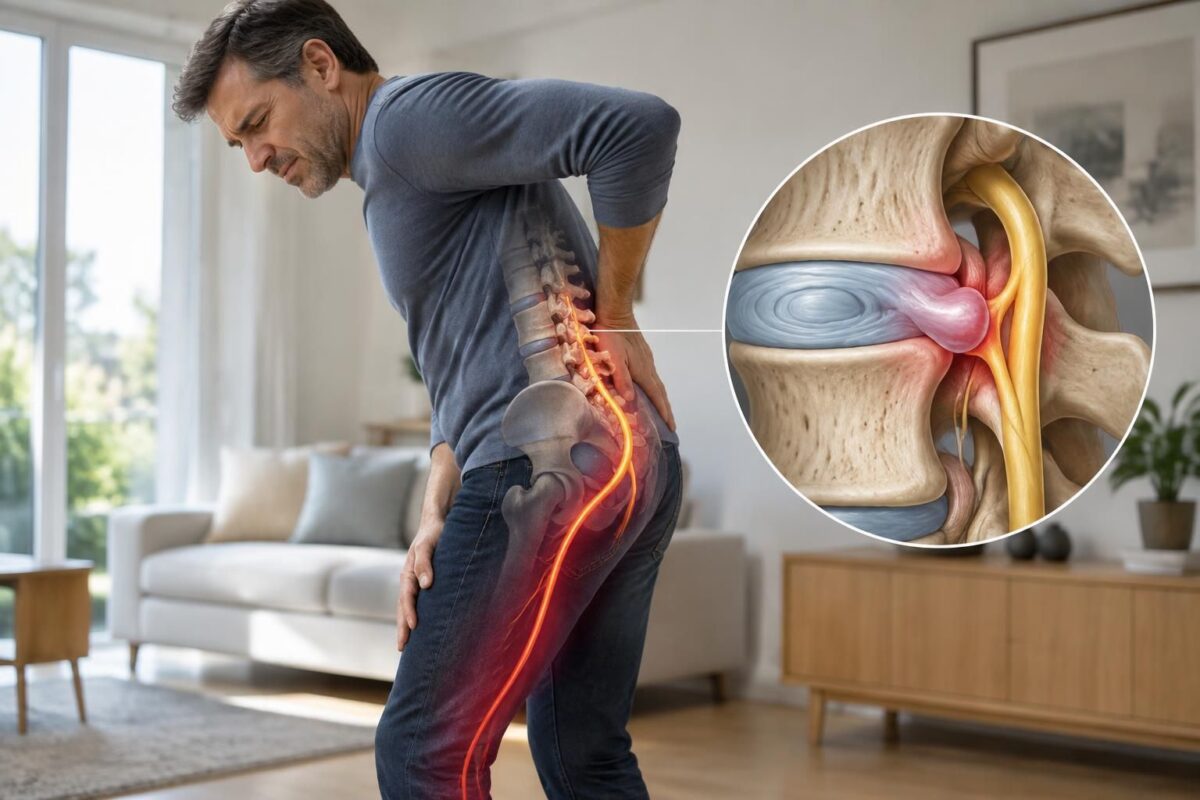
A herniated disc occurs when the gel-like nucleus of an intervertebral disc protrudes through the envelope and can compress a nerve root, causing pain and inflammation.
When the pain is worse in the leg than in the back, it is typically radicular pain — sciatica — that radiates from the lower back to the buttock, thigh, calf, and sometimes the foot.
- Key signs: radiating pain, numbness, tingling, muscle weakness.
- Diagnosis: clinical examination and imaging (MRI) to locate the hernia and the affected nerve.
- Treatment: relative rest, analgesics and NSAIDs, physical therapy; injections if necessary; surgery as a last resort in case of persistence or severe neurological signs.
A doctor can offer a personalized plan to quickly relieve pain and maintain mobility.
Quick summary: A herniated disc can cause more pronounced pain in the leg than in the back. This radicular pain often results from the compression of a nerve root, presenting typical symptoms such as numbness, tingling, and muscle weakness. Diagnosis is based on a clinical examination and imaging, primarily MRI. Treatment often starts with conservative measures and targeted interventions; neurovertebral decompression or injections may be considered based on clinical and radiological assessment. This article describes the signs, diagnosis, and therapeutic options, while highlighting emergency indications and associated resources.
In a herniated disc, the gel-like nucleus exits the envelope of the disc and can compress a nerve root. This compression triggers pain that follows the pathway of the affected nerve. When the pain is more intense in the leg than in the back, it is often referred to as radiculopathy associated with sciatica or cruralgia, depending on the lumbar or cervical level.
Typical Signs and Symptoms
Radiating pain: it starts from the back or neck and descends along the nerve. At the lumbar level, it can affect the buttock, thigh, calf, and sometimes the foot (sciatica). At the cervical level, it can affect the shoulder and arm.
Numbness and tingling: sensations of electric shock or loss of sensitivity in the legs, feet, arms, or fingers, depending on the affected nerve.
Muscle weakness: difficulty lifting the foot, standing on tiptoe, or grasping an object, indicating involvement of the motor nerve.
There are alarm signals. A loss of bladder or bowel control, a loss of perineal sensitivity, or a progressive paralysis of the legs constitutes medical emergencies.
Diagnosis and Evaluation
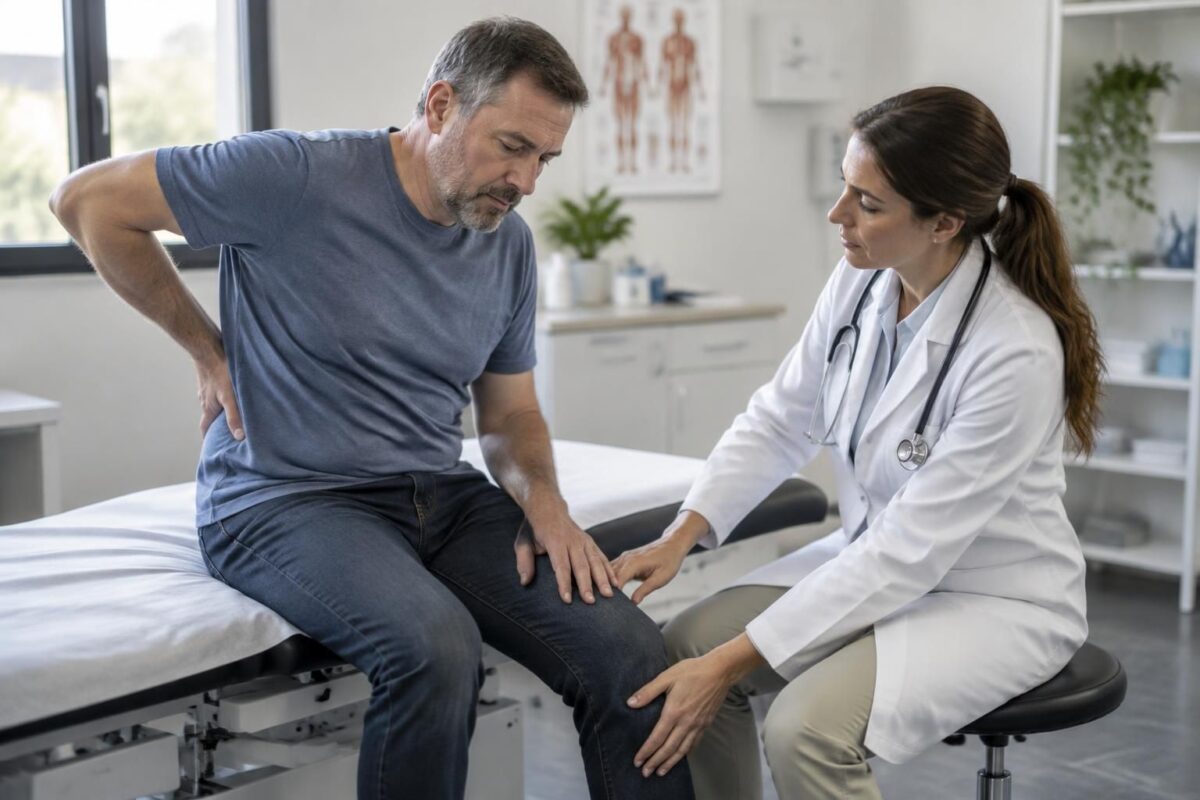
The doctor performs a focused clinical examination and looks for signs of radiculopathy. An MRI is the reference examination to visualize the herniated disc, its precise location, and the degree of nerve compression. Other imaging examinations may be considered depending on the case, but MRI remains the key tool to guide treatment.
For additional information on the mechanisms and manifestations, you can consult specialized resources on Sciatica and disc protrusion.
Treatment Options and Follow-Up
In most cases (more than 90%), a herniated disc heals with appropriate medical treatment without surgery. The initial treatment aims to calm inflammation and pain. This may include pain relievers and, as needed, anti-inflammatories.
Corticosteroid injections near the compressed area may be offered when pain persists despite medication. The effect may last several weeks to months depending on the situation. Rehabilitation or physiotherapy may be considered, but according to protocols and evaluations, it may be discussed differently and in conjunction with other therapies at the TAGMED Clinic.
Neurovertebral decompression may be considered in certain specific cases. This approach is discussed during evaluation and can be part of a comprehensive coordinated care plan at the TAGMED Clinic in Montreal or Terrebonne. For more information on this approach, see Why neurovertebral decompression is a sustainable solution for herniated discs.
Surgery is considered as a last resort. It may be proposed if the pain remains unbearable despite optimal treatment, in cases of progressive muscle weakness, or in the presence of a cauda equina syndrome. In all cases, the decision is made after a thorough evaluation and in consultation with the patient.
When to Seek Immediate Help and Who to Contact
Seek help promptly if you exhibit the emergency signs described above. Otherwise, make an appointment with your primary care physician for evaluation and specialized referral. In case of doubt about symptoms, it is wise to consult to avoid worsening.
Resources and Useful Links
For additional information, please consult the following resources:
Central disc herniation and sciatic pain
For treatment options at TAGMED clinic, see TAGMED Clinic.
Neurovertebral decompression and other specialized approaches
In the context of neurovertebral decompression, the key messages remain clear: avoid unsupervised exercises or stretches in these conditions. Specialized approaches can be discussed during the assessment at TAGMED Clinic or in dedicated resources on Neurovertebral decompression.
For general information on signs, causes, and treatments, you can consult specialized resources on Sciatica and disc protrusion and on the website of Sos Hernie Discale.
TAGMED Clinic can be a reference for coordinated care in Montreal or Terrebonne. Visit TAGMED Clinic.
Medical disclaimer: The information and advice provided on this site do not replace the opinion, diagnosis, or treatment of a healthcare professional. Please note that Dr. Sylvain Desforges, osteopath, is neither a medical doctor nor a physician, and is not a specialist in a medical specialty as defined by the Collège des médecins du Québec. Manual therapy, functional medicine, and sports medicine as described on this site exclude any medical treatment or diagnosis made by a doctor or specialist. Always consult your physician for any medical questions. For more details, please read our full Legal Notice.
Signs and location
- Disc herniation: bulging of the disc compressing a nerve root.
- Radiating pain: lower back pain that radiates down the leg (sciatica).
- Numbness or tingling along the nerve pathway.
- Muscle weakness: difficulty lifting the foot or walking on the heels.
Responses and actions
- Quick consultation in case of persistent pain or neurological signs.
- Physical therapy and back strengthening after the acute phase.
- Medications as per the physician: analgesics, NSAIDs, muscle relaxants.
- Non-surgical options first; surgery if failure or absolute urgency.

This sheet explains why a disc herniation can cause pain in the leg that is stronger than in the back, how to recognize the signals, when to consult, and what practical options to prioritize for quick relief and to prevent complications.
What is a disc herniation and why can pain radiate down the leg?
Disc herniation occurs when the jelly-like core of the intervertebral disc pushes through a tear in its casing. This protrusion can compress a neighboring nerve root. Depending on the affected nerve, the pain can spread along the nerve’s pathway, resulting in radiating pain that sometimes reaches up to the buttock, thigh, calf, and down to the foot. When the compression affects the motor nerve, muscle weakness can accompany the pain, making certain movements more difficult.
In some cases, lower back pain may be less pronounced than the pain felt in the leg, because the pain directly follows the compressed nerve. This presentation is common and can lead to prompt diagnosis and appropriate management without waiting for a worsening condition.
Clinical signs and risk factors
Typical Symptoms
In addition to localized pain in the lower back, you may experience radiating pain that travels down the leg, sometimes to the foot. Sensations of tingling or numbness may accompany the pain, with possible muscle weakness that hinders walking or holding objects.
The pain may be exacerbated by certain movements (bending down, sneezing) and relieved by rest or certain positions. Unilateral pain is common, but any new or persistent pain warrants professional evaluation, especially if accompanied by walking difficulties or notable weakness.
Causes and risk factors
Disc aging, sedentary lifestyle, and repetitive or awkward movements can weaken the disc, promoting a disc herniation. Overweight, poor posture, and certain family histories also increase the risk. An acute injury can trigger disc protrusion and nerve irritation, leading to the sudden onset of leg pain.
When to consult and how to get diagnosed
It is important to consult quickly when leg pain is intense, associated with numbness, weakness, or loss of urinary or bowel control. A physician will assess the pain pattern, muscle strength, and reflexes.
The diagnosis is usually confirmed by appropriate imaging. MRI is the reference examination to visualize the disc and nerves and specify the location of the herniation. Depending on the cases, a CT scan or X-rays can complement the evaluation to rule out other causes of lower back pain.
Treatment options and practical plan
In more than 90% of cases, non-surgical treatment significantly improves symptoms. Relative rest and maintaining appropriate activity help reduce inflammation. Pain and anti-inflammatory medications, sometimes combined with muscle relaxants, are used as first-line treatment. Physiotherapy and targeted exercises that strengthen the back and abdominal muscles play a central role in recovery and prevention of recurrences.
If pain persists despite treatment, intermediate options such as nerve injections may be considered to reduce inflammation and pain. Surgery is only considered as a last resort when there is persistent pain for several weeks, weakness, or progression of neurological symptoms, or in cases of neurological emergency when cauda equina syndrome manifests.
Prevention and tips to protect your spine
Adopting good posture at work and at home, regularly engaging in appropriate activities (walking, light swimming, gradual trunk strengthening), and maintaining a healthy weight reduce the risk of recurrence. Simple flexibility and stretching exercises, performed under supervision, can improve flexibility in the back muscles and pelvic girdle while protecting your spine during daily activities.
Disc herniation and severe leg pain
| Axis | Concise elements |
|---|---|
| Definition and mechanism | Disc herniation refers to the protrusion or rupture of an intervertebral disc, compressing a nerve and causing radicular pain in the leg or arm. |
| Location and irradiation | Lumbar or cervical pain radiating to the buttock/leg or shoulder/arm. |
| Main symptoms | Tingling/numbness and sometimes muscle weakness. |
| Emergency signs | Loss of bladder/bowel control; saddle anesthesia; rapid weakness — medical emergency. |
| Risk factors | Age, genetics, overweight, sedentary lifestyle, heavy lifting. |
| Diagnosis | Clinical examination; MRI as reference; CT or X-ray can be useful. |
| Therapeutic approaches | Relative rest, NSAIDs/analgesics, physiotherapy; injections or surgery as last resort. |
| Progression and prognosis | >90% of cases improve with non-surgical treatment. |
| Prevention and advice | Back strengthening, good posture, appropriate physical activity, and weight management. |
Testimonials on Disc Herniation and Pain Stronger in the Leg than in the Back
Marie – 42 years old: At first, the pain was limited to the back, but it quickly migrated to the leg, becoming much stronger. Tingling and a burning sensation along the nerve alerted me, and I understood that something was wrong. The diagnosis confirmed a disc herniation. Thanks to a personalized exercise program and posture advice, the pain in my leg decreased, and I regained my everyday mobility. If you identify with this case, seek an appropriate assessment.
Émilie – 39 years old: My pain started in my back, but the pain in the leg quickly became the main concern, with numbness and difficulty walking. The doctor mentioned a disc herniation and implemented a non-surgical treatment plan. After a few weeks of physiotherapy and muscle strengthening, the symptoms decreased and I was able to resume my activities without fear of a relapse. If you’re experiencing this, a quick assessment can make all the difference.
Thomas – 51 years old: The pain in my back was overtaken by pain radiating into my leg, with discomfort extending to my foot and bothersome tingling. The approach prioritized non-surgical treatments and targeted rehabilitation. Within a few weeks, the pain in the leg significantly decreased, and I regained a smoother gait and better quality of life. For anyone affected, early assessment can prevent worsening.
Amélie – 34 years old: I felt like my back was locking up, but it was primarily the pain in the leg that was holding me back. The assessment showed a disc herniation. With targeted exercises and postural adjustments, I regained painless mobility and confidence in my sports activities. If your leg is more painful than your back, don’t wait and have your situation assessed.
Lucie – 58 years old: My leg was dominating my back, with pain disrupting my sleep and daily movements. Thanks to a gradual non-surgical approach and tailored rehabilitation, the pain in the leg decreased, and I could resume my usual activities without limitation. If you’re in this situation, a personalized assessment can guide you to the right care plan.
Biography and Approach of Dr. Sylvain Desforges Regarding Disc Herniation and Pain Radiating to the Leg
Dr. Sylvain Desforges, a certified osteopath and reference in the fields of osteopathy, naturopathy, and manual medicine, is the founding president of the TAGMED clinics and the ACMA association. At 59 years old, he dedicates his career to innovation in healthcare and the management of chronic pain of the spine. His approach is based on the integration of advanced technologies such as motorized neurovertebral decompression, laser, and shockwave therapy, to optimize the function and well-being of patients suffering from disc pathologies, especially when radiating pain predominantly manifests in the leg.
In his practice, he pays particular attention to disc herniation, a condition where the intervertebral disc protrudes and can compress a nerve root, generating pain that is often more pronounced in the leg than in the back. This radicular pain can develop along the sciatic nerve, causing sciatica or femoral nerve pain, and can be accompanied by numbness, tingling, and muscle weakness. Understanding this mechanism helps explain why the leg can be the primary site of symptoms, even when the initial pain is located in the spinal area.
His diagnostic approach is based on attentive listening and a structured clinical examination to detect signs of radiculopathy, assess referred pain, and identify risk factors such as age, lifestyle, and occupational history. The physician evaluates the progression of pain and functional limitations, and recommends, when necessary, imaging tests to confirm the presence of a herniated disc and accurately locate the nerve compression. This process aims to guide a personalized treatment plan tailored to the severity of the symptoms.
Therapeutically, Dr. Desforges favors a non-surgical multimodal approach when possible. He combines specific osteopathy techniques and manual therapies with technological modalities, such as motorized neuro-spinal decompression, laser therapy, and shockwave therapy, to reduce inflammation, relieve pressure on nerve roots, and promote strengthening of the back and abdominal muscles. Adapted exercise programs and postural rehabilitation complement treatments to provide lasting relief and prevent recurrences, all based on evidence-based principles.
In parallel, he emphasizes patient education and prevention. Managing daily activities, adopting a suitable posture, maintaining regular physical activity, and engaging in muscle strengthening are tools to limit exacerbations and improve quality of life. When pain persists despite coordinated management and when neurological signs evolve, a more in-depth evaluation is considered, with a discussion of surgical options as a last resort and emergency criteria to monitor.
Dr. Desforges’ mission is to provide evidence-based care tailored to each patient to optimize their health and well-being in the face of a herniated disc and radiating pain in the leg. His practice relies on an integrated approach, combining manual skills, naturopathy, and innovative technologies to facilitate a rapid return to mobility and daily life. To learn more about his approach and available services, contact TAGMED Clinic and discuss with his team dedicated to managing disc and radicular pain.
Quick summary: Herniated disc can cause pain in the lower back with radiating pain in the leg, and sometimes the pain in the leg is more intense than in the back. Early diagnosis and a tailored treatment plan, mostly non-surgical, can quickly relieve pain and limit the risk of complications.
Key Points and Warning Signs
Definition and Mechanism: A herniated disc occurs when the gelatinous core of an intervertebral disc bulges through a tear in the casing, compressing a nerve root and causing pain, tingling, or numbness that may radiate down the leg.
Leg Pain vs Lumbar Pain: When the injury concerns the lumbar segment, the pain may radiate to the buttock, thigh, and calf (sciatica). In some cases, the pain may be more pronounced in the leg than in the back, which may indicate nerve irritation rather than purely muscular pain.
Other Neurological Symptoms: Numbness, tingling, and muscle weakness in the lower limbs may accompany the pain; in some cases, loss of urinary or fecal control requires urgent medical attention.
Causes and Risk Factors: Aging, lack of activity, obesity, repetitive motions, and trauma can contribute to the occurrence of a herniated disc. Family history and physically demanding jobs also increase the risk.
Diagnosis and Treatment Options
Diagnosis: Diagnosis relies on clinical evaluation and imaging tests such as MRI, which helps locate the herniation and assess nerve compression.
Initial Non-Surgical Treatment: First-line treatment includes relative rest, the use of analgesics and anti-inflammatories, and physical therapy to strengthen back muscles and improve posture. Injections may be considered if pain persists.
When to Consider Surgery: Surgery is rare and reserved as a last resort, particularly in cases of failure of medical treatment, signs of paralysis, or cauda equina syndrome, which constitutes a medical emergency.
To delve deeper, explore complementary resources on symptoms and treatments through these links: Doctolix – symptoms and treatments, Doctissimo – Herniated disc, Sciatica and Lumbar Herniated Disc, Neuro-spinal decompression and herniated discs.
Additional Resources and Practical Advice
Most cases of herniated disc progress favorably with appropriate medical follow-up and targeted exercises. Adopting preventive measures, maintaining a healthy weight, and staying active can improve spinal support and reduce the risk of recurrence. For a quick and personalized assessment, do not hesitate to consult a healthcare professional and explore the options available at your local clinic.

L5-S1 protrusion and sciatic pain: pathway to the foot
IN BRIEF A L5-S1 disc protrusion is a disc that slightly bulges between the lumbar and sacral vertebrae. If it irritates a nerve root, pain may radiate from the lower back or buttock down the back of the leg to…

L4-L5 protrusion and sciatic pain: possible signs
IN BRIEF A L4-L5 disc protrusion is a bulging of the disc between two lumbar vertebrae. If it irritates the L5 nerve root, it can cause sciatica radiating from the buttock to the side of the leg and the top…
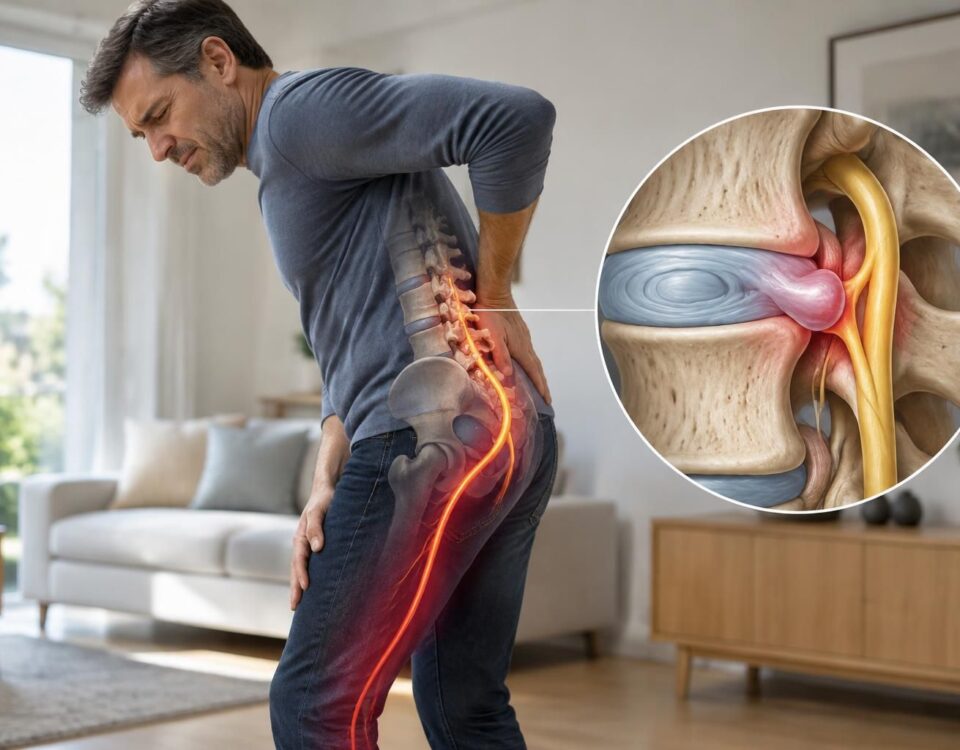
Disc protrusion and sciatica: when the disc touches a nerve root
IN BRIEF A disc protrusion is a disc that extends beyond its usual contour. If it irritates a nerve root, it can contribute to sciatica, with pain radiating into the buttock or leg, sometimes accompanied by tingling or weakness. An…

Herniated disc and sciatica: morning pain and lumbar stiffness
IN BRIEF A herniated disc can irritate a nerve root and cause sciatica, with lower back pain radiating down the leg. However, morning pain and lower back stiffness alone are not sufficient to confirm this diagnosis. An assessment helps guide…

Herniated disc and sciatica: night pain and factors to watch out for
IN BRIEF A herniated disc can irritate a nerve root and cause sciatica, sometimes more bothersome at night. Night pain alone is not enough to determine the cause: its variation according to positions, neurological examination and, if necessary, imaging help…

Herniated disc and sciatica: why the leg can be numb
IN BRIEF A sciatica is pain related to the irritation of a nerve root, sometimes caused by a <strongherniated disc. Pressure on the nerve can cause tingling, loss of sensation, or weakness in the leg. A healthcare professional can assess…

Herniated disc and sciatica: causes of recurring pain
IN BRIEF A herniated disc can irritate or compress a nerve root and cause sciatica, with pain radiating from the lower back to the buttock or leg and possibly returning. Symptoms and their causes are not always the same: an…
Herniated disc and sciatica: when to reassess symptoms
IN BRIEF A herniated disc can irritate a nerve root and cause sciatica, with pain that radiates down the leg. Reevaluating symptoms helps to track their evolution and determine if medical advice or tests are necessary, without assuming that surgery…

Dr Sylvain Desforges, B.Sc., D.O., N.D., osteopath, is the founding president of TAGMED and of the ACMA association. He dedicates his practice to chronic spinal pain, low back pain and symptoms compatible with sciatica, particularly when pain radiates toward the buttock, leg, calf, foot or toes.
Through SOS Sciatique, he publishes educational content on sciatica symptoms, possible causes such as disc herniation, disc narrowing, foraminal stenosis or irritation of a lumbar nerve root, as well as non-surgical approaches that may be considered according to the evaluation. At Clinique TAGMED, care may include, depending on the case, motorized neurovertebral decompression, specific osteopathic care or precision percussion.
For an evaluation related to sciatica treatment in Montreal / Mount Royal or sciatica treatment in Terrebonne, please consult the services available at Clinique TAGMED.
Medical disclaimer
The information published on SOS Sciatique is provided for educational purposes only and does not replace a consultation, diagnosis, opinion or treatment provided by a physician or another authorized healthcare professional. The author of this article is neither a medical doctor nor a specialist in a medical specialty recognized by the Collège des médecins du Québec. The osteopathic, manual medicine or functional support approaches described on this site do not constitute medical acts and are not intended to replace medical follow-up.
Consult a physician or emergency service in cases of loss of bladder or bowel control, anesthesia in the saddle area, significant or progressive weakness in the leg or foot, fever, recent trauma, severe pain or rapid worsening of symptoms. For more details, please read our Legal Notice.