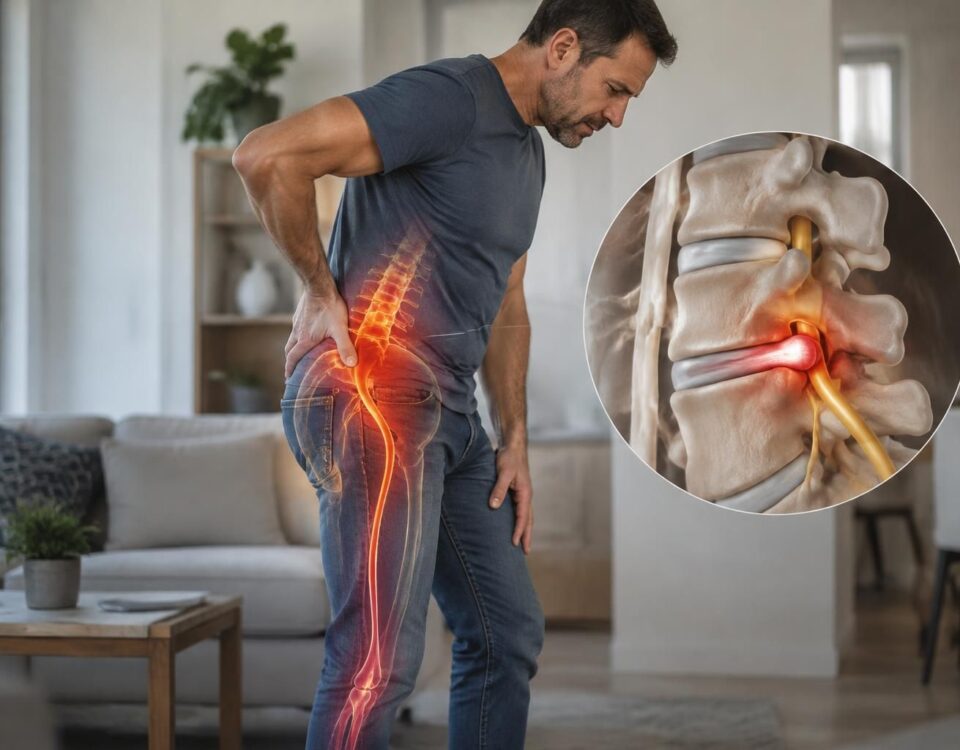
Sciatica and back pain
14/10/2026
Sciatica in Montreal: understanding the lumbar levels on an MRI
15/10/2026
IN BRIEF
| A disc protrusion is a bulging of a disc that can irritate a nerve. In a car, prolonged sitting and vibrations can exacerbate back, buttock, leg, or arm pain. Regular breaks, an adapted posture, and personalized management can help better manage symptoms. Consult quickly in case of progressive weakness or urinary or intestinal disturbances. |
A disc protrusion can sometimes irritate a nerve root and cause pain in the back or neck, with radiation into the buttock, leg, or arm. In a car, prolonged sitting, vibrations, and lack of movement can increase discomfort, although this alone does not confirm the origin of the pain.
To limit discomfort, adjust the seat to support your back and take regular breaks to walk gently. If the pain persists, worsens, or is accompanied by weakness, consult a health professional. Urinary or intestinal disturbances, or loss of sensitivity in the saddle area, require urgent evaluation.
A disc protrusion can be associated with pain that increases in the car, especially when sitting position, vibrations, or trip duration irritate the back or a nerve root. This pain does not prove, by itself, that the disc is the culprit: the evaluation considers symptoms, their evolution, and their impact on your activities. Adjustments to driving and appropriate management can help better manage trips.
The disc protrusion refers to a bulging of the disc located between two vertebrae. Depending on its location and nearby structures, it can remain asymptomatic or be associated with pain in the back, neck, buttock, leg, or arm. To understand the difference from a herniated disc, consult our article on the terms often confused between disc protrusion and herniated disc.
The car can make symptoms more pronounced because the trip imposes a prolonged sitting position. Vibrations, jolts, and maintaining the body in the same posture can also increase discomfort for some people. This does not necessarily mean that the protrusion is worsening or that a nerve is being compressed more: only a health professional can assess the situation.
Why can sitting position exacerbate pain?
In sitting position, the pelvis and lower back often remain less mobile. If this posture triggers your symptoms, pain can appear in the lower back or extend toward the buttock and leg. A poorly adjusted seat or a trip without breaks can make the position less comfortable.
Pain can also vary from trip to trip. The time spent sitting, the condition of the back on that day, the quality of the road, and fatigue can all play a role. Pain that radiates down the back of the thigh may suggest nerve irritation, but this sign alone cannot make a diagnosis. You can learn more about the disc protrusion and pain behind the thigh.
What symptoms can accompany pain in the car?
A disc protrusion may be associated with localized pain or symptoms that follow the path of a nerve. Depending on the affected area, you may experience:
- pain in the lower back or neck;
- pain that extends towards the buttock, leg, shoulder, or arm;
- tingling or numbness;
- stiffness after sitting;
- a decrease in strength in an arm or leg.
If you have tingling in your toes, their presence and evolution deserve evaluation. Consult our page on the disc protrusion and tingling in the toes. For an overview of possible symptoms, you can also read these resources on disc protrusion symptoms and the causes, symptoms, and treatments of disc protrusion.
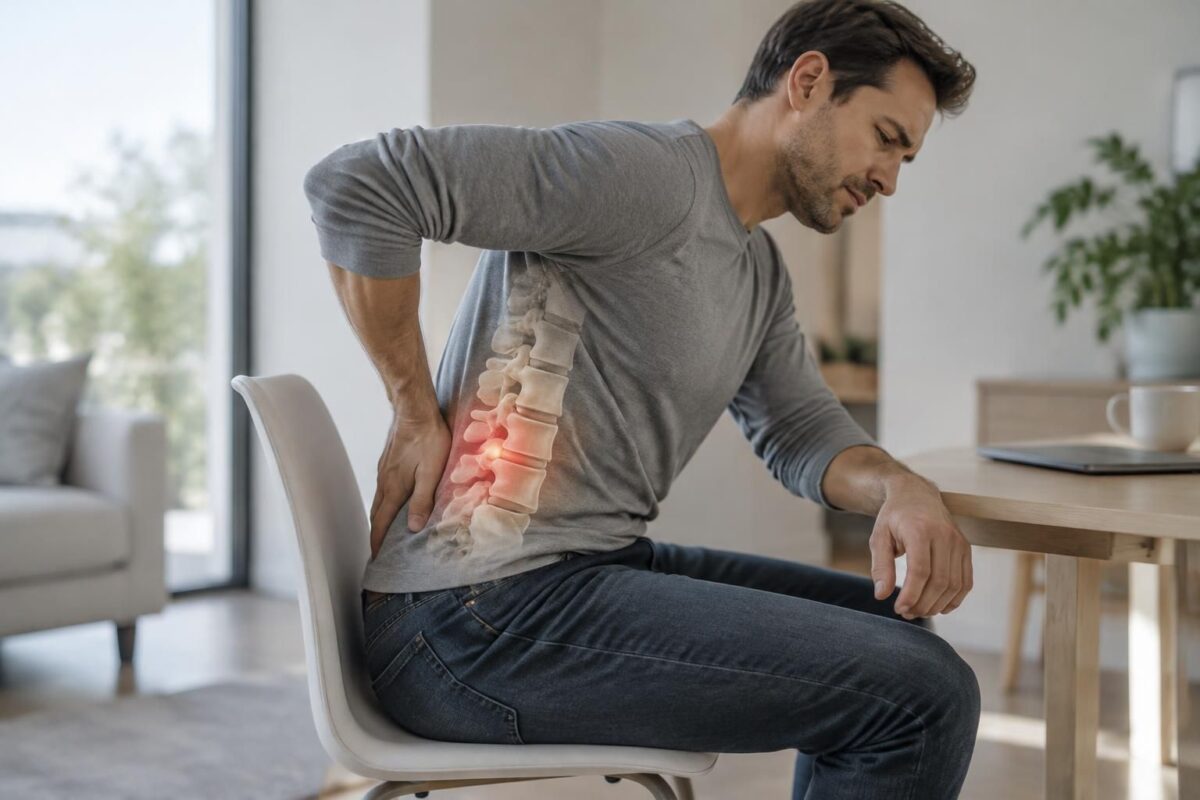
Disc bulge and pain in sitting position
IN BRIEF A disk bulge is a protrusion of a disk between the vertebrae; it does not always cause symptoms. Prolonged sitting can accentuate lower back pain and sometimes pain that radiates into the buttock or leg. Varying positions, moving…
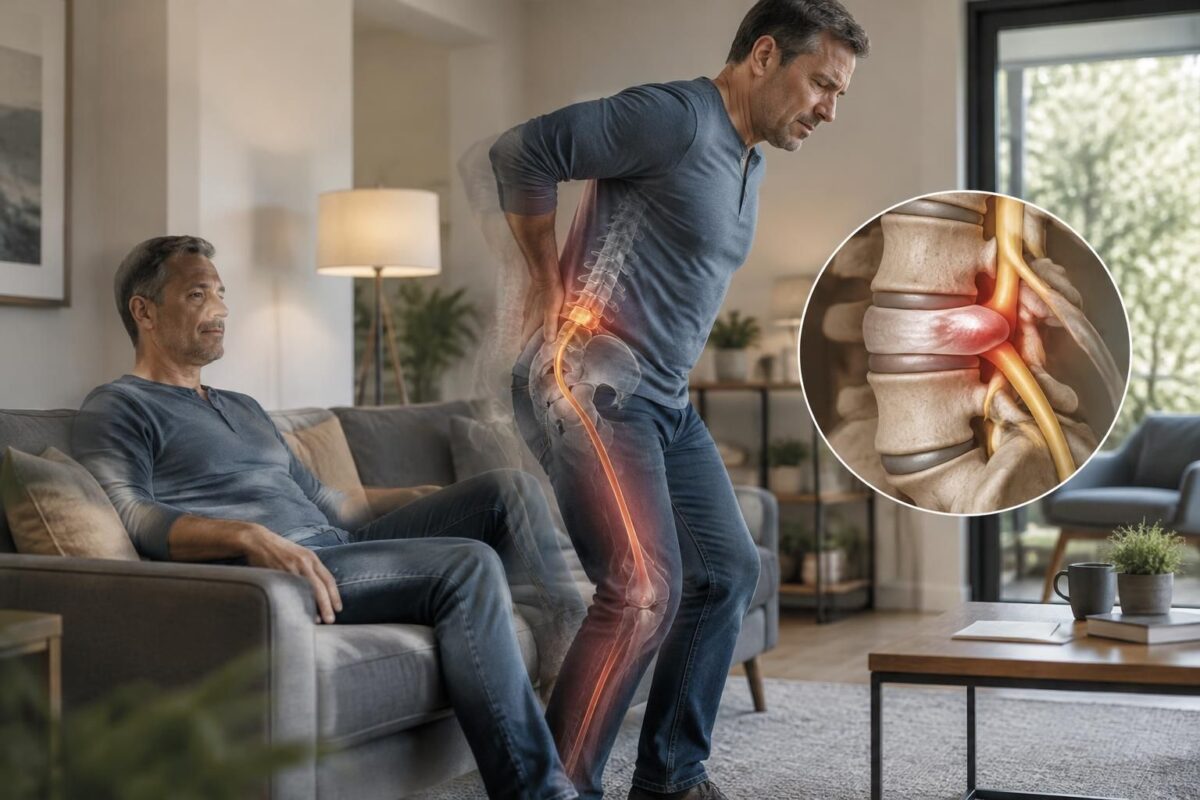
Disc herniation and fluctuating symptoms
IN BRIEF A disc bulge is a protrusion of the disc between the vertebrae, which may not necessarily cause symptoms. When pain fluctuates, its intensity can vary based on movements, activities, and other factors; the bulge visible on MRI does…
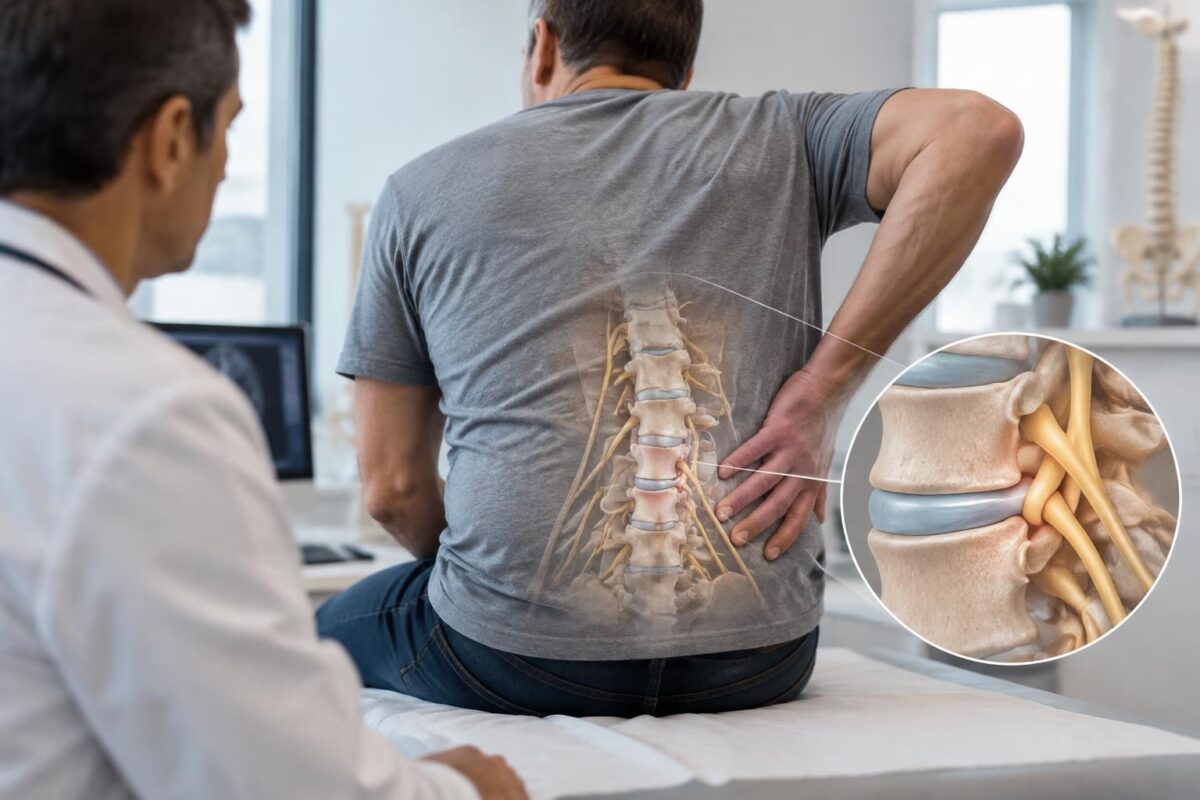
Disc bulge and mild nerve compression
IN BRIEF A disc bulge with mild nerve compression occurs when a disc slightly protrudes and may irritate a nerve, sometimes causing pain, tingling, or numbness. Symptoms and imaging do not always align: the assessment takes into account your movements…
How to make a car journey more comfortable
Some adjustments can reduce strain during the trip. Adjust the seat to keep the back supported and reach the pedals without stretching. Position the backrest to avoid leaning forward. If the journey is long, plan regular stops to change position and walk for a few minutes, depending on your tolerance.
Avoid driving if pain limits your ability to control the vehicle or if a medication makes you drowsy. For more advice on traveling by car with disc pain, consult this article on how to better tolerate a car journey.
If the pain occurs mostly at night or changes significantly, note the circumstances and report them to the professional evaluating you. This resource explains some factors to monitor in case of nocturnal pain.
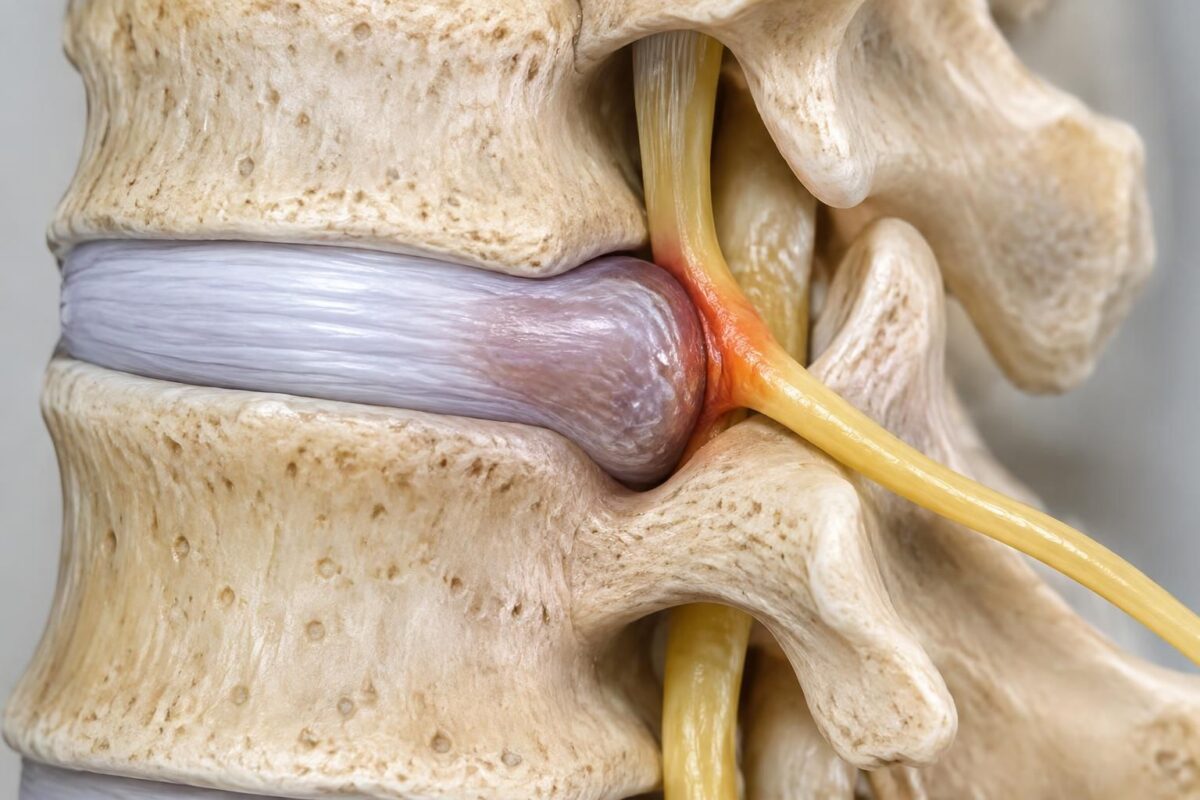
Disc herniation and foraminal irritation
IN BRIEF A disc bulge can reduce the space of the foramen, the opening through which a nerve exits, and contribute to its irritation. This can cause lower back pain radiating into the buttock or leg, tingling, or numbness. An…
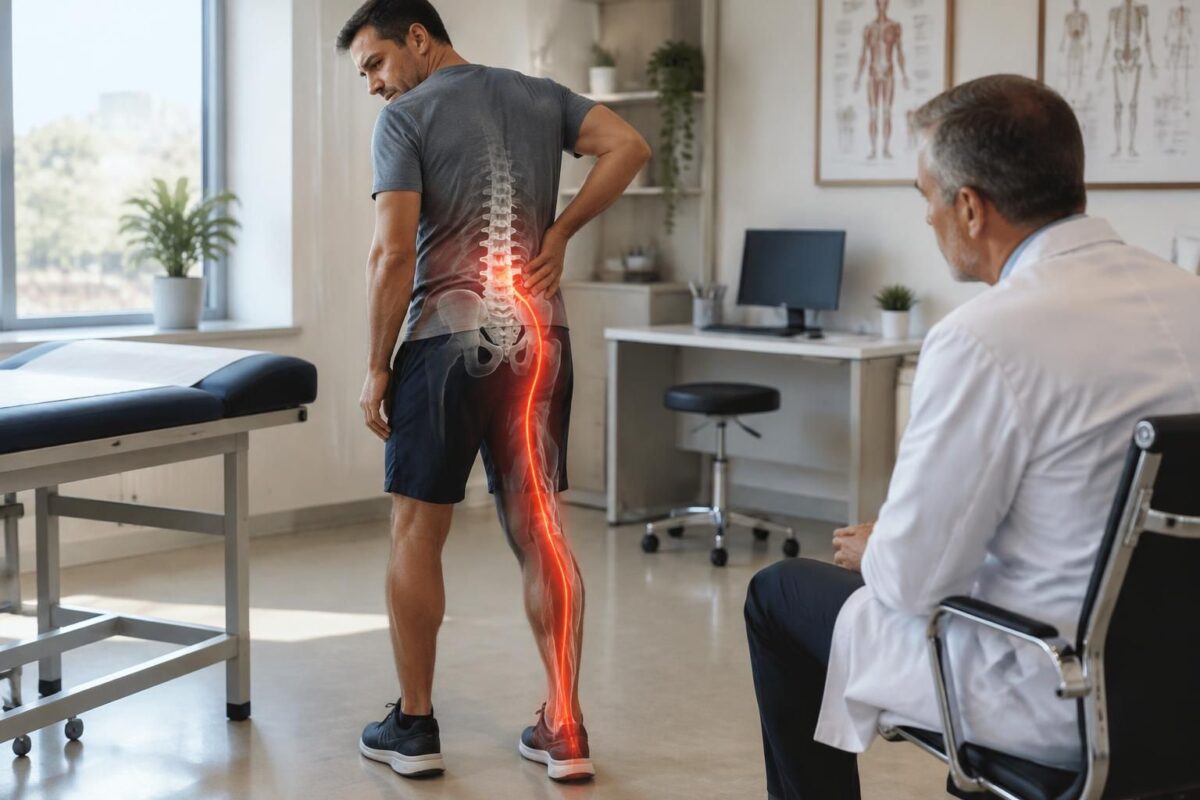
Disc bulge L5-S1 and pain toward the foot
IN SHORT A L5-S1 disc bulge corresponds to a disc that slightly overruns between the last lumbar vertebra and the sacrum. It can irritate a nerve root and cause pain resembling sciatica down to the foot, but this anomaly visible…
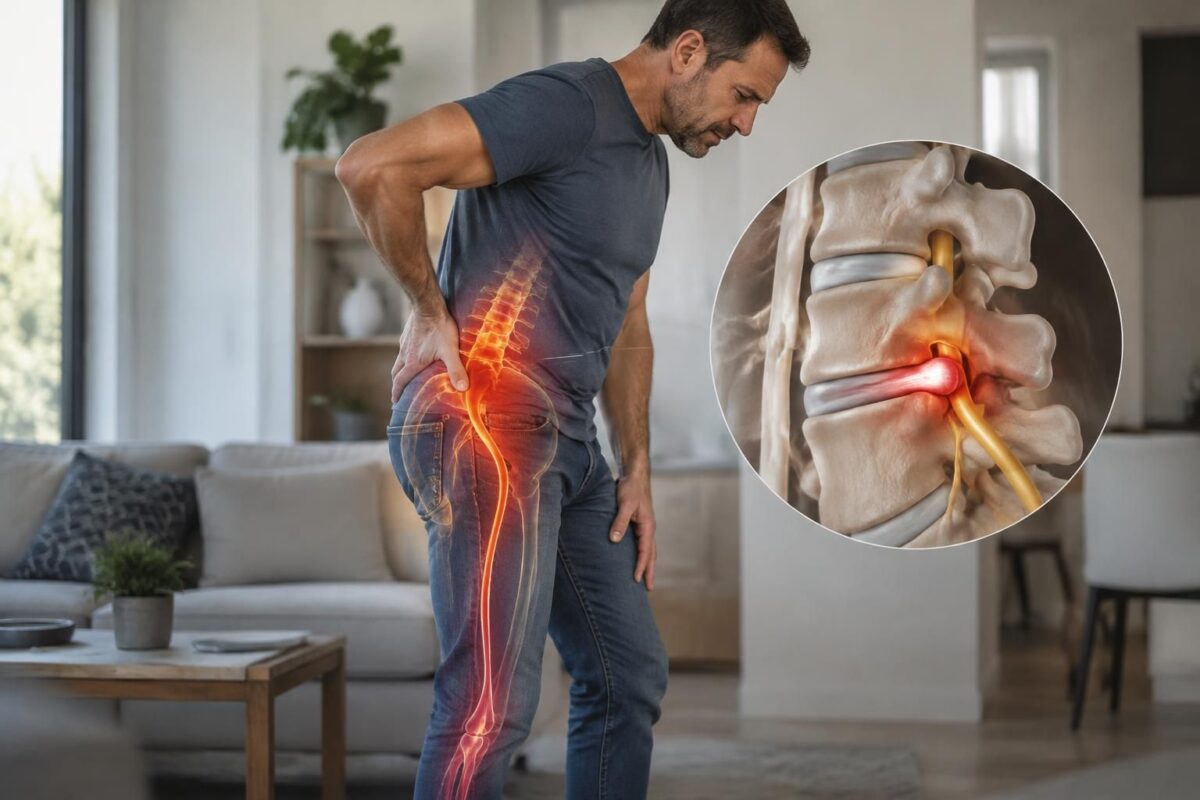
Disc herniation L4-L5 and leg pain
IN BRIEF A L4-L5 disc bulge is a protrusion of the lumbar disc that can contribute to pain in the buttock or leg if a nerve root is irritated. An MRI in a neutral position does not always show what…
How to confirm the cause of pain
A health professional generally starts by asking you about the pain, its evolution, and the movements that worsen it. The examination may include an assessment of mobility, strength, sensitivity, and reflexes. Imaging, such as an MRI, may be considered depending on the symptoms and clinical examination.
An image showing a protrusion is not sufficient to prove that it causes the pain felt in the car. Some people show disc changes without significant symptoms. Interpretation must therefore connect the imaging results to your condition and clinical signs. For information on recovery time and rehabilitation, consult this page on the healing time associated with a disc protrusion.
It also happens that a small protrusion is associated with significant pain, or that a visible protrusion causes little discomfort. The observed size alone does not allow for measuring the intensity of the pain. To explore this point further, read this article on significant pain despite a small protrusion. Another resource provides general information on disc protrusion.
What management options should be considered?
Management depends on your symptoms, their duration, the affected area, and your health status. The professional can advise on temporary activity adaptations and options for managing pain. Medications, including analgesics or anti-inflammatories, may not be suitable for everyone: consult a doctor or pharmacist, especially if you have other health issues or are already taking medications.
At the TAGMED Clinic, an assessment can guide care according to your condition. Options offered may include specific osteopathy or, when deemed appropriate after evaluation, motorized neurovertebral decompression. These approaches do not replace a medical diagnosis or follow-up by a qualified professional. They may not necessarily be suitable for everyone.
Recovery time varies from person to person. It particularly depends on the real cause of the symptoms, their intensity, and their evolution. Avoid resuming driving or any activity that significantly increases pain without considering your ability to function safely.
When to seek medical advice quickly
Consult quickly if you notice new or progressive weakness in an arm or leg, a spreading loss of sensitivity, difficulty walking, or significantly worsening pain. These signs require immediate evaluation.
Go to the emergency room in case of loss of control of the bladder or bowels, numbness in the saddle area, or sudden and significant weakness. A fever, recent trauma, or severe pain that rapidly worsens also justifies urgent medical advice.
About the author
Sylvain Desforges, B.Sc., D.O., N.D., osteopath and naturopath, is the founding president of TAGMED and the ACMA association. His practice focuses on chronic spinal pain, lower back pain, and pain compatible with sciatica, particularly when it radiates to the buttock, leg, calf, foot, or toes.
Through SOS Sciatique, he publishes educational content on sciatic symptoms, their possible causes, and non-surgical options that may be considered after evaluation. At the TAGMED Clinic, care may include, depending on the case, motorized neurovertebral decompression, specific osteopathy, or precision impact therapy.
For an assessment regarding sciatica treatment in Montreal or Mount Royal, or sciatica treatment in Terrebonne, check the services available at the TAGMED Clinic.
Medical disclaimer
Medical disclaimer: The information and advice provided on this site do not replace the opinion, diagnosis, or treatment of a healthcare professional. Please note that Sylvain Desforges, B.Sc., D.O., N.D., Doctor of Osteopathy, is neither a medical doctor nor a physician and is not a specialist in any medical specialty as defined by the Collège des médecins du Québec. Manual medicine, functional medicine, and sports medicine as described on this site exclude any treatment or medical diagnosis made by a doctor or medical specialist. Always consult your doctor for any medical questions. For more details, please read our complete legal notice.
Why the car may increase pain
- Prolonged sitting and pressure on the lower back.
- Vibrations and uneven roads.
- Too reclined seat or legs stretched.
- Getting in, out, or twisting the trunk abruptly.
Actions to make the journey more comfortable
- Adjust the seat to keep the back supported and knees slightly bent.
- Take breaks and walk regularly during long trips.
- Avoid carrying heavy loads when getting out.
- Consult if pain persists or worsens.
A visible protrusion on imaging does not always explain the pain: evaluating the symptoms remains important.

A disc protrusion may be accompanied by pain that increases in the car, particularly when sitting for extended periods or when vibrations and movements strain the back. Adjusting the seat, taking breaks, and resuming movement gradually can help tolerate trips better. However, these measures do not replace a professional evaluation, especially if the pain radiates down a leg or is accompanied by numbness or weakness.
Why might pain increase in the car?
Sustained sitting for long periods may increase discomfort in some individuals, especially if the seat poorly supports the lower back or if the pelvis is tilted backward. Road vibrations and repeated movements to look around may also irritate an already sensitive area.
The pain may remain localized in the back or radiate to the buttock and leg. However, a visible protrusion on imaging does not, by itself, explain the symptoms: clinical examination and their evolution also matter. If discomfort returns with each trip, intensifies, or limits your activities, seek advice from a healthcare professional.
Adjusting the driving position
Adjust the seat before departing
Bring the seat closer to reach the pedals without fully extending your legs and keep the backrest slightly reclined, rather than very straight or heavily tilted. Try to maintain a comfortable posture, with your back supported and shoulders relaxed. A small lumbar support cushion can be tried if it improves your comfort, but it may not suit everyone.
Also adjust the steering wheel and mirrors to avoid leaning or twisting your torso repeatedly. Don’t aim for a perfect posture: the goal is to reduce strain while being able to slightly change position.
Plan for breaks
During a long trip, stop regularly, before the pain becomes difficult to manage. Get out carefully, walk for a few minutes, and move gently, without forcing any stretches. There is no universal duration suitable for everyone: adjust the frequency of breaks according to your symptoms and driving conditions.
Getting in and out of the car without rushing
To get in, first sit on the seat, then rotate your pelvis and legs inward together. To get out, reverse the movement and support yourself stably. Avoid rising by twisting your torso abruptly. If you are carrying bags, bring them close to your body and avoid lifting from a bent position.
Resuming trips and choosing care
If driving significantly increases pain, temporarily reduce trip durations when possible, without imposing extended complete rest. Appropriate activity and personalized rehabilitation can help maintain mobility. Medications, if considered, should be discussed with a professional, especially before driving: some may reduce alertness.
Consult promptly if weakness appears or worsens, if you have difficulty walking, or if numbness spreads. Loss of bladder or bowel control or anesthesia in the saddle region requires urgent evaluation. In such circumstances, do not drive: seek help for care.
| Situation in the car | Useful reference |
|---|---|
| Prolonged sitting position | Can aggravate low back pain or radiation in the leg. |
| Seat too reclined or too low | Adjust the seat to support the back and keep the knees slightly bent. |
| Road vibrations | They may make symptoms more sensitive, without indicating disk worsening on their own. |
| Extended trip | Make regular stops to walk for a few minutes and change position. |
| Getting in or out of the vehicle | Turn the body as a unit and avoid abrupt twists. |
| Persistent pain | A clinical evaluation helps link symptoms to possible disk herniation. |
| Weakness or numbness that progresses | Consult a healthcare professional promptly. |
| Urinary issues or loss of sensation in the saddle area | Seek emergency medical care. |
Illustrative testimonies: disk herniation and pain while driving
Note: The accounts below are fictional examples created to illustrate different possible experiences. They do not correspond to identifiable patient testimonies and do not allow for a diagnosis.
Illustrative case 1 — lower back pain radiating into the leg: “After a few minutes in the car, a pain in my lower back starts to radiate into my buttock and leg. Long trips are the most difficult. Taking a break to walk a bit sometimes helps me find a more comfortable position, but the pain returns when I get back on the road.”
Illustrative case 2 — discomfort after a workday: “I often drive for work and I sit for a long time. Since my disk herniation appeared, I have sharp lower back pains that increase with longer trips. I now try to schedule breaks and adjust my seat, without considering these adjustments as a substitute for a professional evaluation.”
Illustrative case 3 — tingling during the trip: “My pain doesn’t always stay in my back: after some time driving, I sometimes notice tingling in my leg. As these sensations vary from day to day and position to position, I talk to a healthcare professional to check their origin and find out which activities to adapt.”
Illustrative case 4 — neck and arm pain: “In my case, the discomfort is mainly in my neck and shoulder. Prolonged driving, especially when I keep my head turned or shoulders tense, can increase pain into my arm. Breaks and a more comfortable driving position seem to reduce discomfort, but symptoms persist at times.”
Illustrative case 5 — gradual resumption of travel: “After a period where I limited my trips, I started driving short distances again. I monitor the evolution of the pain and avoid forcing it if it increases significantly. This gradual return happens with advice tailored to my condition rather than following a randomly found program.”
Increased pain while driving may be related to prolonged sitting, movements, or other factors; it does not on its own confirm the presence of a disk herniation. Imaging should be interpreted in relation to symptoms and clinical examination. If the pain is accompanied by new or progressive weakness, significant loss of sensation, anesthesia in the saddle region, or urinary or bowel issues, seek medical evaluation promptly.
Disk herniation and pain that increases while driving: understanding and acting
A disk herniation corresponds to the bulging of an intervertebral disk, the cushion situated between two vertebrae. This deformation can irritate nearby tissues and, in some cases, compress a nerve root. Symptoms vary depending on the affected area: a lumbar herniation can cause pain in the lower back, buttock, or leg, while a cervical herniation may radiate from the neck to the shoulder or arm. However, the presence of a herniated disk on imaging alone is not sufficient to explain pain: it must be correlated with symptoms and clinical examination.
When pain increases while driving, prolonged sitting may play a role. The pelvis and lower back sometimes remain in an uncomfortable posture, while road vibrations and repeated movements may accentuate an already present sensitivity. Getting in or out of the vehicle, driving for long periods, or being stuck in traffic can also make symptoms more noticeable. This does not necessarily mean that the disk is worsening, but pain that radiates into the leg or is accompanied by tingling deserves appropriate evaluation.
To limit discomfort during a trip, it may be helpful to adjust the seat to support the back without forcing a rigid posture. Bringing the seat close enough to the pedals, keeping the shoulders relaxed, and avoiding placing a thick wallet in the back pocket can improve comfort. During long journeys, a regular break to stand up and walk for a few minutes is often preferable to prolonged immobility. These measures aim to better tolerate the trip; they do not replace a professional evaluation if pain persists or intensifies.
The diagnosis is primarily based on the history of symptoms and a clinical examination, which can assess mobility, strength, sensitivity, and reflexes. An MRI or another imaging examination may be considered by a healthcare professional when the signs, their duration, or their progression justify it. Results should always be interpreted with caution: an image alone does not determine the best management.
Most episodes are initially approached with non-surgical measures tailored to the situation: maintaining tolerable activity, gradual resumption of movements, and personalized rehabilitation. Medications may be discussed with a doctor or pharmacist according to medical history and contraindications. Osteopathy or other complementary approaches can contribute to the comfort of some individuals, but they do not replace medical follow-up or indicated rehabilitation. Surgery is reserved for selected cases, especially when significant symptoms persist despite appropriate management or when a neurological deficit progresses.
Consult promptly if you observe new or progressive weakness, difficulty walking, or numbness that spreads. Loss of bladder or bowel control, or anesthesia in the saddle area, requires urgent evaluation. These signs are rare, but should not be ignored.
About the author
Sylvain Desforges, B.Sc., D.O., N.D., osteopath and naturopath, is the founding president of TAGMED clinics and the ACMA association. His practice focuses on chronic spinal pain and lower back pain that may be accompanied by radiation into the hip or leg. His approach is concerned with functional evaluation and non-surgical options that may be considered depending on each situation, including motorized neurovertebral decompression, specific osteopathy, and certain care technologies.
Medical disclaimer
This text is provided for educational purposes and does not replace a consultation, diagnosis, or treatment by a licensed healthcare professional. The author is neither a physician nor a specialist in a medical specialty recognized by the Collège des médecins du Québec. The approaches described do not constitute medical acts and do not replace medical follow-up.
A disc protrusion may be accompanied by pain that increases in the car, particularly when the seated position is maintained for long periods or when vibrations and movements of the vehicle accentuate symptoms. However, this discomfort alone does not confirm the disc origin: the evaluation takes into account the pain, its path, sensitivity, and muscle strength.
Disc Protrusion and Pain in the Car: Essential Guidelines
Staying seated for long periods can make the lower back more sensitive and, in some individuals, exacerbate pain that radiates toward the hip or leg. Long trips, infrequent breaks, and an uncomfortable position can also contribute to discomfort. This does not necessarily mean that the disc is getting worse with every trip: the intensity felt depends on several factors and should be related to other symptoms. To better understand the difference between a disc bulge and a herniation, consult the explanations from Doctissimo on disc protrusion and herniation.
To make travels more tolerable, try adjusting the seat to comfortably support your back, avoid keeping a wallet or bulky object in the back pocket, and, when possible, take breaks to stand up and walk for a few minutes. Gradually resuming driving, without pushing through significant pain, can also help identify what worsens or alleviates symptoms. Tips from ergonomics for everyday life in case of disc protrusion can complement these adjustments.
If the pain persists, intensifies, or radiates down the leg, seek an evaluation from a healthcare professional. The clinical examination allows for checking mobility, strength, and sensitivity; imaging such as MRI may be considered if the context warrants it. A visible anomaly on an MRI does not, by itself, explain the symptoms: it should be interpreted in relation to the examination and your situation. For further information, consult the details on disc protrusion, MRI, and symptoms and on what MRI can show in case of sciatic pain.
Pain radiating into the leg may be compatible with nerve irritation, but several causes are possible. Resources on central disc herniation and sciatic pain, nerve root irritation, or the causes and symptoms of disc protrusion can help you prepare your questions for a consultation. This information does not replace a personalized diagnosis.
Consult promptly if you notice new or progressive weakness in a leg or foot, difficulty walking, or a loss of sensation that spreads. Loss of bladder or bowel control, or numbness in the saddle area, requires urgent care. Signs associated with the cauda equina syndrome should be recognized without delay; a sequestrated herniation also requires appropriate evaluation, as explained in this article on the importance of evaluation. For additional information on disc protrusion, you can also consult the page of the Agency for Biomedicine Days.
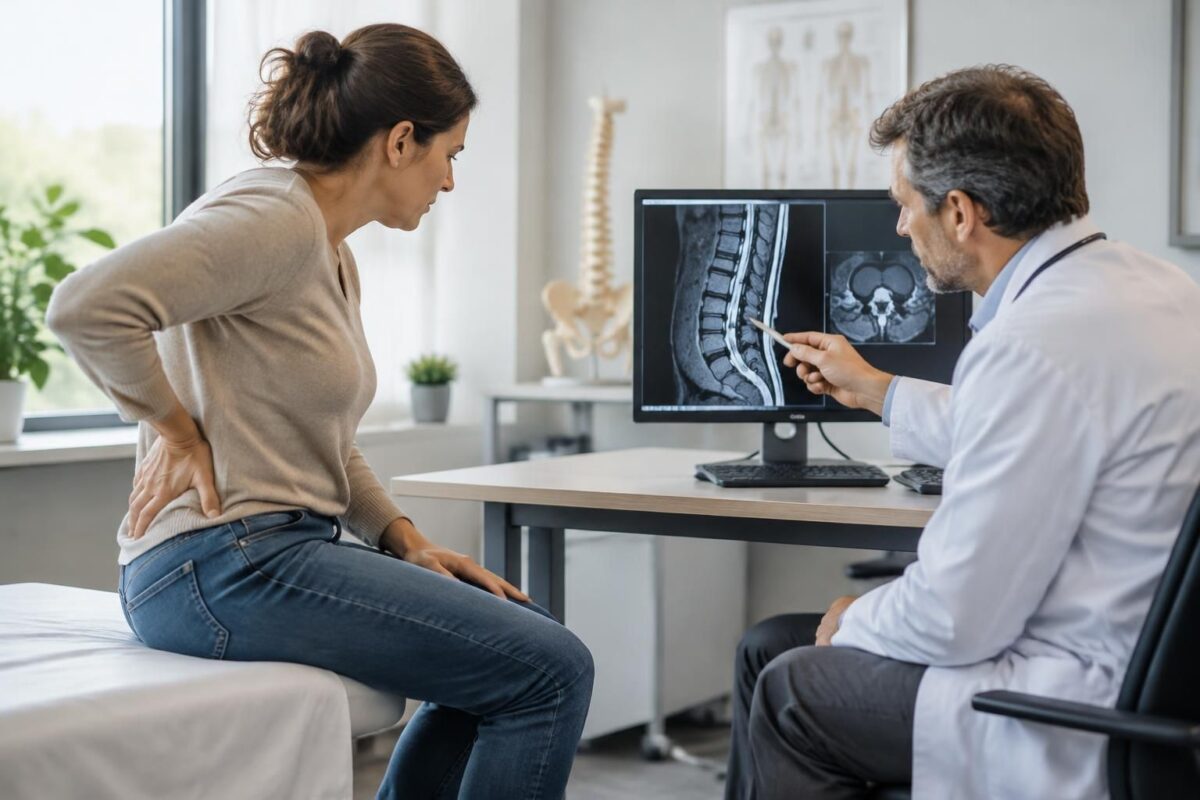
Disc bulge and sciatica: possible cause or simple discovery?
IN SHORT A disc bulge is a diffuse protrusion of a disc, sometimes associated with sciatica, but often discovered incidentally on imaging. To determine if it explains symptoms, one must compare the image to their path, the neurological examination, and…
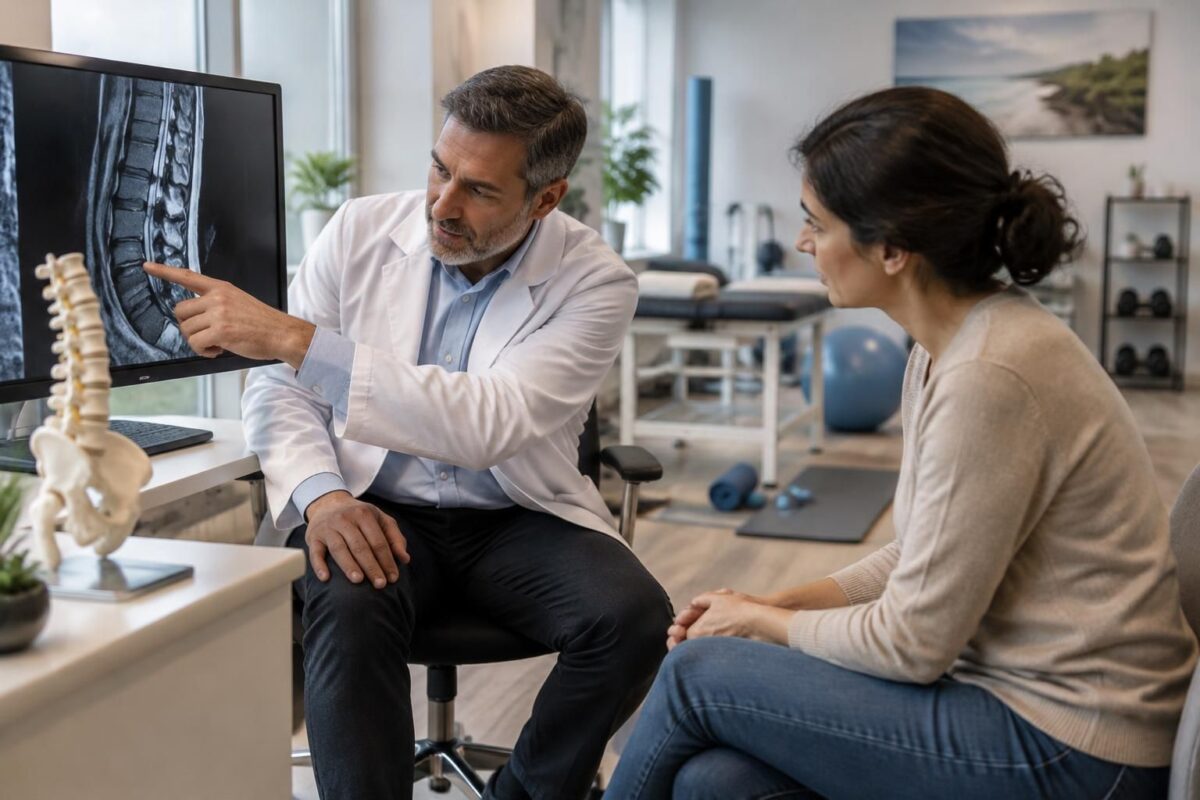
Lumbar Disc Protrusion and the Choice of a Non-Surgical Approach
IN SHORT A disc protrusion is a bulging of a disc between the vertebrae; it often does not cause any symptoms. If it is accompanied by pain, a non-surgical approach may include appropriate activity, prescribed medications, and progressive rehabilitation. It…

Sylvain Desforges, B.Sc., D.O., N.D., docteur en ostéopathie
Dr Sylvain Desforges, B.Sc., D.O., N.D., osteopath, is the founding president of TAGMED and of the ACMA association. He dedicates his practice to chronic spinal pain, low back pain and symptoms compatible with sciatica, particularly when pain radiates toward the buttock, leg, calf, foot or toes.
Through SOS Sciatique, he publishes educational content on sciatica symptoms, possible causes such as disc herniation, disc narrowing, foraminal stenosis or irritation of a lumbar nerve root, as well as non-surgical approaches that may be considered according to the evaluation. At Clinique TAGMED, care may include, depending on the case, motorized neurovertebral decompression, specific osteopathic care or precision percussion.
For an evaluation related to sciatica treatment in Montreal / Mount Royal or sciatica treatment in Terrebonne, please consult the services available at Clinique TAGMED.
Medical disclaimer
The information published on SOS Sciatique is provided for educational purposes only and does not replace a consultation, diagnosis, opinion or treatment provided by a physician or another authorized healthcare professional. The author of this article is neither a medical doctor nor a specialist in a medical specialty recognized by the Collège des médecins du Québec. The osteopathic, manual medicine or functional support approaches described on this site do not constitute medical acts and are not intended to replace medical follow-up.
Consult a physician or emergency service in cases of loss of bladder or bowel control, anesthesia in the saddle area, significant or progressive weakness in the leg or foot, fever, recent trauma, severe pain or rapid worsening of symptoms. For more details, please read our Legal Notice.