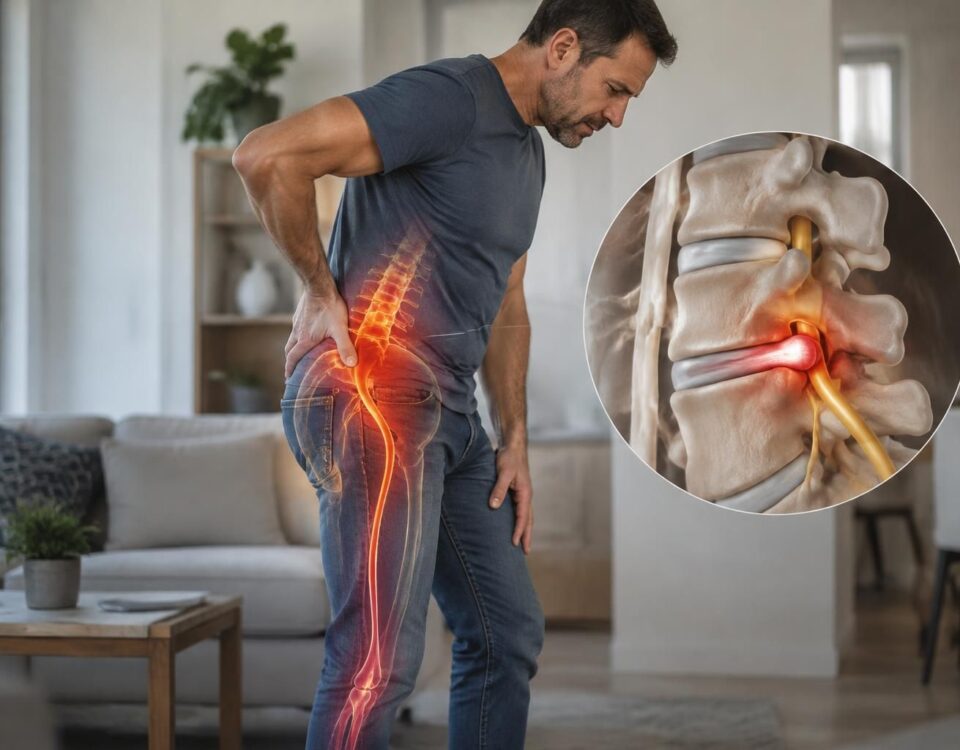
Sciatica L5-S1 in Terrebonne: why the pain can radiate down to the foot
13/10/2026
Sciatica L4-L5 in Montreal: Possible pain, numbness, and weakness
14/10/2026
IN BRIEF A disc protrusion is an intervertebral disc that bulges without necessarily breaking its outer covering. Pain may increase when sitting and sometimes radiate into the buttock or leg, like sciatica. Alternating positions, moving regularly, and following a suitable rehabilitation program can help improve mobility and manage symptoms. In Montréal and Terrebonne, an assessment helps direct the management based on the situation. |
Disc Protrusion and Increased Pain When Sitting
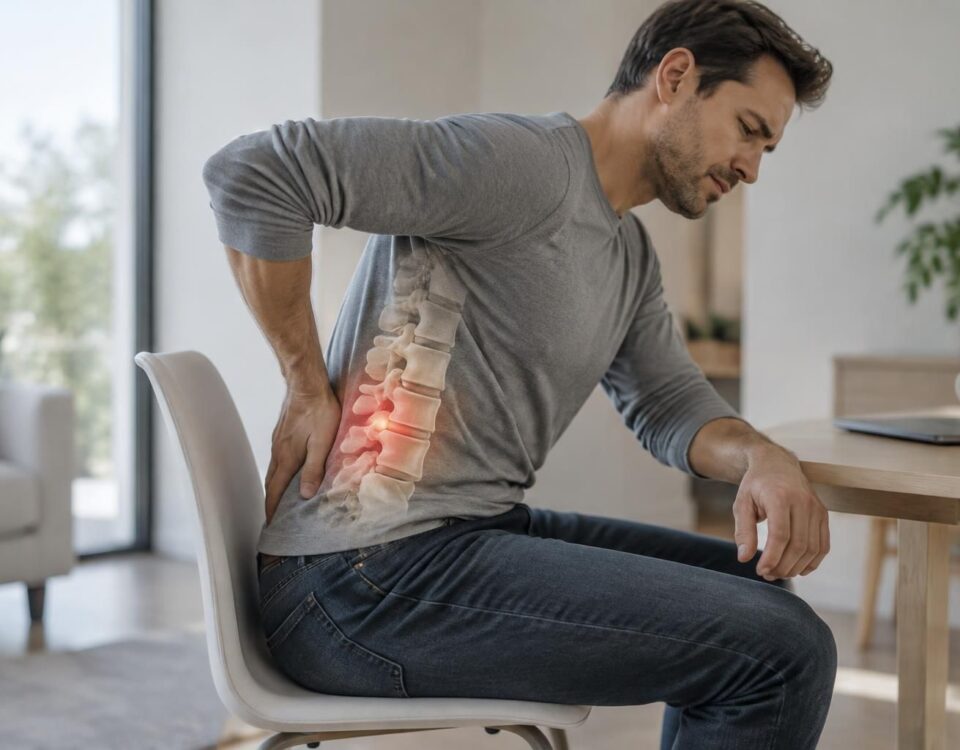
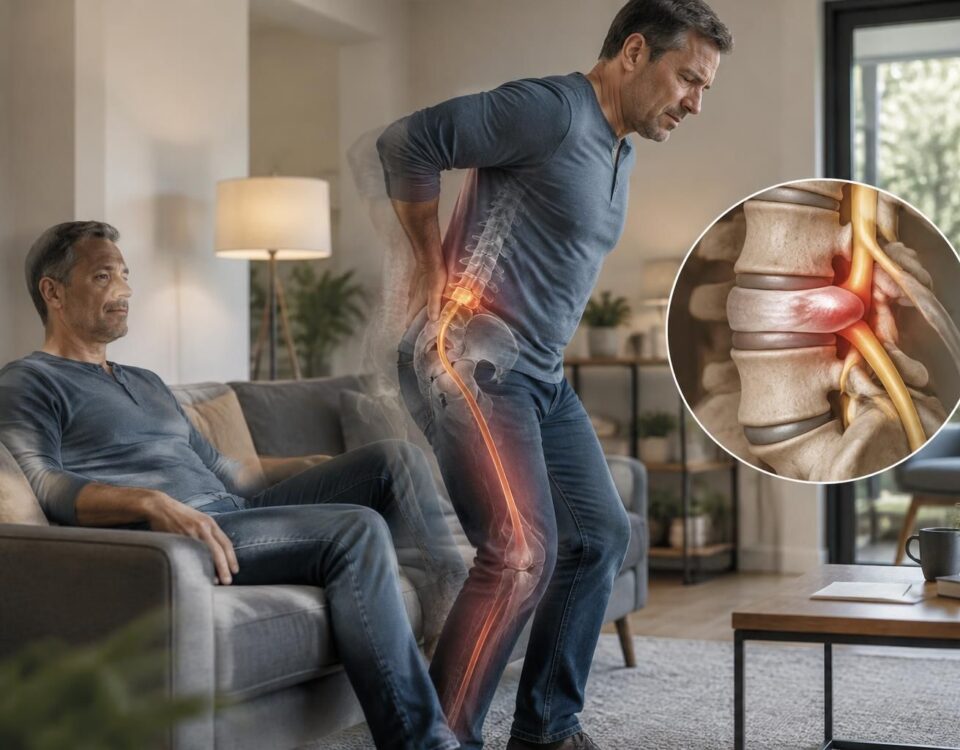
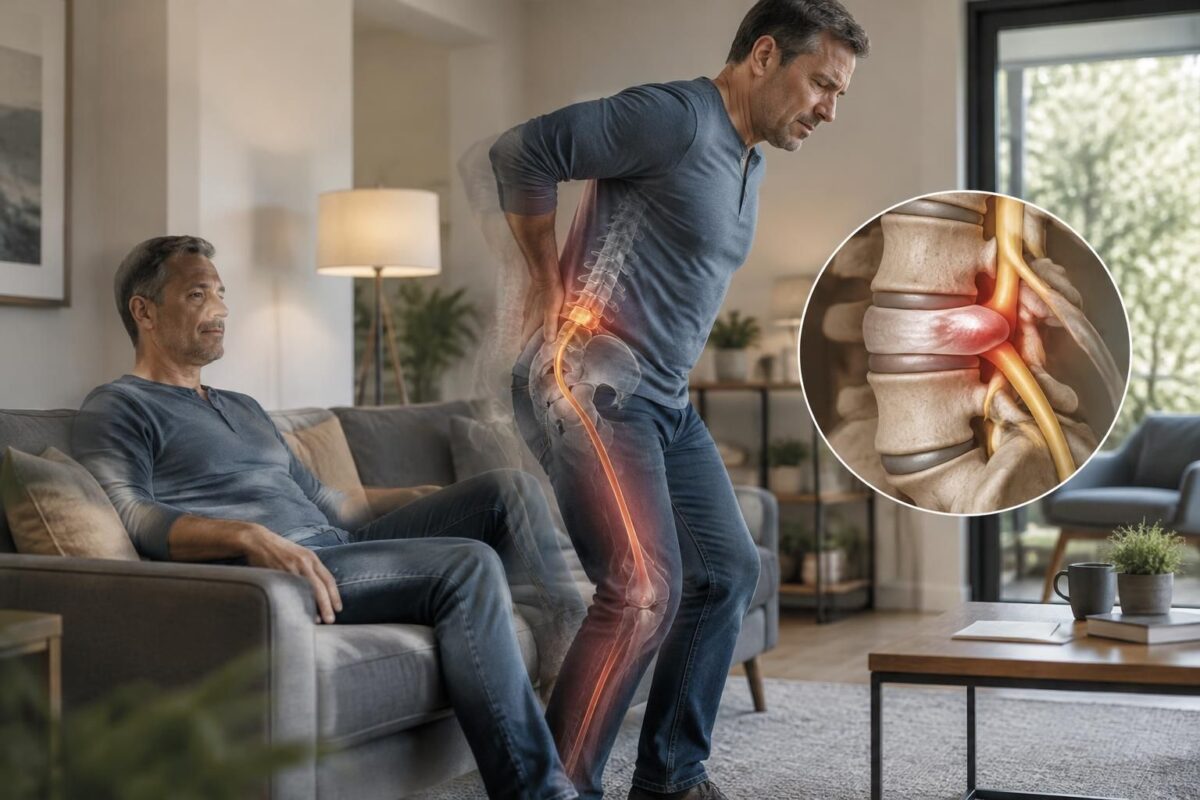
A disc protrusion can sometimes irritate a nerve root and cause pain in the lower back, buttock, or leg. Prolonged sitting may exacerbate symptoms in some individuals, especially if it increases pressure on the lumbar region or leads to uncomfortable posture. However, a protrusion visible on imaging is not always the cause of pain.
Alternating positions, taking short breaks to walk, and gradually resuming adapted movements can help better tolerate the day. If pain persists or worsens, seek an evaluation from a healthcare professional. Consult promptly in case of significant or progressive weakness, loss of bladder or bowel control, or numbness in the saddle area.
An increase in pain while sitting may accompany a disc protrusion, especially in the lower back, but this sign alone is not sufficient to confirm the cause. Posture, duration spent sitting, and irritation of a nerve root can influence symptoms. A professional examination helps differentiate disc pain from other issues and choose appropriate management. A disc protrusion refers to a localized deformation of the disc between two vertebrae. The disc bulges, but its outer covering remains largely intact. A protrusion may be visible on imaging without causing pain. Symptoms depend notably on its location and potential contact with nerve structures. Maintaining a seated position may increase pressure on lower back structures and make certain pains more sensitive. Sustained maintenance of the same posture can also increase stiffness and discomfort. However, sitting pain does not automatically mean a protrusion is compressing a nerve. To learn more about the differences between protrusion and herniation, consult this information on disc problems and sciatica. When seated, the pelvis and lower back often remain in a fixed posture. If this position irritates an already sensitive area, pain may gradually increase. Leaning forward, staying long without changing posture, or sitting on an uncomfortable surface may also heighten discomfort in some individuals. Reactions vary from person to person. Some mainly feel localized pain in the lower back. Others experience pain radiating down to the buttock or leg. A stronger pain in the leg than in the back may indicate nerve irritation, but it alone does not allow for a diagnosis. You may consult this article on leg pain associated with disc injury. A symptomatic lumbar protrusion may be accompanied by pain in the lower back, buttock, or leg. Tingling, numbness, or weakness may occur if a nerve root is irritated. Pain may vary with movements and positions. A cervical protrusion may rather cause neck pain radiating to the shoulder or arm. Numbness in the foot can have several causes. It deserves evaluation, especially if persistent, worsening, or accompanied by a loss of strength. To better understand this symptom, read our page on disc protrusion and foot numbness. A protrusion does not always compress a nerve. A healthcare professional compares symptoms with the clinical examination and, when necessary, with imaging results. An MRI image must be interpreted in the context of the history and clinical signs, as some disc anomalies are present in individuals without pain. The location of the protrusion also matters. A central lesion and one located near a nerve root can produce different symptoms. To delve deeper into this topic, consult information on mechanical nerve compression and central protrusion or herniation and sciatica pain. The evaluation begins with a discussion about the pain, positions that exacerbate it, and associated symptoms. The professional then checks mobility and certain neurological signs, such as sensitivity and strength. These elements help determine if a further medical evaluation is indicated. An MRI is not necessary in all cases. A doctor may request it if the symptoms, examination, or their evolution justify it. Imaging helps visualize the discs and nearby structures, but it does not solely determine the origin of the pain. For general explanations, consult SOS Sciatique information on sciatica and disc disorders. Avoid maintaining a posture that significantly increases your symptoms for long periods. You can vary your positions and arrange your workspace to keep a comfortable support for your back and feet. Regular breaks to change posture can help limit discomfort related to prolonged sitting. If a movement or activity exacerbates the pain radiating down the leg, stop it and seek advice from a professional. Treatment depends on the evaluation, the intensity of symptoms, and their evolution. A conservative approach may be considered when the situation allows. At the TAGMED Clinic, options may include specific osteopathy or motorized neurovertebral decompression, after evaluation and according to the individual’s profile. These approaches are not suitable for everyone and do not replace a medical diagnosis. To learn about available services, consult the TAGMED Clinic in Montréal or Terrebonne. An assessment helps check if these treatments are suitable for your symptoms or if a medical consultation is preferable. Consult a doctor or emergency service without delay in case of loss of bladder or bowel control, numbness in the saddle area, or significant or progressive weakness of a leg or foot. Also seek quick evaluation if the pain is severe, rapidly worsening, occurs after trauma, or is accompanied by fever. Sylvain Desforges, B.Sc., D.O., N.D., Doctor of Osteopathy is the founding president of TAGMED and the ACMA association. He dedicates his practice to chronic pain of the spine, lower back pain, and pain consistent with sciatica, particularly when the pain radiates down to the buttock, leg, calf, foot, or toes. Through SOS Sciatique, he publishes educational content on sciatica symptoms, possible causes such as herniated discs, disc pinching, foraminal stenosis, or irritation of a lumbar nerve root, as well as non-surgical approaches that may be considered based on assessment. At TAGMED Clinic, care may include, depending on the case, motorized neurovertebral decompression, specific osteopathy, or a precision impactor. For an evaluation related to sciatica treatment in Montreal / Mont-Royal or sciatica treatment in Terrebonne, consult the services available at TAGMED Clinic. Medical disclaimer: The information and advice provided on this site do not replace the opinion, diagnosis, or treatment of a healthcare professional. Please note that Sylvain Desforges, B.Sc., D.O., N.D., Doctor of Osteopathy, is neither a medical doctor nor a physician, and is not a specialist in a medical specialty as defined by the Collège des médecins du Québec. Manual medicine, functional medicine, and sports medicine as described on this site exclude any medical treatment or diagnosis made by a physician or medical specialist. Always consult your doctor for any medical questions. For more details, please read our Complete Legal Notice.Why Sitting Position May Worsen Symptoms
What Symptoms May Accompany a Disc Protrusion?
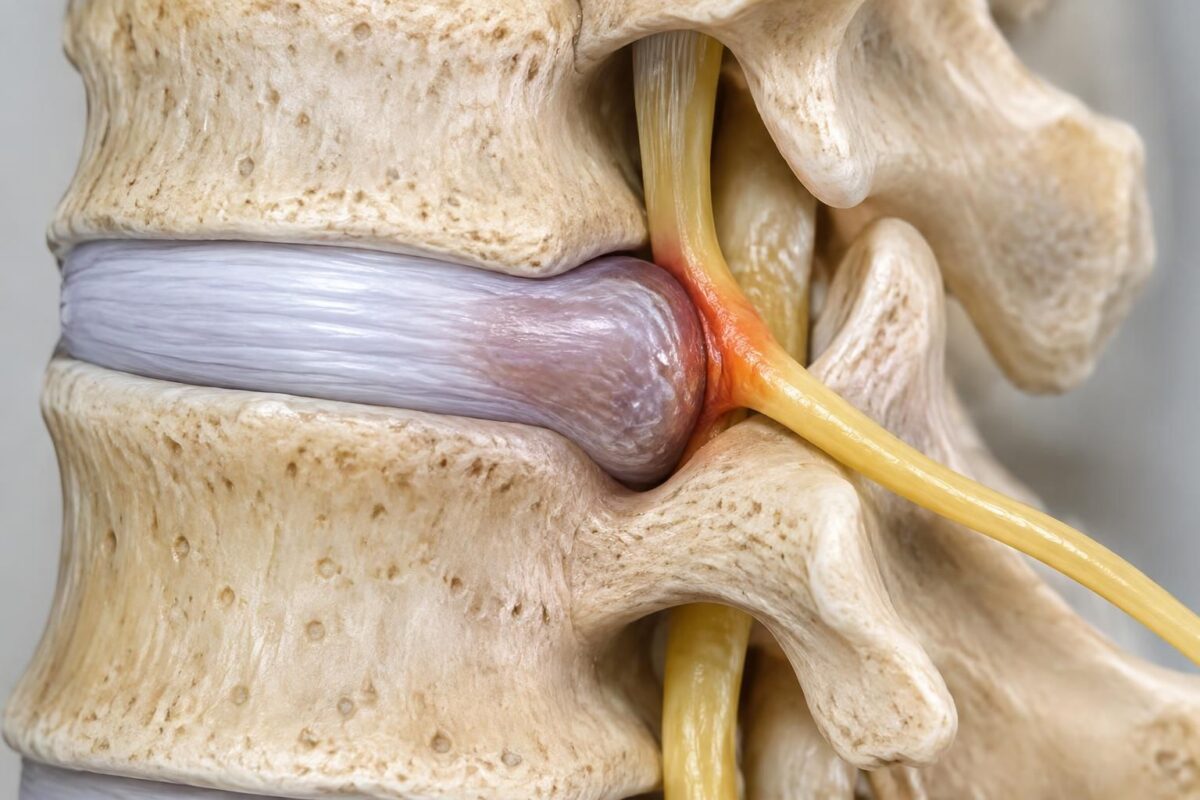
Protrusion and Nerve Compression
How is the Diagnosis Established?
What to Do When Pain Increases When Sitting?
When to Consult Promptly?
About the Author
What sitting pain can mean
- The sitting position can increase pressure on the lower back.
- Pain in the buttock or leg can indicate nerve irritation.
- This symptom alone does not confirm a disc protrusion.
Useful daily gestures
- Change position and walk for a few minutes regularly.
- Try lumbar support and avoid sitting for long periods without a break.
- Request an evaluation if the pain persists or worsens.
- Consult quickly in case of progressive weakness or urinary or bowel issues.

A disc protrusion may sometimes be accompanied by pain that increases while sitting, especially when this posture is prolonged or uncomfortable. However, this does not automatically mean that the disc is the cause of the symptoms: the evaluation must consider their evolution, location, and clinical examination. Here are guidelines to adapt your activities, reduce sitting periods, and know when to ask for help.
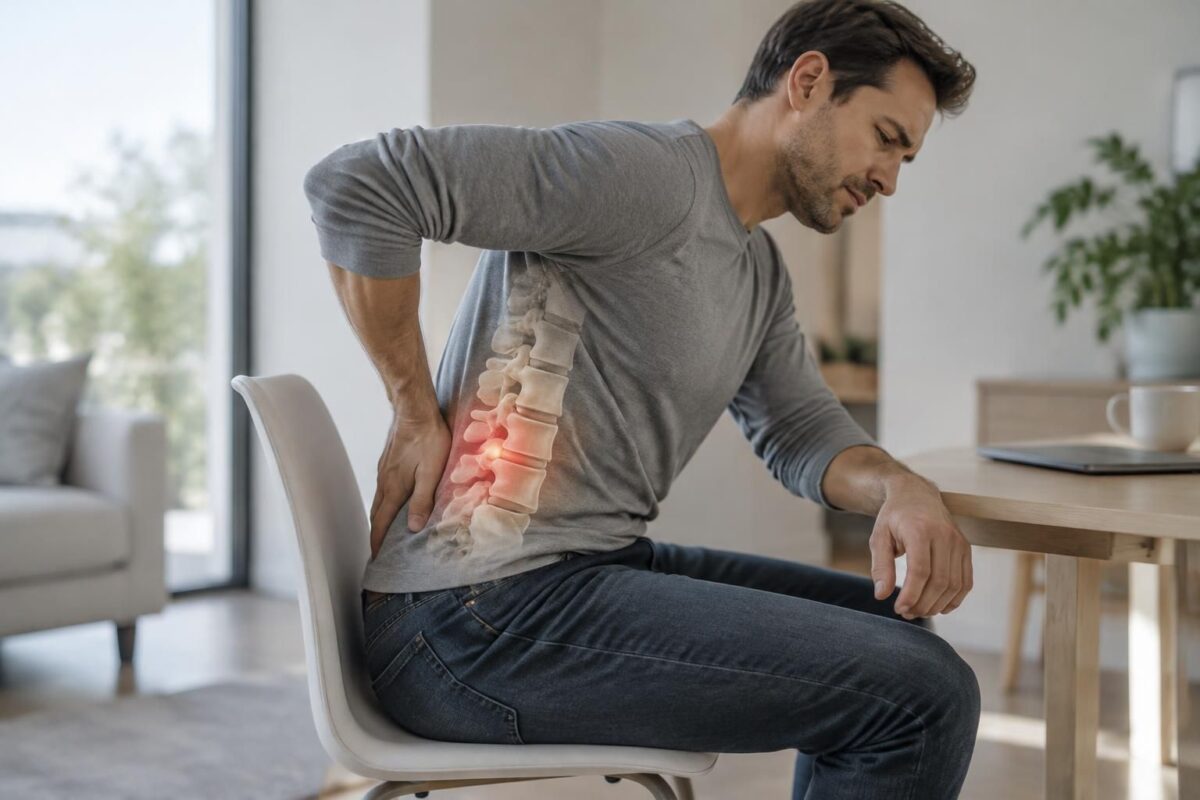
Disc bulge and pain in sitting position
IN BRIEF A disk bulge is a protrusion of a disk between the vertebrae; it does not always cause symptoms. Prolonged sitting can accentuate lower back pain and sometimes pain that radiates into the buttock or leg. Varying positions, moving…
Disc herniation and fluctuating symptoms
IN BRIEF A disc bulge is a protrusion of the disc between the vertebrae, which may not necessarily cause symptoms. When pain fluctuates, its intensity can vary based on movements, activities, and other factors; the bulge visible on MRI does…
Why can pain increase while sitting?
Sitting for a long time can keep the lower back in a minimally variable posture and increase the sensitivity of certain structures. Pain may also be influenced by muscle fatigue, stress, lack of movement, or a position that does not suit you. Some people feel pain in the lower back; others experience radiation to the buttocks or leg, sometimes accompanied by tingling.
A protrusion seen in imaging does not always explain the symptoms: disc changes may be present without pain. Therefore, avoid drawing conclusions based solely on an MRI result. A healthcare professional can correlate your symptoms, your examination, and, if necessary, imaging tests.
Disc bulge and mild nerve compression
IN BRIEF A disc bulge with mild nerve compression occurs when a disc slightly protrudes and may irritate a nerve, sometimes causing pain, tingling, or numbness. Symptoms and imaging do not always align: the assessment takes into account your movements…
Disc herniation and foraminal irritation
IN BRIEF A disc bulge can reduce the space of the foramen, the opening through which a nerve exits, and contribute to its irritation. This can cause lower back pain radiating into the buttock or leg, tingling, or numbness. An…
Adapting sitting position and breaks
Often modify your posture
There is no perfect posture to maintain all day. Instead, try to regularly vary your position and stand up before the pain becomes too strong. A short walk or some gentle movements may be preferable to a long period of sedentary sitting. Adjust the frequency of breaks to your tolerance and activities.
Make the workspace more comfortable
Position the screen at a height that allows you to keep your head relaxed, bring frequently used objects closer, and choose a stable chair. A small lumbar support may be comfortable for some people, but it is not essential for everyone. If a position significantly worsens your symptoms, change it rather than maintaining it out of principle.
Disc bulge L5-S1 and pain toward the foot
IN SHORT A L5-S1 disc bulge corresponds to a disc that slightly overruns between the last lumbar vertebra and the sacrum. It can irritate a nerve root and cause pain resembling sciatica down to the foot, but this anomaly visible…
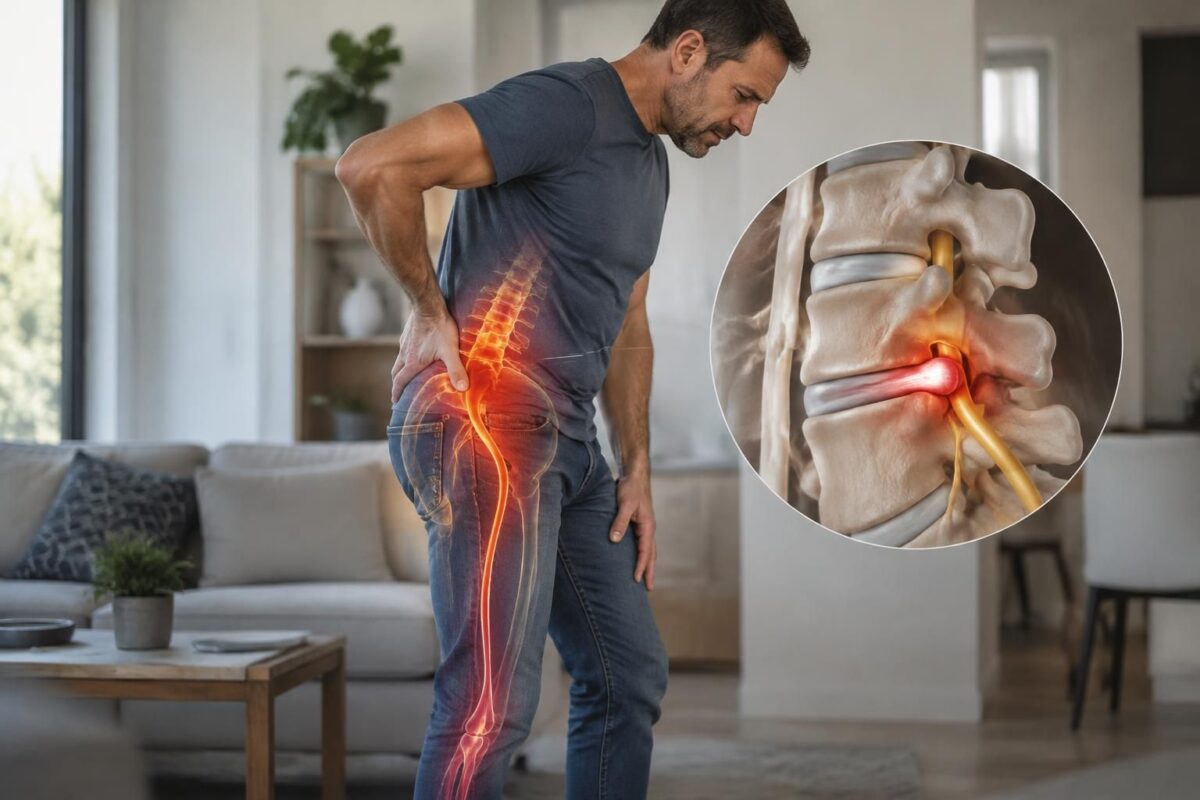
Disc herniation L4-L5 and leg pain
IN BRIEF A L4-L5 disc bulge is a protrusion of the lumbar disc that can contribute to pain in the buttock or leg if a nerve root is irritated. An MRI in a neutral position does not always show what…
Gradually resume movement
As long as it remains tolerable, maintain light daily activities, such as walking. The goal is to preserve appropriate mobility without seeking pain or forcing through marked aggravation. Also, avoid prolonged bed rest, which can contribute to stiffness and loss of physical condition.
Mobility or strengthening exercises may be helpful, but their choice depends on the symptoms and the individual. A movement that relieves one person may irritate another: do not automatically start back extensions, intense stretches, or core exercises without verifying that they are suitable for you. A kinesiologist or another qualified professional can propose individualized progressions and adjust exercises if pain increases.
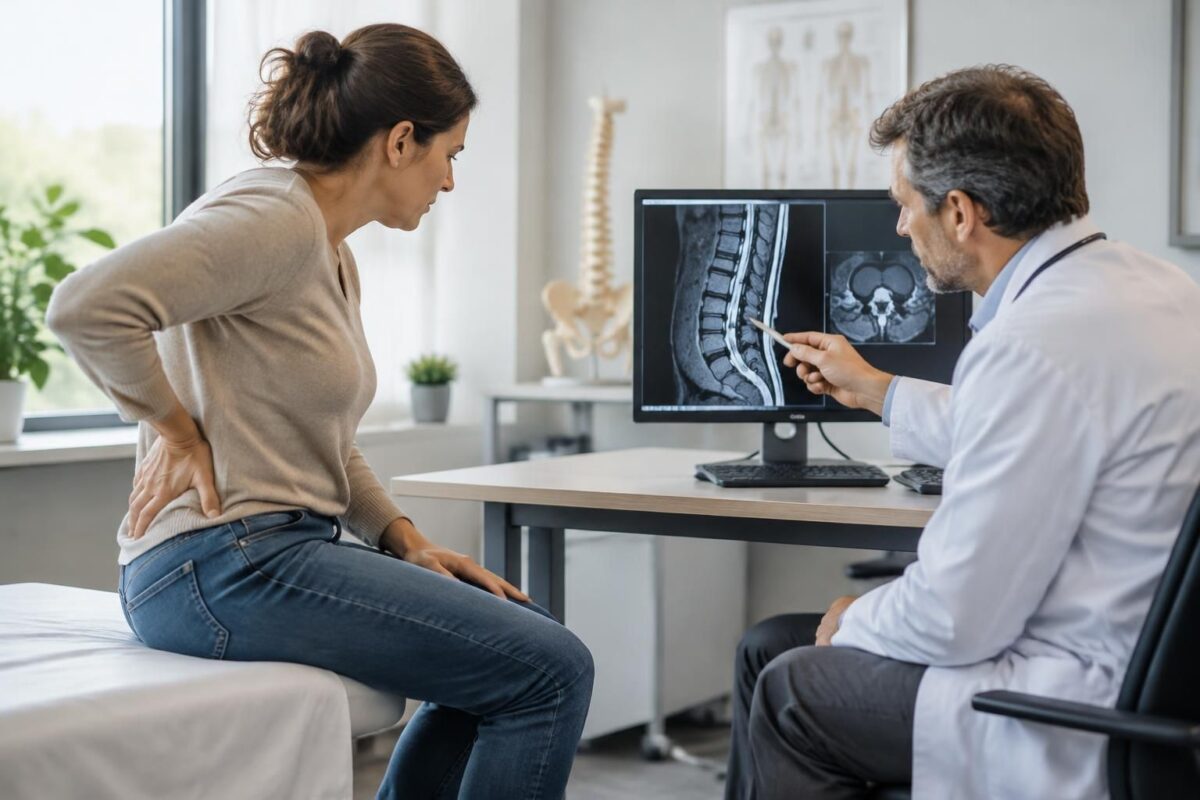
Disc bulge and sciatica: possible cause or simple discovery?
IN SHORT A disc bulge is a diffuse protrusion of a disc, sometimes associated with sciatica, but often discovered incidentally on imaging. To determine if it explains symptoms, one must compare the image to their path, the neurological examination, and…
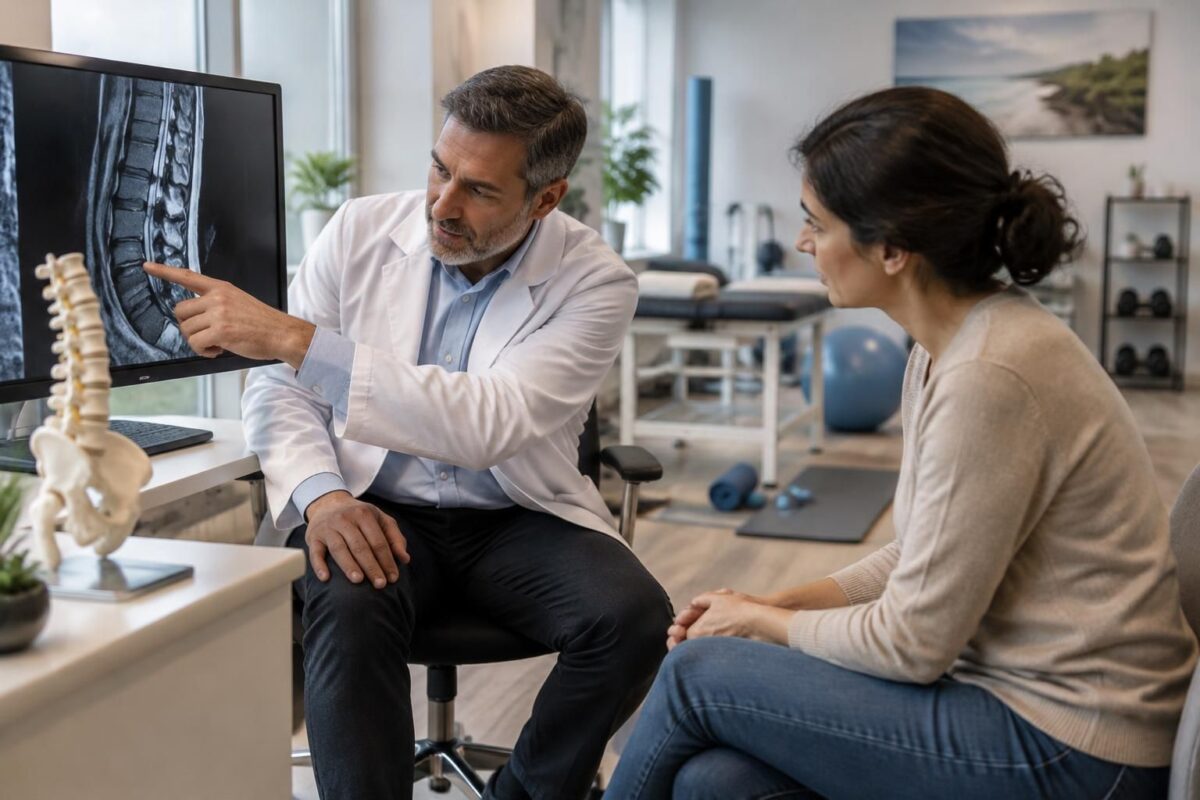
Lumbar Disc Protrusion and the Choice of a Non-Surgical Approach
IN SHORT A disc protrusion is a bulging of a disc between the vertebrae; it often does not cause any symptoms. If it is accompanied by pain, a non-surgical approach may include appropriate activity, prescribed medications, and progressive rehabilitation. It…
When to seek a professional evaluation?
Consult a healthcare professional if the pain persists, returns frequently, radiates down the leg, or limits your activities. An evaluation can check, in particular, strength, sensitivity, and reflexes, and then discuss appropriate care. The time for improvement varies; it cannot be predicted solely from the term “disc protrusion”.
Quickly consult a medical service in case of significant or worsening weakness in a leg or foot, loss of sensation around the genital area or anus, or new difficulty controlling the bladder or bowels. These signs require urgent evaluation.
Medical warning: this information is educational and does not replace a consultation, diagnosis, or treatment by a licensed healthcare professional.
| To observe | Useful marker |
|---|---|
| Increased pain when sitting | May be related to posture or disc irritation, without confirming a protrusion. |
| Pain that decreases with movement | Alternating positions may help reduce discomfort. |
| Pain radiating to the buttock or leg | Nerve irritation is possible; an evaluation may be indicated. |
| Tingling or numbness | Note their location and progression. |
| Weakness in the leg or foot | Consult quickly if it appears or worsens. |
| Prolonged sitting | Take regular breaks and gradually resume movement. |
| Loss of bladder or bowel control | Consult an emergency service immediately. |
Testimonials: disc protrusion and worsening pain when sitting
Note: the testimonials below are fictional and serve to illustrate possible experiences. They do not describe real patients and do not predict the evolution of a disc protrusion. A protrusion visible on imaging is not always the cause of symptoms: the evaluation must take into account the clinical examination and the entire history.
Émilie, 42 years old — “Staying seated became difficult”
“My lower back pain increased after a long period in front of the computer. Sometimes it radiated down to my buttock. I initially thought I just needed to avoid moving, but regular breaks and a gradual return to walking helped me tolerate my days better. I also consulted a professional to evaluate my symptoms and adjust my activities.”
Marc, 51 years old — “The car ride triggered the pain”
“Prolonged sitting in the car worsened my lower back pain and tingling in one leg. I learned to interrupt long trips with short breaks, change positions, and avoid straining when symptoms increased. My rehabilitation plan was adjusted according to my tolerance, rather than following random exercises.”
Nadia, 36 years old — “I was afraid that every movement would worsen the protrusion”
“After hearing about my disc protrusion, I dreaded moving. However, sitting for long periods often made my discomfort more pronounced. With appropriate support, I gradually resumed gentle movements and daily activities. I understood that my symptoms should guide progression and that the MRI image alone was not enough to determine what I could do.”
Luc, 59 years old — “I learned to break up my sitting periods”
“I would spend several hours seated without interruption and would get up with a stiff back. I started alternating positions and taking short active breaks. This did not immediately make the pain go away, but it helped me organize my days more comfortably. Professional follow-up allowed me to check which adjustments suited my situation.”
Increased pain when sitting can have various causes and does not, by itself, confirm a disc protrusion. If the pain persists, intensifies, or is accompanied by radiation, numbness, or weakness, seek an evaluation from a healthcare professional. Exercises and activity changes should be tailored to your symptoms; stop any movement that causes a significant worsening.
Consult a doctor or emergency service quickly in case of loss of bladder or bowel control, numbness in the saddle area, significant or progressive weakness of the leg or foot, fever, recent trauma, severe pain, or rapid deterioration.
About the author
Sylvain Desforges, B.Sc., D.O., N.D., Doctor of Osteopathy, is the founding president of TAGMED and the ACMA association. His practice focuses primarily on chronic spinal pain, lower back pain, and pain compatible with sciatica, based on each person’s evaluation.
Medical warning
This information is provided for educational purposes and does not replace a consultation, diagnosis, advice, or treatment by a physician or another licensed healthcare professional. The author is neither a physician nor a specialist in a medical specialty recognized by the Collège des médecins du Québec. Osteopathy, manual medicine, or functional support approaches do not constitute medical acts and do not replace medical follow-up.
Disc protrusion and pain that increases when sitting
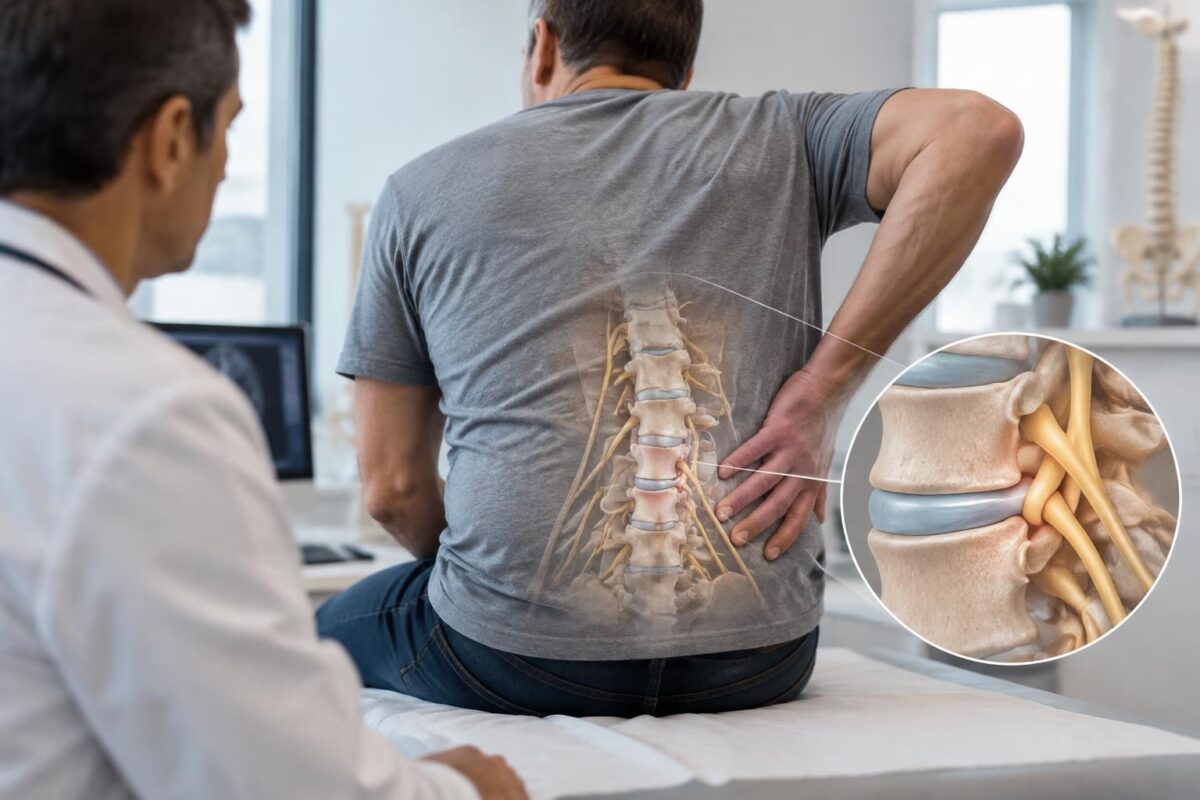
A disc protrusion corresponds to a localized deformation of a disc between two vertebrae. The disc protrudes, but its outer shell generally remains intact. This image may seem alarming; however, it does not automatically mean that there is a painful lesion: some protrusions are discovered incidentally and cause no symptoms. The importance of the diagnosis therefore lies in the alignment between imaging results, signs observed during examination, and difficulties encountered in daily life.
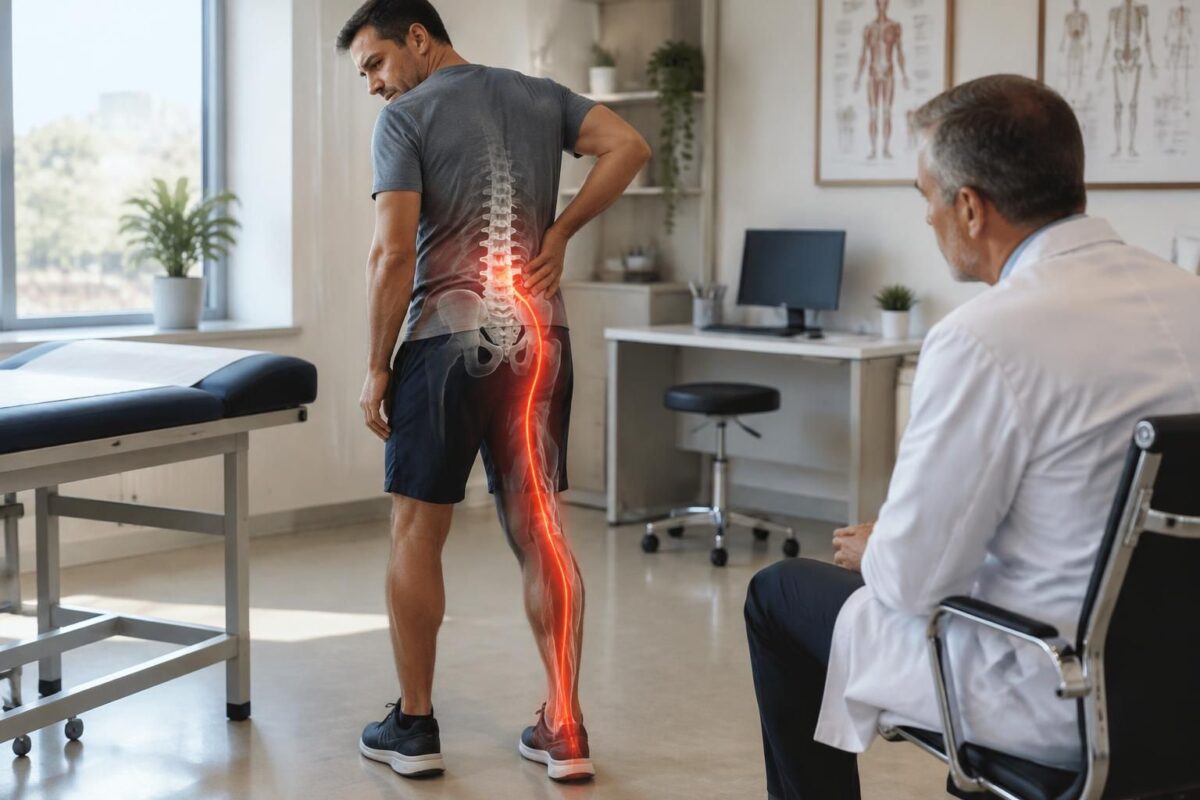
When the protrusion involves the lower back, the pain may remain localized or radiate to the buttock and leg. Tingling, numbness, or a feeling of weakness may also occur if a nerve root is irritated. Some people notice that their symptoms increase when sitting. This reaction may be related to the duration of the posture, the position of the pelvis and back, or the sensitivity of nerve structures; however, it does not alone determine the exact cause of the pain.
Prolonged sitting can maintain the back in a little varied posture and make movement more uncomfortable when getting up. A chair, a workstation, or prolonged driving can also contribute to irritation in some individuals. It is not necessary to try to maintain a “perfect” posture at all times: the goal is rather to limit immobility, vary positions, and identify gestures that truly worsen the symptoms. Regular pauses to walk for a few minutes may be more beneficial than maintaining a rigid posture all day.
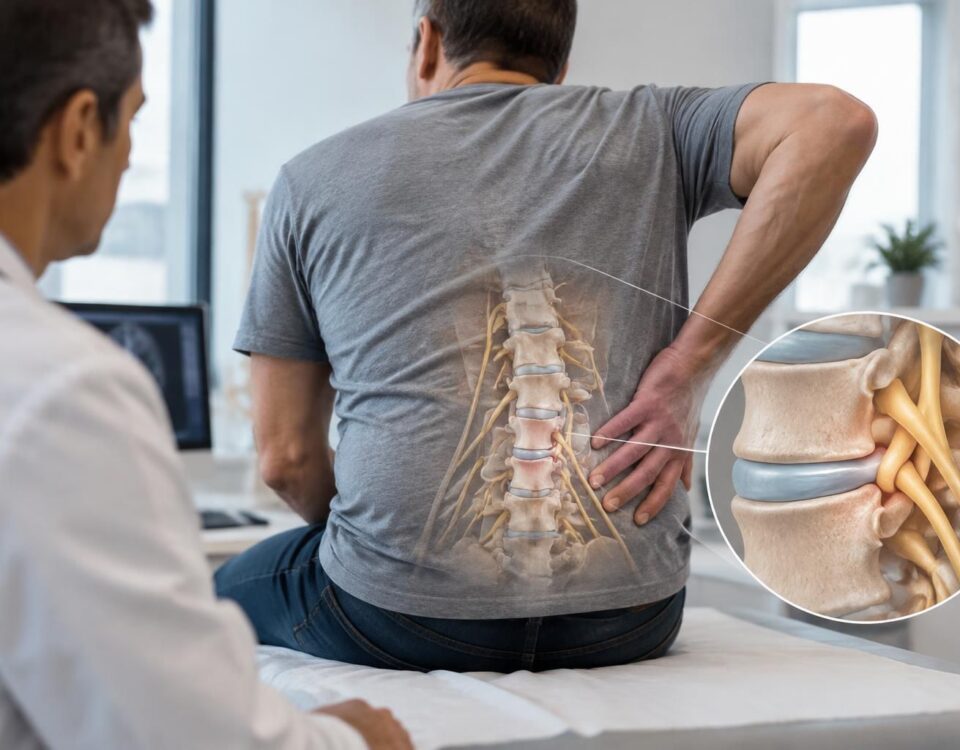
The evaluation begins with the history of symptoms and a clinical examination: location of pain, difficult movements, sensitivity, muscle strength, and reflexes. A healthcare professional can determine if imaging, such as an MRI, is indicated. Images must be interpreted cautiously, as a visible protrusion does not always explain the pain. The examination also serves to distinguish nerve irritation from other possible causes and to choose an appropriate management strategy.
Most situations are first approached in a conservative manner, depending on the individual’s needs and tolerance. The plan may include a gradual resumption of activities, personalized mobility and strengthening exercises, as well as advice on managing sitting periods. Physiotherapy and certain manual approaches may be considered after assessment. Motorized neurovertebral decompression, laser, or shockwave therapy may not be suitable for everyone and do not guarantee results; their relevance should be discussed on a case-by-case basis. Medications and further examinations fall under a licensed professional.
The duration of improvement varies depending on the person, the intensity of symptoms, and their evolution. It is preferable to progress without forcing through significant pain and to have the symptoms re-evaluated if they persist, worsen, or severely limit activities. Marked or progressive weakness, loss of sensation in the saddle region, or difficulty controlling the bladder or bowels require urgent medical evaluation.
Sylvain Desforges, B.Sc., D.O., N.D., is an osteopath and founding president of TAGMED clinics and the ACMA association. His practice focuses in particular on the management of chronic pain and the integration of manual approaches and technologies such as spinal decompression, laser, and shockwave therapy, based on the evaluation of each situation. Any approach must be part of careful monitoring and does not replace a diagnosis or medical follow-up.
A pain that increases in a sitting position may accompany a lumbar disc protrusion, but this symptom alone is not enough to establish a diagnosis. The time spent sitting, posture, nerve sensitivity, and other factors can contribute to the pain. Clinical evaluation helps to determine whether the protrusion observed on imaging actually corresponds to the symptoms and to choose appropriate measures to preserve mobility.
Why can sitting exacerbate pain?
Prolonged sitting can increase discomfort in some individuals, especially when the position is maintained without breaks or leads to prolonged trunk flexion. However, the reaction varies from person to person: there is no single posture that relieves everyone. To better understand the effects of different positions, see this guide on sitting positions and disc pain.
A protrusion refers to a localized deformation of the disc, but its presence on imaging does not prove by itself that it is the cause of the pain. The severity of symptoms does not always correspond to the size of the protrusion: a small anomaly can be associated with marked pain, while a more visible protrusion may cause no symptoms. To delve into these nuances, consult the articles on significant pain despite a small protrusion and on disc protrusion.
Adjusting position and interrupting sitting periods
Rather than seeking a perfect posture, try to regularly vary your positions and get up to walk for a moment when tolerated. Lumbar support or chair adjustment can improve comfort, but it must be tailored to your needs. Additional advice can be found in this article on disc protrusion and posture.
It is also useful to note situations that change symptoms: time in a sitting position, movements, bending, coughing, or sneezing. Pain that radiates into the buttock or behind the thigh may be compatible with nerve irritation, without automatically confirming sciatica. For more information, see the pages on pain behind the thigh and nerve root irritation.
Rehabilitation and professional assessment
Rehabilitation can aim to maintain mobility, gradually resume activities, and develop strength and endurance depending on the individual’s abilities. Exercises should be adjusted: a movement that relieves one person may worsen the symptoms of another. Resources on physiotherapy care for disc protrusion and on causes, symptoms, and possible treatments can serve as educational references, without replacing a personalized assessment.
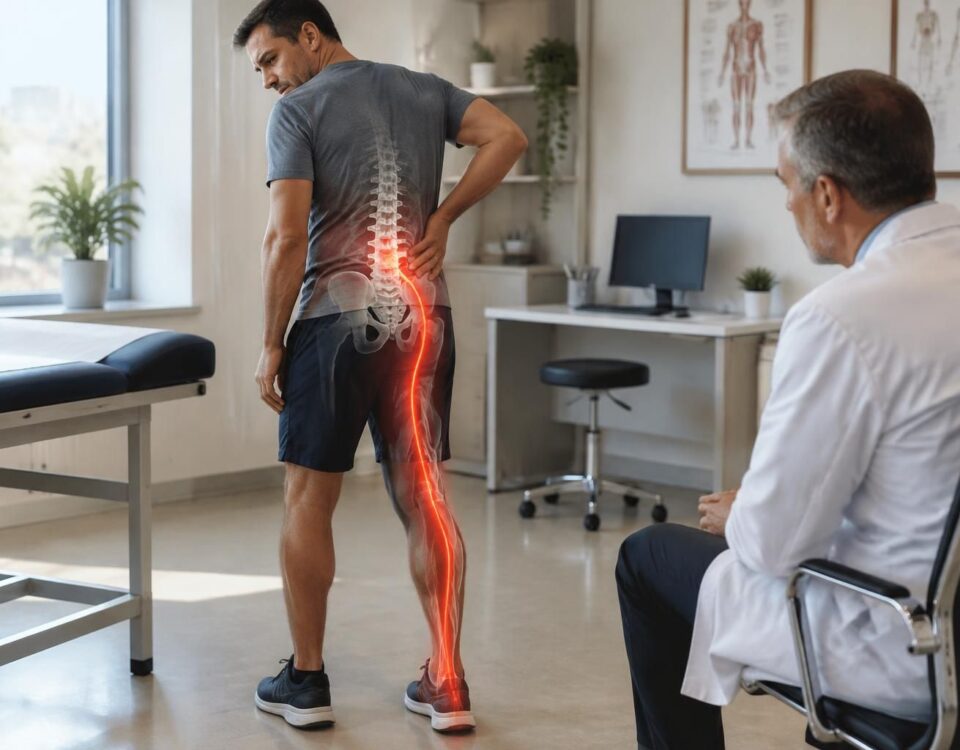
A healthcare professional can examine strength, sensitivity, reflexes, and movements that reproduce or alleviate symptoms. The assessment of muscle strength can help guide the evaluation. Pain radiating down the leg may sometimes exist even if the lower back hurts little; this possibility is explained in the article on pain related to a disc herniation without back pain.
When to seek a quick evaluation?
Consult a physician promptly if the pain significantly worsens, if weakness appears or progresses in the leg or foot, or if symptoms severely limit your activities. Loss of bladder or bowel control, numbness in the saddle area, or significant weakness require urgent care. These signs should not be attributed to mere discomfort related to sitting.

Sylvain Desforges, B.Sc., D.O., N.D., docteur en ostéopathie
Dr Sylvain Desforges, B.Sc., D.O., N.D., osteopath, is the founding president of TAGMED and of the ACMA association. He dedicates his practice to chronic spinal pain, low back pain and symptoms compatible with sciatica, particularly when pain radiates toward the buttock, leg, calf, foot or toes.
Through SOS Sciatique, he publishes educational content on sciatica symptoms, possible causes such as disc herniation, disc narrowing, foraminal stenosis or irritation of a lumbar nerve root, as well as non-surgical approaches that may be considered according to the evaluation. At Clinique TAGMED, care may include, depending on the case, motorized neurovertebral decompression, specific osteopathic care or precision percussion.
For an evaluation related to sciatica treatment in Montreal / Mount Royal or sciatica treatment in Terrebonne, please consult the services available at Clinique TAGMED.
Medical disclaimer
The information published on SOS Sciatique is provided for educational purposes only and does not replace a consultation, diagnosis, opinion or treatment provided by a physician or another authorized healthcare professional. The author of this article is neither a medical doctor nor a specialist in a medical specialty recognized by the Collège des médecins du Québec. The osteopathic, manual medicine or functional support approaches described on this site do not constitute medical acts and are not intended to replace medical follow-up.
Consult a physician or emergency service in cases of loss of bladder or bowel control, anesthesia in the saddle area, significant or progressive weakness in the leg or foot, fever, recent trauma, severe pain or rapid worsening of symptoms. For more details, please read our Legal Notice.