Sciatica and pain after sports
02/10/2026
Sciatica and walking after sitting: why the pain increases at the start
02/10/2026
IN BRIEF
| A sciatica is pain related to the irritation of a nerve root, sometimes caused by a <strongherniated disc. Pressure on the nerve can cause tingling, loss of sensation, or weakness in the leg. A healthcare professional can assess the cause and propose appropriate care. Consult quickly in cases of significant or progressive weakness, loss of control of urination or bowel movements, or numbness in the saddle region. |
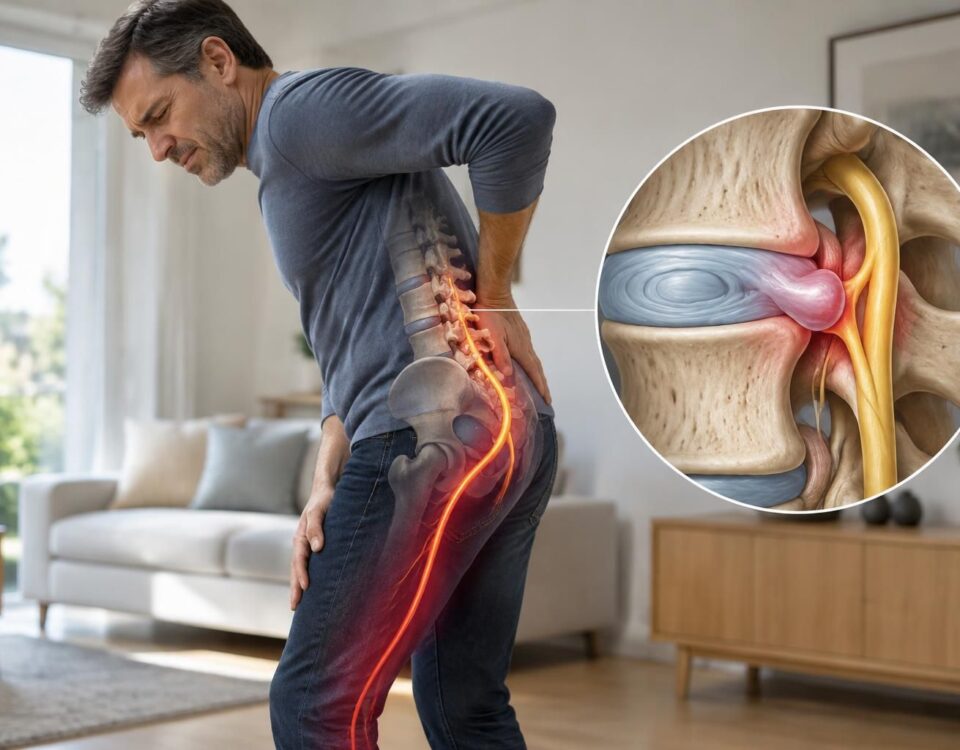
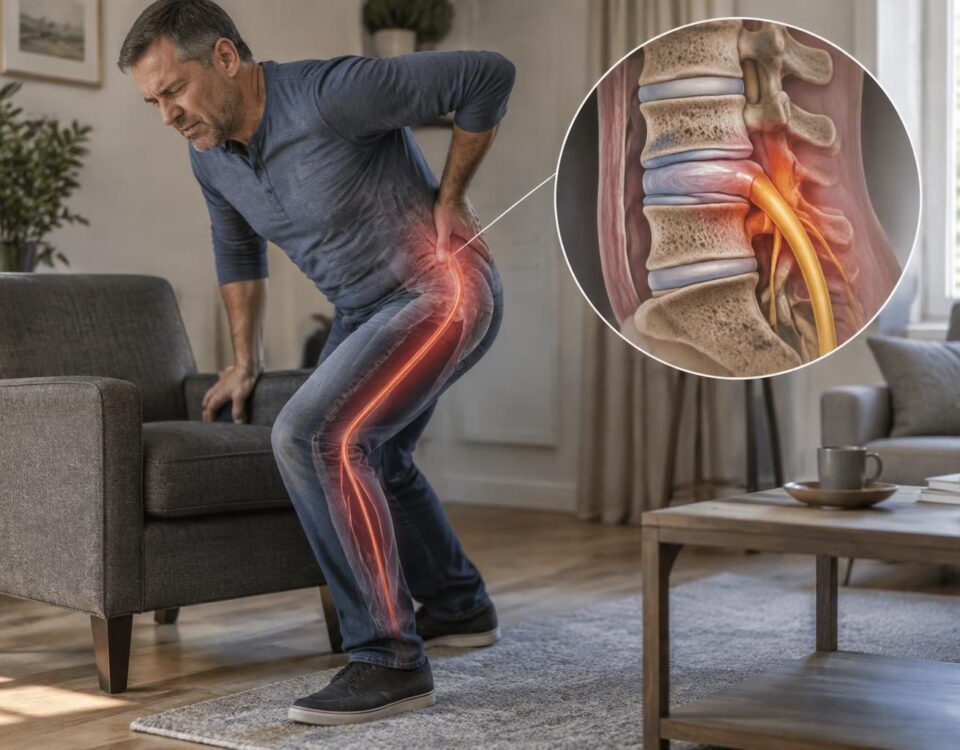
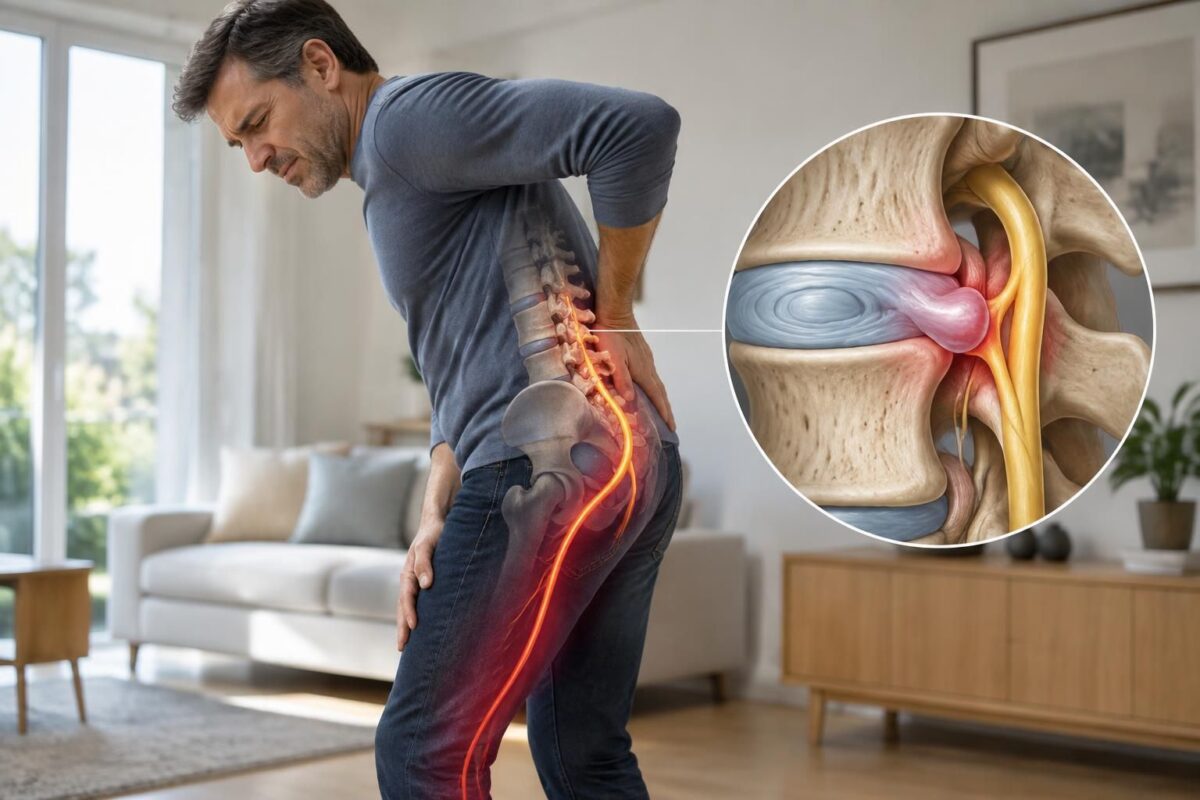
A herniated disc can irritate or compress a nerve root in the lower back. When this irritation affects the nerves linked to the sciatic nerve, it can cause pain that radiates into the buttock and leg, as well as tingling, numbness, or weakness. The affected area varies depending on the involved nerve root.
However, numbness is not always caused by a herniated disc. An evaluation by a healthcare professional helps determine the origin and choose the appropriate course of action. Consult quickly if weakness progresses; loss of control of urination or bowel movements, or numbness in the saddle region requires urgent care.
A herniated disc can irritate or compress a nerve root in the lower back. This irritation can cause pain radiating down the leg, as well as tingling, loss of sensation, or weakness. However, numbness is not always related to a herniated disc: an evaluation by a healthcare professional helps determine the cause and choose the appropriate follow-up. Intervertebral discs are located between the vertebrae. They cushion stresses and contribute to the mobility of the spine. A herniated disc occurs when part of the disc protrudes beyond its usual position. If this protrusion irritates a lumbar nerve root, symptoms may appear in the area supplied by that nerve. The sciatic nerve is formed from nerve roots in the lower back. It passes into the buttock and descends into the leg down to the foot. Irritation of one of these roots can therefore lead to sensations in the leg, even if the problem is located in the back. Pain may sometimes be more pronounced in the leg than in the lower back. To learn more, consult this article on pain stronger in the leg than in the back. A nerve root transmits signals of sensation and movement. When irritated, these signals can be disrupted. The person may experience tingling, burning sensations, electric shocks, or a numb area. Some symptoms come and go; others remain or worsen. The affected area depends in part on the involved nerve root. Irritation of the L5 root can lead to sensations on the side of the leg or on the top of the foot, sometimes down to the big toe. Involvement of the S1 root may affect the back of the leg and the outer edge of the foot. A numbness of the big toe accompanied by lower back pain warrants evaluation, as several causes can produce this picture. A sciatica can associate lower back pain with pain in the buttock or leg. The pain can radiate down to the calf, foot, or toes. Tingling, reduced sensitivity, or weakness may also occur. Coughing, sneezing, or certain efforts can sometimes intensify the pain, but this sign alone is not enough to confirm a herniated disc. Walking and daily activities can become more difficult when the leg is painful or less sensitive. Some people notice discomfort on stairs; others feel their symptoms after a period of walking. You can read articles about pain in the leg when climbing stairs and pain or numbness after walking. Pain that increases when you cough can have several explanations. It does not alone establish a diagnosis. The article dedicated to pain radiating down the leg when coughing presents this symptom in more detail. No. A herniated disc is a possible cause, but tingling and loss of sensation can also be associated with other neurological, circulatory, or metabolic issues. Sleeping position can also lead to temporary numbness. If the symptom persists, recurs frequently, or is accompanied by other changes, seek medical advice. This article presents different situations related to a numb leg, especially at night. The signs of a herniated disc vary from person to person. The location of the pain, changes in sensitivity, and any weakness help guide the professional in their assessment. To consult a list of possible symptoms, read the information on symptoms associated with a herniated disc. An overview of pain related to L5-S1 involvement is also available in this article on herniated disc L5-S1 and pain in the leg. The healthcare professional will ask about the onset of symptoms, their duration, trajectory, and progression. They may examine sensitivity, strength, and certain reflexes. They also consider medical history and signs present during the examination. These elements help distinguish nerve irritation from other possible causes. Imaging is not necessary in all situations. The professional may consider it when symptoms and examination warrant, for example, if they persist, worsen, or suggest significant involvement. The image must be interpreted alongside the symptoms: the presence of a disc abnormality does not always prove it explains the pain. To gain a better understanding of the diagnostic question, consult this article on herniated disc. A quick evaluation is necessary if you notice significant or progressive weakness in the leg or foot, new difficulty walking, or loss of control of the bladder or bowels. Loss of sensation in the saddle region — around the genitals and anus — also requires urgent care. Consult an emergency service immediately if these signs appear. Also consult a professional if the numbness persists, spreads, or is accompanied by increasing pain. The article on situations where you should worry about numbness in the leg presents other signs to watch for. The management depends on the cause, the intensity of the symptoms, and the clinical examination. A doctor can discuss appropriate medical options, including medications or further tests. Surgery may be considered in certain situations, for example, in the presence of significant nerve damage or persistent symptoms despite appropriate management. This decision is made by the medical team. At TAGMED Clinic, an evaluation can help determine if non-surgical care, such as specific osteopathy or motorized neurovertebral decompression, is suitable for your situation. These approaches do not replace a medical diagnosis or medical follow-up and may not be right for everyone. Consult the services offered at TAGMED Clinic in Montreal or Terrebonne, or information on treatment of sciatica in Montreal and Mont-Royal and treatment of sciatica in Terrebonne. Avoid concluding that a device, massage, or particular technique can correct a herniated disc or eliminate the cause of numbness. These options can have varying effects depending on the individual and do not replace a proper evaluation. The choice of care should take into account the symptoms, contraindications, and the person’s goals. Dr. Sylvain Desforges, B.Sc., D.O., N.D., osteopath, is the founding president of TAGMED and the ACMA association. He dedicates his practice to chronic pain of the spine, lower back pain, and pain associated with sciatica, particularly when pain radiates down to the buttock, leg, calf, foot, or toes. Through SOS Sciatique, he publishes educational content on the symptoms of sciatica and their possible causes, including herniated discs, disc compression, foraminal stenosis, or irritation of a lumbar nerve root. At TAGMED Clinic, care may include, depending on the evaluation, motorized neurovertebral decompression, specific osteopathy, or precision percussion. Medical warning The information published on SOS Sciatique is provided for educational purposes. It does not replace a consultation, diagnosis, opinion, or treatment by a physician or another licensed health professional. The author of this article is neither a physician nor a specialist in a medical specialty recognized by the Collège des médecins du Québec. The approaches to osteopathy, manual medicine, or functional support described on this site do not constitute medical acts and are not intended to replace medical follow-up. Consult a doctor or emergency service in case of loss of bladder or bowel control, numbness in the saddle area, significant or progressive weakness of the leg or foot, fever, recent trauma, severe pain, or rapid deterioration. For more details, please read our Legal Notice. Medical disclaimer: The information and advice provided on this site do not replace the opinion, diagnosis, or treatment of a healthcare professional. Please note that Dr. Sylvain Desforges, osteopath, is neither a medical doctor nor a physician and is not a specialist in a medical specialty as defined by the Collège des médecins du Québec. Manual medicine, functional medicine, and sports medicine as described on this site exclude any treatment or medical diagnosis made by a physician or specialist. Always consult your doctor for any medical questions. For more details, please read our complete Legal Notice.Why does nerve irritation change sensations?
What signs may accompany a numb leg?
Does a numb leg always mean a herniated disc?
How to assess numbness and sciatica?
When should you consult quickly?
What management options can be considered?
About the author
What can happen
- A herniated disc can irritate or compress a lumbar nerve root.
- The transmission of sensations is then disrupted along the nerve, down to the buttock, leg, or foot.
- Numbness may be accompanied by tingling, pain, or weakness.
The right reflexes
- The pathway of symptoms can guide the evaluation, but is not sufficient to confirm a hernia.
- Have a persistent, recurrent, or worsening numbness assessed by a health professional.
- Consult urgently in case of progressive weakness, numbness in the saddle area, or loss of bladder or bowel control.

A numb leg can accompany sciatica when a lumbar nerve root is irritated or compressed, sometimes by a herniated disc. However, tingling, decreased sensitivity, or weakness alone do not determine the cause: a professional evaluation helps clarify the origin of the symptoms and the appropriate measures.
Why can a herniated disc numb the leg?
Between the vertebrae are intervertebral discs, which help absorb motion. When a disc deforms or part of its content protrudes, it can irritate a nerve root in the lower back. If this root contributes to the sciatic nerve, abnormal sensations can spread to the buttock, leg, or foot.
Symptoms vary depending on the affected root
Numbness may be accompanied by tingling, burning, electric shocks, or pain. Some individuals feel these symptoms on the side of the leg and the top of the foot; for others, they manifest behind the thigh and into the edge or sole of the foot. The pathway varies depending on the affected nerve root and cannot, by itself, confirm a hernia.
Sciatica may also present without marked lower back pain. Moreover, a numb leg is not always related to a disc: other nerve, circulatory, or medical problems can produce comparable sensations. Therefore, avoid diagnosing yourself based on an isolated symptom.

L5-S1 protrusion and sciatic pain: pathway to the foot
IN BRIEF A L5-S1 disc protrusion is a disc that slightly bulges between the lumbar and sacral vertebrae. If it irritates a nerve root, pain may radiate from the lower back or buttock down the back of the leg to…

L4-L5 protrusion and sciatic pain: possible signs
IN BRIEF A L4-L5 disc protrusion is a bulging of the disc between two lumbar vertebrae. If it irritates the L5 nerve root, it can cause sciatica radiating from the buttock to the side of the leg and the top…
What to do if your leg is numb?
Have the symptoms evaluated
If the numbness is new, persistent, comes and goes, or worsens, make an appointment with a healthcare professional. The evaluation may include questions about the onset of symptoms, an examination of sensitivity, strength, and reflexes, followed by imaging tests if the context justifies it. An X-ray does not directly show all hernias; the choice of tests depends on the clinical situation.
Stay active without overdoing it
While waiting for the evaluation, adjust activities that significantly worsen pain or tingling, without imposing prolonged bed rest. Gentle movements and short walks, depending on your tolerance, can help maintain your daily activities. Temporarily avoid heavy lifting and movements that clearly worsen symptoms. Seek advice before taking medication, especially if you have other health issues or are already on treatment.
Depending on the diagnosis, management may include advice on activities, progressive exercises, or physiotherapy. Manual approaches may sometimes be considered after an evaluation, but they do not replace medical follow-up or guarantee the disappearance of a hernia. Surgery is reserved for certain situations, especially when significant symptoms persist or neurological deficits justify it.
Disc protrusion and sciatica: when the disc touches a nerve root
IN BRIEF A disc protrusion is a disc that extends beyond its usual contour. If it irritates a nerve root, it can contribute to sciatica, with pain radiating into the buttock or leg, sometimes accompanied by tingling or weakness. An…

Herniated disc and sciatica: morning pain and lumbar stiffness
IN BRIEF A herniated disc can irritate a nerve root and cause sciatica, with lower back pain radiating down the leg. However, morning pain and lower back stiffness alone are not sufficient to confirm this diagnosis. An assessment helps guide…
When to seek emergency care?
Seek emergency care immediately in case of loss of control of the bladder or bowels, numbness around the genitals or the saddle area, or significant or rapidly progressive weakness of the leg or foot. Severe pain that rapidly worsens, especially after trauma or accompanied by fever, also requires quick evaluation.

Herniated disc and sciatica: night pain and factors to watch out for
IN BRIEF A herniated disc can irritate a nerve root and cause sciatica, sometimes more bothersome at night. Night pain alone is not enough to determine the cause: its variation according to positions, neurological examination and, if necessary, imaging help…

Herniated disc and sciatica: causes of recurring pain
IN BRIEF A herniated disc can irritate or compress a nerve root and cause sciatica, with pain radiating from the lower back to the buttock or leg and possibly returning. Symptoms and their causes are not always the same: an…
About the author
Dr. Sylvain Desforges, B.Sc., D.O., N.D., osteopath, dedicates his practice to chronic spinal pain, lower back pain, and symptoms consistent with sciatica. His content is educational and does not replace a consultation.

Herniated disc and sciatica: when to reassess symptoms
IN BRIEF A herniated disc can irritate a nerve root and cause sciatica, with pain that radiates down the leg. Reevaluating symptoms helps to track their evolution and determine if medical advice or tests are necessary, without assuming that surgery…

Herniated disc and sciatica: understanding the clinical correlation
IN BRIEF A herniated disc can irritate a nerve root and cause sciatica, with pain, numbness, or weakness in the leg. Their connection is verified by comparing the symptom pathway, neurological examination, and, if necessary, imaging: a visible hernia alone…
Medical disclaimer
This information does not constitute a diagnosis or medical treatment. The author is neither a physician nor a specialist in a medical specialty recognized by the Collège des médecins du Québec. Consult a licensed healthcare professional for advice tailored to your situation.
| Element | Concise explanation |
|---|---|
| Disc herniation | A damaged disc can irritate or compress a lumbar nerve root. |
| Nerve transmission | The irritation disrupts sensation signals to a part of the leg or foot. |
| Possible sensations | Numbness, tingling, or decreased sensitivity may occur. |
| Affected area | The path varies depending on the affected root; it can extend from the buttock to the toes. |
| Other causes | Numbness is not always related to a hernia; an evaluation may investigate the origin. |
| When to seek emergency care | Significant or progressive weakness, loss of bladder or bowel control, or numbness in the saddle area. |
Disc herniation and sciatica: testimonies about leg numbness
Note: the testimonies below are fictional and representative examples created for educational purposes. They do not describe real patients and do not predict the course of a particular situation.
“My leg was numb all the way to the foot” — Marc, 46
After several days of lower back pain, I felt tingling in my buttock and down my leg, all the way to the top of my foot. The numbness worried me more than the pain. During the evaluation, I was explained that irritation of a nerve root could cause these sensations, sometimes related to a disc herniation. I consulted a healthcare professional to specify the cause and the next steps appropriate for my case.
“The tingling changed from day to day” — Nadia, 52
My symptoms were not always the same: some days I had pain primarily in my buttock; other days, I felt tingling in my calf and foot. I learned that pain following the leg may be consistent with sciatica, but symptoms alone do not confirm a disc herniation. A clinical examination and, if necessary, further tests may help guide the evaluation.
“I was afraid that numbness meant paralysis” — Étienne, 39
I felt a less sensitive area on one side of my foot and feared my condition would worsen. The professional I consulted explained that numbness can occur when the nerve is irritated or compressed, but it is important to monitor its evolution and check the strength of the leg. When weakness appears or progresses, a quick medical evaluation is important.
Why can a disc herniation numb the leg?
A disc herniation refers to a change in a disc located between the vertebrae. If it irritates or compresses a nerve root in the lower back, it can cause pain that radiates down the buttock and leg, as well as tingling, decreased sensitivity, or a numb sensation. The affected area depends notably on the nerve root involved.
However, numbness is not proof of a disc herniation. Other causes can produce similar sensations; a healthcare professional can evaluate the symptoms, sensitivity, and strength, then determine if tests are indicated. Avoid diagnosing yourself based on a testimony or isolated symptom.
When to seek urgent help?
Consult a doctor or emergency service immediately in case of loss of bladder or bowel control, numbness in the saddle area, significant weakness or worsening in the leg or foot, or rapid worsening of symptoms. Severe pain, fever, or recent trauma also justify medical evaluation.
About the author
Dr. Sylvain Desforges, B.Sc., D.O., N.D., osteopath, is the founding president of TAGMED and the ACMA association. His practice is dedicated, among other things, to chronic spinal pain, lower back pain, and pain consistent with sciatica, including when it radiates to the buttock, leg, calf, foot, or toes.
Through SOS Sciatique, he publishes educational content on the symptoms of sciatica, their possible causes — such as disc herniation, disc pinching, foraminal stenosis, or irritation of a lumbar nerve root — and the non-surgical approaches that may be considered based on the evaluation. The care offered at the clinic may include, depending on the situation, motorized neurovertebral decompression, specific osteopathy, or precision impactor.
Medical disclaimer
The information presented is provided for educational purposes and does not replace a consultation, diagnosis, opinion, or treatment by a physician or other licensed health professional. The author is neither a physician nor a specialist in a medical specialty recognized by the Collège des médecins du Québec. Osteopathy, manual medicine, or functional support approaches do not constitute medical acts and do not replace medical follow-up.
A numbness in the leg can occur when a nerve transmits sensory information less effectively between the lower limb and the brain. Among the possible causes is sciatica, a pain or unusual sensation following the path of the sciatic nerve, from the lower back or buttock down to the leg and sometimes to the foot. A herniated disc may contribute to these symptoms, but it is not the only explanation.
In the lower back, intervertebral discs are located between the vertebrae. They participate in cushioning movements and mobility of the spine. A herniated disc occurs when a part of the disc moves beyond its normal limit. If it irritates or compresses a lumbar nerve root, the pain may radiate to the buttock and leg. Tingling, decreased sensitivity, or a feeling of a “sleeping” leg may then accompany the pain.
The location of the symptoms depends, in particular, on the affected nerve root. Irritation of the L5 root may lead to unusual sensations on the side of the leg and the top of the foot, sometimes extending to the big toe. Impairment of S1 may rather affect the back of the thigh and calf, as well as the outer edge or the sole of the foot. These patterns are variable: the pain may stop at the buttock or thigh, and some people mainly experience tingling or reduced sensitivity.
The presence of numbness alone does not confirm a herniated disc. Circulatory problems, certain neurological impairments, metabolic disorders, or other conditions can also produce similar symptoms. An evaluation by a healthcare professional helps to clarify their origin. Based on the observed signs and their evolution, the clinical examination may be complemented by imaging, such as an MRI. However, results must be interpreted in light of the symptoms: a visible anomaly does not necessarily mean it is responsible for the pain.
Management depends on the situation, the intensity of the symptoms, and their duration. It may include measures to temporarily adapt activities, exercises or rehabilitation guided by a professional, as well as a drug treatment determined with a physician. Certain manual or functional approaches may be considered after evaluation, but they do not replace a medical diagnosis or appropriate care. If symptoms persist, worsen, or limit daily activities, it is important to consult.
Significant or progressive weakness of the leg or foot requires prompt medical evaluation. One should also consult without delay in case of loss of control of the bladder or bowels, or numbness in the saddle area, meaning around the genitals and anus. These signs may indicate an urgent nerve injury. The duration and evolution of sciatica vary from person to person; therefore, the appearance of numbness deserves particular attention without automatically concluding a specific cause.
About the author
Dr. Sylvain Desforges, B.Sc., D.O., N.D., osteopath, is the founding president of TAGMED and the ACMA association. His practice focuses on chronic spinal pain, lower back pain, and symptoms that may be compatible with sciatica. Through SOS Sciatique, he publishes educational content on symptoms, their possible causes, and non-surgical approaches that may be considered based on evaluation. At TAGMED Clinic, care may include, depending on the case, motorized neurovertebral decompression, specific osteopathy, or precision impactor.
Medical Disclaimer
The information published on SOS Sciatique is provided for educational purposes and does not replace a consultation, diagnosis, opinion, or treatment performed by a physician or other licensed health professional. The author of this article is neither a physician nor a specialist in a medical specialty recognized by the Collège des médecins du Québec. The osteopathy, manual medicine, or functional support approaches described on this site do not constitute medical acts and do not aim to replace medical follow-up. Consult a physician or emergency service in case of loss of urinary or bowel control, numbness in the saddle area, significant or progressive weakness of the leg or foot, fever, recent trauma, severe pain, or rapid deterioration.
A herniated disc can irritate or compress a lumbar nerve root and cause sciatica. When the sensory signals transmitted by the nerve are disrupted, the pain may be accompanied by tingling or numbness in the leg, foot, or toes. However, these symptoms have several possible causes: their origin cannot be confirmed without clinical evaluation.
Numb Leg: Understanding the Link with Herniated Disc
The intervertebral discs separate the vertebrae and help absorb stresses. If a disc protrudes or a part of its content moves, it can irritate a nerve root. Depending on the affected root, unusual sensations may manifest in the buttock, thigh, leg, top or sole of the foot, sometimes extending to the toes. To learn more about this association, consult the explanations dedicated to numb leg and herniated disc or the relationship between herniated disc and numbness.
The presence of numbness alone is not sufficient to establish a diagnosis of a herniated disc. Similar symptoms can be associated with other nerve irritations, circulatory disorders, or other health problems. A healthcare professional will evaluate, in particular, the distribution of symptoms, their duration, muscle strength, and sensitivity, then determine whether additional examinations are indicated. An overview of sciatica is also available in this informative sheet.
The position or activity can sometimes alter symptoms without revealing the underlying cause by itself. Some people notice discomfort after prolonged standing, walking, or several hours of driving. You can check these articles on pain in the leg after prolonged standing, pain or numbness after walking, as well as discomfort felt after several hours of driving and pain that radiates down the leg while driving. Pain limited to a single limb can also have various explanations; see information on pain in one leg and the possibility of sciatica.
While waiting for an assessment, avoid activities that significantly worsen symptoms and seek advice before starting exercises, manipulations, or using a traction device. Appropriate approaches depend on the cause, intensity of symptoms, and examination. Quickly consult a doctor if numbness persists, spreads, or is accompanied by weakness. Loss of control of the bladder or bowels, anesthesia in the saddle area, or significant or progressive weakness requires urgent medical evaluation.

Dr Sylvain Desforges, B.Sc., D.O., N.D., osteopath, is the founding president of TAGMED and of the ACMA association. He dedicates his practice to chronic spinal pain, low back pain and symptoms compatible with sciatica, particularly when pain radiates toward the buttock, leg, calf, foot or toes.
Through SOS Sciatique, he publishes educational content on sciatica symptoms, possible causes such as disc herniation, disc narrowing, foraminal stenosis or irritation of a lumbar nerve root, as well as non-surgical approaches that may be considered according to the evaluation. At Clinique TAGMED, care may include, depending on the case, motorized neurovertebral decompression, specific osteopathic care or precision percussion.
For an evaluation related to sciatica treatment in Montreal / Mount Royal or sciatica treatment in Terrebonne, please consult the services available at Clinique TAGMED.
Medical disclaimer
The information published on SOS Sciatique is provided for educational purposes only and does not replace a consultation, diagnosis, opinion or treatment provided by a physician or another authorized healthcare professional. The author of this article is neither a medical doctor nor a specialist in a medical specialty recognized by the Collège des médecins du Québec. The osteopathic, manual medicine or functional support approaches described on this site do not constitute medical acts and are not intended to replace medical follow-up.
Consult a physician or emergency service in cases of loss of bladder or bowel control, anesthesia in the saddle area, significant or progressive weakness in the leg or foot, fever, recent trauma, severe pain or rapid worsening of symptoms. For more details, please read our Legal Notice.