Sciatica and pain during sitting-standing transitions
06/08/2026
Calf pain and sciatica in Montreal: how to interpret it?
08/08/2026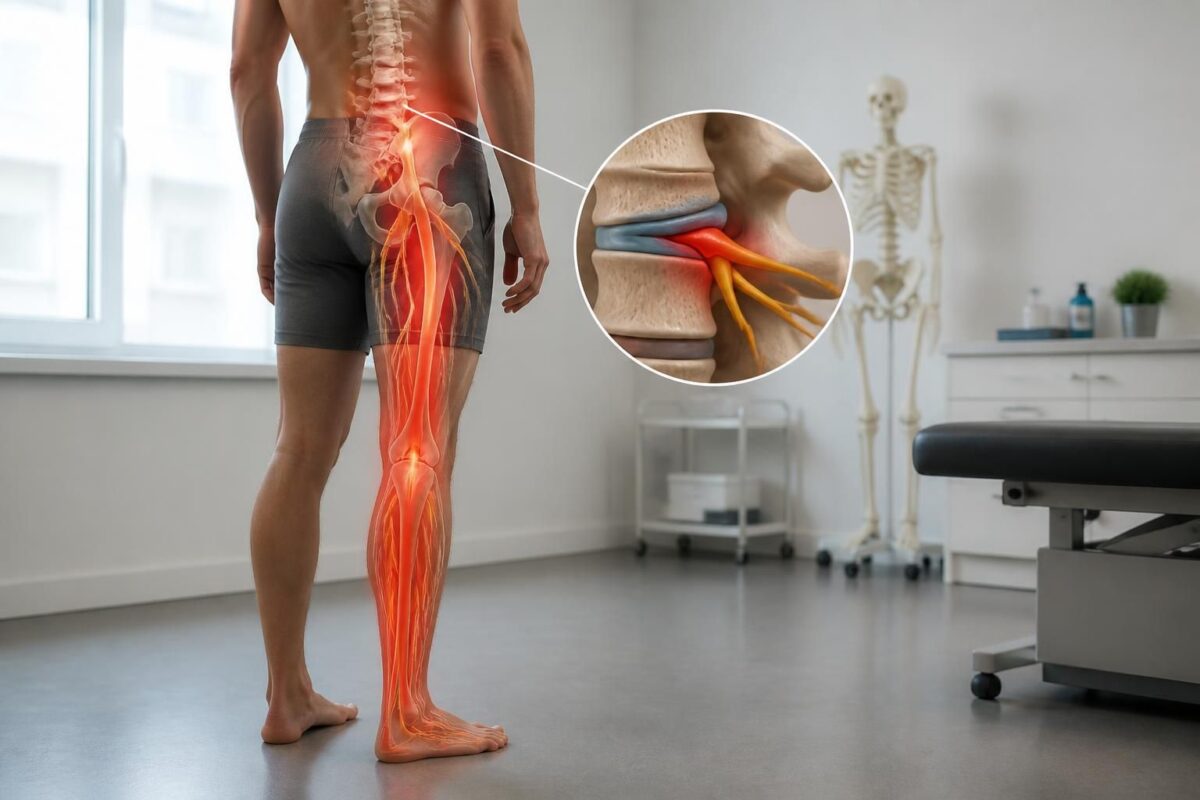
IN BRIEF In brief, herniated disc and sciatica explain why pain radiates down the leg: a bulging disc can irritate the sciatic nerve, traveling from the lower back to the foot. The pathway follows the L5 and S1 roots, defining the location of the pain (forefoot or heel). Benefits: accurate assessment to target non-surgical treatment, rehabilitation, and mobilization that restore mobility and reduce pain, while preventing recurrences. In Montreal, this service is recommended for pain radiating to the foot and for prompt return to activity. |
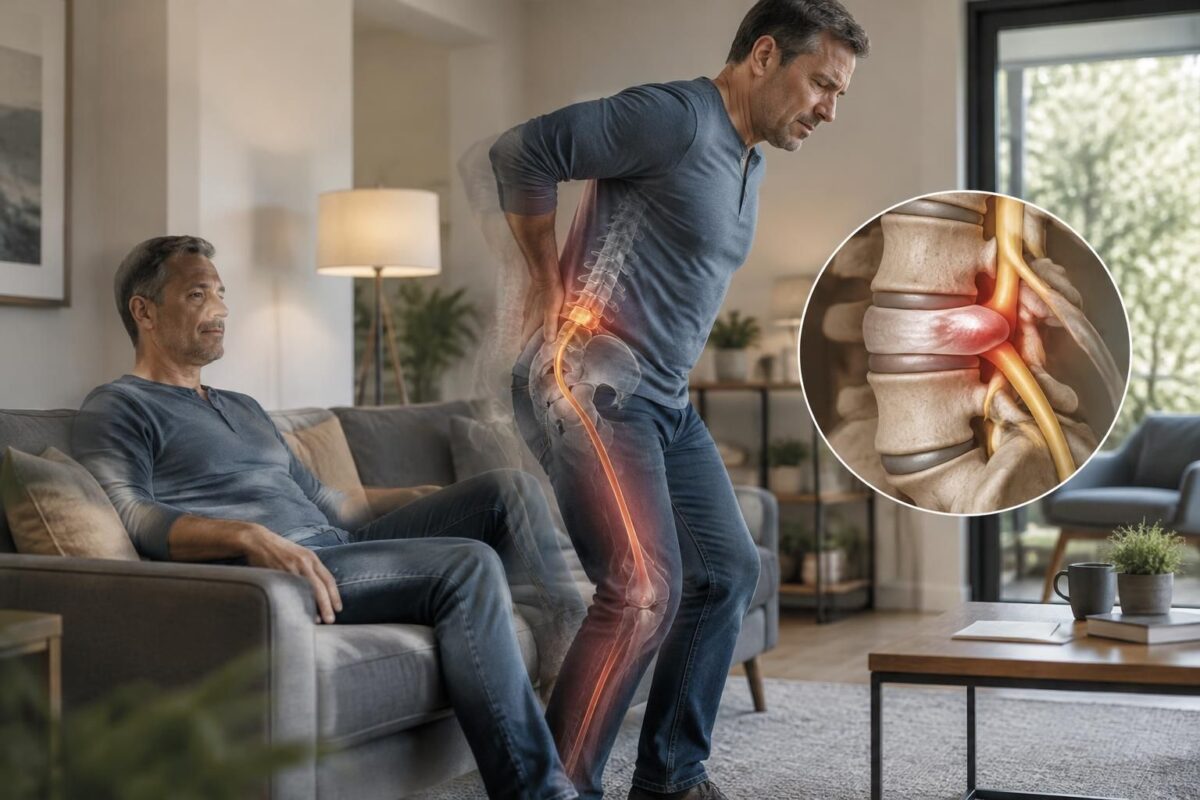
The key document for pain radiating down the leg is the association between herniated disc and sciatica. The main cause is irritation of the sciatic nerve, the longest in the body, by the prolapsed disc.
When an intervertebral disc deforms or partially ruptures, its nucleus may protrude and irritate a lumbar root. This irritation triggers painful sensations that follow the path of the nerve down to the leg and foot.
The painful pathway depends on the affected root: L5 causes pain on the outer side of the thigh and towards the big toe, while S1 causes pain along the back of the leg to the heel and the little toe.
Beyond mechanical pressure, inflammatory mediators contribute to nerve irritation. Movement and appropriate rehabilitation facilitate recovery, while strict rest can hinder the healing process.
This article, written by Sylvain Desforges, osteopath and expert in lower back pain and sciatica, explains why pain radiates down the leg during a Herniated disc, describes the nerve pathway, and proposes the optimal care pathway in 2025, emphasizing non-surgical approaches offered at TAGMED Clinic.
The sciatic nerve is the longest in the body. Its nerve arch starts from the lumbar vertebrae, crosses the leg, and can cause pain that begins from the lower back or buttock and radiates to the foot when the nerve root is irritated.
Understanding the anatomy of the sciatic nerve
At its widest point, near the pelvis, the sciatic nerve can be compared to the diameter of a thumb. This size makes it a structure vulnerable to compressions in the case of disc pathology. When the Herniated disc manifests, the disc can irritate this root and trigger burning sensations or electrical shocks, particularly felt when sitting or sneezing.
Pathway and location of the L5 and S1 roots
The pain follows a precise mapping. Irritation of the L5 roots leads to pain on the outer side of the thigh, around the ankle, and up to the big toe. Conversely, impairment of S1 follows the back of the leg to the heel and little toe. Following the pathway of the sciatic nerve to the foot helps to understand the disc-root origin and guide the assessment.
Mechanism of pain and inflammation
Pain is not solely due to mechanical pressure. The disc releases irritating proteins around the tissues, causing an inflammatory reaction. Thus, treatment aims to support healing while maintaining appropriate activities, rather than blocking movement with strict rest.
Care pathway and non-surgical options
In clinical practice, the optimal pathway combines a rigorous clinical examination, targeted imaging if necessary, and non-surgical interventions when appropriate. At TAGMED Clinic, care may include, depending on the case, motorized neurovertebral decompression, a specific osteopathy, and a precision percussion tool. These approaches aim to reduce nerve irritation and restore mobility without systematically resorting to surgery.
Patients benefit from coordinated follow-up, with regular evaluation of signs of improvement and current medical criteria guiding the therapeutic decision. In the majority of cases, improvement is observed through appropriate management and medical monitoring. For those wishing to explore additional options, specialized resources may be consulted on websites dedicated to sciatica and discopathy.
To learn more about the nerve pathway and associated mechanisms, you can consult specialized resources on websites dedicated to sciatica and herniated discs, including content published by sossciatique.com and TAGMED Clinic.
Additional information on the links between lower back pain, posture, and work can be found on sossciatique.com and sosherniediscale.com.
Warning signs that require rapid assessment
Three emergency signs may arise. One indication is cauda equina syndrome, which requires urgent decompression. A loss of motor strength or an inability to walk on tiptoes represents a severe form and demands immediate care. Hyperalgesic pain resistant to usual treatments may also signal the need for specialized assessment and close follow-up.
When pain returns or persists, it is useful to obtain specialized assessment to adapt the care pathway and avoid hasty decisions. Information resources and management protocols exist to guide patients toward solutions tailored to their situation.
For patients living in Montreal or Terrebonne, non-surgical options offered by TAGMED Clinic can be considered as a first choice, with personalized evaluation and a coordinated treatment plan.
To enhance your understanding, complementary resources on disc pathology and its manifestations can be consulted on websites dedicated to locomotor health and pain.
Useful links and additional sources to authorized specialized fields: sossciatique.com, Clinique TAGMED, decompressionneurovertebrale.com, sosherniediscale.com, sosherniateddisc.com, sostunnelcarpien.com.
For more information related to non-surgical approaches and specialized evaluation, you can also consult resources dedicated to TAGMED and sciatica on authorized websites.
Medical disclaimer: The information and advice provided on this site do not replace the opinion, diagnosis, or treatment of a healthcare professional. Please note that Sylvain Desforges, B.Sc., D.O., N.D., Doctor of Osteopathy, is neither a medical doctor nor a physician, and is not a specialist in a medical specialty as defined by the Collège des médecins du Québec. Manual medicine, functional medicine, and sports medicine as described on this site exclude any treatment or medical diagnosis made by a physician or a medical specialist. Always consult your doctor for any medical questions. For more details, please read our complete Legal Notice.
- Herniated disc can irritate a root of the sciatic nerve.
- The sciatic nerve is the longest in the body; its path explains the radiation.
- The pain follows the path: buttock → thigh → leg → foot.
- It may worsen when sitting or during a sneeze.
- Differentiation of pathways: L5 vs S1 determines the exact location of the symptoms.
- The main mechanism is inflammatory: the disc releases irritating proteins around the nerve.
- Strict rest is no longer recommended; light movement promotes blood flow and healing.
- Rehabilitation (core strengthening and neuro-meningeal mobilization) restores mobility and reduces recurrences.
- In about 80% of cases, the disc absorption occurs spontaneously within six months.

The sciatic pain radiating down the leg is often associated with a herniated disc. Understanding the pathway of the sciatic nerve and the inflammatory mechanisms irritating it allows for the evaluation of treatment options and guides rehabilitation. This article provides practical recommendations to take action now and promote mobility without routinely resorting to surgery.
Understanding the Anatomy of the Sciatic Nerve
The Longest Nerve and Its Roots
The sciatic nerve originates from the lumbar and sacral roots; it is the longest nerve in the body and collects signals from several segments. The intervertebral disc can, in the case of a herniated disc, irritate one or more roots and trigger pain and weakness along the leg.
Differentiating L5 and S1 Pathways
The pain that follows the pathways of the L5 and S1 roots allows for pinpointing the origin of the conflict. L5 irritation projects towards the outer side of the thigh, passes the malleolus, and affects the big toe; S1 travels up the back of the leg to the heel and the little toe.
Why Does the Pain Radiate Down the Leg?
Understanding the Inflammatory Mechanism
The pain is primarily related to an inflammatory reaction around the nerve roots irritated by the disc. The disc releases chemicals that cause pain and sensitivity. Strict rest is now less recommended; controlled movement promotes blood flow and healing.
The Role of Activity and Rehabilitation
Tailored physiotherapy and core strengthening exercises improve lumbar mobility and strengthen deep muscles, reducing the risk of recurrence. Neuro-meningeal mobilization and targeted exercises help “reclaim” tissue flexibility and prevent recurrent pain, particularly in active adults.
When to Act and How to Organize Daily Life
Effective Non-Surgical Approaches
For most patients, a combination of adapted physical activity, pain management, and rehabilitation can allow for progressive improvement within a few weeks to a few months. The aim is to maintain an appropriate load, avoid aggravating positions, and progress towards functional activities.
Warning Signs Requiring Prompt Consultation
In the presence of significant loss of strength, difficulty walking on tiptoes, urinary disturbances, or severe pain that does not subside, it is essential to consult quickly to evaluate a possible nerve compression requiring specialized care.
| Element | Concise finding |
|---|---|
| Origin and pathway of the nerve | Sciatic nerve originating from the lumbar roots and descending to the foot. |
| Herniated disc | Protrusion of the gelatinous nucleus compressing a root. |
| Pain mapping L5 vs S1 | L5: outer thigh and big toe; S1: back of the leg, heel, and little toe. |
| Inflammatory mechanism | Chemical inflammation with irritating proteins; movement aids healing. |
| Role of movement and activity | Light activity promotes healing and prevents complications. |
| Natural recovery | 80% of hernias resolve spontaneously in 6 months. |
| Rehabilitation and posture | Physiotherapy and core strengthening restore lumbar mobility and stability. |
| Signs of urgency | Loss of motor strength or urinary control; acute pain or rapid progression. |
Claire, 45 years old: “When the pain started, it began in my lower back and gradually moved down my leg. I was told it was a herniated disc irritating a nerve root, and the pathway taken by the sciatic nerve explained this irradiation to my foot.”
Julien, 38 years old: “The pain started from my buttock and followed the back of my thigh, then reached my heel and foot. It was the typical pathway of the sciatic nerve, and the distinction between the L5 and S1 roots helped me understand where the irritation was.”
Marie, 52 years old: “The doctor told me that inflammatory pain follows the nerve’s pathway and that the disc can release irritating substances. Staying active and following a rehabilitation program improved my mobility and reduced inflammation.”
Thomas, 29 years old: “I was encouraged to keep moving rather than stay in bed. With core strengthening and appropriate exercises, the pain diminished and the pathway of the sciatic nerve became tolerable again.”
Isabelle, 60 years old: “I was reassured to learn that most cases resolve spontaneously within six months. Thanks to a physiotherapist and targeted exercises, my mobility was restored and the radicular pain decreased.”
Marc, 41 years old: “The healing process allowed me to avoid surgery. Understanding the mechanism behind the pain’s descent motivated me to follow the rehabilitation program and resume my activities.”
Sylvain Desforges, B.Sc., D.O., N.D., Doctor of Osteopathy, naturopath, and manual medicine physician, is known for his commitment to evidence-based care and an integrated approach to low back pain. As the founding president of TAGMED clinics and the ACMA association, he is dedicated to harmonizing osteopathic knowledge with technological advancements to guide his patients toward sustainable improvement in their mobility and well-being. His journey illustrates a vision where manual approaches, biological knowledge, and modern techniques complement each other to treat pain related to herniated discs and sciatica.
To understand why the pain “descends” into the leg, one must first know the path taken by the sciatic nerve, the longest and one of the most sensitive in the body. From the lumbar roots, this nerve travels down the spine to the foot, and its numerous branches make it a prime target when an intervertebral disc shifts or cracks. When a herniated disc forms, the gelatinous nucleus can irritate or compress a nerve root, triggering pain that combines burning sensations, electric shocks, and a feeling of jolt, especially when sitting or sneezing.
The pain can then describe specific pathways around the L5 and S1 roots. In the case of L5 root involvement, the pain may extend to the outer side of the thigh, cross the ankle, and radiate to the big toe. Conversely, irritation of the S1 root follows the path behind the leg to the heel and little toe. Following this pathway allows for precise identification of the disco-radicular origin and adaptation of the treatment accordingly.
Contrary to popular belief, inflammation plays a major role in pain and not just mechanical pressure. The disc can release pro-inflammatory molecules that irritate the surrounding tissues. An important signal for management is therefore to prioritize movement rather than strict rest: light physical activity promotes blood flow, accelerates restoration, and supports nerve healing. In most cases, spontaneous resorption of the herniated disc can occur over a period of about six months, thanks to natural cellular cleaning mechanisms and suitable rehabilitation.
Rehabilitation plays a central role in recovery. Through targeted exercises, core strengthening, and neuro-meningeal mobilization, lumbar mobility is gradually restored, and the deep muscles supporting the spine are strengthened. This approach aims not only to relieve pain but also to prevent recurrences, which remain more frequent in some profiles. Physiotherapy and strengthening programs allow for the relearning of daily movements and help preserve the flexibility of nerve and musculoskeletal tissues.
Despite positive developments for the majority of patients, some situations require urgent care. Cauda equina syndrome, a neurosurgical emergency, can manifest as anesthesia in the saddle area, loss of continence, or marked motor weakness in the leg. In the presence of such signs, prompt medical evaluation is essential. Beyond the surgery that can eliminate mechanical compression, a rigorous rehabilitation process remains crucial to ensure sustainable functional recovery and avoid recurrences.
Sylvain Desforges emphasizes a comprehensive and individualized approach. By integrating technologies such as spinal decompression, laser, and shockwave therapy, he offers solutions tailored to each patient, relying on scientific data and cautious clinical practice. His objective is clear: to enable everyone to quickly regain mobility, improve quality of life, and ensure lasting recovery after a herniated disc and sciatica.
Quick summary: Herniated disc and sciatica explain why pain travels down the leg. By understanding the pathway of the sciatic nerve, the role of the L5 and S1 roots, and the importance of tailored treatments, it is possible to quickly improve mobility in non-surgical practice and prevent recurrences, with targeted approaches and reliable resources.
The sciatic nerve is the longest in the body and originates from several lumbar roots. When an intervertebral disc shifts and protrudes, it can irritate one or more nerve roots, triggering intense, burning pain. This pain is often worsened by sitting or sneezing, and it follows the path of the nerve all the way to the foot. The large diameter of the nerve and its proximity to spinal structures explain its sensitivity to disc compression and the inflammatory irritation that often accompanies the pain.
Differentiating L5 and S1 root involvement allows for precise localization of the origin and adjustment of treatment. L5-type lumbar irritation generally spreads along the outer thigh, past the malleolus, and ends at the big toe. In contrast, S1 involvement follows the back of the leg down to the heel and the little toe. By tracing the path of the sciatic nerve to the foot, a useful mapping is obtained to target the disc-root conflict and orient the most effective exercises and therapies.
Contrary to popular belief, pain largely originates from an inflammatory mechanism, where irritant proteins around the tissues play a key role. Absolute rest is no longer recommended: maintaining appropriate movement promotes blood flow and accelerates healing. A natural treatment for inflammation of the sciatic nerve is based on light and progressive physical activity, enabling the body to better gather its strength and restore mobility.
The figures remain reassuring: about 80% of herniated discs resolve spontaneously within six months thanks to natural cellular cleaning. Rehabilitation plays a central role during this consolidation period. Targeted physiotherapy exercises for sciatica or herniated disc help restore lumbar mobility and strengthen deep muscles. Core stabilization and neurodynamics make the tissues more supple and prepare the body to resume activities, while reducing the risk of recurrence, particularly in men aged 35 to 44.
To deepen your understanding of pain localization and its impact, you can consult specialized resources on this topic, including Doctissimo pages and SOS Sciatique guides that explain how pain can vary according to location and movements: Sciatiques – Doctissimo, pain localization, buttock pain → leg. Other complementary resources offer detailed explanations about herniated discs and pain mechanisms: Hernie discale – symptoms and treatments, Herniated disc and sciatica – link, Herniated disc – Doctissimo dossier.
Signs of alert that require urgent consultation remain the same: loss of motor strength that prevents standing on tiptoes, pain intensified with fever or urinary function impairment, severe pain or rapid progression, or marked neurological deficit requiring rapid decompression. In these situations, medical attention is essential to prevent serious complications.
For practical advice and non-surgical approaches tailored to your situation, you can explore the following resources, which address non-surgical treatment, the role of exercises, and the evolution of pain during walking: non-surgical treatment, pain that increases when walking, pain localization – Montreal.

Disc bulge and pain after exertion
IN BRIEF A disc bulge is a disc that slightly protrudes between two vertebrae; after exertion, it may be associated with low back pain, sometimes radiating into the leg. An imaging result alone is not enough to explain the pain…

Disc bulge and tingling in the foot
IN SHORT A disc bulge refers to a disc that bulges beyond its boundary; if it irritates a nerve root, it can contribute to tingling in the foot, numbness, or pain in the leg. However, MRI alone is not sufficient…

Disc bulge and intermittent numbness
IN SHORT A bulging disc associated with intermittent numbness may sometimes indicate nerve irritation, but an MRI alone does not allow determining the cause. Connecting the symptoms’ path, sensitivity, and strength helps guide the evaluation and next steps. New or…
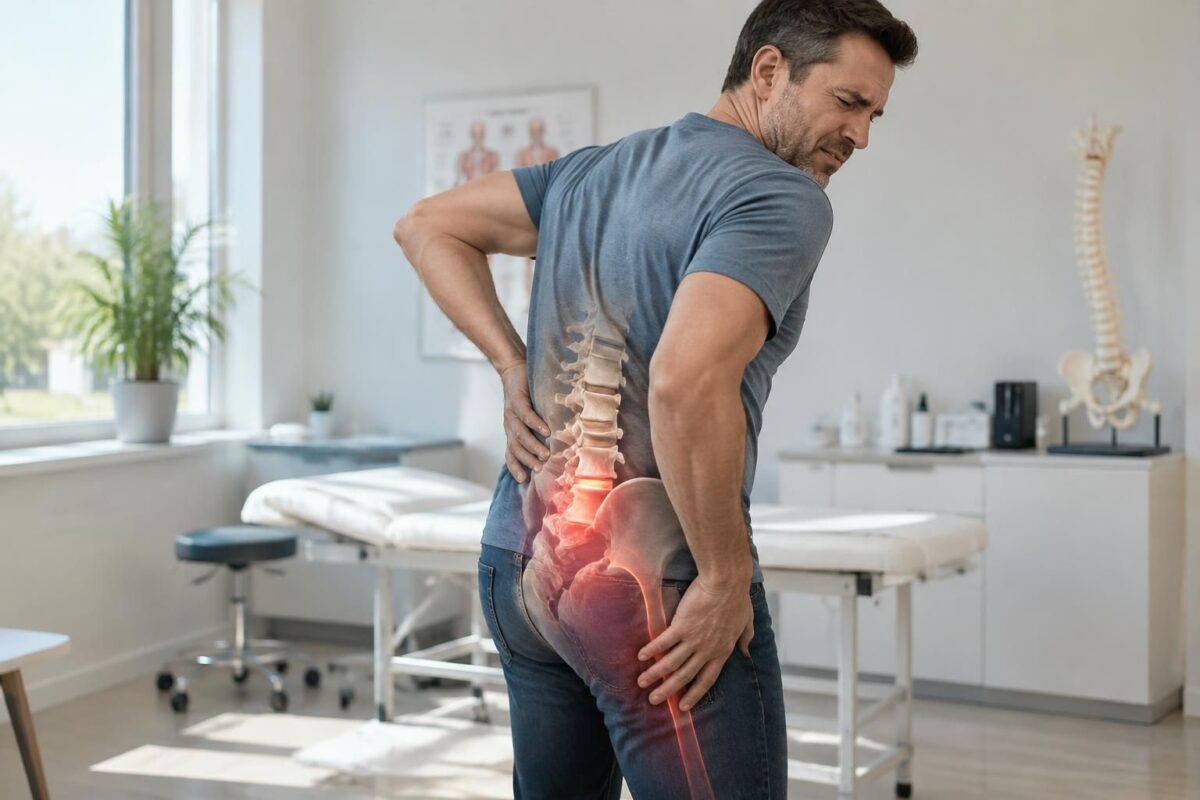
IN BRIEF A disc bulge is a diffuse protrusion of the disc and does not always cause symptoms. A buttock pain may sometimes be associated with nerve irritation, but the bulge visible on imaging is not enough to establish the…
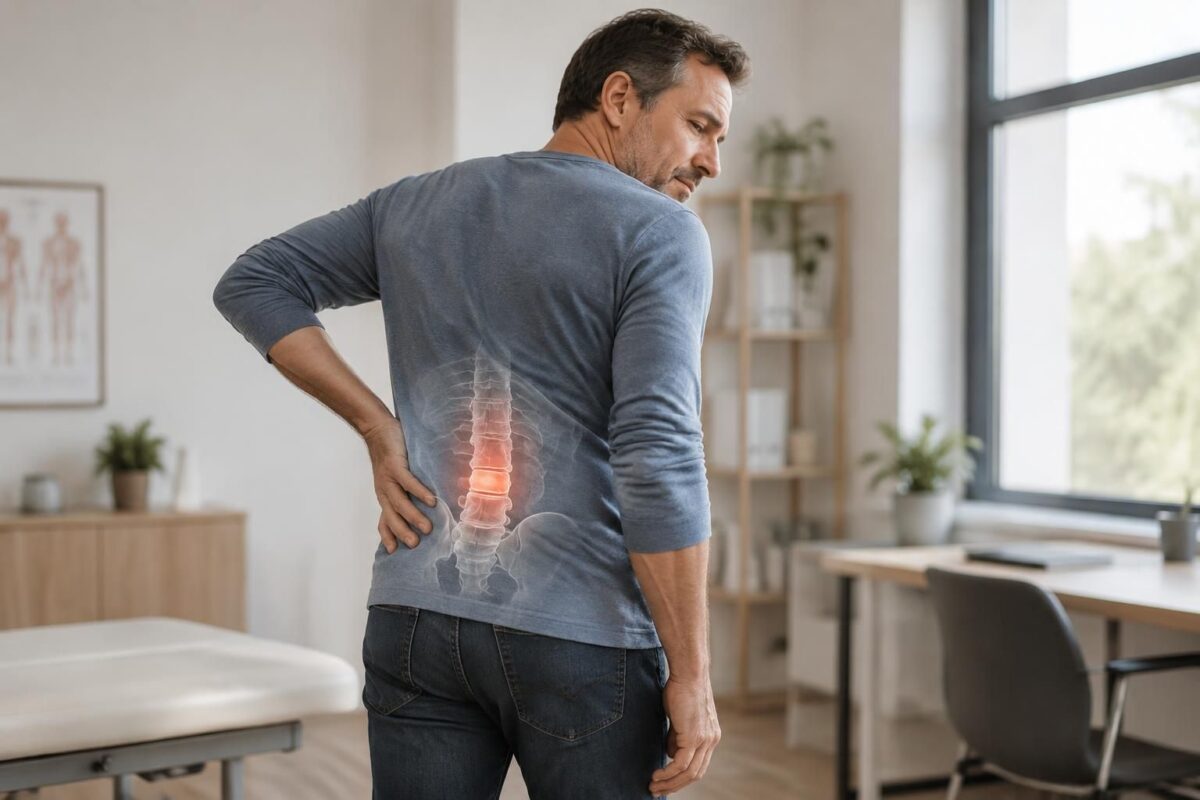
Disc herniation and lumbar stiffness
IN BRIEF The disc bulge is a protrusion of the disc between the vertebrae, without a necessary tear, and does not always indicate a herniation or a cause of pain. It can accompany lumbar stiffness, but the link must be…
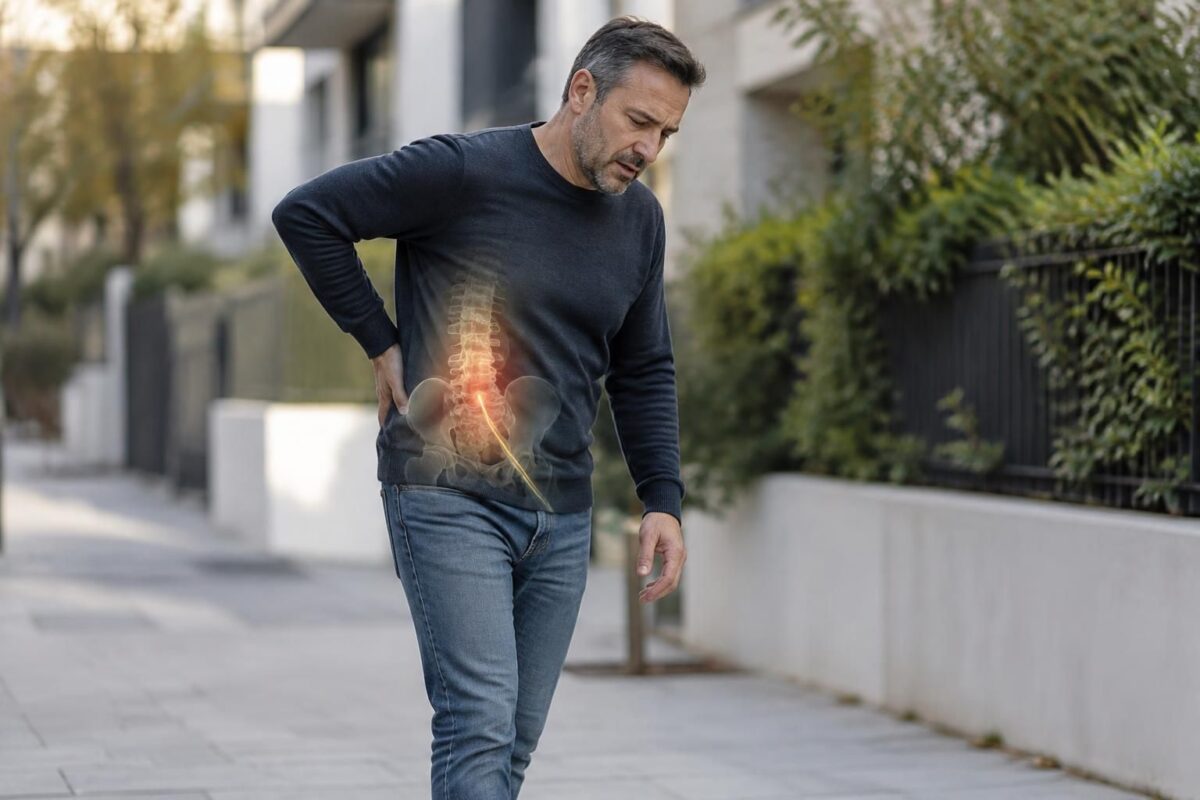
Disc herniation and pain while walking
IN BRIEF A disc bulge is a protrusion of the disc between the vertebrae, which can sometimes be accompanied by pain while walking or radiating down the leg. A gentle and progressive walk helps maintain activity if symptoms remain stable,…
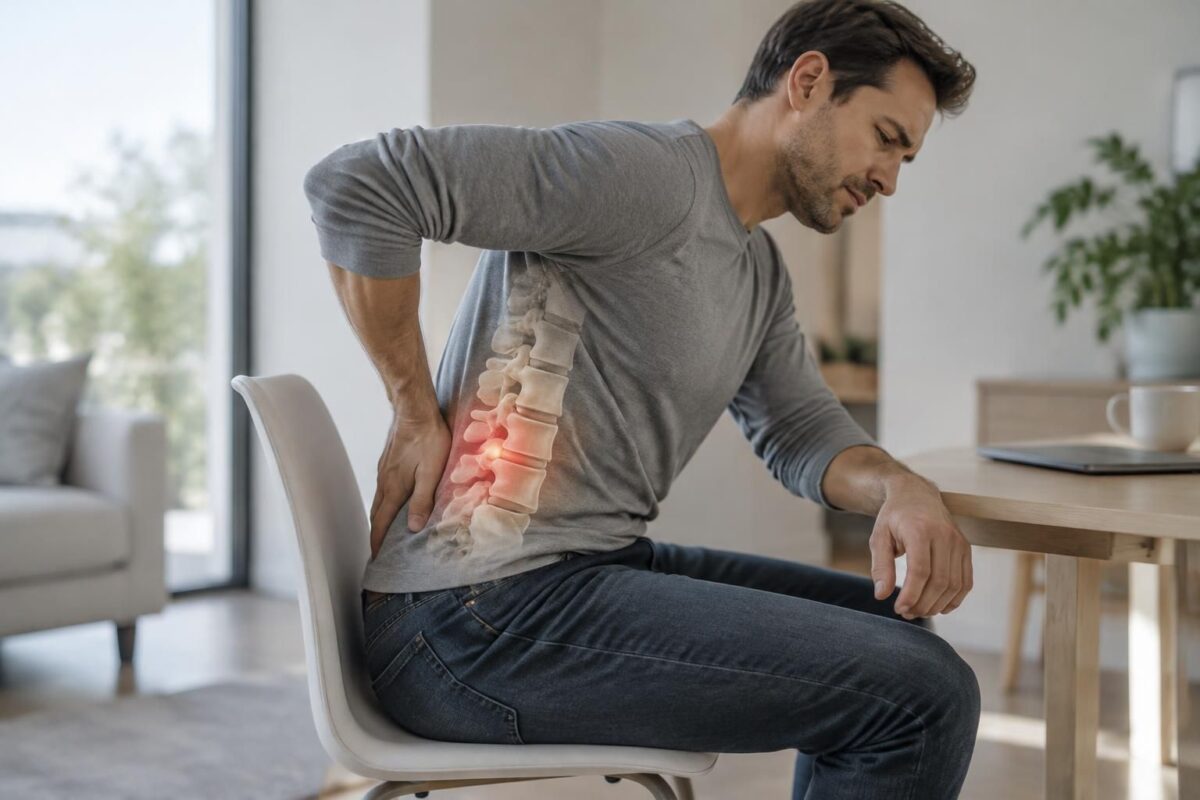
Disc bulge and pain in sitting position
IN BRIEF A disk bulge is a protrusion of a disk between the vertebrae; it does not always cause symptoms. Prolonged sitting can accentuate lower back pain and sometimes pain that radiates into the buttock or leg. Varying positions, moving…
Disc herniation and fluctuating symptoms
IN BRIEF A disc bulge is a protrusion of the disc between the vertebrae, which may not necessarily cause symptoms. When pain fluctuates, its intensity can vary based on movements, activities, and other factors; the bulge visible on MRI does…

Sylvain Desforges, B.Sc., D.O., N.D., docteur en ostéopathie
Dr Sylvain Desforges, B.Sc., D.O., N.D., osteopath, is the founding president of TAGMED and of the ACMA association. He dedicates his practice to chronic spinal pain, low back pain and symptoms compatible with sciatica, particularly when pain radiates toward the buttock, leg, calf, foot or toes.
Through SOS Sciatique, he publishes educational content on sciatica symptoms, possible causes such as disc herniation, disc narrowing, foraminal stenosis or irritation of a lumbar nerve root, as well as non-surgical approaches that may be considered according to the evaluation. At Clinique TAGMED, care may include, depending on the case, motorized neurovertebral decompression, specific osteopathic care or precision percussion.
For an evaluation related to sciatica treatment in Montreal / Mount Royal or sciatica treatment in Terrebonne, please consult the services available at Clinique TAGMED.
Medical disclaimer
The information published on SOS Sciatique is provided for educational purposes only and does not replace a consultation, diagnosis, opinion or treatment provided by a physician or another authorized healthcare professional. The author of this article is neither a medical doctor nor a specialist in a medical specialty recognized by the Collège des médecins du Québec. The osteopathic, manual medicine or functional support approaches described on this site do not constitute medical acts and are not intended to replace medical follow-up.
Consult a physician or emergency service in cases of loss of bladder or bowel control, anesthesia in the saddle area, significant or progressive weakness in the leg or foot, fever, recent trauma, severe pain or rapid worsening of symptoms. For more details, please read our Legal Notice.