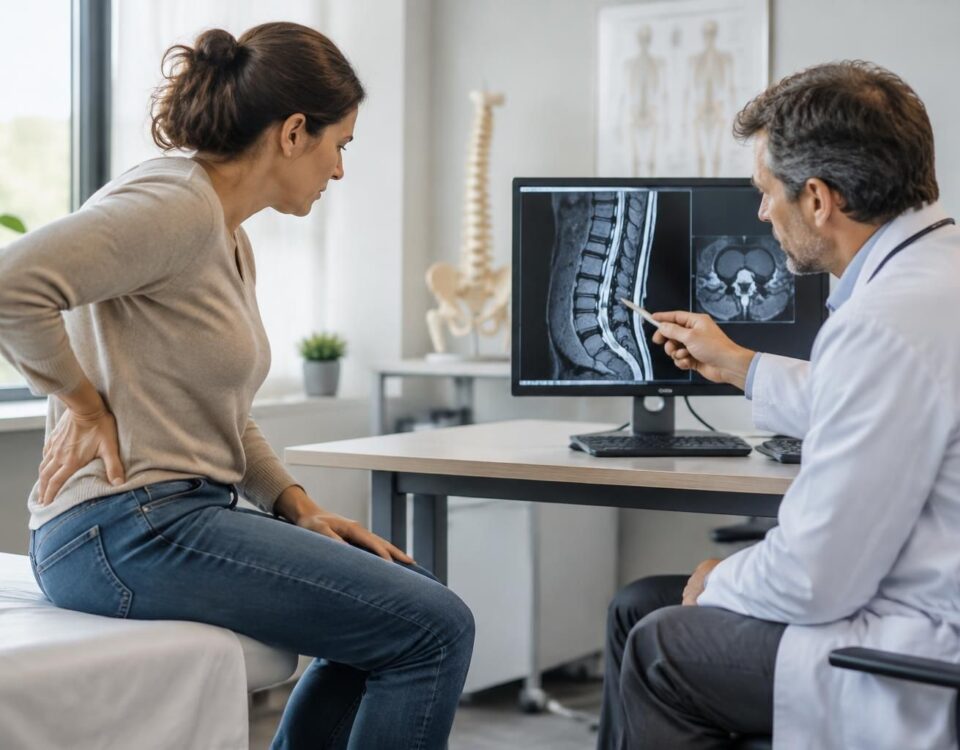
Sciatica and pain after long walk
06/10/2026
Sciatica and physical activity: how to avoid mistakes
06/10/2026
IN BRIEF A L4-L5 disc protrusion is a bulging of the disc between two lumbar vertebrae. If it irritates the L5 nerve root, it can cause sciatica radiating from the buttock to the side of the leg and the top of the foot. However, it can also be painless: imaging must be interpreted alongside symptoms and clinical examination. Significant or progressive weakness in the leg requires prompt medical evaluation. |
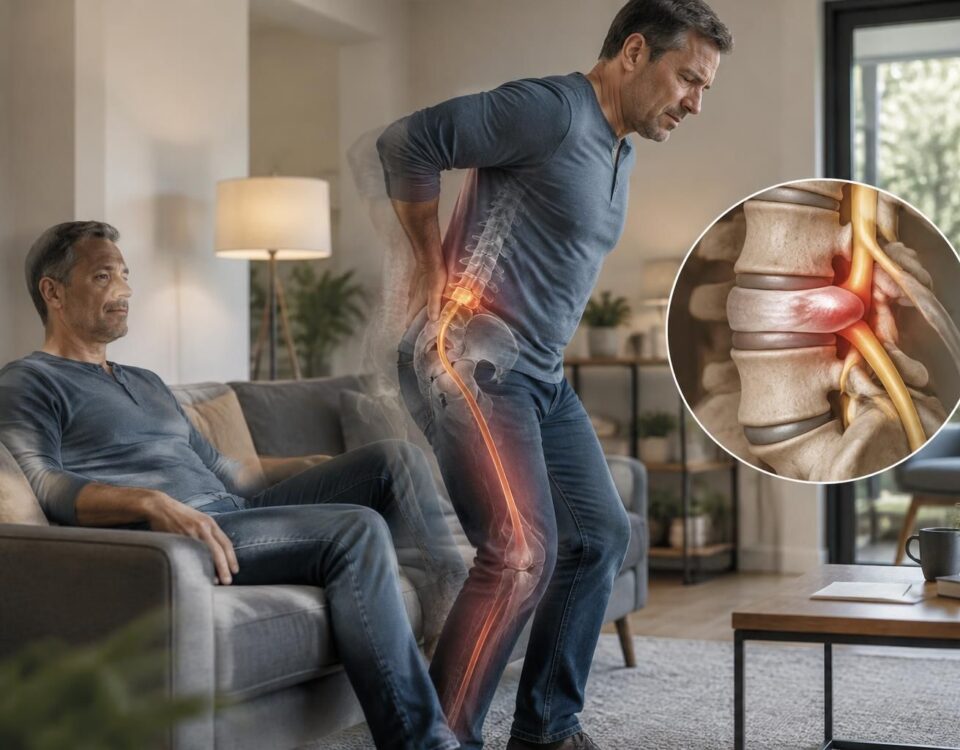
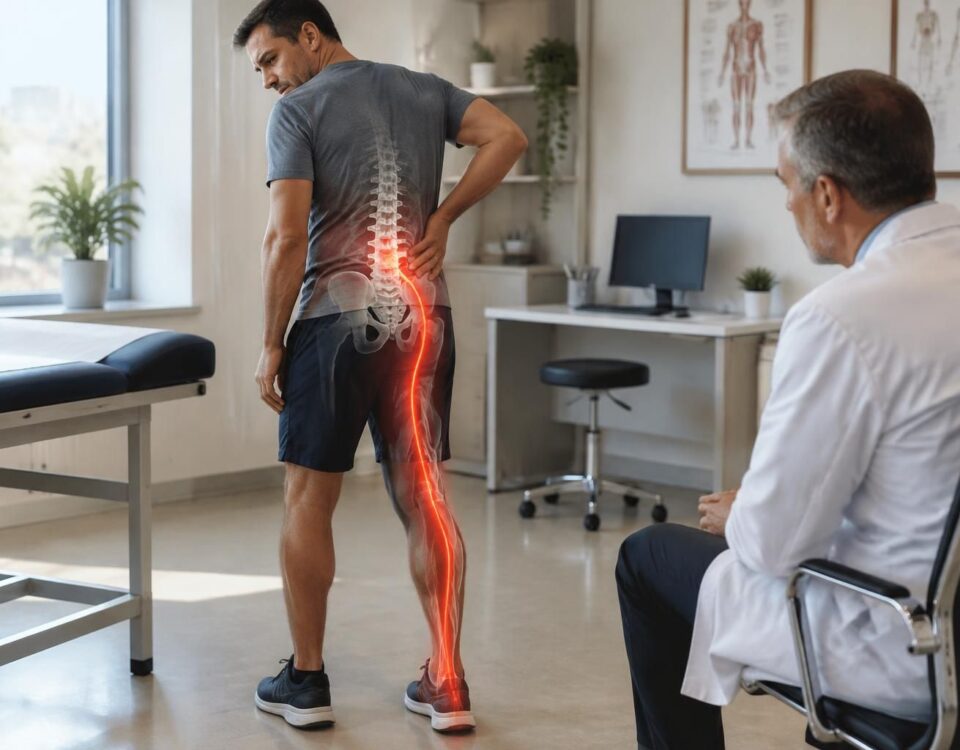
A L4-L5 disc protrusion can sometimes irritate the L5 nerve root and cause pain of a sciatic type. This pain can start from the lower back, go through the buttock and the side of the thigh and calf, and then reach the top of the foot or the big toe. Tingling, numbness, or difficulty lifting the foot may also occur.
However, a protrusion visible on imaging does not always cause symptoms: clinical evaluation helps determine whether it correlates with the pain. Quickly consult a healthcare professional if there is significant or progressive weakness, loss of bowel or bladder control, or numbness in the saddle region.
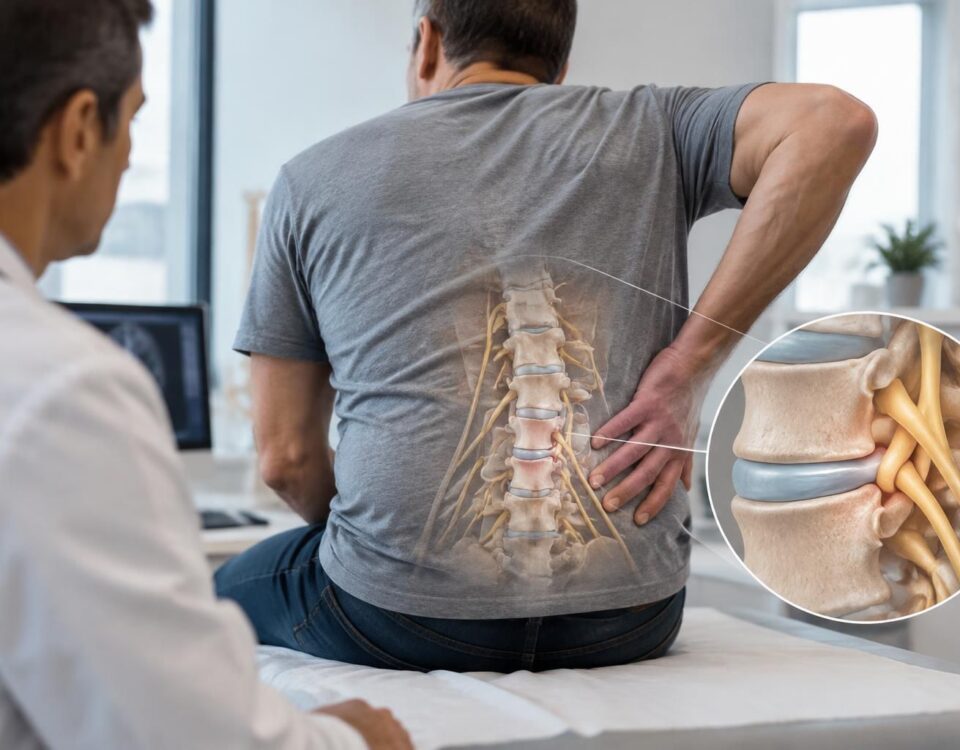
A L4-L5 disc protrusion can sometimes irritate a nerve root and cause pain that radiates down the buttock and leg. However, it does not always cause symptoms. The path of the pain, changes in sensitivity or strength, and clinical examination help determine if the disc may be involved. An MRI image must always be interpreted with symptoms and evaluation from a professional. The L4-L5 disc is located between the fourth and fifth lumbar vertebrae. It helps distribute forces and allows movement of the lower back. A protrusion corresponds to a bulging of the disc. It differs from an extrusion where a part of the disc material crosses the fibrous ring more extensively. At this level, a protrusion located toward the back or side can sometimes irritate the L5 nerve root. The pain can then start from the lower back or buttock and descend along the leg. However, a protrusion visible on imaging does not prove by itself that it is the cause of the pain. To better understand the difference between a protrusion and a hernia, please visit our page on sciatica and lumbar disc herniation. Pain consistent with irritation of the L5 root may affect the buttock, the outer part of the thigh, and the outer side of the leg. It can extend to the top of the foot, sometimes reaching the big toe. The path varies from person to person and does not necessarily confirm a disc origin on its own. The pain may be described as burning, shooting, stabbing, or a sensation of electrical current. It may be accompanied by tingling or decreased sensitivity in part of the leg or foot. To learn more about nerve root irritation, check this article on irritated nerve roots. Motor impairment of the L5 root can make it more difficult to lift the foot or the big toe. Some people notice that they drag their toes more on the ground or have trouble walking on their heels. New or worsening weakness requires prompt medical evaluation. A protrusion may be accompanied by pain in the lower back or stiffness. It can also be present without pain. Symptoms depend on the location of the bulge, the proximity to a nerve root, and other factors. Some individuals have a protrusion visible on MRI without experiencing discomfort. The terms protrusion and disc herniation describe forms of disc deformation. A protrusion refers to a bulge that remains contained by the outer layers of the ring. A hernia may refer to a more pronounced exit of disc material. Imaging reports may use different terms depending on the observed aspect. Sciatic pain occurs when the clinical situation includes irritation or compression of a nerve root. Therefore, a protrusion or a hernia does not automatically lead to sciatica. A central hernia can also have variable effects depending on its size and position; further details are available on central disc hernia and sciatic pain. An L5 involvement can give symptoms on the side of the leg and the top of the foot, with possible difficulty lifting the foot or big toe. An S1 involvement more frequently affects the back of the leg and can radiate toward the heel, the sole of the foot, or the outer edge of the foot. Symptoms do not always follow these descriptions exactly. A L4-L5 protrusion does not necessarily explain all pain radiating down the leg. The relevant level, the direction of the bulge, and the results of the examination must be correlated. Also consult information on pain at the outer edge of the foot and the S1 root. The healthcare professional gathers symptoms and their evolution, then examines sensitivity, strength, and certain movements. They check if the signs correspond with a nerve involvement and look for other possible causes. Clinical examination is essential: MRI does not replace this evaluation. Imaging is not necessary in all episodes of low back or sciatic pain. A doctor may request it if symptoms persist, if the examination warrants it, or if concerning signs appear. MRI may show a protrusion, but this finding must correlate with symptoms before being considered as their explanation. Management depends on the intensity of the symptoms, their duration, examination results, and the overall condition. A doctor can discuss medications suitable for needs and contraindications, as well as the relevance of exams or other interventions. Do not change a prescribed treatment without discussing it with your healthcare professional. In the absence of urgent signs, some individuals may also seek a complementary evaluation in manual therapy. At Clinique TAGMED, options may include osteopathic assessment or, depending on the case and eligibility, motorized neurovertebral decompression. These approaches do not replace a medical diagnosis and may not be suitable for all situations. Services are offered in Montreal and Terrebonne. The persistence or return of symptoms warrants reevaluation. Possible causes of recurrence and associated factors are presented in this article on sciatic recurrence and its possible factors. Request a medical evaluation without delay if you notice significant or progressive weakness in the leg or foot, increasing difficulty walking, loss of control of the bladder or intestines, or numbness in the saddle region. Pain accompanied by fever, recent trauma, or rapid worsening also requires medical attention. Sylvain Desforges, B.Sc., D.O., N.D., Doctor of Osteopathy, is the founding president of TAGMED and the ACMA association. His practice focuses on chronic pain of the spine, lower back pain, and pain associated with sciatica. Through SOS Sciatique, he publishes educational content on the symptoms of sciatica, their possible causes, and non-surgical approaches that may be considered after evaluation. Care at TAGMED Clinic may include, as appropriate, motorized neurovertebral decompression, specific osteopathy, or precision impact therapy. For an evaluation related to sciatica treatment in Montreal or Mount Royal, or sciatica treatment in Terrebonne, consult the available services at TAGMED Clinic. Medical disclaimer: The information and advice provided on this site do not replace the opinion, diagnosis, or treatment of a health professional. Please note that Sylvain Desforges, B.Sc., D.O., N.D., Doctor of Osteopathy, is neither a medical doctor nor a physician and is not specialized in a medical specialty as defined by the Collège des médecins du Québec. Manual medicine, functional medicine, and sports medicine as described on this site exclude any treatment or medical diagnosis made by a physician or specialist. Always consult your doctor for any medical questions. For more details, please read our Full Legal Notice.What symptoms may accompany an L4-L5 protrusion?
Pain following the path of the L5 root
Possible weakness of the foot or big toe
Low back pain with or without radiation
L4-L5 protrusion, disc herniation, and sciatica: what are the differences?
How to distinguish an L5 involvement from an S1 involvement?
How to evaluate a L4-L5 protrusion?
What management options may be considered?
When to consult quickly?
About the Author
Medical Disclaimer
- Lower back pain radiating to the buttock, then the side of the leg.
- Possible irradiation to above the foot and the big toe.
- Tingling or decreased sensitivity along this path.
- Sometimes, difficulty lifting the foot or walking on the heels.
- An L4-L5 protrusion may be asymptomatic.
- An MRI image alone is not sufficient to confirm the cause of pain.
- Significant or progressive weakness in the foot requires prompt medical evaluation.
- Loss of bladder or bowel control, or numbness in the perineum: medical emergency.

An L4-L5 disc protrusion is a bulging of the disc located between the fourth and fifth lumbar vertebrae. It may be visible on imaging without causing symptoms. However, if it irritates or compresses the L5 nerve root, it can lead to sciatica-like pain, sometimes accompanied by tingling, numbness, or weakness of the foot. Only a healthcare professional can determine whether the protrusion is indeed the cause of the symptoms and propose a suitable management.
What signs may suggest L5 sciatica?
The pain may start in the lower back or buttock, then descend along the side or back-external part of the thigh and calf. It may extend to the top of the foot, sometimes reaching the big toe. Its intensity varies: some individuals describe a dull ache, while others report sharp, burning sensations or electric jolts.
Tingling or decreased sensitivity may appear in a similar area. Weakness in lifting the front of the foot or the big toe may also be observed. It may then become difficult to walk on the heels. These signs do not confirm an L5 involvement: different issues can produce similar symptoms.
A visible protrusion does not always explain the pain
Disc protrusions are common, even in individuals with no back pain. An MRI image should therefore be interpreted alongside symptoms and the clinical examination, not in isolation. Location, pain intensity, muscle strength, and sensitivity help the professional assess whether the L4-L5 disc is likely to irritate a nerve root.
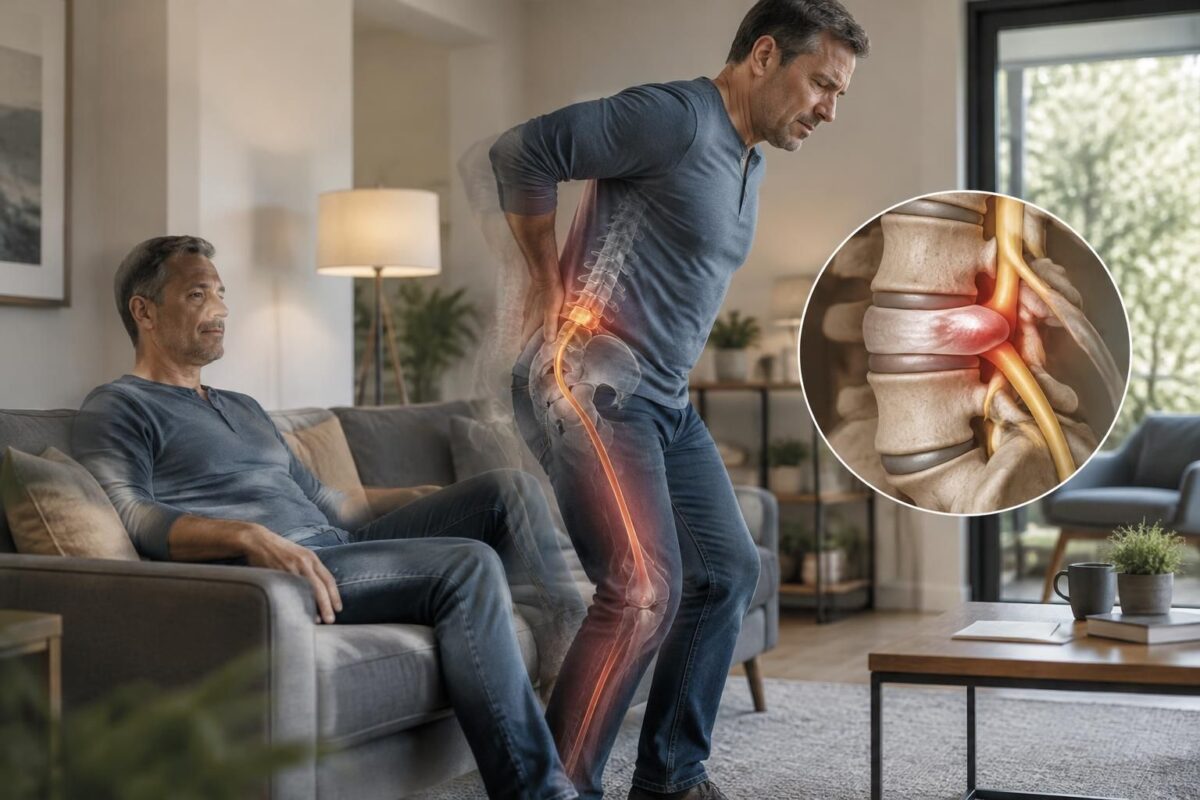
Disc herniation and fluctuating symptoms
IN BRIEF A disc bulge is a protrusion of the disc between the vertebrae, which may not necessarily cause symptoms. When pain fluctuates, its intensity can vary based on movements, activities, and other factors; the bulge visible on MRI does…
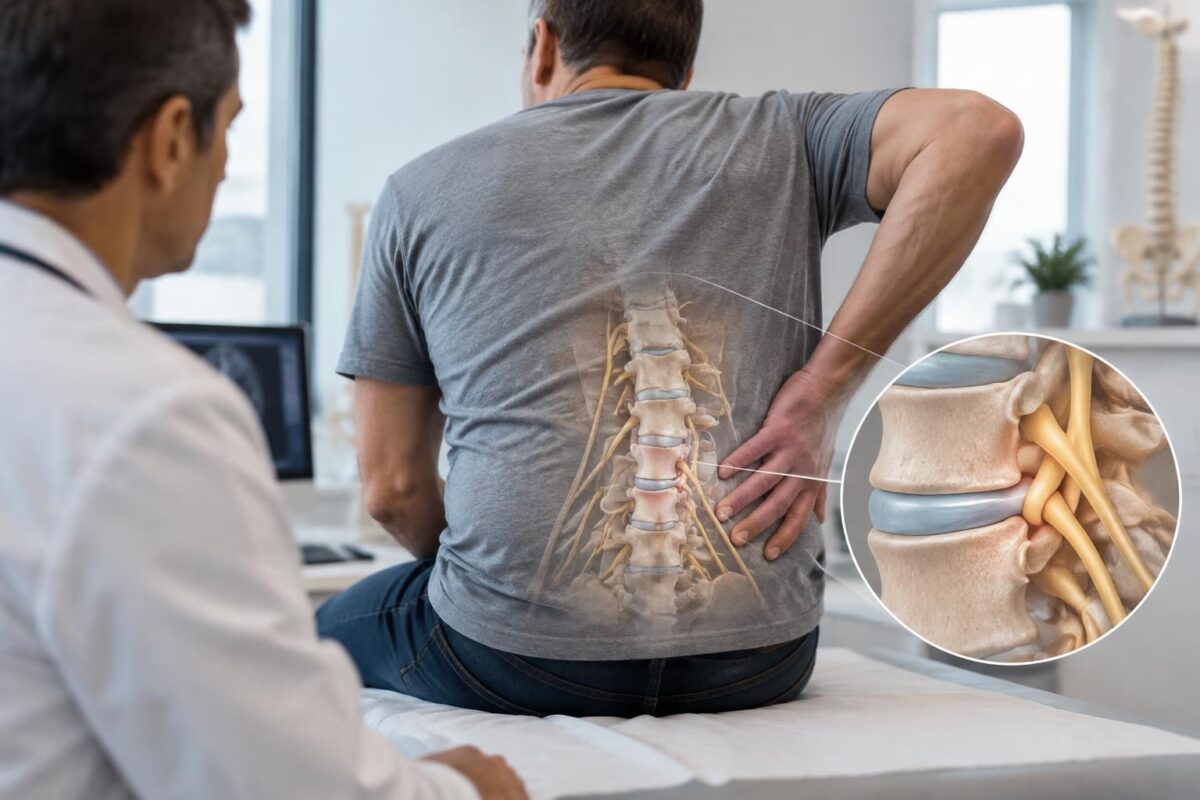
Disc bulge and mild nerve compression
IN BRIEF A disc bulge with mild nerve compression occurs when a disc slightly protrudes and may irritate a nerve, sometimes causing pain, tingling, or numbness. Symptoms and imaging do not always align: the assessment takes into account your movements…
What to do if sciatica pain arises?
In the absence of urgent signs, generally avoid prolonged bed rest. Gentle movements and daily activities adjusted to your tolerance can help maintain mobility. Temporarily reduce actions that clearly worsen the pain, such as certain flexions or carrying loads, then gradually resume your activities as progress allows.
Consult a physician or authorized healthcare professional to assess the symptoms, especially if they persist, worsen, or limit walking and sleep. Treatment depends on the situation and may include advice on staying active, prescribed medications, or rehabilitation. Manipulations or other manual therapies should be considered after evaluation and do not replace a medical diagnosis. Imaging is not routine: its relevance depends notably on the duration and evolution of symptoms as well as observed signs.
When to seek urgent care
Consult an emergency service immediately if you experience new difficulty urinating or retaining stool, numbness in the perineal region, or significant or progressive weakness in a leg or foot. Pain accompanied by fever, occurring after trauma, or rapidly worsening also requires prompt medical evaluation.
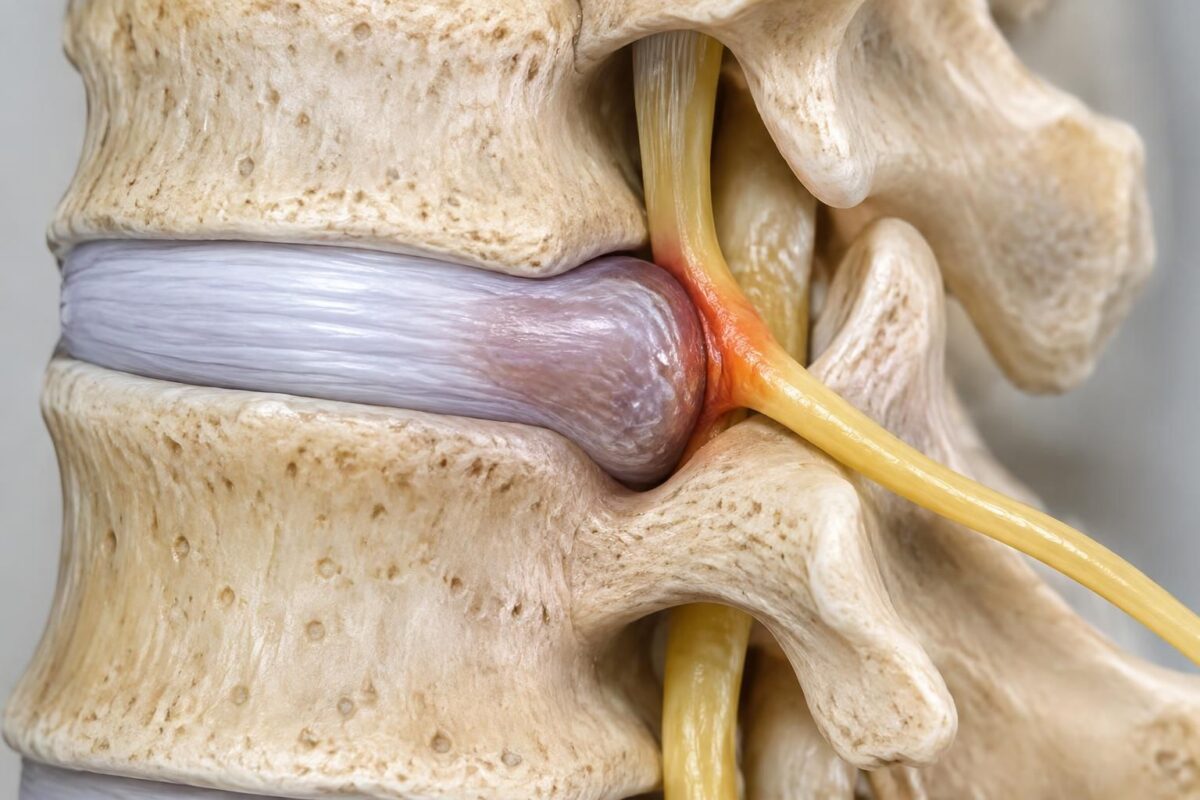
Disc herniation and foraminal irritation
IN BRIEF A disc bulge can reduce the space of the foramen, the opening through which a nerve exits, and contribute to its irritation. This can cause lower back pain radiating into the buttock or leg, tingling, or numbness. An…
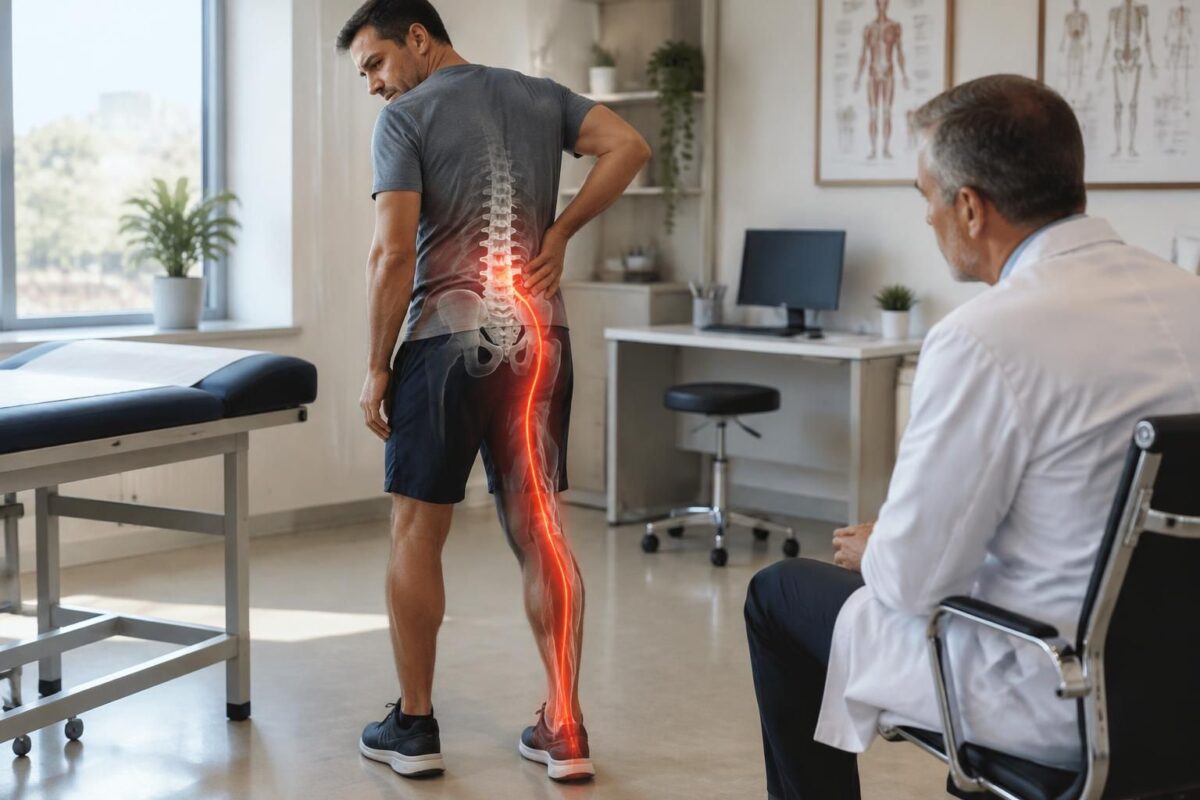
Disc bulge L5-S1 and pain toward the foot
IN SHORT A L5-S1 disc bulge corresponds to a disc that slightly overruns between the last lumbar vertebra and the sacrum. It can irritate a nerve root and cause pain resembling sciatica down to the foot, but this anomaly visible…
About the Author
Sylvain Desforges, B.Sc., D.O., N.D., Doctor of Osteopathy, is the founding president of TAGMED and the ACMA association. His practice is devoted to chronic pain of the spine, lower back pain, and pain associated with sciatica. The care offered at TAGMED Clinic may include, depending on the evaluation, motorized neurovertebral decompression, specific osteopathy, or precision impact therapy.
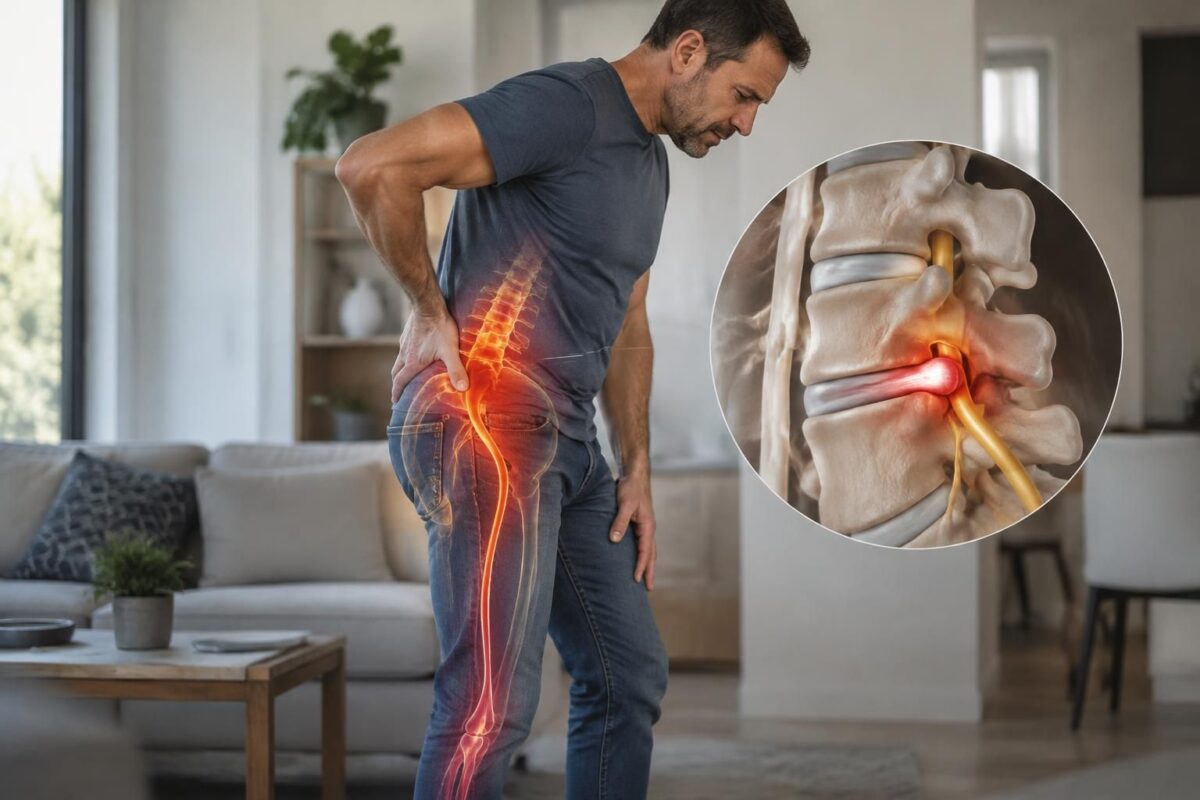
Disc herniation L4-L5 and leg pain
IN BRIEF A L4-L5 disc bulge is a protrusion of the lumbar disc that can contribute to pain in the buttock or leg if a nerve root is irritated. An MRI in a neutral position does not always show what…
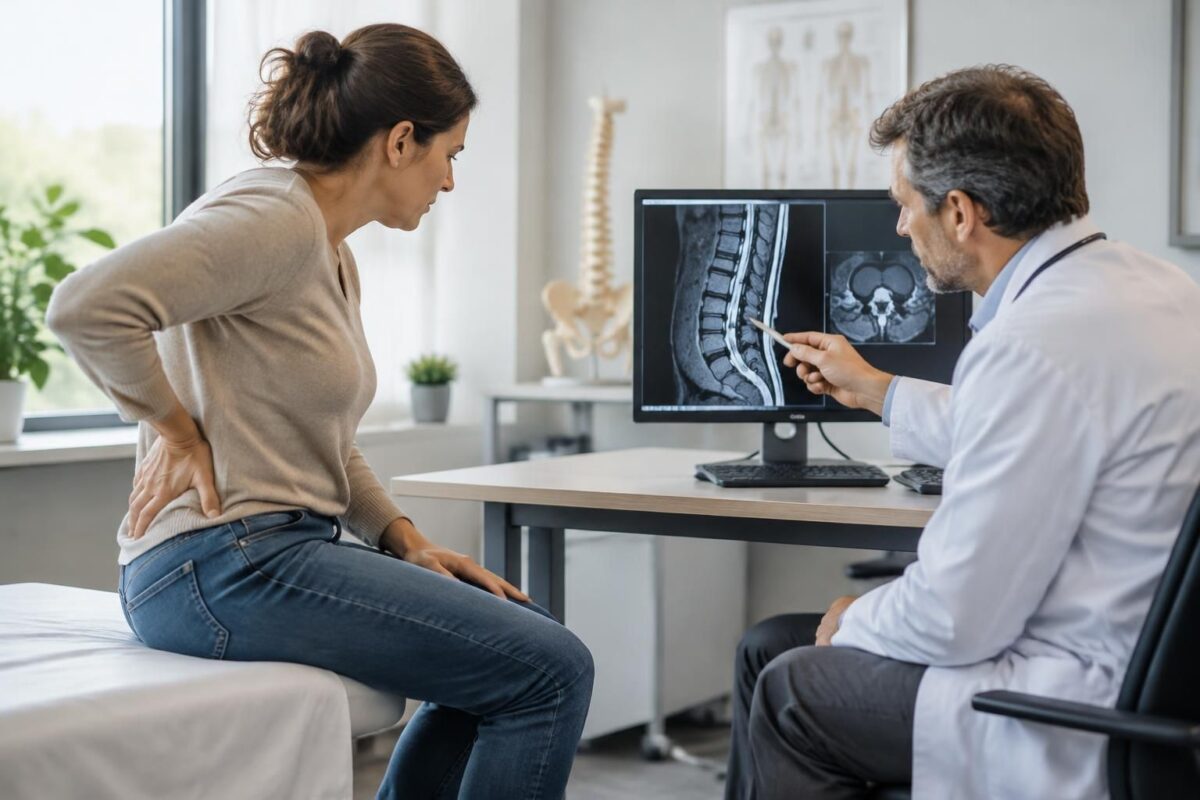
Disc bulge and sciatica: possible cause or simple discovery?
IN SHORT A disc bulge is a diffuse protrusion of a disc, sometimes associated with sciatica, but often discovered incidentally on imaging. To determine if it explains symptoms, one must compare the image to their path, the neurological examination, and…
Medical Warning
This content is provided for educational purposes and does not substitute for consultation, diagnosis, or treatment by a physician or other licensed healthcare professional. The author is neither a physician nor a specialist in a medical specialty recognized by the Collège des médecins du Québec. Osteopathic and manual medicine approaches do not replace medical follow-up.
| Possible Sign | Concise Manifestation |
|---|---|
| L5 Radicular Pain | May radiate from the buttock to the side of the leg, the top of the foot, and the big toe. |
| Tingling or Numbness | Possible on the top of the foot or near the big toe. |
| Foot Weakness | Possible difficulty in raising the foot or walking on the heels. |
| Lower Back Pain | May accompany pain in the leg, but is not always present. |
| Asymptomatic Protrusion | Common: an MRI image alone does not prove the cause of pain. |
| Warning Signs | Progressive weakness, loss of bladder or bowel control: consult urgently. |

Lumbar Disc Protrusion and the Choice of a Non-Surgical Approach
IN SHORT A disc protrusion is a bulging of a disc between the vertebrae; it often does not cause any symptoms. If it is accompanied by pain, a non-surgical approach may include appropriate activity, prescribed medications, and progressive rehabilitation. It…
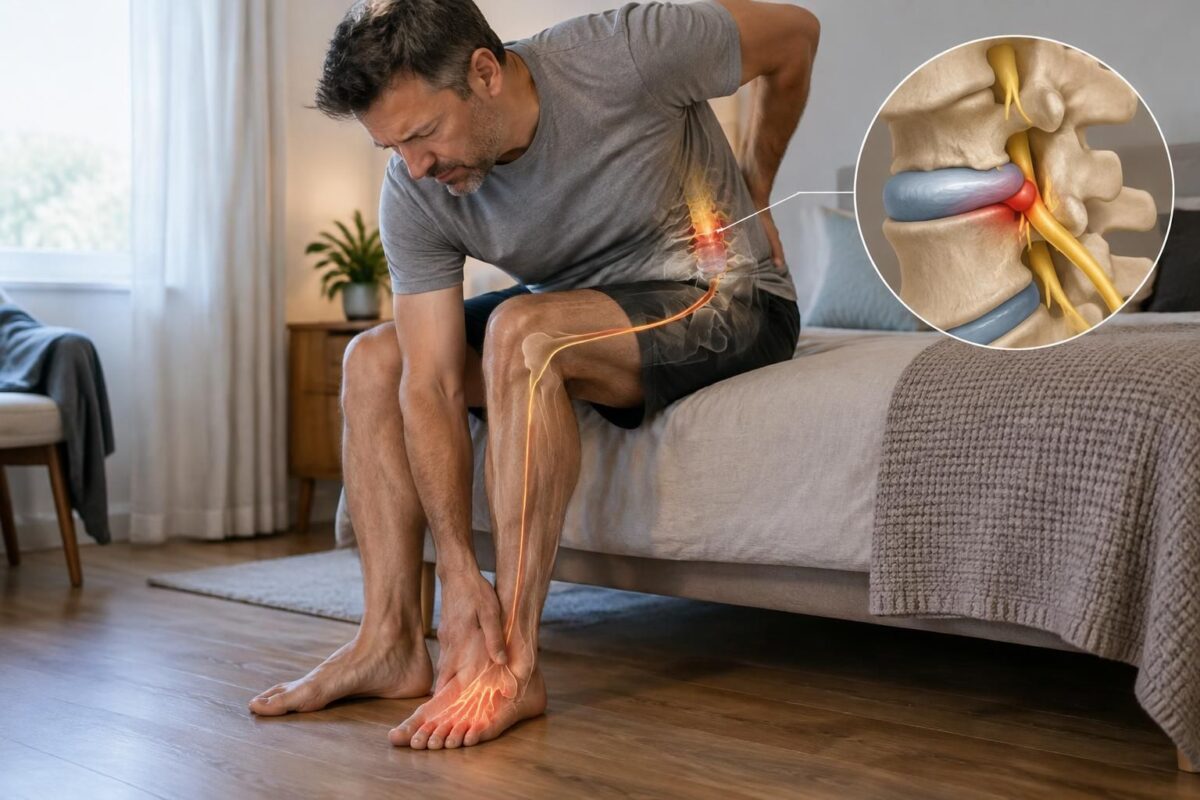
Disc herniation and pain on the top of the foot
IN BRIEF A disc protrusion is an intervertebral disc that bulges without necessarily rupturing. Pain on the top of the foot may sometimes be related to irritation of a lumbar nerve, but it does not alone confirm disc involvement. An…
L4-L5 Protrusion and Sciatic Pain: Fictional Testimonials and Possible Signs
The narratives below are fictional and presented for illustrative purposes. They do not correspond to identifiable patients and do not allow for a diagnosis. A protrusion observed on an MRI does not necessarily mean it is the cause of the pain: imaging must be interpreted alongside symptoms and clinical examination.
“My pain started from my lower back and went down into my leg.” In this example, the person describes pain on one side, moving through the buttock and side of the thigh, then down to the calf and the top of the foot. This pathway may suggest irritation of the L5 nerve root, sometimes associated with L4-L5 disc involvement, but other causes can produce similar symptoms.
“I also had tingling in my foot.” Another fictional account might mention prickling, numbness, or decreased sensitivity on the top of the foot or near the big toe. These sensory signs can accompany sciatic pain, but their presence and intensity vary from person to person.
“I noticed weakness when raising my foot.” A new difficulty in raising the front of the foot or walking on the heels may indicate a motor deficit. This sign merits prompt medical evaluation, particularly if it worsens or makes walking less stable.
“My exam showed a protrusion, but I was almost pain-free.” This is also possible: an L4-L5 protrusion may be discovered during imaging done for another reason, without pain or sciatica. Conversely, symptoms alone do not confirm that a protrusion is responsible for the pain.
When an L4-L5 involvement irritates the L5 root, the pain may start from the lower back, cross the buttock, and descend the side of the leg to the top of the foot or the big toe. Tingling, numbness, or weakness may be added, but the pathway is not always typical. Lower back pain alone does not automatically mean it is sciatica.
A healthcare professional can relate the symptoms, physical examination, and, when indicated, imaging results. Medical consultation is particularly important if the pain persists, worsens, or is accompanied by weakness. Do not attempt to deduce the severity of an injury solely from the MRI report.
Consult an emergency service without delay if you have difficulty controlling urination or bowel movements, numbness in the saddle area, significant or rapidly progressive weakness of the leg or foot, or severe pain accompanied by fever or occurring after trauma.
About the Author
Sylvain Desforges, B.Sc., D.O., N.D., Doctor of Osteopathy, is the founding president of TAGMED and the ACMA association. His practice focuses on chronic spinal pain, lower back pain, and pain consistent with sciatica.
The educational content published under his responsibility addresses the symptoms of sciatica, their possible causes — including disc herniation, disc impingement, foraminal stenosis, or irritation of a nerve root — as well as non-surgical approaches that may be considered based on evaluation. The care offered in the clinic may include, depending on the case, motorized neurovertebral decompression, specific osteopathy, or precision impactor.
Medical Warning
This information is provided for educational purposes and does not substitute for a consultation, diagnosis, advice, or treatment provided by a physician or other licensed health professional. The author is neither a physician nor a specialist in a medical specialty recognized by the Collège des médecins du Québec. The osteopathy, manual medicine, or functional support approaches described do not constitute medical acts and do not replace medical follow-up.
L4-L5 Disc Protrusion and Sciatic Pain: Possible Signs
A L4-L5 disc protrusion corresponds to a bulging of the disc located between the fourth and fifth lumbar vertebrae. Over time, the disc may lose some of its hydration and height, while its contour widens. This change does not automatically mean there is a serious injury: protrusions are common and may be discovered on imaging in people who have no pain.
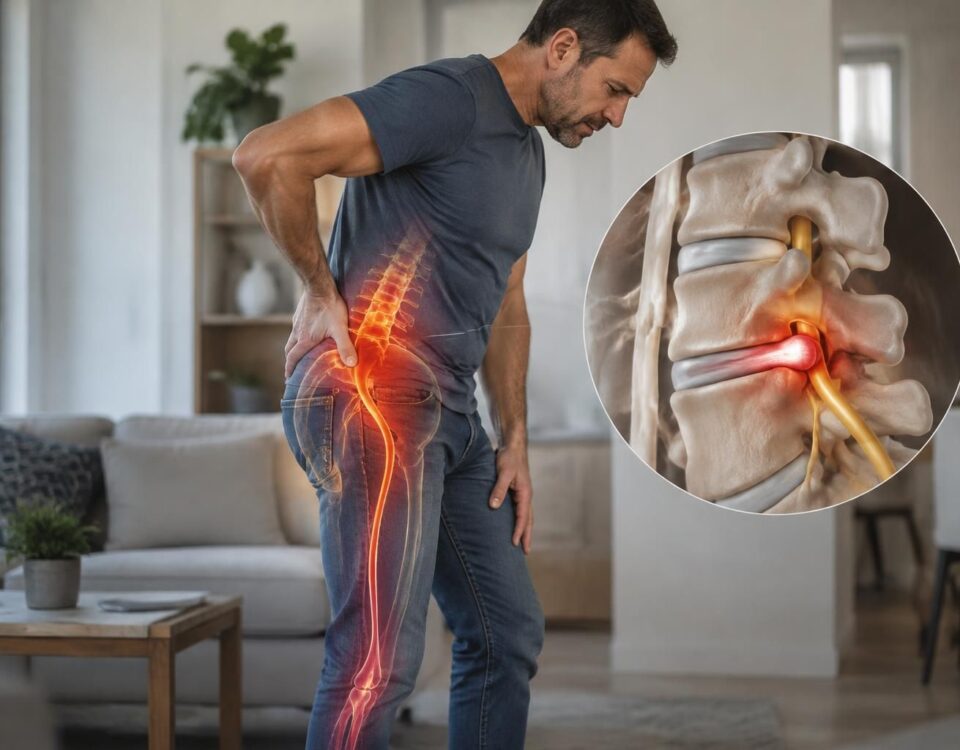
Symptoms mainly appear when the disc bulge irritates a sensitive structure, particularly a nerve root. At the L4-L5 level, a protrusion located toward the back or side may irritate the L5 root. The pain can then start from the lower back or buttock, descend the side of the thigh and calf, and then reach the top of the foot or the big toe. This pathway suggests sciatica, but its location varies from person to person and does not alone confirm the origin of the problem.
The pain may be described as burning, electrical shock, stabbing, or pulling sensation. Tingling, numbness, or decreased sensitivity may accompany the radiation. Some people notice weakness when raising the foot or big toe, or difficulty walking on the heels. These signs may correspond to nerve irritation and should be evaluated, particularly if they progress.
A L4-L5 protrusion can also cause localized lower back pain, stiffness, or discomfort during certain movements. Prolonged sitting, trunk flexion, coughing, or exertion can sometimes accentuate the symptoms, but reactions vary from person to person. Conversely, visible changes on MRI do not always explain the pain: the image must be interpreted alongside symptoms and clinical examination results.
The diagnosis generally relies on the history of symptoms and an examination of strength, sensitivity, reflexes, and mobility. An MRI may be considered when symptoms persist, worsen, or present concerning characteristics; it is not necessary in every recent episode of low back pain or sciatica. A licensed healthcare professional can determine whether imaging or further evaluation is indicated.
Management depends on the situation and the intensity of the symptoms. It may include individualized advice, maintaining appropriate activity rather than prolonged bed rest, and a progressive exercise or rehabilitation program. Medications, injections, or a specialist consultation should be discussed with a qualified professional. Surgical intervention is not systematic: it may be considered in certain persistent cases or when significant neurological deficits are observed.
Consult a doctor or emergency service quickly in case of significant or worsening weakness in the leg or foot, loss of bowel or bladder control, or numbness in the saddle region. A fever, recent trauma, severe pain, or rapid worsening also require medical evaluation.
About the author
Sylvain Desforges, B.Sc., D.O., N.D., Doctor of Osteopathy, is the founding president of TAGMED and the ACMA association. His practice focuses in particular on chronic spinal pain, lower back pain, and pain consistent with sciatica. His content provides educational information on symptoms, their possible causes, and non-surgical approaches that can be considered after evaluation.
Medical warning
This text is provided for educational purposes and does not replace a consultation, diagnosis, opinion, or treatment performed by a doctor or another licensed healthcare professional. The author is neither a physician nor a specialist in a medical specialty recognized by the Collège des médecins du Québec. Osteopathy, manual medicine, or functional support approaches do not constitute medical acts and do not replace medical supervision.
A L4-L5 disc protrusion may be visible on imaging without causing pain. However, if it irritates or compresses a nerve root, it may contribute to sciatica-like pain, accompanied by tingling, numbness, or, more rarely, weakness in the foot. Symptoms must be interpreted alongside clinical examination: the image alone does not determine the cause of the pain.
Possible signs of an L4-L5 protrusion and sciatic pain
At L4-L5, a protrusion may sometimes irritate the L5 nerve root. The pain may then start from the lower back or buttock and travel down the back or side of the thigh, then to the outside of the leg and the top of the foot, sometimes reaching the big toe. However, the pathway varies from person to person and does not alone confirm the level affected. For more information on this level, consult this article about L4-L5 disc protrusion, its causes, symptoms, and treatments.
Nerve irritation may also manifest as tingling, numbness, a sensation of pins and needles, or reduced sensitivity in the leg or foot. Some people notice weakness when lifting the foot or big toe. These signs are not systematic: a protrusion seen on MRI can remain silent, while similar symptoms may have other causes. The page on disc protrusion and possible nerve root irritation presents this link in more detail.
The location and shape of the protrusion also matter. A paramedian protrusion may, depending on its position and nearby structures, be associated with nerve irritation and pain radiating into the leg. However, the presence of a disc bulge does not automatically mean that a nerve is compressed. To better understand this distinction, you can refer to the explanations on paramedian disc herniation and the possible pain pathway, as well as L4-L5 disc protrusions.
Lower back pain may also be related to several combined factors: degenerative changes in the discs, osteoarthritis, movement habits, or repetitive strain. That is why it is better not to automatically attribute all leg pain to a protrusion. The article on disc herniation and lumbar osteoarthritis as possible combined causes of sciatica addresses this situation.
Evaluation takes into account symptoms, their evolution, and examination of strength, sensitivity, and reflexes. Imaging such as MRI may be considered by a healthcare professional based on the context, especially if signs persist or concerning elements are present. To delve into the specifics of the L4-L5 region, this article discusses lumbar discopathy L4-L5, and this resource describes lumbar disc herniation L4-L5. This general information does not replace personalized evaluation.
In the absence of urgent signs, maintaining appropriate activities and a gradual resumption of movements can be discussed with a professional. Exercises should be tailored to the individual’s capabilities and should not significantly exacerbate symptoms. Guidance on physical activity is presented in this guide dedicated to disc protrusion and sports training.
Quickly consult a doctor or an emergency service in case of significant or progressive weakness in the leg or foot, loss of urinary or bowel control, numbness in the saddle area, fever, recent trauma, or rapid worsening. For guidance regarding symptoms compatible with sciatica, you can refer to the resources of SOS Sciatica or request a sciatica assessment in Montreal. Additional information on disc protrusion is also available on SOS Sciatica.
About the author
Sylvain Desforges, B.Sc., D.O., N.D., Doctor of Osteopathy, is the founding president of TAGMED and the ACMA association. He dedicates his practice to chronic spinal pain, low back pain, and pain compatible with sciatica, particularly when the pain radiates to the buttock, leg, calf, foot, or toes.
Through SOS Sciatica, he publishes educational content on sciatica symptoms, possible causes such as disc herniation, disc pinching, foraminal stenosis, or irritation of a lumbar nerve root, as well as on non-surgical approaches that may be considered based on the evaluation. At TAGMED Clinic, care may include, depending on the case, motorized neurovertebral decompression, specific osteopathy, or precision percussion.
For an evaluation related to the treatment of sciatica in Montreal / Mont-Royal or the treatment of sciatica in Terrebonne, consult the services available at TAGMED Clinic.
Medical disclaimer
The information published on SOS Sciatica is provided for educational purposes and does not substitute for a consultation, diagnosis, advice, or treatment by a doctor or other licensed health professional. The author of this article is neither a physician nor a specialist in a medical specialty recognized by the Collège des médecins du Québec. The approaches of osteopathy, manual medicine, or functional support described on this site do not constitute medical acts and are not intended to replace medical follow-up.
Consult a doctor or an emergency service in case of loss of urinary or bowel control, anesthesia in the saddle area, significant or progressive weakness in the leg or foot, fever, recent trauma, severe pain, or rapid worsening. For more details, please read our Legal notice.

Sylvain Desforges, B.Sc., D.O., N.D., docteur en ostéopathie
Dr Sylvain Desforges, B.Sc., D.O., N.D., osteopath, is the founding president of TAGMED and of the ACMA association. He dedicates his practice to chronic spinal pain, low back pain and symptoms compatible with sciatica, particularly when pain radiates toward the buttock, leg, calf, foot or toes.
Through SOS Sciatique, he publishes educational content on sciatica symptoms, possible causes such as disc herniation, disc narrowing, foraminal stenosis or irritation of a lumbar nerve root, as well as non-surgical approaches that may be considered according to the evaluation. At Clinique TAGMED, care may include, depending on the case, motorized neurovertebral decompression, specific osteopathic care or precision percussion.
For an evaluation related to sciatica treatment in Montreal / Mount Royal or sciatica treatment in Terrebonne, please consult the services available at Clinique TAGMED.
Medical disclaimer
The information published on SOS Sciatique is provided for educational purposes only and does not replace a consultation, diagnosis, opinion or treatment provided by a physician or another authorized healthcare professional. The author of this article is neither a medical doctor nor a specialist in a medical specialty recognized by the Collège des médecins du Québec. The osteopathic, manual medicine or functional support approaches described on this site do not constitute medical acts and are not intended to replace medical follow-up.
Consult a physician or emergency service in cases of loss of bladder or bowel control, anesthesia in the saddle area, significant or progressive weakness in the leg or foot, fever, recent trauma, severe pain or rapid worsening of symptoms. For more details, please read our Legal Notice.