Osteopathy and recovery after a fracture: regain mobility
28/06/2026
Osteopathy and well-being: a natural solution against chronic pain
28/06/2026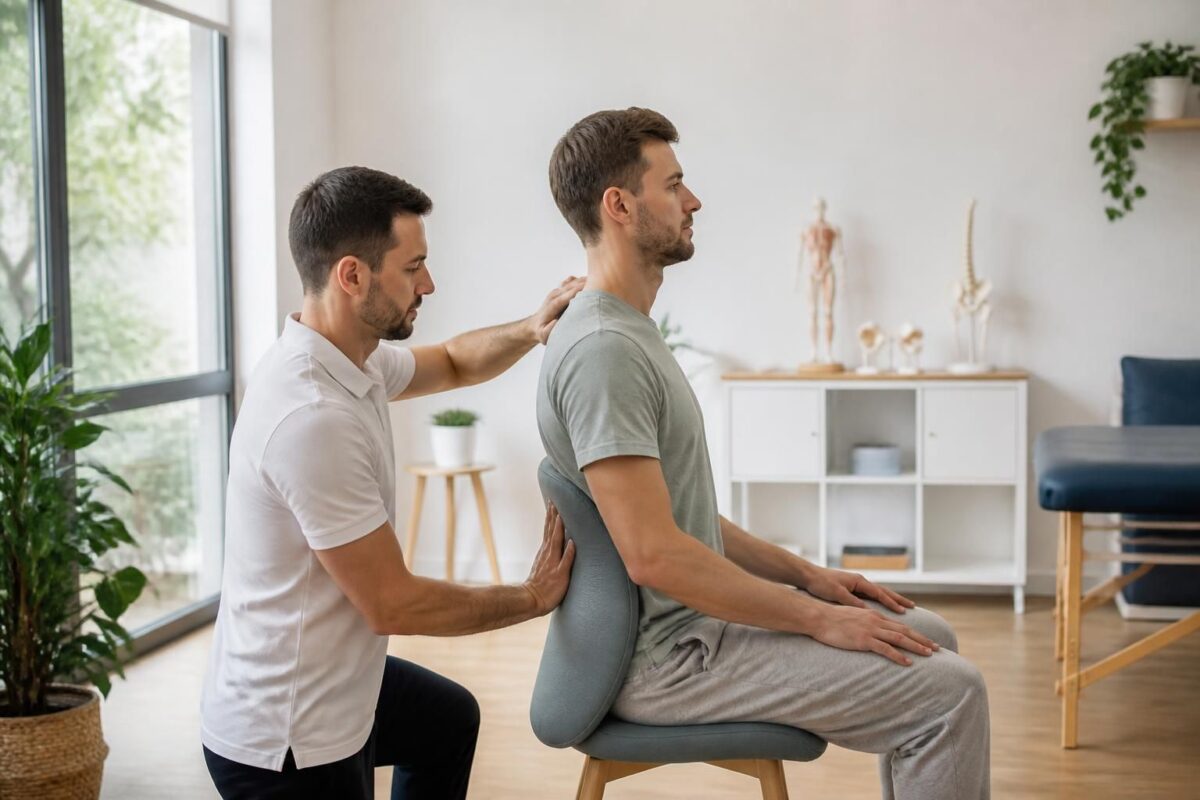
In short
| In short, the Osteopathic approaches for Optimize posture daily use Soft manual techniques To restore thePostural balance, reduce the Posture-related pain and improve the mobility joints. They start with a Overall assessment posture, identifying the imbalances and uncomfortable positions. The practitioner applies Gentle techniques And some Personalized postural exercises To realign the segments, release tension and prevent recurrences. The benefits include a better Daily posture, less fatigue and improved overall well-being. accessible to Montreal and its surroundings, this approach is particularly useful for Office professionals and people working from home. |
osteopathic approaches to optimize the posture on a daily basis are based on a Overall assessment of the body and on a targeted intervention to correct the imbalances that set in over time. The goal is to improve the mobility, reduce tension and integrate lasting postural habits.
- Overall postural evaluation To identify areas of tension and compensation in the column, shoulders and pelvis.
- Gentle techniques To release tension, realign the joints and restore postural balance.
- Personalized advice On strengthening exercises, stretching and daily habits adapted to everyone.
- Postural rehabilitation aimed at integrating corrections in the daily and the professional environment.
- Approach integrated With ergonomics and physical activity adapted to support results sustainably.
This article presents osteopathic approaches to optimize posture on a daily basis. He describes the Osteopathic technique of postural relaxation (TORP), its principles and the mechanisms by which it can improve thePostural alignment. The objective is to provide simple and effective benchmarks to promote comfort, prevent tension and support better Daily posture, while remaining compatible with appropriate support by a professional when necessary.
The osteopathic technique of postural relaxation (TORP)
The Torp is inspired by positional release or Strain-CountersTrain, concept developed by Dr. Lawrence H. Jones. She is looking for a Comfort position which allows the body to release muscle tension and rebalance the joint segments. The osteopath assesses the posture, identifies areas of tension and applies gentle manipulations, associated with targeted stretching and postural advice. The objective is to restore harmony between muscles, joints and fascias, while promoting better posture on a daily basis. This approach focuses on patient education, so that it actively participates in maintaining its postural balance between sessions. To deepen the foundations and general benefits of osteopathy, resources can be consulted on non-invasive approaches that support the management of osteopathy. Chronic pain. Learn more.
Postural education and daily habits
Osteopaths systematically integrate a Postural education in each session. They explain how to modify everyday gestures, adjust theergonomy from the workstation and favor simple routings that minimize the constraints on the spine. Practical advice on movement, sitting and transitions between sitting and standing help sustainably support thePostural balance.
Complementary resources have the benefits of osteopathy to prevent muscle imbalances and improve Joint flexibility. These concepts are part of a global strategy to maintain the posture and daily mobility. See preventive effects.
Integration of postural principles into everyday life
The osteopathic approach is not limited to the session. It aims at a sustainable integration of postural principles in the gestures and activities of the day. thePostural balance Reinforced by simple habits: pelvis alignment, neck and shoulder positioning, and redistribution of loads during common movements. This approach is supported by the general benefits of osteopathy, particularly on the circulation and the flexibility fabrics.
To better understand global mechanisms, resources describe how osteopathy can optimize the lymphatic circulation and support the Joint mobility As part of a postural approach. Learn here.
Special cases and security
In practice, osteopathy favors gentle and adapted approaches. It can be associated with other therapeutic approaches when relevant, always in a secure and personalized setting. When there is specific pain or limitation, the use of specialized resources remains necessary and exercises or stretching must be evaluated and supervised by the health professional.
Useful links and additional resources
To deepen the postural aspects and the benefits of osteopathy, several resources can be consulted:
Benefits on joint flexibility,
Prevent muscle imbalances,
Why osteopathy is a non-invasive solution,
and the chapter devoted to neurovertebral decompression and other related approaches in the relevant field. neurovertebral decompression.
Knowledge and training: Osteopaths are trained in recognized institutions such as NUMSS, NAO, National University of Medical Sciences and National Academy of osteopathy, and are based on the principles and practices validated within the framework of their discipline. For general information related to practice and safety, it is useful to consult official resources and opinions from recognized professional associations such as ACMA, the College of Canadian Osteopaths or the College of Canadian Osteopaths.
For more details on conceptual bases and clinical applications, dedicated posture and osteopathy resources are available in the authorized areas mentioned below. legal notice.
“Medical disclaimer: The information and advice provided on this site does not replace the health professional’s benefit, diagnosis or treatment. Please note that Dr. Sylvain Desforges osteopath is neither a doctor of medicine nor a doctor, and is not a specialist in a medical specialty as defined by the Collège des Médecins du Québec. Manual medicine, functional medicine and sports medicine as described on this site exclude any medical treatment or diagnosis made by a doctor or specialist doctor. Always consult your doctor for any medical questions. For more details, please read our full legal notice. »
- Overall postural evaluation — Identifies imbalances and tensions
- Segment Alignment — Corrects cervical, thoracic and lumbar alignment
- Muscle tension management — Targeted relaxation of muscle chains
- Joint mobility — Improves mobility and fluidity of movement
- Postural rehabilitation — Personalized exercises to maintain posture on a daily basis
- Postural education — Practical advice for adopting an optimal posture
- Breath control — Synchronizes breathing and posture to reduce tension
- Integration Movement — Incorporates micro-methods and routines into everyday life
- Ergonomic settings — Simple adjustments of the workstation and furniture
- Prevention and maintenance — Monitoring plan to prevent future imbalances

This article presents the Osteopathic approaches To optimize the Daily posture, by combining overall assessment, postural relaxation and simple exercises, to improve mobility, reduce pain and prevent imbalances. You will discover how a body-centric approach can help you adopt lasting habits, without systematically resorting to invasive acts.
Overall assessment and basic principles
An effective osteopathic approach begins with a Overall assessment Alignment of body segments, biomechanics and muscle chains. The practitioner identifies areas of tension, postural compensation and repetitive stressors that alter body dynamics. This approach makes it possible to target areas where a gentle intervention can have a lasting effect on the entire posture.
Posture and functional balance
posture is considered as a living system, where Muscle balance And joint relationships guide therapeutic choices. By working on the harmony between the structures of the trunk, pelvis and limbs, the osteopath aims to restore a harmonious spine And to prevent recurring tensions that disrupt everyday life.

How osteopathy improves the quality of life of active people
In short In short, theosteopathy is a global approach that Optimizes mobility and the function of the body of ACTIVE PEOPLE, for a better quality of life. It helps prevent injury and reduce Musculoskeletal pain While promoting the Sports recovery.…

Osteopathy and sports recovery: prepare the body for lasting performance
In short In short, Osteopathy and Sports recovery is one Global manual approach that sustainably prepares the body for the effort by restoring mobility and circulation After the effort. It is a discipline that acts on the sinews, the joints,…
Postural relaxation and associated techniques
Among the key approaches, the Postural relaxation Based on the search for a position of comfort that allows the body to release muscle tension and improve joint mobility. This method is based on the idea that the body responds better and rebalances when tension is reduced in muscles and fascias around problem areas.
Release in position and soft repositioning
The practitioner uses gentle manipulations and subtle adjustments to realign the segments and promote the Back to balance. Maintaining the comfort position for a few moments allows the nervous and muscular system to organize itself differently, reducing spasms and movement limitations.
Postural education and practical advice
What distinguishes these approaches is the emphasis onPatient education. In addition to the technical gestures, you receive personalized exercises and advice to maintain a posture suitable for work, at home and during daily activities. This active dimension allows you to become an actor in your well-being and achieve more lasting results.
Why Osteopathy Is Essential For Recovery People
In short In short, Osteopathy in convalescence is an approach manual and holistic which helps to accelerate the recovery by restoring The balance, the mobility and a good circulation fabrics. it contributes to Reduce the pain, support the Back to…

Osteopathic manipulations to strengthen post-traumatic muscles
In short In short, Osteopathic manipulations for Strengthen post-traumatic muscles constitute a gentle manual approach aimed at restoring the mobility, reduce the pain and facilitate the Functional rehabilitation After a injury. What is Is it? A series of precise gestures…
Integration into daily life and recommended practices
Daily posture is managed through simple and repeatable habits. Osteopathy recommends short, regular routines to support posture without overloading the body. The objective is to install conscious gestures that correct postural accumulations and prepare the body to better respond to requests.
Ergonomics and simple adjustments
Adapting your workstation and your daily gestures is essential. Alternate sitting and standing positions, maintaining an ergonomic backrest, and optimal placement of screens and keyboards facilitate an aligned column and free breathing. Lumbar supports or height adjustments can be useful depending on your activity.
Breathing, mobility and targeted reinforcement
The Diaphragmatic breathing And targeted mobility exercises complement manual techniques. Strengthen the muscles of the abdominal belt, back and hips, while working on the flexibility of the posterior chains, helps to stabilize the trunk and support a lasting posture.
| Approach | posture impact |
|---|---|
| Postural relaxation technique | Comfort position landmark and relaxation muscle to improve the alignment global. |
| Postural education and exercises | Simple exercises and tips to maintain a Neutral posture and prevent tensions. |
| Global biomechanical assessment | Analysis of thealignment and from the biomechanical for targeted corrections. |
| Gentle mobilizations and targeted stretching | improve the Joint mobility and reduce the strain which distort the posture. |
| Decompression and neurovertebral balancing | Reduces stress on nerves and spinal segments for better Postural balance. |
| osteopathy Visceral and posture | connects the breathing and the functioning of the organs at the Overall posture. |
| Cranial osteopathy and cervical posture | Optimize the cervical tone and the head position for an aligned column. |
| Ergonomic advice and layout | adapt thescreen, the seat and the Lumbar support To support a Neutral posture. |
| Functional postural rehabilitation | integrates the Daily movements To anchor a sustainably balanced posture. |

Osteopathy and prevention of work-related musculoskeletal disorders
In short theosteopathy is one Manual approach that restores body balance and prevents MSD related to work. Its advantages: reduction of tension, improvement of mobility and prevention of chronic pain. She is preventive and healing, suitable for office and trades…

The benefits of osteopathy to treat muscle imbalances
In short theosteopathy is a manual approach to restore themuscle harmony and postural considering the body as a whole. Its main benefits include the reduction of aches and tensions, the improvement of the mobility and from the posture, and prevention…
Testimonials on osteopathic approaches to optimize posture on a daily basis
“Since my osteopathy sessions focused on posture, my lower back pain has decreased and I hold myself better at work. The Postural exercises offered follow me throughout my day and are not complicated to integrate. »
“The approach centered on the Postural relaxation Really made the difference. My tensions in the neck and shoulders disappeared gradually and I breathe better, even in times of stress. »
“The personalized advice on ergonomics and lifestyles allowed me to adopt simple reflexes to protect my spine on a daily basis and gain energy. »
“Sweet manipulations and helpalignment of the body improved my mobility and reduced the points of tension that returned after a day standing or sitting. »
“Today, the posture Has become a habit: I correct my position in the office, I stretch regularly and I see a much less fatigue. »
“I recommend these approaches to anyone who spends time sitting. Osteopathy offers methods sweet and effective To prevent tension and promote better posture on a daily basis. »
In the field of osteopathy, optimize the posture On a daily basis goes far beyond a simple apparent recovery. It’s about using an approach holistic Who seeks to harmonize musculoskeletal chains, to release tension and to promote lasting stability of the body in all its activities. The goal is to allow each individual to move with balance, fluidity and comfort, while preventing pain linked to poor postural habits.
Postural evaluation in osteopathy is global and dynamic. She is interested in the alignment of the skull, the column, the pelvis and the limbs, but also in the breathing and the dynamics of walking or standing. The practitioner observes the asymmetries, the recurring tensions and the compensations that are put in place during daily movements. This approach identifies areas of tension, joint restrictions and imbalances that, if left untreated, can maintain or aggravate pain.
the techniques used aim to Postural relaxation targeted and personalized. Through gentle manipulations, controlled stretching and soft tissue work, the osteopath seeks to restore thealignment joints and release tensions that limit mobility. This work can be supplemented by postural advice and simple exercises, designed to be carried out on a daily basis and strengthen the effectiveness of the treatment without causing discomfort.
Posture is not just a question of musculoskeletal chain; It is also intimately linked to the breathing and thorax mobility, diaphragm and pelvic muscles. By working on costal mobility, abdominal tone and lumbar support, osteopathy helps create a stable base that supports daily gestures. This respiratory dimension contributes to a better Diaphragmatic function and reduced stress on the spine.
At the same time, the postural approach focuses on strengthening deep chains and neuromuscular control. Targeted exercises, adapted to the lifestyle and activities of each one, make it possible to maintain the gains obtained in the session and to prevent relapses. Postural education plays a central role: it gives each individual the tools to adopt more neutral positions in the office, car and at home, and to integrate active breaks and micro-stretching into their routine.
Expected results include a reduction of tensions, a Improving mobility, and a decrease in pain related to repetitive or uncomfortable postures. This approach is personalized and can be integrated into other therapeutic modalities when necessary, in order to optimize benefits for musculoskeletal health and overall well-being. By placing the patient at the center of the process, osteopathy offers a concrete way to act on the posture and, in turn, on the quality of daily life.
This document explores how Osteopathic approaches can help optimize the posture On a daily basis, by combining a global body assessment, adapted manual gestures and practical advice to prevent tension and improve mobility. The objective is to offer you concrete and actionable elements to gradually integrate good postures into your activities, from work to screen to sports practice.
Note: This section provides an operational summary and practical recommendations without formulating a general conclusion on all possible outcomes.
The Osteopathic approaches To optimize the posture rely on a Overall assessment Alignment of body segments, joint mobility and muscle tone. By associating Gentle techniques, targeted exercises and ergonomic advice, they aim to reduce constraints on the column, shoulders and pelvis, while promoting better synchronization of structures.
To act on a daily basis, favor simple and regular micro-actions: Active breaks To mobilize the back and shoulders, targeted stretching, maintaining a Neutral posture during repetitive tasks, and the integration of exercises to strengthen the trunk support muscles. These gestures support the mobility and the stability posturals, thus reducing the risk of pain and dysfunction in the long term.
The resources and approaches presented invite a proactive and personalized approach. To deepen and implement these principles, you can explore resources dedicated to osteopathy and posture and choose recognized readings and guides that detail the mechanisms and exercises adapted to your profile. Among the useful references you will find:
To go further, consult these reliable and detailed resources, which include the link between osteopathy and posture, joint pain, recovery after tendonitis, and the impact on physical performance:
Osteopathy and posture: Winning Duo,
Natural and effective solutions,
Osteopathic approaches to optimize posture on a daily basis,
How osteopathy acts on inflammatory pain,
Supports recovery after tendonitis,
Improves physical performance in athletes,
Prevention of musculoskeletal disorders,
Focus on the different osteopathic practices,
Osteopathy and postural disorders,
Optimize your posture with osteopathy.
Osteopathy and chronic leg pain: regaining an optimal quality of life
In short In short, Osteopathy is one Global manual approach aimed at reducing Chronic leg pain and improve the quality of life. What is it? Non-drug therapy using the hands to identify restrictions and treat lesional chains. How does it…
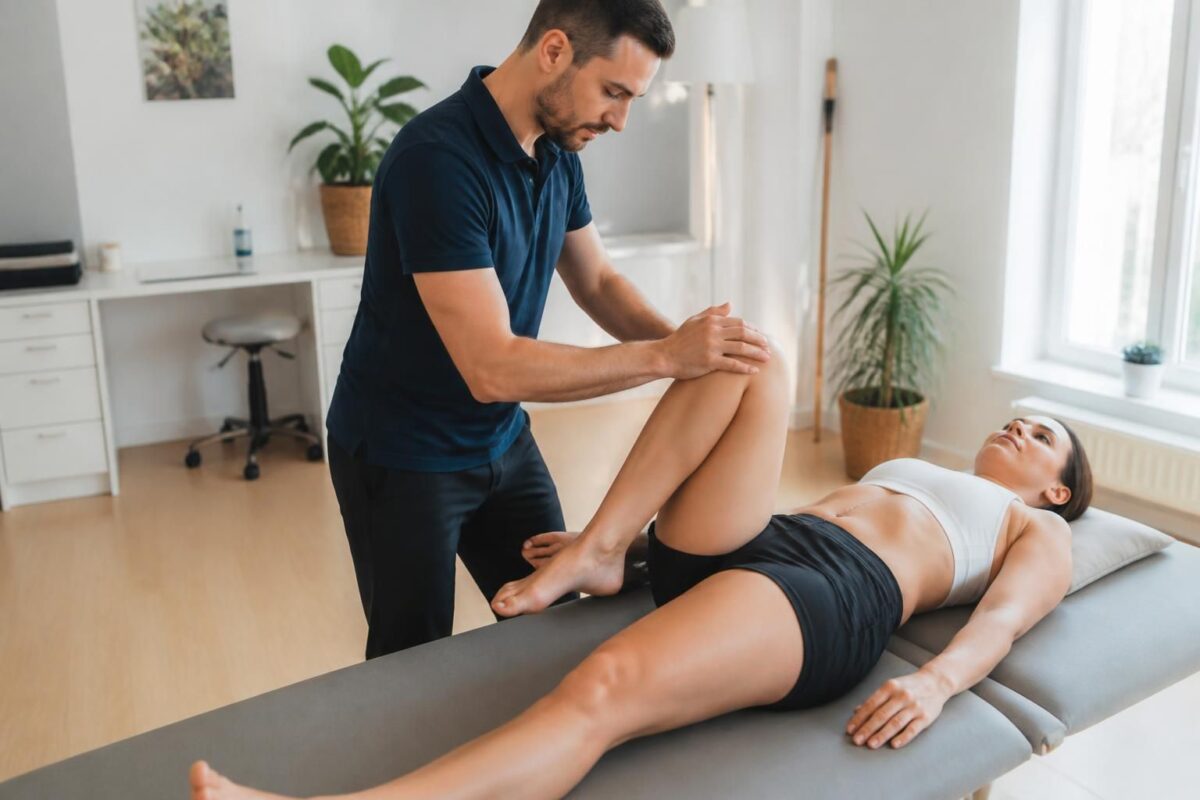
How osteopathy supports recovery after complex surgery
In short In short, Post-operative osteopathy is an approach fresh which supports the recovery After a Complex surgery. It helps to reduce the pain and the fatigue, improves the mobility and accelerates the healing thanks to a better vascularization and…

Dr Sylvain Desforges, B.Sc., D.O., N.D., osteopath, is the founding president of TAGMED and of the ACMA association. He dedicates his practice to chronic spinal pain, low back pain and symptoms compatible with sciatica, particularly when pain radiates toward the buttock, leg, calf, foot or toes.
Through SOS Sciatique, he publishes educational content on sciatica symptoms, possible causes such as disc herniation, disc narrowing, foraminal stenosis or irritation of a lumbar nerve root, as well as non-surgical approaches that may be considered according to the evaluation. At Clinique TAGMED, care may include, depending on the case, motorized neurovertebral decompression, specific osteopathic care or precision percussion.
For an evaluation related to sciatica treatment in Montreal / Mount Royal or sciatica treatment in Terrebonne, please consult the services available at Clinique TAGMED.
Medical disclaimer
The information published on SOS Sciatique is provided for educational purposes only and does not replace a consultation, diagnosis, opinion or treatment provided by a physician or another authorized healthcare professional. The author of this article is neither a medical doctor nor a specialist in a medical specialty recognized by the Collège des médecins du Québec. The osteopathic, manual medicine or functional support approaches described on this site do not constitute medical acts and are not intended to replace medical follow-up.
Consult a physician or emergency service in cases of loss of bladder or bowel control, anesthesia in the saddle area, significant or progressive weakness in the leg or foot, fever, recent trauma, severe pain or rapid worsening of symptoms. For more details, please read our Legal Notice.