How Osteopathy Improves Physical Performance in Athletes
28/06/2026
Osteopathy and recovery after a sports injury: Optimize healing
28/06/2026
In short
| In short, Osteopathic approaches to treat upper limb pain use Soft manual techniques To rebalance the tissues and joints around the shoulders, of elbows And some cuffs. They aim to Reduce the pain and to Improve mobility while promoting prevention by Osteopathic evaluation and advice in ergonomy and in strengthening. At Montreal, this service is particularly beneficial for ACTIVE PEOPLE suffering from persistent pain and looking for an approach non-drug and adapted to way of life. |
osteopathy for the Upper limb pain offers an approach holistic Aiming to restore theMuscle and joint balance shoulders, elbows and wrists, and to promote a Sustainable mobility. Key techniques include the Myofascial relaxation and the Soft tissue techniques To release tensions, Joint mobilizations To restore amplitude and Structural adjustments soft to lift blockages. A Postural evaluation Identifies imbalances and adjusts treatment, while advice in ergonomy and strengthening exercises support prevention and sustainable improvement of mobility and from the quality of life.
Summary: This article presents the osteopathic approaches used to treat upper limb pain, including the shoulders, elbows and wrists. It describes the initial assessment, manual techniques and the importance of a comprehensive care plan. The objective is to restore functional balance, improve mobility and promote sustainable recovery, while respecting the particularities of each patient and professional recommendations.
In osteopathy, the treatment of pain in the upper limbs is based on an approach holistic and an In-depth assessment Musculoskeletal dysfunctions and joint imbalances. The objective is to reduce pain, improve mobility and propose lasting solutions taking into account the postural and environmental factors that influence the region concerned. For professionals, the training received in institutions recognized as NUMSS, NAO or National University of Medical Sciences contributes to anchoring a practice based on evidence and on the integration of the most appropriate techniques.
Assessment and global approach
The first step is a Targeted anamnesis and an Systematic palpation Structures around the shoulder, elbow and wrist. The osteopath observes the posture, the proprioception, and the movements as a whole. The evaluation favors the individual, his functional history and his daily or sporting activities. This approach makes it possible to identify areas of tension, joint blockages and myofascial chains that can influence the symptomatology of the upper limb.
Soft tissue techniques and myofascial relaxation
The soft tissue work aims to release muscle tension and fascia-les adhesions in order to promote better circulation and relaxation of the tissues. The Myofascial relaxation And targeted stretches are among the tools used to reduce spasms, reduce local inflammation and facilitate return to functional movements.
Structural manipulations and joint mobilizations
The Joint mobilizations soft and structural manipulations make it possible to restore theAlignment and amplitude upper limb joints. The shoulder, elbow and wrist may have restrictions that limit mobility. By working on these structures, the osteopath aims to reduce pain and improve the overall function of the upper limb, while remaining in clear indications adapted to each patient.
Functional techniques and postural approach
Functional techniques, such as proprioceptive work and gentle repositioning approaches, help restore muscle coordination and stability. A Postural education And ergonomic advice is integrated to prevent recurrences and promote appropriate use of the upper limb in professional and leisure activities.
Visceral approaches and body balance
In some cases, techniques visceral can be considered to identify internal constraints that can influence the mechanics of the upper limbs. The goal is to achieve an overall balance of the body and to support the local mobility of the shoulders, elbows and wrists.
Elements of prevention and education
Beyond treatment, the osteopath offers practical recommendations to prevent tension and pain. The focus is onergonomy At work, the appropriate warm-up of sports activities and maintaining a balanced muscle tone around the shoulder belts and upper limbs. Postural hygiene advice helps to reduce the likelihood of recurrence.
Dialogue and collaboration
A successful osteopathic approach is part of A multidisciplinary framework. The osteopath can collaborate with other health professionals and rely on recognized professional associations such as ACMA and the College of Canadian Ostopaths. This collaboration ensures comprehensive and appropriate care for each patient.
Practical resources and references
To deepen the techniques and practical considerations, several resources offer clear syntheses on the Osteopathic techniques and their application, including resources at training sites and practical guides.
In addition, certain information and reference channels make it possible to enrich the practice, such as the pages dedicated to osteopathy and sports recovery. To explore these contents, you can view resources such as
Osteopathy and sports recovery, a tool to improve resilience,
How Osteopathy Supports Recovery After Tendinitis,
The benefits of osteopathy to strengthen post-injury muscles.
For a general presentation of the techniques and their application framework, the TagMed portal presents clinical resources and relevant action points, accessible via Tagmed Clinic.
Additional insights into osteopathic practices and their mechanisms can be consulted via other specific public resources. For a global vision of osteopathic practices, also consult articles such as Focus on the different osteopathic practices, and The different techniques used by osteopaths.
To learn more about the resources and training framework, recognized training courses include NUMSS and NAO, as well as National University of Medical Sciences and National Academy of osteopathy, which offer professional and certifying courses in osteopathy.
For additional information specific to sports recovery and post-injury reinforcement, targeted content exists on Why osteopathy is essential for active people and For people in rehabilitation.
| Aspect | osteopathy | Other therapies (example) |
|---|---|---|
| Approach | holistic and manual | varied, sometimes targeted at a structure |
| goals | Reduce pain and tension, restore mobility | Symptomatic relief, sometimes limitation of effects |
| Risk | Low risk, few side effects | Varies depending on therapy |
For additional information on benefits and mechanisms, you can consult referenced resources on authorized domains.
Clinical feedback and practical examples
Patients describe progressive improvement after a series of sessions, with decreased pain and better mobility. Some situations show correction of postural patterns and reduced tension in the shoulder girdle, making daily and professional activities easier.
To complete the informative framework, you can explore additional perspectives on osteopathic practices and their indications via the mandatory resources mentioned above.
To learn more about osteopathic approaches and associated conditions, you can also consult the following pages:
Osteopathy and sports recovery, a tool to improve resilience — sosciatica
Medical Disclaimer: The information and advice provided on this site does not replace the health professional’s diagnosis or treatment. Please note that Dr. Sylvain Desforges osteopath is neither a doctor of medicine nor a doctor, and is not a specialist in a medical specialty as defined by the Collège des Médecins du Québec. Manual medicine, functional medicine and sports medicine as described on this site exclude any medical treatment or diagnosis made by a doctor or specialist doctor. Always consult your doctor for any medical questions. For more details, please read our full legal notice.
Medical disclaimer: The information and advice provided on this site does not replace the advice, diagnosis or treatment of a healthcare professional. Please note that Dr. Sylvain Desforges osteopath is neither a doctor of medicine nor a doctor, and is not a specialist in a medical specialty as defined by the Collège des Médecins du Québec. Manual medicine, functional medicine and sports medicine as described on this site exclude any medical treatment or diagnosis made by a doctor or specialist doctor. Always consult your doctor for any medical questions. For more details, please read our full legal notice.
- Evaluation and plan — Postural analysis targeting shoulder, arm and hand
- soft tissues — myofascial relaxation, stretching, release of adhesions
- Joint manipulations — Accurate joint adjustments (shoulder, elbow, wrist)
- Functional techniques — Posture and Proprioception, Counters-Strain
- Visceral techniques — Visceral influences on the upper limb
- Education and ergonomics — Posture advice and work habits
- Reduction of inflammation — Improved circulation and tissue nutrition
- Mobilization and mobility — Increased joint amplitudes
- Quick relief — Targeted action to quickly reduce pain
- Prevention and rehabilitation — Strengthening exercises and sustainable plan
- holistic approach — Consideration of postural and environmental factors
- Multidisciplinary integration — Coordination with other professionals

This text presents practical recommendations on osteopathic approaches used to treat upper limb pain. It emphasizes an integrated, patient-centric approach based on the assessment of musculoskeletal dysfunctions to improve mobility and quality of life.
Early assessment and diagnosis
A full assessment begins with a in-depth anamnesis and targeted functional tests to identify mobility restrictions, muscle tension and postural imbalances. The goal is to determine if the pain comes from the shoulder, elbow, wrist or referral disorder. Particular attention is paid to the posture, to the function of the shoulder and thoracic belts, and to daily gestures. From the first signs of serious risks (significant loss of strength, progressive pain at rest, neurosensive disorders), a medical orientation is recommended.

How osteopathy improves the quality of life of active people
In short In short, theosteopathy is a global approach that Optimizes mobility and the function of the body of ACTIVE PEOPLE, for a better quality of life. It helps prevent injury and reduce Musculoskeletal pain While promoting the Sports recovery.…

Osteopathy and sports recovery: prepare the body for lasting performance
In short In short, Osteopathy and Sports recovery is one Global manual approach that sustainably prepares the body for the effort by restoring mobility and circulation After the effort. It is a discipline that acts on the sinews, the joints,…
Key Techniques for Upper Limb Treatment
Release of tensions and grips
The Soft tissue techniques, including myofascial relaxation and directed stretching, aim to reduce spasms and improve local perfusion. By working on the fasciae and muscle masses, we obtain a reduction in pain and a better range of motion, especially in the areas of the shoulder and elbow.
Joint mobilization and structural rebalancing
The Joint mobilizations And the soft adjustments help restore the alignment of the joints and restore their slip. Structural rebalancing seeks to correct global tensions that can limit the mobility of the upper limb, taking into account musculoskeletal chains and links with the spine and shoulder girdle. Better joint synchronization reduces pain and facilitates movement.
Functional techniques and proprioception
the approaches functional And active exercises help restore motor patterns and proprioception. Methods such as comfort postures or specific positions make it possible to avoid painful gestures while preparing for return to normal activities. Progress towards targeted exercises gradually improves strength and coordination of arms, shoulders and trapeze.
Visceral approaches and postural adaptation
In some cases, Visceral techniques and a global postural evaluation may reveal internal stresses influencing arm mechanics. By integrating these elements, the osteopath adjusts the treatment according to individual needs and promotes better harmony between the organs and musculoskeletal structures.
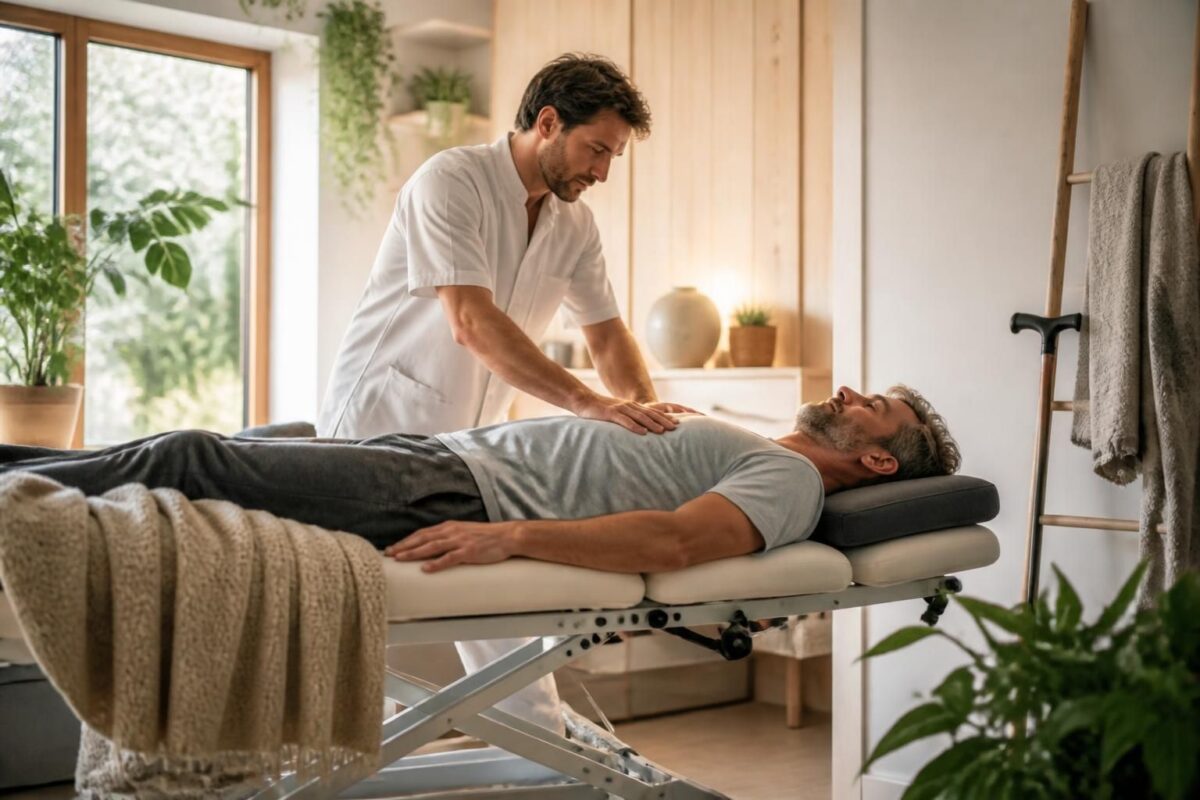
Why Osteopathy Is Essential For Recovery People
In short In short, Osteopathy in convalescence is an approach manual and holistic which helps to accelerate the recovery by restoring The balance, the mobility and a good circulation fabrics. it contributes to Reduce the pain, support the Back to…

Osteopathic manipulations to strengthen post-traumatic muscles
In short In short, Osteopathic manipulations for Strengthen post-traumatic muscles constitute a gentle manual approach aimed at restoring the mobility, reduce the pain and facilitate the Functional rehabilitation After a injury. What is Is it? A series of precise gestures…
Treatment plan and progression
The treatment begins with a series of targeted and progressive sessions, with an appropriate intensity and a duration of session adjusted in the pain/operation stage. Exercises at home are prescribed to support the gains obtained in the office. The progression aims to gradually increase the amplitude, strength and stability of the upper limb joints, while respecting the patient’s signals and adjusting the plan according to the observed results.

Osteopathy and prevention of work-related musculoskeletal disorders
In short theosteopathy is one Manual approach that restores body balance and prevents MSD related to work. Its advantages: reduction of tension, improvement of mobility and prevention of chronic pain. She is preventive and healing, suitable for office and trades…

The benefits of osteopathy to treat muscle imbalances
In short theosteopathy is a manual approach to restore themuscle harmony and postural considering the body as a whole. Its main benefits include the reduction of aches and tensions, the improvement of the mobility and from the posture, and prevention…
Integration and coordination of care
An effective approach involves a Multidisciplinary collaboration when necessary, especially with doctors, physiotherapists or occupational therapists. The objective is to integrate osteopathic treatment into a global plan that combines ergonomic advice, functional resuscitation exercises and posture adjustments at work and at home. Monitoring helps assess progress and adapt objectives to prevent recidivism.
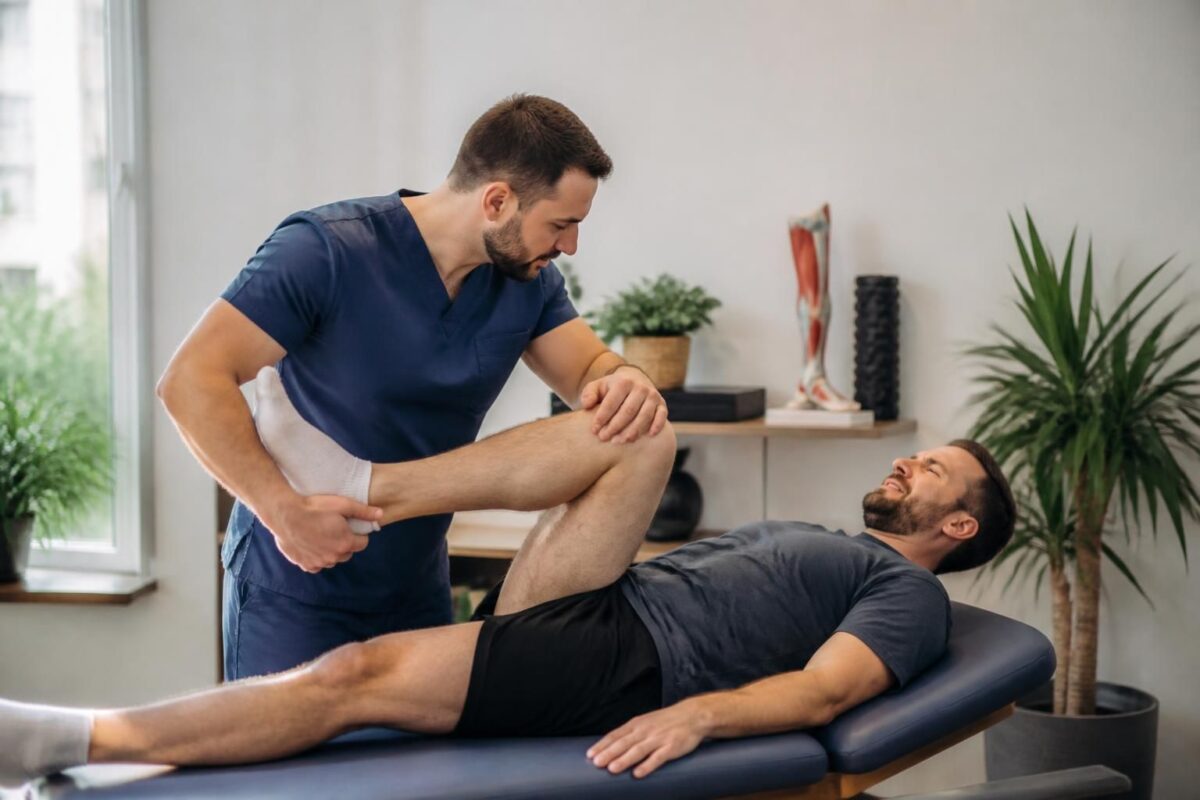
Osteopathy and chronic leg pain: regaining an optimal quality of life
In short In short, Osteopathy is one Global manual approach aimed at reducing Chronic leg pain and improve the quality of life. What is it? Non-drug therapy using the hands to identify restrictions and treat lesional chains. How does it…
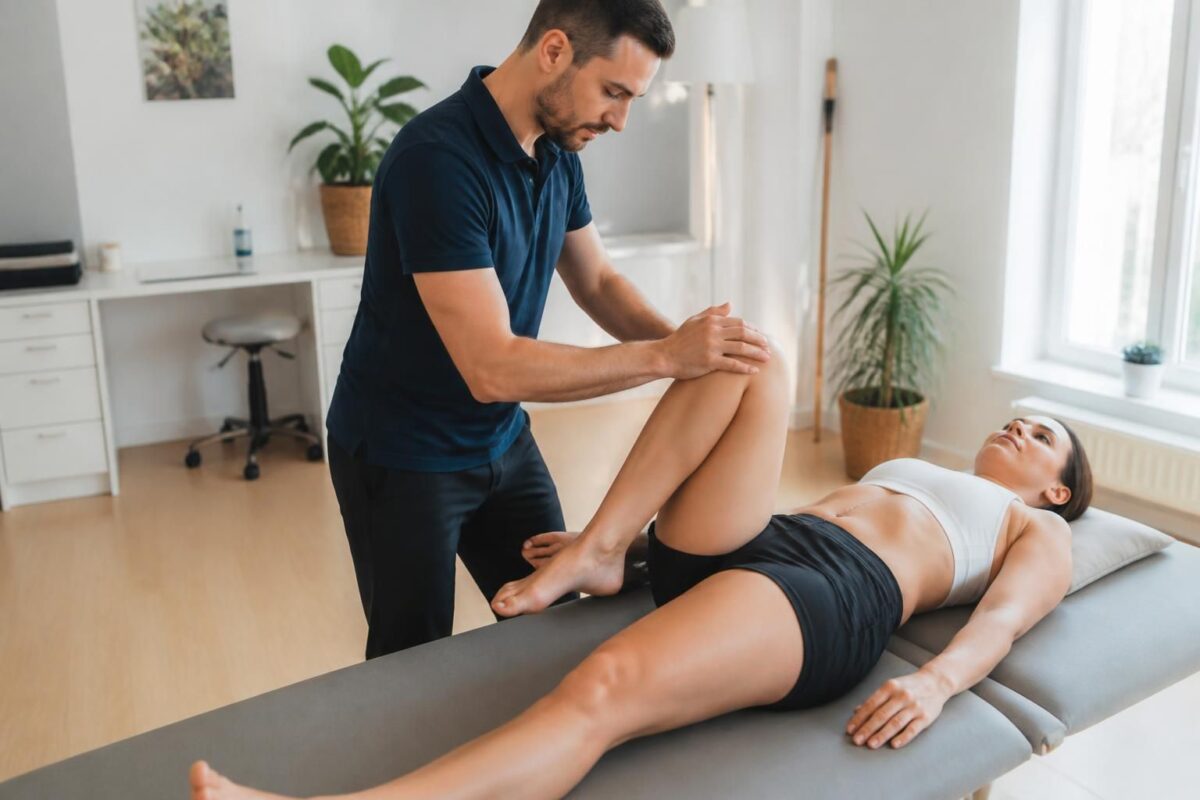
How osteopathy supports recovery after complex surgery
In short In short, Post-operative osteopathy is an approach fresh which supports the recovery After a Complex surgery. It helps to reduce the pain and the fatigue, improves the mobility and accelerates the healing thanks to a better vascularization and…
Monitoring indicators and expected results
Expected results include a Lasting pain reduction, a Improving mobility and a better quality of life in daily and professional activities. There is often an improvement in posture, a decrease in muscle tension and a better ability to perform functional gestures without significant pain.
Comparative table of osteopathic approaches for upper limb pain
| Approach | Concise description |
|---|---|
| Techniques of soft tissues | Liberation of Muscle tensions and fascials with targeted relaxation and stretching, better circulation and mobility. |
| manipulation articular (structural) | Precise adjustments restoring the amplitude of the shoulders, elbows and wrists, usually painless. |
| techniques functional | Approaches focused on muscle function and proprioception to restore fluid movements. |
| Visceral techniques | Interventions on certain internal organs that can influence the pain and posture of the limbs. |
| Evaluation osteopathic | Anamnesis and mobility tests to identify restrictions and adapt treatment. |
| Relaxation myofascial | Treatment of deep adhesions and tensions to release muscle chains and improve circulation. |
| engagement sweet | Controlled movements to restore joint mobility and reduce inflammation. |
| HVBA Techniques (High velocity low amplitude) | Quick and precise handling to quickly dissipate joint blockages. |
| Prevention and advice ergonomic | Postural recommendations and strengthening exercises to prevent recurrences and optimize mobility. |
Testimonials on osteopathic approaches to treat upper limb pain
“I had just dragged on persistent shoulder pain and, after a few sessions focused on Manual techniques and one Myofascial relaxation, I found a Joint mobility noticeable and much less pain on a daily basis. theosteopathy was presented as a personalized and painless approach, and I come out with a better quality of life and less limitations in my gestures”.
“My repetitive work caused pain in the wrist and forearm. immediately after sessions centered on the Release of muscle tension and the Joint mobilizations, the pain subsided considerably and my performance returned. The focus on an approach holistic and the advice ofergonomy have been valuable in preventing recurrences. »
“As a sportswoman, a shoulder injury had compromised my training. The osteopath evaluated the imbalances throughout my body and guided me to strengthening and of proprioception. After several sessions, my mobility improved and I feel more stable, which allowed me to resume my activities with more security. »
“Working in handling, my ribs and arms were accumulating tensions. The work on the Rebalancing body structures and advice dedicated to prevention Pain helped me reduce the frequency and intensity of the episodes. My posture is improving and I feel a better efficiency on a daily basis. »
“At 63, I had wrist pain related to mild osteoarthritis. after several sessions, I found a Reduction of inflammation and an Improving mobility that allow me to accomplish my daily tasks without Associated Pain. »
In the context of upper limb pain, Osteopathic approaches revolve around a global vision of the body. They combine a precise assessment of musculoskeletal dysfunctions with targeted manual techniques in order to restore the balance of the structures that support the shoulder, arm, elbow and wrist. This approach is part of an approach holistic that connects mobility, posture and living conditions. The professional who organizes this care is based on a rich experience in the field of chronic pain And favors close collaboration with patients to adapt the gestures to each morphology and to each body story.
A complete osteopathic evaluation begins with a Detailed anamnesis And continues with functional tests, postural observation and soft tissue palpation. The goal is to identify the mobility restrictions, muscle tension, fascial adhesions and joint imbalances that can cause localized or referred pain in the shoulder, elbow or wrist. This step makes it possible to establish an accurate assessment and to plan a personalized treatment that takes into account the environmental and professional factors likely to fuel the disorder.
Release of muscle tension is a central component. Soft tissue techniques, such as myofascial relaxation and targeted stretching, aim to reduce spasms and improve blood and lymph circulation. This approach helps to release the muscle chains around the shoulder and elbow, while promoting better mobility of the nerve chains that innervate the upper limb.
Rebalancing body structures is then sought by Sweet mobilizations And some Joint adjustments In order to restore the alignment of the bone segments and joints. The manipulations, carried out with precision, aim to free the blockages and to restore a harmonious range of motion between the scapula, the clavicle, the humerus and the radius/ulna. When the dysfunctions come from a cervico-thoracic imbalance, the objective is to restore a scapulo-thoracic dynamic compatible with an optimal function of the upper limb.
Functional techniques, like the CounterStrain, make it possible to offer comfort positions that will relieve painful areas without forcing the injured tissues. These gestures facilitate proprioception and neuromuscular coordination, promoting progressive pain and movement management. In some cases, Visceral techniques can be explored when internal tensions affect the mechanics of the arm or shoulder, without entering into an invasive logic.
The dimension Ergonomic and postural is processed alongside manual processing. Tips fromergonomy at work, adjustments to habits and exercise programs strengthening and stability are integrated to prevent recurrences and consolidate the gains obtained. The objective is to allow a functional practice on a daily basis, whether during professional, sports or domestic activities.
Beyond the technique, the osteopathic approach to pain in the upper limbs is based on a Interprofessional collaboration and active listening to the patient. The treatment can be enriched with personalized advice on maintaining a postural balance, pain management and integrating an appropriate rehabilitation plan. The practitioner thus guides the patient towards sustainable mobility and a better quality of life, favoring appropriate and scalable care for the shoulders, elbows and wrists.
This article summarizes the Osteopathic approaches used to treat Upper limb pain, showing how theIn-depth assessment, the Targeted manual techniques and theOverall support Reduce pain and improve mobility.
Upper limb pain can be effectively addressed through an approach holistic which associates a Osteopathic evaluation meticulous, the Release of tensions muscles and Rebalancing body structures. This approach aims to restore theJoint alignment, to free up blockages and promote better mobility shoulders, elbows and wrists while taking into account postural and environmental factors.
Among the key techniques, Soft tissue techniques and the Joint manipulations allow to Reduce the pain and rapidly improving local traffic. The Myofascial relaxation and targeted stretching affects muscle tension and adhesions, while Joint adjustments work on therange of motion joints.
The Functional techniques Offer a gentle way to restore proprioceptive function and mobility without excessively straining painful joints. approaches like counterstrain Allows you to obtain a rebalancing without pain and facilitate the return to the as well as to the daily movement. theVisceral approach Can also be useful when internal constraints influence the mechanics of the arms and shoulders, working on organ-fabric relationships to promote a harmonious overall dynamic.
Beyond treatment, thePostural education and the advice ofergonomy play a major preventive role. Practical advice on the workstation, repeated gestures and lifestyles help to prevent recurrences and maintain the improvements obtained. Targeted exercises of strengthening and of stability can then be considered to support the joints and stabilize functional gains.
To enrich your understanding and expand your management options, you can consult specialized resources such as guides on osteopathic techniques and their indications, as well as articles that explore the benefits and mechanisms of mobilization and therapeutic touch. For example, you can discover syntheses on the Osteopathic manipulations For chronic joint pain, or analyzes on the integration of osteopathy in the Benefits for nervous tensions. Other resources detail the Osteopathic techniques and their indications, as well as Therapeutic indications associated.
To deepen the practical aspects around joint mobility and recovery, resources are exploring in particular the Joint mobility and recovery advice after intense physical exertion, while offering additional views on the techniques and benefits expected. Finally, you can consult content that discusses The integration of osteopathy in sports recovery and the approaches Well-being and emotional related to osteopathic practice.
To access concrete examples and various perspectives, here are some additional links that illustrate the concepts mentioned and propose complementary approaches around Joint pain and from the Injury prevention in a sporting and professional context.
In addition, resources detail the mechanisms and benefits of osteopathic techniques, particularly within the framework of the Mobility and joint flexibility, recovery after an intense effort and the global integrative approach.

Dr Sylvain Desforges, B.Sc., D.O., N.D., osteopath, is the founding president of TAGMED and of the ACMA association. He dedicates his practice to chronic spinal pain, low back pain and symptoms compatible with sciatica, particularly when pain radiates toward the buttock, leg, calf, foot or toes.
Through SOS Sciatique, he publishes educational content on sciatica symptoms, possible causes such as disc herniation, disc narrowing, foraminal stenosis or irritation of a lumbar nerve root, as well as non-surgical approaches that may be considered according to the evaluation. At Clinique TAGMED, care may include, depending on the case, motorized neurovertebral decompression, specific osteopathic care or precision percussion.
For an evaluation related to sciatica treatment in Montreal / Mount Royal or sciatica treatment in Terrebonne, please consult the services available at Clinique TAGMED.
Medical disclaimer
The information published on SOS Sciatique is provided for educational purposes only and does not replace a consultation, diagnosis, opinion or treatment provided by a physician or another authorized healthcare professional. The author of this article is neither a medical doctor nor a specialist in a medical specialty recognized by the Collège des médecins du Québec. The osteopathic, manual medicine or functional support approaches described on this site do not constitute medical acts and are not intended to replace medical follow-up.
Consult a physician or emergency service in cases of loss of bladder or bowel control, anesthesia in the saddle area, significant or progressive weakness in the leg or foot, fever, recent trauma, severe pain or rapid worsening of symptoms. For more details, please read our Legal Notice.