How osteopathy acts on chronic back pain
28/06/2026
Osteopathy and sports recovery: a non-invasive approach
28/06/2026
In short
| In short, Osteopathic manipulations for Reduce work-related muscle tension use Manual techniques targeted that release areas of tension caused by prolonged postures and professional stress. They improve the mobility and the circulation blood, soothing pain and contractures in a way quick and effective. Key benefits include lowering deep tension, prevention of musculoskeletal disorders (MSD), better posture and regained productivity. accessible to Montreal, this treatment is particularly suitable for office professionals and workers exposed to stress, by offering an approach painless and adapted to their needs. |
The Osteopathic manipulations offer a solution Fast and natural To reduce the Work-related muscle tension. By targeting restriction areas and rebalancing the body, they reduce contractures and improve mobility.
- Structural techniques : Realign the joints and release tensions
- Myofascial techniques and relaxation : relax the muscles and surrounding tissues
- Improvement of the circulation and from the posture with a MSD prevention
- Results observed: pain reduction and Increased comfort On a professional daily
Quick Summary: This article presents how osteopathic manipulations reduce work-related muscle tension. The approach combines accurate assessment of live zones and targeted manual techniques. Structural, tissue and relaxation manipulations improve mobility, circulation and postural comfort. The objective is to help professionals better manage work requirements, prevent pain and preserve their performance at work.
Work-related tensions most often appear in areas that are heavily stressed during professional activities. The trapezoids, back, neck and pelvic belt can become stiff after hours of sitting or standing, repetitive postures and poorly distributed loads. Osteopathy offers a global approach to restore the balance of tissues and joints, and to promote a better overall function of the body, which translates into less pain and better work efficiency. posture And daily movements also play a key role in the prevention of tensions, and the advice provided is part of a sustainable approach to health at work.
Evaluation and location of voltage zones
The professional quickly identifies zones of tension and joint restrictions that limit mobility. This step makes it possible to determine which techniques will be most suitable for releasing tensions and restoring a correct amplitude of movement. An assessment of occupational habits and ergonomic risks is integrated into the approach to target contributing factors and consider concrete workplace adjustments. Listen to the body And watching the patient’s reactions in small mobility tests helps to personalize the treatment.
osteopathic techniques used
Structural manipulations: These precise gestures aim to realign the joints and release the tensions that limit mobility. They can promote more fluid return of the joint segments and better synchronization of movements. Structural manipulations are often associated with more targeted techniques to release deep skeletal tensions.
Tissue techniques: centered on muscles and soft tissues, they use soft and controlled pressures to release tension points and improve the elasticity of the fascias. These interventions facilitate blood and lymph circulation, which can contribute to faster recovery after professional efforts. Tissue techniques help restore better oxygenation of the muscles involved.
Relaxation techniques: These methods aim to relax the contracted muscles and restore their play. By promoting deep relaxation, they reduce feelings of stiffness and improve exercise tolerance. Muscle relaxation Can also reduce tensions that accumulate with professional stress.
Complementary elements: Depending on the case, complementary approaches such as fascia mobilization and delicate joint adjustments can be proposed to support the recovery process and prevent exacerbations of work-related tensions. traffic and drainage Tissue fluids play a key role in improving comfort and recovery.
Benefits for professional life
the benefits of osteopathic manipulations result in a pain reduction, a Improving mobility and an best posture. Better circulation promotes muscle oxygenation and can increase endurance during working hours. By working on the entire musculoskeletal system and on body regulation mechanisms, osteopathy helps to limit recurrent tensions and promote more effective and less tiring professional gestures. For people who are active or exposed to occupational constraints, these approaches can improve concentration, productivity and overall well-being at work.
The resources and techniques presented are part of an approach based on clinical evidence and the experience of trained professionals in recognized institutes such as NUMSS and NAO. Practices aligned with the ethical and professional standards of the ACMA, College of Canadian Osteopaths and the College of Canadian Osteopaths support this approach.
Integration into the care and prevention course
A payload combines osteopathic manipulations, ergonomic advice and tension prevention strategies. The practitioner may recommend ergonomic adjustments to the workplace, active pauses and movement habits that reduce repeated loads and static postures. Regular visits make it possible to maintain the musculoskeletal balance and to anticipate the peaks of professional activity. To learn more about osteopathic techniques and their work benefits, consult resources like Osteopathic manipulations to soothe trapezoid pains and Osteopathic techniques to improve physical performance. Other useful information is available on Deep muscle tension and on Joint pain related to arthritis.
The use of osteopathy can also aim to optimize recovery after exercise and to support professional performance. In some cases, the practitioner may coordinate with other health professionals when specific medical factors are identified. For professionals who work on computers or in demanding environments, osteopathy offers a suitable way to maintain mobility and comfort on a daily basis. For patients seeking a global approach, resources like Tagmed Clinic can be consulted to discover the services offered and the methods of support.
For training and professional references, we can rely on the NUMSS or NAO courses, which train competent osteopaths in the evaluation and treatment of work-related tensions. As part of the professional associations, ACMA, the College of Canadian Osteopaths and the College of Canadian Osteopaths guide the ethics and quality of care provided. In the context of treatments, osteopathy is generally presented as a safe and suitable manual approach for work-related muscle tension, when practiced by qualified professionals.
Useful links and additional resources: Hip pain, Deep muscle tension, osteopathic techniques used.
Medical Disclaimer: The information and advice provided on this site does not replace the health professional’s diagnosis or treatment. Please note that Dr. Sylvain Desforges osteopath is neither a doctor of medicine nor a doctor, and is not a specialist in a medical specialty as defined by the Collège des Médecins du Québec. Manual medicine, functional medicine and sports medicine as described on this site exclude any medical treatment or diagnosis made by a doctor or specialist doctor. Always consult your doctor for any medical questions. For more details, please read our full legal notice. »
Axis: Osteopathic approach in the professional environment
- Structural manipulations : Realign the joints and release work-related blockages.
- Tissue techniques : Relax muscles and soft tissue around the neck and back.
- Myofascial techniques : Free the fascias and improve thoracic and cervical mobility.
- Joint mobilizations : increase amplitude and reduce postural rigidity.
- muscle relaxation : Relaxes contracted muscles and improves comfort in the office.
- lymphatic drainage Lightweight: Optimizes circulation and accelerates recovery after a sitting day.
- Dry Needling : defuses the nodes and reduces localized pain related to posture.
- Postural advice and exercises : Simple gestures to do in the office to prevent tension.
- Prevention in the workplace : Custom protocol to reduce MSDs and absenteeism.
- Monitoring and protocol : Adapted session plan and follow-up for lasting results.

This article brings together Practical recommendations on the Osteopathic manipulations To reduce the Muscle tensions work-related. It highlights how a manual, personalized and progressive approach can improve the mobility, the posture and well-being on a daily basis, while promoting the prevention of pain and fatigue linked to professional activity.
Understand work-related tensions
In a professional setting, muscle tension often comes from a prolonged posture, repetitive gestures and a stress supported. Screen work, restricted movements and poorly distributed loads favor areas of restriction in the back, shoulders and neck. The objective of osteopathic manipulation is to identify these areas and to intervene in a targeted way to restore theMusculoskeletal balance and promote more efficient circulation.
Common causes
Standing or standing positions held over time, ill-fitting equipment, repetitive movements (keyboard, mouse, hand tools), and a lack of active pauses create deep tension. Stress and lack of recovery disrupt nervous and muscular functioning, increasing the risk of contractures and fatigue.
Warning signals and prevention
Localized pain in the neck, shoulders or lower back, morning stiffness, muscle fatigue after a day’s work, and postures that aggravate the symptoms are all signs to be taken seriously. A preventive osteopathic approach can be part of a follow-up routine to maintain thebalance and prevent recurrences.
Relevant osteopathic techniques
The Osteopathic manipulations Used in the professional context cover both structural, tissue and relaxation. By adapting the techniques to each situation, the osteopath aims to rapidly and sustainably improve the mobility and from the circulation, while minimizing discomfort during and after the session.
Structural and tissue manipulations
Structural manipulations aim to realign the joints and release tensions blocked by controlled and precise movements. Tissue techniques target the surrounding muscles and soft tissues to relax muscle groups and promote better fiber oxygenation. Together, they promote better range of motion and a reduction in pain associated with sustained work.
Relaxation and mobilization
The methods of relaxation act in depth on the contracted muscles, while the gentle mobilizations restore the elasticity of the fascias and the play of the joints. This combination can quickly decrease feelings of tension and improve recovery after a busy day.
Integrate osteopathy into the professional setting
Integrating regular sessions can be beneficial for both employees and the organization. Appointments in companies or on site, or periodic visit programs, make it possible to support positions at risk, to adjust workstations and to offer individualized advice. The osteopathic intervention can be associated with recommendations for ergonomics, mobility and reinforcement exercises, in order to amplify the beneficial effects and support a prevention policy.
Practical advice and prevention on a daily basis
To maximize the benefit of manipulations and limit tensions, apply these simple principles: Adopt a Adapted ergonomics From the workstation, take active breaks several times per hour, practice micro-stretching targeting the neck, shoulders and back, and vary the postures throughout the day. Moisturize yourself regularly, breathe deeply to reduce stress and require osteopathic sessions when the pain persists or increases. Finally, integrate simple strengthening and flexibility exercises that support long-term mobility and muscle resilience.
Osteopathic manipulations to reduce work-related muscle tension
| Aspect | concise text |
|---|---|
| Definition and purpose | osteopathy manual aimed at reducing Deep muscle tension and to restore the balance of the body in the professional context, with an approach fresh and painless. |
| Typologies of manipulations | techniques structural, tissue, relaxation and myofasciales To release tensions and find mobility. |
| Mechanism of action | Release of tension zones and rebalancing of the fascias, improving circulation and oxygenation muscles. |
| Effects on pain at work | Progressive decrease in work-related pain and contractures through targeted action on areas of tension. |
| Posture and ergonomics | Realignment of the joints and action on the posture For an approach ergonomic and MSD prevention. |
| Target audience | employees and professions presenting Extended postures, repetitive gestures or work in front of screen. |
| course of a session | Quick assessment, targeted manipulation and advice postural and simple exercises to practice. |
| Frequency and prevention | Regular sessions as needed for prevent and maintain earnings. |
| Advantages and security | fast, Without medication, with Sustainable results and reduced pain risks. |
| Precautions and limits | to be adapted according to the state; certain conditions acute or inflammatory require a Medical assessment and caution. |

How osteopathy improves the quality of life of active people
In short In short, theosteopathy is a global approach that Optimizes mobility and the function of the body of ACTIVE PEOPLE, for a better quality of life. It helps prevent injury and reduce Musculoskeletal pain While promoting the Sports recovery.…

Osteopathy and sports recovery: prepare the body for lasting performance
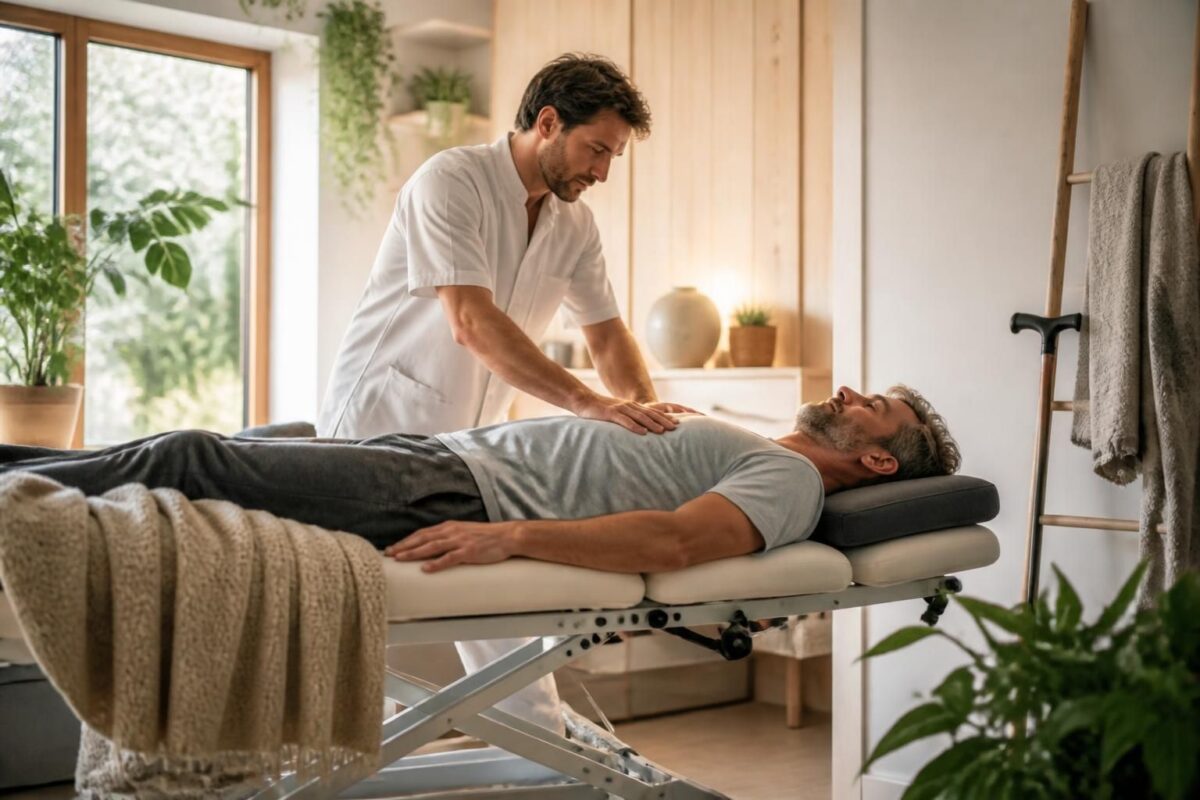
In short In short, Osteopathy and Sports recovery is one Global manual approach that sustainably prepares the body for the effort by restoring mobility and circulation After the effort. It is a discipline that acts on the sinews, the joints,…
Why Osteopathy Is Essential For Recovery People
In short In short, Osteopathy in convalescence is an approach manual and holistic which helps to accelerate the recovery by restoring The balance, the mobility and a good circulation fabrics. it contributes to Reduce the pain, support the Back to…

Osteopathic manipulations to strengthen post-traumatic muscles
In short In short, Osteopathic manipulations for Strengthen post-traumatic muscles constitute a gentle manual approach aimed at restoring the mobility, reduce the pain and facilitate the Functional rehabilitation After a injury. What is Is it? A series of precise gestures…
Testimonials on osteopathic manipulations to reduce work-related muscle tension
“Before, the Work-related muscle tension Tossed me from morning to night: stiff neck, stiff shoulders, back blocked after long hours in front of the screen. The Osteopathic manipulations began to release these tensions and improve my mobility, with a posture more natural and a regained concentration. »
“As a frame, I sit for a very long time. After a few sessions, my shoulders relaxed and my neck pain decreased. I sleep better and I am more efficient in the office thanks to a better mobility and an pain reduction. »
“Working in administrative, I often feel stiffness in the upper back and the trapezoids. osteopathic manipulations helped to release these areas, and my posture at work has improved. Now I end my days with less fatigue and more energy when I get home. »
“As an operator on the production line, I spend hours in standing and sitting, which strongly strains the back and legs. After several sessions, I noticed a better circulation blood and decreased contractures. My performance and my comfort at work have improved significantly. »
“As a graphic designer, my wrists and shoulders suffered from repetitive movements. The Osteopathic manipulations succeeded in releasing tension in the soft tissues and restoring a better mobility, which allowed me to work longer without pain and with less breaks. »
“I am a developer and my days are punctuated by sessions of creativity and debugging. After the sessions, I felt a reduction in cervical tension and better mental energy. theosteopathy improved my concentration and my Quality of life at work. »
“As a project manager, preventing pain is essential to stay on course during intense periods. Osteopathic manipulations helped me maintain a posture correct, to reduce deep tensions and to remain active throughout working days without recurring contractures. »
With its expertise in osteopathy, in naturopathy and manual medicine, Dr. Sylvain Desforges embodies a holistic and pragmatic approach to treat muscle tension linked to professional activity. His background, dedicated to health innovation, led him to develop a practice centered on the lasting relief of work-related pain and on the prevention of recurrences thanks to a precise evaluation of the body as a whole.
The modern world of work, whether dynamic occupations or very sedentary positions, can generate deep tension in the muscle groups of the neck, shoulders, back and bust. Dr. Desforges considers these tensions as a sign of a functional imbalance that affects posture, breathing and circulation. His approach favors a global reading of the body: fine palpation of the restriction zones, identification of fasial tensions and evaluation of postural habits in the office or on the site, in order to propose a strategy adapted to each patient.
The Osteopathic manipulations Used by the doctor use a variety of techniques to act on deep muscles, joints and soft tissues. By Structural manipulations Targeted, the joints are realigned to restore a natural range of motion and release tension nodes that often radiate to the neck and shoulders. The Tissue techniques – Soft and sustained pressures – Promote the relaxation of fascias and muscles, releasing tension points that slow down flexibility and amplify local blood circulation, a source of better oxygenation and faster recovery.
In addition to these structural and tissue approaches, Dr. Desforges integrates techniques for relaxation Muscle by muscle and focuses on improving neuromuscular coordination. The objective is not only to eliminate acute pain, but also to prevent relapses by optimizing posture and providing practical advice: simple exercises to do in the office, active micro-breaks, and ergonomic advice to adapt the working environment. This combination makes it possible to transform the sessions into a real performance lever, by improving concentration, breathing and endurance on a daily basis.
In connection with his commitment to evidence-based care, Dr. Desforges offers a personalized and results-oriented approach. His sessions take into account the tensions linked to stress and fatigue, work habits and physical constraints specific to each job. In addition to manipulations, he can recommend therapeutic tools and technologies when they are part of a global rehabilitation strategy. The goal is to offer a complete solution that supports functional recovery, improves mobility and allows you to resume professional activities without chronic pain.
Work is not just a source of muscle tension: it can become an opportunity to strengthen body health. With attentive listening, precise analysis and adapted techniques, Dr. Desforges each guides towards a better harmony between effort and recovery. His approach aims to restore balance, preserve energy and optimize overall well-being, so that each professional can work with vigor and serenity.
quick summary : Osteopathic manipulations offer a targeted manual approach to reduce work-related muscle tension, by relaxing the deep muscles, releasing fascias and improving circulation to promote mobility and well-being in the office or on the professional site.
The Osteopathic manipulations bring together Structural techniques, myofasciales, tissue and of relaxation which act on areas of tension in the body, in particular those accumulated by prolonged postures and repetitive activities associated with work. By working on joints, muscles and surrounding tissues, these techniques aim to restore biomechanical balance, improve circulation and restore a more fluid range of motion. The result can be lasting pain relief and better ability to maintain various workplaces without pain, while promoting more effective recovery after exercise.
In the professional context, osteopathic gestures make it possible to reduce tensions lokally and globally. Structural manipulations contribute to joint realignment and release of blockages, which may decrease movement limitations and pain associated with long muscle contractions. Tissue approaches and relaxation techniques target muscles and fascias to promote better elasticity and better tissue vascularization, which contributes to a decrease in feelings of stiffness and fatigue after a day’s work. To deepen the mechanisms and benefits, you can consult the resources dedicated to osteopathic techniques used to treat lower back pain and deep muscle tension.
Osteopathic practice is also part of a preventive approach to work. In addition to a Adapted ergonomics, fromRegular exercises And from active pauses, these manipulations can help maintain better posture, improve breathing and promote rapid recovery between efforts. For those looking for complementary approaches, online resources detail how osteopathy can contribute to well-being at work and the prevention of musculoskeletal disorders.
In practice, a personalized approach is essential: after an evaluation of your physical condition and professional postures, the practitioner adapts the therapeutic protocol by combining the different techniques and possibly proposing postural recommendations and exercises to be carried out at home or in the office. For more information on the mechanisms and results of osteopathic manipulations in the professional context, see the articles and guides dedicated to the techniques and effectiveness of osteopathic treatments.
To deepen the approaches and results from clinical studies and practices, here are some relevant resources that explore the mechanisms, tools and benefits of osteopathy in the professional context: Osteopathic manipulations to treat lower back pain, Osteopathic techniques to strengthen weakened muscles, To relieve neck tension, as well as resources that address the link between osteopathy and well-being at work and the prevention of musculoskeletal disorders.
To accompany the sessions and maximize the results, it is often recommended to integrate ergonomic advice and simple exercises. Online readings and guides describe how to optimize posture on a daily basis, promote better breathing and support joint mobility, in order to prolong the beneficial effects of osteopathic manipulations and to limit recurrent work-related tensions.
Additional resources to deepen: MSDs and back pain at work – Osteopathic solutions, Treatment of musculoskeletal disorders, Osteopathic Techniques – An Art of Healing Through Touch, Osteopathic techniques to relieve neuropathic pain, Osteopathy at work – Well-being.

Osteopathy and prevention of work-related musculoskeletal disorders
In short theosteopathy is one Manual approach that restores body balance and prevents MSD related to work. Its advantages: reduction of tension, improvement of mobility and prevention of chronic pain. She is preventive and healing, suitable for office and trades…

The benefits of osteopathy to treat muscle imbalances
In short theosteopathy is a manual approach to restore themuscle harmony and postural considering the body as a whole. Its main benefits include the reduction of aches and tensions, the improvement of the mobility and from the posture, and prevention…
Osteopathy and chronic leg pain: regaining an optimal quality of life
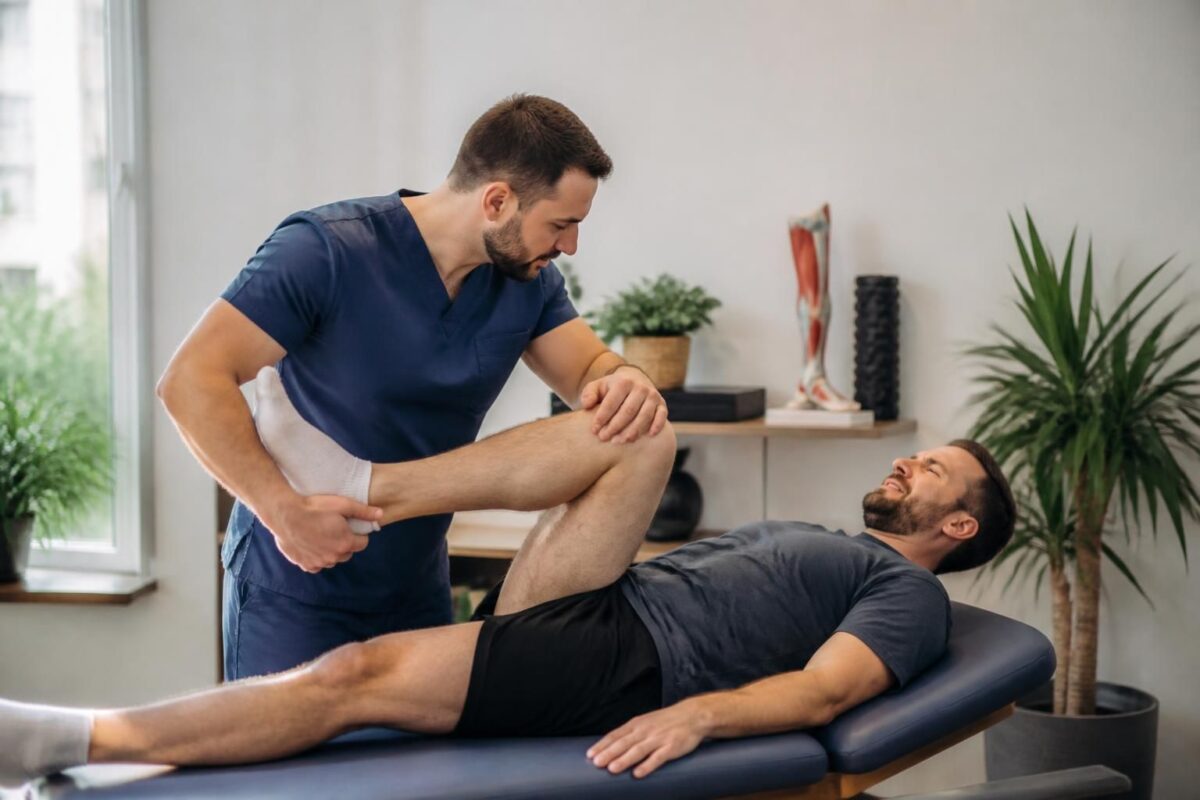
In short In short, Osteopathy is one Global manual approach aimed at reducing Chronic leg pain and improve the quality of life. What is it? Non-drug therapy using the hands to identify restrictions and treat lesional chains. How does it…
How osteopathy supports recovery after complex surgery
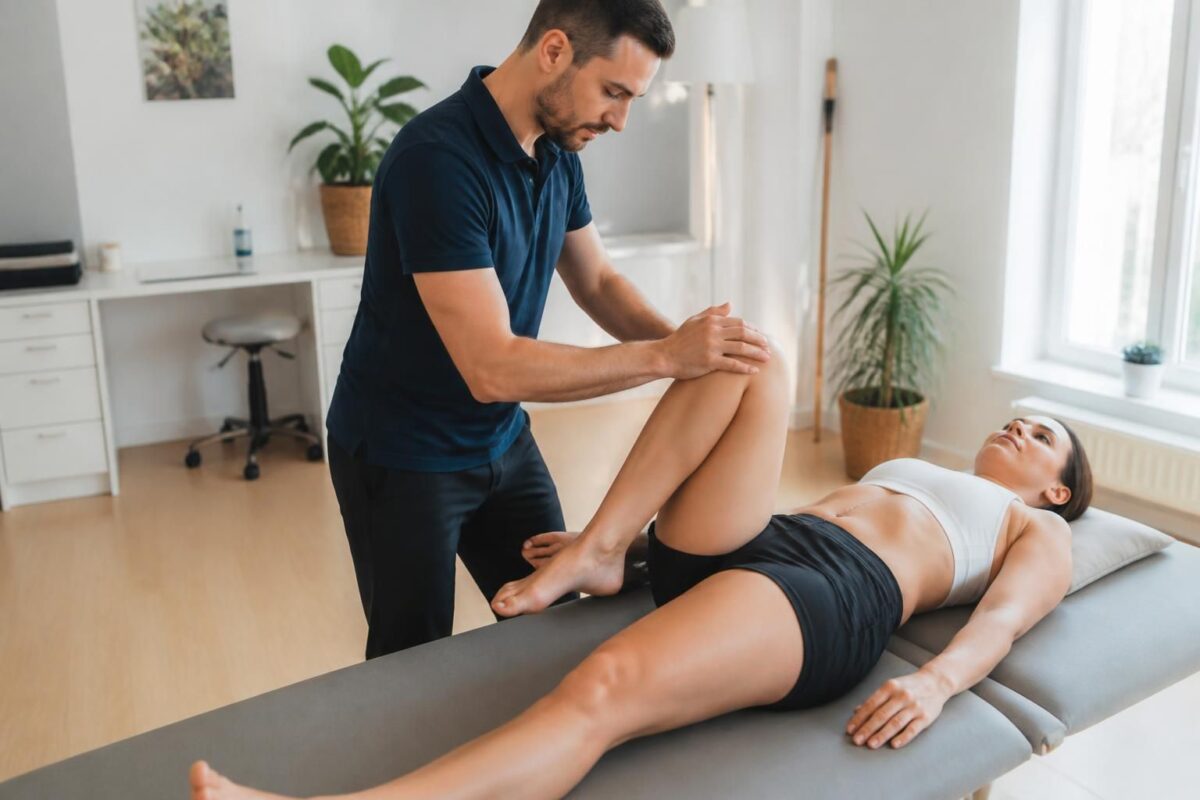
In short In short, Post-operative osteopathy is an approach fresh which supports the recovery After a Complex surgery. It helps to reduce the pain and the fatigue, improves the mobility and accelerates the healing thanks to a better vascularization and…

Dr Sylvain Desforges, B.Sc., D.O., N.D., osteopath, is the founding president of TAGMED and of the ACMA association. He dedicates his practice to chronic spinal pain, low back pain and symptoms compatible with sciatica, particularly when pain radiates toward the buttock, leg, calf, foot or toes.
Through SOS Sciatique, he publishes educational content on sciatica symptoms, possible causes such as disc herniation, disc narrowing, foraminal stenosis or irritation of a lumbar nerve root, as well as non-surgical approaches that may be considered according to the evaluation. At Clinique TAGMED, care may include, depending on the case, motorized neurovertebral decompression, specific osteopathic care or precision percussion.
For an evaluation related to sciatica treatment in Montreal / Mount Royal or sciatica treatment in Terrebonne, please consult the services available at Clinique TAGMED.
Medical disclaimer
The information published on SOS Sciatique is provided for educational purposes only and does not replace a consultation, diagnosis, opinion or treatment provided by a physician or another authorized healthcare professional. The author of this article is neither a medical doctor nor a specialist in a medical specialty recognized by the Collège des médecins du Québec. The osteopathic, manual medicine or functional support approaches described on this site do not constitute medical acts and are not intended to replace medical follow-up.
Consult a physician or emergency service in cases of loss of bladder or bowel control, anesthesia in the saddle area, significant or progressive weakness in the leg or foot, fever, recent trauma, severe pain or rapid worsening of symptoms. For more details, please read our Legal Notice.