


Osteopathy and mobility: maintaining flexibility with age
28/06/2026
How osteopathy acts on chronic back pain
28/06/2026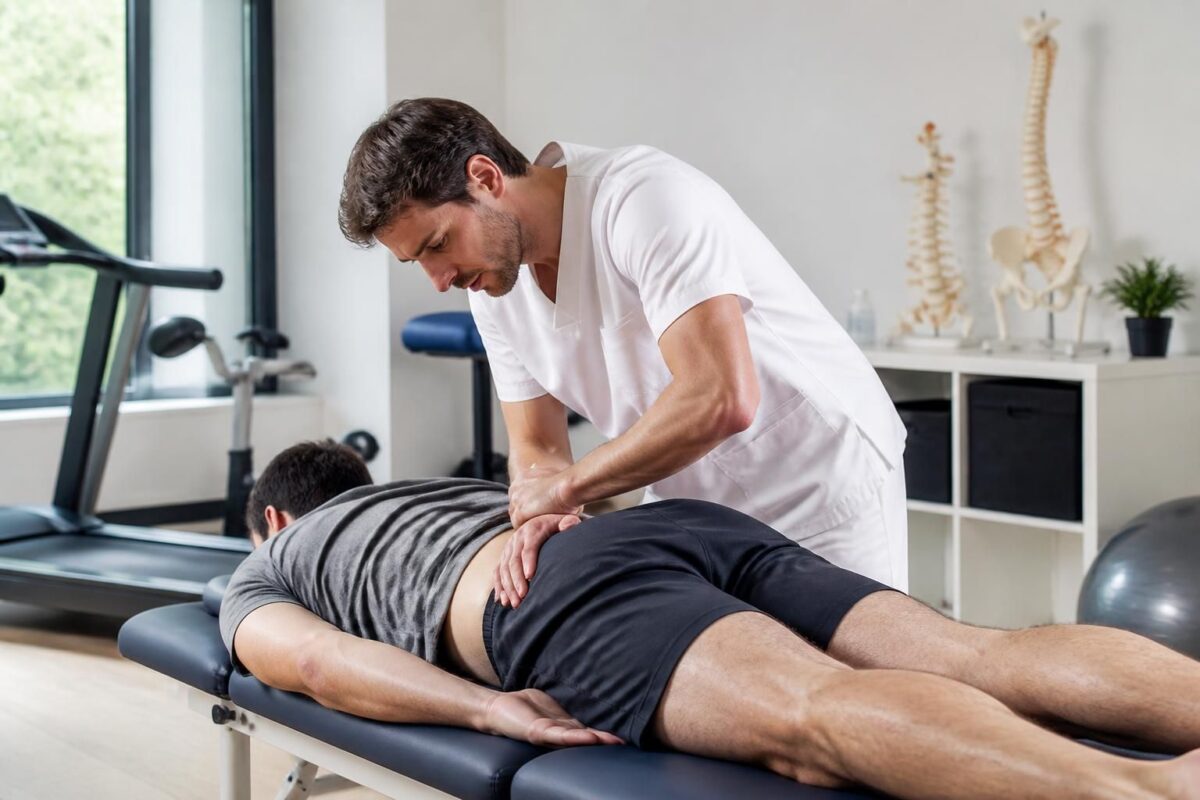
In short
In short, theosteopathy for Strengthen the lumbar muscles is one Manual approach which aims to improve the Lower back stability and of trunk. it can reduce Lower back pain, improve the mobility and prevent relapses thanks to the strengthening deep muscles. How does it work? Targeted techniques release tensions, rebalance the column and promotemuscle activation, supplemented by simple exercises to do at home. In Montreal, this service is particularly suitable for active people seeking to protect their backs and improve their performance on a daily basis. |
The Osteopathic techniques use an approach manual for Strengthen the lumbar muscles and improve spinal stability. They combine Vertebral mobilizations And some Joint mobilizations To restore alignment and release tension, facilitating the work of the deep back muscles. of Targeted stretches And some Adapted exercises are then proposed to strengthen the trunk and prevent recurrences. The approach also includes advice on the posture and daily gestures to limit lumbar tension and sustain the lumbar sustainably.
Written by a health professional and expert, this article presents the Osteopathic techniques used for Strengthen the lumbar muscles. It describes manual gestures, mechanisms of action and practical advice to improve the Lower back stability and the mobility without resorting to invasive treatments.
Osteopathic techniques work on tissues, vertebrae and muscles in the lumbar region. They aim to restore balance, reduce tension and support deep muscle groups that hold the spine. Each session begins with an evaluation, then gestures adapted to the patient.
Key manual techniques
Common osteopathic gestures include Soft spine adjustments, of Segmental mobilizations And some Myofascial techniques targeting the lumbar muscles. The goal is to improve theVertebrae alignment and coordination of paraspinal muscles. These gestures can be adapted to each patient according to the initial evaluation. They promote the vertebral mobility and deep muscle tone.
To learn more, check out the following resources on reliable and relevant sites: The benefits of osteopathy to improve joint flexibility and How Osteopathy Improves Musculoskeletal Health.
Role of the practitioner and safety
The osteopath adapts the intensity and techniques to the patient’s condition. Support begins with a functional and body assessment. The practitioner is careful not to cause pain and favors progressive gestures. In the event of suspected serious pathology, he directs towards the appropriate examinations.
Integration into the care pathway
To obtain lasting results, the treatment is generally scheduled over several sessions and can be supplemented by lifestyle advice. The objective is to improve the tone of the lumbar muscles and to stabilize the spine. Daily measurements such as suitable posture and back-compatible activities can support results. To deepen the impact of osteopathic techniques on mobility and prevention, consult the resources on Osteopathy and prevention and Mobility and quality of life on a daily basis.
Prevention and maintenance of tone
Lumbar reinforcement is part of a global approach. Appropriate physical activity, correct posture and stress management contribute to maintaining gains. The osteopath can offer simple and controlled movements to be carried out regularly, under supervision during the first consultation.
To learn more about the effects of osteopathic techniques and mobility support, you can consult the following resources: Osteopathy and well-being, harmonize body and mind and Benefits on joint flexibility.
For more information on the foundations and mechanisms of lumbar reinforcement, see the dedicated content on Osteopathic techniques to strengthen the lumbar muscles.
Additional resources help to understand the link between osteopathy, mobility and quality of life. Also see the following pages: Osteopathy and mobility: improving the quality of daily life and Osteopathy and prevention: avoid musculoskeletal disorders.
As part of a global approach, the attending physician and osteopath work together to adapt care and ensure patient safety. If a specific pathology is suspected, additional examinations may be considered.
For more information on osteopathic approaches and overall benefits on the back, visit Tagmed Clinic.
“Medical disclaimer: The information and advice provided on this site does not replace the health professional’s benefit, diagnosis or treatment. Please note that Dr. Sylvain Desforges osteopath is neither a doctor of medicine nor a doctor, and is not a specialist in a medical specialty as defined by the Collège des Médecins du Québec. Manual medicine, functional medicine and sports medicine as described on this site exclude any medical treatment or diagnosis made by a doctor or specialist doctor. Always consult your doctor for any medical questions. For more details, please read our full legal notice. »
- Activation of paraspiers and of quadratus lumborum.
- Strengthening isometric and dynamics of the trunk.
- gentle mobilization and Lumbar alignment.
- breathing and activation of Deep Motors of the trunk.
- Lumbar bridge and extensions for the posterior chain.
- lumbar sheathing and board with progression.
- Proprioception and control neuromuscular.
- Posture and advice ergonomic.

This article presents to you, in a concise and pragmatic way, the Osteopathic techniques for Strengthen the lumbar muscles, improve spine stability and prevent postural pain. It describes targeted manual acts and simple exercises to put into practice on a daily basis, in order to promote a Lumbar stability sustainable and better mobility.
Objectives of osteopathic techniques for lumbar reinforcement
The main goal is to act on the Lumbar structures To facilitate effective activation of the deep muscles, in particular the stabilizer groups around the vertebrae. The approach aims to release muscle tension, improve spinal alignment and prepare the body to accept functional loads. By combining gentle manipulation, controlled mobility and postural advice, osteopathy seeks to reduce the risk of recurrent pain and support regular physical activity.

How osteopathy improves the quality of life of active people
In short In short, theosteopathy is a global approach that Optimizes mobility and the function of the body of ACTIVE PEOPLE, for a better quality of life. It helps prevent injury and reduce Musculoskeletal pain While promoting the Sports recovery.…
osteopathic techniques used for strengthening
Targeted joint mobilization
The Joint mobilizations aim to restore the amplitude of the lumbar joints and to optimize coordination between the vertebral segments. Gently, they improve the mobility of stagnant areas and prepare the muscles to work without excessive resistance. This step then facilitates the coordinated activation of the lumbar and deep muscles of the abdominal belt.
Gentle vertebral manipulations
The vertebral manipulation Apply precise and non-traumatic impulses to the segments concerned. The objective is to restore a mechanical balance, to release tension and to promote better communication between the skeleton and the muscles. Well supervised, these techniques prepare the body for muscle activation exercises and reinforce stability without excessive stress.
Myofascial techniques and relaxation
The Myofascial relaxation Releases the tensions of the fascias that envelop the lumbar muscles. By working on pulling points and muscle bands, these techniques improve the fluidity of movements and reduce postural compensation. A liberated fascia facilitates theEffective activation deep muscles and improves the endurance of the lower back during repeated efforts.
Stretching and muscle activation
Targeted stretching and activation exercises are a key step to solidifying the Lumbar reinforcement. The movements guide the patient to a controlled contraction of the lumbar muscles and abdominal muscles, which contributes to better stability during daily and sports activities. The goal is to get a muscle balance Between flexion and extension, without pain.
Breathing and diaphragm control
The Diaphragmatic breathing is integrated to optimize posture and support the lumbar muscles. Voluntary, deep breathing helps activate the deep abdominal strap and reduce lumbar tension during exertion. By associating breathing and movement, we obtain better synchronization between the trunk and the lower back.

Osteopathy and sports recovery: prepare the body for lasting performance
In short In short, Osteopathy and Sports recovery is one Global manual approach that sustainably prepares the body for the effort by restoring mobility and circulation After the effort. It is a discipline that acts on the sinews, the joints,…
Integration into everyday life and progress
Techniques are generally associated with Guided exercises at home and practical advice to preserve lumbar stability on a daily basis. A suitable progression makes it possible to gradually increase the load and complexity of the exercises, while remaining in a secure comfort zone. The goal is for the patient to become autonomous in maintaining a correct posture and one Durable reinforcement.

Why Osteopathy Is Essential For Recovery People
In short In short, Osteopathy in convalescence is an approach manual and holistic which helps to accelerate the recovery by restoring The balance, the mobility and a good circulation fabrics. it contributes to Reduce the pain, support the Back to…
Security and consultation criteria
It is recommended to consult a qualified osteopath to assess the origin of lumbar tension and adapt the techniques to your morphology and your activity. Signs of alert (increasing pain, significant loss of mobility, unexplained pain radiating to the limbs) require an in-depth assessment and, if necessary, rapid progress towards other health professionals.

Osteopathic manipulations to strengthen post-traumatic muscles
In short In short, Osteopathic manipulations for Strengthen post-traumatic muscles constitute a gentle manual approach aimed at restoring the mobility, reduce the pain and facilitate the Functional rehabilitation After a injury. What is Is it? A series of precise gestures…
Osteopathic techniques to strengthen the lumbar muscles
| Technical | Concise description and axis of action |
|---|---|
| Strengthening the deep muscles of the trunk | Progressive activation of the deep muscles of the back and trunk to stabilize the spine and prevent pain. |
| Paraspinal myofascial release | Release of tension and fascia around the lower back to improve the effectiveness of the exercises. |
| Diaphragmatic breathing and pelvic floor activation | Activation of the diaphragm and pelvic floor to stabilize the center and facilitate reinforcement. |
| Targeted lumbar and hamstring stretches | Prepares the back for reinforcement by improving flexibility and support base. |
| Lumbar segmental mobilizations | gentle mobilization of the lumbar segments to release restrictions and optimize reinforcement. |
| Mild lumbar decompression | Reduces pressure on the lumbar structures, facilitating muscle work without pain. |
| Sheathing and stabilization | Progressive sheathing exercises strengthening the abdominal and lumbar belt. |
| Postural education and ergonomics | Postural corrections and daily habits to support strengthening and prevent recurrences. |
| Progress and security | Clear progression plan, follow-up and adjustments by the osteopath if necessary. |

Osteopathy and prevention of work-related musculoskeletal disorders
In short theosteopathy is one Manual approach that restores body balance and prevents MSD related to work. Its advantages: reduction of tension, improvement of mobility and prevention of chronic pain. She is preventive and healing, suitable for office and trades…
Testimonials on osteopathic techniques to strengthen the lumbar muscles
“Since my first sessions, I felt my Lumbar muscles progressively strengthen. The Osteopathic techniques Target key areas and exercises to be performed on a daily basis help me to gain stability without feeling pain during efforts. »
“The initial assessment made it possible to identify tensions around the lumbar and to propose Sweet mobilizations adapted. After each session, my Trunk stability improves and tensions are decreasing, which facilitates my daily and sporting activities. »
“As a sportswoman, I was looking to better coordinate my lower back muscles. My osteopath guided me to simple exercises and Targeted mobilizations which strengthened the lumbar muscles and improved my flexibility, with immediate feedback in my performance. »
“After several sessions, my lower back is more stable and my posture at work has improved significantly. the techniques used for the Lumbar muscle strengthening gave me concrete tools to prevent pain and continue my activities without fear. »
“I recommend these sessions to all those who suffer from lumbar tension. We not only work on the muscular plane, but I am also taught simple routines to do at home to support the back and avoid recurrences. »

The benefits of osteopathy to treat muscle imbalances
In short theosteopathy is a manual approach to restore themuscle harmony and postural considering the body as a whole. Its main benefits include the reduction of aches and tensions, the improvement of the mobility and from the posture, and prevention…
Osteopathic techniques to strengthen the lumbar muscles
Dr. Sylvain Desforges is a reference in the fields ofosteopathy, from the naturopathy and manual medicine. As Founding President of TagMed and the ACMA Association, he has been working for years at theHealth Innovation and the management of lower back pain, favoring the Lumbar muscle strengthening as an essential lever for stability and prevention. Its approach is based on evidence, careful listening and accurate personalization of care to optimize the health and well-being of each patient.
To develop the strength and tone of the muscles located in the lower back, osteopathy seeks above all to restore harmony between vertebral mobility, pelvi-spinal balance and neuromuscular control. By releasing blockages and improving column alignment, it facilitates effective activation of supporting muscles. This approach aims both for immediate relief and for the progressive consolidation of the trunk, in order to prevent recurrences and to sustainably improve physical performance on a daily basis.
The osteopathic techniques used to strengthen the lumbar combine gentle vertebral adjustments, targeted joint mobilizations and myofascial releases. Approaches to release muscle and tissue tension play a key role, as well as techniques to optimize flexibility and coordination between the diaphragm, abdominal muscles and lumbar muscles. This synergy not only makes it possible to increase the range of movements but also to improve the ability of the lumbar muscles to support the spine during daily or sporting efforts.
In addition to the manipulations, the practitioner can offer a program of progressive and adapted exercises. Effective solutions include trunk stabilization exercises such as planks, “bird-dog” and “dead bug” exercises, as well as bridges and strengthening of the glutes and spine erectors. Diaphragmatic breathing and postural control routines enhance exercise efficiency by promoting better activation of the transverse and deep back muscles. The objective is to establish a solid base that helps protect the spine and limit muscle tension.
Support is personalized and can be part of a sustainable preventive strategy. The practitioner assesses the mobility of the lumbar segments, identifies imbalances and develops a plan that combines gentle manipulations and functional exercises. Advice on posture at work, during sports activities and in daily gestures complete the treatment in order to reduce mechanical loads and to encourage efficient use of the lumbar muscles.
For those who wish to sustainably strengthen the lumbar muscles through osteopathy, it is recommended to work with a certified and experienced professional in this field. A first consultation makes it possible to establish a precise diagnosis, to develop a personalized program and to monitor progress over several weeks. The goal is to achieve pain reduction, better mobility and increased trunk stability, in order to support the spine and promote a safe resumption of activities.
This presentation explores how osteopathic techniques can strengthen lumbar muscles, improve spine stability and reduce pain. By combining targeted manipulations, mobilizations and appropriate exercises, osteopathy acts on the muscles, vertebrae and fascias to promote sustainable reinforcement and prevent relapses. For those who wish to optimize their back, these approaches offer a natural and effective way, accessible in daily practice and in specialized consultation.

Osteopathy and chronic leg pain: regaining an optimal quality of life
In short In short, Osteopathy is one Global manual approach aimed at reducing Chronic leg pain and improve the quality of life. What is it? Non-drug therapy using the hands to identify restrictions and treat lesional chains. How does it…
Foundations of osteopathic techniques for strengthening lumbar muscles
Osteopathic techniques are based on a global approach to the body, aimed at restoring mobility and The balance articular and tissue structures around the lumbar region. By working on the relationships between vertebrae, muscles and fascias, the osteopath can improve the stability lower back and reduce the tensions that fuel low back pain. This approach promotes better neuromuscular coordination and prepares the ground for effective strengthening of the lumbar muscles.
Beyond the pain, the objective is to prevent imbalances that can weaken the back, by associating observations on posture, mobility and functional habits. To deepen the preventive benefits and how osteopathy acts on inflammatory mechanisms, you can consult dedicated resources to this subject.
For additional information on the link between osteopathy and postural balance, see the Preventive benefits of osteopathy and the role of muscle strengthening in the prevention of imbalances.

How osteopathy supports recovery after complex surgery
In short In short, Post-operative osteopathy is an approach fresh which supports the recovery After a Complex surgery. It helps to reduce the pain and the fatigue, improves the mobility and accelerates the healing thanks to a better vascularization and…
Key techniques and gestures to strengthen the lower back
Osteopathic sessions include vertebral manipulation And some Joint mobilizations To realign the spinal segments and release muscle tension around the lumbar spine. These gestures aim to restore a natural range of motion and reduce the compressions that can irritate the nerves, while preparing the muscles for progressive reinforcement work.
targeted stretching and exercises Strengthening of the trunk complete the treatment to sustainably support the column. During these approaches, the goal is to improve the stability and promote harmonious muscle recruitment, so that the lumbar muscles work in synergy with the abdominal and pelvic muscles.
In some cases, the osteopath may offer complementary therapies, such as spinal decompression or associated physical therapies, in order to prepare the tissues for more effective reinforcement and optimize recovery after injury. To explore concrete examples of osteopathic action on the back and reinforcement strategies, you can consult dedicated resources to this subject.
For practical advice on lumbar-focused exercises and complementary approaches, find out the following resources: Osteopathy and low back pain, Valuable support against lower back pain, and Action on inflammatory pain.
Integration of exercises and posture into the program
An effective lumbar muscle strengthening program combines osteopathic techniques with adapted exercises and postural advice. After a session, simple and progressive exercises can be recommended in order to gradually strengthen the muscles of the back and trunk, while preserving the lumbar joints. This integrated approach improves the mobility and the resilience of the back in the face of daily efforts.
Resources on prevention and reinforcement explain how osteopathy can help limit the risk of muscle imbalances and support the post-traumatic recovery process or after a fracture, when the doctor allows it. To access practical tips and application scenarios, here are some useful resources: Prevent muscle imbalances, Recovery after fracture and return to mobility, and A tool to soothe the body and mind.
For a practical overview of the techniques and their impact on the back, you can also consult the resources associated with osteopathy and low back pain, as well as the offers and services offered by specialized clinics in this area.

Dr Sylvain Desforges, B.Sc., D.O., N.D., osteopath, is the founding president of TAGMED and of the ACMA association. He dedicates his practice to chronic spinal pain, low back pain and symptoms compatible with sciatica, particularly when pain radiates toward the buttock, leg, calf, foot or toes.
Through SOS Sciatique, he publishes educational content on sciatica symptoms, possible causes such as disc herniation, disc narrowing, foraminal stenosis or irritation of a lumbar nerve root, as well as non-surgical approaches that may be considered according to the evaluation. At Clinique TAGMED, care may include, depending on the case, motorized neurovertebral decompression, specific osteopathic care or precision percussion.
For an evaluation related to sciatica treatment in Montreal / Mount Royal or sciatica treatment in Terrebonne, please consult the services available at Clinique TAGMED.
Medical disclaimer
The information published on SOS Sciatique is provided for educational purposes only and does not replace a consultation, diagnosis, opinion or treatment provided by a physician or another authorized healthcare professional. The author of this article is neither a medical doctor nor a specialist in a medical specialty recognized by the Collège des médecins du Québec. The osteopathic, manual medicine or functional support approaches described on this site do not constitute medical acts and are not intended to replace medical follow-up.
Consult a physician or emergency service in cases of loss of bladder or bowel control, anesthesia in the saddle area, significant or progressive weakness in the leg or foot, fever, recent trauma, severe pain or rapid worsening of symptoms. For more details, please read our Legal Notice.





