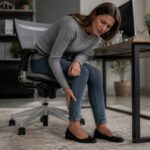
Sciatica and high chair: leg pain
24/07/2026
Sciatic pain in Terrebonne: when walking becomes difficult
24/07/2026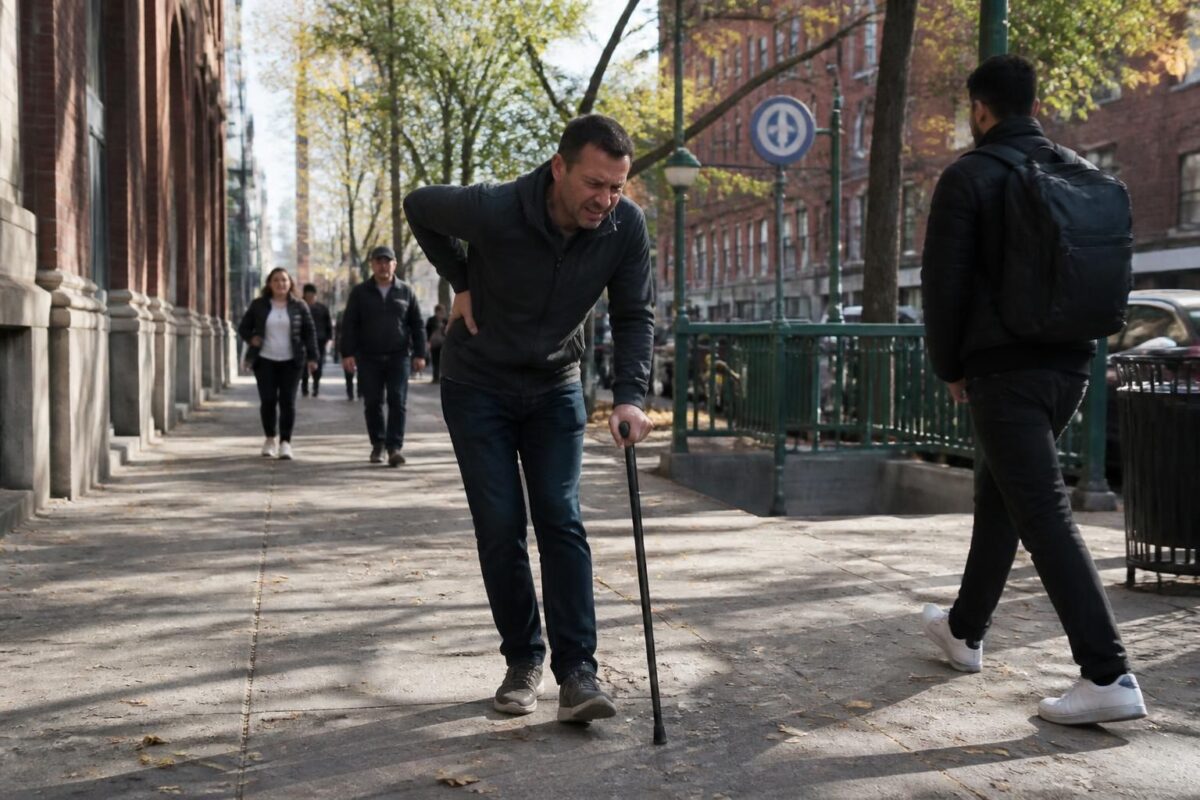
IN BRIEF
| Sciatic pain is the irritation or compression of the sciatic nerve that can radiate from the lower back down to the leg, making walking difficult. Appropriate management offers clear benefits: pain reduction, improved mobility, and a gradual return to pain-free walking. Non-surgical approaches, particularly osteopathy and, when relevant, neurovertebral decompression, allow for targeting the cause and promoting long-lasting recovery without invasive intervention. In Montreal, this service is particularly recommended for individuals seeking an accurate diagnosis and a personalized plan to restore smooth and safe walking. |
Sciatic pain is a painful radiation that follows the path of the sciatic nerve. In Montreal, it can occur after a herniated disc, a disc pinching, a foraminal stenosis, or nerve irritation related to pelvic imbalance. Its typical signs include pain radiating from the lower back to the buttock and leg, accompanied by burning sensations, tingling, numbness, and sometimes weakness.
Osteopathy and non-surgical approaches (mobilizations, targeted muscle work, fascial techniques, and neurovertebral decompression when appropriate) can reduce pressure on the nerve root, improve mobility, and allow for a quicker return to walking.
- When to consult: persistent pain, radiation down to the leg, or progressive weakness worsening with walking.
- Goal: reduce irritation, restore mobility, and prevent recurrences with a personalized plan.
A clinical evaluation at TAGMED, in Montreal or nearby areas, can help identify the actual cause and propose a non-surgical pathway tailored to your situation. If pain prevents you from walking, schedule an appointment today to relieve your pain and regain your independence.
This article presents, from a professional perspective, the causes and issues of sciatic pain in Montreal when walking becomes difficult. It describes possible mechanisms, assessment steps, and the main non-surgical management options offered by TAGMED Clinic. The goal is to help patients understand the pain that travels along the sciatic nerve and know when to consult for appropriate guidance.
What is Sciatic Pain and How It Impacts Walking
Sciatic pain is a radiation that follows the path of the sciatic nerve. It can start in the lower back and radiate to the buttock, thigh, calf, heel, or foot. This pain can make walking difficult, wake you at night, and limit daily activities. Typical symptoms include a burning sensation, tingling, numbness, or weakness in the leg.
Common Causes
The most common causes include a herniated disc, a disc protrusion, a foraminal or spinal stenosis, lumbar osteoarthritis, muscle strains, or a piriformis syndrome. Irritation or compression of a lumbar nerve root may explain the painful path down to the leg.
Evaluation and Diagnosis
The evaluation is based on the medical history and a simple neurological examination, aiming to trace the pain’s path and detect signs of radiculopathy. Mobility tests and reflexes help localize the involved root. Imaging studies may be considered if necessary to clarify a disc-related cause or stenosis. The goal is to establish a probable cause and guide treatment.
Treatment and Management at TAGMED
At TAGMED Clinic, the management of sciatica focuses on non-surgical and personalized approaches. The goal is to reduce nerve irritation and improve mobility without routinely resorting to surgery. Proposed options include a specific osteopathy, neurovertebral decompression when conditions allow, and a holistic approach centered on the body. Neurovertebral decompression is a non-invasive technique aimed at reducing mechanical stress on the discs and nerve roots through controlled traction. For more information on this approach, you may consult specialized resources on websites dedicated to neurovertebral decompression and sciatica.
To understand the differences between discal and radicular origins and treatment choices, consult the following resources:
- Sciatica and pain at the outer edge of the foot — possible S1 root
- Pain in the buttock and possible lumbar cause
- Sciatic crisis — how long before it goes away
- Sciatica: pain in the buttock while sitting
- Sciatica — Practical guide
- Pain that increases while sitting and possible discal cause
- Sciatica — TAGMED Clinic
- Sciatic pain — osteopathy blog
- Role of neurological assessment in Terrebonne
- Sciatica and osteopathy – Montreal
Neurovertebral decompression and other options
Neurovertebral decompression remains a non-surgical option when the condition is suitable. It aims to reduce mechanical stress on the discs and nerve roots, which can help decrease pain and improve mobility. In this context, osteopathy and a holistic approach to the body can support the recovery process, without prescribing inappropriate specific exercises. For more information, refer to specialized resources on authorized fields.
Warning signs and when to consult quickly
Consult quickly in the event of loss of urinary or bowel control, saddle anesthesia, progressive or significant weakness in the leg, feverish pain, or rapid aggravation. Certain signs require urgent medical attention.
Resources and access to care
The TAGMED Clinic offers an evaluation of sciatic pain in Montreal and Terrebonne. You can make an appointment online or by phone. It is helpful to bring existing imaging (MRI, X-rays) to the consultation. To find TAGMED’s services and practical information, visit cliniquetagmed.com.
To learn more about neurovertebral decompression and its indications, you can explore the dedicated contents at decompressionneurovertebrale.com and sosherniediscale.com.
TAGMED Clinic — Montreal and Terrebonne — easy access and care tailored to your situation.
Warning signals not to be neglected and important elements to discuss during your visit:
Pain that radiates down the leg, numbness, weakness, nocturnal pain, or pain after trauma can guide the evaluation towards a nerve or disc cause and inform the choice of available treatments at TAGMED.
For additional information, explore the following resources:
– Neurovertebral decompression and discopathies at decompressionneurovertebrale.com
– Sciatic pain and facilitated management at sossciatique.com
– TAGMED Clinic and associated resources at cliniquetagmed.com
Medical disclaimer: The information and advice provided on this site do not replace the advice, diagnosis, or treatment of a healthcare professional. Please note that Dr. Sylvain Desforges, osteopath, is neither a medical doctor nor a physician, and is not a specialist in a medical specialty as defined by the Collège des médecins du Québec. Manual medicine, functional medicine, and sports medicine as described on this site exclude any treatment or medical diagnosis made by a physician or medical specialist. Always consult your physician for any medical questions. For more details, please read our complete Legal Notice.
- Axis : Practical pathway to resume walking facing sciatic pain in Montreal
- Typical symptoms : Pain radiating from the lower back to the buttock and/or the leg
- Alarm signs : loss of urinary/bowel control or progressive weakness
- Common causes : disc herniation, protrusion, stenosis, or nerve irritation
- Quick assessment : neurological examination and analysis of the painful path
- Non-invasive approaches : osteopathy and neurovertebral decompression when suitable
- When to consult : pain limiting walking or rapidly worsening
- Goals : reduce nerve irritation and restore mobility
- Location : TAGMED Clinic — Montreal, Mont-Royal and Terrebonne

This article offers clear guidelines to understand and manage sciatic pain that makes walking difficult, particularly in Montreal. It emphasizes assessment, conservative approaches, and practical advice to improve mobility and reduce pain without systematic recourse to surgery.
Understanding why walking becomes difficult
Sciatic pain is often related to irritation or compression of the sciatic nerve, which can radiate from the lower back to the buttock and leg. When walking becomes painful, it is usually because nerve irritation increases with weight-bearing or twisting of the trunk, or because mechanical factors such as a herniated disc, foraminal stenosis, or muscular tensions around the pelvis worsen the symptoms.
Common causes
Typical causes may include a herniated disc, a disc protrusion, foraminal stenosis, lumbar osteoarthritis or irritation of the piriformis muscle which can mimic sciatica. Understanding the cause helps to choose an appropriate treatment strategy and to anticipate progression.

Sciatica L5 in Montreal: pain towards the big toe
IN BRIEF L5 sciatica refers to pain that can follow from the lower back or buttock down the leg to the big toe. This pathway can guide the evaluation, but does not alone confirm the involved nerve root. In Montreal,…

Sciatica L4-L5 in Montreal: understanding possible symptoms
IN BRIEF L4-L5 sciatica refers to a pain that may occur when a lumbar nerve root is irritated, sometimes related to a herniated disc. It can cause pain, tingling, or weakness in the buttock and leg; symptoms vary and cannot,…
Practical recommendations for walking with sciatica in Montreal
Adopting movement and posture habits
Maintain a balanced posture and vary positions when walking or standing. Frequent breaks, supportive shoes, and a moderate pace help reduce pressure on the discs and nerve roots. Avoid repetitive motions that aggravate pain and prefer short but regular trips to promote mobility without overloading the nerve.
Pain management and activities
For acute pain, apply simple methods like relative rest and alternating ice/heat based on tolerance, and favor gentle activities. Painkillers or anti-inflammatories may be considered according to a professional’s advice. The goal is to stay active without pushing to extremes, to aid recovery and avoid sedentariness which can aggravate stiffness.
Targeted exercises and therapies
Targeted exercises by a professional can reduce pressure on the nerve and improve the mobility of the pelvis and lumbar spine. A multidisciplinary approach may combine gentle osteopathy techniques, lumbar mobilizations, and fascial work to release tensions and optimize body alignment.

Sciatica in Montreal: nerve symptoms not to be taken lightly
IN BRIEF Sciatica refers to pain that may radiate from the lower back or buttock down the leg, sometimes accompanied by tingling, numbness, or weakness. In Montreal, an evaluation can help seek the cause and guide appropriate care, without deducing…

Sciatica in Montreal: Pain that Radiates Down the Leg Upon Waking
IN BRIEF Sciatica is a nerve pain that starts in the lower back or buttock and radiates down the leg, sometimes to the foot; it may be more pronounced upon waking. In Montreal, an assessment helps to better understand symptoms…
When to seek immediate care in Montreal
Warning signs and urgency
Seek immediate care in case of loss of bladder or bowel control, numbness in the saddle, progressive weakness of the leg or foot, or pain associated with fever, trauma, or general decline. Significant bilateral symptoms or rapidly worsening pain require urgent medical evaluation.

Sciatica in Montreal: pain that worsens during sitting-standing transitions
IN BRIEF Sciatica is pain that starts in the lower back or buttock and may radiate down the leg. Pain that increases when moving from a sitting to a standing position may be influenced by irritation of a nerve root…

Sciatica in Montreal: radiation in the leg after physical effort
IN BRIEF Sciatica is a pain that starts from the lower back or the buttock and radiates down the leg; it can appear after physical exertion. In Montreal, an assessment helps identify aggravating movements and guide care. Acupuncture can be…
What a professional evaluation can provide
Conservative approaches and neurovertebral decompression
A clinical evaluation can connect the pain trajectory, neurological signs, and available imaging, to determine suitable conservative options, such as neurovertebral decompression when appropriate. The objective is to reduce nerve irritation, improve mobility, and prevent recurrences, without immediate resort to surgery.
| Element | Concise description |
|---|---|
| Nature of pain | Sciatic pain radiating from the lower back to the buttock and leg, often stronger when walking |
| Main location | Sciatic nerve and lumbar segments L4 to S2 depending on the case |
| Triggering factors | Prolonged walking, standing, repeated bending or twisting |
| Impact on walking | Pain and weakness that limit stride and stability |
| Warning signs | Loss of bladder or bowel control, numbness in the saddle, progressive weakness |
| Recommended evaluation | Targeted history, neurological examination, nerve tension tests, imaging if necessary |
| Non-surgical approaches | Osteopathy, neurovertebral decompression, exercises and postural correction |
| When to seek immediate care | Pain that progresses, pain descending into the leg, increasing weakness |
| Treatment goal | Restore tolerable walking, reduce irritation and prevent relapses |
Marie D., 47 years old – NDG, Montreal: Before, every step was a struggle. The sciatic pain started in my lower back and heavily descended into my buttock and leg, making walking almost impossible beyond a few steps. After a few sessions of osteopathy in Montreal, I gradually regained a more natural stride and my daily walks are no longer a chore.
Jonathan P., 58 years old – Downtown Montreal: Walking in the city became a painful memory: the pain returned with every step, and long lines or uneven sidewalks put me to the test. Thanks to a personalized care plan, osteopathy allowed me to reduce pressure on the nerve and walking has become fluid again, without cramps stopping me.
Élodie S., 39 years old – Rosemont–La Petite-Patrie: Irritation of the sciatic nerve made me feel sharp pains and a burning sensation when trying to go outside for fresh air or take a simple walk. After working with the TAGMED team, I regained overall mobility and walking has become pleasant again, without pain holding me back.
Sophie L., 33 years old – Villeray–Saint-Michel-Parc-Extension: The sciatic pain especially limited me during outings with my children: I had to stop frequently and was afraid of covering long distances. The sessions of osteopathy in Montreal improved my posture and balance, and I can walk long distances again without painful fatigue.
Bruno G., 65 years old – Montreal (NDG): I felt like every step weighed on my spine, with pain radiating down to my foot. After resorting to non-surgical approaches with professionals from TAGMED, my stride has become natural again and I can resume my little weekend hikes without marked pain.
Dr. Sylvain Desforges, osteopath and recognized expert in the fields of osteopathy, naturopathy, and manual medicine, is the founding president of the TAGMED clinics and the ACMA association. With a career dedicated to innovation in healthcare, he specializes in managing chronic pain of the spine and integrating advanced technologies such as neurovertebral decompression, laser therapies, and shockwave treatments. His approach emphasizes evidence-based care to optimize the health and well-being of his patients, particularly when it comes to sciatic pain that complicates walking and daily life in Montreal and surrounding areas.
In the context of sciatic pain in Montreal, his approach is based on a rigorous clinical assessment that seeks to identify the underlying cause of irritation or compression of the sciatic nerve. Sciatica is not an isolated diagnosis, but a symptom that can reflect various mechanisms: herniated disc, disc protrusion, foraminal stenosis, lumbar osteoarthritis, or even pelvic imbalances and muscular tensions. Dr. Desforges emphasizes a global analysis, combining the history of symptoms, neurological examination, and, if necessary, imaging to guide the care plan precisely and personally.
The treatment philosophy that he applies at TAGMED combines manual interventions and non-invasive therapeutic approaches to reduce pressure on the sciatic nerve and restore mobility. Osteopathy plays a central role, with techniques targeted at the muscles, fascia, and joints of the spine and pelvis, while adopting a holistic approach to the body. The program may integrate innovative methods such as motorized neurovertebral decompression, aimed at relieving mechanical constraints around the discs and nerve roots, as well as complementary therapies like laser and shockwave treatments to promote muscle relaxation and tissue repair. Each approach is designed to adapt to the individual’s symptomatology and lifestyle.
The TAGMED clinics offer solutions located in Montreal, in the Mont-Royal neighborhood and in Terrebonne, to support patients in a local and accessible manner. Utilizing precise assessments and personalized treatment plans often helps shorten the path to a smoother and less painful walk. Dr. Desforges focuses on clearly explaining the possible origins of symptoms and proposing conservative options as much as necessary, while remaining attentive to the potential need for more specialized or multidisciplinary options when warranted by the signs.
Through his commitment to patient education and tailored care, Dr. Desforges aims to restore autonomy and quality of life to those suffering from severe or recurrent sciatica, prioritizing non-surgical solutions when appropriate. To learn more about his approach and the services offered, make an appointment at one of the TAGMED clinics in Montreal, Ville Mont-Royal, or Terrebonne and benefit from personalized support.
This summary presents the essential elements related to sciatic pain in Montreal and its repercussions on walking, describing possible causes, non-surgical approaches such as osteopathy and neurovertebral decompression, as well as the importance of a thorough clinical evaluation and a personalized treatment plan to regain mobility and quality of life.
Sciatic pain can infiltrate the hip, buttock, or leg, making walking difficult and sometimes disabling. Understanding the path and the real cause is essential to choose the appropriate treatment, which can range from conservative measures to neurovertebral decompression or other non-surgical options. In Montreal and the surrounding area, a multidisciplinary evaluation can identify whether the irritation comes from a herniated disc, a disc pinch, foraminal stenosis, or another mechanism, in order to develop an effective and personalized therapeutic plan.
For individuals whose walking becomes difficult, it is crucial to act early. A precise diagnosis and appropriate management often allow for a quick improvement in mobility and pain reduction without necessarily resorting to surgery. Osteopathy and associated techniques, when integrated into a holistic approach, can reduce tensions, restore mobility, and support the beneficial effects of neurovertebral decompression when relevant.
Local resources and services, particularly through specialized clinics in Montreal and Terrebonne, offer targeted assessments and personalized plans to address symptoms and their underlying cause. For more, consult the dedicated pages on sciatica treatment in Montreal and the general information available on SOS Sciatica, as well as the following resources to understand the painful journey and the options available in the area.
To guide your journey, you can make an appointment with the TAGMED Clinic, which offers an evaluation of sciatic pain in the sectors of Montreal, Ville Mont-Royal, and Terrebonne. Prepare your imaging reports and familiarize yourself with non-surgical options to maximize the effectiveness of care and promote a gradual return to activities.

Sciatica in Montreal: burning in the foot and possible nerve compression
IN BRIEF Sciatica is an irritation or compression of a nerve that can cause pain radiating from the buttock down the leg and into the foot, sometimes accompanied by a burning sensation, tingling, or numbness. In Montreal, an assessment helps…

Sciatica in Montreal: foot pain without lower back pain
IN SHORT A foot pain without lower back pain may sometimes be linked to nerve irritation compatible with sciatica, but other causes are possible. In Montreal, an evaluation allows for examining symptoms and function to guide management according to their…

Dr Sylvain Desforges, B.Sc., D.O., N.D., osteopath, is the founding president of TAGMED and of the ACMA association. He dedicates his practice to chronic spinal pain, low back pain and symptoms compatible with sciatica, particularly when pain radiates toward the buttock, leg, calf, foot or toes.
Through SOS Sciatique, he publishes educational content on sciatica symptoms, possible causes such as disc herniation, disc narrowing, foraminal stenosis or irritation of a lumbar nerve root, as well as non-surgical approaches that may be considered according to the evaluation. At Clinique TAGMED, care may include, depending on the case, motorized neurovertebral decompression, specific osteopathic care or precision percussion.
For an evaluation related to sciatica treatment in Montreal / Mount Royal or sciatica treatment in Terrebonne, please consult the services available at Clinique TAGMED.
Medical disclaimer
The information published on SOS Sciatique is provided for educational purposes only and does not replace a consultation, diagnosis, opinion or treatment provided by a physician or another authorized healthcare professional. The author of this article is neither a medical doctor nor a specialist in a medical specialty recognized by the Collège des médecins du Québec. The osteopathic, manual medicine or functional support approaches described on this site do not constitute medical acts and are not intended to replace medical follow-up.
Consult a physician or emergency service in cases of loss of bladder or bowel control, anesthesia in the saddle area, significant or progressive weakness in the leg or foot, fever, recent trauma, severe pain or rapid worsening of symptoms. For more details, please read our Legal Notice.