Sciatica pain in Montreal: incomplete journey, should we be concerned?
06/09/2026
Sciatica and difficulty walking on heels: possible L5 root
06/09/2026
IN BRIEF The subject is sciatic pain in Terrebonne, which can follow the incomplete path of the sciatic nerve and project pain down to the foot. Key benefits: pain reduction, improved mobility, and prevention of recurrences through tailored exercises and a personalized evaluation. Operation: a clinical evaluation and a personalized plan including physiotherapy and osteopathy local to Terrebonne to promote a return to activity without unnecessary surgery. |
The sciatic pain can start at the lumbar level and follow the path of the sciatic nerve down to the foot. Sometimes, the signal is described as an incomplete path, meaning it does not necessarily reproduce the entire route. This does not necessarily indicate an emergency, but warrants a proper evaluation to rule out a cause requiring prompt management.
In Terrebonne, non-surgical approaches prioritize movement and posture. With a personalized plan including physiotherapy and local osteopathy, the goal is to reduce pain, improve mobility, and prevent recurrences.
Warning signs that require prompt consultation: loss of bladder or bowel control, marked weakness, fever, or recent trauma. In the absence of these signals, an evaluation can determine appropriate treatments and facilitate a return to activity without surgery.
For an evaluation in Terrebonne and care focused on the nerve pathway, contact the TAGMED Clinic to start an effective and safe program.
This article, written by a healthcare professional, explains why sciatic pain can follow an incomplete path. It describes what to watch for, how pain is evaluated, and which non-surgical options to prioritize in Terrebonne. It also explains how to act quickly to limit pain and preserve mobility.
What is sciatica and why might the path seem incomplete?
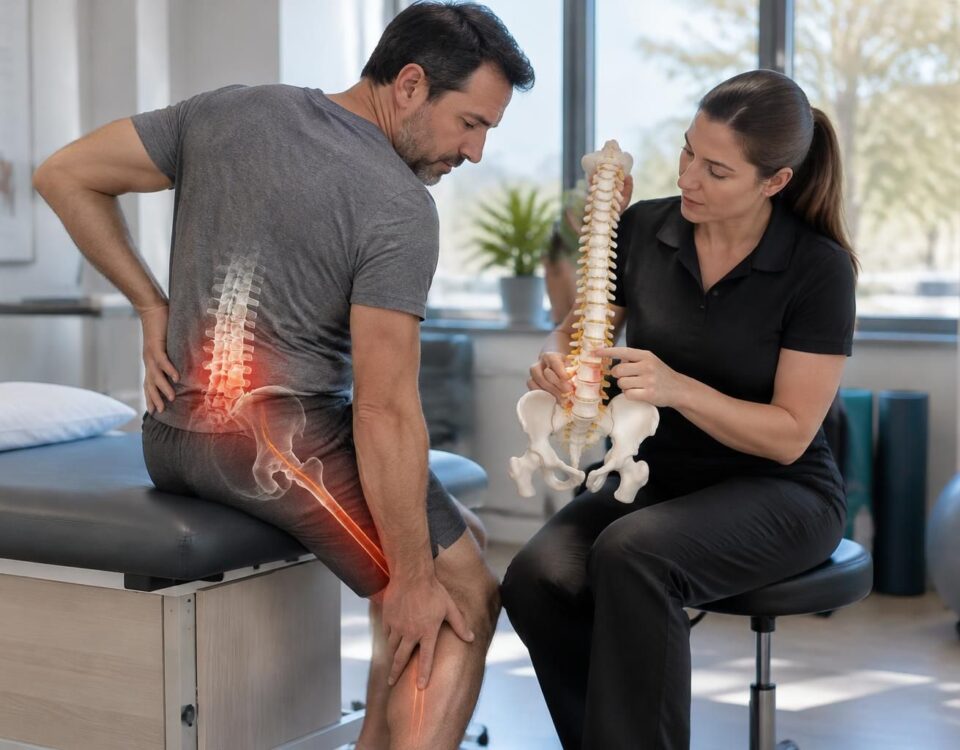
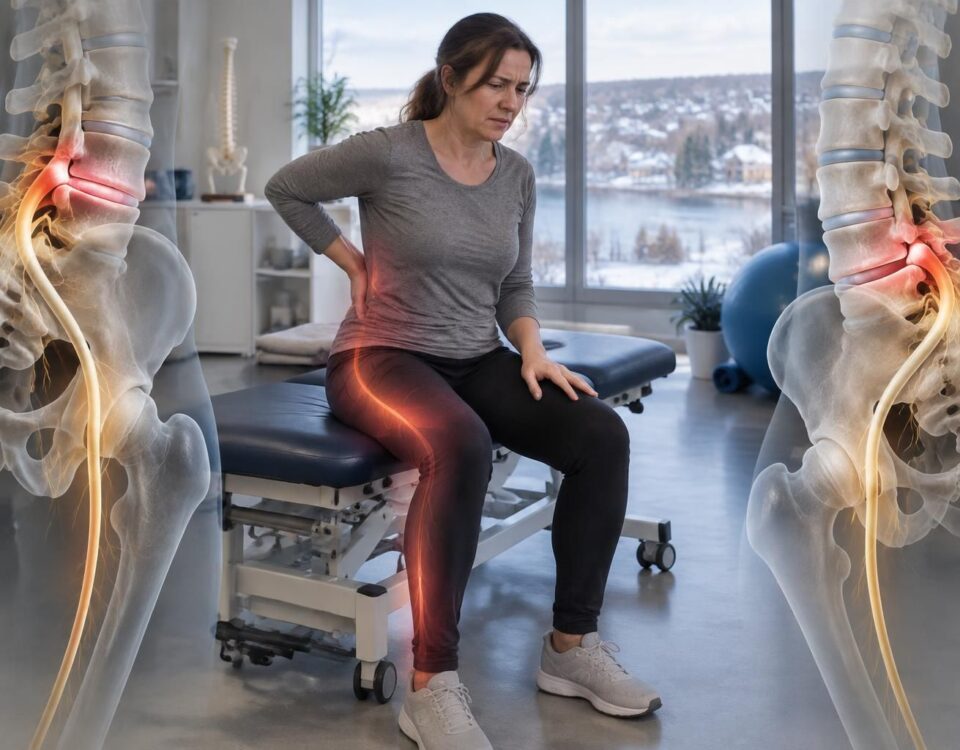
Sciatic pain follows the path of the sciatic nerve, the longest in the body. The path starts in the lower back, goes through the buttock, and descends down the leg to the foot. The pain may seem incomplete or project differently depending on movements. It is often unilateral and can present as an electric or burning sensation along the path.
Warning signs and when to be concerned
Signs to watch for can indicate more significant nerve involvement. Pain that does not decrease after a few days, significant numbness, marked weakness, or difficulty walking are reasons to consult. Urinary or bowel issues, or loss of sensation in the perineal area, need rapid attention.
Evaluation and diagnosis
The evaluation begins with a clinical examination focused on the painful path and associated symptoms. Simple tests can identify irritation or root compression. If symptoms persist, imaging may be considered to clarify the mechanism and exclude other causes.
Non-surgical approaches in Terrebonne and at the TAGMED Clinic
In most cases, conservative and tailored measures are prioritized. The goal is to reduce pain, improve mobility, and prevent recurrences. At the TAGMED Clinic, the evaluation may lead to targeted non-surgical care and non-invasive technological solutions. To explore an approach focused on the nerve pathway and movement, see The Sciatica – Solution.
To understand how the path can influence management, you can consult dedicated resources on the pathway and changes in pain over time:
• SOS Sciatique Society – understand the path in Terrebonne
• SOS Sciatique – pain that changes path
Additional resources on the path and possible causes are available through the following links:
• Hello Santé – sciatic nerve, path and causes
• SOS Sciatique – sciatic pain
Preventing recurrences and taking concrete action
Prevention relies on regular mobility and proper posture. Adopt movements that strengthen the trunk and avoid sudden actions that stress the nerve pathway. Ergonomic advice at work and in daily life facilitates a return to activity.
In Terrebonne, collaboration with a local professional allows for personalized evaluation and an appropriate action plan. Non-surgical options can be considered after evaluation, including manual techniques and movement- and function-focused approaches.
Useful resources and complementary links
For more in-depth information, consult the following resources:
Pain that rises to the foot and root L5
Loss of sensation – why consult
Sciatica that does not go away in Terrebonne
Sciatic pain – state of affairs
Sciatic pain that extends to the foot – understanding the path
To learn more about the path and mechanisms of pain, dedicated resources are available here:
Path of pain in Terrebonne – understanding the path
Changing path over the days – Terrebonne
Professional references and evaluation tools available in the resources mentioned above.
Medical disclaimer: The information and advice provided on this site do not replace the opinion, diagnosis, or treatment of a health professional. Please note that the content presented is not the work of a specific doctor and is not personalized medical advice. Manual medicine and the approaches described do not exclude medical follow-up. Always consult your doctor for any medical questions. For more details, please read our complete Legal Notice.
- Incomplete path and projected pain: from the lower back to the leg, unilateral pain.
- Projected pain: can follow the path of the nerve, not necessarily the local origin.
- Common causes: lumbar disc herniation, piriformis syndrome, lumbar osteoarthritis with foraminal stenosis.
- Signs of concern: marked weakness, loss of urinary/bowel control, fever or pain that worsens rapidly.
- Initial assessment: targeted clinical examination and simple tests; imaging if persistence or red flags.
- Non-surgical approach: movement, posture, local physiotherapy and osteopathy.
- Personalized plan: trunk strengthening and tailored program after assessment in Terrebonne.
- Progression: progressive protocol to regain activity without surgery.
- When to act: pain that interferes with sleep, work, or activities.
- Local follow-up: adapted care with a professional in Terrebonne.

Quick summary: sciatic pain can follow the path of the sciatic nerve even when the origin is located in the lower back or the buttock. In Terrebonne, a non-surgical and personalized approach, focused on movement, trunk strengthening, and posture correction, often improves mobility and reduces pain without immediately resorting to surgery. However, some signals warrant quick evaluation, particularly the presence of marked neurological signs or urinary or bowel issues.
Understanding the path of the sciatic nerve and the concept of incomplete path
The sciatic nerve is the longest in the body, and its path can explain why pain felt in the back or buttock can extend down to the foot. This “projected pain” is common and can be unilateral. Understanding this path helps interpret symptoms and prioritize non-surgical approaches focused on movement and strengthening the trunk’s stabilizing structures.

Sciatica L5-S1 in Terrebonne: why the pain can radiate down to the foot
IN BRIEF L5-S1 sciatica refers to pain related to irritation of a lumbar nerve root, which may start from the lower back and radiate into the buttock, leg, and down to the foot. The pathway varies: the top of the…

Sciatica in Terrebonne: painful journey according to roots L4, L5, and S1
IN BRIEF Sciatica in Terrebonne can cause pain, tingling, or weakness in the leg. The roots L4, L5, and S1 can guide the evaluation based on symptoms and changes in strength, sensitivity, or reflexes; their territories do overlap, however. Comparing…
Incomplete path and implications for therapeutic action
An incomplete path means that the observed painful location does not always accurately reflect the point of nerve irritation or compression. This justifies a comprehensive clinical assessment and a treatment strategy centered on the nerve path and the overall function of the back and hips. In Terrebonne, this approach prioritizes non-invasive therapies like osteopathy and physiotherapy, supplemented if necessary by local techniques to facilitate a return to activity.

Sciatica in Terrebonne: what does irritation of the S1 root mean?
IN BRIEF An irritation of the S1 root can cause pain of a sciatica type in the buttock, the back of the leg, and the outer edge of the foot. Tingling, numbness, or difficulty walking on tiptoes may also occur.…

Sciatica in Terrebonne: what does irritation of the L5 root mean?
IN BRIEF L5 sciatica corresponds to irritation of the L5 nerve root, often felt from the lower back and buttock down the side of the leg, to above the foot and the big toe. It can cause pain, tingling, or…
Local assessment and criteria for therapeutic orientation
The diagnosis is primarily based on a targeted clinical examination of the painful path, with simple tests sufficient to guide treatment. Imaging (MRI or CT scan) is considered if symptoms persist beyond a few weeks, worsen, or present red flags. A personalized evaluation in Terrebonne helps identify possible causes — disc herniation, piriformis syndrome, lumbar osteoarthritis — and determine whether a conservative approach is appropriate.

Sciatica in Terrebonne: difference between L4-L5 and L5-S1
IN BRIEF The difference between L4-L5 and L5-S1 concerns the level of the lumbar discs and the sometimes irritated nerve roots: an L4-L5 injury often affects L5, while an L5-S1 injury often affects S1. The sensory pathways overlap; thus, an…

Sciatica S1 in Terrebonne: pain towards the calf and the outer edge of the foot
IN BRIEF S1 sciatica is pain related to irritation of a lumbar nerve root, which may radiate down to the buttock, back of the calf, and the outer edge of the foot. Tingling or weakness may also occur. In Terrebonne,…
Non-surgical options and action plan
For those who prefer to avoid surgery, non-invasive solutions are highlighted. The typical program combines physiotherapy and local osteopathy, focused on movement, trunk strengthening, and improving the mobility of the nerve path. Progressive and tailored exercises, postural advice, and regular physical activities (walking, swimming) help reduce pain and prevent recurrences. In more stubborn cases, targeted local interventions may be discussed during the evaluation, always prioritizing functional results and a return to activity.

Sciatica L5 in Terrebonne: pain towards the big toe
IN SHORT L5 sciatica can cause pain or numbness that radiates to the big toe, sometimes with difficulty lifting the foot. This pathway is a clue, not a diagnosis: the examination compares strength, sensitivity, and gait, as the nerve territories…

Sciatica L5-S1 in Terrebonne: pain radiating to the heel or foot
IN BRIEF A L5-S1 sciatica often corresponds to irritation of the S1 root, which can cause pain that radiates from the buttock down to the calf, heel, or outer edge of the foot. Identifying the pathway of symptoms and changes…
Warning signs and when to consult quickly
Warning signs justify an urgent consultation: loss of urinary or bowel control, marked weakness or rapid progression of pain, fever, or recent trauma. In the absence of these signs, a gradual and monitored approach by a professional may be sufficient to improve the situation.
Practical tips for Terrebonne
Maintaining an aligned posture, prioritizing activities compatible with your pain, and integrating a trunk strengthening program are effective preventive measures. Using active breaks, choosing ergonomic furniture, and favoring managed loads and movements help limit tension on the nerve pathway and promote a sustainable return to daily activities.
| Axis | Concise observation |
|---|---|
| Path and projection | Knowing the path helps target non-invasive treatments and avoid heavy interventions. |
| Nature of the pain | Unilateral and radiating pain; prioritize movement and strengthening. |
| Warning signs | Loss of urinary control or major weakness; medical emergency. |
| Frequent causes | Herniated disc, piriformis syndrome, foraminal stenosis; activity- and age-related factors. |
| Initial assessment | Assessment focused on the pathway and simple tests; imaging if persistence. |
| Non-surgical approaches | Physiotherapy, osteopathy, core strength and adapted exercises; return to activity. |
| Terrebonne action plan | Personalized assessment and adapted progression; symptom reduction without surgery. |
| Prevention and posture | Regular mobility, ergonomics, exercises; correct posture at work and home. |
| When to consult | Pain persists >7 days or signs of emergency; act early to prevent complications. |
Testimony from Sophie, Terrebonne: at first, the pain seemed to be limited to the lower back and the sensation did not follow the usual pathway of the sciatic nerve, which alarmed me. I was explained that the sciatic nerve pathway can be felt as a projected pain and that concern might be unjustified when the pain follows an incomplete path. Thanks to a personalized assessment and a plan combining physiotherapy and local osteopathy in Terrebonne, I regained mobility and comfort, without surgery. Today, I advise listening to professionals and adopting a progressive approach.
Testimony from Marc, Terrebonne: when the pain appeared, it started from the lower back and sometimes radiated to the buttock without following the usual pathway. It was concerning, but the team reassured me by explaining the principle of projected pain and the fact that the sciatic nerve pathway can seem incomplete in some people. A program of physiotherapy combined with local osteopathy allowed me to gain mobility and limit recurrences without resorting to surgery.
Testimony from Claire, Terrebonne: I was afraid that an incomplete pathway indicated a serious pathology. The assessment clarified things and showed me that the mechanical causes (posture, daily activities) were targetable through appropriate rehabilitation. With gentle exercises, work on posture, and support from Clinique TAGMED in Terrebonne, the pain decreased and walking became smooth again, without heavy intervention.
Testimony from Théo, Terrebonne: “I felt like the sciatic nerve was not giving me a break and that the complete pathway was problematic.” The local approach favored non-invasive and progressive methods, combining osteopathy and physiotherapy to work on trunk control and mobility along the nerve pathway. Result: gradual return to my activities and fewer painful episodes, without surgery.
Testimony from Jeanne, Terrebonne: “Understanding the nerve pathway and the idea of projected pain reassured me.” The team guided me on simple movements and targeted exercises that strengthen the back and stabilizing muscles while respecting my limits. Within weeks, the pain became sporadic and my quality of life improved thanks to a non-surgical and personalized program.
Dr. Sylvain Desforges, osteopath, naturopath, and manual medicine physician, is the founding president of the TAGMED clinics and the ACMA association. His commitment to healthcare innovation leads him to specialize in the management of chronic spinal pain and to integrate advanced technologies such as neurovertebral decompression, laser, and shockwaves. His mission is to provide evidence-based care to optimize the health and well-being of his patients, with an approach focused on efficacy and safety.
In Terrebonne, his work on sciatic pain is based on a key idea: the incomplete pathway can explain why pain does not always follow the entire path of the sciatic nerve. This notion allows for a nuanced perspective and prioritizes non-surgical approaches focused on movement and posture. Understanding this partial pathway helps target areas to mobilize and strengthen to improve function without immediately resorting to invasive intervention.
The initial examination is based on a careful clinical evaluation focused on the painful pathway and neurological signs. The straight leg raise test may be used to detect nerve root irritation, and imaging is reserved for persistent cases or those presenting red flags. Dr. Desforges favors a holistic approach that takes into account muscle imbalances, postural habits, and the patient’s activity level, in order to specify the origin and guide treatment.
The therapeutic plan aims for a return to activity without surgery. It combines targeted osteopathy, physiotherapy, trunk strengthening, and work on posture and movement. Depending on individual needs, complementary non-invasive options can be offered, such as specific manual techniques and technological solutions suited to sciatica, in order to rapidly improve mobility and reduce pain.
On the ground in Terrebonne, this approach encourages suitable progression and personalized follow-up with the goal of reducing pain through movement and control, and preventing recurrences. It allows each person to regain their functional qualification and return to their daily activities with greater serenity and confidence in managing their pain.
At the heart of practice, Dr. Desforges places central importance on patient education and clear communication about the course of the sciatic nerve and the concept of referred pain. This transparency facilitates adherence to the rehabilitation program and encourages self-management of daily activities. The multidisciplinary approach in Terrebonne relies on attentive listening to individual needs and ongoing collaboration with a dedicated local team to quickly optimize mobility and quality of life without resorting to invasive treatments when possible.
Continuing his innovative work, Dr. Desforges relies on evidence-based protocols and measured progression to sustainably improve the comfort, mobility, and well-being of patients suffering from sciatica in Terrebonne while maintaining a holistic and personalized approach to each painful trajectory.
Quick summary: Sciatic pain in Terrebonne follows the path of the sciatic nerve from the lower back to the foot. Understanding this pathway allows for directing towards non-surgical approaches focused on movement and posture, with a personalized assessment and a treatment plan including physiotherapy and local osteopathy. The goal is a return to activity and prevention of recurrences, without immediately resorting to surgical intervention. This article clarifies how to recognize the signs, assess the mechanisms behind the pain, and navigate the non-invasive options available at the TAGMED Clinic in Terrebonne while providing practical tips and useful resources.
Incomplete pathway: why understand it?
The path of the sciatic nerve explains why discomfort felt in the lower back can project down to the foot. This pain, often described as an electric shock or burning sensation, can follow a unilateral path and be accompanied by paresthesias or weakness. By understanding this trajectory, it becomes possible to target exercises and treatments that address the nerve segments and muscles supporting the nerve pathway, rather than solely aiming at the painful area. For further information, consult dedicated resources on the path of the sciatic nerve and its mechanical causes.
Warning signs and when to worry
Warning signs require quick evaluation, notably loss of urinary or bowel control, marked or progressive weakness of a leg, fever, or recent trauma. In the absence of these signs, pain can often be managed with conservative approaches combining movement, posture, and specialized therapies. To better understand situations requiring quick consultation and the mechanisms involved, you can refer to reliable resources like MSD Manual – Sciatica and the dedicated guides for Terrebonne.
Non-surgical approaches and personalized plan
In most cases, it is better to prioritize non-surgical approaches centered on movement and function. A personalized plan may include physiotherapy, osteopathy, and trunk strengthening exercises, tailored to your pace and daily activities. At the TAGMED Clinic in Terrebonne, the evaluation aims to identify possible underlying causes (lumbar disc herniation, piriformis syndrome, foraminal stenosis, etc.) and propose progressive solutions to reduce pain and improve mobility. Complementary options such as neurovertebral decompression, therapeutic laser therapy, or shockwave therapy may be considered based on the evaluation. To explore the mechanisms and non-surgical options, refer specifically to the following resources: Neurological Evaluation and When to Consult.
Prevention and lifestyle
Prevention relies on regular mobility, strengthening of trunk muscles, and maintaining proper posture throughout the day. Adapt your work and home environment to limit strain on the nerve pathway and prioritize activities such as walking or swimming, while avoiding sudden movements and heavy lifting. For practical advice and local resources, you can consult pages focused on Terrebonne and Montreal as well as guides dedicated to the assessment and prevention of sciatica.
Resources and useful links
To delve deeper, these resources offer additional explanations on the path of the sciatic nerve and non-surgical management options:
Path and pain in Terrebonne and surrounding areas: pain towards the top of the foot and root L5 ·
pain that descends into the leg when coughing ·
MSD Manual: Sciatica ·
Sciatica Montreal and neurological evaluation: Neurological Evaluation and When walking becomes difficult •
General information and practical tips: When to Consult and When to Worry •
Other resources: Sciatica Evaluation Terrebonne ·
Top Health: Symptoms and treatments.

Dr Sylvain Desforges, B.Sc., D.O., N.D., osteopath, is the founding president of TAGMED and of the ACMA association. He dedicates his practice to chronic spinal pain, low back pain and symptoms compatible with sciatica, particularly when pain radiates toward the buttock, leg, calf, foot or toes.
Through SOS Sciatique, he publishes educational content on sciatica symptoms, possible causes such as disc herniation, disc narrowing, foraminal stenosis or irritation of a lumbar nerve root, as well as non-surgical approaches that may be considered according to the evaluation. At Clinique TAGMED, care may include, depending on the case, motorized neurovertebral decompression, specific osteopathic care or precision percussion.
For an evaluation related to sciatica treatment in Montreal / Mount Royal or sciatica treatment in Terrebonne, please consult the services available at Clinique TAGMED.
Medical disclaimer
The information published on SOS Sciatique is provided for educational purposes only and does not replace a consultation, diagnosis, opinion or treatment provided by a physician or another authorized healthcare professional. The author of this article is neither a medical doctor nor a specialist in a medical specialty recognized by the Collège des médecins du Québec. The osteopathic, manual medicine or functional support approaches described on this site do not constitute medical acts and are not intended to replace medical follow-up.
Consult a physician or emergency service in cases of loss of bladder or bowel control, anesthesia in the saddle area, significant or progressive weakness in the leg or foot, fever, recent trauma, severe pain or rapid worsening of symptoms. For more details, please read our Legal Notice.