Herniated disc and sciatica: absence of pain despite visible image
28/09/2026
Sciatica in Montreal: burning in the foot and possible nerve compression
29/09/2026
IN BRIEF
| Sciatica is pain that radiates from the lower back or buttock into the leg. To avoid it, one can modify their gait, but limping or unevenly distributing weight can maintain tension and pain. Identifying these compensations and gradually returning to a comfortable walk helps limit strain, without forcing. If the pain worsens or is accompanied by weakness, seek medical advice. |
When sciatica hurts, one may modify their gait to protect the leg: limping, shortening steps, or leaning the torso. If these compensations continue, they can tire the muscles, create tension in the back and pelvis, and perpetuate discomfort.
Try to walk at a comfortable pace, over a short distance, without forcing or abruptly correcting your posture. If the pain worsens, significantly limits your movements, or is accompanied by weakness in the leg, consult a healthcare professional.
When sciatica hurts, one often changes their way of walking to protect the leg. One may limp, shorten a step, or lean the trunk. These adjustments sometimes relieve pain temporarily, but an asymmetrical and prolonged gait can tire the muscles and increase tension. Understanding this mechanism helps to adapt activities and know when to seek medical advice.
Sciatica refers to pain that follows the path of the sciatic nerve, often from the buttock to the thigh and sometimes down to the foot. The pain may be accompanied by burning, tingling, or numbness. It can also alter the gait, as the body instinctively seeks to avoid painful movements.
The pain that descends into the leg does not always originate from a local issue in that leg. It may be related to irritation of a nerve near the lower back or buttock. To better understand this path, consult this article on why sciatica pain descends into the leg.
How Pain Changes Walking
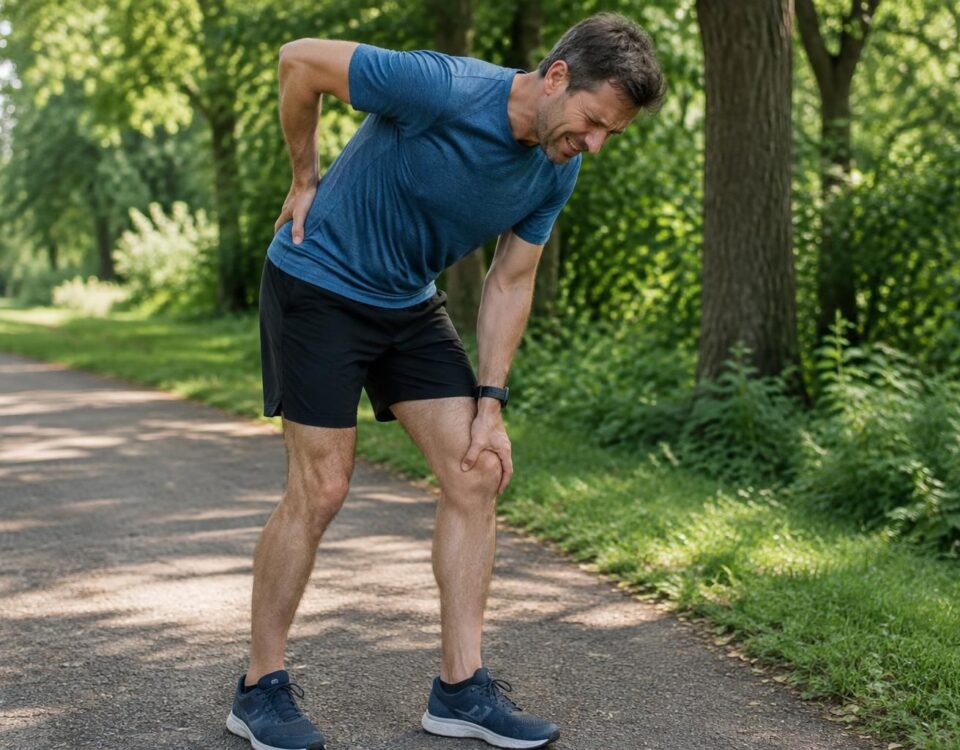
A person in pain may place their foot down for a shorter duration on the painful side. They may also take a shorter step, limp, or shift their weight to the other leg. Some people lean their trunk or slightly rotate their pelvis to reduce the pain.
These reactions are often involuntary. They may reduce discomfort for a few steps, but they unevenly distribute the body’s weight. The muscles in the hip, back, and opposite leg may then work harder.
Why an Asymmetrical Gait Can Prolong Discomfort
When a person limps for a long time, some muscles contract more than usual while others work less. This difference can cause fatigue, stiffness, or additional pain in the lower back, buttock, or the other leg.
A modified gait does not automatically mean the nerve is more damaged. However, it can maintain a protective cycle: pain changes walking, walking becomes less regular, and then fatigue and tension make movements more difficult. Information on positions to avoid with sciatica can help identify certain movements that exacerbate symptoms.
Changes in Walking to Look Out For
Limping or Shortening Steps
Limping often appears when putting weight on one leg increases pain. The person then reduces the time spent on that foot. They may also advance the opposite leg less far to limit the movement of the pelvis.
If walking triggers pain, temporarily reduce the duration or distance. Return to a comfortable pace and take breaks. Walking may still be possible for some people, but it should not be forced. Find guidelines in this article about walking with sciatica and precautions to take.
Leaning the Torso or Shifting Weight to One Side
Leaning the torso may reduce pain for some people. But if this position persists, it can fatigue the back muscles and alter overall balance. The body may then compensate at the pelvis, hips, or opposite leg.
Avoid trying to correct your posture by forcing yourself to walk perfectly straight if that increases pain. The goal is to find a gait that is as natural and comfortable as possible, without exaggerating the weight on one side.
The Foot Dragging or Unstable Support
A sensation of weakness, a dragging foot, or repeated stumbling requires special attention. These signs may indicate a neurological issue and should not be treated merely as a walking compensation.
Numbness or tingling in the foot while walking should also be reported to a healthcare professional. You can consult information on foot numbness while walking and on tingling after walking.
Sciatica and stationary bike: useful or aggravating depending on the case
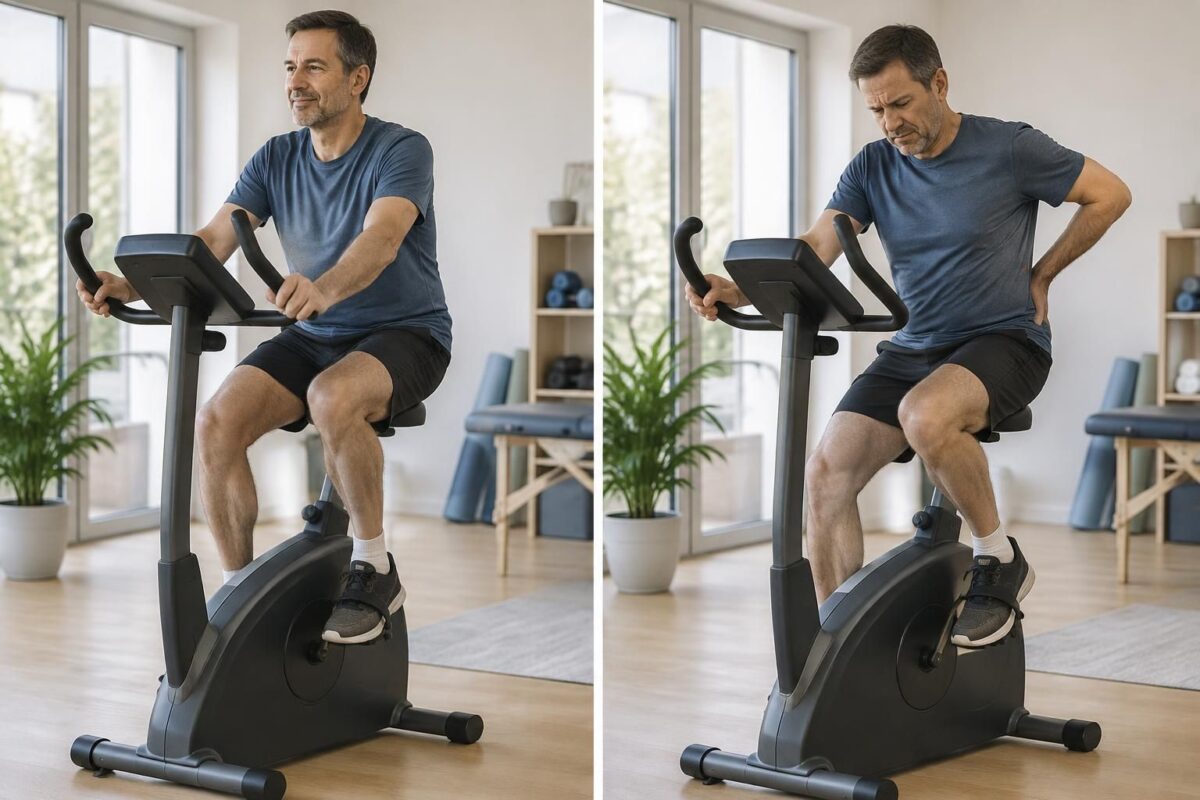
IN BRIEF The stationary bike with sciatica can help you stay active if the pain is mild and stable. Start with a short session, at low resistance and in a comfortable position. If the pain goes further down the leg,…

Sciatica and cycling: sitting, bending, and symptoms
IN BRIEF Sciatica is pain related to irritation of the sciatic nerve, which can extend from the buttock down to the leg. Cycling may sometimes be possible if symptoms are mild and stable: a comfortable seat, a less bent posture,…

Sciatica and jogging: pain in the leg after effort
IN BRIEF Jogging-related sciatica is pain that often starts from the lower back or buttock and travels down the leg. Running may be possible if the discomfort is mild and stable, but if the pain intensifies, or if there are…

Sciatica and running: when to stay cautious
IN BRIEF Sciatica is pain related to irritation of a nerve, which can extend from the lower back or buttock down the leg. Running is not always prohibited if the discomfort remains mild and stable, without tingling or weakness. Reduce…
What Can Intensify Symptoms During Movements
Walking Too Long Despite Increasing Pain
Pain that increases with each step indicates that the effort may be exceeding your tolerance at that moment. Continuing at all costs can increase fatigue and make the gait less stable. Take a break and observe if the pain calms when you rest.
The tolerable walking duration varies from person to person. Some can walk for a few minutes, others for longer. Simple guidelines on sciatica pain on stairs can help distinguish effort-related discomfort from a sign that deserves evaluation.
Lack of Breaks and Prolonged Positions
Sitting for a long time before walking can make the first steps more difficult. Conversely, standing still for a long time can fatigue the lower back and legs. Alternate positions and get up regularly if your day includes long periods of sitting.
Practical advice on daily gestures is available in this article from Santé Magazine devoted to gestures for better living with sciatica.
The loads and changes in direction
Carrying a heavy bag to one side can accentuate trunk inclination. Turning the body sharply while walking can also trigger pain. Distribute loads, keep them close to the body, and turn with your feet rather than just pivoting your back.
General advice on possible causes and measures to take can be found in this article on reflexes in response to sciatic pain.
How to adapt your walking without forcing
Choose a tolerable duration
Start with a distance that does not cause a significant increase in pain. If necessary, break down the movements into short periods. Gradually increase the duration only if symptoms remain stable during walking and after the activity.
Prefer flat terrain and stable shoes. Avoid, at the beginning, routes that require long climbs, repeated descents, or uneven ground if these conditions worsen your pain.
Observe the evolution of symptoms
Note where the pain starts, how far it goes down, and what happens after walking. Pain that is closer to the lower back may be experienced differently from pain that goes down further toward the foot. These observations can help a professional assess your situation.
Pain in one leg alone does not determine the cause. To better understand what the painful side may indicate, read this article on sciatic pain in one leg.
Avoid forcibly correcting your gait
Do not try to significantly lengthen your stride or to put weight on the painful leg to eliminate a limp. Forcing a correction can increase pain. If the gait remains significantly altered, consult a health professional rather than trying multiple attempts alone.
When to seek medical advice
Consult a doctor if the pain is intense, if it worsens, or if it does not improve. Also ask for advice if the pain significantly disrupts your sleep, mobility, or daily activities.
New weakness in the leg, a foot that drops or catches, or significant loss of sensation requires prompt evaluation. For more information on leg numbness and neurological signs, consult a health professional and do not rely solely on self-assessment.
Contact emergency services if you have difficulty controlling your bladder or bowels, loss of sensation around the genitals or anus, or sudden weakness. These signs require immediate attention.
Symptoms can also appear in specific situations, such as pain that increases on stairs or numbness while walking. Describe these changes precisely to the professional assisting you. More information is available on pain on stairs and numbness of the foot while walking.
Frequently asked questions about sciatica and walking
Is it normal to limp with sciatica?
Pain can lead to a temporary limp, as the body seeks to reduce weight on the painful area. A persistent limp that worsens or is accompanied by weakness should be evaluated by a health professional.
Should I stop walking when pain appears?
Not necessarily. If the pain remains mild and does not intensify, a short walk may be tolerated. Stop or reduce the effort if the pain increases significantly, goes lower down the leg, or is accompanied by significant weakness or numbness.
Does a modified gait mean the nerve is damaged?
No. A limp may be a reaction to pain and does not alone prove nerve damage. However, new weakness, marked loss of sensation, or a foot that catches does require medical advice.
Why can pain increase after walking?
Duration, terrain, fatigue, or the way weight is distributed can contribute to a temporary increase in pain. If this reaction recurs or persists, reduce effort and seek advice from a professional.
For additional information on the gestures to adopt, also consult the resources from SOS Sciatique on numbness after walking and from Cahors Ostéo on positions to avoid.
Medical disclaimer: The information and advice provided on this site do not replace the opinion, diagnosis, or treatment of a healthcare professional. Please note that Dr. Sylvain Desforges, osteopath, is neither a medical doctor nor a physician and is not a specialist in a medical specialty as defined by the Collège des médecins du Québec. Manual medicine, functional medicine, and sports medicine as described on this site exclude any treatment or medical diagnosis made by a physician or specialist doctor. Always consult your physician for any medical questions. For more details, please read our full Legal Notice.
When pain modifies walking
- You shorten your stride to protect the painful leg.
- You shift more weight to the other side.
- You tense up and move your pelvis less.
- You slow down or avoid certain movements.
How the cycle can set in
- The asymmetric gait can stress other muscles.
- Tension can increase around the back and glutes.
- Reduced movement can promote stiffness.
- Pain can then make walking even more cautious.
Key takeaway: adapt your walking to your tolerance, without forcing or remaining immobile for too long. If your leg becomes weak or if pain significantly worsens, seek medical advice.

A modified approach in case of sciatica is often an instinctive response to pain: one shortens a step, avoids putting weight on one leg, or leans the torso. But if this way of walking continues, it can overload other muscles and joints, increase tension, and maintain discomfort. The goal is not to walk “normally” at all costs, but to gradually regain comfortable movement, without forcing or ignoring warning signs.
Why does pain change the way we walk?
When pain radiates in the buttock or leg, the body instinctively tries to protect the sensitive area. You may limp, put your foot down for a shorter time, reduce the length of your steps, or shift your body weight to the other side. This adaptation can provide relief in the moment: it limits certain movements that trigger symptoms.
The gait can also be modified by stiffness in the lower back, weakness due to pain, or fear of triggering pain in the leg. However, there is not one single way of walking that precisely indicates the origin of sciatica. A limp alone does not provide a diagnosis.
How can a prolonged limp maintain pain?
Overloading on one side of the body
By avoiding painful weight-bearing, you may transfer more weight to the other leg. The pelvis and torso then compensate, sometimes with every step. Over time, these repeated efforts can tire the muscles of the hips, buttocks, and back, and create new tensions. The initial pain is not necessarily aggravated directly, but your body can become more sensitive and less comfortable in its movements.
Less movement, more stiffness
Very short steps and hesitant walking reduce usual mobility. If you also limit your movements greatly for fear of pain, the muscles can stiffen and returns to activity can become more painful. Prolonged strict rest is generally not the best strategy: gentle activity, suited to your tolerance, often helps preserve mobility.
Good reflexes for walking without forcing
Reduce the dose rather than immobilizing yourself
Start with short walks on flat terrain, at a comfortable pace. You can break your trips into several sequences of a few minutes, then gradually increase if the symptoms remain stable. Take a break if the pain significantly increases or travels further down the leg. Avoid trying to “correct” your gait by forcing a long stride or painful weight-bearing.
Choose reassuring conditions
Wear stable and comfortable shoes, avoid uneven surfaces if you feel less stable, and keep carried objects close to your body. If you are limping heavily, a healthcare professional can assess your gait and advise you on useful adaptations. A physiotherapist can particularly help you gradually resume movements and exercises.
When to seek medical advice?
Consult if the limp persists, worsens, significantly limits your activities, or is accompanied by weakness in the leg. A new difficulty in lifting the foot requires prompt evaluation. In case of loss of bladder or bowel control, numbness around the intimate area, or significant weakness, contact emergency medical services without delay.
To track the evolution, note what triggers or eases the pain, the distance traveled, and any tingling. These markers will help a doctor or physiotherapist tailor advice to your situation.
| Change in gait | Possible effect |
|---|---|
| Limping to avoid painful weight-bearing | Transfers more load to the other leg. |
| Taking shorter steps | Alters the movement of the pelvis and may increase tension. |
| Leaning to one side while walking | Exerts asymmetrical stress on the back. |
| Tensing up for fear of pain | Fatigues the muscles and limits mobility. |
| Slowing down significantly or stopping often | Reduces activity and may promote stiffness. |
| Forcing to regain normal walking | Can revive pain if the effort exceeds your tolerance. |
Sciatica and altered gait: testimonials to understand the pain cycle
Note: the testimonials below are fictional examples, inspired by frequently described situations. They do not replace medical advice and do not help identify the cause of pain.
Claire, 42 years old: “When the pain radiated down my right leg, I started limping without realizing it. I took shorter steps and avoided placing my foot firmly. After a few days, I also had pain in my hip and lower back.”
An altered gait can be a natural reaction to avoid sharp pain. But if one always spares the same side, it can make walking less fluid and differently engage the muscles of the back, pelvis, and legs. These additional tensions can sometimes maintain discomfort, without necessarily being the initial cause of sciatica.
Marc, 56 years old: “I leaned towards the left to feel less pain in my buttock. This position relieved me momentarily, but I ended up walking crooked and was stiff by the end of the day.”
Shifting weight to one side or shortening steps can alter the balance of the pelvis and torso. If this compensation repeats, some muscles work harder than others and can become sensitive or fatigued. It is useful to notice these changes, without forcing oneself to walk normally if it significantly increases pain.
Nadia, 35 years old: “I limped more when I was tired. I then tried to walk quickly to finish, but the pain spread further down my leg. By slowing down and making shorter trips, I managed my outings better.”
Lengthening the stride or speeding up despite increasing pain can lead to tensing the body and multiplying compensatory movements. Conversely, gentle walking, on regular terrain and broken into short periods, can help maintain mobility if well tolerated. Reduce effort if the pain becomes sharper or travels further down the leg.
Éric, 61 years old: “I spent almost the entire day sitting, then stood up limping. I thought I should avoid moving, but staying still made me even stiffer.”
A long period of sitting can make getting back to walking uncomfortable for some individuals. Standing up regularly, taking a few steps, and changing positions may be preferable to prolonged immobility, as long as it remains within a tolerable zone. The goal is not to eliminate all sensation, but to avoid movements that trigger lasting aggravation.
If your gait changes due to pain, observe what happens: which side you are favoring, when you are limping, and whether the pain increases during or after walking. These elements can help a healthcare professional assess the situation and advise you on appropriate movements.
Seek medical advice quickly if you notice a new weakness in one leg, a foot that drags, significant loss of sensitivity, or unusual difficulties in controlling the bladder or bowels. A change in gait associated with these signs requires prompt evaluation.
Sciatica can make every step painful. When pain radiates from the lower back to the hip and leg, it is common to alter one’s way of walking to avoid stressing the painful area. One might shorten their stride, limp, lean the torso to one side, or keep one leg stiffer. These adjustments are often spontaneous: the body seeks to reduce discomfort. However, if they persist, they can contribute to maintaining tensions and discomfort.
A modified gait redistributes weight differently between the two legs. By reducing the time spent on the painful side, one might put more strain on the other leg, the pelvis, and certain back muscles. These muscles then work repeatedly to stabilize the body. In the long run, this compensation can lead to muscle fatigue, stiffness, or new pain, without necessarily meaning that the nerve is more compressed.
Walking can also become less fluid when anticipating pain. One moves more cautiously, limits hip movement, or avoids rolling the foot. This protection is understandable during a flare-up, but prolonged immobility or an established limp can reduce mobility and make resuming activities more difficult. The cycle can then continue: pain changes gait, compensations fatigue the body, and this fatigue increases sensitivity to movement.
It’s not about forcing oneself to walk “normally” despite sharp pain. The goal is rather to stay active at a tolerable intensity by breaking movement into segments. Short walks on flat terrain may be easier than a long outing. Find a comfortable pace, take breaks if necessary, and avoid rigidly trying to correct your posture. If pain significantly increases, travels further down the leg, or is accompanied by new symptoms, reduce effort and seek advice from a healthcare professional.
To limit compensations, also think about daily gestures: alternate positions, avoid very long periods of sitting, and bring objects closer to you before lifting them. Stable and comfortable shoes can facilitate movement. Mobility or strengthening exercises must be adapted to your situation; a movement that triggers a discharge in the leg should not be pursued at all costs. The reaction in the hours that follow also matters: mild and transient discomfort does not have the same significance as lasting aggravation.
Dr. Sylvain Desforges is recognized as a specialist in osteopathy, naturopathy, and manual medicine. He is the founding president of TAGMED clinics and the ACMA association. His practice focuses on the management of chronic pain and the integration of advanced technologies, including spinal decompression, laser, and shockwave therapy. His approach aims to offer care based on available data to contribute to the health and well-being of patients.
In the context of sciatica accompanied by altered gait, an individualized assessment can help understand what limits walking and determine appropriate adaptations. The examination can clarify the evolution of pain, the movements that trigger it, and any possible neurological signs. Manual or technological support does not replace medical evaluation when needed, and no method guarantees symptom relief on its own.
Consult promptly if weakness appears in the leg, if the foot drags on the ground, if sensitivity decreases significantly, or if you have unusual difficulties controlling the bladder or bowels. These signs require immediate evaluation. For persistent, very intense pain, or pain that significantly disrupts sleep and walking, also seek the opinion of a physician or another qualified healthcare professional.
A modified gait may appear when a sciatica-type pain makes each step painful. By limping, shortening strides, or avoiding weight on one leg, one instinctively seeks to protect oneself. But if these compensations persist, they can increase tensions and fatigue, thus contributing to ongoing discomfort. The goal is to identify these changes without forcing and to gradually resume movement, taking into account signs that require medical advice.
When pain radiates from the lower back or hip to the leg, the body spontaneously adapts its movements. You may walk more slowly, reduce weight on the sensitive side, keep the knee bent, or lean the torso. This reaction can provide temporary relief, but it also alters the distribution of effort between the legs, pelvis, and back.
By repeatedly employing the same compensation, some muscles work harder while others are less engaged. The gait can then become stiffer and less fluid, resulting in increased fatigue in the lower back, glutes, or the other leg. This does not necessarily mean that the nerve is more compressed with each step: pain depends on several factors, and a modified gait does not, by itself, allow one to identify its cause.
Pay attention to whether you tend to take shorter steps, avoid putting the heel down, walk on your toes, or lean to one side. These changes are useful to describe to a professional, especially if they persist or are accompanied by weakness. Pain that decreases while walking can be interpreted in various ways; you can read more about sciatica and the pain that lessens during walking.
Pain can follow a path in the buttock and leg, but its course is not enough to determine the source of the problem. To better understand this phenomenon, also refer to these explanations on the path of sciatic pain in the leg and on the mechanisms of sciatic nerve pain.
Certain efforts, such as coughing, sneezing or straining, can also trigger or intensify pain in some people. If you notice this type of trigger, report it to a professional rather than trying to compensate by walking in a forced manner. Additional information is available on sciatic pain increased by sneezing or effort. A herniated disc or foraminal stenosis may be among the possible causes, but only a healthcare professional can assess your situation: see also the explanations on the possible association between herniated disc and foraminal stenosis.
To avoid maintaining tension, do not try to correct your gait by taking large strides or forcing pressure on the painful leg. Favor short movements, on stable ground, at a comfortable pace. Adjust the duration according to your tolerance and take a break if the pain significantly increases or extends lower into the leg. Alternating positions and breaking up walking may be more suitable than a long outing followed by a period of immobility.
At home, choose stable shoes and avoid carrying a heavy load on one side. To stand up from a chair, move close to the edge, support yourself with your arms if necessary, and rise without sudden movements. Tips on positions and gestures that can help relieve sciatica as well as positions to avoid in case of sciatica can help you adapt your habits without completely immobilizing yourself.
A new difficulty in walking on heels or on tips of toes, a dragging foot or increased weakness should not be attributed solely to a protective limp. These signs may warrant a rapid medical evaluation. To learn more, refer to the information on difficulty walking on heels or tips of toes and on decreased reflexes as a possible neurological sign.
If your gait remains altered, if the pain severely limits your movements, or if symptoms evolve, seek advice from a doctor or a physiotherapist. Guidance can help distinguish between pain-related adaptation and functional deficit and choose gradual movements. The rehabilitation of nerve pain of the sciatic type should be tailored to your symptoms rather than based on exercises that provoke a discharge or lasting aggravation.

Sciatica and sports: when leg pain should slow you down
IN BRIEF Sciatica is pain related to inflammation of a nerve, which can extend from the lower back down to the leg. Sports aren’t always forbidden, but running should slow down if the pain intensifies or is accompanied by tingling,…

Sciatica and return to activity: why to progress slowly
IN BRIEF Returning to activity after sciatica involves gradually regaining movement without exacerbating pain. It helps maintain mobility while minimizing the risk of relapse. Start with walking, then alternate between walking and running for short intervals, increasing effort step by…

Sciatica and physical activity: how to avoid mistakes
IN BRIEF Sciatica is pain that follows the path of the sciatic nerve, from the lower back to the leg. Appropriate physical activity helps to stay mobile without maintaining irritation: favor gentle walking, cycling in an upright position, or swimming,…
Sciatica and forced walking: risk of worsening
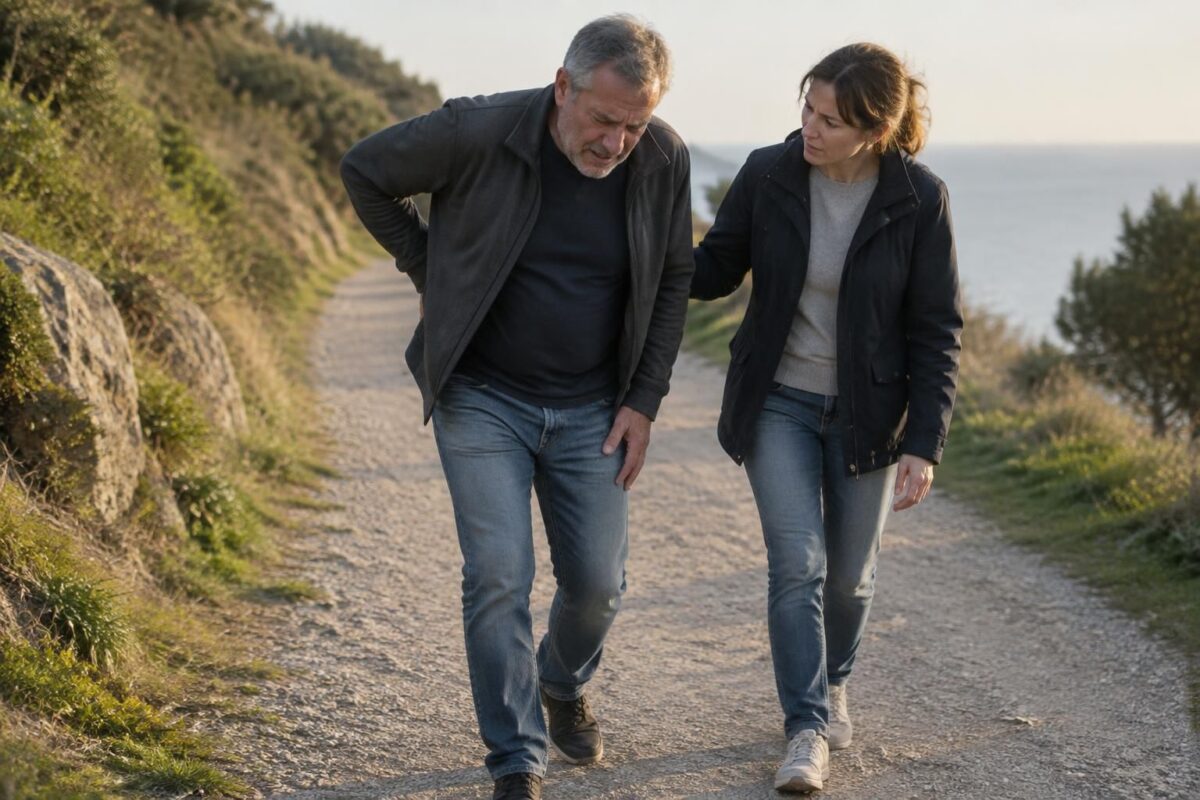
IN BRIEF Sciatica can make walking painful, but pushing yourself may worsen the symptoms. Walk for short periods, at your own pace, only if the pain remains tolerable and does not intensify over time. If you are limping, if the…

Dr Sylvain Desforges, B.Sc., D.O., N.D., osteopath, is the founding president of TAGMED and of the ACMA association. He dedicates his practice to chronic spinal pain, low back pain and symptoms compatible with sciatica, particularly when pain radiates toward the buttock, leg, calf, foot or toes.
Through SOS Sciatique, he publishes educational content on sciatica symptoms, possible causes such as disc herniation, disc narrowing, foraminal stenosis or irritation of a lumbar nerve root, as well as non-surgical approaches that may be considered according to the evaluation. At Clinique TAGMED, care may include, depending on the case, motorized neurovertebral decompression, specific osteopathic care or precision percussion.
For an evaluation related to sciatica treatment in Montreal / Mount Royal or sciatica treatment in Terrebonne, please consult the services available at Clinique TAGMED.
Medical disclaimer
The information published on SOS Sciatique is provided for educational purposes only and does not replace a consultation, diagnosis, opinion or treatment provided by a physician or another authorized healthcare professional. The author of this article is neither a medical doctor nor a specialist in a medical specialty recognized by the Collège des médecins du Québec. The osteopathic, manual medicine or functional support approaches described on this site do not constitute medical acts and are not intended to replace medical follow-up.
Consult a physician or emergency service in cases of loss of bladder or bowel control, anesthesia in the saddle area, significant or progressive weakness in the leg or foot, fever, recent trauma, severe pain or rapid worsening of symptoms. For more details, please read our Legal Notice.