Disc protrusion and sciatica: when the disc touches a nerve root
05/10/2026
Sciatica L5-S1 in Terrebonne: pain radiating to the heel or foot
06/10/2026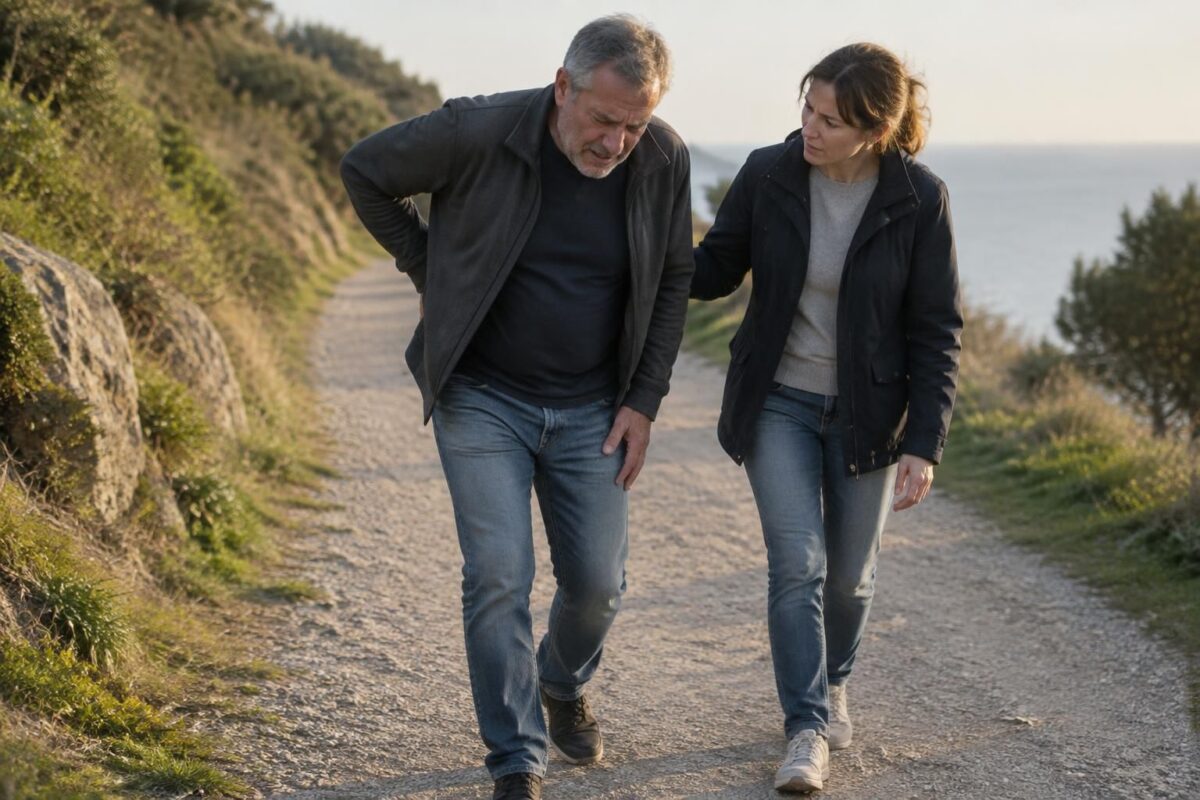
IN BRIEF Sciatica can make walking painful, but pushing yourself may worsen the symptoms. Walk for short periods, at your own pace, only if the pain remains tolerable and does not intensify over time. If you are limping, if the pain increases, or if there is weakness, stop and consult a professional. In Montreal, an evaluation can help determine the cause of the pain and the appropriate activities. |
Sciatica and forced walking: a risk of worsening
With sciatica, walking despite increasing pain can exacerbate symptoms and alter your gait. Favor short walks at your pace, without forcing it, and stop if the pain intensifies or if you start to limp. New or progressive weakness, urinary or bowel issues, or numbness in the perineum require urgent medical evaluation.
Walking with sciatica can help maintain daily activity, but forcing despite increasing pain can aggravate the symptoms. The right approach depends on your tolerance, your gait, and the evolution of the pain after walking. Pain that spreads, weakness, or numbness that progresses requires special attention. Sciatica refers to pain related to the irritation of a nerve root in the lower back. It can follow the buttock and the back or side of the leg, sometimes down to the foot. Tingling, loss of sensation, or weakness may also occur. The trajectory of symptoms varies among individuals. For example, pain in the buttock without lower back pain is not sufficient to confirm sciatica. The distribution of pain and associated signs must be evaluated as a whole. To learn more, refer to these articles on buttock pain without lower back pain and foot pain without lower back pain. Yes. Walking too long or too fast can increase pain in the back or leg. Fatigue can also change your gait and make your movements less stable. This does not automatically mean that an injury has worsened, but pain that persists or intensifies after exertion indicates that the load was likely too great. Do not try to reach a specific distance while ignoring your symptoms. If you are limping, if the pain increases with each step, or if you need to change your posture to continue, stop and rest in a comfortable position. You will find additional guidelines in this article on sciatica and walking. A slight discomfort that remains stable and returns quickly to its usual level after activity does not always mean that walking is harmful. However, reduce the duration if the pain clearly increases, extends further down the leg, or remains stronger after your outing. A pain that appears after a similar distance with each walk and decreases when you sit down or bend forward may correspond to a different profile of nerve irritation related to a herniated disc. A lumbar stenosis can notably make prolonged walking difficult for some individuals. A clinical evaluation helps clarify the likely cause. If you can walk without limping and without significant aggravation, start with a short period at a comfortable pace. Choose a simple route, close to home, and plan to be able to stop easily. You can gradually increase the duration if your symptoms remain stable and if you recover well after each walk. Take breaks as soon as the pain increases or your gait changes. Avoid carrying heavy loads during the outing. If you need a cane or crutch to move around, consult a healthcare professional about the most suitable assistance. The principle is simple: remain active within the limits of what your symptoms allow, without forcing. General recommendations are also presented in this article on precautions to take when walking with sciatica. Walking may suit some individuals and exacerbate symptoms in others. Duration, pace, posture, the cause of the pain, and neurological state can affect tolerance to activity. Pain that increases while walking does not alone determine the cause. Calf pain that predictably returns with exertion may also have a vascular origin. It should not be automatically attributed to the sciatic nerve. A professional can evaluate the symptoms and guide further assessment if necessary. The position of the back can also influence symptoms. Some individuals experience more discomfort when standing or walking for long periods, while sitting provides temporary relief. Report these observations during a consultation. Consult a professional if the pain prevents you from walking normally, if it does not improve, or if it returns regularly. The evaluation should consider the duration of symptoms, their trajectory, progression, and their effect on your activities. An examination may include observing your walking, assessing strength and sensitivity, as well as tests tailored to your symptoms. Imaging results, when available and relevant, should be correlated with the examination and reported signs. An isolated image does not always explain the pain. A consultation at the TAGMED clinic can help examine your profile and discuss appropriate options. Any management should consider your symptoms, your health status, and the observed progression. Get medical help quickly if you experience new or progressive weakness, a foot drop, a leg that increasingly gives way, or significant loss of sensitivity. New difficulties controlling the bladder or bowels, or numbness in the perineal area, require urgent evaluation. Severe pain accompanied by fever, major trauma, or overall deterioration should also be evaluated without waiting for a routine appointment. If a leg suddenly becomes cold, pale, or very painful, seek emergency medical assistance. Not by forcing it. If the pain remains bearable and does not alter your gait, a short walk may be tolerated. Stop or reduce the duration if the pain clearly increases, spreads, or if you begin to limp. There is no duration that fits everyone. Start with a short period, then adjust according to your symptoms and recovery. The distance covered matters less than your ability to walk without prolonged aggravation. Yes. A recent activity can temporarily irritate the back or leg and make walking less comfortable. To understand these situations, refer to the articles on pain after cycling and pain after gardening. No. Reproducible pain in the calf during exertion can have several causes, including a vascular cause. Get it evaluated, especially if it is accompanied by changes in color, temperature, or sensitivity in the leg. Important information: This article provides general information and does not diagnose. Symptoms and recovery times vary based on their cause, duration, neurological signs, history, and individual response to care. Medical disclaimer: The information and advice provided on this site do not replace the opinion, diagnosis, or treatment of a healthcare professional. Please note that Sylvain Desforges, B.Sc., D.O., N.D., Doctor of Osteopathy, is neither a doctor of medicine nor a physician, and is not a specialist in a medical specialty as defined by the Collège des médecins du Québec. Manual medicine, functional medicine, and sports medicine as described on this site exclude any treatment or diagnosis made by a physician or medical specialist. Always consult your doctor for any medical questions. For more details, please read our full Legal Notice.What does it mean to walk with sciatica?
Can forced walking worsen symptoms?
A pain that varies during walking
How to adapt walking in case of sciatica?
Why does walking not relieve everyone?
When to seek medical evaluation?
Signs that require urgent evaluation
Frequently asked questions about sciatica and forced walking
Should I walk even if it hurts?
How long should I walk?
Can pain after cycling or gardening change my walking tolerance?
Is pain in the calf during walking always related to sciatica?
- Forcing walking can intensify pain in the back or leg.
- If you are limping or if the pain increases, slow down or stop.
- Tolerated walking: favor short periods, with breaks.
- New or progressive weakness: seek medical advice promptly.

Forcing walking despite sciatica can intensify pain, limping, or symptoms in the leg. The goal is not to remain still at all costs, but to move at a tolerable dose: start with short distances and adjust based on your reaction. If walking significantly worsens your symptoms or if weakness appears, stop the activity and seek advice from a healthcare professional.

Sciatica and trunk flexion: why bending over can make it worse
IN BRIEF Sciatica is pain related to irritation of the sciatic nerve, sometimes worsened by trunk flexion. Bending forward can increase tension in the lower back and reproduce pain in the buttock or leg. Identifying trigger movements helps adjust actions…
Why forced walking can worsen sciatica
Sciatica corresponds to irritation of a nerve root that can cause pain radiating from the lower back to the buttock and leg. Depending on its cause and your condition, standing or walking for long periods can aggravate pain, tingling, or numbness. By continuing despite marked worsening, you also risk altering your gait and overloading other areas.
Not all pain during walking necessarily means that the nerve is more damaged. However, pain that gradually increases, travels further down the leg, or persists long after stopping indicates that the effort may have been too great. Avoid imposing a fixed distance or duration in the name of recovery.

Sciatica and daily activity: finding the right balance
IN SHORT Sciatica is pain linked to irritation of the sciatic nerve. Adapting your daily activities means staying active without worsening symptoms: alternate tasks, take breaks, and gradually resume effort. This proper balance helps maintain mobility and avoid prolonged rest.…
Adapting walking to your symptoms
Prioritize a tolerable activity
If you can walk without limping and the symptoms remain mild, short periods of movement can help maintain your mobility. Try a few minutes at a time, on a route that is close and easy to interrupt. Take a break if the pain increases, then check if it returns to its usual level after resting.
Gradually increase the duration or distance, changing only one variable at a time. A practical reference: walking should not cause significant or lasting worsening, nor lead to a loss of function. A pain scale from one to ten can help describe your experience, but it does not replace a clinical assessment.
Do not confuse activity with forced endurance
If the pain is intense, prevents you from placing your foot normally, or causes you to limp, do not force yourself to walk. Temporarily reduce the duration of necessary movements and seek advice to choose appropriate activities. Prolonged complete rest is generally not a preferred solution without medical advice, but it is reasonable to avoid what triggers significant worsening.
Pain that appears after a fairly constant distance and improves when you sit down or bend forward may correspond to a different profile, including lumbar stenosis. A calf cramp triggered regularly by exertion may also have a vascular origin. These signs should not be automatically attributed to sciatica.

Sciatica and fear of movement: how to avoid the vicious circle
IN BRIEF Sciatica and the fear of moving can create a vicious cycle: avoidance of movement promotes stiffness and maintains worry. A gradual resumption of gentle activities, like walking, helps preserve mobility and regain confidence, without forcing or ignoring sharp…
When to seek an evaluation
An evaluation can help link the trajectory of pain to your gait, strength, and sensitivity. Imaging exams, when relevant, should be interpreted in relation to symptoms and the examination, rather than being considered in isolation. At TAGMED Clinic, a consultation allows discussing options suited to your situation, without assuming that one approach fits all.
Consult quickly in case of new or progressive weakness, foot drop, or if the leg gives way. New urinary or intestinal disorders, numbness in the perineal area, significant symptoms in both legs, fever, or a general deterioration require urgent medical evaluation. Do not try to continue walking to “push through” these signs.
| Situation while walking | Preferred approach |
|---|---|
| Mild and stable pain | Walk gently, for short periods. |
| Pain that gradually increases | Slow down or take a break; do not push. |
| Pain that persists or worsens after stopping | Reduce the duration and seek advice from a healthcare professional. |
| Walking with a limp or difficulty moving forward | Do not try to cover an imposed distance. |
| New weakness or leg giving way | Have these symptoms evaluated promptly. |
| Urinary or intestinal disorders, or numbness in the perineum | Consult urgently. |

Sciatica and controlled movement: why adaptation matters
IN BRIEF Sciatica can make movement more anticipated and controlled, especially when pain persists. Gradually adjusting one’s movements helps preserve protective strategies while regaining more movement options. The support aims to move with less constraint and to enhance daily autonomy.…
Illustrative testimonies: sciatica and forced walking, a risk of worsening
These testimonies are fictional and only serve to illustrate different possible experiences. The reaction to walking varies depending on the cause of the symptoms and the person. Do not force it if the pain significantly increases.
“I thought I had to walk at all costs to alleviate my sciatica. After a long walk despite the pain, it descended further down my leg and I began to limp. By shortening the duration of my outings and taking breaks, I was able to gradually resume walking.”
“At first, a few minutes of walking were tolerable. I wanted to increase the distance too quickly, and my symptoms remained more intense after the walk. I learned to stop when the pain increased rather than sticking to a duration goal.”
“My leg became heavy and painful after a fairly consistent distance. Sitting or leaning forward relieved me. An assessment helped me understand that this profile deserved to be examined, rather than simply continuing to walk despite the symptoms.”
“I automatically attributed my calf cramps to sciatica. Since they returned with exertion, I discussed it with a healthcare professional to confirm that another cause should not be considered.”
A short and comfortable walk may be suitable for some people, but forced walking is not a treatment to apply at all costs. If the pain intensifies, persists after activity, or alters your gait, reduce the effort and seek advice from a healthcare professional. New or progressive weakness, significant loss of sensitivity, or urinary or intestinal disturbances require urgent medical evaluation.

Sciatica and prolonged immobility: possible effect on pain
IN BRIEF Sciatica is pain related to the irritation of a nerve that goes down the leg. Staying immobile for long periods, especially sitting or lying down, can exacerbate pain and stiffness. Regularly changing position and resuming gentle movements, according…
Sciatica and forced walking: the risk of aggravation
When sciatic pain extends from the lower back to the hip and leg, walking may seem difficult. Some people continue anyway, hoping that the effort will alleviate the pain. However, forcing walking while symptoms are significantly increasing is not an appropriate strategy. Activity can be helpful when tolerated, but its duration and intensity must respect the body’s reactions.
Sciatica corresponds to irritation of a nerve root, often in the lumbar region. It can cause pain, tingling, numbness, or a feeling of weakness in the leg. These symptoms vary from person to person. Walking with mild and stable pain does not mean the same thing as continuing a long walk while limping, with pain descending further into the leg or increasing weakness.
Forced walking can temporarily increase pain, heighten fatigue, and disrupt gait. Compensatory movements—bending, shortening a stride, or transferring weight to the other leg—can also make movement less comfortable. This does not automatically mean that the nerve or the spine has suffered new damage, but it is a signal to reduce effort and reassess the situation.
The right approach generally involves avoiding prolonged inactivity while not attempting to exceed one’s tolerance. If walking remains comfortable, start with short periods, on easy terrain, and take breaks as needed. Gradually increase the duration only if symptoms remain stable and return to their usual level after activity. If the pain intensifies, extends lower into the leg, or persists longer after walking, shorten the next outing and seek advice from a healthcare professional.
A pain that regularly appears after a specific distance should also be examined. For example, discomfort or heaviness that increases while walking and eases when sitting or leaning forward may correspond to a different profile than classic radicular irritation. Similarly, a calf cramp triggered by exertion is not necessarily related to the sciatic nerve: a vascular origin should sometimes be considered. The distribution of symptoms, their evolution, and their impact on walking are just as important as their intensity.
A consultation will help clarify the probable cause and check strength, sensitivity, and gait. Imaging, when relevant, should be interpreted in relation to the symptoms and examination rather than considered in isolation. A management plan may include maintaining tolerated activities, gradual rehabilitation, and other measures chosen according to the clinical profile. Treatments do not all suit every person, and their benefits should be reassessed.
Consult quickly in case of new or progressive weakness, a dropped foot, a leg giving way, or numbness that spreads. New urinary or intestinal disturbances, significant loss of sensitivity around the perineum, fever, or marked deterioration require urgent evaluation. In these situations, do not continue forced walking and do not merely wait for a routine appointment.
Sylvain Desforges, B.Sc., D.O., N.D., Doctor of Osteopathy, naturopath, and manual medicine practitioner, is the founding president of the TAGMED clinics and the ACMA association. His work particularly focuses on the management of chronic pain and the integration of technologies such as spinal decompression, laser, and shock wave therapy. His approach emphasizes care based on available data and tailored to each patient’s situation.
Walking can help maintain activity when sciatica allows it, but pushing through despite increasing pain risks worsening symptoms and disrupting recovery. The right approach is to adapt the duration and pace to your tolerance, to stop walking if symptoms worsen, and to seek evaluation if pain or neurological signs progress.
Sciatica and bed rest: why to be cautious
IN BRIEF Sciatica is pain that radiates from the lower back down to the leg. Prolonged bed rest is generally not recommended: it can increase stiffness and delay the return to activities. It is better to remain active as tolerated,…
Sciatica and forced walking: why to avoid pushing through despite the pain
A short and comfortable walk can be a useful activity. However, continuing to push through despite increasing pain in the back or further down the leg is not a strategy to prioritize. Forcing can provoke a flare-up of symptoms, increase discomfort after exertion, or make movement more difficult. For more guidelines on walking and sciatica, consult this guide on walking with sciatica and these practical tips for adapting your movements.
However, pain is not the only indicator to monitor. Discomfort extending further down the leg, progressing numbness, new weakness, or worsening gait justify reducing activity and having the situation assessed. An image of a herniated disc is not sufficient on its own to explain the symptoms: interpretation must take into account their location, evolution, and clinical examination. To further explore this point, see this article on herniated disc visible on imaging without pain.

Sciatica and complete rest: helpful or counterproductive?
IN BRIEF Complete rest in case of sciatica consists of interrupting activities and staying in bed. It can help briefly if the pain is very intense, but prolonged rest is generally counterproductive: it is better to gradually resume movement and…
Adapting walking to your tolerance
If you can walk without limping and without lasting aggravation, start with a short distance at a comfortable pace. Take a break as soon as symptoms increase, then observe how you feel after the effort. If the pain returns to its usual level quickly, you may consider a gradual progression on your next outings. If it remains significantly stronger or spreads, reduce the duration and seek advice from a healthcare professional. This guide on walking duration and pace also provides tips for adjusting activity.
A pain that manifests after a relatively consistent distance and eases when sitting or leaning forward may correspond to a different profile than a classic radicular irritation, especially in the presence of lumbar stenosis. A calf cramp triggered by exertion may also have a vascular origin. Therefore, it is better not to automatically attribute all pain to sciatica. If you notice a burning sensation in the foot or feelings of nerve compression, these symptoms deserve to be placed in context, as illustrated by this case of foot burning and possible nerve damage.

Sciatica and too quick a return: why the pain comes back
IN SHORT Sciatica is pain related to irritation of the sciatic nerve, which can recur when returning to activities too quickly. To limit recurrences, gradually resume movement and exertion, taking into account pain and hip and pelvic mobility. The goal:…
Reassessing with caution after exertion
A flare-up after an activity does not necessarily mean that an injury has worsened, but it indicates that the effort may have exceeded your current tolerance. Shoveling, weightlifting, or an unusual activity can stress the back and awaken symptoms. Gradually resume activities without trying to “make up for” missed sessions. These resources discuss pain after shoveling and pain after weightlifting.
Coughing or sneezing can sometimes exacerbate pre-existing pain, but this sign should be interpreted alongside the other symptoms. You can learn more about sciatica pain triggered by sneezing. For general advice on walking and precautions to take, also check these articles on the benefits and limitations of walking and on the precautions to take.
When to seek an evaluation
A consultation can help connect the pain trajectory to your gait, strength, and sensitivity, rather than relying on an isolated image. At TAGMED Clinic, located at 1140 Beaumont Avenue, Mont-Royal, the assessment can help clarify the next steps and activities to adjust based on your profile. Management depends on the likely cause, duration of symptoms, and their functional impact.
Consult quickly if you notice new or worsening weakness, a leg giving way, or a foot dropping. Recent urinary or intestinal issues, numbness in the perineal region, significant symptoms in both legs, major trauma, fever, or general deterioration require urgent evaluation. In these situations, do not continue forced walking and do not delay seeking care.

Sylvain Desforges, B.Sc., D.O., N.D., docteur en ostéopathie
Dr Sylvain Desforges, B.Sc., D.O., N.D., osteopath, is the founding president of TAGMED and of the ACMA association. He dedicates his practice to chronic spinal pain, low back pain and symptoms compatible with sciatica, particularly when pain radiates toward the buttock, leg, calf, foot or toes.
Through SOS Sciatique, he publishes educational content on sciatica symptoms, possible causes such as disc herniation, disc narrowing, foraminal stenosis or irritation of a lumbar nerve root, as well as non-surgical approaches that may be considered according to the evaluation. At Clinique TAGMED, care may include, depending on the case, motorized neurovertebral decompression, specific osteopathic care or precision percussion.
For an evaluation related to sciatica treatment in Montreal / Mount Royal or sciatica treatment in Terrebonne, please consult the services available at Clinique TAGMED.
Medical disclaimer
The information published on SOS Sciatique is provided for educational purposes only and does not replace a consultation, diagnosis, opinion or treatment provided by a physician or another authorized healthcare professional. The author of this article is neither a medical doctor nor a specialist in a medical specialty recognized by the Collège des médecins du Québec. The osteopathic, manual medicine or functional support approaches described on this site do not constitute medical acts and are not intended to replace medical follow-up.
Consult a physician or emergency service in cases of loss of bladder or bowel control, anesthesia in the saddle area, significant or progressive weakness in the leg or foot, fever, recent trauma, severe pain or rapid worsening of symptoms. For more details, please read our Legal Notice.