



Herniated disc and heel pain: possible S1 root
17/08/2026
Sciatica in Terrebonne: pain that travels below the knee
18/08/2026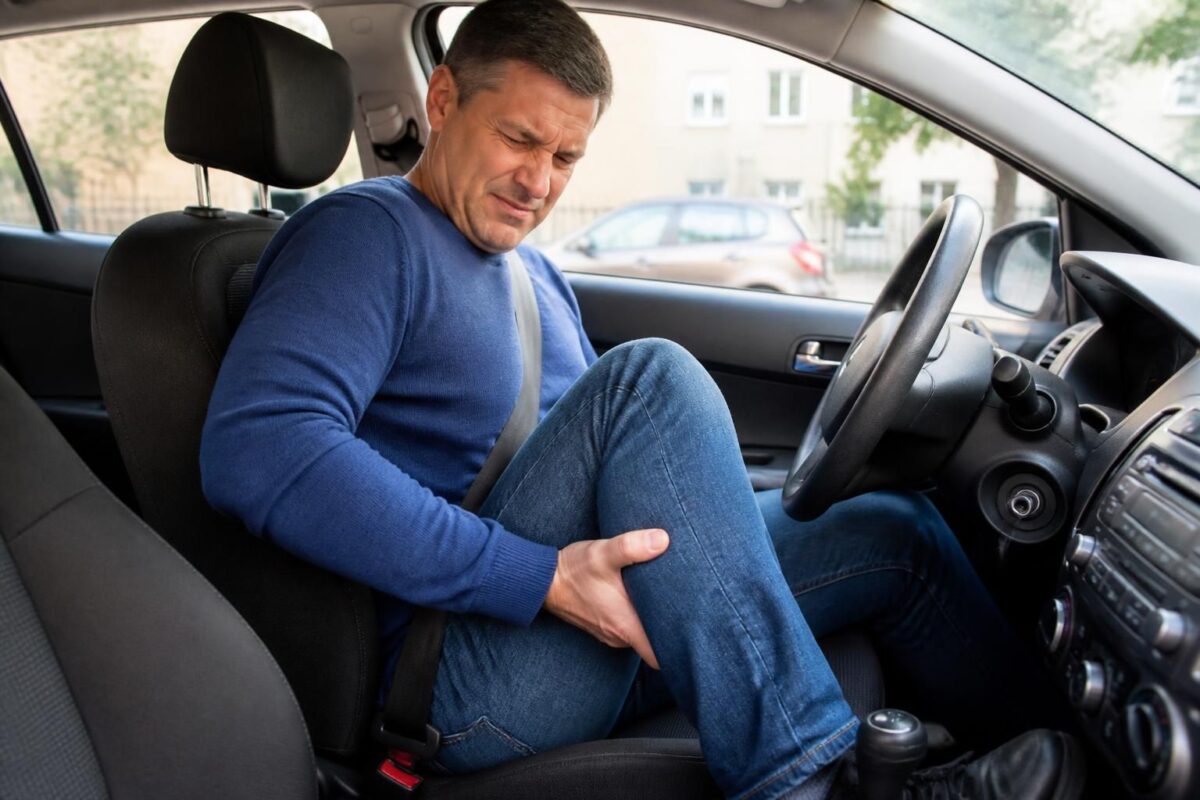
IN BRIEF
| In brief, sciatica and calf pain after driving refer to irritation or compression of the sciatic nerve that can manifest after a trip. This often occurs with prolonged sitting, vibrations, and an inadequate driving posture. Benefits: better comfort and enhanced road safety through good posture, regular breaks, a lumbar cushion, and simple exercises that strengthen trunk muscles and reduce pain. How does it work? By adjusting the seat and backrest, using lumbar support, and planning breaks every 1–2 hours to relieve tension and promote circulation. |
Sciatica can manifest as pain that starts in the lower back and descends into the leg, potentially reaching the calf, sometimes accompanied by electric shock sensations, tingling, or numbness.
While driving, prolonged sitting, vibrations, and a poor posture increase pressure on the sciatic nerve and may worsen calf pain after a trip.
To drive more comfortably, adopt a good posture at the wheel: properly adjusted seat, slightly bent knees, steering wheel within reach, and, if necessary, a lumbar cushion. Plan for breaks every 1–2 hours and walk for a few minutes.
Gentle exercises and strengthening trunk muscles help prevent recurrences and limit lower back tension. An appropriate cushion and alternating heat/cold can also provide temporary relief.
Consult a doctor in case of weakness, sensitivity disorders, or very debilitating pain.
This article written by a health professional explores the link between sciatica and calf pain after driving. It details possible causes, signs to watch for, and simple actions to limit discomfort without resorting to inappropriate exercises in certain contexts. You will also discover how to assess the situation and what management options to discuss with your practitioner.
Causes and mechanisms
Sciatica is pain that follows the path of the sciatic nerve. When driving, sitting position and vibrations can increase pressure in the lower back. This pressure can irritate or compress the nerve, causing pain that descends to the calf. A lumbar disc herniation, osteoarthritis, or muscle tension may be associated causes. Pain may present as burning sensations, electric shocks, or diffuse discomfort in the leg, especially after long periods of driving.
Warning signs and aggravating factors
Watch for signs indicating an emergency or a need for quick consultation: marked muscle weakness, numbness spreading, very debilitating pain, urinary issues, or significant loss of sensation. If pain occurs primarily during trips, it may be useful to assess posture, seat, and breaks. Symptoms that persist despite rest, or that worsen, require medical evaluation.
Driving and posture to limit discomfort
To drive with sciatica, prioritize a position that limits strain on the lower back. Adjust the seat to keep your back in contact with the backrest and knees slightly bent. Keep the pelvis in a stable position and avoid leaning forward. An adequate distance to the steering wheel can reduce leg strain. If necessary, use an ergonomic lumbar cushion to support the lumbar curve and maintain a more natural posture during the trip.
Breaks, circulation, and movements when stopped
Regular breaks are essential during long trips. Take a break every 1 to 2 hours to walk and move your feet and calves slightly. These small movements promote blood circulation and relieve lower back tension. In driving contexts, avoiding long periods without movement can help limit the progression of symptoms.
Management and therapeutic options
In case of sciatica associated with calf pain after driving, assessment by a professional is recommended to determine the exact origin and tailor the treatment. In some cases, medication or external devices may be considered, but an individualized and safe approach should be prioritized. For those concerned with professional or regular trips, tailored advice for their vehicle and route can reduce the impact of pain while driving. Specialized resources and advice in osteopathy and related therapies can be consulted via the following sites: sciatica and pain in both legs, automobile driving and sciatica, and protecting your back in the car.
Comparison of management options
In some cases, various approaches exist. Physiotherapy may be considered, but it may have reduced effectiveness compared to other therapies depending on the exact nature of the pain and its cause. For any decision, discuss with your health professional and consider a comparative table of options. Complementary resources and clinical options can be explored via the sites: sciatica and leg pain, neurovertebral decompression, and syndromes and related resources.
Resources and additional information
To explore the topic further, you can consult specialized sources and clinical guidelines available on leg pain and sciatica and Sciatica and driving. Discussions with professionals referenced by institutions such as NUMSS, NAO, National University of Medical Sciences and National Academy of Osteopathy can also provide insights into your case.
For advice on the risks and precautions related to driving with sciatica, you can consult specialized resources in the fields of osteopathy and nerve pain on sites like SosSciatique and Clinique TAGMED.
Medical disclaimer: The information and advice provided on this site do not replace the opinion, diagnosis, or treatment of a healthcare professional. Please note that Sylvain Desforges, B.Sc., D.O., N.D., Doctor of Osteopathy, is neither a doctor of medicine nor a physician, and is not a specialist in a medical specialty as defined by the Collège des médecins du Québec. Manual medicine, functional medicine, and sports medicine as described on this site exclude any treatment or medical diagnosis made by a physician or specialist doctor. Always consult your doctor for any medical questions. For more details, please read our full Legal Notice.
.sciatique-mollet-conduite .two-columns{
display:grid;
grid-template-columns:1fr 1fr;
gap:24px;
}
@media (max-width: 800px){
.sciatique-mollet-conduite .two-columns{ grid-template-columns:1fr; }
}

This guide presents the links between sciatica and calf pain after driving, the mechanisms involved, and practical recommendations to limit discomfort, adopt a better posture, and preserve your mobility during trips.
Understanding the Connection Between Sciatica and Calf Pain
Sciatica is the irritation or compression of the nerve that runs from the lower back down to the calf. In a car, prolonged sitting, vibrations, and repeated micro-movements increase pressure on the discs and can trigger pain that radiates into the calf, sometimes with electric shocks or numbness.
Adjusting Your Posture and Vehicle
Essential Adjustments
Adjust the seat to support the lumbar curve and tilt the pelvis slightly forward. The backrest should not be too reclined, and the steering wheel must be accessible without stretching the legs. If necessary, add a lumbar cushion or support to improve back support.
Practical Requirements
Opt for an automatic transmission to limit repetitive movements of the left leg during long trips. Choose a seat that is not too soft or too hard to avoid sinking of the pelvis and lumbar tension.
Breaks and Movement
Plan for breaks every 1 to 2 hours and walk for a few minutes to restore circulation and reduce pressure on the nerve.
Simple Exercises While Stationary
When stationary, perform gentle movements of the ankles and knees, and do light stretches of the torso. These actions support blood circulation and reduce stiffness that can worsen calf pain.
Symptoms to Monitor and When to Consult
Consult promptly if you notice marked muscle weakness, loss of sensitivity, urinary issues, or unbearable pain that does not diminish with at-home measures. These signs may indicate more significant nerve compression requiring medical evaluation.
Long-Term Prevention
Maintain regular physical activity and work on your core with stability exercises and targeted stretches. Adopt a stable posture while driving, take frequent breaks, and prioritize ergonomic adjustments to the vehicle to limit lumbar tension and radiations to the calf.
Sciatica and Calf Pain After Driving: Quick Comparison Table
| Aspect | Brief Info |
|---|---|
| Definition | The sciatic nerve is irritated or compressed; pain may radiate down to the calf. |
| Typical Symptoms After Driving | Pain radiating from the lower back to the calf, sometimes with electric shocks and tingling. |
| Common Causes | Prolonged sitting, vibrations, and poor posture worsening the situation. |
| Difference with Cramp | Sciatica follows the nerve pathway; a cramp is a local muscle issue. |
| Warning Signs | Weakness, urinary issues, loss of sensation, excruciating pain. |
| Diagnosis | Clinical examination; sometimes imaging if urgent or uncertain. |
| Exacerbating Factors | Poorly adjusted seat, long journey, bumpy roads. |
| Immediate Measures | Adjust the seat, take breaks, use a <strong lumbar cushion. |
| Preventions | Strengthening the trunk, regular stretching and breaks. |
Testimonials After Driving: Sciatica and Calf Pain
“When I hit the road, my sciatica flares up and the pain goes down almost to my calf. After only half an hour of driving, electric shocks shoot through my leg and the tension in my back becomes unbearable.”
“I realized that the cause stemmed from my posture and the vibrations from the road. By adjusting the seat, bringing the steering wheel closer, and keeping my knees slightly bent, the pain has decreased. Regular breaks and some gentle stretches have greatly helped limit the pain in my calf.”
“As a professional driver, I was doing long trips every day. My sciatica would really act up at the end of the day, and my calf was painful after each stop. Since I started incorporating core exercises and taking breaks every 1-2 hours, the symptoms have become more manageable and the trip is less taxing.”
“I tried an ergonomic cushion that supports the spine well and relieves the tailbone. As a result: I feel less urge to lean forward and have less pressure on my lower back. After a journey, my calf is less stiff and the sciatica is significantly less noticeable.”
“When the pain arrived with a heaviness in my leg, I consulted a doctor and changed my driving style: sitting straighter, taking more frequent breaks, and balancing my pelvis. The pain in my calf eased and I was able to resume my trips without compromising my safety.”
“I tested the Ergoccyx Vehicles during my daily trips: the high resilience foam and fluid system absorb shocks well. The pelvis is slightly elevated, reducing pressure on the discs and relieving lumbar tensions. Since then, episodes of sciatica and pain in the calf have been much less frequent after trips.”
Detailed Biography on Sciatica and Calf Pain After Driving
The sciatica associated with calf pain can appear or worsen after long sessions of driving. Triggered by irritation or compression of the sciatic nerve, it often manifests as electric sensations, tingling, or pain that travels up the leg. In some cases, this pain can even feel like a marathon of tension in the spine and calf muscles, especially when the seat does not properly support the pelvis and breaks are lacking. This reality demands a rigorous medical approach and personalized care to regain comfort and safety behind the wheel.
Sylvain Desforges, an expert in osteopathy, naturopathy, and manual medicine, is the central figure of this approach. He is the founding president of TAGMED clinics and the ACMA association, and his career is dedicated to innovation in healthcare. His work centers on managing chronic pain and integrating advanced technologies such as spinal decompression, laser, and shockwave therapy. His goal is to deliver evidence-based care to optimize the health and well-being of his patients, including those suffering from driving-related pain.
In his practice, Dr. Desforges focuses on differentiating the mechanisms involved in pain experienced after driving. He notably distinguishes mechanical components related to posture and prolonged seated positions from radicular or musculo-tendinous factors that may extend pain down to the calf. This precise diagnostic approach allows for targeted treatments ranging from postural rehabilitation and core work to complementary therapies, always firmly grounded in scientific evidence.
His vision for managing the issues of daily commutes includes practical advice: ergonomic adjustment of the seat and backrest, core strengthening and stability exercises, gentle stretches to reduce lumbar tension, and regular breaks to relax the muscles and promote better blood circulation. When necessary, he may incorporate technologies such as gentle spinal decompression, laser therapy to reduce inflammation, or shockwave therapies to accelerate musculoskeletal recovery, always following validated protocols.
In practice, the goal is to enable everyone to drive safely, without compromising comfort or road safety. Dr. Desforges’ approach is based on a comprehensive assessment, personalized care, and rigorous follow-up, in order to prevent relapses and sustainably improve the quality of life for those suffering from sciatica and calf pain after driving.
His commitment to his patients is reflected in a multidisciplinary offer within TAGMED clinics and an interoperability of approaches that combines science, experience, and compassion. With his experience, he continues his mission to provide effective and accessible care so that each journey becomes a less painful and safer experience.
Quick summary: sciatica can extend down to the calf after driving, particularly after long journeys where seated position, vibrations, and immobility increase pressure on the sciatic nerve. This text provides insights into the mechanisms, warning signs, and simple actions for more comfortable driving and reducing pain risk, with useful links for further exploration of the topic.
Pain in the calf after driving is often related to sciatica that may be irritated or compressed at the sciatic nerve, running from the lower back down to the leg. The role of the L4-L5 and L5-S1 roots is often mentioned in classical causes, especially when arthritis, a narrow lumbar canal, or muscle tension adds to nerve compression. In the context of driving, prolonged seated position, jolts, and repeated adjustments of the vehicle tend to increase pressure on the spine and the nerve, which can amplify pain and sensations of burning or tingling in the calf.
To reduce these symptoms during journeys, the industry and professionals recommend a three-step approach: an appropriate posture, vehicle adjustments, and regular breaks. Keeping the back in contact with the seatback, a slight tilt of the pelvis, and slightly bent knees help limit lumbar compression. Using a lumbar cushion and a seat support that relieves the coccyx can also promote better pressure distribution and decrease radiating pain in the calf. Additionally, opting for an automatic transmission can reduce repetitive leg movements and limit muscle fatigue while driving.
Practical measures can be implemented on every trip: adjusting the seat and steering wheel to avoid extending the legs or straining the back, taking breaks every 60 to 120 minutes to walk and stretch, and performing gentle ankle and calf exercises when the vehicle is stopped to relaunch circulation and decrease stiffness. Applying heat or cold to the painful area before the trip can also provide temporary relief and promote muscle relaxation.
Prevention also relies on regular physical activity and strengthening the core muscles, which ensures stability for the spine and reduces lumbar tension over time. Targeted stretching and gradual core stabilization work can help prevent relapses and better support movement. For those who sometimes face persistent pain, assessment by a healthcare professional remains essential to clarify the causes and adapt treatment.
To explore practical advice and complementary approaches in more depth, you can consult specialized resources like this Ergotech article on driving and sciatica, Lombafit – sciatica and car, or the pages dedicated to the association between herniated disc and sciatica on Sos Sciatique. Other useful resources address driving position and practical advice, for example on Clinique Solutions Discales and InPhysio. For additional information on the evolution and interpretation of symptoms, you can also consult this Sos Sciatique article on driving.

Sciatica and tying your shoes: why the pain can radiate down
IN BRIEF Sciatica is pain related to the irritation of a nerve in the lower back, which can radiate into the buttock and leg. Leaning down to tie your shoes may accentuate the pain or cause it to descend further.…

Sciatica and picking up an object from the ground: movement to watch out for
IN BRIEF Sciatica is pain that follows the path of the sciatic nerve. To pick up an object from the ground, avoid bending abruptly while rounding your back or twisting: bend your knees, tilt your hips, and keep the object…

Sciatica and bending forward: lumbar disc or nerve tension?
IN BRIEF Forward-bending sciatica may be related to irritation of the lumbar disc or tension on the sciatic nerve. This movement alone does not allow for determining the cause. Identifying the movements that trigger the pain helps guide the evaluation…

Sciatica and trunk flexion: why bending over can make it worse
IN BRIEF Sciatica is pain related to irritation of the sciatic nerve, sometimes worsened by trunk flexion. Bending forward can increase tension in the lower back and reproduce pain in the buttock or leg. Identifying trigger movements helps adjust actions…

Sciatica and daily activity: finding the right balance
IN SHORT Sciatica is pain linked to irritation of the sciatic nerve. Adapting your daily activities means staying active without worsening symptoms: alternate tasks, take breaks, and gradually resume effort. This proper balance helps maintain mobility and avoid prolonged rest.…

Sciatica and fear of movement: how to avoid the vicious circle
IN BRIEF Sciatica and the fear of moving can create a vicious cycle: avoidance of movement promotes stiffness and maintains worry. A gradual resumption of gentle activities, like walking, helps preserve mobility and regain confidence, without forcing or ignoring sharp…

Sciatica and controlled movement: why adaptation matters
IN BRIEF Sciatica can make movement more anticipated and controlled, especially when pain persists. Gradually adjusting one’s movements helps preserve protective strategies while regaining more movement options. The support aims to move with less constraint and to enhance daily autonomy.…

Sciatica and prolonged immobility: possible effect on pain
IN BRIEF Sciatica is pain related to the irritation of a nerve that goes down the leg. Staying immobile for long periods, especially sitting or lying down, can exacerbate pain and stiffness. Regularly changing position and resuming gentle movements, according…

Sylvain Desforges, B.Sc., D.O., N.D., docteur en ostéopathie
Dr Sylvain Desforges, B.Sc., D.O., N.D., osteopath, is the founding president of TAGMED and of the ACMA association. He dedicates his practice to chronic spinal pain, low back pain and symptoms compatible with sciatica, particularly when pain radiates toward the buttock, leg, calf, foot or toes.
Through SOS Sciatique, he publishes educational content on sciatica symptoms, possible causes such as disc herniation, disc narrowing, foraminal stenosis or irritation of a lumbar nerve root, as well as non-surgical approaches that may be considered according to the evaluation. At Clinique TAGMED, care may include, depending on the case, motorized neurovertebral decompression, specific osteopathic care or precision percussion.
For an evaluation related to sciatica treatment in Montreal / Mount Royal or sciatica treatment in Terrebonne, please consult the services available at Clinique TAGMED.
Medical disclaimer
The information published on SOS Sciatique is provided for educational purposes only and does not replace a consultation, diagnosis, opinion or treatment provided by a physician or another authorized healthcare professional. The author of this article is neither a medical doctor nor a specialist in a medical specialty recognized by the Collège des médecins du Québec. The osteopathic, manual medicine or functional support approaches described on this site do not constitute medical acts and are not intended to replace medical follow-up.
Consult a physician or emergency service in cases of loss of bladder or bowel control, anesthesia in the saddle area, significant or progressive weakness in the leg or foot, fever, recent trauma, severe pain or rapid worsening of symptoms. For more details, please read our Legal Notice.


