Herniated disc and diminished reflexes: possible neurological sign
18/09/2026
Sciatica in Montreal: burning pain behind the thigh
19/09/2026
IN BRIEF
| In short, sciatica and walking illustrate the necessary balance between activity and caution during a lumbar crisis. What is it? Pain radiating down the sciatic nerve, often due to irritation or compression. Benefits: maintain mobility, stimulate circulation, and prevent stiffness. How does it work? The appropriate movement acts as a barometer: favor short, regular steps and stop if the pain worsens. When to be cautious? Severe pain, loss of strength, urinary/rectal issues, or fever require rapid medical assessment. |
Quick summary: in the face of sciatica, walking must remain reasoned and moderate. Gentle movement stimulates circulation and helps the nerve without overloading the back. If walking triggers jolts, slow down and prefer shorter stretches on flat terrain with good cushioning. Stay attuned to the pain and consult if it persists or if warning signs appear (loss of strength, urinary issues, unbearable pain). Alternatives like water or cycling in an upright position can also provide relief, always staying cautious and gradual.
This article published by a healthcare professional explains why sciatica and walking can be feasible but emphasizes the need for caution. It reminds that total rest is not the solution and that measured movement helps preserve mobility. The goal is to progress without worsening the pain by listening to your body and adjusting speed and effort.
Sciatica can cause radiating pain in the leg during sudden movements or when the back is subjected to significant loads. Fast walking can intensify these sensations if the pace is too fast or if the terrain is uneven. The major risk is increasing nerve irritation and promoting a relapse when pain signals are ignored. Staying cautious means favoring a comfortable speed and a smooth stride, without trying to beat records.
To limit painful episodes, adapt your walking to your current tolerance. Progress gradually, and prefer regular walking periods rather than very long single sessions. An upright posture, consistent steps, and feet providing support without tension help limit pressure on the lumbar spine.
If fast walking triggers radiation from the first few meters, slow down and reassess the effort. Use simple scenarios: alternating walking-breathing, frequent short breaks, and flat terrain. For structured advice, you can consult resources on sossciatique.com and seek appropriate care at TAGMED clinic.
How to Walk Safely and Effectively
Begin with short and fairly regular steps. Keep your back straight and gaze ahead. Choose flat terrain and shoes with good cushioning. Stop as soon as the pain worsens noticeably. Alternate between walking and resting based on your tolerance. If you were already a regular walker, maintain adapted activity by breaking sessions into smaller segments. If you were sedentary, start with 5 to 10 minutes and increase very gradually.
Additional resources on walking and sciatica are available on sosherniediscale.com and sossciatique.com. For care options at the clinic, see TAGMED Clinic.
Signs That Require Immediate Medical Evaluation
- Unbearable pain that prevents sleep or speaking
- Significant loss of strength in the leg (impossible to stand on tiptoe or heel)
- Bladder or bowel issues (leakage or retention)
- Severe numbness or loss of sensation (saddle anesthesia)
- Fever or unexplained weight loss
Alternatives and Precautions When Fast Walking is Uncomfortable
If pain radiates intensely from the first few meters, favor activities that lighten the body’s weight on the spine. Swimming or water walking, with water up to the chest or waist, reduces pressure on the discs and offers gentle resistance for supportive muscles. Cycling in a seated position or upright posture can also be considered, staying within a range that does not provoke new irritation.
Preventing recurrences relies on maintaining trunk strength and good posture in daily life. For practical insights and resources, consult sosherniateddisc.com and sossciatique.com.
If in doubt about the next steps, you can discuss with a professional during a consultation at TAGMED clinic in Montreal or Terrebonne. See cliniquetagmed.com for details.
Should you push through the pain when walking with sciatica? No. Stay within a comfortable zone and avoid any sharp triggering of irritation. The goal is to oxygenate the tissues without worsening nerve inflammation.
To learn more about the mechanisms and warning signals, you can consult dedicated resources on sossciatique.com and decompressionneurovertebrale.com.
Medical Disclaimer: The information and advice provided on this site do not replace the opinion, diagnosis, or treatment of a healthcare professional. Please note that Dr. Sylvain Desforges, osteopath, is neither a medical doctor nor a physician and is not specialized in any medical specialty as defined by the Collège des médecins du Québec. Manual therapy, functional medicine, and sports medicine as described on this site exclude any treatment or medical diagnosis performed by a doctor or specialist. Always consult your physician for any medical questions. For more details, please read our full Legal Notice.
- Acute pain that worsens with movement: stop and assess.
- Loss of strength or inability to lift the foot or heel.
- Urinary or sphincter issues (leakage or retention).
- Severe numbness or saddle anesthesia.
- Fever or unexplained weight loss.
- Pain persisting > 3 months or little improvement after 6 weeks.
- Pain awareness: do not push beyond comfort.
- Break up walks: 5–10 minutes, then increase gradually.
- Prefer flat surfaces and cushioned shoes.
- Avoid unstable terrain and heavy loads, high impact.
- Active alternatives: swimming, water walking, upright cycling, targeted exercises.
- If symptoms persist beyond 3 months, consult.

In summary, fast walking can provide relief in cases of sciatica, but it must remain progressive and attentive to the body. Total rest is no longer the norm: prefer gentle, regular, and suitable movement to prevent aggravating irritations and to help maintain mobility without overloading the nerve.
Why to stay cautious when fast walking in cases of sciatica
The sciatic nerve can be sensitive to the slightest sudden stress. An improperly measured fast walk can trigger intense radiations and worsen the pain. In contrast, light and suitable activity acts as a natural lubricant and promotes blood circulation around the nerve, which can speed recovery. The goal isn’t to go far, but to maintain gradual and sustainable mobility, staying within a comfortable zone and without straining.
The key is to listen to the pain and use your pain as a barometer. If moving forward even a step causes unbearable electric shock-like pain, you must immediately slow down or stop. The aim is to avoid prolonged immobility while avoiding excessive strain that can block progress.
How to integrate fast walking without triggering pain
Listen to the pain and stay comfortable
Start with short sessions and gradually increase the duration according to tolerance. Pain should never drive the effort. If it intensifies, reduce the pace and take a longer break before resuming.
Pace, frequency, and terrain
Prefer steady steps on flat terrain and avoid unstable or overly hard surfaces. Break up your sessions: several short walks throughout the day are better than one long, exhausting effort. Well-cushioned shoes support the back and joints and enhance overall comfort.
If fast walking is not tolerated, gentle alternatives like moderate pace walking, swimming, or upright cycling can help maintain circulation and tone without overloading the spine.
Warning signs and when to consult
Keep in mind the red flags: unbearable pain that prevents sleep, marked loss of strength in the leg, urinary or bowel issues, saddle anesthesia, fever, or unexplained weight loss. If these signs are present, promptly consult a professional.
Alternatives and complementarity
If fast walking triggers radiations, prefer activities that relieve the back while engaging supportive muscles. Swimming or aquatic walking reduces pressure on the discs, and upright cycling with correct posture can complement the effort. Osteopathy or targeted floor exercises can also help restore mobility and strengthen the trunk, alongside medical advice.
Practical tips for safe walking
Break up sessions, prefer flat terrain and suitable shoes, and stay hydrated. Avoid heavy loads and sudden efforts; adapt your activity to your pain and progress. If symptoms persist beyond a few weeks or worsen, a medical consultation is recommended to establish an accurate diagnosis and consider appropriate treatment options.
| Aspect | Concise overview |
|---|---|
| Mechanism and trigger | Walking can activate the sciatic nerve when the disc is irritated; proceed cautiously while staying in a comfort zone. |
| Tolerance and progress | Start with 5–10 minutes, then adjust; do not push beyond the pain threshold. |
| Risk of relapse | The risk of relapse is real if you push too hard. |
| Signs for immediate stop | Unbearable pain, loss of sensation, marked muscle weakness, or sphincter issues require immediate consultation. |
| Benefits of gentle movement | Improves circulation, reduces numbness, and stimulates recovery. |
| Alternatives if significant radiations | Swimming in shallow water, upright cycling, and floor exercises to relieve the spine. |
| Posture and equipment | Maintain a correct posture and prefer cushioned shoes. |
| Recommended frequency | Several short outings daily rather than one long walk. |
| When to consult | If no improvement beyond 3 months or presence of serious neurological symptoms, consult. |
Testimonials on sciatica and fast walking: why to stay cautious
“Before, I thought sciatica meant staying still. In reality, by adopting a gentle walk and staying cautious, I regained mobility without aggravating the nerve.”
“I went from total inactivity to 5 to 10-minute walking sessions several times a day. I’m not trying to go fast; I respect my tolerance and take small steps.”
“The red flags have been my true signals: worsening pain, loss of strength, or urinary issues. As soon as that appears, I slow down and seek medical advice without hesitation.”
“Movement, even light, acts as a natural lubricant for the nervous system and improves circulation around the sciatic nerve. It’s much more effective than remaining completely inactive.”
“When I feel that fast walking triggers radiations, I return to a moderate walk on flat terrain and listen to my pain. The pace doesn’t matter; it’s the consistency that counts.”
“In case of severe pain, I use alternatives like swimming or waist-deep walking, or upright cycling to keep the back unloaded.”
“Osteopathy and other manual approaches can help, but a medical consultation is essential if symptoms persist or worsen.”
“The message is clear: stay active at your own pace, listen to your body, and prioritize light physical activity and progressive exercise to avoid relapses.”
Dr Sylvain Desforges, an expert in osteopathy, naturopathy, and manual medicine, is the founding president of TAGMED clinics and the ACMA association. Throughout his career, he has placed health innovation at the heart of his actions, with particular attention to managing chronic pain and integrating advanced technologies such as spinal decompression, laser, and shockwave therapy. His mission is to provide evidence-based care to optimize the health and well-being of his patients, prioritizing active listening and rigorous assessment of clinical outcomes.
In the field of sciatica, he emphasizes the need to be cautious when incorporating brisk walking into a rehabilitation program. He does not advocate inactivity, but rather a gradual, adapted walking regimen that respects the body’s signals. For him, the goal is not to push for distance but to progressively re-activate the muscles and mobility of the trunk and hips. He notes that painful radiation can limit comfort and that listening to the pain threshold is essential to prevent setbacks. His approach favors a measured progression over several days, with segmented walking sessions and adequate recovery to ensure safety and effectiveness of movement.
For each patient, Dr Desforges develops a personalized protocol, combining postural advice, adapted physical activity, and, when necessary, manual techniques. He stresses the importance of a balance between activity and light rest to maintain mobility without worsening inflammation. His practice emphasizes measurable goals and regular monitoring of symptoms, allowing for adjustments in pace over the weeks. He reminds that the risks of immobility and the benefits of controlled movement should be understood as a true partnership between the patient and the therapist.
In addition to exercises, he uses modern therapeutic tools to support recovery: spinal decompression, laser, and shockwaves, as well as manual approaches to release restricted areas. This synergy aims to enhance spinal mobility, reduce nerve irritation, and promote functional recovery. His work is based on clinical data and patient feedback to optimize each step of the treatment while remaining vigilant to warning signs and symptom evolution.
As a leader of the TAGMED network and the professional association, he promotes a holistic and rigorous approach, centered on the patient and evidence. His mission is to offer care that improves quality of life, with a particular focus on patient education and autonomy in daily activities, including walking. For those wondering about the best way to approach their sciatica, his message is clear: listen to the body, progress cautiously, and make informed choices between movement and rest.
Sciatica and brisk walking should not be associated with unnecessary risk. This article reminds us that in case of a flare-up, it is important to remain cautious, prioritize gentle movement, and adjust effort according to one’s pain to preserve mobility without worsening nerve irritation.
To remain effective, walking should not be a race. The goal is to reactivate the muscle pump and foster natural drainage, without exceeding your limits. Walking too fast or too long can intensify pain and delay recovery. In contrast, regular and controlled walking, especially on flat ground and at a tolerable intensity, can help reduce stiffness and improve circulation around the sciatic nerve.
Caution is necessary when the pain is intense or when warning signs appear. If symptoms such as loss of strength, urinary issues, or pain that prevents sleep occur, it is important to consult quickly. The following red flags require immediate medical attention: unbearable pain, loss of strength in the leg, sphincter disturbances, marked loss of sensation, fever, or unexplained weight loss.
In practice, adapting activity according to the profile is essential. For acute pain, prioritize short, repeated lifts and walks, then gradually increase. Rest should not replace activity whenever possible, since staying active moderates inflammation and maintains supportive muscles without overloading the discs.
If walking triggers significant radiations from the very first steps, there are other options to remain active while unloading the spine: swimming or exercises in water up to the waist, upright cycling, and certain targeted stretches. The long-term goal is to maintain trunk strength and good postural hygiene to prevent relapses.
To go further and compare professional opinions, you can consult the following resources that address issues of walking, resting, and overall management of sciatica: Sciatica and difficulty going down stairs, Sciatica: should you walk or rest?, Sciatica: walking, how much and at what pace?, Sciatica and pain from the lower back to the calf, Sciatica and difficulty going up stairs, Position to relieve sciatica and good supports, Sciatica and loss of balance – symptoms to evaluate, Herniated disc and lumbar osteoarthritis – combined causes, Sciatica and walking: is it compatible?, Walking with sciatica: benefits and precautions.
If you suspect any complications or if symptoms persist, do not hesitate to seek medical expertise to obtain an accurate diagnosis and recommendations tailored to your case. Caution remains the best ally to maintain your mobility and quality of life.
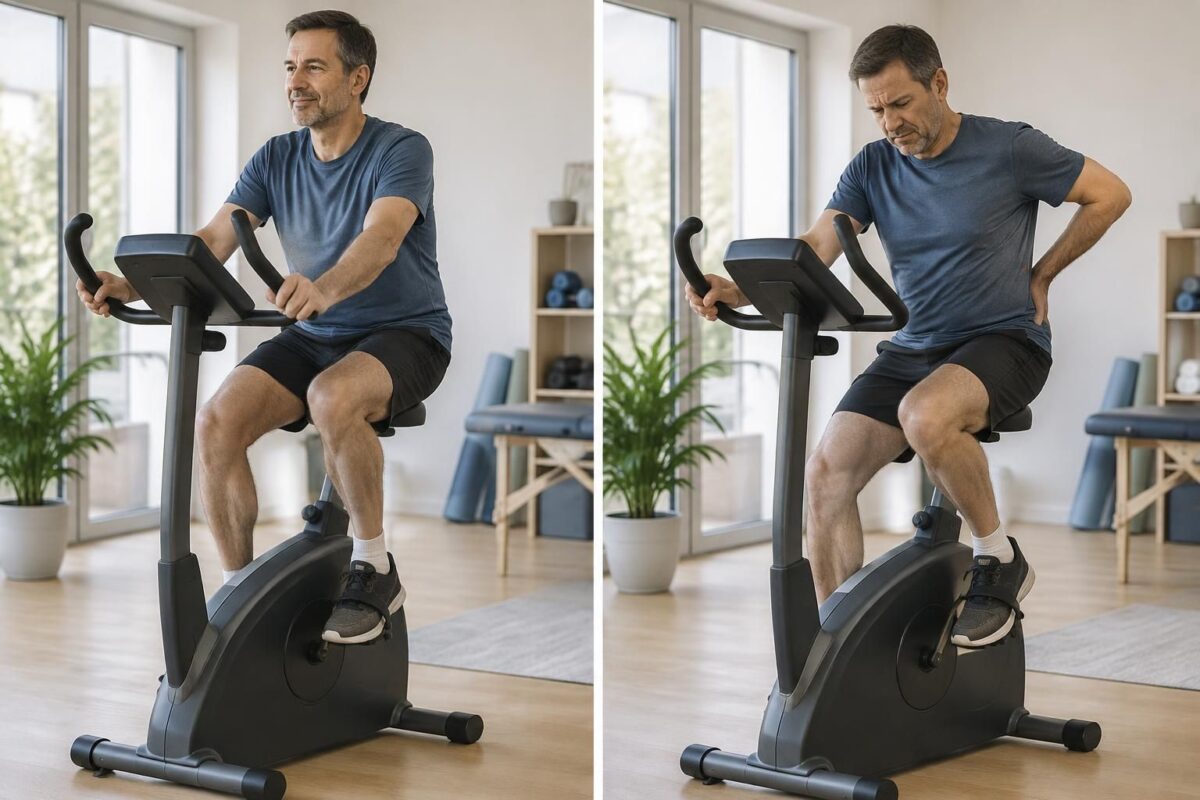
Sciatica and stationary bike: useful or aggravating depending on the case
IN BRIEF The stationary bike with sciatica can help you stay active if the pain is mild and stable. Start with a short session, at low resistance and in a comfortable position. If the pain goes further down the leg,…

Sciatica and cycling: sitting, bending, and symptoms
IN BRIEF Sciatica is pain related to irritation of the sciatic nerve, which can extend from the buttock down to the leg. Cycling may sometimes be possible if symptoms are mild and stable: a comfortable seat, a less bent posture,…

Sciatica and jogging: pain in the leg after effort
IN BRIEF Jogging-related sciatica is pain that often starts from the lower back or buttock and travels down the leg. Running may be possible if the discomfort is mild and stable, but if the pain intensifies, or if there are…

Sciatica and running: when to stay cautious
IN BRIEF Sciatica is pain related to irritation of a nerve, which can extend from the lower back or buttock down the leg. Running is not always prohibited if the discomfort remains mild and stable, without tingling or weakness. Reduce…

Sciatica and sports: when leg pain should slow you down
IN BRIEF Sciatica is pain related to inflammation of a nerve, which can extend from the lower back down to the leg. Sports aren’t always forbidden, but running should slow down if the pain intensifies or is accompanied by tingling,…

Sciatica and return to activity: why to progress slowly
IN BRIEF Returning to activity after sciatica involves gradually regaining movement without exacerbating pain. It helps maintain mobility while minimizing the risk of relapse. Start with walking, then alternate between walking and running for short intervals, increasing effort step by…

Sciatica and physical activity: how to avoid mistakes
IN BRIEF Sciatica is pain that follows the path of the sciatic nerve, from the lower back to the leg. Appropriate physical activity helps to stay mobile without maintaining irritation: favor gentle walking, cycling in an upright position, or swimming,…
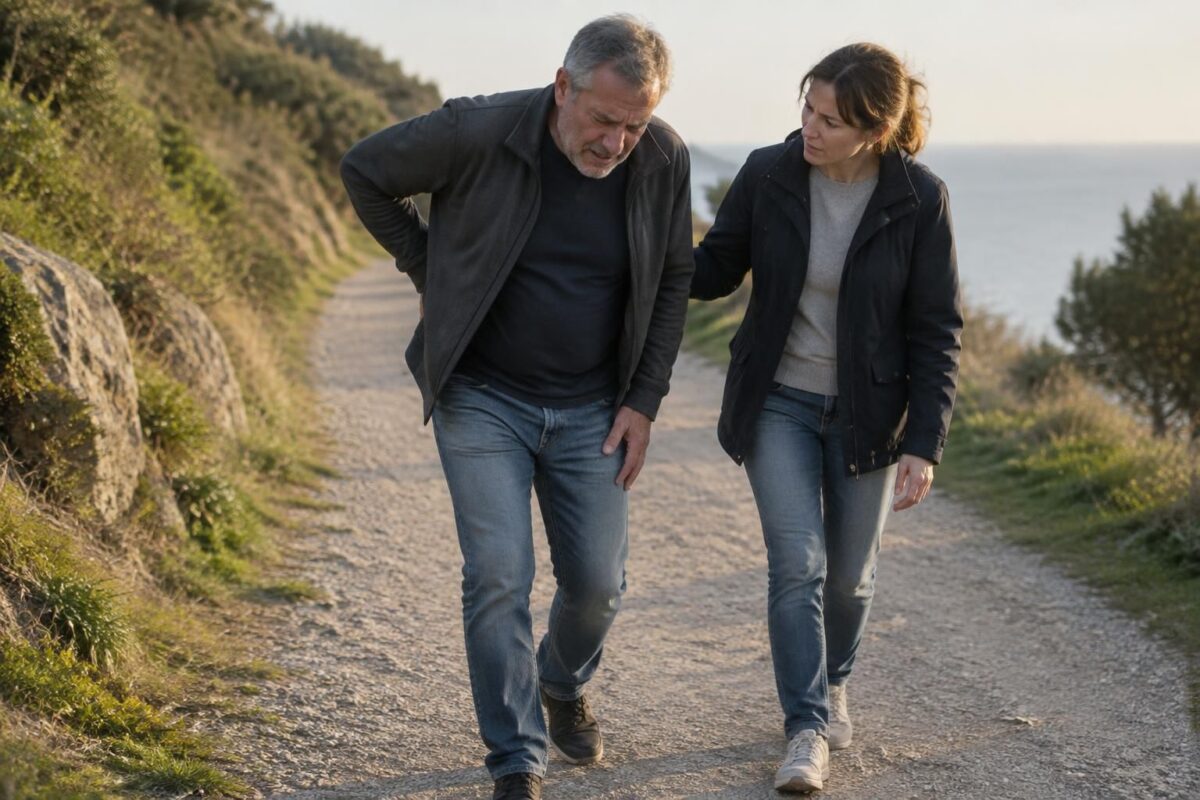
Sciatica and forced walking: risk of worsening
IN BRIEF Sciatica can make walking painful, but pushing yourself may worsen the symptoms. Walk for short periods, at your own pace, only if the pain remains tolerable and does not intensify over time. If you are limping, if the…

Dr Sylvain Desforges, B.Sc., D.O., N.D., osteopath, is the founding president of TAGMED and of the ACMA association. He dedicates his practice to chronic spinal pain, low back pain and symptoms compatible with sciatica, particularly when pain radiates toward the buttock, leg, calf, foot or toes.
Through SOS Sciatique, he publishes educational content on sciatica symptoms, possible causes such as disc herniation, disc narrowing, foraminal stenosis or irritation of a lumbar nerve root, as well as non-surgical approaches that may be considered according to the evaluation. At Clinique TAGMED, care may include, depending on the case, motorized neurovertebral decompression, specific osteopathic care or precision percussion.
For an evaluation related to sciatica treatment in Montreal / Mount Royal or sciatica treatment in Terrebonne, please consult the services available at Clinique TAGMED.
Medical disclaimer
The information published on SOS Sciatique is provided for educational purposes only and does not replace a consultation, diagnosis, opinion or treatment provided by a physician or another authorized healthcare professional. The author of this article is neither a medical doctor nor a specialist in a medical specialty recognized by the Collège des médecins du Québec. The osteopathic, manual medicine or functional support approaches described on this site do not constitute medical acts and are not intended to replace medical follow-up.
Consult a physician or emergency service in cases of loss of bladder or bowel control, anesthesia in the saddle area, significant or progressive weakness in the leg or foot, fever, recent trauma, severe pain or rapid worsening of symptoms. For more details, please read our Legal Notice.