Herniated disc and sciatica: night pain and factors to watch out for
03/10/2026
Sciatica in Terrebonne: how to describe your symptoms during a consultation
04/10/2026
IN BRIEF Sciatica is pain related to irritation or compression of the sciatic nerve. After an episode, gradually resuming walking can help maintain mobility and limit stiffness without straining. Start with short walks on flat terrain, wear comfortable shoes, and take a break if the pain increases. Consult a healthcare professional for advice on tailoring your return to your situation. |
After an episode of sciatica, gradually resuming walking can help maintain mobility: start with short walks on flat terrain, wearing stable and comfortable shoes. Increase the duration only if the pain allows, and take a break if it intensifies. Avoid prolonged immobility, sudden movements, and rough terrains; a healthcare professional can guide you in adapting your return.
After an episode of sciatica, a gradual return to walking can help maintain mobility, provided that the effort is tailored to your symptoms. Start with short outings on level ground, progressively increase the duration, and stop if the pain intensifies or new symptoms appear. A healthcare professional can help you choose a pace suited to your situation. Sciatica refers to pain associated with the irritation of a nerve root that contributes to the formation of the sciatic nerve. It may originate from the lower back or buttock, then radiate down the thigh and sometimes to the foot. Tingling, numbness, or weakness in the leg may also occur. A herniated disc or spinal canal stenosis are among the possible causes. Pain varies from person to person: it can be continuous or come in episodes. The resources on buttock pain with radiation into the thigh and intermittent sciatic pain describe these presentations. Pain that comes and goes does not, by itself, indicate the cause or severity of the problem. Rest can be beneficial for a short period if the pain is strong. However, remaining immobile for long can reduce mobility and make the return to activities more challenging. When symptoms allow, small regular movements are often preferable to spending an entire day in bed. There is no specific duration of walking that suits everyone. The return should take into account the pain, physical fitness, and the advice of the healthcare professional. To compare advice on walking and resting during an episode, refer to the resources from NS Ostéo and Tout pour ma santé. After an episode, begin with a short walk at a comfortable pace on flat ground. Repeat it if it does not cause a significant increase in symptoms. It’s better to take multiple short outings than to embark on a long journey that exhausts the body or increases the pain. Gradually extend the duration without trying to reach a specific distance quickly. If pain increases while walking, slow down or stop. If it remains stronger after activity or the next day, reduce the duration of the next outing and seek advice if this worsening persists. Wear stable and comfortable shoes. Prefer a regular path and initially avoid steep slopes, unstable surfaces, and long walks. Maintain a natural pace and avoid sudden movements. Practical tips from Posturea on walking with sciatica can complement these guidelines. The ability to walk for a long time varies from person to person and depending on the origin of the symptoms. An article from Kiné Sport Versailles on walking duration addresses this issue. If pain appears after a few minutes, note when it starts and what alleviates it. This information can assist the professional evaluating your situation. Mild and stable discomfort does not always mean that walking aggravates the problem. However, stop if the pain becomes significantly more intense, radiates further down the leg, or is accompanied by new tingling or numbness. Rest in a comfortable position, then resume only if symptoms allow. New difficulties in walking straight or controlling a leg require medical advice. Consult immediately if you notice a weakness that progresses. Go to the emergency room if there is a loss of control of the bladder or bowels, numbness around the genitals or anus, or sudden significant weakness. Information on difficulty walking straight and pain that occurs after a few minutes of walking may help identify situations to discuss with a professional. Daily walking and resuming more intense sports do not require the same level of effort. Wait until routine activities are better tolerated before considering running or intense training. Resume cautiously and seek medical advice if pain persists or returns with increased effort. For running, avoid running through pain that worsens or radiates further down the leg. Guidelines on resuming running with sciatica can shed light on warning signs, but do not replace a clinical evaluation. Consult a healthcare professional if the pain remains strong, limits your movements, worsens, or frequently returns. They can investigate the cause of the symptoms and help you determine which activities are appropriate. The choice of follow-up depends on your health status and clinical examination. An article dedicated to lower back pain with radiating pain into the leg, such as the one on sciatica in Terrebonne, cannot establish a diagnosis remotely. Keep track of the duration of your walks, the intensity of the pain, and the time needed to regain your usual comfort level. These observations can help adjust the activity more cautiously. Avoid changing your medications or taking them to continue a painful walk without consulting a healthcare professional. Medical Disclaimer: The information and advice provided on this site do not replace the opinion, diagnosis, or treatment of a healthcare professional. Please note that Dr. Sylvain Desforges, osteopath, is neither a medical doctor nor a physician, and is not specialized in a medical specialty as defined by the Collège des médecins du Québec. Manual medicine, functional medicine, and sports medicine as described on this site exclude any treatment or medical diagnosis made by a physician or medical specialist. Always consult your doctor for any medical questions. For more details, please read our full Legal Notice.Understanding Sciatic Pain
Why to Avoid Prolonged Complete Rest
Resuming Walking Without Straining the Back
Start with Short Outings
Choose a Comfortable Environment and Posture
Adapting Effort to Symptoms
Recognizing Signs That Require a Break
Do Not Resume Sports Too Quickly
Preparing a Tailored Return with a Professional
Gradual Resumption
- Start with short walks several times a day.
- Increase the duration according to your tolerance, without aiming for performance.
- Choose a flat surface and well-cushioned shoes.
Protect the Back
- Maintain a relaxed posture and avoid sudden movements.
- Take a break if the pain intensifies; adopt a position that relieves you.
- Seek advice from a health professional to adapt the resumption.

After a sciatica attack, gradually resuming walking can help preserve mobility and prevent stiffness, as long as you respect the pain. Start with short outings on flat ground, take breaks, and increase the duration only if symptoms remain stable. The goal is not to push but to gradually regain regular activity without further irritating the nerve.
Resuming Walking Without Stressing the Back
Sciatica corresponds to irritation or compression of the sciatic nerve, often felt from the buttock down into the leg. After an attack, prolonged immobility can encourage stiffness. Conversely, too rapid or intense a resumption can worsen the pain. It is therefore preferable to find a balance between movement and rest.
Start with Short Outings
Resume with a few minutes of walking, once or several times a day, rather than a long walk. Move at a comfortable pace, without trying to set a record. If the pain significantly increases, if it descends further into the leg, or if tingling intensifies, stop and rest. Then resume more gently, according to your tolerance.
Gradually increase the duration in small steps, after several well-tolerated outings. There is no identical rhythm for everyone: adapt the progression to your symptoms and the advice of your healthcare professional.
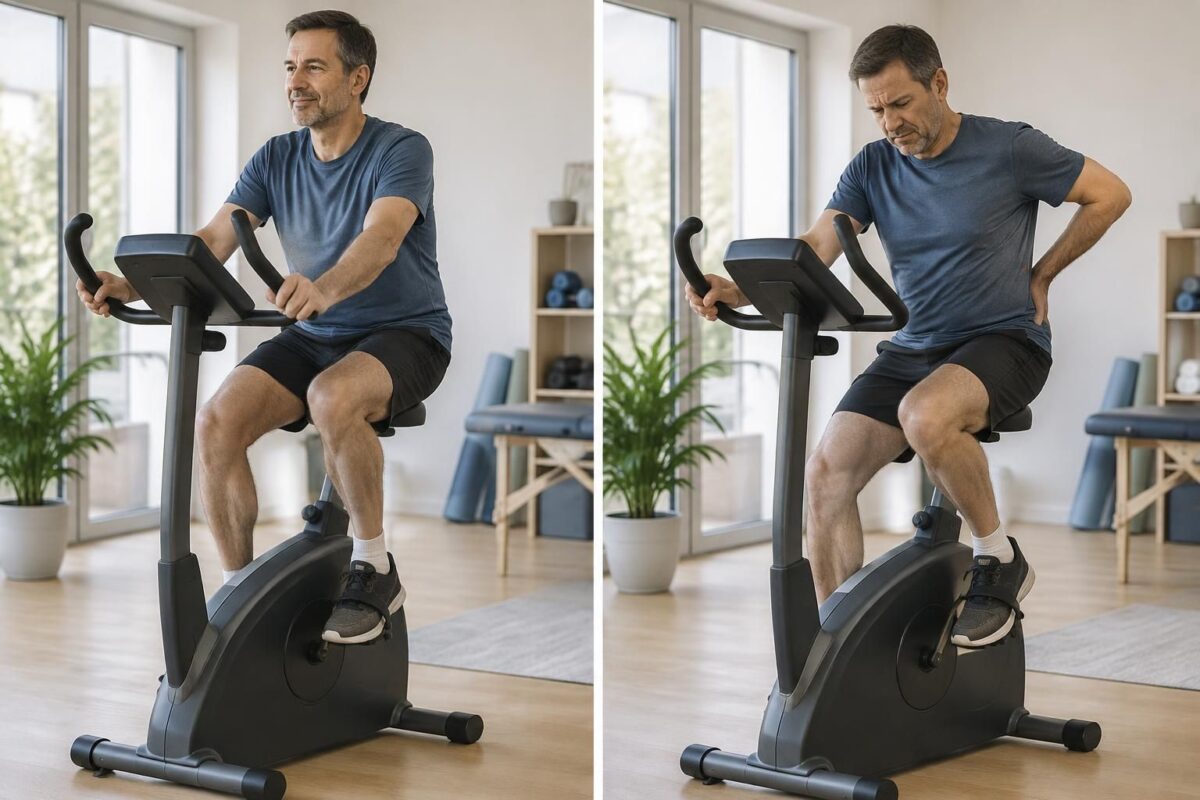
Sciatica and stationary bike: useful or aggravating depending on the case
IN BRIEF The stationary bike with sciatica can help you stay active if the pain is mild and stable. Start with a short session, at low resistance and in a comfortable position. If the pain goes further down the leg,…

Sciatica and cycling: sitting, bending, and symptoms
IN BRIEF Sciatica is pain related to irritation of the sciatic nerve, which can extend from the buttock down to the leg. Cycling may sometimes be possible if symptoms are mild and stable: a comfortable seat, a less bent posture,…
Adopt the Right Movements While Walking
Choose an Appropriate Route and Shoes
For your first outings, prioritize a flat and regular surface close to home. Avoid slopes, rough paths, and long distances as long as the pain remains sensitive. Wear comfortable shoes that support the foot and absorb shocks. Lightweight clothing and garments that do not restrict your movements can also make walking more pleasant.
Maintain a natural posture: look forward, keep your shoulders relaxed, and take smooth steps. Avoid sudden twists of the torso and do not carry heavy loads during the resumption. If you need to stop, position yourself in a way that relieves your back. Some people feel more comfortable sitting for a moment or lying on their back with knees slightly bent.

Sciatica and jogging: pain in the leg after effort
IN BRIEF Jogging-related sciatica is pain that often starts from the lower back or buttock and travels down the leg. Running may be possible if the discomfort is mild and stable, but if the pain intensifies, or if there are…

Sciatica and running: when to stay cautious
IN BRIEF Sciatica is pain related to irritation of a nerve, which can extend from the lower back or buttock down the leg. Running is not always prohibited if the discomfort remains mild and stable, without tingling or weakness. Reduce…
Monitor Progress and Seek Advice
A slight and temporary discomfort may arise initially, but it should not worsen durably after exertion. Note the duration of your walks and the evolution of symptoms: this helps adjust your progression. A doctor or physiotherapist can advise you on resumption and suggest adapted exercises to maintain mobility and gradually strengthen the back and trunk muscles.
Do not change your medication without medical advice. Paracetamol or an anti-inflammatory may be suitable for some people, but these medications are not appropriate for everyone.
Recognize Signs That Require Consultation
Quickly seek medical advice if the pain intensifies, persists, or is accompanied by newfound weakness in the leg. A loss of control over the bladder or bowels, or numbness in the area between the legs, requires urgent care. To avoid resuming too ambitiously, favor short, regular outings tailored to your condition of the day.

Sciatica and sports: when leg pain should slow you down
IN BRIEF Sciatica is pain related to inflammation of a nerve, which can extend from the lower back down to the leg. Sports aren’t always forbidden, but running should slow down if the pain intensifies or is accompanied by tingling,…
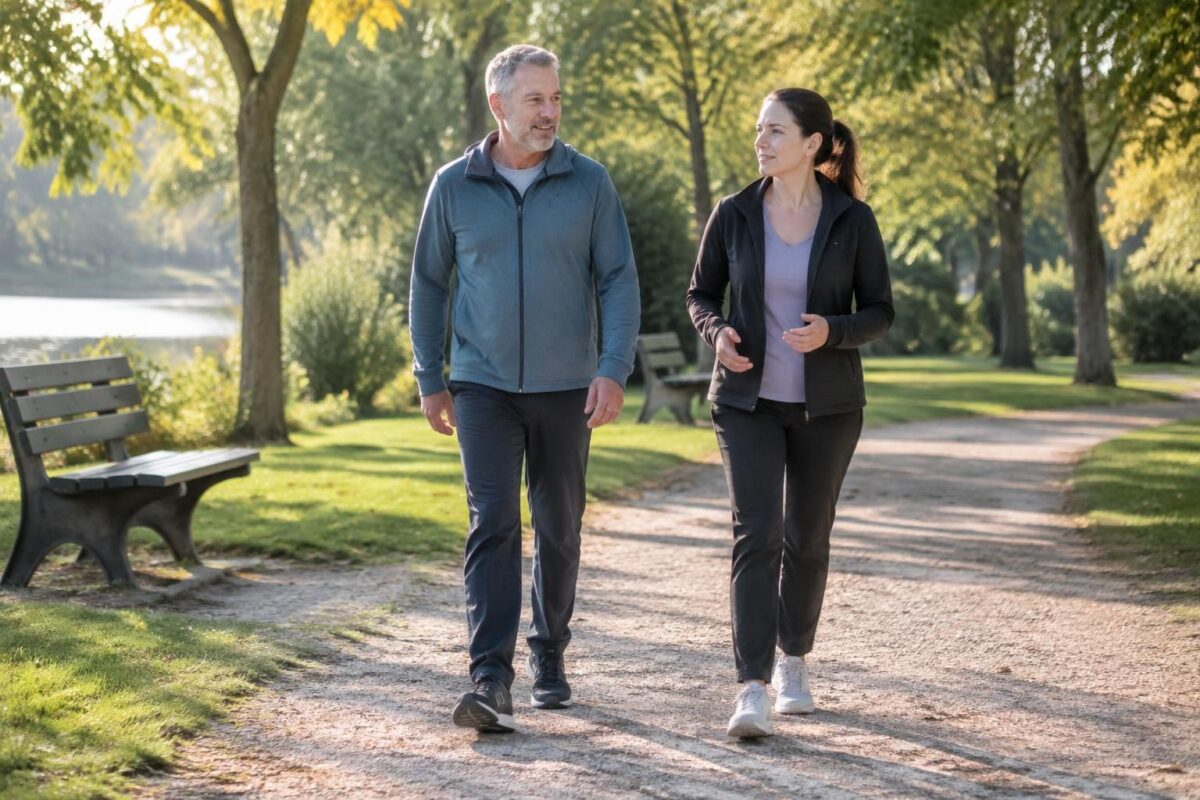
Sciatica and return to activity: why to progress slowly
IN BRIEF Returning to activity after sciatica involves gradually regaining movement without exacerbating pain. It helps maintain mobility while minimizing the risk of relapse. Start with walking, then alternate between walking and running for short intervals, increasing effort step by…
Resuming Walking Without Stressing the Back
| Marker | To Do |
|---|---|
| Start of Resumption | Begin with short walks, several times a day. |
| Progression | Gradually increase the duration according to your tolerance. |
| Route | Choose a flat and regular surface. |
| Shoes | Wear stable and cushioned shoes. |
| Posture | Keep your shoulders relaxed and distribute your weight. |
| Increasing Pain | Take a break and resume more gently. |
| Follow-Up | Seek advice from a healthcare professional if discomfort persists. |

Sciatica and physical activity: how to avoid mistakes
IN BRIEF Sciatica is pain that follows the path of the sciatic nerve, from the lower back to the leg. Appropriate physical activity helps to stay mobile without maintaining irritation: favor gentle walking, cycling in an upright position, or swimming,…
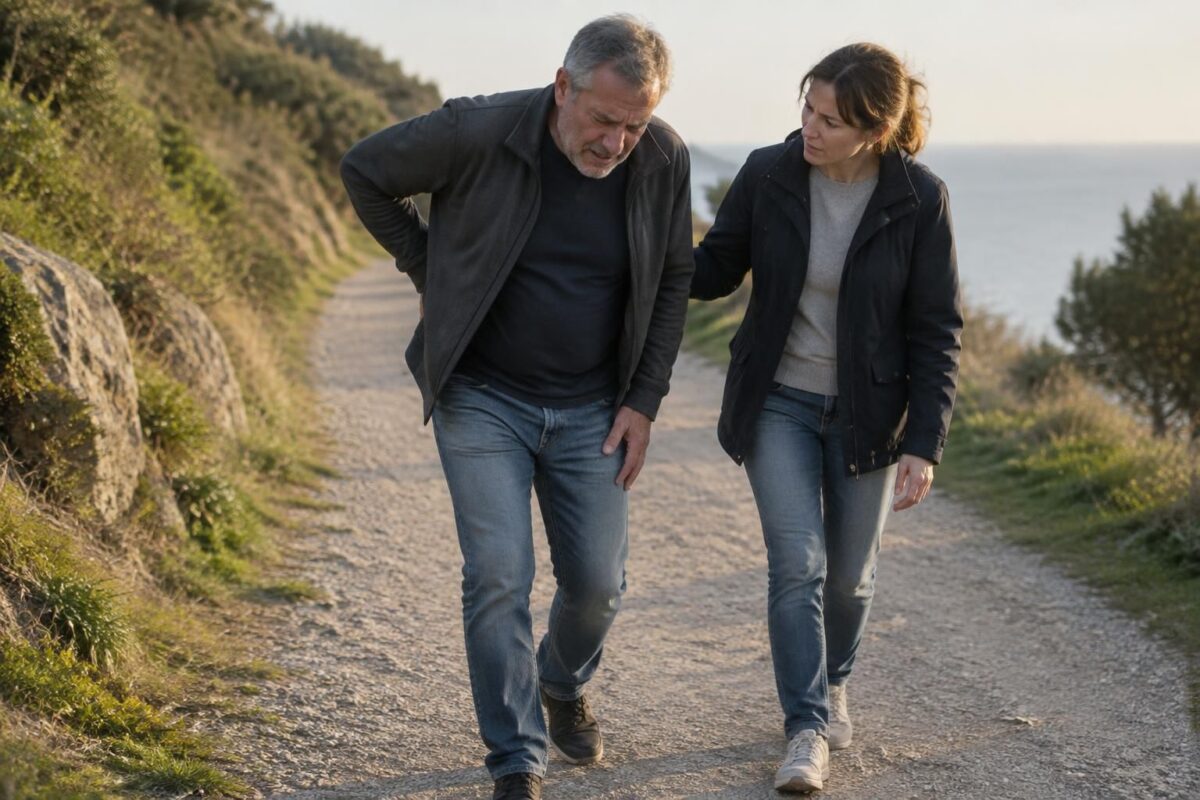
Sciatica and forced walking: risk of worsening
IN BRIEF Sciatica can make walking painful, but pushing yourself may worsen the symptoms. Walk for short periods, at your own pace, only if the pain remains tolerable and does not intensify over time. If you are limping, if the…
Testimonials: Gradually Resuming Walking After a Sciatica Attack
The testimonials below are fictional examples, provided for illustrative purposes. Each sciatica and recovery is different.
Claire, 42: “I started with a few minutes”
After an attack that shot from my buttock to my calf, I was afraid that walking would make things worse. I resumed gently, with short trips on flat terrain, several times a day. At first, I stopped whenever pain increased. Little by little, I was able to extend some walks without trying to set a record.
Marc, 57: “The breaks helped me gauge the effort”
I thought I had to lie down until I felt nothing. My doctor advised me to stay active according to my tolerance instead. I alternated short walks with rest, wearing comfortable shoes. If the symptoms became more intense, I reduced the duration instead of pushing through.
Sophie, 36 years old: “I adapted my outings to my sensations”
In the first few days, the pain sometimes descended into my leg after a few minutes. I chose regular routes, without slopes or uneven ground, and I kept a steady pace. This gradual return allowed me to regain confidence in my movements, without considering each outing as a training session to succeed.
Yanis, 49 years old: “The support reassured me”
I didn’t always know if I should continue or stop. A physiotherapist helped me choose suitable movements and to gradually resume walking. I learned to distinguish slight discomfort from a clear worsening and to modify my activity accordingly.
Élise, 63 years old: “I prioritized regularity”
I started with short walks near my home, rather than a long walk on the weekend. I took a break whenever necessary and resumed only if I felt capable. This way of progressing seemed more realistic than wanting to quickly regain my usual pace.
In case of increasing pain, new weakness in the leg or unusual symptoms, seek advice from a healthcare professional. They can guide you on the appropriate level of activity for your situation.
Dr. Sylvain Desforges: supporting sciatica and the gradual resumption of walking
The Dr. Sylvain Desforges is a professional specialized in osteopathy, naturopathy, and manual medicine. Founder and president of the TAGMED clinics and the ACMA association, he has dedicated his career to health innovation and supporting people suffering from persistent pain. His approach particularly focuses on chronic pain management and integrating methods suited to each patient’s needs.
Sciatica holds an important place in this field. It corresponds to pain related to irritation or compression of a nerve root associated with the sciatic nerve. It can manifest in the lower back, buttock, and leg, sometimes extending to the foot. Burning, sharp pain, electric shocks, numbness, or weakness can accompany the pain. Since symptoms and their causes vary from person to person, evaluation by a healthcare professional helps determine appropriate measures and to rule out situations requiring prompt attention.
After a flare-up, resuming walking often requires a balance between movement and caution. Complete rest is not necessarily the best answer for everyone: depending on the situation, gentle and suitable activity can help maintain mobility. The principle advocated in a progressive approach is to begin with short periods of walking at a comfortable pace, then adjust the duration according to tolerance. The goal is not to push through pain but to gradually regain everyday movements without causing significant worsening.
To resume more serenely, it is helpful to choose a flat route and shoes that provide good support. A relaxed posture, without sudden movements or large strides, can also make the initial movements more comfortable. If symptoms increase significantly, a break and a resting position may be necessary. The pace of progression should remain individual: age, physical condition, the intensity of symptoms, and their cause influence recovery. A doctor or another qualified professional can specify the limits to respect and advise on a safe resumption.
In his practice, Dr. Desforges focuses on evidence-based care and the reasoned association of different therapeutic options. The TAGMED clinics offer approaches that involve advanced technologies, such as vertebral decompression, laser, and shockwave therapy. These modalities do not necessarily suit every person; their relevance depends on clinical evaluation, symptoms, and care objectives. They are part of a holistic approach aimed at optimizing patient health and well-being.
Resuming walking can also be accompanied by exercises chosen with a professional, for example, to maintain mobility and gradually strengthen the muscles that support the trunk. Progress is built step by step, taking into account the body’s reactions rather than following the same calendar for everyone. This attention to activity, evaluation, and adaptation reflects Dr. Desforges’ mission: to provide informed and individualized care to people facing sciatica and chronic pain.
After a sciatica flare-up, gradually resuming walking can help to preserve mobility and limit stiffness, provided the effort is adapted to the pain. Short outings on flat terrain, comfortable shoes, and regular breaks allow you to slowly regain your bearings without imposing excessive strain on your back.
Resuming walking after a sciatica flare-up
The resumption takes place at the pace of the symptoms: start with a few minutes of walking, then increase the duration in small steps if the pain remains stable or decreases. It’s better to have several short outings than one long walk that tires the back and leg. These practical tips on the benefits and precautions of walking with sciatica can help adjust the activity to your situation.
Choose a regular route and avoid slopes, uneven terrain, and sudden movements at first. Wear shoes that provide good foot support and absorb shocks. Maintain a relaxed posture, without trying to force yourself to stand tall. If the pain descends to the foot, also refer to the guidelines dedicated to foot pain while walking and pain that starts from the buttock and radiates to the foot.
Monitor the evolution of sensations during walking and in the hours that follow. A slight and temporary discomfort does not necessarily mean you have worsened the situation, but a pain that significantly increases, weakness, or progressing numbness justifies reducing the effort and seeking medical advice. A calf pain that feels like a cramp or discomfort after prolonged standing should also be evaluated: refer to the information on calf pain and pain in the leg after standing for a long time.
Staying immobile for long periods, especially sitting in a car, can also increase discomfort for some people. Alternate positions and interrupt prolonged periods by standing up if possible. Tips for better managing the immobile position in traffic jams can help you anticipate these situations. For additional guidance on the benefits and limits of this activity, also check this guide for walking with sciatica.
The resumption of other activities should also be gradual. Running, which is more demanding on the body, should not be reintroduced until walking and daily movements are tolerated satisfactorily; consult a healthcare professional before considering this stage. You will find information on the gradual resumption of running and the signs to consider before running again.
A doctor or physiotherapist can help you establish an appropriate progression, especially if symptoms persist or return as soon as you increase activity. Individualized support allows for adjustments in walking, exercises, and the resumption of daily activities, relying on advice for resuming activities after sciatica.

Dr Sylvain Desforges, B.Sc., D.O., N.D., osteopath, is the founding president of TAGMED and of the ACMA association. He dedicates his practice to chronic spinal pain, low back pain and symptoms compatible with sciatica, particularly when pain radiates toward the buttock, leg, calf, foot or toes.
Through SOS Sciatique, he publishes educational content on sciatica symptoms, possible causes such as disc herniation, disc narrowing, foraminal stenosis or irritation of a lumbar nerve root, as well as non-surgical approaches that may be considered according to the evaluation. At Clinique TAGMED, care may include, depending on the case, motorized neurovertebral decompression, specific osteopathic care or precision percussion.
For an evaluation related to sciatica treatment in Montreal / Mount Royal or sciatica treatment in Terrebonne, please consult the services available at Clinique TAGMED.
Medical disclaimer
The information published on SOS Sciatique is provided for educational purposes only and does not replace a consultation, diagnosis, opinion or treatment provided by a physician or another authorized healthcare professional. The author of this article is neither a medical doctor nor a specialist in a medical specialty recognized by the Collège des médecins du Québec. The osteopathic, manual medicine or functional support approaches described on this site do not constitute medical acts and are not intended to replace medical follow-up.
Consult a physician or emergency service in cases of loss of bladder or bowel control, anesthesia in the saddle area, significant or progressive weakness in the leg or foot, fever, recent trauma, severe pain or rapid worsening of symptoms. For more details, please read our Legal Notice.