Sciatica with heavy leg: nerve pain or another cause?
16/07/2026
Sciatica in Montreal: what to do when stretching worsens the pain?
24/07/2026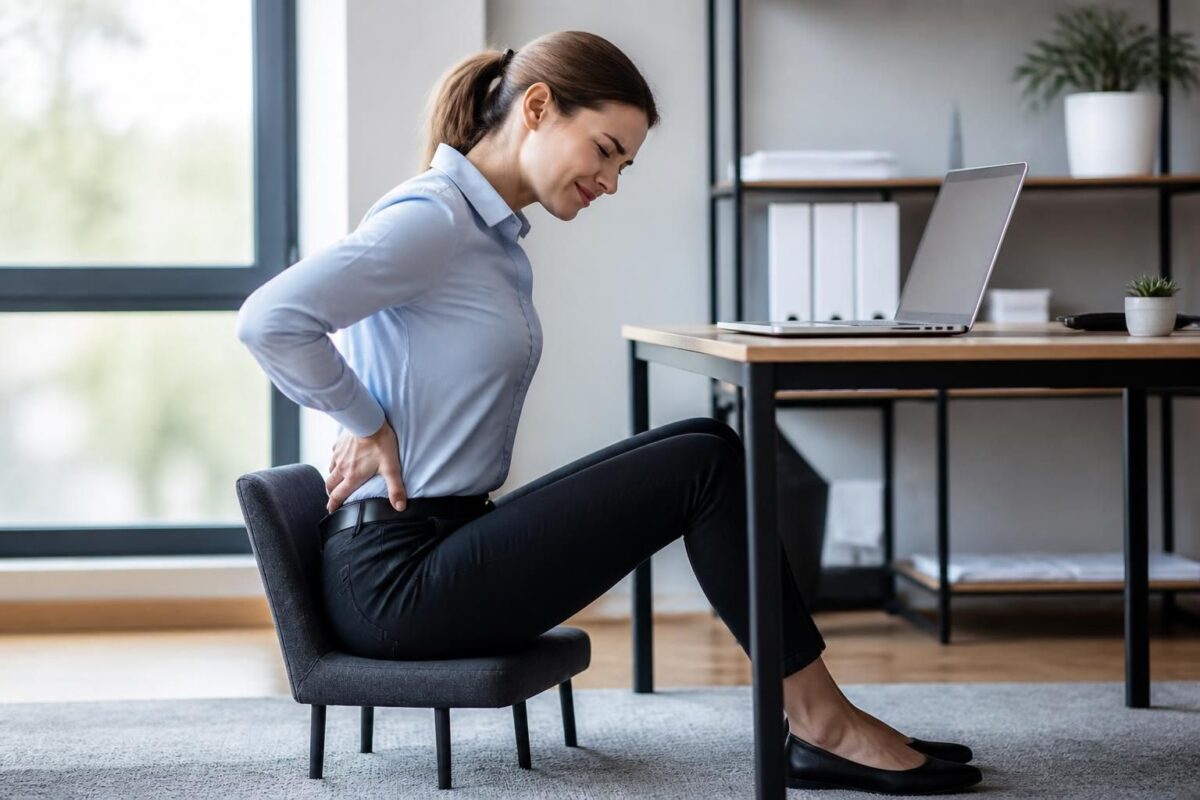
IN BRIEF
| In brief, sciatica related to a too-low chair can increase tension on the lower back by causing a posterior pelvic tilt and possible compression of the sciatic nerve. A simple ergonomic approach provides concrete benefits: adjusting the chair so that the feet are flat and the knees at ~90°, adding lumbar support, using an ergonomic cushion, and alternating positions (sitting/moving) to prevent aggravation. This helps reduce pain, improves posture, and allows for continued work, especially in Paris or the Paris region. This logic is quick to implement and can be complemented by simple exercises to relieve the nerve, without replacing medical advice. |
Sciatica can be aggravated by a too-low chair, which increases pressure on the intervertebral discs and promotes posterior pelvic tilt, reducing lumbar lordosis and putting more strain on the sciatic nerve. This position can also increase pain in the lower back and cause tension in the piriformis. To limit these effects, adjust the chair height so that the knees are level with the hips, use lumbar support, and, if necessary, a footrest.
Quick summary: This article, written by a healthcare professional and expert, explains how a too-low chair can influence sciatica and the lower back, describes the mechanisms involved, and offers simple and effective adjustments to prevent and relieve pain at work or at home.
A chair that is too low alters the alignment of the body. The pelvis can tilt backward, and lumbar lordosis flattens. This loss of curvature increases pressure on the lumbar discs and can increase tension on the sciatic nerve. The piriformis muscle may be inappropriately stressed, which can intensify symptoms radiating down the leg. In the long term, this can worsen sciatica pain and lead to recurrent episodes, especially if one sits for several hours.
Why a low chair influences the lower back
The lower back experiences increased strain when the pelvis is misaligned. The lack of lumbar support and forced slouching posture over long periods increase tension on lumbar structures and the sciatic nerve, which can intensify pain during daily activities.
How to optimize ergonomics to limit impact
To reduce this risk, prioritize proper ergonomics and a workstation that maintains body alignment. Here are some simple guidelines:
- Height: feet should be flat on the floor, knees around 90°, or slightly below hip level.
- Seat depth: leave 2–3 fingers between the back of the knee and the edge of the seat.
- Backrest: slightly adjustable backward (100–110°) with effective lumbar support.
- Footrest: use it if your feet do not touch the ground.
- Screen: position it at eye level to avoid excessive bending of the neck and back.
- Hip position: avoid crossing thighs and prefer alignment of the trunk and pelvis.
Practical tips for daily office life
Alternate positions and schedule active breaks. If possible, use a height-adjustable desk to alternate between sitting and standing. Avoid clothing that constricts at the pelvis and maintain good hydration to support disc health.
Links and useful resources
To delve deeper, check out the following resources:
- Contact Tagmed and sossciatique services
- Sciatica and working at the office – Ergonomics
- Positions to avoid in case of sciatica
- Postures to avoid
- Interpreting pain that radiates down the leg
- Relief and general resources (neurovertebral decompression)
- Additional information on ergonomics and pain
- General resources on sciatica
- TAGMED Clinics – Montreal and Terrebonne
For clinical solutions, you can also consult our TAGMED resources in Montreal or Terrebonne.
Note: this article avoids recommending exercises intended for neurovertebral decompression or specific pathologies. Always consult a healthcare professional for an appropriate diagnosis.
Medical disclaimer: The information and advice provided on this site do not replace the opinion, diagnosis, or treatment of a healthcare professional. Please note that Dr. Sylvain Desforges, osteopath, is neither a medical doctor nor a physician, and is not specialized in a medical specialty as defined by the Collège des médecins du Québec. Manual therapy, functional medicine, and sports medicine as described on this site do not include any treatment or medical diagnosis made by a physician or medical specialist. Always consult your doctor for any medical questions. For more details, please read our full Legal Notice.

When the chair is too low, the pelvis tilts retroverted and the lordosis of the lower back can flatten. This increases pressure on the intervertebral discs and can amplify pain associated with sciatica. This article provides concrete recommendations to understand this link and quickly reorganize your workstation to limit pain flare-ups.
The mechanisms between low chairs and sciatica
A low chair pushes the back backward and forces the body to adjust to this height. This configuration promotes a retroversion of the pelvis and a loss of the natural curvature of the lower back. Consequently, the lumbar discs undergo increased pressure, and the sciatic nerve may become irritated from the pelvis.
Furthermore, this position may maintain or increase tension in the piriformis, the deep gluteal muscle, which can compress the sciatic nerve as it exits the pelvis. Practically, this means that a low chair can both multiply lower back pain and irradiations that extend into the leg, especially during prolonged static positions.

Sciatica and cycling: sitting, bending, and symptoms
IN BRIEF Sciatica is pain related to irritation of the sciatic nerve, which can extend from the buttock down to the leg. Cycling may sometimes be possible if symptoms are mild and stable: a comfortable seat, a less bent posture,…

Sciatica and jogging: pain in the leg after effort
IN BRIEF Jogging-related sciatica is pain that often starts from the lower back or buttock and travels down the leg. Running may be possible if the discomfort is mild and stable, but if the pain intensifies, or if there are…
Effects on the lower back and pain pathway
Disc pressure and lower back pain
The lower the chair, the more the lumbar disc is stressed during sedentary periods. This strain can exacerbate a herniated or pinched lumbar nerve, leading to pain that wakes up or intensifies when sitting.
Nerve tension and irradiation
The combination of a misaligned pelvis and insufficient back support can increase tension along the path of the sciatic nerve. This manifests as pain that can radiate from the lower back down to the leg.

Sciatica and running: when to stay cautious
IN BRIEF Sciatica is pain related to irritation of a nerve, which can extend from the lower back or buttock down the leg. Running is not always prohibited if the discomfort remains mild and stable, without tingling or weakness. Reduce…

Sciatica and sports: when leg pain should slow you down
IN BRIEF Sciatica is pain related to inflammation of a nerve, which can extend from the lower back down to the leg. Sports aren’t always forbidden, but running should slow down if the pain intensifies or is accompanied by tingling,…
Practical recommendations to correct the low chair effect
Adjustments to the chair and workspace
Adjust the height of the chair so that the feet rest flat on the floor and the knees are at about 90°. The backrest should support the lumbar curve, and there should be a small space of 2 to 3 fingers between the last cm of the ischions and the edge of the seat. Using a lumbar cushion or back support can help maintain the lordosis and limit tensions.
If possible, choose an ergonomic chair or a footrest to adjust the angle of the knees and reduce pelvis retroversion. Place the screen at eye level and avoid prolonged forward head positions that exacerbate back tension.
Breaks and position alternation
Adopt the 45-5 rule: every 45 minutes, stand up and walk or stretch for 5 minutes. If your job allows, consider a height-adjustable desk to alternate between sitting and standing positions and relieve the lower back.
Simple exercises and micro-movements
Incorporate gentle piriformis stretches and pelvic tilt exercises to maintain lumbar mobility. Lumbar rotations while seated and micro-releases during breaks can also help preserve a favorable range of motion and decrease tension on the sciatic nerve.
Additional tips
Avoid tight clothing and belts that restrict pelvic mobility. Stay hydrated and favor a diet that supports disc health. In case of intense pain or neurological signs, quickly contact a healthcare professional to assess your situation.
| Element | Impact on lower back |
|---|---|
| Chair too low | Increases pressure on lumbar discs and reduces lordosis, worsening lower back pain and sciatica. |
| Retroversion of the pelvis | Promotes retroversion of the pelvis, stretching the nerve and increasing pain. |
| Increased lumbar pressure | Increases tension on the sciatic nerve due to compressions and pulls on tissues. |
| Piriformis tension | Strains the piriformis and may compress the nerve as it exits the pelvis. |
| Poor torso/neck alignment | Alters the alignment of the torso and back, amplifying lumbar tension. |
| Leg position | Improper leg position compresses nerve and vascular structures. |
| Prolonged sitting duration | Prolonged sitting without breaks prolongs tension and pain. |
| Lack of lumbar support | Absence of lumbar support promotes insufficient lordosis and disc pressure. |
| Insufficient space and ergonomics | Posture and insufficient space limit adjustments and maintain irritation. |

Sciatica and return to activity: why to progress slowly
IN BRIEF Returning to activity after sciatica involves gradually regaining movement without exacerbating pain. It helps maintain mobility while minimizing the risk of relapse. Start with walking, then alternate between walking and running for short intervals, increasing effort step by…

Sciatica and physical activity: how to avoid mistakes
IN BRIEF Sciatica is pain that follows the path of the sciatic nerve, from the lower back to the leg. Appropriate physical activity helps to stay mobile without maintaining irritation: favor gentle walking, cycling in an upright position, or swimming,…
Testimonials: Sciatica and low chair, effects on lower back
“Before, my sciatica forced me to avoid prolonged sessions on my low chair. My lower back hurt as soon as I sat for more than half an hour, and even car rides became painful. By raising the seat and adding lumbar support, I’ve regained some comfort. I can sit without tension, and my pain gradually calms down.”
“As a developer, I spend hours in front of the screen. When my sciatica worsened on a low chair, the pain radiating down my leg made every task difficult. After adjusting the height and adding a lumbar cushion, the tension decreased and my lower back eased up a bit. I stand more often, and active breaks have become easy to follow.”
“The drive, especially on long journeys, was a real ordeal because of my sciatica. A chair too low in the vehicle kept my lower back in constant tension. By changing the seat incline and adjusting my legs, I gained comfort and tolerance for the trip.”
“I thought it was inevitable: every seated posture triggered nerve tension. In reality, just the right seat height and an adapted posture are enough to relieve the lower back. Since I sit correctly and take small breaks, the sciatica is less present in my daily life.”
“At the office, I’ve adopted a simple routine: adjusted chair, lumbar cushion, and breaks every 45 minutes. The result: the sciatica no longer worsens after half a day, and my lower back relaxes. It’s a real change for my productivity and comfort.”
Sciatica and Low Chair: Possible Effects on the Lower Back
Dr. Sylvain Desforges, an expert in osteopathy, naturopathy, and manual medicine, is the founding president of TAGMED clinics and the ACMA association. His career revolves around innovation in healthcare, and he is recognized for his ability to combine scientific rigor with a human approach to the patient. Specialized in managing chronic pain and integrating advanced technologies, he offers comprehensive solutions aimed at restoring function, reducing pain, and improving daily well-being. His approach is based on clinical evidence and attentive listening to the individual needs of each patient.
In the context of sciatica, he emphasizes that a low chair can directly influence the pelvis and spinal alignment. A seat that is too low may promote retroversion of the pelvis, increase lumbar disc pressure, and alter lumbar alignment, which can exacerbate pain radiating down the leg. Dr. Desforges insists that these postural factors, combined with repetitive movements and prolonged immobility, can sustain or worsen sciatica neuralgia. His approach aims to restore a neutral posture and reduce the mechanical strains that fuel pain.
To effectively address these issues, the physician employs a range of techniques and strategies. His work relies on a personalized assessment of the patient, musculoskeletal rebalancing, and the coordinated use of technologies such as spinal decompression, laser, and shockwave therapy. These tools, combined with osteopathic and naturopathic modalities, aim to reduce nerve tension, improve spinal mobility, and foster sustainable recovery. The goal is clear: to provide evidence-based care that adapts to the personal and professional context of the patient, whether they are at the office, at home, or on the move.
The path proposed by Dr. Desforges translates these principles into concrete and daily actions. He emphasizes ergonomic advice for the workstation, simple adjustments to the chair, active breaks, and targeted exercises to prevent recurrences. The program is designed to be compatible with modern life: office work, travel, and household tasks. By integrating breathing techniques, measured stretches, and controlled strengthening, he helps his patients regain control over their back and stride, while minimizing risks associated with an ill-fitted chair.
In summary, Dr. Desforges’s vision is one of pragmatic and human practice that combines science, manual techniques, and advanced technologies to relieve sciatica and protect the lower back in often ergonomically deficient work environments. His commitment is to provide accessible and effective solutions so that everyone can maintain or regain a quality of life, even when sitting is necessary in daily life.
This quick summary explains how a low chair can influence the lower back and sciatica, the mechanisms involved (retroversion of the pelvis, pressure on the lumbar discs, tension in the piriformis), and the ergonomic and postural solutions to adopt to limit pain when working seated or on the move.
Key points to remember: a low chair can increase the load on the lumbar discs and intensify sciatic nerve tension through retroversion of the pelvis and poor back position; it’s essential to ensure a neutral spine alignment and proper lumbar support.
Practical actions to limit the impact: adjust the height so that your feet rest flat and your knees are at 90°, use a lumbar cushion, and if possible, opt for a seat slightly inclined backward to preserve the lumbar lordosis. Prioritize active breaks and micro-stretches for the sciatic nerve and piriformis muscles.
To complement, adopt the 45-5 rule: every 45 minutes of seated work, stand up for 5 minutes, walk, and stretch to decompress the discs and relieve muscle tension. If your workstation allows, prefer a height-adjustable desk to alternate positions throughout the day.
For further information, consult reliable resources and gestures to avoid or ergonomic solutions:
Seven good gestures to counter sciatica,
Sciatica and low seating position: why it can worsen,
Sciatica: positions to avoid,
Sciatica: postures to avoid,
Sciatic pain and loss of sensitivity: why consult.

Sciatica and forced walking: risk of worsening
IN BRIEF Sciatica can make walking painful, but pushing yourself may worsen the symptoms. Walk for short periods, at your own pace, only if the pain remains tolerable and does not intensify over time. If you are limping, if the…

Sciatica and daily walking: how to respect tolerance
IN BRIEF Sciatica is pain related to the irritation of a nerve, which can extend from the lower back down to the leg. Walking with sciatica is often possible and helps to maintain mobility, provided you move slowly, take short…

Dr Sylvain Desforges, B.Sc., D.O., N.D., osteopath, is the founding president of TAGMED and of the ACMA association. He dedicates his practice to chronic spinal pain, low back pain and symptoms compatible with sciatica, particularly when pain radiates toward the buttock, leg, calf, foot or toes.
Through SOS Sciatique, he publishes educational content on sciatica symptoms, possible causes such as disc herniation, disc narrowing, foraminal stenosis or irritation of a lumbar nerve root, as well as non-surgical approaches that may be considered according to the evaluation. At Clinique TAGMED, care may include, depending on the case, motorized neurovertebral decompression, specific osteopathic care or precision percussion.
For an evaluation related to sciatica treatment in Montreal / Mount Royal or sciatica treatment in Terrebonne, please consult the services available at Clinique TAGMED.
Medical disclaimer
The information published on SOS Sciatique is provided for educational purposes only and does not replace a consultation, diagnosis, opinion or treatment provided by a physician or another authorized healthcare professional. The author of this article is neither a medical doctor nor a specialist in a medical specialty recognized by the Collège des médecins du Québec. The osteopathic, manual medicine or functional support approaches described on this site do not constitute medical acts and are not intended to replace medical follow-up.
Consult a physician or emergency service in cases of loss of bladder or bowel control, anesthesia in the saddle area, significant or progressive weakness in the leg or foot, fever, recent trauma, severe pain or rapid worsening of symptoms. For more details, please read our Legal Notice.