



Sciatica treatment in Terrebonne: non-invasive and personalized approach
24/07/2026
Sciatica in Terrebonne: why imaging doesn’t always explain the pain
24/07/2026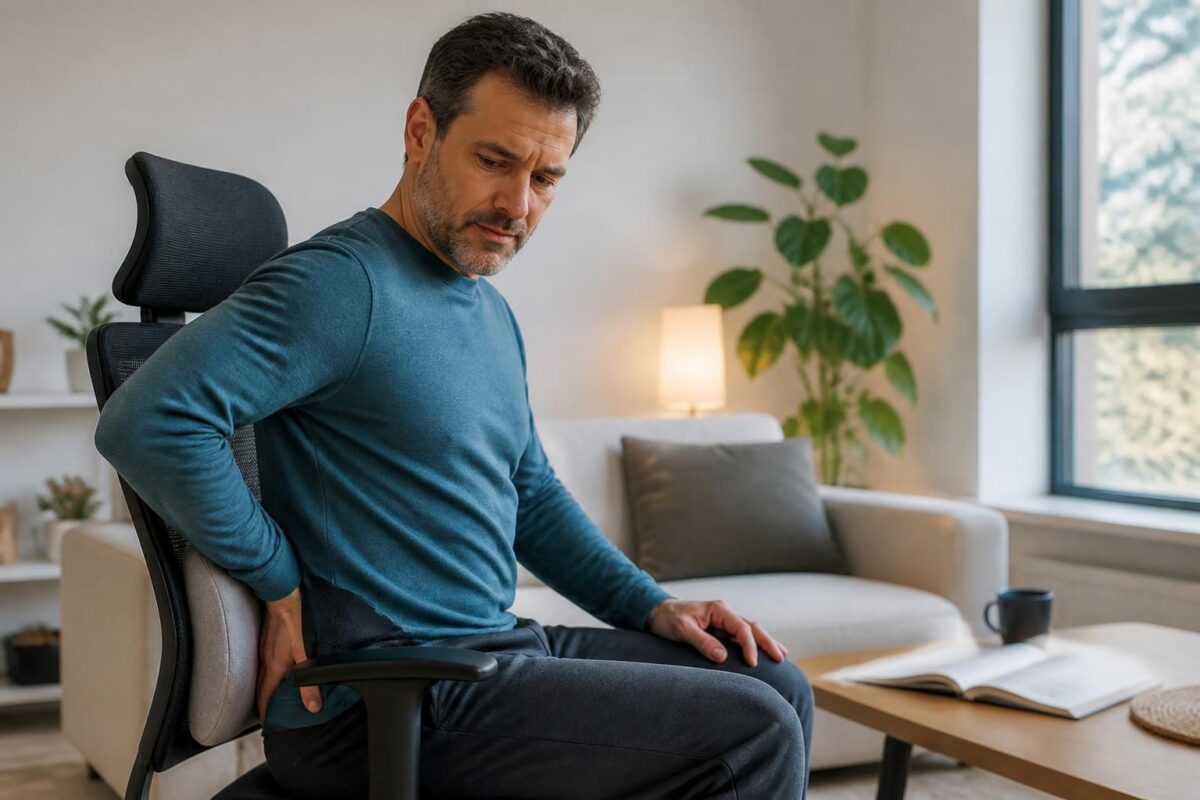
IN SHORT Sciatica and the <strong lumbar cushion address pain caused by irritation or compression of the sciatic nerve. This approach highlights the role of posture and an ergonomic cushion to limit lumbar pressure and promote recovery. Benefits: improvement of back alignment, reduction of pressure on the sciatic nerve while sitting, better sleep and night comfort, and prevention of relapses through simple postural habits. How it works: the lumbar cushion redistributes weight, supports the natural curvature, and relieves the coccyx during long sitting periods. At night, targeted positions (side with a pillow between the knees, back with slight support) facilitate rest and recovery. Local: In France, this device is particularly useful for people who spend long hours sitting at work or at home. |
Sciatica is a pain related to irritation or compression of the sciatic nerve, the longest nerve in the body. It can radiate from the lower back down to the leg and is often accompanied by tingling or weakness.
To stay cautious in daily life, prioritize good posture and a suitable lumbar cushion. A supported sitting position and regular movements reduce pressure on the discs and the nerve, especially when sitting or standing for long periods.
Practical tips: move every 30 to 45 minutes, avoid rounding the back and heavy loads, and opt for a straight back and flexed knees during exertion. The lumbar cushion helps maintain pelvis-lumbar alignment and reduces nighttime tension, without replacing a medical opinion in case of persistence or unusual signs.
This article, written by a health professional and expert, explains how sciatica can be influenced by the use of a lumbar cushion. It reminds when this accessory is useful and when caution should be exercised. The choice, position, and conditions of use determine effectiveness and safety. It provides practical advice and clear guidelines for a safer and less painful daily life.
Role of the lumbar cushion in managing sciatica
The lumbar cushion helps maintain the alignment of the pelvis and spine. It can reduce pressure on the sciatic nerve when you’re sitting. Adequate support can also limit muscle tension in the lower back. To learn more about positions and cushion choices, check out this guide: Practical Guide.
When to be cautious with a lumbar cushion
Using a lumbar cushion does not replace a medical evaluation. Certain signs require prompt consultation: loss of strength, pain that spreads despite rest, or urinary problems. In case of doubt, refer to a reliable source like Ameli. Avoid cushions that exert excessive pressure on a painful area and prefer support that respects the natural curvature.
How to choose a suitable cushion
To remain effective, choose an ergonomic cushion that supports the lower back and/or coccyx without compressing sensitive areas. U-shaped or donut shapes relieve pressure on the back of the pelvis and decrease local pressure. Favor materials that slowly conform to the body’s contours, such as memory foam or gel. Before purchase, try different models if possible and consider your sleeping position and activity.
Specialized resources also recommend aligning your sitting position with the rest of your posture. For advice on the impact of chairs and practical tips, refer to dedicated resources: chair and leg pain, pain pathway, and non-invasive approach. For points of comparison with other therapies, see the information available on neurovertebral decompression.
Practical tips for daily use
Adopt a sitting position with lumbar support, feet flat, and back straight. Change positions regularly and walk for a few minutes every 30 to 45 minutes. In cases of nighttime pain, favor a position that limits arching and pressure on the nerve; a pillow under the knees can help when you’re on your back. For concrete advice on sleep and cushions, refer to this guide.
Resources also show that simple movements and better posture during domestic or professional activities reduce strain on the sciatic nerve. To delve deeper, explore articles and guides on the chair and pain and on When to consult.
When to consult and what exclusions to avoid
If the pain persists despite using the cushion, or if it is associated with marked weakness, urinary issues, or significant loss of sensation, promptly consult a health professional. In these cases, it is advisable to check for any developments requiring appropriate management. You can also make an appointment through the SosSciatique portal for a specialized evaluation.
For general information and advice, you can also consult the viewpoint of the Health system: Ameli. Other useful resources cover non-invasive approaches and perceptions of pain related to the nerve pathway: pain pathway and non-invasive approach.
Note: In the context of this article, the referenced professional sources adhere to established practice limits and do not replace personalized clinical advice.
For practical advice on choosing and using, you can also consult specialized resources on carpal tunnel and general tips on postural supports.
Get to know the available options in Montreal and elsewhere through recognized clinical resources, including those from TAGMED Montreal.
To delve deeper into ergonomics and prevention aspects, visit Chronic Sciatica.
For an overview of pain mechanisms and pathways, see specialized resources on pain pathways.
For questions about training and professional structures, we remind you that only the following institutions are relevant in this context: NUMSS, NAO, National University of Medical Sciences, National Academy of Osteopathy.
For posture-focused rehabilitation and prevention, postural rehabilitation with a physiotherapist may be helpful, but it is not detailed here. If you wish to compare options, check the resources below: chair and pain and non-invasive treatment.
For any medical questions, consult your primary care physician or a licensed specialist.
Benefits and limitations of the lumbar cushion. The cushion can improve comfort while sitting and help maintain lumbar alignment. It does not correct all structural causes of pain and does not replace a comprehensive medical evaluation.
More useful information on treatment and support options is available at SosSciatique Montreal.
Medical disclaimer: The information and advice provided on this site do not replace the advice, diagnosis, or treatment of a healthcare professional. Please note that Sylvain Desforges, B.Sc., D.O., N.D., Doctor of Osteopathy, is neither a medical doctor nor a physician and is not a specialist in a medical specialty as defined by the Collège des médecins du Québec. Manual medicine, functional medicine, and sports medicine as described on this site exclude any treatment or medical diagnosis made by a physician or medical specialist. Always consult your physician for any medical questions. For more details, please read our full Legal Notice.
- Prolonged sitting: > 4 hours without lumbar support, increased pressure on the discs.
- Slouched back / crossed legs: tension on the sciatic nerve.
- Picking up an object with a rounded back: lumbar distortion and pain push.
- Standing still: overworked lumbar region during prolonged tasks.
- Warning signs: increased night pain, loss of strength or urinary issues → consult promptly.
- Appropriate cushion: U-shaped or donut shape to relieve the coccyx and nerve area.
- Quality materials: memory foam or gel; removable and washable cover.
- Daily use: office, car, sofa; change position every 30–45 minutes.
- Night and sleeping: side with pillow between knees; back with a cushion under knees if necessary.
- Essential reminder: the cushion does not exclude the doctor; consult in case of persistent or worsening pain.

Quick summary: sciatica and lumbar cushion are closely linked in pain prevention. This article offers practical guidelines to remain cautious: identify postures that worsen pain, prefer ergonomic seating and proper bedding, and adopt daily gestures that limit pressure on the sciatic nerve to promote recovery.
Quickly understand the link between sciatica and posture
Pain follows the path of the sciatic nerve, starting from the lower back and can reach the buttock and leg. Causes include discs that irritate or compress the nerve. Positions that place too much strain on the spine or pull on the nerve trigger or worsen symptoms. Prolonged immobility does not help; suitable activity and controlled postures can limit recurrences and improve recovery.

Sciatica and tying your shoes: why the pain can radiate down
IN BRIEF Sciatica is pain related to the irritation of a nerve in the lower back, which can radiate into the buttock and leg. Leaning down to tie your shoes may accentuate the pain or cause it to descend further.…
Sitting: stay cautious to limit pressure
Avoid seats that are too low, without lumbar support, or positions that cross the legs. Remaining seated for more than an hour without moving significantly increases pressure on the discs. Prefer an adjustable chair with good lumbar support and feet flat. Get up and walk every 30 to 45 minutes to relieve your back. In case of sharp pain, a small lumbar cushion may help maintain alignment.
Good sitting practices
Keep your back straight, your pelvis stable, and avoid positions that “slouch”. Avoid crossing legs for extended periods and prefer a neutral posture that supports the lumbar and gluteal areas.

Sciatica and picking up an object from the ground: movement to watch out for
IN BRIEF Sciatica is pain that follows the path of the sciatic nerve. To pick up an object from the ground, avoid bending abruptly while rounding your back or twisting: bend your knees, tilt your hips, and keep the object…
Sleep and nights: recommended postures
Sleep can influence pain. Sleeping on your stomach increases lumbar curvature and can amplify pulling on the sciatic nerve. The mattress should not be too hard or too soft, to limit tensions. Sleeping on your side, with a pillow between your knees, helps align the spine and hips. The frog position (legs bent and spread) can also relieve lower back pain at night.
Bedding equipment
A balanced mattress and a supporting pillow promote good spinal alignment. Testing several positions can be helpful in finding the one that causes the least pain upon waking.

Sciatica and bending forward: lumbar disc or nerve tension?
IN BRIEF Forward-bending sciatica may be related to irritation of the lumbar disc or tension on the sciatic nerve. This movement alone does not allow for determining the cause. Identifying the movements that trigger the pain helps guide the evaluation…
Standing and daily movements: avoid overload
Standing for too long can overload the lower back muscles and discs. Alternate your supports and slightly bend your knees during tasks. To pick up or carry an item, keep your back straight, knees bent, and the weight close to your body to limit pressure on the nerve.
Practical Tips
Use a step stool when necessary, change positions regularly, and favor controlled movements rather than sudden movements with a rounded back.

Sciatica and trunk flexion: why bending over can make it worse
IN BRIEF Sciatica is pain related to irritation of the sciatic nerve, sometimes worsened by trunk flexion. Bending forward can increase tension in the lower back and reproduce pain in the buttock or leg. Identifying trigger movements helps adjust actions…
The Role of the Lumbar Cushion and Accessories
A lumbar cushion supports the natural curvature and can reduce pressure on the sciatic nerve during long periods of sitting. U-shaped or donut models relieve pressure on the tailbone and promote better posture. Opt for quality materials (memory foam, gel) and a removable, washable cover for hygiene and durability.
Choosing and Using
Test different cushions based on your usual position (office, car, sofa). You may combine a cushion between the legs or lumbar support depending on nighttime or daytime needs, while being attentive to your body’s response.

Sciatica and daily activity: finding the right balance
IN SHORT Sciatica is pain linked to irritation of the sciatic nerve. Adapting your daily activities means staying active without worsening symptoms: alternate tasks, take breaks, and gradually resume effort. This proper balance helps maintain mobility and avoid prolonged rest.…
When to Consult and Warning Signs
Consult if in doubt or if unusual signs appear: loss of strength, urinary issues, fever, or pain that persists despite appropriate measures. A professional can offer postural rehabilitation and specific exercises to limit recurrences and improve quality of life.
| Axis | Concise Advice |
|---|---|
| Prolonged Sitting Posture | Sit for less than 4 hours at a time and get up every 30 to 45 minutes; favor an adjustable chair with lumbar support and feet flat. |
| Seat and Support | Use an adjustable chair with lumbar support; avoid sofas or backless seats. |
| Lift and Carry Loads | Knees bent, straight back, load close to the body; avoid a rounded back and ask for help with heavy loads. |
| Prolonged Standing | Alternate supports, walk and take breaks; distribute weight and avoid static standing. |
| Sleep and Position | Sleep on your side with a pillow between your knees; mattress neither too hard nor too soft; avoid stomach sleeping and move if in pain. |
| Physical Activity | 30 minutes of moderate activity/day; favor walking and postural rehabilitation with a physiotherapist; gentle exercises. |
| Using the Lumbar Cushion | Use a suitable cushion as soon as you sit down; prefer memory foam/gel and a washable cover. |
| Cushions for Sciatica | U-shaped or donut cushion to relieve pressure on the tailbone and sciatic nerve; choose based on your comfort while sitting. |
| Warning Signs | Loss of strength, urinary issues, or fever: consult promptly. |

Sciatica and fear of movement: how to avoid the vicious circle
IN BRIEF Sciatica and the fear of moving can create a vicious cycle: avoidance of movement promotes stiffness and maintains worry. A gradual resumption of gentle activities, like walking, helps preserve mobility and regain confidence, without forcing or ignoring sharp…
Testimonials: Sciatica and Lumbar Cushion — When to Stay Cautious
“Before, my sciatica ruined my days: meetings, travel, and even at night. Since I started using a lumbar cushion on my chair and taking breaks every 30 to 45 minutes, the pressure on the nerve has significantly decreased and my pain has become less frequent.” – Claire, 42, marketing executive.
“I long believed I was invincible and did too much: standing without moving, heavy movements, hunched back. My physiotherapist reminded me of the importance of posture and keeping loads close to the body, with a U-shaped cushion on my chair to ease pressure on the tailbone. Since then, I feel less pain and breathe better during daily tasks.” – Mathieu, 39, developer.
“For sleep, I have tested several positions. Sleeping on my side with a pillow between my knees or on my back with a cushion under my knees has made a difference. The frog position, often recommended by physiotherapists, also helps ease tension on my lower back and avoids nighttime awakenings due to sciatica.” – Isabelle, 27, student.
“On the construction site, poorly coordinated movements can trigger a crisis: straight back, bent knees, and load close to the body have become my reflexes. I use a lumbar cushion in tandem with an ergonomic seat and favor active breaks. Result: fewer painful episodes and quicker recovery after each effort.” – Alexandre, 52, craftsman.
“At home and in the office, I apply simple advice: move regularly, stretch gently in the morning, and choose appropriate bedding. A balanced mattress and a quality lumbar cushion help me maintain spinal alignment and limit pressure on the sciatic nerve. Sometimes, I add a donut cushion when the pain radiates, to relieve the tailbone and stay in a comfortable position.” – Marie, 65, retiree.

Sciatica and controlled movement: why adaptation matters
IN BRIEF Sciatica can make movement more anticipated and controlled, especially when pain persists. Gradually adjusting one’s movements helps preserve protective strategies while regaining more movement options. The support aims to move with less constraint and to enhance daily autonomy.…
Sciatica and Lumbar Cushion: When to Stay Cautious — A Biography of Sylvain Desforges
Sylvain Desforges is a multidisciplinary expert utilizing osteopathy, naturopathy, and manual medicine to enhance the quality of life for patients suffering from chronic pain. Founder of TAGMED clinics and founding president of the ACMA association, he has established himself as a key player in healthcare innovation. His practice relies on evidence-based approaches and the integration of advanced technologies such as spinal decompression, laser therapy, and shock waves, in order to optimize pain management and the overall well-being of patients.
At the core of his professional journey lies a strong conviction: spine pain, especially sciatica, is not healed by inaction or exclusive rest, but by active and personalized management. His approach is based on prevention and rehabilitation, with particular attention given to posture, daily ergonomics, and patient education. He emphasizes a therapeutic alliance where the patient becomes an active participant in their healing, capable of adopting habits that protect the sciatic nerve throughout their life.
In his practice, the importance given to the lumbar cushion and seating accessories reflects his pragmatic approach to daily life. He explains that sciatic pain is often exacerbated by certain positions and simple movements, such as poorly supported seating or lifting movements without back protection. His message is clear: simple and suitable tools can sustainably reduce pressure on the lumbar region and improve tolerance to everyday challenges, whether at the office, in the car, or at home. This educational dimension is accompanied by a posture rehabilitation plan and gentle exercises designed to strengthen deep muscles and stabilize the spine.
Alongside his manual interventions, Dr. Desforges implements therapeutic protocols that combine modern technologies with proven methods. Spinal decompression may be used to promote disc space when necessary, while applications of laser and shock waves target pain mechanisms and accelerate functional recovery. Each patient benefits from a personalized journey, tailored to their pain profile, activity, and goals, to limit relapses and prevent chronic pain.
Dr. Desforges’s vision for managing sciatica and the lumbar cushion also relies on healthy and sustainable lifestyle habits. He promotes regular and appropriate physical activity, walking, gentle stretching, and constant vigilance regarding body signals. His approach integrates practical advice on ergonomics, lifting technique, and the prevention of lumbar strain so that everyone can remain cautious without giving up their daily or professional activities. His goal is to allow each patient to regain normal mobility and a satisfactory quality of life while minimizing relapse risks.
Through his clinics, Dr. Desforges brings together a multidisciplinary team that shares this commitment to excellence and safety. His approach continues to evolve, guided by patient feedback and scientific advancements, to provide effective and responsible care for sciatica and its impacts on daily life.
This text concludes that sciatica is often linked to irritation or compression of the nerve, and that the lumbar cushion as well as the choice of daily postures significantly influence pain and recovery. By combining simple movements, appropriate activity, and ergonomic supports, it is possible to limit pressure on the sciatic nerve, improve sleep, and avoid relapses while preserving your quality of life.
To stay cautious about sciatica, prioritize postures that protect the spine and reduce pressure on the nerve. Episodes often improve with concrete adjustments and suitable physical activity, rather than complete immobility. The message is clear: listen to your body and adapt your daily movements.
The lumbar cushion occupies a central role in the prevention and daily management of pain. By supporting the natural lordosis and distributing pressure, it can transform a work or driving moment into a less painful experience. U-shaped or donut-shaped models, combined with materials like memory foam or gel, offer a balance between comfort and lasting support.
In terms of sleep, prioritizing positions that relieve the lumbar region and allow for neutral alignment is crucial. Rest should not resemble enforced immobility, but rather targeted relaxation: sleeping on your side with a pillow between your knees or under your knees when on your back can reduce tension and promote nighttime recovery. Choosing a mattress that is neither too hard nor too soft also helps limit pressure on the nerve.
In daily life, alternating positions and adopting safe movements is essential. Avoid standing for long periods with straight legs without moving, and prefer to keep your back straight during movement or lifting; bending your knees and bringing loads closer to your body significantly reduces pressure on the lumbar disc. The goal is to maintain regular and gentle activity that stimulates circulation and muscle tone without overloading the nerve.
Finally, do not hesitate to consult a healthcare professional if symptoms change, worsen, or are accompanied by loss of strength or urinary issues. Sciatica is not inevitably a fate: with simple adjustments, suitable posture rehabilitation, and the wise use of a lumbar cushion, you can regain a better quality of life and limit relapse risks.
To go further and choose the cushion or advice that suits you, you can consult specialized resources such as
how to sit with sciatica without worsening the pain,
perfect cushion to relieve sciatic pain,
best sciatica cushion and other useful guides available on the recommended websites. To monitor the evolution of your pain and the adjustments to be made, feel free to consult specialists through the dedicated sections.

Sciatica and prolonged immobility: possible effect on pain
IN BRIEF Sciatica is pain related to the irritation of a nerve that goes down the leg. Staying immobile for long periods, especially sitting or lying down, can exacerbate pain and stiffness. Regularly changing position and resuming gentle movements, according…

Sylvain Desforges, B.Sc., D.O., N.D., docteur en ostéopathie
Dr Sylvain Desforges, B.Sc., D.O., N.D., osteopath, is the founding president of TAGMED and of the ACMA association. He dedicates his practice to chronic spinal pain, low back pain and symptoms compatible with sciatica, particularly when pain radiates toward the buttock, leg, calf, foot or toes.
Through SOS Sciatique, he publishes educational content on sciatica symptoms, possible causes such as disc herniation, disc narrowing, foraminal stenosis or irritation of a lumbar nerve root, as well as non-surgical approaches that may be considered according to the evaluation. At Clinique TAGMED, care may include, depending on the case, motorized neurovertebral decompression, specific osteopathic care or precision percussion.
For an evaluation related to sciatica treatment in Montreal / Mount Royal or sciatica treatment in Terrebonne, please consult the services available at Clinique TAGMED.
Medical disclaimer
The information published on SOS Sciatique is provided for educational purposes only and does not replace a consultation, diagnosis, opinion or treatment provided by a physician or another authorized healthcare professional. The author of this article is neither a medical doctor nor a specialist in a medical specialty recognized by the Collège des médecins du Québec. The osteopathic, manual medicine or functional support approaches described on this site do not constitute medical acts and are not intended to replace medical follow-up.
Consult a physician or emergency service in cases of loss of bladder or bowel control, anesthesia in the saddle area, significant or progressive weakness in the leg or foot, fever, recent trauma, severe pain or rapid worsening of symptoms. For more details, please read our Legal Notice.


