




Sciatica and lumbar osteoarthritis: when joint wear irritates the nerve roots
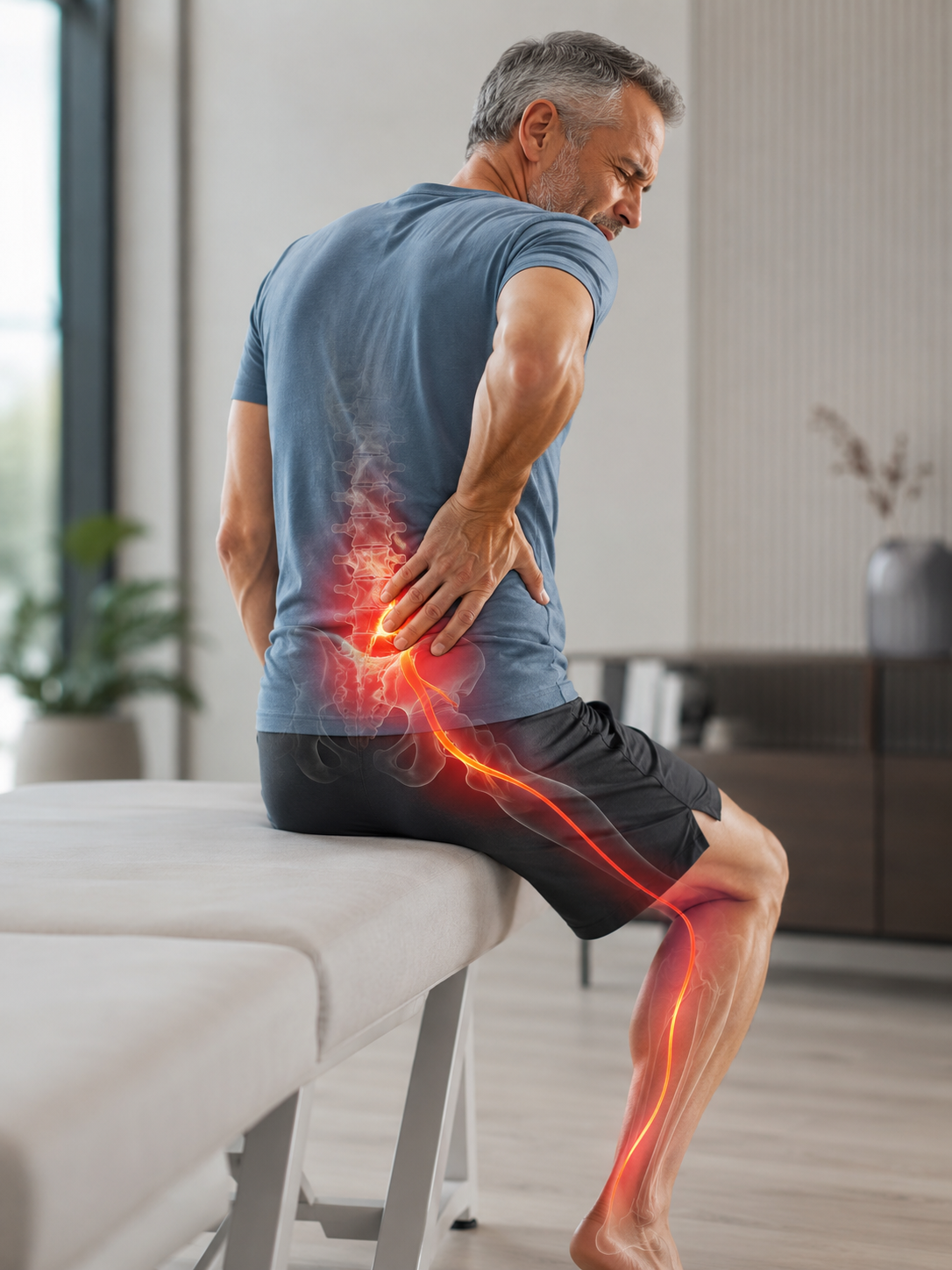
Lumbar osteoarthritis corresponds to degenerative changes in the joints and structures of the lumbar spine. When it reduces space around a nerve root, it can contribute to pain compatible with sciatica.
Unlike acute disc herniation, lumbar osteoarthritis often acts more progressively. It can be associated with a pinching disc, foraminal stenosis, lumbar spinal stenosis or mechanical stiffness that influences walking, standing, sitting, and certain back movements.
How can lumbar osteoarthritis contribute to sciatica?
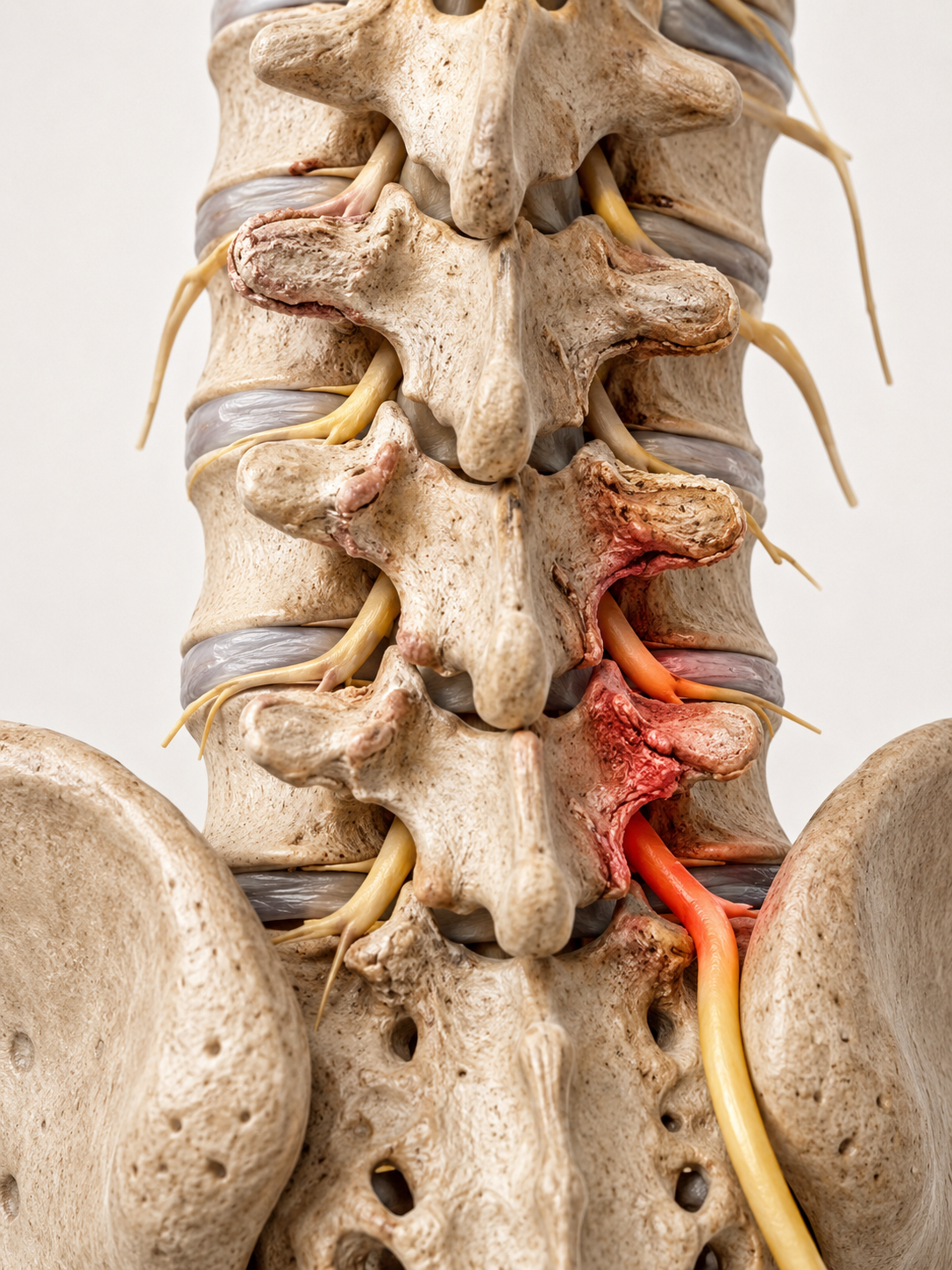
A nerve root can become irritated if the available space around it decreases. Osteoarthritis can participate in this space reduction in several ways: thickening of the posterior joints, osteophytes, decrease in disc height, foraminal stenosis or spinal stenosis.
The pain can then descend into the buttocks, thigh, calf or foot. In some patients, walking or standing up worsens symptoms. In others, prolonged sitting or changes in position triggers more pain.
| Possible mechanism | mechanical effect | Possible symptom |
|---|---|---|
| osteoarthritis facets | joint thickening or local irritation. | Lumbar pain, stiffness, buttock pain or positional pain. |
| osteophytes | Small bone growths that can reduce space. | Nervous irritation possible if the foramen or canal is affected. |
| Associated disc pinch | Decreased height between two vertebrae. | Foramen reduction and downside pain possible. |
| Foraminal stenosis | Reduced the exit passage of a nerve root. | pain in a specific territory of the leg or foot. |
| Spinal stenosis | central channel reduction. | Heaviness, pain or numbness sometimes in both legs. |
What symptoms can accompany lumbar osteoarthritis?
Lumbar osteoarthritis can cause very different symptoms depending on the person. It can be silent, cause mechanical lower back pain, or contribute to sciatic pain when a nerve root becomes irritated.
lumbar pain
The pain can be felt in the lower back, with stiffness or feeling of mechanical blockage.
Pain in the buttock
Deep pain in the buttock may accompany joint damage or nervous irritation.
Leg pain
The pain can go down to the thigh, calf, foot or toes depending on the root concerned.
Numbness
Numbness in a specific territory may indicate a neurological component to monitor.
Heaviness when walking
Heaviness or fatigue of the legs when walking can evoke a stenosing component.
Weakness
Progressive weakness of the foot, calf or leg should be assessed quickly.
Lumbar osteoarthritis, nerve roots and pain path
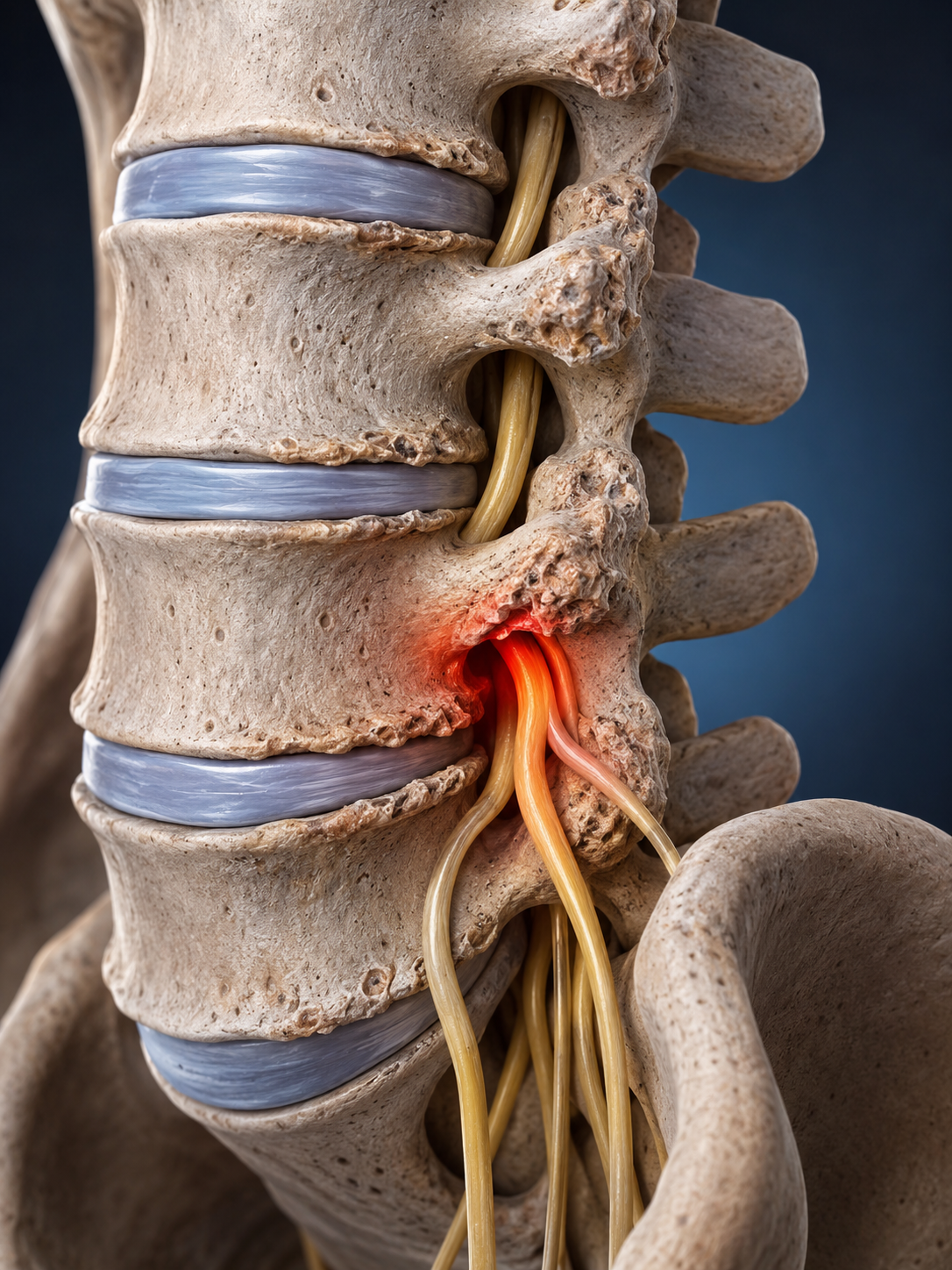
When osteoarthritis reduces space around a nerve root, the pain can follow a path in the leg. An attack around L4-L5 may be compatible with L5 irritation depending on the context. An attack around L5-S1 can influence L5 or S1 depending on the foramen, disc and joints.
The pain path should therefore be compared to the imaging ratio. Pain towards the big toe, heel, outer edge of the foot or the front of the thigh does not mean the same thing. The evaluation aims to link the painful territory to the root possibly involved.
- Pain towards the big toe: often compatible with L5.
- Pain towards the heel or the outer edge of the foot: often compatible with S1.
- Pain in front of the thigh: may evoke a higher root or cruralgia.
- Walking pain: May suggest a stenosing component.
- Weakness or progressive numbness: sign to be reassessed quickly.
Osteoarthritis, disc pinching, stenosis: how to distinguish them?
Imaging reports often mention several terms at once. It is common to see a combination of lumbar osteoarthritis, disc pinching, foraminal stenosis, spinal stenosis or protrusion. The challenge is to determine what actually corresponds to the symptoms.
| Term | What this describes | Important clinical question |
|---|---|---|
| Lumbar osteoarthritis | Degenerative changes in joints and lumbar structures. | Is it associated with mechanical pain or nervous irritation? |
| disc pinch | Decrease in height of a disc. | Does the loss of height reduce the foramen or change the constraints? |
| Foraminal stenosis | Nerve root exit passage narrows. | Does the pain path correspond to the root concerned? |
| Spinal stenosis | central channel narrowing. | Are walking, heaviness or bilateral symptoms present? |
| Protrusion or hernia | more or less localized disc protrusion. | Is there contact or conflict with a nerve root? |

Why personalized evaluation is essential
Two people may have similar lumbar osteoarthritis on an image, but very different symptoms. One may have localized lumbar pain, while another may have descending pain, numbness, weakness or significant limitation of walking.
The evaluation aims to link imaging, the level reached, the side of pain, the path in the leg, muscle strength, sensitivity, walking and aggravating positions. This approach makes it possible to better understand if osteoarthritis is simply present or if it really participates in nervous irritation.
Clinical agreement
Compare the imaging relationship with the painful territory and the neurological signs.
Function and evolution
Check the walking, position tolerance, strength and symptom progression.
What options should be considered if lumbar osteoarthritis contributes to sciatica?
The choice of an approach depends on the severity, duration, walking, strength, sensitivity, imaging and tolerance of the patient. Visible lumbar osteoarthritis should not automatically lead to the same recommendation for all.
According to the evaluation, certain non-surgical and non-invasive approaches can be discussed, including neurovertebral decompression motorized, specific osteopathy or the precision striker. In some cases, a medical reference or specialized assessment may be more appropriate, especially if the symptoms progress.
| Approach | Possible role | When to consider it with caution |
|---|---|---|
| Motorized neurovertebral decompression | Reduce some mechanical stress on discs, foramen and nerve roots. | Profile compatible with mechanical irritation, without sign of urgency or progressive deficit. |
| osteopathy specific | Adapt the interventions to the patient’s restrictions, compensation and tolerance. | Pain associated with stiffness, mobility limitation or mechanical overload. |
| Precision striker | Instrument assisted intervention, targeted and low amplitude. | Accurate mechanical dysfunction depending on the assessment and tolerance. |
| Medical reference | Orientation when the situation is beyond the scope of a conservative approach. | Progressive weakness, loss of function, uncontrollable pain or significant neurological signs. |
sciatica, lumbar osteoarthritis and clinical orientation
An educational page like this serves to better understand the possible mechanisms, but it does not replace an evaluation. Sciatic pain associated with lumbar osteoarthritis should be interpreted depending on the path, walking, strength, sensitivity, duration and imaging results when available.
For a local appointment or a geolocated treatment page, the main conversion page must be hosted on the TagMed Clinic website in order to avoid SEO cannibalization with the educational content of SOS Sciatica.
The educational pages of SOS Sciatica must explain the causes and guide the reader. The local treatment, appointment and conversion pages should remain on the TagMed Clinic website.
Understand the probable cause
Compare symptoms, pain path, neurological signs and imaging to avoid rapid conclusions.
Orient the sequel
When the pain persists, worsens or limits walking, a clinical evaluation becomes more important.
Frequently asked questions about sciatica and lumbar osteoarthritis
Can lumbar osteoarthritis cause sciatica?
Yes, it can contribute to it if it reduces the space around a nerve root, in particular by foraminal stenosis, spinal stenosis or association with a disc pinching.
Does lumbar osteoart always cause pain in the leg?
No. Osteoarthritis can be present without sciatic pain. It becomes more significant when it corresponds to the path of pain, walking, strength and sensitivity.
What is the difference between lumbar osteoarthritis and herniated disc?
Osteoarthritis corresponds to degenerative changes in joints and lumbar structures. The disc herniation corresponds rather to a more marked migration or protrusion of the disc.
Can osteoarthritis cause foraminal stenosis?
Yes I do. Joint changes, osteophytes and decrease in disc height can reduce the foramen, i.e. the passage of exit from a nerve root.
Can osteoarthritis cause spinal stenosis?
Yes I do. Osteoarthritis, thickened ligaments and disc changes can contribute to lumbar duct narrowing.
Why does walking sometimes make the symptoms worse?
In some people, walking or standing can reduce the space around the nerve roots, especially in the presence of spinal or foraminal stenosis.
What signs should be consulted quickly?
Progressive weakness, difficulty walking, loss of urinary or intestinal control, stool anesthesia or extending numbness should be assessed quickly.
Can neurovertebral decompression be considered?
It can be discussed in some profiles compatible with mechanical or associated disc irritation, if the evaluation does not reveal any signs of urgency or progressive deficit.
Does lumbar osteoarthritis still require surgery?
No. Several situations can be addressed in a non-surgical way depending on severity, function, walking, strength, sensitivity and evolution.
When should lumbar osteoarthritis be evaluated again?
A reassessment is recommended if the pain drops lower, walking decreases, numbness increases, or weakness appears.
Treatment pages by clinic
SOS Sciatique and TAGMED clinics are part of the same website portfolio.
Could your lumbar osteoarthritis irritate a nerve root?
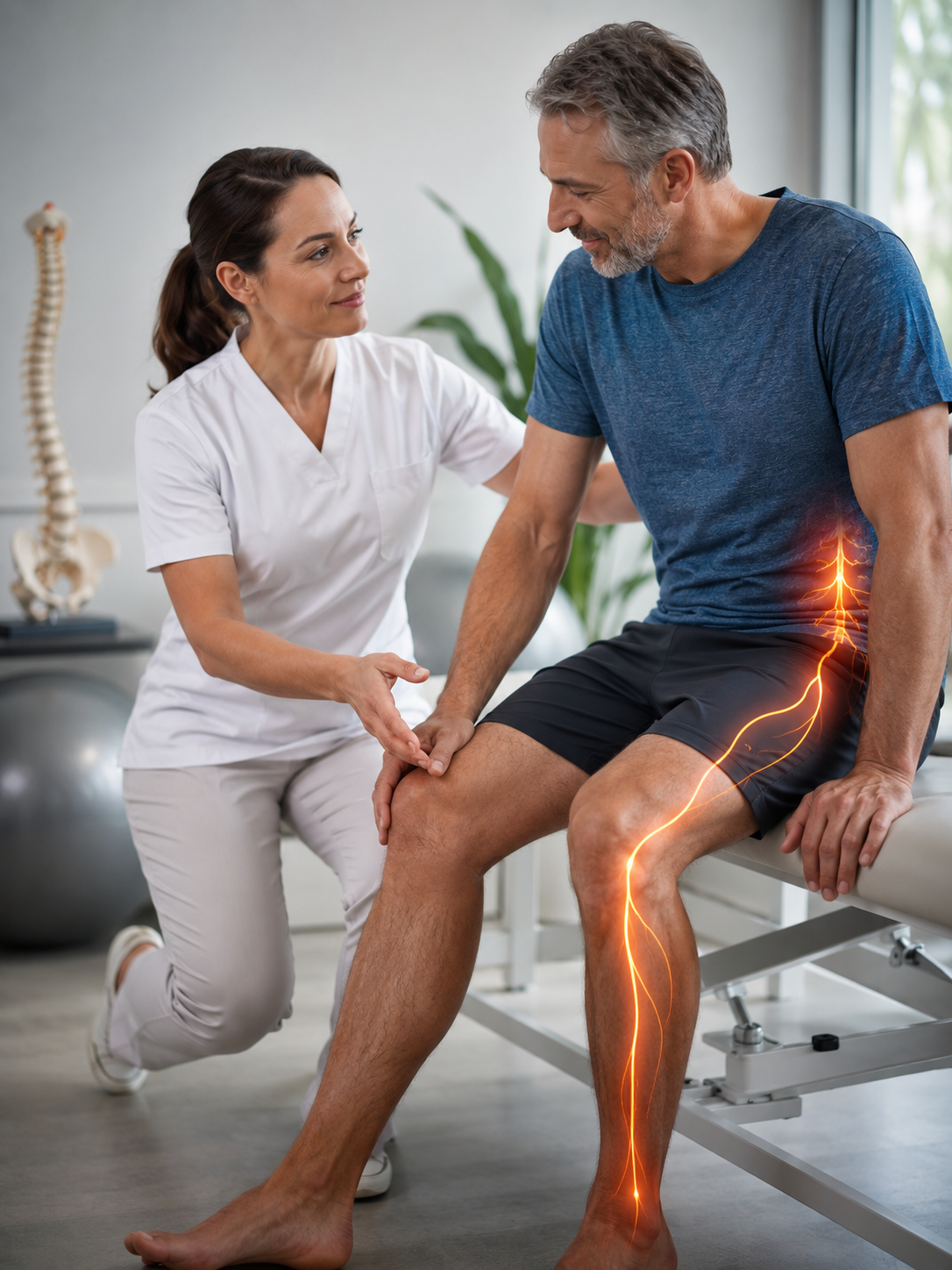
A personalized assessment can help connect your imaging, walking ability, muscle strength, numbness, and the path of your symptoms to better understand the likely cause.
Sylvain Desforges, B.Sc., D.O., N.D., Doctor of Osteopathy
Editorial information, sources and limitations
This content is intended to inform patients about sciatica, possible causes, warning signs, and care options. It does not replace an individualized assessment.
Reference sources
References are selected according to the subject of the page: guidelines, systematic reviews, then institutional resources.
- NICE NG59 – Low back pain and sciatica in over 16s — National guideline
- HAS – Management of patients with common low back pain — French national guideline
- Cochrane – Corticosteroid injections for treatment of sciatica — Systematic review
- NCBI Bookshelf – Sciatica — Clinical institutional resource
Complementary resources from the TAGMED network
These internal resources complement the clinical information and thematic linking. They do not replace national guidelines or systematic reviews.
Editorial note on decompression
Clinical resource from the TAGMED network; it does not replace national guidelines. Some guidelines use the term “traction” and recommend caution for low back pain with or without sciatica. Any decompression option should therefore be presented as an individualized clinical approach, with limitations, indications, and contraindications clearly explained.
Limitations of this information
The information on this page is general. It does not constitute a diagnosis, prescription, or guarantee of results. Pain radiating into the leg may have several causes; assessment should consider clinical history, examination findings, symptom progression, and, when appropriate, complementary tests.
When to seek urgent medical care
Seek urgent medical care if you experience loss of bladder or bowel control, saddle anesthesia, major or progressive leg weakness, unexplained fever, pain after significant trauma, or severe pain that rapidly worsens.
