
Sciatica in Terrebonne: foot pain without back pain
28/09/2026
Herniated disc and sciatica: absence of pain despite visible image
28/09/2026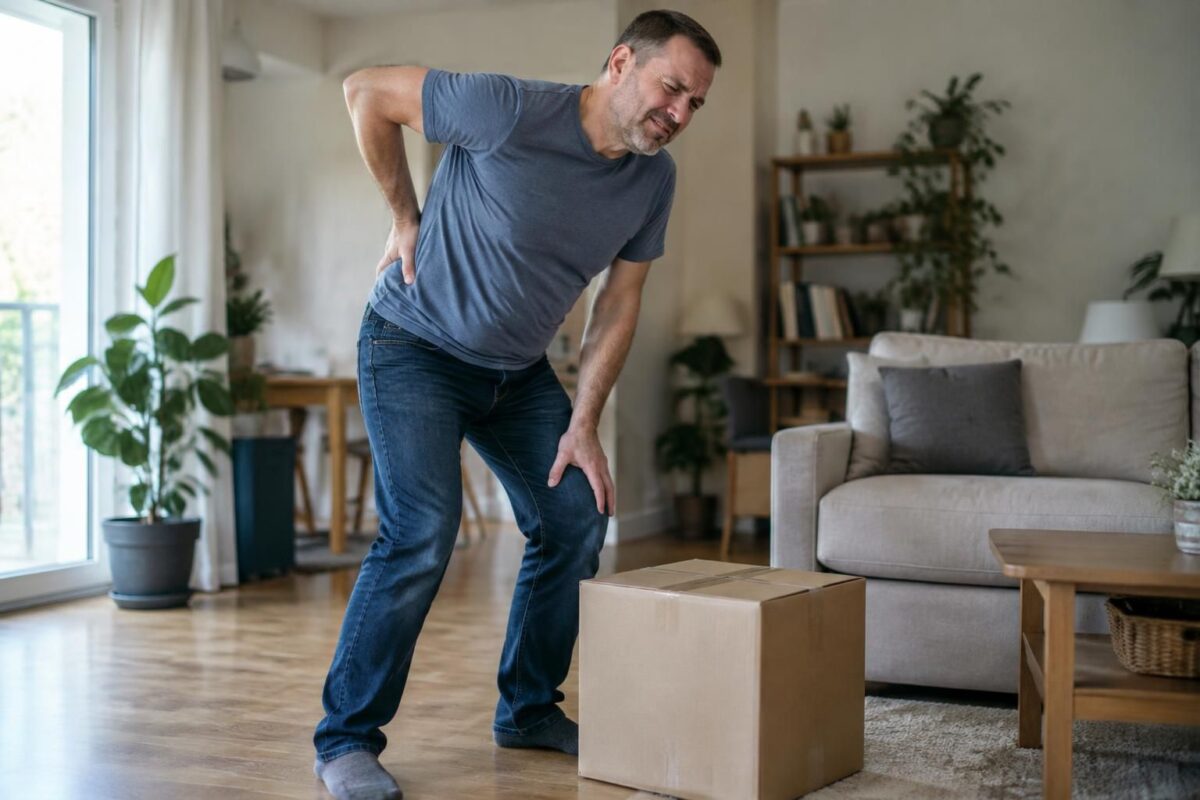
IN BRIEF
| sciatica after lifting a load refers to pain that starts from the lower back or buttock and radiates down a leg, sometimes all the way to the foot. Lifting can trigger symptoms or reveal nerve irritation, particularly related to a herniated disc. An evaluation helps specify the cause and appropriate care; gradually resuming activities and adopting a suitable lifting technique can limit strain on the back. Consult promptly in case of significant or progressive weakness, numbness in the saddle area, or loss of bladder or bowel control. |
After lifting a load, pain may appear in the lower back and radiate to the buttock, back of the leg, or foot: this may indicate sciatica, often related to irritation or compression of a nerve root. The pain may be accompanied by tingling, numbness, or weakness. An evaluation by a healthcare professional helps determine the cause and appropriate measures. Consult promptly in case of significant or progressive weakness, loss of bladder or bowel control, or numbness in the saddle area.
Pain that appears after lifting a load may come from the muscles or joints of the back. It may also correspond to sciatica if it starts from the lower back or buttock and radiates down a leg. Lifting does not prove that a herniated disc is present. Symptoms, their evolution, and a clinical examination help determine the next steps. Lifting an object while bending, twisting the trunk, or holding the load away from the body can put significant strain on the lower back. Pain may then appear in the lumbar region. If a nerve root is irritated or compressed, the pain may also follow the path of the sciatic nerve, from the buttock down the back of the thigh and sometimes down to the calf, foot, or toes. A herniated disc can irritate a nerve root, but other causes are also possible, such as changes related to osteoarthritis or narrowing of the spinal canal. It can also happen that no specific cause is identified. To learn more about the link between discs and nerve pressure, see our page on herniated discs and mechanical nerve compression. Sciatica often affects only one side of the body. It can cause sharp, burning, or shock-like pain. Tingling, numbness, or weakness in the leg or foot may also manifest. The pain does not always reach the foot and does not follow the same path for everyone. Coughing, certain movements, or walking can exacerbate symptoms. However, pain limited to the lower back after exertion is not automatically sciatica. The difference between lumbar pain and nerve pain depends, in part, on the location of symptoms and examination results. Discover the common causes of acute sciatica related to herniated discs and the reasons why the pain pathway may change. Consult a healthcare professional promptly if the pain is severe, persists, worsens, or is accompanied by numbness or weakness. An evaluation helps verify if the symptoms suggest nerve irritation or another cause and choose the appropriate next steps. Go immediately to the emergency room in case of loss of bladder or bowel control, numbness in the saddle area, or significant or progressive weakness in a leg or foot. A fever, recent trauma, or rapid worsening also requires medical attention. You can also consult our page on signs that justify targeted evaluation. If you would like osteopathic care, the TAGMED Clinic offers evaluations in Montreal and Terrebonne. The services considered depend on your situation and do not replace a medical diagnosis. The evaluation usually starts with questions about the onset of pain, the movement performed, and the symptoms felt in the leg. A clinical examination may check sensitivity, strength, and certain reflexes. Imaging, such as an MRI or CT scan, is not necessary in all cases. It may be considered depending on the signs present and their duration. Pain that appeared during lifting does not alone indicate the presence of a herniated disc. The professional relates the symptoms to the examination results. To better understand possible causes, consult our article on sciatica when the cause is mechanical. Temporarily adapt activities that significantly worsen the pain and avoid resuming heavy lifting if symptoms are still present. Prolonged bed rest is generally not a preferred solution without professional advice. The choice of relief measures depends on your health status and the suspected cause. Avoid starting exercises or stretches that trigger or increase the pain, especially if a disc or nerve injury is possible. Seek advice from a healthcare professional before modifying your activities or taking medication. You can find additional information on sciatica and its symptoms. When you need to move an object, keep it close to your body and avoid twisting the trunk while lifting it. If the load is too heavy or cumbersome, ask for help or use suitable equipment. These precautions can reduce the strain on the back but do not guarantee that pain will not occur. Pain that radiates down the leg, changes pathway, or is accompanied by weakness warrants particular attention. An evaluation allows for choosing appropriate measures instead of assuming that every pain after exertion is sciatica. Dr Sylvain Desforges, B.Sc., D.O., N.D., osteopath, is the founding president of TAGMED and the ACMA association. He dedicates his practice to chronic pain of the spine, lower back pain, and pain compatible with sciatica, particularly when the pain radiates down towards the buttock, leg, calf, foot, or toes. Through SOS Sciatique, he publishes educational content on the symptoms of sciatica, possible causes such as herniated discs, disc compression, foraminal stenosis, or irritation of a lumbar nerve root, as well as on non-surgical approaches that may be considered based on the evaluation. At TAGMED Clinic, care may include, depending on the case, neurovertebral decompression, specific osteopathy, or a precision punch. For an evaluation related to sciatica treatment in Montreal / Mont-Royal or sciatica treatment in Terrebonne, check the services available at TAGMED Clinic. Medical disclaimer: The information and advice provided on this site do not replace the opinion, diagnosis, or treatment of a healthcare professional. Please note that Dr. Sylvain Desforges, osteopath, is neither a medical doctor nor a physician, and is not a specialist in a medical specialty as defined by the Collège des médecins du Québec. Manual medicine, functional medicine, and sports medicine as described on this site exclude any treatment or medical diagnosis made by a physician or specialist doctor. Always consult your physician for any medical questions. For more details, please read our Complete Legal Notice.Why pain may appear after lifting a load
Recognizing the signs of sciatica after exertion
When to seek prompt evaluation
How the professional determines the cause
What to do after lifting
Reducing the risk during future lifts
About the author
Medical Disclaimer
Pain after lifting a load
- A lower back pain may appear after effort or twisting.
- It does not necessarily mean it is sciatica.
- Avoid temporarily the movements that worsen the pain; gradually resume tolerated movements.
Signs compatible with sciatica
- Pain starting from the lower back or buttock and radiating down one leg.
- Tingling, numbness, or possible weakness in the leg or foot.
- Seek prompt consultation in case of significant or progressive weakness, numbness around the saddle area, or loss of bladder or bowel control.

After lifting a load, lower back pain that radiates into the buttock and leg may suggest sciatica, but it alone does not confirm the cause. Use cautious movements, remain lightly active if possible, and have the symptoms evaluated if they are significant, persistent, or associated with warning signs.
Sciatica after lifting a load: what happens?
Pain may appear when a bending, twisting, or lifting motion irritates a structure in the lower back. A herniated disc, age-related changes, or narrowing around a nerve root may contribute to pain radiating to the buttock, the back of the leg, sometimes down to the foot. However, pain that remains localized to the back is not necessarily sciatica.
Monitor how the symptoms evolve: burning or shooting pain, tingling, numbness, or weakness may accompany nerve irritation. The intensity of the pain does not alone allow for a precise identification of its origin.

Sciatica and pain after a day of sitting at work
IN BRIEF Sciatica after a day of sitting refers to pain that starts in the lower back or buttock and may radiate down the leg. Prolonged posture can accentuate discomfort. Regular breaks, a few minutes of walking, and an adequately…
What to do in the first hours?
Adopt suitable activity
If the pain allows, avoid prolonged immobility. Short walks and regular position changes may be preferable to several days in bed. Temporarily reduce efforts that significantly worsen the symptoms, especially heavy lifting and repeated twisting movements. Gradually resume activities based on your tolerance.
Try simple measures with caution
Cold or heat can provide temporary relief: choose what works for you and protect the skin. Some over-the-counter pain relievers may also be considered, but they are not suitable for everyone. Consult a pharmacist or healthcare professional, especially in cases of chronic illness, pregnancy, or taking other medications. Avoid forced stretching: stop any movement that increases pain or symptoms in the leg.

Sciatica and pain after prolonged standing
IN BRIEF Sciatica is pain related to irritation of a nerve root, which can radiate from the lower back to the buttock and leg. Prolonged and immobile standing can promote or worsen symptoms, although it is not always the cause.…
When to seek an evaluation?
Consult a healthcare professional if the pain limits your activities, worsens, recurs frequently, or is accompanied by numbness or weakness. The evaluation is primarily based on symptoms and clinical examination. Imaging or nerve tests are not systematic; they may be considered based on progression and clinical findings.
An urgent evaluation is necessary in case of loss of bladder or bowel control, numbness in the saddle area, or significant or progressive weakness in a leg or foot. Also, seek medical advice rapidly after trauma, with fever, or if the pain becomes severe or worsens quickly.

Sciatica and pain after long walk
IN BRIEF sciatica after a long walk manifests as pain in the lower back or buttock that radiates down the leg, sometimes accompanied by tingling or numbness. Temporarily reduce the distance, take breaks, and resume walking gradually, without staying in…
Reduce the risk during future lifts
Approach the object, spread your feet for stability, and bend at the hips and knees rather than bending with straight legs. Keep the load close to the body, rise by pushing with your legs, and avoid twisting during the movement. If the object is too heavy or bulky, ask for help or break the load down.
In the long term, regular and progressive physical activity, as well as strengthening the trunk muscles, can support back function. Adapt exercises if a movement triggers or amplifies symptoms.

Sciatica and pain after weight training
IN BRIEF Sciatica after weight training refers to pain that starts from the lower back or buttock and radiates down the leg, sometimes after a workout. Weight training is not always the cause or necessarily prohibited: a gradual return, a…
About the author
Dr. Sylvain Desforges, B.Sc., D.O., N.D., osteopath, is the founding president of TAGMED and the ACMA association. His practice particularly focuses on chronic spinal pain, lower back pain, and symptoms compatible with sciatica. The care offered at the clinic may include, depending on the evaluation, specific osteopathy, motorized neurovertebral decompression, or precision punching.

Sciatica and pain after cycling
IN BRIEF Sciatica and pain after biking may be related to nerve irritation or an uncomfortable position. Biking is sometimes possible if the pain is mild and stable: reduce the duration, pedal without forcing, and adjust your posture. Stop if…
Medical Warning
This content is provided for educational purposes and does not replace a consultation, diagnosis, or treatment by a licensed health professional. The author is neither a doctor nor a specialist in a medical specialty recognized by the Collège des médecins du Québec. Osteopathy and manual medicine approaches do not replace medical follow-up.
| Sciatica | Pain after lifting a load |
|---|---|
| Path: pain that may start from the lower back and descend into a buttock and a leg. | Path: pain often localized in the lower back, sometimes in the buttocks. |
| Possible cause: irritation or compression of a nerve root. | Possible cause: effort that has stressed the muscles or structures of the back. |
| Associated signs: tingling, numbness, or weakness in the leg or foot. | Associated signs: stiffness or pain during certain movements. |
| Trigger: may be aggravated by coughing, exertion, or certain positions. | Trigger: occurs during lifting or shortly after. |
| To remember: pain that descends into the leg may suggest sciatica, but does not suffice to confirm the diagnosis. | To remember: lifting may cause local pain or trigger sciatica. |
| Consult quickly: significant or progressive weakness, loss of sensation in the groin, or urinary or bowel issues. | Consult quickly: same warning signs, severe pain or rapid worsening. |

Sciatica and pain after running
IN BRIEF Sciatica after running is pain that can radiate from the lower back or buttock down the leg, sometimes all the way to the foot. The impacts of running can exacerbate symptoms: reduce or temporarily suspend outings that worsen…
Illustrative testimonials: sciatica and pain after lifting a load
Note: The stories below are fictional examples created for educational purposes. They do not come from identified patients and do not predict the progression of a particular situation.
A pain that descends into the leg
“I felt pain in my lower back after lifting a box while bending. In the following hours, it extended into my buttock and down the back of my thigh. I thought it would pass quickly, but certain movements and coughing intensified the pain. I sought advice from a health professional to assess my symptoms and find out which activities I could resume without straining.”
Tingling after a move
“While carrying boxes, I turned my back while lifting a load. I then noticed tingling in one leg, sometimes down to the foot. I avoided repeated movements that increased the pain and made an appointment to understand what could explain it. The evaluation helped me determine the next steps appropriate for my situation.”
Persistent pain despite rest
“Lower back pain appeared after moving a piece of furniture. Rest provided some relief at first, but the discomfort returned when I walked or sat for a long time. As the symptoms did not improve, I consulted to check if it was nerve irritation or another cause requiring attention.”
A weakness that demands prompt attention
“After lifting a heavy bag, I had back pain and an unusual sensation in my leg. When it became weak, I realized I shouldn’t just wait. I quickly sought medical advice to assess the situation.”
A pain that follows the path of the nerve, from the lumbar region to the buttock and leg, may be consistent with sciatica, but several causes are possible. A herniated disc, changes related to osteoarthritis, or narrowing around a nerve root may be considered. A clinical examination helps guide the evaluation; imaging tests or nerve tests are only indicated in certain situations.
After lifting, avoid repeating movements that significantly aggravate the symptoms and gradually resume activities according to your tolerance and the advice of a professional. Exercises or stretches may not be suitable for everyone: stop a movement if it increases the pain or causes new symptoms. An evaluation can help distinguish possible options without presuming the cause or guaranteeing a result.
Seek urgent medical help if there is loss of bladder or bowel control, numbness in the saddle area, significant or progressive weakness in a leg or foot, or rapid worsening. A fever, recent trauma, or severe pain also warrant prompt medical advice.
About the author
Dr. Sylvain Desforges, B.Sc., D.O., N.D., osteopath, is the founding president of TAGMED and the ACMA association. His practice focuses on chronic spinal pain, lower back pain, and pain consistent with sciatica, particularly when radiating to the buttock, leg, calf, foot, or toes.
Through SOS Sciatique, he publishes educational content on the symptoms of sciatica, their possible causes, and non-surgical approaches that can be considered based on the evaluation. At the TAGMED Clinic, care may include, as applicable, motorized neurovertebral decompression, specific osteopathy, or precision impactor.
Medical warning
This information is provided for educational purposes and does not replace a consultation, diagnosis, advice, or treatment by a doctor or another licensed health professional. The author is neither a doctor nor a specialist in a medical specialty recognized by the Collège des médecins du Québec. Osteopathy, manual medicine, or functional support approaches do not constitute medical acts and do not replace medical follow-up.
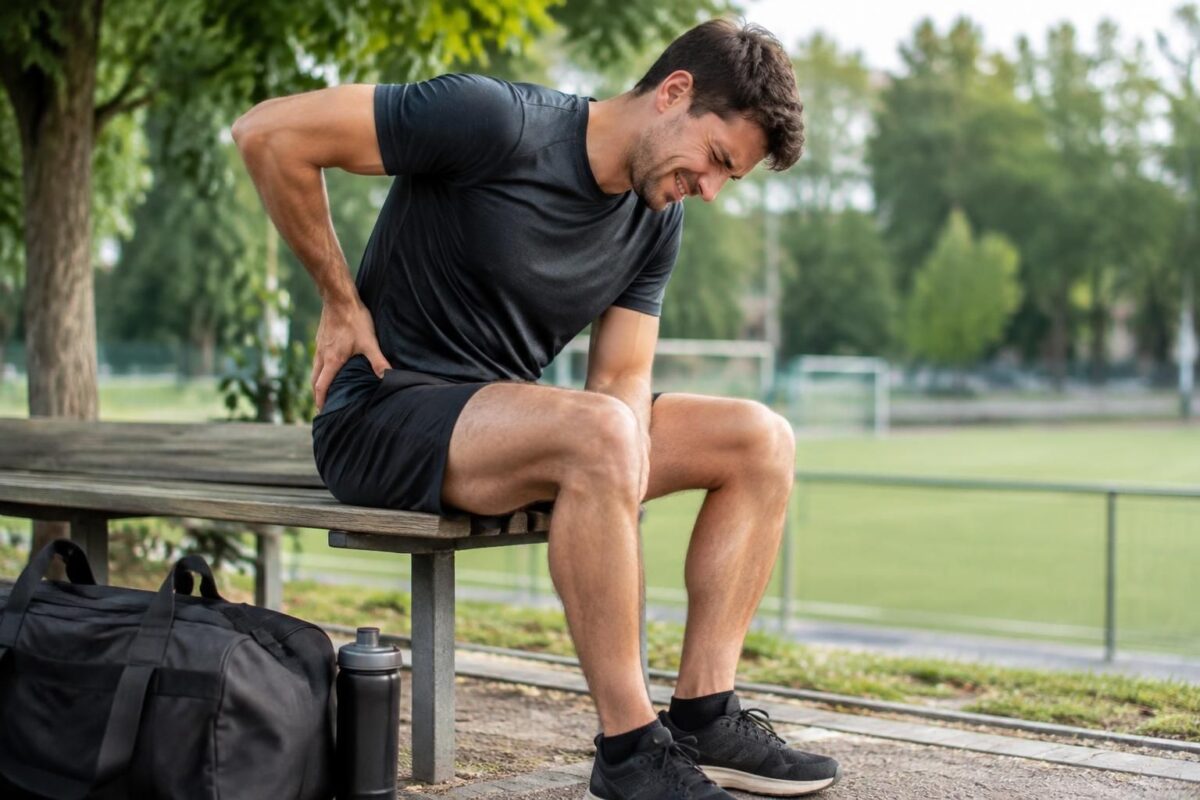
Sciatica and pain after sports
IN SHORT Sciatica pain after sports can be a temporary reaction to effort, especially after a too-quick or intense return. It does not necessarily mean that sports are off-limits: reducing intensity, progressing gradually, and favoring well-tolerated movements can help keep…
Sciatica and pain after lifting a load
After lifting a heavy object, a person may feel pain in the lower back, sometimes accompanied by discomfort that crosses the buttock and descends into a leg. When this pain follows the path of a lumbar nerve root, it is often referred to as sciatica or radicular pain. Lifting may trigger or exacerbate symptoms, but their occurrence alone does not allow for the exact cause to be identified.
The sciatic nerves are formed by nerve roots coming from the lower spine. They pass behind the hips, traverse the buttocks, and extend into the legs down to the feet. An irritation or nerve compression can cause a burning, electric, or stabbing pain, often on one side. Tingling, numbness, or weakness in the leg or foot may also be present.
The act of lifting a load can put strain on the muscles, ligaments, and discs of the lower back. Pain felt after this effort may be related to muscle tension, but it can also stem from nerve irritation or a disc issue, such as a hernia. Osteoarthritis and the narrowing of certain spaces around the nerves are among the other possible causes. Therefore, symptoms and their progression should be assessed in context, without assuming that a disc herniation is necessarily the cause.
Initially, it is generally helpful to avoid movements that significantly worsen the pain, while maintaining suitable activity if it remains tolerable. Prolonged bed rest can promote stiffness and loss of physical condition. Comfortable postures, short walking periods, and a gradual return to daily activities can be considered depending on the symptoms. Heat or cold may provide temporary relief to some individuals. Before taking medication, it’s advisable to consult a doctor or pharmacist, especially if you have other health issues or are already undergoing treatment.
To lift a load, get close to the object, bend at the hips and knees, and then keep it close to your body during the movement. Avoid twisting the trunk while carrying the load and change positions regularly if you must sit for a long time. In the long term, suitable physical activity and gradual strengthening of the core can help improve the ability to perform daily tasks. However, exercises should be adjusted if they trigger or exacerbate symptoms in the leg.
The evaluation primarily relies on symptoms and a clinical examination of strength, sensitivity, and reflexes. Imaging or nerve tests are not necessary in all cases; they may be considered based on progression, observed signs, and the health professional’s opinion. Persistent pain, weakness, or worsening numbness merits medical evaluation. A loss of bladder or bowel control, numbness in the saddle area, or significant and progressive weakness requires urgent intervention.
Dr. Sylvain Desforges, B.Sc., D.O., N.D., osteopath, is the founding president of TAGMED clinics and the ACMA association. His practice is particularly focused on chronic spine pain, lower back pain, and symptoms compatible with sciatica. Depending on the assessment and situation of each individual, the care offered at TAGMED Clinic may include motorized neurovertebral decompression, specific osteopathy, or the use of a precision impactor. These approaches do not replace a diagnosis or medical follow-up.
Medical warning: this text is provided for educational purposes and does not replace consultation, diagnosis, or treatment by a licensed health professional. The author is neither a doctor nor a specialist in any medical specialty recognized by the Collège des médecins du Québec. The osteopathy and manual medicine approaches described do not constitute medical acts.
Pain that appears after lifting a load may result from lumbar irritation and sometimes accompany sciatica, which is pain that radiates from the buttock down the leg. The load is not necessarily the sole cause: movement, posture, effort exerted, and the condition of the back structures can contribute to the symptoms. An evaluation helps determine appropriate management and identify signs that require prompt care.
Sciatica and Pain After Lifting a Load
Lifting an object by bending, twisting the trunk, or holding it away from the body can heavily strain the lower back. Pain localized in the lower back after exertion is not automatically indicative of sciatica. Symptoms compatible with sciatica are described when the pain radiates down the buttock and the back of the thigh, sometimes reaching the calf or foot, and may accompany tingling, numbness, or weakness. For better distinguishing possible causes, consult these resources on the common lumbar causes of sciatica and its definition, symptoms, and causes.
A disc herniation can irritate or compress a nerve root, but it is not the only possible explanation: changes related to osteoarthritis or narrowing of the spinal canal may also be involved. Moreover, seeing a disc bulge on an image does not necessarily mean it explains the pain. It is useful not to confuse disc bulge and disc herniation and to have imaging results interpreted in context. After an episode, certain factors may also contribute to a recurrence, as explained in this article on the recurrence of sciatica and its possible factors.
In the early stages, avoid repeating the action that clearly triggers the pain, but do not remain bedridden for prolonged periods. Mild and suitable activity is often preferable to strict rest, but the level of activity should be adjusted based on symptoms. The movements to limit depend on each situation: consult the advice on movements to avoid in case of sciatica. Not all exercises are appropriate for everyone, especially when a disc herniation is suspected; generic exercises may not be suitable, as noted in this resource on exercise selection in case of disc herniation.
As symptoms improve, gradually resuming activities and learning to lift a load by keeping it close to the body, bending at the hips and knees, and avoiding twisting the trunk during exertion can help reduce strain. This does not guarantee that all pain will be avoided, but it allows for more careful movements. For guidelines regarding load and sciatic symptoms, consult this article on sciatica and load carrying.
A consultation is indicated if the pain is intense, persists, worsens, or is accompanied by numbness or weakness. A healthcare professional can examine strength, sensitivity, and reflexes, and decide whether further tests are necessary. The information from Assurance Maladie on actions to take and when to consult can also help guide the next steps. For general information on the evolution and treatments, you can read this overview of the duration and treatments for sciatica.
Quickly consult a doctor or emergency service in case of loss of control of the bladder or bowels, numbness in the saddle area, significant or progressive weakness in the leg or foot, fever, recent trauma, or rapid worsening. These signs require immediate medical evaluation.
About the author
Dr. Sylvain Desforges, B.Sc., D.O., N.D., osteopath, is the founding president of TAGMED and the ACMA association. He dedicates his practice to chronic spinal pain, lower back pain, and pain compatible with sciatica, particularly when the pain radiates down to the buttock, leg, calf, foot, or toes.
Through SOS Sciatique, he publishes educational content on the symptoms of sciatica, its possible causes — including herniated disc, disc compression, foraminal stenosis, or irritation of a lumbar nerve root — and non-surgical approaches that may be considered based on the evaluation. At the TAGMED Clinic, care may include, depending on the case, motorized neurovertebral decompression, specific osteopathy, or precision percussion.
For an evaluation related to sciatica treatment in Montreal / Mont-Royal or sciatica treatment in Terrebonne, consult the available services at the TAGMED Clinic.
Medical disclaimer
The information published on SOS Sciatique is provided for educational purposes. It does not replace a consultation, diagnosis, opinion, or treatment performed by a physician or another licensed health professional. The author of this article is neither a physician nor a specialist in a medical specialty recognized by the Collège des médecins du Québec. The osteopathic, manual medicine, or functional support approaches described on this site do not constitute medical acts and are not intended to replace medical follow-up.
For more details, please read our Legal notice.

Sciatica and pain after moving
IN BRIEF Sciatica after a move is pain that starts in the lower back or buttock and radiates down the leg, sometimes after lifting or moving heavy objects. It may be accompanied by tingling or numbness. Identifying the symptoms and…

Dr Sylvain Desforges, B.Sc., D.O., N.D., osteopath, is the founding president of TAGMED and of the ACMA association. He dedicates his practice to chronic spinal pain, low back pain and symptoms compatible with sciatica, particularly when pain radiates toward the buttock, leg, calf, foot or toes.
Through SOS Sciatique, he publishes educational content on sciatica symptoms, possible causes such as disc herniation, disc narrowing, foraminal stenosis or irritation of a lumbar nerve root, as well as non-surgical approaches that may be considered according to the evaluation. At Clinique TAGMED, care may include, depending on the case, motorized neurovertebral decompression, specific osteopathic care or precision percussion.
For an evaluation related to sciatica treatment in Montreal / Mount Royal or sciatica treatment in Terrebonne, please consult the services available at Clinique TAGMED.
Medical disclaimer
The information published on SOS Sciatique is provided for educational purposes only and does not replace a consultation, diagnosis, opinion or treatment provided by a physician or another authorized healthcare professional. The author of this article is neither a medical doctor nor a specialist in a medical specialty recognized by the Collège des médecins du Québec. The osteopathic, manual medicine or functional support approaches described on this site do not constitute medical acts and are not intended to replace medical follow-up.
Consult a physician or emergency service in cases of loss of bladder or bowel control, anesthesia in the saddle area, significant or progressive weakness in the leg or foot, fever, recent trauma, severe pain or rapid worsening of symptoms. For more details, please read our Legal Notice.