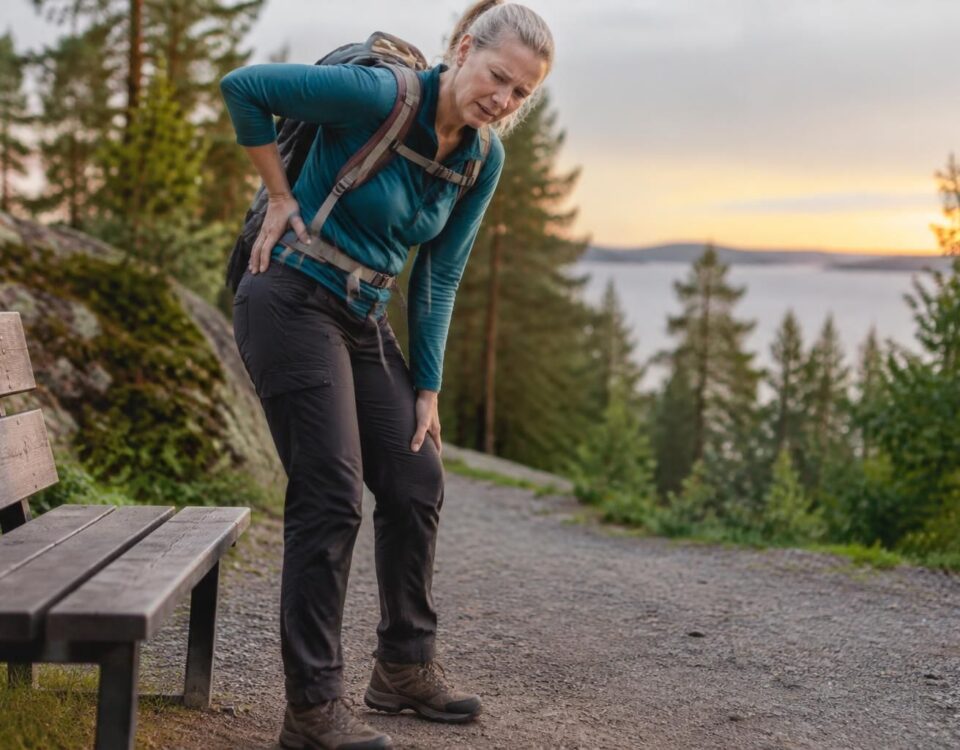
Sciatica in Terrebonne: pain that descends into the leg upon waking
02/10/2026
Herniated disc and sciatica: why the leg can be numb
02/10/2026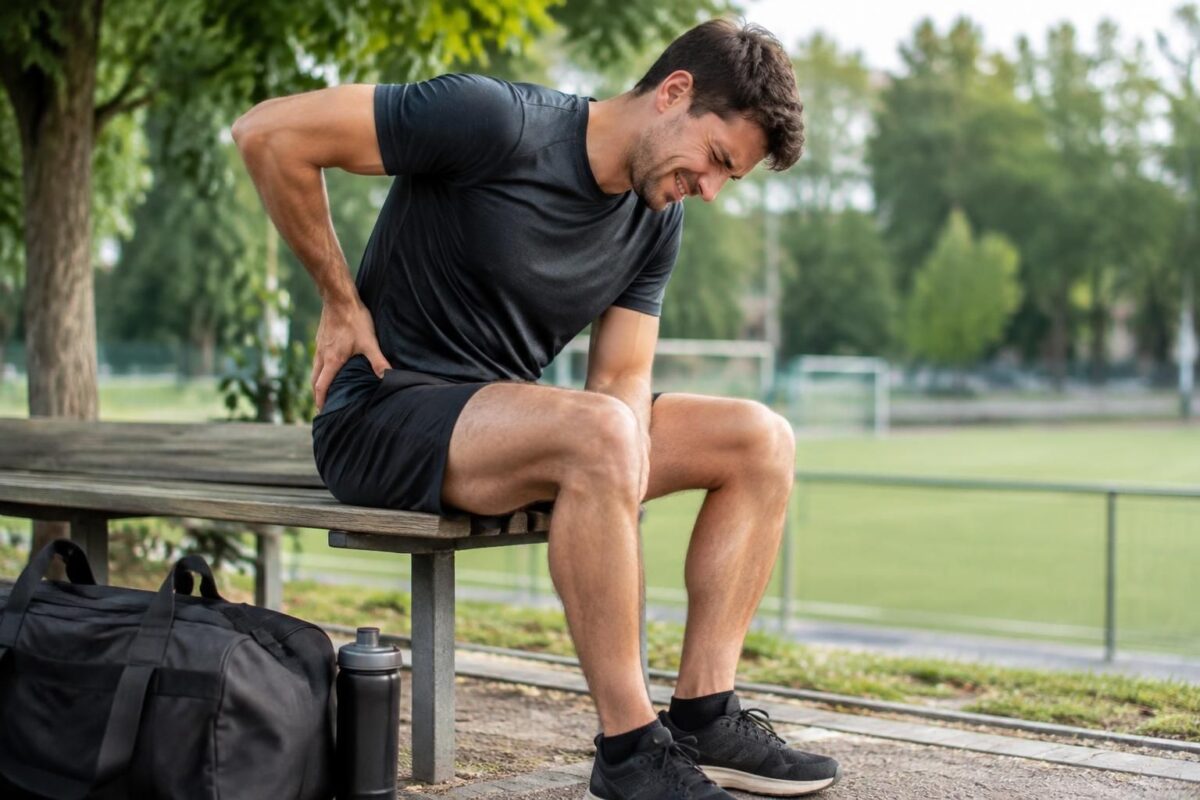
IN SHORT
| Sciatica pain after sports can be a temporary reaction to effort, especially after a too-quick or intense return. It does not necessarily mean that sports are off-limits: reducing intensity, progressing gradually, and favoring well-tolerated movements can help keep you active. Consult a healthcare professional if the pain worsens or is accompanied by weakness. |
Sciatica pain after sports does not necessarily mean you have worsened your condition. It can occur after a too-rapid return, muscle fatigue, restricted breathing, or excessive stretching. Temporarily reduce effort, prioritize gentle movements, and gradually resume activities according to your tolerance. Consult a healthcare professional if the pain worsens, persists, or is accompanied by weakness. In case of loss of bladder or bowel control or numbness in the saddle area, seek urgent medical help.
Pain that descends from the buttock to the leg after sports may indicate irritation of the sciatic nerve, but it does not always mean that an injury has worsened. The intensity of effort, fatigue, movements, and recovery time can influence symptoms. Here’s how to recognize reassuring signs, identify alerts, and adapt your activities. Sciatica describes pain that follows the path of the sciatic nerve. It can start from the lower back or buttock and then descend into the thigh, calf, or foot. Tingling, numbness, or weakness may also appear. Several causes are possible. A healthcare professional should evaluate your symptoms to determine their origin. After physical activity, pain can occur when the body has endured a load greater than it can tolerate at that moment. A too-quick return, a long session, or significant fatigue can contribute to this reaction. Pain may also manifest after exertion rather than during it because symptoms sometimes evolve with fatigue and recovery. After a break or a painful episode, the body may need a gradual return. A too-long or too-intense session can increase symptoms. Fatigue can also alter posture and movement control, making certain actions less well-tolerated. During sustained effort, some people hold their breath or contract their torso strongly. This way of exerting can increase tension in the lower back and make the activity less comfortable. However, pain felt after a session does not, on its own, determine the cause. A mild and transient discomfort can occur after activity, especially following a resumption. It is more reassuring if it remains moderate, diminishes over time, and is not accompanied by a loss of strength. Also observe its evolution in the hours and days that follow. Increasing pain, pain that descends further down the leg, or pain that returns after each session requires more caution. Note the activities that trigger it, its intensity, and the time needed to recover. This information can help the consulted professional evaluate the situation. Running, impact sports, and weightlifting are not automatically off-limits in cases of sciatica. However, repeated impacts, heavy loads, repeated trunk movements, and efforts made while fatigued may be poorly tolerated by some individuals. Tolerance varies according to symptoms and their cause. To learn more about symptoms in active individuals, consult our page on modified gait in cases of sciatica. A changing gait can sometimes accompany pain and deserves evaluation if it persists. Quickly seek medical advice if the pain becomes very severe, worsens day by day, or wakes you in an unusual manner. Any new or progressive weakness in the leg or foot also requires evaluation. You can read our article on leg weakness and loss of confidence in walking. Consult an emergency service if you experience loss of bladder or bowel control, numbness in the saddle area, significant or rapidly progressive weakness, fever, or pain following trauma. Do not wait for these symptoms to resolve on their own. Pain that appears when you cough or sneeze may also need evaluation, especially if it is accompanied by pain descending into the leg. More information is available on sciatica and pain while coughing. Temporarily reduce the intensity or duration of the activity that triggers the symptoms. Avoid repeating the session to see if the pain returns. Gradually resume your activities when the symptoms allow, without forcing despite increasing pain. You do not necessarily need to stop all movement. The choice depends on your condition and the reaction of your symptoms. Low-impact activities may be better tolerated by some individuals, but no activity suits everyone. Seek advice from a healthcare professional before resuming a sport if the pain is significant, persistent, or accompanied by neurological symptoms. If pain increases when transitioning from sitting to standing, consult our page on sciatica pain during sitting-standing transitions. Pain triggered by trunk rotation is addressed in our article on sciatica and pain while rotating the trunk. A gradual return allows you to observe the body’s reaction. Start with an activity that is shorter or less intense than your usual level. Increase only one variable at a time, like duration or intensity, and plan for recovery time between sessions. Stop the activity if the pain becomes sharp, extends further down the leg, or is accompanied by new weakness or numbness. If symptoms do not decrease or return regularly, seek evaluation rather than continuing at the same pace. An evaluation can help clarify the factors related to the pain and choose an appropriate course of action for your situation. At the TAGMED Clinic, approaches such as specific osteopathy or motorized neurovertebral decompression may be considered based on the evaluation and available services at the TAGMED Clinic. These approaches do not replace diagnosis or medical follow-up. To better understand the pain that descends into the leg, also check our page on sciatica management in Montreal. Dr. Sylvain Desforges, B.Sc., D.O., N.D., osteopath, is the founding president of TAGMED and the ACMA association. His practice focuses on chronic pain in the spine, lower back pain, and pain compatible with sciatica, particularly when the pain descends towards the buttock, leg, calf, foot, or toes. Through SOS Sciatica, he publishes educational content on the symptoms of sciatica, its possible causes, and non-surgical approaches that may be considered after an evaluation. The care available at TAGMED Clinic may include, depending on the case, motorized neurovertebral decompression, specific osteopathy, or precision percussion. To know the services offered in Montreal, Mont-Royal, or Terrebonne, check the TAGMED Clinic. Medical disclaimer: The information and advice provided on this site do not replace the opinion, diagnosis, or treatment of a healthcare professional. Please note that Dr. Sylvain Desforges, osteopath, is neither a medical doctor nor a physician, and is not a specialist in a medical specialty as defined by the Collège des médecins du Québec. Manual medicine, functional medicine, and sports medicine as described on this site exclude any treatment or medical diagnosis made by a physician or specialist doctor. Always consult your doctor for any medical questions. For more details, please read our Complete Legal Notice.Sciatica and pain after sports: why does it appear?
Too-quick return and fatigue
Intense efforts and restricted breathing
Sciatica and pain after sports: is it normal?
Pain after running or weightlifting
Sciatica and pain after sports: warning signs
What to do if pain appears after a session?
How to resume sports with sciatica?
When to seek evaluation for pain after sports?
About the Author
Medical Disclaimer
Often Transitory Reaction
- Moderate pain after effort
- Symptoms that decrease with gentle movement
- Improvement in 24 to 48 hours
- No new weakness in the leg or foot
Warning Signals
- Severe pain or pain that worsens day by day
- New or progressive weakness
- Loss of urinary or bowel control
- Numbness around the saddle: medical emergency

A sciatic pain after sports does not automatically mean you have aggravated your back, but it deserves attention. A too-rapid return, fatigue, an unsuitable technique, or breath holding can awaken symptoms. Temporarily reduce effort, prioritize a tolerable movement, and observe the evolution: persistent, increasing pain or pain accompanied by weakness requires an evaluation by a healthcare professional.
Why Does Pain Occur After Training?
Sciatica corresponds to pain that sometimes follows the path of a lumbar nerve root, towards the buttock and leg. A herniated disc or foraminal narrowing can notably contribute to these symptoms, but only an evaluation can help identify the cause. Pain after a session does not alone prove that an injury has worsened.
Common Triggers
A sudden increase in duration, intensity, or loads may exceed current tolerance. Fatigue can also impair movement control, while holding your breath during exertion increases tension in the trunk. Repeated bends, impacts, or forced leg stretches can also irritate already present symptoms.

Sciatica and pain after a day of sitting at work
IN BRIEF Sciatica after a day of sitting refers to pain that starts in the lower back or buttock and may radiate down the leg. Prolonged posture can accentuate discomfort. Regular breaks, a few minutes of walking, and an adequately…

Sciatica and pain after prolonged standing
IN BRIEF Sciatica is pain related to irritation of a nerve root, which can radiate from the lower back to the buttock and leg. Prolonged and immobile standing can promote or worsen symptoms, although it is not always the cause.…
When Should Activities Be Modified?
If discomfort remains moderate, decreases with gentle activity, and returns to its usual level after recovery, you can often try to adapt the session. First, reduce the load, range, or duration, then check how you feel the next day. Avoid constantly testing yourself: this can make it harder to observe your progress.
Stop any exercise that causes sharp pain, progressive worsening, or symptoms that descend further into the leg. Unusual pain that persists or intensifies deserves professional advice. Consult urgently if you lose control of your bladder or bowels, experience numbness in the saddle area, or have significant or progressive weakness in one leg or foot.

Sciatica and pain after long walk
IN BRIEF sciatica after a long walk manifests as pain in the lower back or buttock that radiates down the leg, sometimes accompanied by tingling or numbness. Temporarily reduce the distance, take breaks, and resume walking gradually, without staying in…

Sciatica and pain after weight training
IN BRIEF Sciatica after weight training refers to pain that starts from the lower back or buttock and radiates down the leg, sometimes after a workout. Weight training is not always the cause or necessarily prohibited: a gradual return, a…
How to Resume Sports Cautiously?
Progress in Small Steps
Resume with short sessions and an intensity easy to modulate. Increase only one element at a time — duration, frequency, or effort — and allow time to evaluate recovery. Walking or other low-impact activities may suit some people; however, cycling, swimming, or yoga is not suitable for all symptoms. Choose according to your tolerance and seek advice if in doubt.
Breathe and Move Without Straining
Keep a smooth breath during effort and avoid holding your breath for long periods. Prioritize controlled movements rather than intense stretches that pull on the leg. After training, a few minutes of quiet walking can help gradually return to calm.

Sciatica and pain after cycling
IN BRIEF Sciatica and pain after biking may be related to nerve irritation or an uncomfortable position. Biking is sometimes possible if the pain is mild and stable: reduce the duration, pedal without forcing, and adjust your posture. Stop if…

Sciatica and pain after running
IN BRIEF Sciatica after running is pain that can radiate from the lower back or buttock down the leg, sometimes all the way to the foot. The impacts of running can exacerbate symptoms: reduce or temporarily suspend outings that worsen…
When to Request an Evaluation?
If episodes repeat, limit your activities, or are accompanied by numbness, consult a licensed healthcare professional. An evaluation can help identify movements to adjust and establish a resumption suitable for your situation. Do not continue a painful activity just to “get through” it and do not replace medical follow-up with general training advice.

Sciatica and pain after moving
IN BRIEF Sciatica after a move is pain that starts in the lower back or buttock and radiates down the leg, sometimes after lifting or moving heavy objects. It may be accompanied by tingling or numbness. Identifying the symptoms and…
Sciatica and pain after shoveling
IN BRIEF Post-shoveling sciatica refers to lower back pain that may radiate into the buttock and leg, sometimes triggered by lifting heavy snow or repetitive twisting. Pushing snow, lightening the loads, and taking breaks help reduce strain on the back.…
About the Author
Dr. Sylvain Desforges, B.Sc., D.O., N.D., osteopath, is the founding president of TAGMED and the ACMA association. His practice focuses specifically on chronic spinal pain, lower back pain, and symptoms compatible with sciatica. The approaches offered at TAGMED Clinic may include, depending on the evaluation, specific osteopathy, motorized neurovertebral decompression, or precision percussion.
Medical warning: This information is educational and does not replace a consultation, diagnosis, or treatment by a physician or other licensed health professional. The author is neither a physician nor a specialist in a medical specialty recognized by the Collège des médecins du Québec. The approaches to osteopathy and manual medicine described do not constitute medical acts and do not replace medical follow-up.
| Marker | Pain after sports |
|---|---|
| Intensity | A moderate discomfort may follow a demanding effort. |
| Evolution | A pain that decreases with relative rest is rather reassuring. |
| Duration | An improvement in 24 to 48 hours may suggest a temporary reaction to effort. |
| Possible causes | Too rapid a resumption, fatigue, apnea during effort, or forced stretching. |
| Activity | Adjust the intensity rather than stop completely, if symptoms allow it. |
| Warning signs | New weakness, worsening pain, or unusual symptoms: seek medical advice. |
| Emergency | Loss of urinary or bowel control, or numbness in the saddle: seek emergency care. |
Testimonials: sciatica and pain after sports
The testimonials below are fictional examples, written for educational purposes. They do not describe real patients and do not allow for determining the cause of pain or the appropriate treatment for a particular person.
“The pain appeared after my run” — Marc, 42 years old
“I had resumed running after a more sedentary period. During my first outings, everything seemed fine, but a pain appeared in my buttock and behind my thigh a few hours after the effort. I reduced the duration of my sessions and slowed my pace. As the discomfort returned, I sought advice from a healthcare professional before increasing the distance again.”
“I tense up when I lift weights” — Nadia, 37 years old
“After a weightlifting session more intense than usual, I felt shooting pains in my lower back, extending into my leg. I realized I often held my breath during the exercises. I set aside the heavy weights and returned to lighter movements, breathing regularly. The persistent pain led me to have my symptoms evaluated.”
“Stretching increased the tingling” — Étienne, 51 years old
“I thought I needed to stretch the back of my leg more after sports. However, some stretches caused the tingling to descend lower into my leg. I stopped forcing the range of motion and favored gentle movements, avoiding provoking pain.”
“I adapted my cycling instead of stopping completely” — Sophie, 46 years old
“After a bike ride, discomfort appeared in my buttock and thigh. I temporarily shortened my sessions and paid attention to my position. I also monitored how I felt the next day. This experience taught me that activity should be adjusted according to my symptoms, rather than abruptly resumed at the same intensity.”
“The pain didn’t go away like usual” — Karim, 33 years old
“At first, I thought it was just fatigue after training. But the pain increased and I noticed weakness in my leg. I stopped the exercises that triggered the symptoms and consulted quickly for an evaluation.”
Pain after sports can be related to several factors, including too rapid a resumption, fatigue, training load, or nerve sensitivity. It does not alone indicate that a herniated disc has worsened. If the symptoms are significant, persistent, or accompanied by weakness, seek advice from a healthcare professional. Loss of urinary or bowel control, numbness in the saddle area, or significant and progressive weakness necessitate urgent evaluation.
Medical warning: these examples are provided for educational purposes and do not replace a consultation, diagnosis, or advice from a licensed healthcare professional.
Sciatica and pain after sports: understanding the body’s reactions
Pain that appears in the buttock or radiates down the leg after a sports session can be destabilizing. It may be accompanied by burning, tingling, numbness, or, at times, a feeling of weakness. These symptoms may suggest pain consistent with sciatica, but their presence does not alone determine the cause. Irritation of a lumbar nerve root, a herniated disc, or other spine issues may be involved. A healthcare professional can assess the situation.
Pain after exertion does not automatically mean that an injury has worsened. It may occur when the activity has been too long or too intense relative to your condition, or when the resumption has been too rapid. Fatigue can also reduce movement control: posture changes, the pelvis becomes less stable, and the lower back may be more stressed. Symptoms may also manifest after the session rather than during, particularly when fatigued muscles relax and the nervous system reacts to the load endured.
Weight training can provoke symptoms if the loads are too heavy, if repetitions are done under strain, or if one holds their breath. Prolonged apnea during intense exercise can increase tension in the trunk and make movements less fluid. Running, jumping, and certain racquet sports can also be difficult to tolerate, especially after a break or when fatigue sets in. This does not mean they are necessarily prohibited: their appropriateness depends on the symptoms, physical condition, and chosen progression.
After a session, moderate discomfort that decreases with gentle movement and improves in the following hours or days may correspond to a transient reaction. However, intense pain or worsening pain, new weakness, unusual nighttime pain, or loss of sensitivity warrant evaluation. In case of loss of bladder or bowel control, numbness in the saddle area, or significant and progressive weakness, seek medical attention immediately.
It is not always necessary to stop all activity as soon as pain appears. A cautious approach is to temporarily reduce the duration or intensity of training while keeping movements that remain comfortable. Walking, swimming, or stationary cycling may suit some people, but no activity is suitable for everyone. Start with short sessions and gradually increase the load only if recovery remains satisfactory. During exertion, maintain smooth breathing and avoid forcing a range of motion that reproduces pain in the leg.
Intense leg stretches are not necessarily indicated when symptoms seem to be of nerve origin. It is better to prioritize gentle, controlled movements that are tolerated, then observe the body’s reaction. Constantly testing oneself, immobilizing for several days without professional advice, or immediately resuming full intensity can complicate symptom management. If the pain persists, returns with each session, or limits your activities, seek advice from a healthcare professional to obtain a tailored assessment and recommendations.
About the Author
Dr Sylvain Desforges, B.Sc., D.O., N.D., osteopath, is the founding president of TAGMED clinics and the ACMA association. His practice particularly focuses on managing chronic pain and integrating manual approaches and technologies like neurovertebral decompression, laser, and shockwave therapy. His goal is to contribute to informed care, tailored to each person’s situation.
Medical Disclaimer
This content is provided for educational purposes and does not substitute for a consultation, diagnosis, or treatment by a physician or another licensed healthcare professional. The author is neither a physician nor a specialist in a medical specialty recognized by the Collège des médecins du Québec. Osteopathy, manual medicine, and functional coaching approaches do not replace medical follow-up.
Sciatica pain after sports does not automatically indicate a worsening or injury. However, it may signal that the effort, technique, or return was too demanding for the moment. The intensity of symptoms, their evolution, and the possible presence of weakness are important indicators for adapting activity and knowing when to seek professional advice.
Gradually Resume and Observe Symptoms
After a painful flare-up, it is not always necessary to stop all activity. A temporary reduction in duration or intensity, followed by a step-by-step progression, may be more appropriate than an immediate return to the same pace. Walking, swimming, or biking may be suitable for some people, but no activity is universally appropriate: posture, range, and the body’s reaction matter. To better understand the precautions related to sports practice, consult these resources on sciatica and sports and on practicing sports with sciatica.
During exertion, prioritize controlled movements and smooth breathing. Avoid forcing into a range that triggers pain radiating into the buttock or leg, and do not try to “force” a nerve sensation to stretch. If walking improves the symptoms and they return to their usual level after the session, this can help adjust the training. Pain that travels down to the foot, even without significant low back pain, should nevertheless be evaluated in context; also see foot pain without low back pain.
Reduce effort and seek advice from a healthcare professional if the pain becomes unusual, intensifies day by day, regularly disrupts sleep, or is accompanied by weakness. Pain that appears after exertion can have various causes and does not, by itself, indicate a worsening of a herniated disc. If radiation into the leg persists after activity, this resource on leg pain after physical exertion can also help clarify the situation.
Quickly consult a physician or emergency service in case of loss of bowel or bladder control, numbness in the saddle area, significant or progressive weakness of the leg or foot, fever, recent trauma, or rapid worsening. The information presented here is educational and does not replace a personalized assessment by a healthcare professional.

Dr Sylvain Desforges, B.Sc., D.O., N.D., osteopath, is the founding president of TAGMED and of the ACMA association. He dedicates his practice to chronic spinal pain, low back pain and symptoms compatible with sciatica, particularly when pain radiates toward the buttock, leg, calf, foot or toes.
Through SOS Sciatique, he publishes educational content on sciatica symptoms, possible causes such as disc herniation, disc narrowing, foraminal stenosis or irritation of a lumbar nerve root, as well as non-surgical approaches that may be considered according to the evaluation. At Clinique TAGMED, care may include, depending on the case, motorized neurovertebral decompression, specific osteopathic care or precision percussion.
For an evaluation related to sciatica treatment in Montreal / Mount Royal or sciatica treatment in Terrebonne, please consult the services available at Clinique TAGMED.
Medical disclaimer
The information published on SOS Sciatique is provided for educational purposes only and does not replace a consultation, diagnosis, opinion or treatment provided by a physician or another authorized healthcare professional. The author of this article is neither a medical doctor nor a specialist in a medical specialty recognized by the Collège des médecins du Québec. The osteopathic, manual medicine or functional support approaches described on this site do not constitute medical acts and are not intended to replace medical follow-up.
Consult a physician or emergency service in cases of loss of bladder or bowel control, anesthesia in the saddle area, significant or progressive weakness in the leg or foot, fever, recent trauma, severe pain or rapid worsening of symptoms. For more details, please read our Legal Notice.