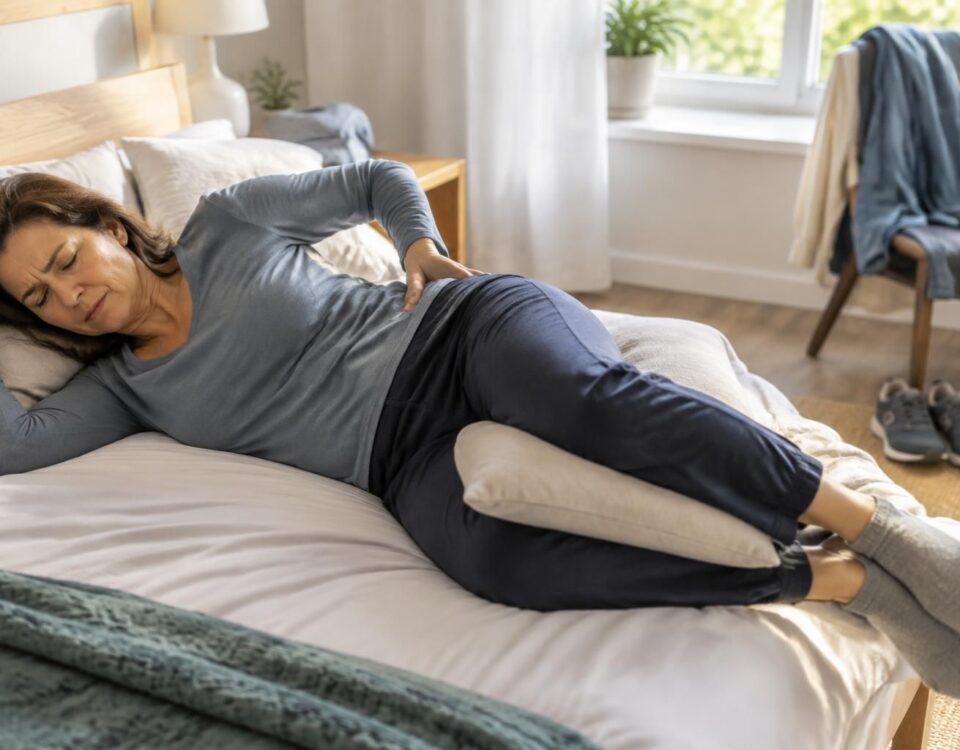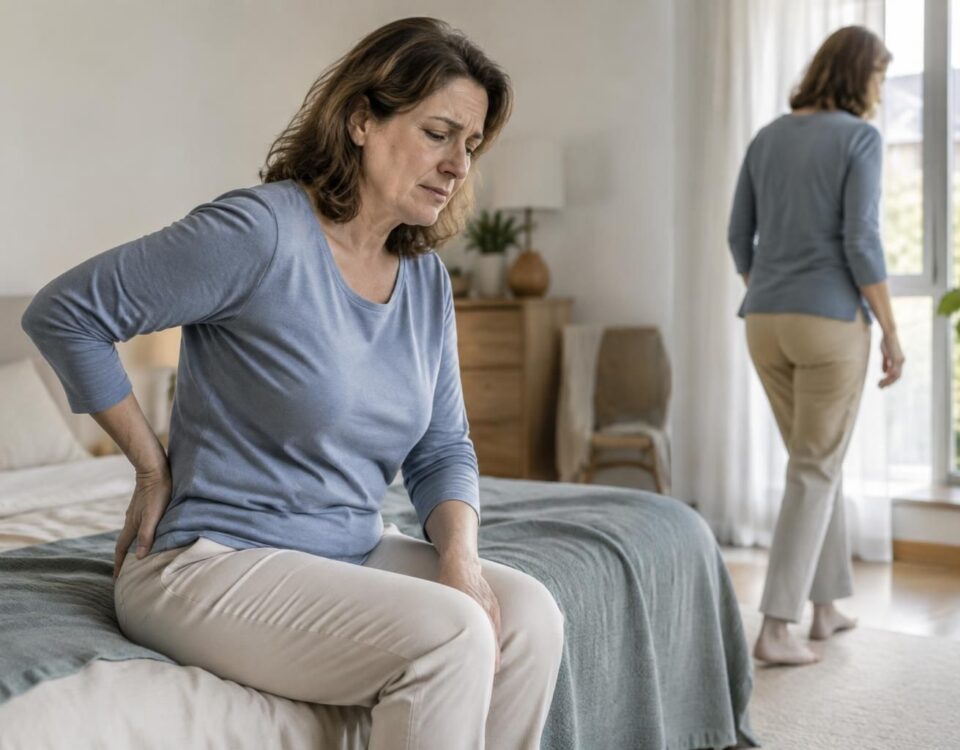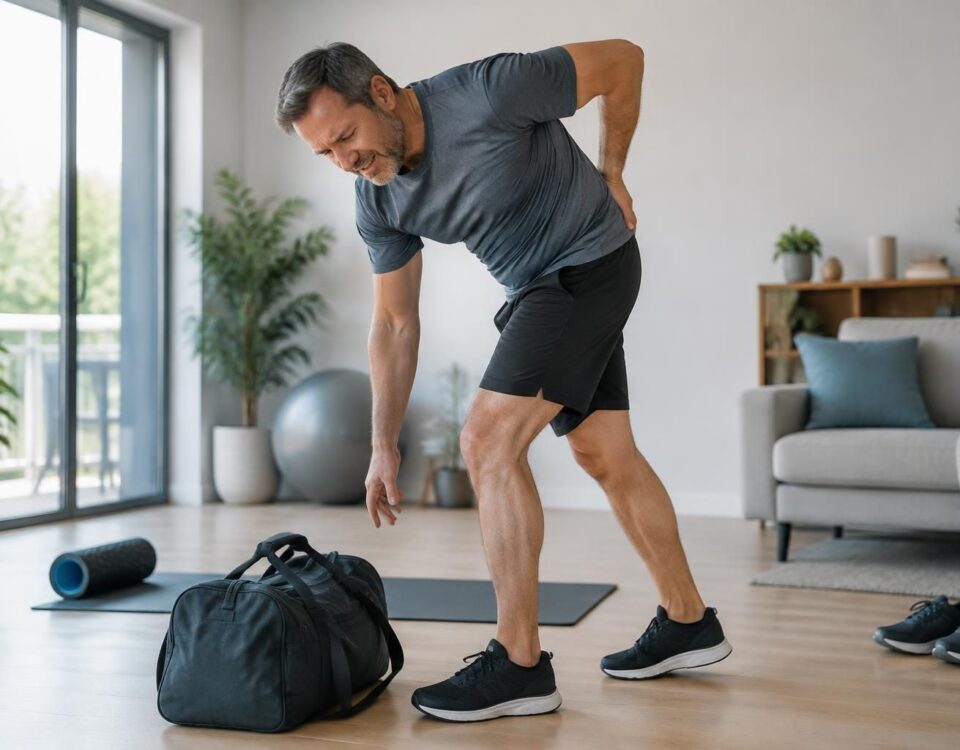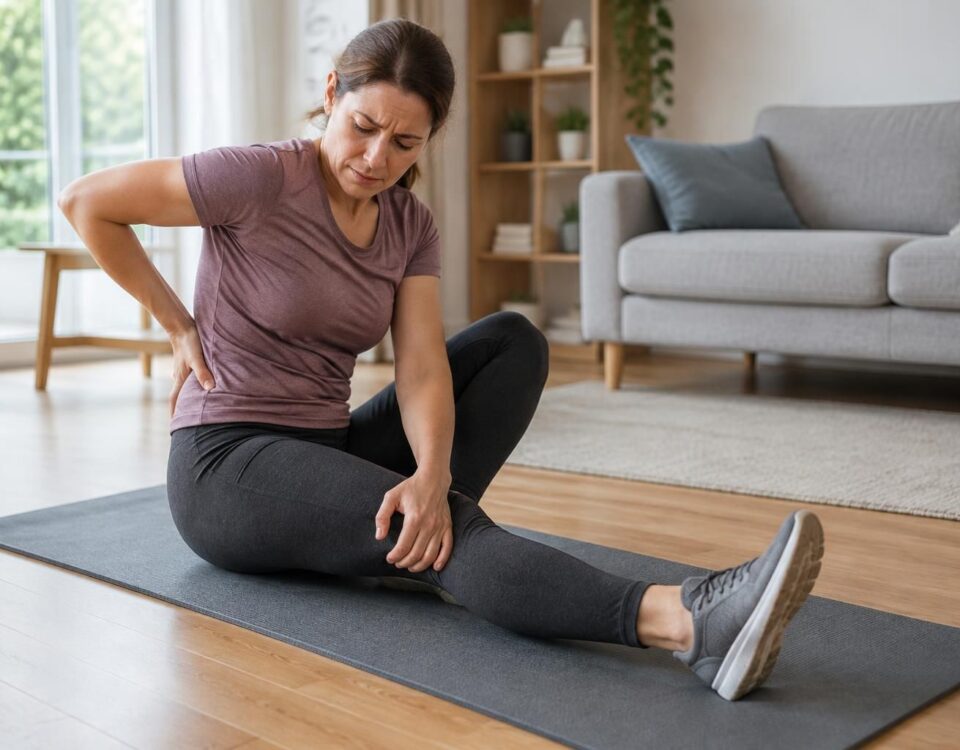
L4-L5 protrusion and sciatic pain: possible signs
06/10/2026
Sciatica L5 in Montreal: pain towards the big toe
07/10/2026
IN BRIEF
| Sciatica is pain that follows the path of the sciatic nerve, from the lower back to the leg. Appropriate physical activity helps to stay mobile without maintaining irritation: favor gentle walking, cycling in an upright position, or swimming, gradually resuming. Avoid movements that worsen or bring down the pain in the leg, including impacts, sudden twists, and forced stretches. |
In the case of sciatica, staying active can help, provided you choose gentle movements and progress without forcing. Favor walking on flat terrain, cycling in an upright position, or gentle swimming. Temporarily avoid impacts, sudden twists, heavy loads, and stretches that awaken pain in the leg. Stop the activity if the pain increases, descends further down the leg, or is accompanied by weakness or numbness. Consult a healthcare professional if in doubt or if symptoms persist.
In the case of sciatica, the goal is not to remain immobile, but to choose an activity that does not increase pain. Gentle walking, cycling in an upright position, and swimming are sometimes better tolerated. Conversely, impacts, fast twists, and heavy efforts can exacerbate symptoms. The good guideline: stop the activity if the pain descends further into the leg or if weakness appears.
Sciatica corresponds to pain related to the irritation or compression of a nerve root. It can start in the lower back, go through the buttock, and descend into the leg. A herniated disc can be a cause, but other situations can also produce similar symptoms. You can learn more about sciatica associated with a persistent herniated disc and about possible signs of an L4-L5 protrusion.
The reaction to effort varies according to the cause of the symptoms and their intensity. An activity may be tolerable one day, then awaken pain another day. Therefore, you should observe the effect of movement during the activity, in the following hours, and the next day.
Resuming an activity without forcing
Complete and prolonged rest can make resuming more difficult. If the pain allows, light activities that are easy to interrupt can help maintain mobility. Start with a short duration and low intensity. Gradually increase only if symptoms remain stable.
Movement should not be used to test your endurance. If the pain increases significantly, descends lower into the leg, or becomes electrical, stop the activity. An aggravation related to certain movements or changes in position is explained in this article about sciatica and pain during position changes.
Activities often better tolerated
Walking on flat terrain at a comfortable pace may be suitable if it does not worsen the pain. Fast walking requires more effort and is not suitable for everyone during a painful period. Check the advice on fast walking and sciatica.
Cycling can also be considered if the position remains upright and pedaling is light. Avoid long rides, high resistances, and routes that require a bent position. Gentle swimming or water activities can reduce impacts, but some strokes may strain the lower back. Adapt the activity to your tolerance rather than a general rule.
To compare activities and their precautions, refer to this information on sciatica and sports as well as this guide on managing sciatica with physical activity.

Sciatica and prolonged immobility: possible effect on pain
IN BRIEF Sciatica is pain related to the irritation of a nerve that goes down the leg. Staying immobile for long periods, especially sitting or lying down, can exacerbate pain and stiffness. Regularly changing position and resuming gentle movements, according…
Errors that can maintain pain
Continuing despite increasing pain
Do not continue a session to reach a planned duration or distance. Pain that descends further into the leg, increasing numbness, or loss of strength are signals to stop. Aggravated pain after running, for example, deserves a reduction in effort and a reevaluation of the activity. Discover the warning points related to sciatic pain after running.
Resuming running or impact sports too quickly
Running, jumping, and contact sports involve repeated impacts. They can be poorly tolerated when pain is active. Do not resume these activities until daily movements no longer significantly awaken symptoms. The resumption must be gradual and depend on the evolution of your condition.
Forcing twists, bends, or heavy loads
Quick trunk rotations, repeated bends, and carrying heavy loads can increase strain on the lower back. Weight training requires special attention: the type of movement, load, and posture influence tolerance. To better understand the precautions, consult these resources on weight training with sciatica and weight training and its precautions in case of sciatica.
Also avoid forcing a stretch that causes pain in the leg. Exercises and stretches are not suitable for all situations. For an overview of movements that can exacerbate symptoms, refer to this article on exercises to avoid for sciatica.
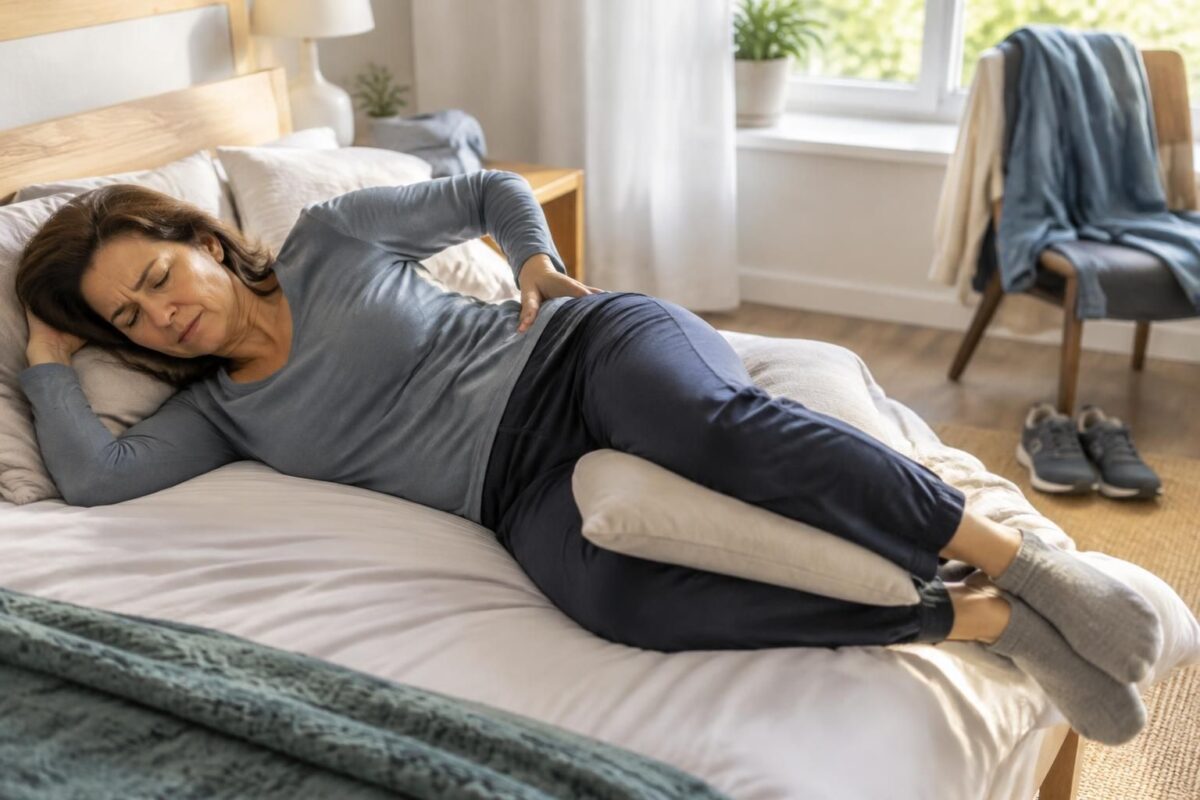
Sciatica and bed rest: why to be cautious
IN BRIEF Sciatica is pain that radiates from the lower back down to the leg. Prolonged bed rest is generally not recommended: it can increase stiffness and delay the return to activities. It is better to remain active as tolerated,…
Adapting cycling and daily activities
On a bike, a very bent position and a long sitting period can increase discomfort. Choose a more upright position if it is better tolerated. Start with a short route, on regular terrain, with low resistance. Reduce the duration if the pain increases during or after the ride.
In the office and in the car, alternate positions whenever possible. Keep your feet supported and avoid staying in a posture that increases pain for too long. To lift an object, bring it close to your body and avoid sudden movements. These adjustments do not replace medical advice but can limit repeated strain.

Sciatica and complete rest: helpful or counterproductive?
IN BRIEF Complete rest in case of sciatica consists of interrupting activities and staying in bed. It can help briefly if the pain is very intense, but prolonged rest is generally counterproductive: it is better to gradually resume movement and…
When to seek medical advice
Consult a healthcare professional if the pain persists, worsens, or significantly interferes with your activities. Seek immediate advice if you experience weakness or numbness in your leg or foot. Pain in both legs or difficulty holding urine or stool requires urgent medical attention.
If the pain does not improve or comes back regularly, a professional can investigate its cause and check your neurological status. Additional information is available on persistent pain related to a herniated disc and sciatica.

Sciatica and too quick a return: why the pain comes back
IN SHORT Sciatica is pain related to irritation of the sciatic nerve, which can recur when returning to activities too quickly. To limit recurrences, gradually resume movement and exertion, taking into account pain and hip and pelvic mobility. The goal:…
Frequently Asked Questions about Sciatica and Physical Activity
Should all sports be stopped in case of sciatica?
Not necessarily. Gentle activity may still be possible if it doesn’t cause an increase in symptoms. Adjust the duration and intensity, and stop if the pain spreads further down the leg or if weakness appears.
Is it possible to walk with sciatica?
A gentle walk on flat ground may be tolerated. Start with a short duration and observe your response after the activity. If walking significantly worsens the pain, do not push through and seek advice from a healthcare professional.
Can you ride a bike?
Cycling may be suitable for some people, especially with an upright position, low resistance, and short outings. If the sitting position or pedaling increases symptoms, stop the session.
“Medical Disclaimer: The information and advice provided on this site do not replace the opinion, diagnosis, or treatment of a healthcare professional. Please note that Sylvain Desforges, B.Sc., D.O., N.D., Doctor of Osteopathy, is neither a medical doctor nor a physician, and is not a specialist in a medical specialty as defined by the Collège des médecins du Québec. Manual medicine, functional medicine, and sports medicine as described on this site exclude any treatment or medical diagnosis made by a physician or a specialist. Always consult your doctor for any medical questions. For more details, please read our full Legal Notice.”
To Avoid
- Forcing a painful stretch.
- Resuming running or jumping during a flare-up.
- Making sudden twists or lifting heavy objects.
- Continuing despite pain that extends further down the leg.
To Favor
- Walking gently on flat ground.
- Testing cycling in an upright position and at low intensity.
- Choosing gentle swimming, especially backstroke.
- Resuming gradually if the pain remains stable.

In the case of sciatica, staying active can help, provided you choose gentle movements and progress without forcing. Walking on flat ground, cycling in an upright position, and gentle swimming are often good options. Avoid activities that increase pain or make it radiate further down the leg, as well as sudden movements, impacts, and heavy loads.
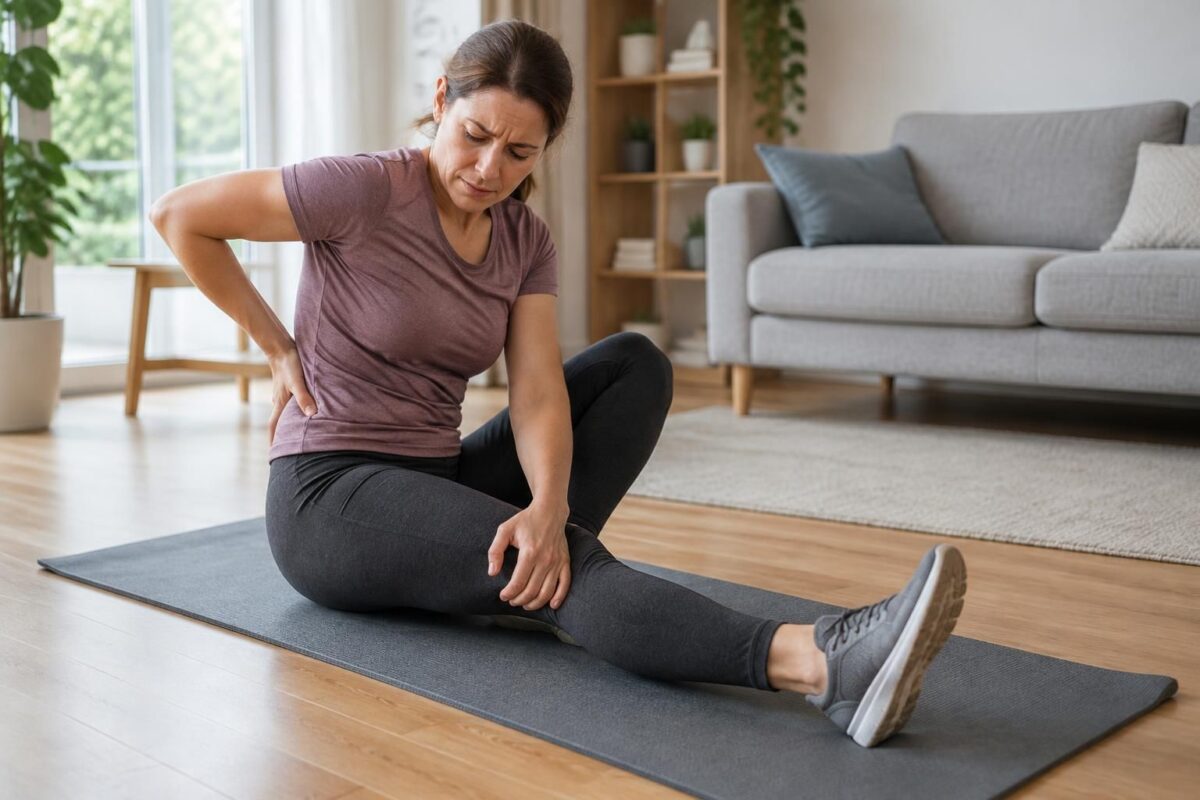
Sciatica and pain during exercise: sign to watch out for
IN BRIEF Sciatica causes pain that radiates from the lower back or buttock down the leg. During exercise, stop the movement if it worsens the pain or causes discomfort: gentle, adapted activities can help you stay active without guaranteeing recovery.…
Choose an Activity That Doesn’t Trigger Pain
The best choice depends on your current tolerance. Start with an activity that is easy to interrupt and practice it at low intensity. A useful guideline: you should be able to move without significantly intensifying pain during the effort, immediately after, or the next day.
Favor Gentle Activities
Walking on flat ground allows you to test your mobility without equipment. Start with a short duration, then gradually increase if symptoms remain stable. Cycling may also be suitable, especially on a stationary bike or a flat route: choose a light gear, pedal smoothly, and keep your back as upright as possible.
Gentle swimming and aquatic activities reduce impacts. Backstroke is often better tolerated than breaststroke if the latter forces you to arch your back. Yoga or Pilates can be considered with adapted movements and, if possible, under the supervision of a professional.

Sciatica and pain after exercise: muscle soreness or nerve irritation?
IN BRIEF Pain after exercise can be muscle soreness or the sign of sciatic nerve irritation. Soreness primarily affects the muscles used and usually subsides within a few days; sciatica can radiate from the buttocks down the leg, sometimes with…
Avoid Mistakes That Aggravate Irritation
Do Not Force Stretches
Leaning forward with straight legs to touch your feet or pulling hard on the back of the leg can strain the nerve. If a stretch triggers pain radiating down the leg, release immediately. Stretches should never be performed in pain: consult a physiotherapist to select movements appropriate for your situation.
Pause Aggressive Movements
During painful periods, avoid rapid twists of the torso, repeated crunches, deep squats with weights, and exercises that strongly round the lower back. Running, jumping, and contact sports may also be too intense while pain is active. Gradually resume them as symptoms improve, without trying to immediately return to your usual level.
Measure Rather Than Stay Still or Force
Prolonged strict rest is generally not an ideal strategy: it can stiffen the back and make resumption more difficult. Conversely, continuing a session despite increasing pain risks aggravating symptoms. Reduce duration, intensity, or range as needed. On a bike, also monitor your position, vibrations, and the time spent sitting.
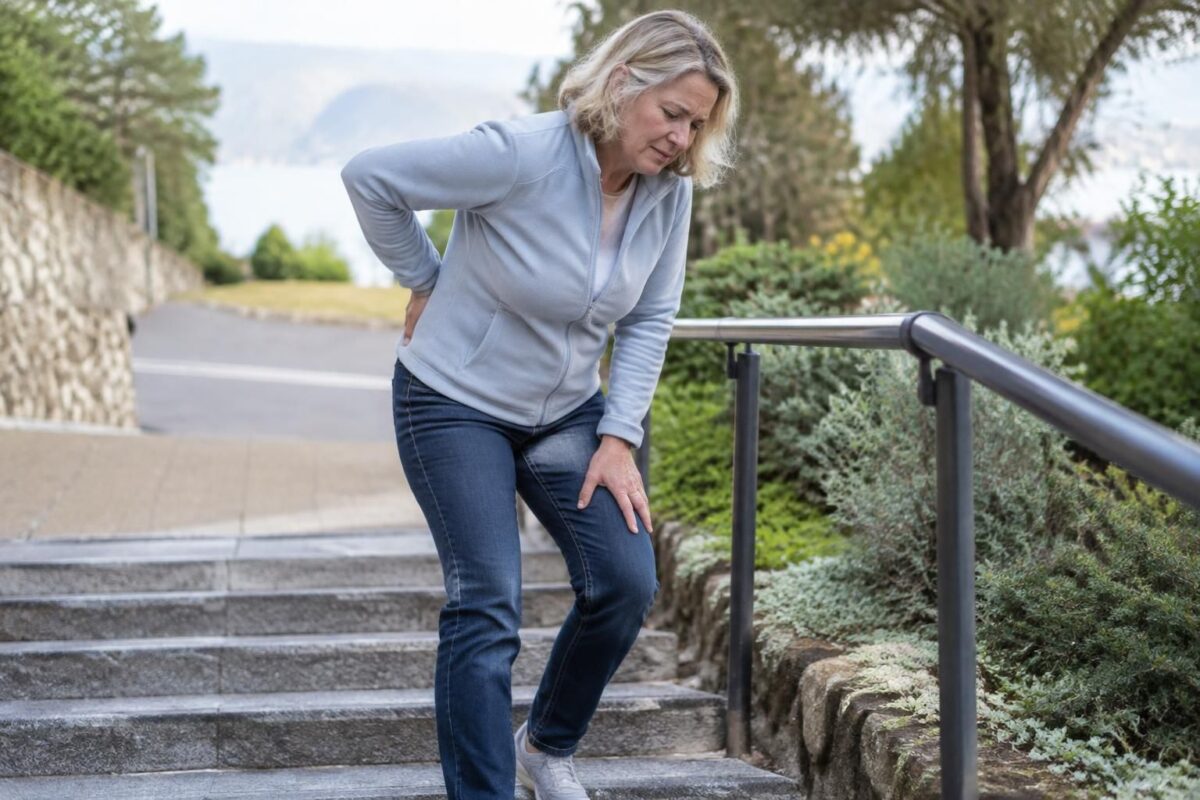
Sciatica and poorly tolerated activity: how to recognize it
IN BRIEF An activity poorly tolerated with sciatica significantly worsens the pain that radiates down the buttock and leg, or causes more tingling and discomfort. Reduce or adapt effort, without remaining bedridden, and gradually resume based on your symptoms. A…
Monitor Warning Signs
Stop the activity if the pain increases significantly, radiates lower in the leg, or is accompanied by numbness or weakness. Consult a doctor or physiotherapist if these signs appear, if the pain persists, or if you have any doubts. Difficulty holding urine or stool requires urgent medical attention.
A sciatica often improves within a few weeks with appropriate management, but its progression varies from person to person. These tips are informative and do not replace medical advice. Before resuming an activity that causes radiating pain, consult a healthcare professional.
| Errors to avoid | To prefer |
|---|---|
| Forcing a stretch that triggers pain | Stop and choose a comfortable movement |
| Resuming sports at full intensity | Start with short and easy sessions |
| Running or jumping in a full flare-up | Walk on flat ground, based on tolerance |
| Peddling bent over or with a heavy gear | Keep the back upright and pedal smoothly |
| Doing quick twists | Prefer slow and controlled movements |
| Continuing despite worsening pain | Reduce effort or stop |
| Ignoring weakness or numbness | Consult a healthcare professional quickly |
Sciatica and Physical Activity: Testimonials to Avoid Mistakes
The testimonials below are fictional and illustrate common situations. Every sciatica is different: adjust your activity with the help of a healthcare professional if necessary.
Élodie, 42 years old: “I stopped forcing the stretches”
“I thought I had to touch my toes to relax my back. But every forward bend with straight legs intensified the pain down my leg. I stopped forcing and consulted my physiotherapist. I realized that a movement that triggers radiating pain is not a stretch to continue.”
Marc, 55 years old: “I gradually resumed cycling”
“I wanted to quickly get back to my long rides, but staying bent over and pedaling with a tough gear woke up my pain. I started on a stationary bike, with a more upright position and short sessions. I also monitor how I feel in the evening and the next day before increasing the duration.”
Samira, 36 years old: “Complete rest was making me stiff”
“At first, I stopped all activity for fear of worsening the sciatica. After a few days, I felt even stiffer. I resumed with short walks on flat terrain, at a comfortable pace. If the pain significantly increases or goes further down my leg, I stop and reduce the effort.”
Thomas, 48 years old: “I replaced classic ab exercises”
“Crunches triggered pain in my lower back and leg. I learned not to confuse strengthening with repeating painful exercises. With my physiotherapist’s consent, I tried short and adapted core exercises without holding my breath.”
Claire, 61 years old: “I chose a low-impact activity”
“Running on asphalt worsened my symptoms. During the most sensitive period, I preferred gentle walking and a few swimming sessions, especially backstroke. I avoided movements that made me arch or twist my back sharply.”
Julien, 39 years old: “I learned to recognize warning signs”
“I thought that feeling more pain after exercising was just part of resuming. Now, I monitor its progression during exercise and in the hours that follow. If weakness or numbness occurs, or if the pain notably worsens, I stop and seek medical advice.”
These experiences remind us of a useful rule: prefer a gentle and progressive activity, and do not continue a movement that increases pain in the leg. If symptoms persist, if there is weakness, marked numbness, or doubt, consult a doctor or physiotherapist.
Sylvain Desforges: Sciatica and Physical Activity, Avoiding Mistakes
Sylvain Desforges is an expert in osteopathy, naturopathy, and manual medicine. Founder and president of TAGMED clinics and the ACMA association, he devotes his work to innovation in health and supporting individuals suffering particularly from chronic pain. His approach aims to provide care based on available data, while considering the needs and situation of each patient.
Sciatica illustrates the importance of individualized care. It corresponds to pain that follows the path of the sciatic nerve, often from the lower back to the buttock and leg. Its causes can vary; the intensity of symptoms and the movements that trigger them also. For Dr. Desforges, understanding these particularities is essential before choosing an activity or resuming sports.
When sciatica manifests, the mistake often lies in believing that one must either stop everything or continue exactly as before. Prolonged immobility can promote stiffness, while excessive effort risks exacerbating symptoms. The goal is rather to maintain an adapted and progressive movement, carefully observing the body’s response during activity, after the session, and the following day.
Low-impact activities are often good options for a gentle resumption: walking on flat ground, low-intensity cycling, gentle swimming, or controlled mobility exercises. Cycling should allow keeping the back relatively upright, with moderate resistance and short sessions at the start. In the water, some people tolerate backstroke better than breaststroke, which can exacerbate lumbar arching. However, these choices may not automatically suit everyone: they must remain comfortable and easily interrupted.
Conversely, several actions deserve particular caution when pain is active. Forced forward bends, sudden twists, classic abdominal exercises, heavy lifting, and repeated impacts can further irritate the lower back or trigger pain in the leg. Stretches should never be pushed beyond tolerance: if pain increases or travels further down the leg, one should ease off and modify the movement rather than seek to “unlock” the area.
This gradual progression aligns with Dr. Desforges’ mission: integrating methods and technologies suited for a thoughtful approach to chronic pain management. His expertise includes spinal decompression, laser therapy, and shock waves. These tools fit into a holistic approach and do not replace clinical assessment or personalized advice from a healthcare professional. The choice of treatment depends on the individual’s situation and the presumed origin of their symptoms.
Some signs warrant a prompt consultation: new weakness in the leg or foot, marked numbness, pain that persists or worsens, or symptoms affecting both legs. Difficulty controlling the bladder or bowels constitutes a medical emergency. When in doubt, a doctor or physiotherapist can assess symptoms and guide the resumption of activity. Information on sciatica and exercise remains general and does not replace medical advice.
In the case of sciatica, physical activity can help maintain mobility, provided to choose gentle movements and gradually resume. Walking on flat terrain, cycling in a comfortable position, and swimming are often good options. Conversely, impacts, rapid twists, heavy loads, and forced stretches can aggravate the pain: the key indicator is to stop if it increases or descends further down the leg.
Resume without aggravating the nerve
Start with a short and easy-to-interrupt activity, then observe your sensations during the effort, in the hours that follow, and the next day. If the pain remains stable or decreases, you can gradually increase the duration or intensity. If it intensifies, radiates further down the leg, or is accompanied by numbness or weakness, stop the activity and consult a healthcare professional. These precautions are also discussed in the advice for practicing sports despite sciatica and for understanding pain after sports.
For cycling, prefer an upright position, a light gear, and short sessions on a flat course. Avoid compensating for a difficult outing with intense or prolonged effort: posture, vibrations, and time spent sitting can also influence symptoms. Specific guidelines are provided for choosing a bike with sciatica.
Avoid movements that trigger pain
Do not force forward bends, crunches, rapid twists, or heavy weightlifting if these trigger nerve pain. Gentle core workouts and gradual strengthening of the hips or glutes can be considered if they remain comfortable and controlled. To better adjust exercises, consult these guidelines on weightlifting mistakes to avoid and recommendations for staying active without overexerting.
Pain can vary throughout the day or manifest differently among individuals. More pronounced discomfort at the end of the day, upon waking, or as a burning sensation behind the thigh should be taken into account to adjust effort, without self-diagnosing. You can learn more about these symptoms in the information regarding pain that worsens at the end of the day, pain that radiates down the leg upon waking, and burning sensation behind the thigh.
When to seek medical advice
A healthcare professional can help choose activities and adaptations fitting your situation. Consult if the pain persists, worsens, or is accompanied by a loss of strength or numbness. Significant weakness, sciatica in both legs, or difficulties controlling urination or bowel movements require urgent medical evaluation. To understand the possible link between a disc injury and the nerve, also refer to the information on disc protrusion and sciatica.
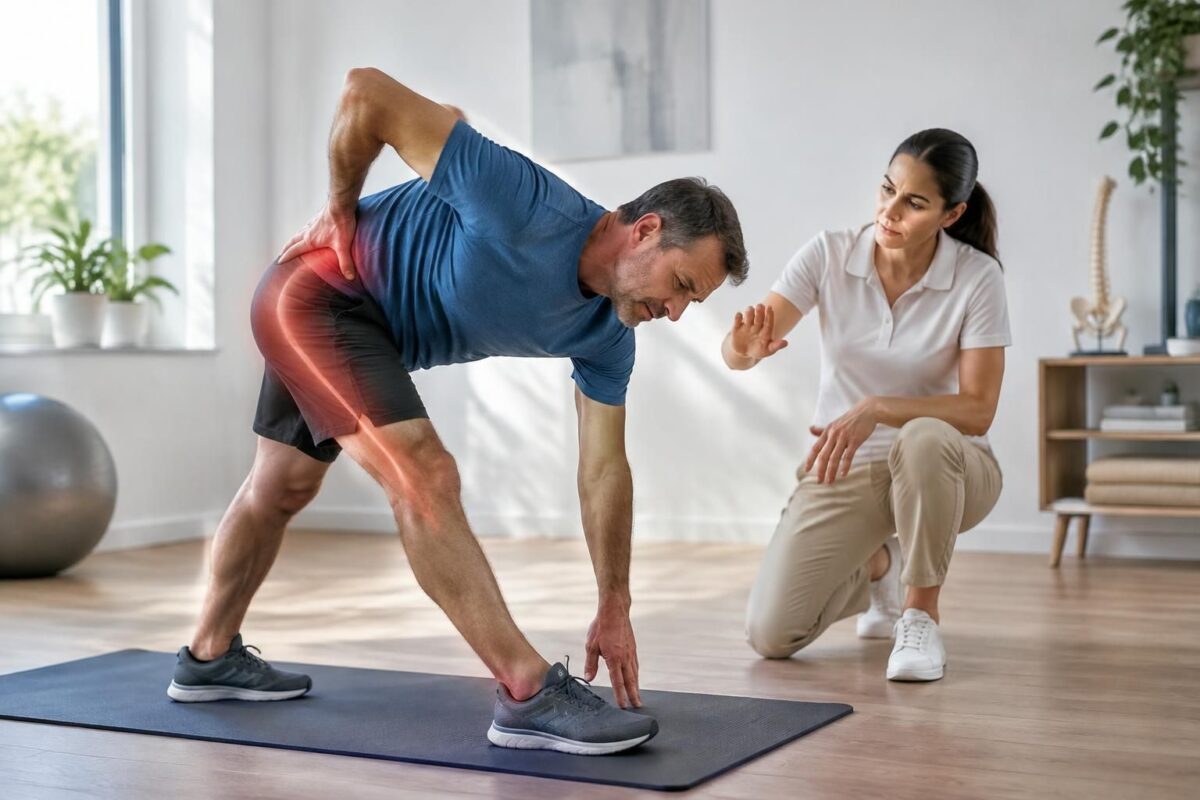
Sciatica and exercises to avoid according to the symptoms
IN BRIEF Sciatica is pain related to irritation or compression of the sciatic nerve. Exercises can help maintain mobility and reduce tension, but avoid those that intensify leg pain, as well as sudden twists, forced bends, and carrying heavy loads.…

Sylvain Desforges, B.Sc., D.O., N.D., docteur en ostéopathie
Dr Sylvain Desforges, B.Sc., D.O., N.D., osteopath, is the founding president of TAGMED and of the ACMA association. He dedicates his practice to chronic spinal pain, low back pain and symptoms compatible with sciatica, particularly when pain radiates toward the buttock, leg, calf, foot or toes.
Through SOS Sciatique, he publishes educational content on sciatica symptoms, possible causes such as disc herniation, disc narrowing, foraminal stenosis or irritation of a lumbar nerve root, as well as non-surgical approaches that may be considered according to the evaluation. At Clinique TAGMED, care may include, depending on the case, motorized neurovertebral decompression, specific osteopathic care or precision percussion.
For an evaluation related to sciatica treatment in Montreal / Mount Royal or sciatica treatment in Terrebonne, please consult the services available at Clinique TAGMED.
Medical disclaimer
The information published on SOS Sciatique is provided for educational purposes only and does not replace a consultation, diagnosis, opinion or treatment provided by a physician or another authorized healthcare professional. The author of this article is neither a medical doctor nor a specialist in a medical specialty recognized by the Collège des médecins du Québec. The osteopathic, manual medicine or functional support approaches described on this site do not constitute medical acts and are not intended to replace medical follow-up.
Consult a physician or emergency service in cases of loss of bladder or bowel control, anesthesia in the saddle area, significant or progressive weakness in the leg or foot, fever, recent trauma, severe pain or rapid worsening of symptoms. For more details, please read our Legal Notice.