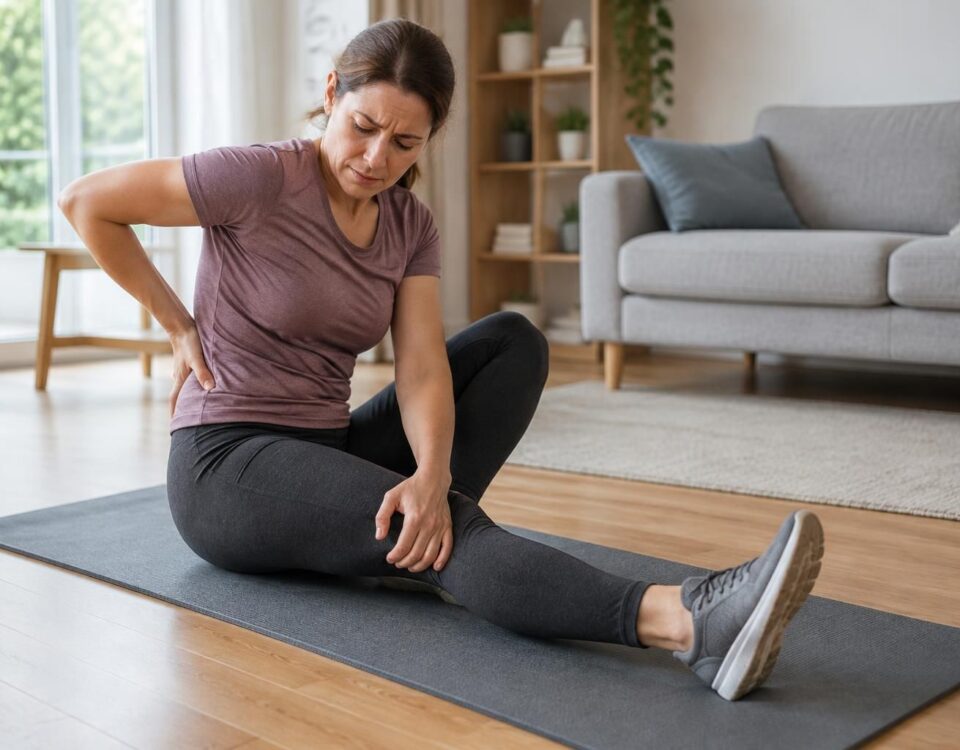
Disc herniation and tingling in the toes
12/10/2026
Sciatica L5-S1 in Montreal: why the pain can radiate down to the foot
13/10/2026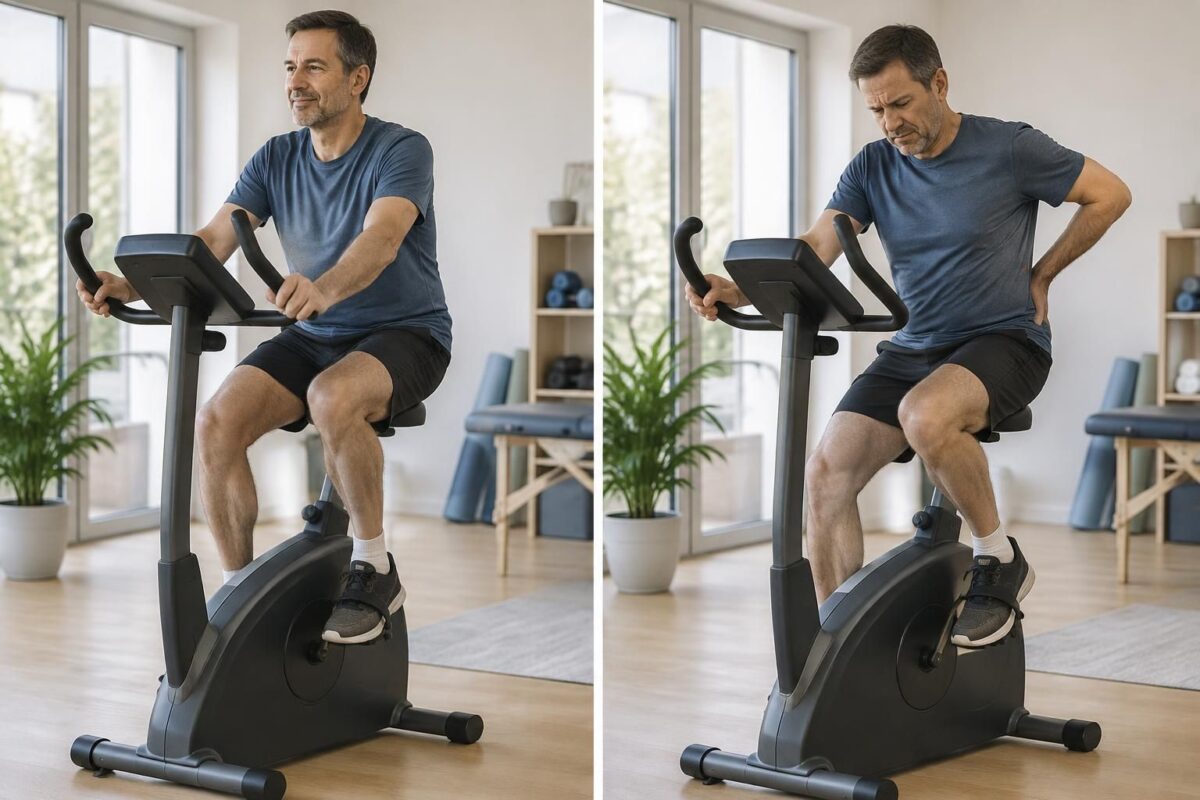
IN BRIEF
| The stationary bike with sciatica can help you stay active if the pain is mild and stable. Start with a short session, at low resistance and in a comfortable position. If the pain goes further down the leg, intensifies, or is accompanied by tingling or weakness, stop and seek advice from a healthcare professional. |
The stationary bike may still be suitable in the case of sciatica if the pain is mild and stable. Start with a short session, at low resistance and a comfortable posture. If the pain goes further down the leg, intensifies, or is accompanied by tingling or weakness, stop and seek advice from a healthcare professional.
The stationary bike can be suitable with sciatica if pedaling remains comfortable and does not increase symptoms. It can also worsen the pain if sitting position, resistance, or session duration increases nerve irritation. Start gently, monitor the evolution of the pain, and stop if it goes further down the leg or if weakness appears. Sciatica refers to pain related to the irritation of a nerve root or the sciatic nerve. It can start from the lower back or buttock and go down behind the thigh, sometimes all the way to the calf or foot. Tingling, numbness, or a burning sensation may also occur. The stationary bike has a practical advantage: you can adjust the resistance and stop quickly. But it requires a seated position, sometimes with the torso leaning forward. This posture can exacerbate symptoms in some individuals. The reaction varies depending on the cause of the pain, its intensity, and how you are positioned. To better understand the factors to monitor, check these tips on sciatica on the bike, adjustments, and stopping effort or this article dedicated to when it is possible to pedal with sciatica. A short and easy session may be feasible if the pain remains mild, stable, and does not extend further down the leg. You should be able to pedal without grimacing, without compensating with your pelvis, and without altering your walking pattern after the session. Start with a few minutes at low resistance. Maintain a smooth cadence and a comfortable position. If symptoms remain stable during the session and afterward, you can gradually adjust the duration, without increasing the intensity at the same time. Postpone the session if you have severe pain at rest, if simply sitting significantly increases the pain, or if symptoms worsen while walking. Also, stop if the pain goes further down towards the calf or foot, or if tingling and numbness progress. A burning sensation in the foot can have several causes and deserves special attention if it persists or is accompanied by a loss of sensation. You can read information about foot burning and possible nerve irritation, but only a healthcare professional can assess your situation. A proper adjustment does not address the cause of sciatica, but it can make the position less constraining. Adjust the seat so that your knee remains slightly bent when the pedal is at the bottom. Avoid a seat that is too high, which can tilt the pelvis with every pedal stroke. If the handlebars are adjustable, choose a height that allows you to keep your back in a comfortable position. Do not force yourself to stay very bent. Place your feet securely on the pedals and relax your shoulders. A small adjustment may be enough to make the session more bearable. For additional guidelines on posture and practice, check these tips on sciatica and cycling, as well as on pedaling without worsening symptoms. Before you start, observe your pain at rest and while walking. Then sit on the bike without pedaling for a moment. If the seated position triggers stronger pain or irradiation in the leg, do not continue the test. If the position is tolerated, pedal slowly with low resistance. Regularly check if the pain remains in the same place and at the same intensity. Stop as soon as it increases, goes further down the leg, or is accompanied by new numbness. After the session, observe your condition when getting off the bike, and then a few hours later. Pain that remains stronger or spreads indicates that the duration, position, or effort were probably not suitable. Resume only when symptoms have returned to their usual level and seek advice if the problem recurs. Consult a healthcare professional if the pain persists, recurs often, or prevents you from walking normally. An opinion is also important if symptoms change trajectory over the days. This article explains why a sciatic pain that evolves in trajectory deserves to be described and assessed. Stop biking and seek medical advice promptly in case of new weakness in one leg, significant loss of sensation, or difficulty walking. A loss of control over the bladder or bowels, or numbness in the area between the legs, requires urgent care. Tolerance for other activities can also vary. To compare the signs to monitor, check the information on walking with sciatica and running when suffering from sciatica. Additional practical advice is available on cycling and sciatica. Medical disclaimer: The information and advice provided on this site do not replace the opinion, diagnosis, or treatment of a healthcare professional. Please note that Sylvain Desforges, B.Sc., D.O., N.D., Doctor of Osteopathy, is neither a medical doctor nor a physician, and is not a specialist in a medical specialty as defined by the Collège des médecins du Québec. Manual therapy, functional medicine, and sports medicine as described on this site exclude any treatment or medical diagnosis made by a doctor or specialist. Always consult your physician for any medical questions. For more details, please read our complete Legal Notice.When the stationary bike may be well tolerated
When it is better to avoid pedaling
How to adjust the stationary bike to limit discomfort
How to test a session without overexertion
Signs that warrant medical attention
Practical tip: stop the session if symptoms worsen.Sciatica and the stationary bike: helpful or aggravating?
May be helpful if…
May aggravate if…

The stationary bike can be helpful in cases of sciatica if the pain remains mild and stable, but it can also worsen if sitting or pedaling exacerbates radiation down the leg. Start with a short session, using low resistance and a comfortable posture. If the pain worsens, causes tingling, or reduces your strength, stop and seek advice from a healthcare professional.
Stationary bike and sciatica: when to try?
The exercise bike allows you to control the effort, avoids road bumps, and makes it easy to stop. It can therefore be an option to test when symptoms are moderate, stable, and do not worsen in a seated position. The goal is not to “unstick” the nerve by forcing but to maintain a well-tolerated movement.
Before pedaling, observe your condition at rest, while walking, and then sitting on the saddle. If discomfort remains localized and bearable, try 10 to 20 minutes at low intensity. You should be able to pedal without tensing up or holding your breath. If the pain radiates further down to the thigh, calf, or foot, stop the session rather than trying to complete it at all costs.

Sciatica and prolonged immobility: possible effect on pain
IN BRIEF Sciatica is pain related to the irritation of a nerve that goes down the leg. Staying immobile for long periods, especially sitting or lying down, can exacerbate pain and stiffness. Regularly changing position and resuming gentle movements, according…
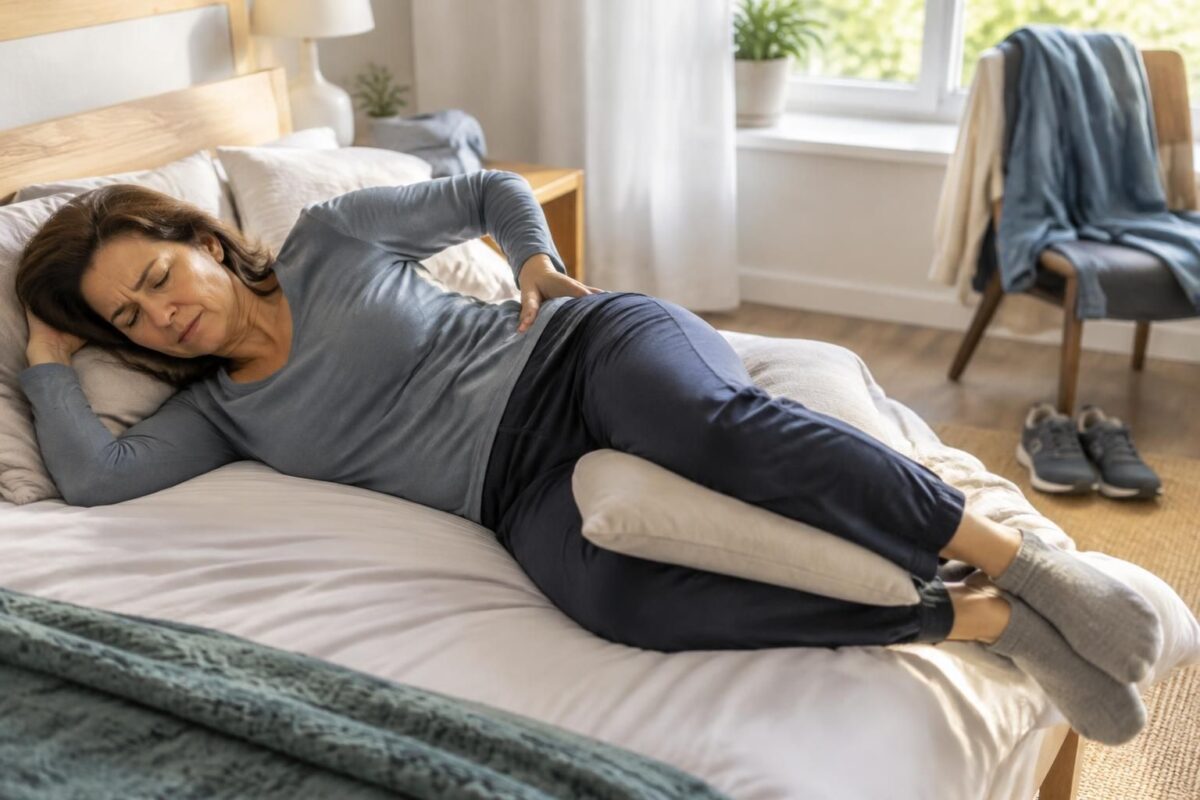
Sciatica and bed rest: why to be cautious
IN BRIEF Sciatica is pain that radiates from the lower back down to the leg. Prolonged bed rest is generally not recommended: it can increase stiffness and delay the return to activities. It is better to remain active as tolerated,…
When does pedaling risk worsening symptoms?
The position maintained on the bike may be poorly tolerated, especially if it forces you to round your back or lean forward for extended periods. Pain that increases over the minutes, a feeling of electric discharge, burning, numbness, or tingling are signals to reduce the effort or stop.
High resistance, accelerations, and long sessions can also place more strain on the lower back and gluteal muscles. During a flare-up, prioritize smooth pedaling, without simulated hills or intense intervals. If sitting already triggers radiation, postpone the attempt and choose a better-tolerated activity, such as short walking if it does not aggravate your symptoms.

Sciatica and complete rest: helpful or counterproductive?
IN BRIEF Complete rest in case of sciatica consists of interrupting activities and staying in bed. It can help briefly if the pain is very intense, but prolonged rest is generally counterproductive: it is better to gradually resume movement and…

Sciatica and too quick a return: why the pain comes back
IN SHORT Sciatica is pain related to irritation of the sciatic nerve, which can recur when returning to activities too quickly. To limit recurrences, gradually resume movement and exertion, taking into account pain and hip and pelvic mobility. The goal:…
Adjust the bike for more comfortable pedaling
Adopt a less restrictive position
Adjust the saddle so that the knee remains slightly bent when the pedal is at the bottom. A saddle that is too high can tilt the pelvis with every rotation; a saddle that is too low can make pedaling uncomfortable. If possible, raise the handlebars to limit back flexion and keep the pelvis stable, without sliding forward.
Decrease effort and break up the session
Choose low resistance and a steady cadence rather than pushing hard on the pedals. Start with a short duration, then check how you feel during the session and after getting off the bike. Do not increase duration or difficulty as long as the activity does not cause worsening. Persistent or worsening discomfort after exertion warrants reviewing adjustments and suspending sessions.

Sciatica and pain during exercise: sign to watch out for
IN BRIEF Sciatica causes pain that radiates from the lower back or buttock down the leg. During exercise, stop the movement if it worsens the pain or causes discomfort: gentle, adapted activities can help you stay active without guaranteeing recovery.…

Sciatica and pain after exercise: muscle soreness or nerve irritation?
IN BRIEF Pain after exercise can be muscle soreness or the sign of sciatic nerve irritation. Soreness primarily affects the muscles used and usually subsides within a few days; sciatica can radiate from the buttocks down the leg, sometimes with…
When to seek medical advice?
Consult a professional if the pain returns regularly, radiates to the foot, worsens despite appropriate activity, or prevents you from walking normally. Weakness in the leg, loss of sensation, or difficulty controlling movements also requires prompt advice. A doctor or physical therapist can clarify the origin of the symptoms and guide you towards a gradual return to the stationary bike.
| Situation | Possible effect and course of action |
|---|---|
| Mild and stable pain | May be well tolerated: try 10 to 20 minutes at low resistance. |
| Pain that increases while pedaling | Possible aggravation: stop the session. |
| Pain that descends lower in the leg | Bad signal: stop biking and monitor symptoms. |
| Tingling, numbness or weakness | Do not continue; seek medical advice. |
| Leaning position or tense back | Adjust the bike to adopt a more upright and comfortable posture. |
| Resuming after a flare-up | Start gently and stop if symptoms reappear. |
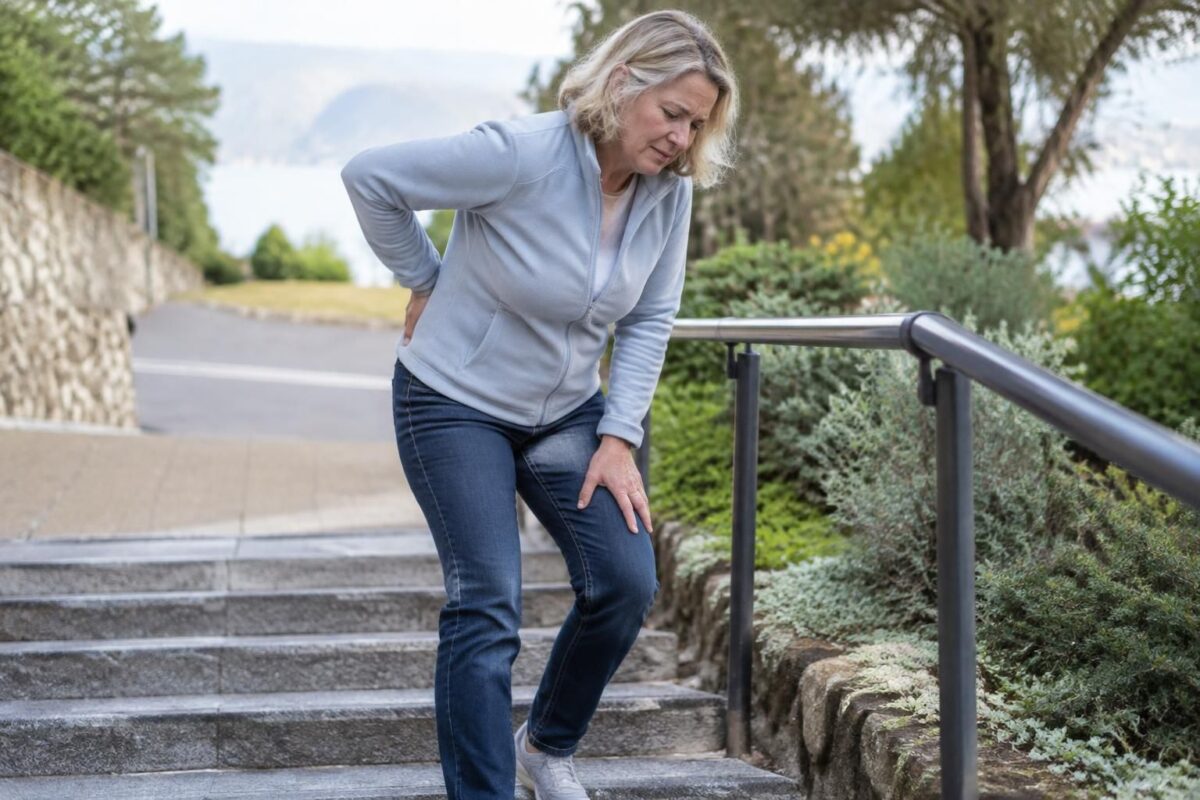
Sciatica and poorly tolerated activity: how to recognize it
IN BRIEF An activity poorly tolerated with sciatica significantly worsens the pain that radiates down the buttock and leg, or causes more tingling and discomfort. Reduce or adapt effort, without remaining bedridden, and gradually resume based on your symptoms. A…

Sciatica and exercises to avoid according to the symptoms
IN BRIEF Sciatica is pain related to irritation or compression of the sciatic nerve. Exercises can help maintain mobility and reduce tension, but avoid those that intensify leg pain, as well as sudden twists, forced bends, and carrying heavy loads.…
Sciatica and stationary bike: helpful or exacerbating depending on the situation?
Claire, 46 — a gentle return better tolerated: “During my flare-up, sitting for long periods bothered me, so I tried the stationary bike with very low resistance. I started with ten minutes, keeping my back relatively straight. As long as the pain remained mild and did not descend further down my leg, I managed it. I gradually increased the duration, without trying to force it.”
Mehdi, 39 — a position too hunched that awakened the pain: “On my exercise bike, I was very leaned forward over the handlebars. After a few minutes, the pain radiated from my buttocks down the back of my thigh. I stopped the session and, before trying again, I raised the handlebars and checked the adjustments. If the pain radiates further, continuing to pedal is not a good idea.”
Françoise, 58 — an alternative to road outings: “The vibrations and bumps made outdoor outings uncomfortable for me. The stationary bike allowed me to control the effort and stop immediately if necessary. I pedaled at an easy pace, on a short route, and I mostly monitored whether the symptoms remained stable.”
Thomas, 34 — a session interrupted in time: “I thought I needed to pedal to ‘unstick’ my back. But the tingling started radiating to my calf, and my foot felt less sensitive. I stopped rather than finishing my session. I spoke with a healthcare professional before resuming.”
Élodie, 51 — the adjustment changed comfort, without solving everything: “A saddle that was too high tilted my pelvis with every pedal stroke. After adjustment, the movement was smoother, and I felt less tension. This did not make the sciatica disappear, but a comfortable posture and low resistance made the attempt more bearable.”
Tip to keep in mind: the stationary bike may be suitable if the pain is moderate, stable, and does not increase during exertion. Start with a few easy minutes, in a comfortable posture. Stop if the pain descends further down the leg, if tingling or numbness appears, or if you notice weakness. In case of persistent or worsening symptoms, seek advice from a healthcare professional.
Sylvain Desforges and the stationary bike for sciatica
Sylvain Desforges is a professional specialized in osteopathy, naturopathy, and manual medicine. Founder and president of TAGMED clinics as well as the ACMA association, he has dedicated his career to health innovation and supporting individuals facing persistent pain. His approach focuses particularly on the management of chronic pain and how to tailor care to the needs of each patient.
In this context, the question of stationary biking with sciatica warrants a nuanced response. Biking is not necessarily contraindicated: a gentle activity can help some people maintain their mobility. However, biking can also exacerbate symptoms, especially if the sitting position, trunk flexion, or effort increases nerve irritation. Tolerance varies depending on the cause of the pain, its intensity, and the phase of the episode.
Sciatica often manifests as pain radiating from the lower back or buttock and extending behind the thigh, sometimes down to the calf or foot. Burning sensations, tingling, or numbness may also occur. For someone wishing to use a stationary bike, the key is to monitor the evolution of symptoms rather than following a predefined training program. If the pain remains mild and stable, a few minutes at low resistance might be feasible. If it intensifies or travels further down the leg, it’s best to stop the session.
The stationary bike has certain practical advantages: it allows control over the duration and intensity, provides a stable surface to pedal, and can be stopped immediately in case of discomfort. To limit strain, it may be helpful to adjust the seat so that the knee remains slightly bent at the bottom of the movement, choose a low resistance, and maintain a comfortable posture. A handlebar that is too low or a position that excessively rounds the back can lead to less tolerable pedaling. However, these adjustments do not replace a personalized evaluation.
Dr. Desforges’s work also focuses on integrating advanced technologies into care, including vertebral decompression, laser, and shockwave therapy. These tools are part of a data-driven care approach aimed at improving health and well-being. For individuals suffering from sciatic pain, the challenge is to identify the factors that perpetuate the symptoms and choose an appropriate strategy, rather than relying solely on exercise or specific equipment.
Weakness in the leg, loss of sensation, difficulty walking, or worsening pain warrant medical advice. A healthcare professional can help clarify the origin of symptoms and decide whether the stationary bike is suitable, at what intensity, and for how long. Dr. Desforges’s approach emphasizes individualized care and the reasoned use of available therapeutic options.
The stationary bike with sciatica can allow for staying active when the pain is mild and stable, provided one pedals gently and in a comfortable position. Conversely, if radiation increases, extends further down the leg, or is accompanied by tingling or weakness, it is advisable to stop and seek medical advice.
Sciatica and stationary biking: helpful or aggravating depending on the case?
The advantage of the stationary bike is the ease of controlling the duration and intensity of the effort. With no circulation, vibrations, or terrain to manage, you can start with a few minutes at low resistance and stop as soon as symptoms worsen. To better distinguish situations where pedaling can help from those where it is better to take a break, consult this guide on sciatica and biking.
Before starting, observe your pain at rest, while walking, and sitting. If it remains moderate and does not extend further down the leg, try a short session at a pace that allows you to speak comfortably. Keep a low resistance, pedal smoothly, and avoid pulling on the pedals or excessively leaning forward. An article dedicated to biking with sciatica can also help you reflect on your tolerance for effort.
However, the stationary bike can aggravate symptoms if the sitting position compresses a painful area, if the handlebars force you to round your back, or if the seat is poorly adjusted. Adjust its height to maintain a slight bend in the knee when the pedal is at the bottom, and raise the handlebars if you have to lean the trunk too much. To review possible adjustments, find these tips on bike posture with sciatica and on the possibility of biking despite pain.
During the session, especially monitor the evolution of symptoms, not just their initial intensity. Pain that travels from the buttock down the thigh, calf, or foot, a sensation of electrical discharge, numbness, or weakness are signals to stop pedaling. If pain occurs after effort, persists, or intensifies, this information on pain after biking can help you describe the situation to a healthcare professional.
If the session is well tolerated, gradually increase the duration rather than the resistance. Gentle mobility of the pelvis or short walking can also be considered if they do not increase pain. Do not force stretches: a movement that causes greater radiation should not be continued. For a more structured resumption and adaptation tips, you can check these guidelines on biking, sciatica, and precautions to take.
Recurrent pain warrants an evaluation, especially to check if it originates from the lower back, nerve irritation, or muscle tension in the buttock. A doctor or physiotherapist can guide you on exercises and resumption; depending on your situation, a professional may also advise you on care approaches, without replacing the medical evaluation, as emphasized in this article on osteopathy and joint pain.
Quickly consult in case of new weakness in the leg, significant loss of sensitivity, difficulty walking, or marked worsening. In case of loss of control of the bladder or bowels or numbness in the area between the legs, seek urgent medical help. Pain that occurs when you cough, laugh, or strain should be reported: this point is addressed in this article on pain and possible disc pressure. To limit recurrences, also discover advice on sciatica prevention.

Sylvain Desforges, B.Sc., D.O., N.D., docteur en ostéopathie
Dr Sylvain Desforges, B.Sc., D.O., N.D., osteopath, is the founding president of TAGMED and of the ACMA association. He dedicates his practice to chronic spinal pain, low back pain and symptoms compatible with sciatica, particularly when pain radiates toward the buttock, leg, calf, foot or toes.
Through SOS Sciatique, he publishes educational content on sciatica symptoms, possible causes such as disc herniation, disc narrowing, foraminal stenosis or irritation of a lumbar nerve root, as well as non-surgical approaches that may be considered according to the evaluation. At Clinique TAGMED, care may include, depending on the case, motorized neurovertebral decompression, specific osteopathic care or precision percussion.
For an evaluation related to sciatica treatment in Montreal / Mount Royal or sciatica treatment in Terrebonne, please consult the services available at Clinique TAGMED.
Medical disclaimer
The information published on SOS Sciatique is provided for educational purposes only and does not replace a consultation, diagnosis, opinion or treatment provided by a physician or another authorized healthcare professional. The author of this article is neither a medical doctor nor a specialist in a medical specialty recognized by the Collège des médecins du Québec. The osteopathic, manual medicine or functional support approaches described on this site do not constitute medical acts and are not intended to replace medical follow-up.
Consult a physician or emergency service in cases of loss of bladder or bowel control, anesthesia in the saddle area, significant or progressive weakness in the leg or foot, fever, recent trauma, severe pain or rapid worsening of symptoms. For more details, please read our Legal Notice.