Sciatica and getting into the car: avoiding sudden twists
20/08/2026
Sciatica in Terrebonne: calf pain without significant lower back pain
21/08/2026
IN BRIEF Sciatalgia refers to pain and sensations related to the sciatic nerve, which can manifest as a calf pain or foot pain without significant lumbar pain. In Montreal, this service offers a local evaluation and a non-surgical personalized plan aimed at reducing pain, restoring mobility and strengthening the lumbopelvic muscles through manual therapy and tailored exercises. Its operation is based on identifying the causes (herniated disc, foraminal stenosis, myofascial tensions) and on a progressive approach that combines relief, mobility, and strengthening to remain active without surgery and prevent recurrences. |
In Montreal, sciatica can manifest as pain in the calf without significant lumbar pain. It often involves a sciatalgia involving irritation or sensitization of the nerve root that travels from the lower back to the foot. The most common causes include a herniated disc or foraminal stenosis, but tensions in the deep gluteal muscles can also contribute. A quick assessment will confirm the diagnosis and guide towards effective non-surgical treatments suited to Montreal.
This article, written by a healthcare professional, explains sciatica in Montreal when the pain primarily manifests in the calf without marked lumbar pain. It describes possible causes, associated signs, diagnosis, and available management options at TAGMED Clinic. The goal is to help patients understand their situation and choose an appropriate evaluation.
Understanding the Sciatic Nerve and Pain that Can Reach the Calf
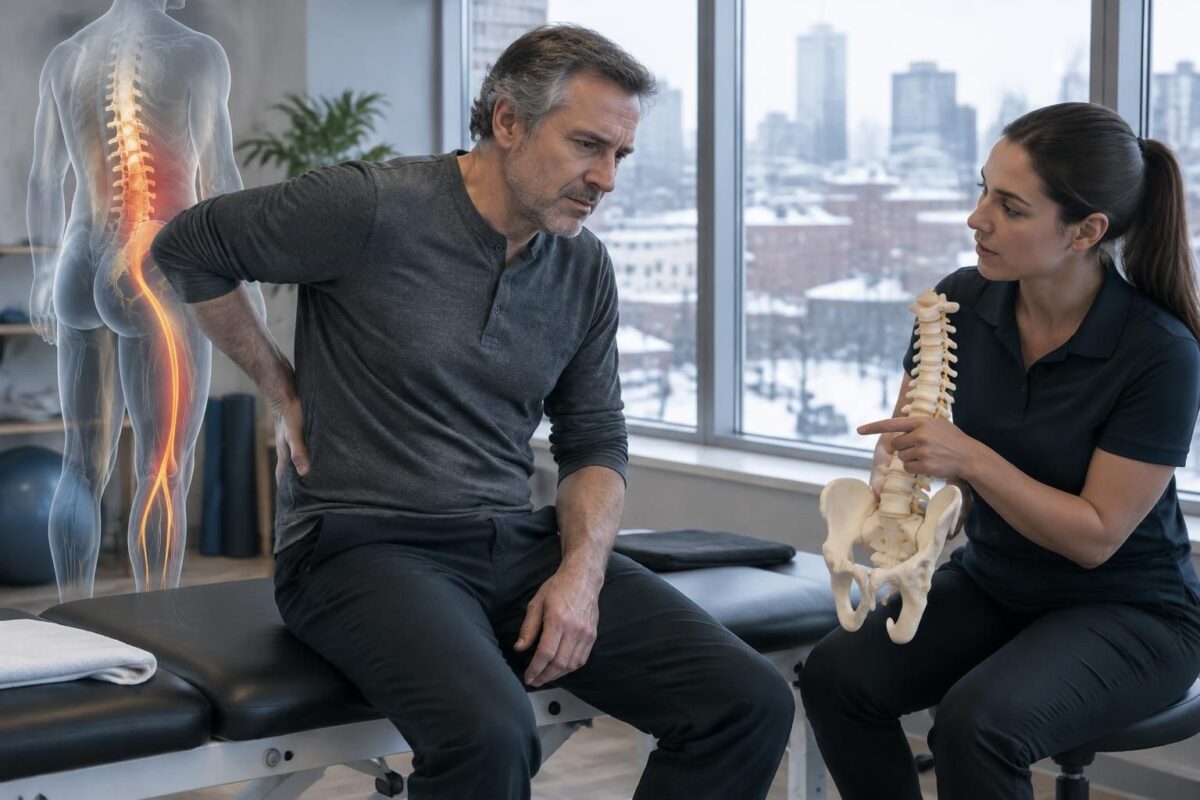
The sciatic nerve is the longest nerve in the body. It starts from the lumbar vertebrae and descends to the tips of the feet. It innervates the tissues at the back of the leg and provides sensations and movements. Pain that reaches the calf may reflect a sensitization of the sciatic nerve, even in the absence of marked lumbar pain.
Possible Causes When Pain Radiates to the Calf
The pain in the calf related to sciatalgia can arise from different mechanisms. A herniated disc can compress a nerve root and cause pain that follows the path of the sciatic nerve. Degenerative changes such as foraminal stenosis or lumbar osteoarthritis can reduce the space around the nerve root and cause pain and paresthesias.
The deep gluteal syndrome can also sensititize the sciatic nerve when certain deep muscles of the buttock become tense. Muscular causes rarely exist as the sole origin, but they can contribute to pain along the nerve’s path.
Typical Signs and Symptoms
The main sign is pain that may start in the lower back and radiate down the leg to the calf or foot. Paresthesias, such as tingling or numbness, may accompany the pain. Muscle weakness or loss of control may occur in some cases.
Pain may be more intense when walking, during prolonged sitting, or when the sciatic nerve is stretched. The painful pathway may follow the branches of the nerve to the calf.
Diagnosis and Assessment
The diagnosis is based on clinical examination and assessment of symptoms. A healthcare professional can determine if the pain reflects irritation or sensitization of the sciatic nerve and specify possible causes, such as discal or degenerative indications.
As part of the evaluation in Montreal, TAGMED Clinic offers an adapted and personalized approach to determine the exact source and appropriate treatment options.
Treatment Options in Montreal
At TAGMED Clinic, care can be adapted based on the evaluation. They may include specific osteopathic techniques or non-surgical approaches. Motorized neurovertebral decompression may be considered when suitable for the situation. The use of interventional procedures is discussed on a case-by-case basis and guided by the clinical evaluation.
It is important to note that treatments do not only involve exercises or stretches. The goal is to reduce pain, improve mobility, and support a return to activity. To learn more about available options, contact TAGMED Clinic.
When to Seek Immediate Care
Consult if calf pain is accompanied by significant loss of sensitivity, progressive weakness, or a recent onset after trauma. Signs such as very intense pain or loss of urinary or bowel control require urgent medical evaluation.
Preventing and Living With It
Maintaining correct posture and avoiding positions that worsen the sciatic nerve pathway can help. Staying active with appropriate activities is recommended while avoiding movements that increase pain. A professional assessment allows for the tailoring of advice and care to each situation.
Resources and Useful Links
To complete the information and explore other perspectives, you can consult the following resources. Note that these links lead to recognized sites in the field.
Numbness of the Foot and Sciatalgia
Sciatica and Pain that Increases While Standing
Deep Gluteal Pain and Radiation in the Thigh
Herniated disc and sciatica – the importance of evaluation
Sciatica in the calf – causes and when to consult
Progressive numbness – why not wait
Calf pain and sciatica in Montreal
Understanding sciatic nerve pain
Medical disclaimer: The information and advice provided on this site do not replace the opinion, diagnosis, or treatment of a healthcare professional. Please note that Sylvain Desforges, B.Sc., D.O., N.D., Doctor of Osteopathy, is neither a medical doctor nor a physician, and is not a specialist in any medical specialty as defined by the Collège des médecins du Québec. Manual therapy, functional medicine, and sports medicine as described on this site exclude any medical treatment or diagnosis made by a physician or specialist. Always consult your doctor for any medical questions. For more details, please read our full Legal Notice.
- Symptoms: pain radiating from the calf, paresthesias, possible weakness, without marked low back pain.
- Causes to consider: sciatica peripherally; other causes such as cramps or neuropathy.
- Warning signs: persistent pain, progression, loss of strength, swelling, fever.
- Rapid differentiation: targeted clinical examination focusing on walking, sensitivity, and reflexes of the calf.
- Action in Montreal: quick consultation with an osteopath or physiotherapist for assessment and personalized plan.
- Non-invasive plan: progressive exercises, manual therapy, postural advice, and adapted activity.
- Goals: reduce pain, restore mobility, and strengthen the lumbar-pelvic area.
- When to act: intense pain, inability to walk, or warning signs — schedule an appointment quickly.

This recommendation addresses a common situation in Montreal: pain felt in the calf without marked low back pain, potentially related to sciatica. It describes possible causes, signs to watch for, and appropriate non-surgical approaches to regain mobility and comfort, with an emphasis on options available locally.
Understanding calf pain associated with sciatica
The sciatic nerve is the longest in the body and runs from the lumbar segments down to the foot. When this nerve is sensitized or irritated, pain can manifest not only in the back but also along its path to the calf and beyond. In these situations, the pain may primarily appear at the level of the calf, with sensations of burning, tugging, or electric shocks, even if the back experiences little pain.
Why the calf may be affected without marked low back pain
Pain is not necessarily proportional to the intensity of low back pain. Pathological sensitization of the nerve root can generate symptoms along the path of the sciatic nerve, including in the calf. Factors such as a herniated disc, foraminal stenosis, or deep gluteal syndrome may be at play without significant back pain apparent.
Differences with other calf causes
Muscle pain, cramps, or vascular causes can also cause calf pain. An accurate diagnosis is essential to distinguish a sciatica from other origins and to avoid inappropriate treatments.

Sciatica disc in Montreal: why the pain travels down the leg
IN BRIEF Disc herniated sciatica occurs when a lumbar disc irritates or compresses a nerve root, which can cause pain to radiate down to the buttock and leg. In Montreal, an evaluation helps understand the cause of the symptoms and…

L4-L5 disc herniation and sciatica in Montreal: pain towards the foot
IN BRIEF An L4-L5 disc herniation can irritate the L5 nerve root and cause sciatica that radiates down to the top of the foot or the big toe. Burning sensations, tingling, and pain when walking may occur. In Montreal, a…
Possible causes when pain is primarily in the calf
Irritated or sensitized nerve root
A herniated disc or degenerative changes in the lumbar region can compress a nerve root and produce pain radiating into the calf, even if there is little back pain.
Deep gluteal syndrome
The deep gluteal syndrome can irritate the sciatic nerve when it passes near the deep muscles of the buttock. Several muscles may be involved and contribute to referred pain in the calf.
Muscle and myofascial causes
Chronic tension in the muscles of the buttock and calf can influence the path of the sciatic nerve and exacerbate symptoms, even in the absence of significant back pain.

Herniated Disc L5-S1 and Sciatica in Montreal: Common Symptoms
IN BRIEF A L5-S1 disc herniation is a displacement of the disc located between the last two lumbar vertebrae and the sacrum; if it irritates a nerve root, it can cause sciatica. The pain often radiates from the buttock down…

Sciatica and disc herniation in Montreal: understanding the link
IN BRIEF Sciatica is a pain that radiates down the leg when a nerve root is irritated; a lumbar herniated disc can be the cause, but is not always responsible. In Montreal, an assessment helps to better understand the symptoms,…
Evaluation and diagnosis in Montreal
What the professional looks for
A specialist evaluates the entire nerve path, looks for signs of radiation, weakness, or loss of sensation, and distinguishes lumbar-radicular origins from purely muscular or vascular disorders. A personalized approach is favored to adapt the treatment plan.
When to consult quickly
Consult if warning signs appear: progressive weakness of a calf or foot, loss of urinary or bowel control, suddenly aggravated pain, or swelling and warmth in the calf suggesting a vascular complication.
Sciatica in Montreal: lumbar roots and choice of a cautious treatment
IN BRIEF Sciatica is pain radiating from the buttock down the leg, often related to irritation of a lumbar root. In Montreal, a careful assessment helps to connect symptoms to function and to choose appropriate management: modified activity, rehabilitation, or…

Sciatica in Montreal: how to interpret pain according to the leg path
IN BRIEF Sciatica refers to pain that can follow a nerve root from the lower back to the buttock and the leg. Its path, along with tingling, numbness, or weakness, helps guide the evaluation but is not sufficient to make…
Treatment and practical advice in Montreal
Non-surgical approaches
Physiotherapy and osteopathy offer personalized plans combining targeted exercises, manual therapy techniques, and postural advice to reduce pain, restore mobility, and strengthen the lumbar-pelvic region. The goal is to reduce pain in the calf while preserving the function of the sciatic nerve.
Exercises and posture in daily life
Gentle and progressive movements, tailored to your condition, can promote recovery without worsening pain. Maintaining an upright posture, avoiding positions that excessively stretch the nerve, and alternating between sitting and standing can aid recovery.
When to Consider Other Options
Depending on the assessment, complementary treatments such as temporary pharmacological advice or targeted measures (e.g., specific nerve depilation techniques or foraminal blocks if medically necessary) can be discussed with your healthcare professional to optimize the treatment plan and speed up the return to your activities.
Practical Tips for Montreal
In Montreal, prioritize professionals who can assess both the nerve and musculoskeletal components and offer a structured program over several weeks. The key is a holistic, gradual approach tailored to your daily life, to resume your activities pain-free and prevent recurrences.
| Factors to Consider | Concise Description |
|---|---|
| Location and Type of Pain | Painful calf with little or no marked low back pain; distinguish sciatica from other causes. |
| Character and Evolution | Burning, throbbing, or electric pain; may be intermittent. |
| Paresthesia and Weakness | Paresthesia or possible weakness of the foot or ankle in case of root involvement. |
| Probable Causes | Disc herniation or foraminal stenosis; deep gluteal syndrome. |
| Triggering Factors | Repeated efforts, prolonged postures, and flexion irritating the sciatic nerve. |
| Signs to Monitor | Pain that worsens with effort; radiation along the path; persistent paresthesia. |
| Useful Examinations | Neurological examination; imaging if discal or foraminal suspicion, specialized assessment. |
| Non-Surgical Approaches | Targeted physiotherapy; progressive exercises; adapted physical activity and pain management. |
| Daily Tips | Maintain correct posture, avoid prolonged sitting, stay active with suitable activities. |
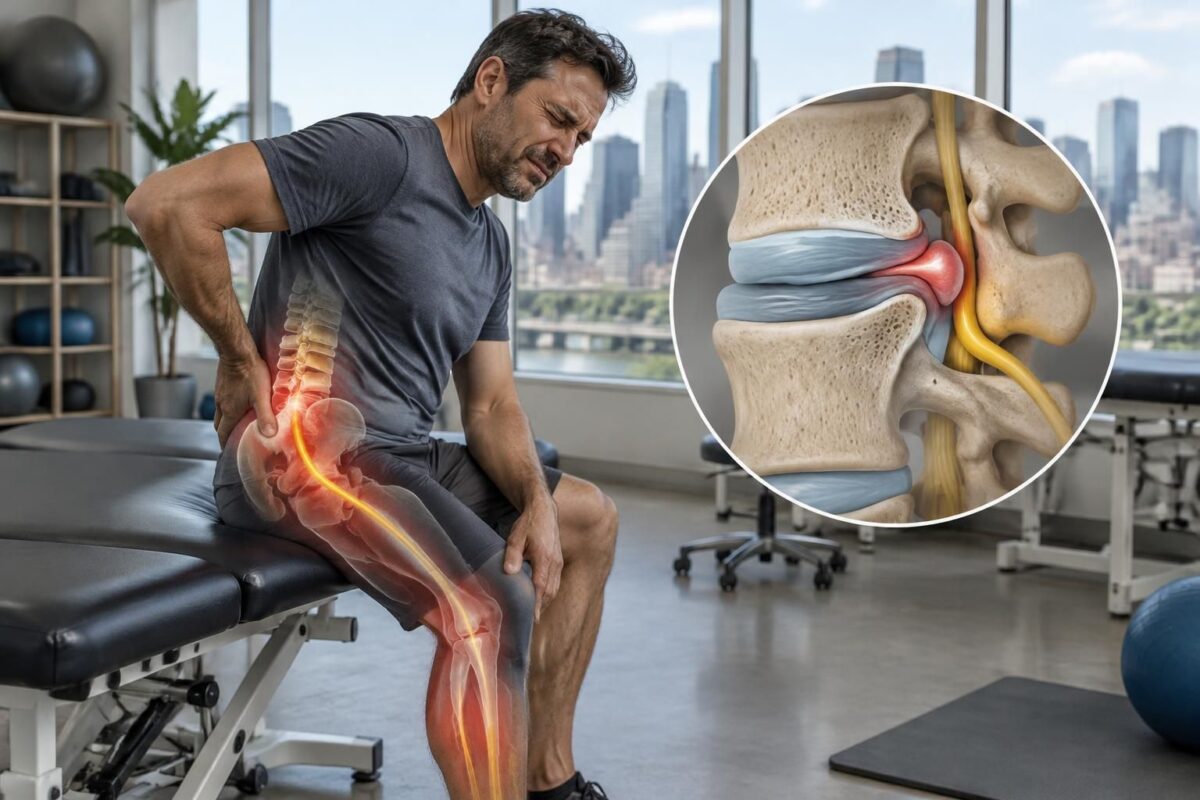
Sciatica in Montreal: L5-S1, canal, foramen, and nerve compression
IN BRIEF Sciatica related to L5-S1 can occur when a nerve root is irritated or compressed, particularly due to narrowing of the spinal canal or the foramen, the opening through which the nerve exits the spine. It can cause pain,…
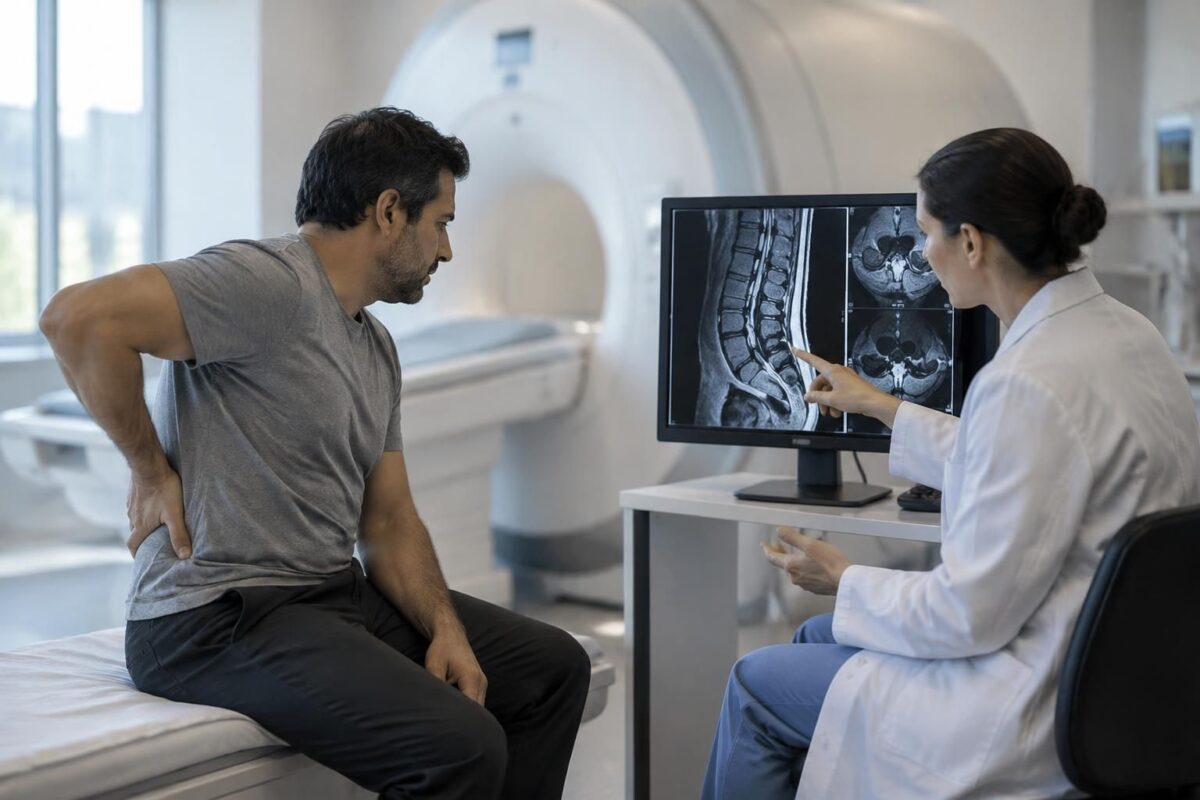
Sciatica in Montreal: why an MRI must be correlated with symptoms
IN BRIEF An MRI for sciatica shows structures in the lower back, but an anomaly alone does not prove the cause of the pain. It must be compared with the symptom pathway, the affected side, and the neurological examination. This…
Testimonials on Sciatica in Montreal: Calf Pain without Significant Low Back Pain
“From Montreal, I felt pain in my calf that seemed to come from the sciatic nerve. There was no significant low back pain, yet every step was pulling. After specialized care focused on sciatica, exercises, and postural advice, the calf relaxed, and I returned to my activities pain-free.”
“As a runner, the path of the sciatic nerve especially pulled at my calf after long runs, with no notable pain in my lower back. Montreal is my go-to for care: targeted osteopathy and exercise programs that got me running again without limits.”
“I work standing all day in Montreal, and my calf pain was constant, but my lower back was not painful. Thanks to an approach targeting sciatica and myofascial tension, I regained normal mobility and long-lasting improvement.”
“My son and I appreciated the advice on staying active in Montreal. Sciatica gave me pain in my calf that appeared during certain movements, without penetrating low back pain. Osteopathic treatment and exercises helped me resume my family activities.”
“After a sudden pain in my right calf, without obvious low back pain, I consulted in the Montreal area. The diagnosis of sensitized sciatica was explained clearly, and the rehabilitation plan was effective, with notable improvements within weeks.”
“As an amateur athlete, I was looking for a quick solution for my calf pain related to the sciatic nerve. I appreciated the tailored exercises and the personalized follow-up in Montreal that allowed me to resume my training without relapse.”
Sylvain Desforges, an expert in osteopathy, naturopathy, and manual medicine, is the founding president of TAGMED clinics and ACMA. With a career dedicated to innovation in care, he specializes in chronic pain management and the integration of advanced technologies such as lumbar decompression, laser, and shock wave therapy. His mission is to provide evidence-based care to optimize the health and well-being of his patients, particularly in the context of sciatica in Montreal, when symptoms are primarily expressed in the calf and not significantly in the low back. His approach is based on a comprehensive assessment, prevention, and active recovery in collaboration with patients.
In cases of sciatica, the sciatic nerve provides sensations and movements for the leg. When pain primarily manifests in the calf and the back is not painful, the practitioner seeks to determine if the nerve is sensitized rather than trapped at a single lumbar segment. The path of the sciatic nerve extends from the lumbar region to the toes, passing through the buttock and the back of the thigh and calf. This location can lead to pain, paresthesia, or true weakness despite mild low back pain.
Possible causes of sciatica pain in the calf without dominant low back pain include a disc herniation, degenerative changes leading to foraminal stenosis, or deep tension in the gluteal muscles and lower back. Deep gluteal syndrome, long considered a unique factor, is now analyzed as a set of myofascial tensions that can influence the sciatic nerve, especially when it passes between the deep muscles of the buttock. A precise assessment allows for targeting the real cause(s) and avoiding inappropriate treatments.
The clinical picture may present radiating pain from the lower back to the calf, accompanied by paresthesia and sometimes muscle weakness or loss of endurance in the leg. Symptoms often worsen with walking or certain prolonged postures and may radiate along the path of the sciatic nerve down to the feet or toes, even if the back remains relatively unaffected.
The treatment follows a non-surgical and personalized approach. It aims to reduce pain, restore mobility, and strengthen the lumbopelvic muscles to prevent recurrences. An integrated approach combines osteopathy techniques and rehabilitation exercises, with complementary tools when necessary, such as assistance through motorized decompression, laser approaches, and shockwave treatments. The goal is to enable you to resume your daily and sports activities while minimizing constraints and pain.
In Montreal, the care provided by Dr Desforges and his team is based on a comprehensive evaluation and a clear treatment plan focused on rapid pain reduction while improving mobility and strength in the trunk and lower limbs. Postural advice, adapted exercises, and strategies to remain active while protecting the sciatic nerve are integral to the care pathway, aiming to optimize recovery and minimize the risk of recurrence.
If you suffer from calf pain associated with sciatica and back pain is minimal, a specialized assessment can help identify the origin precisely and benefit from an effective and personalized care plan designed to sustainably improve your quality of life.
This text offers a detailed approach to sciatica in Montreal, particularly when calf pain is present without significant lower back pain. It explores possible mechanisms, clinical signs to watch for, and non-surgical management options, along with useful local resources for a rapid and suitable evaluation.
The sciatic nerve is the longest nerve in the body, running from the lumbar region to the foot. Pain or a burning sensation in the calf may reflect sciatalgia, even when lower back pain is minimal or absent. In 85% of cases, this pain is associated with a herniated disc that sensitizes the nerve root, but other factors like foraminal stenosis or deep gluteal syndrome may also be involved. To understand these mechanisms and the possible treatments in Montreal, you can consult this guide: Understanding Sciatica and Its Treatments in Montreal.
The typical symptoms include pain that may emanate from the lower back and radiate along the course of the sciatic nerve down to the calf and sometimes to the foot. Paresthesias (particularly in the leg), weakness, or sporadic loss of muscle control may accompany these sensations. The pain may affect the lower back, buttock, thigh, calf, and extend to the toes. For a deeper interpretation of the symptoms and signs to watch for after exertion or walking, see: Sciatica and Tingling After Walking.
Several causes may explain this presentation. Besides herniated discs, lumbar osteoarthritis or foraminal stenosis may reduce the space through which the nerve root passes and cause pain along the sciatic pathway. Deep gluteal syndrome (formerly referred to as “piriformis syndrome”) can also irritate the sciatic nerve when certain deep gluteal muscles become tight or painful. For a targeted understanding of the causes and associated signs, you can explore: Herniated Disc and Nerve Irritation and Paramedian Herniated Disc and Possible Pain Pathway.
For individuals presenting calf pain linked to sciatica, non-surgical approaches can be particularly effective. Osteopathy, physiotherapy, and targeted exercises aim to reduce pain, restore mobility, and strengthen the lumbopelvic region. Local resources describe how to interpret the pain and organize treatment: Calf Pain and Sciatica — How to Interpret It, and Sciatica and Calf Pain at TAGMED Clinic.
For those seeking public and professional insights specific to Montreal, resources like Thespinepage provide information on treatments adapted to Montreal’s context, while other practical articles address nighttime pain progression, signs of foot weakness, and situations requiring rapid consultation in Terrebonne or nearby: Nighttime Pain — What to Watch For, Foot Weakness and Sciatica in Terrebonne, and Sciatica and Calf Pain – TAGMED Clinic.
In all cases, a personalized evaluation is essential to distinguish sciatalgia from other pathologies that are less related to nerve roots. For practical advice on adapting activities, postures, and exercises that support mobility without exacerbating pain, consider a consultation with a specialist in Montreal and its surroundings. To broaden your knowledge, you can also read complementary resources on conditions associated with sciatica: Leg Pain Without Back Pain — Possible Causes and Pain and Sleep. If you show signs of nerve sensitivity, a significant loss of strength, or persistent calf pain despite efforts, do not hesitate to seek a specialized assessment: TAGMED Clinic — Sciatica and Calf.

Sylvain Desforges, B.Sc., D.O., N.D., docteur en ostéopathie
Dr Sylvain Desforges, B.Sc., D.O., N.D., osteopath, is the founding president of TAGMED and of the ACMA association. He dedicates his practice to chronic spinal pain, low back pain and symptoms compatible with sciatica, particularly when pain radiates toward the buttock, leg, calf, foot or toes.
Through SOS Sciatique, he publishes educational content on sciatica symptoms, possible causes such as disc herniation, disc narrowing, foraminal stenosis or irritation of a lumbar nerve root, as well as non-surgical approaches that may be considered according to the evaluation. At Clinique TAGMED, care may include, depending on the case, motorized neurovertebral decompression, specific osteopathic care or precision percussion.
For an evaluation related to sciatica treatment in Montreal / Mount Royal or sciatica treatment in Terrebonne, please consult the services available at Clinique TAGMED.
Medical disclaimer
The information published on SOS Sciatique is provided for educational purposes only and does not replace a consultation, diagnosis, opinion or treatment provided by a physician or another authorized healthcare professional. The author of this article is neither a medical doctor nor a specialist in a medical specialty recognized by the Collège des médecins du Québec. The osteopathic, manual medicine or functional support approaches described on this site do not constitute medical acts and are not intended to replace medical follow-up.
Consult a physician or emergency service in cases of loss of bladder or bowel control, anesthesia in the saddle area, significant or progressive weakness in the leg or foot, fever, recent trauma, severe pain or rapid worsening of symptoms. For more details, please read our Legal Notice.