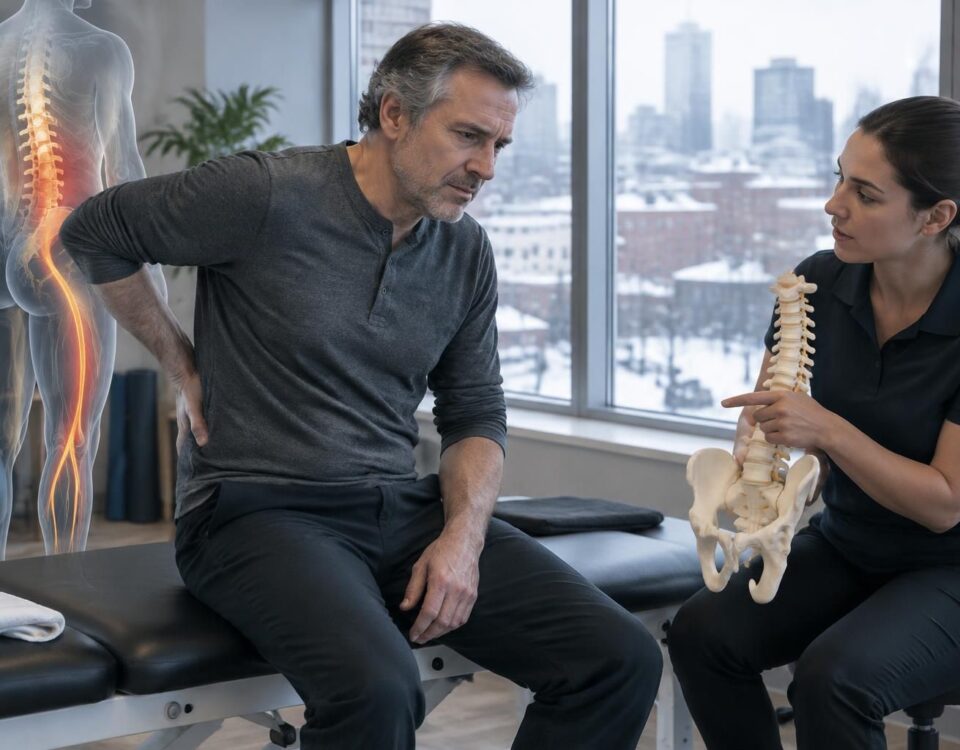
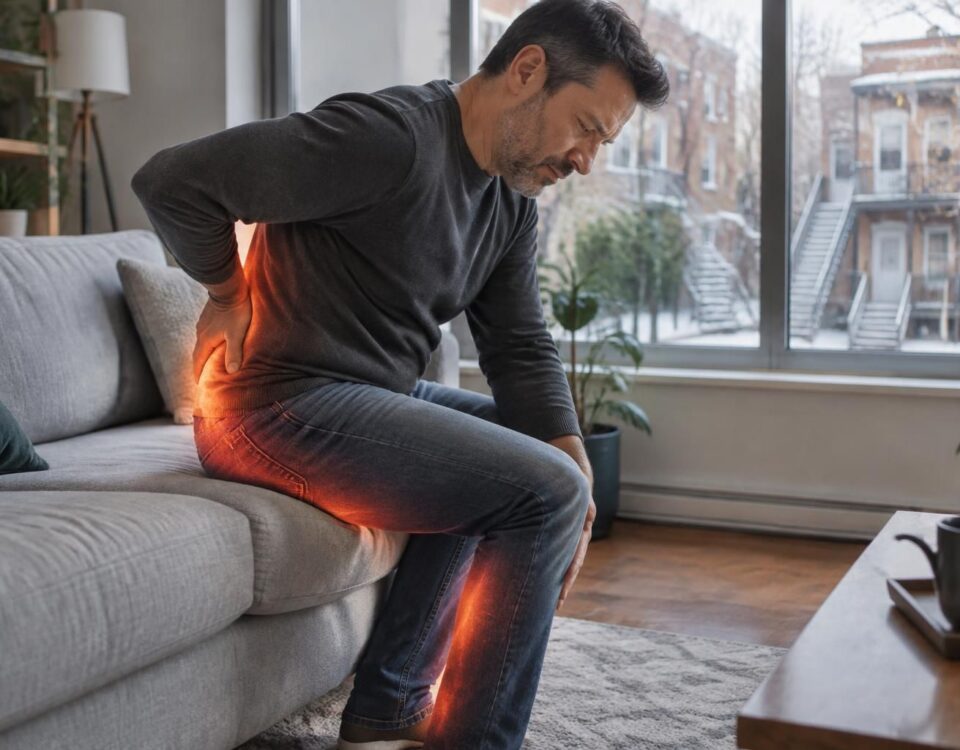
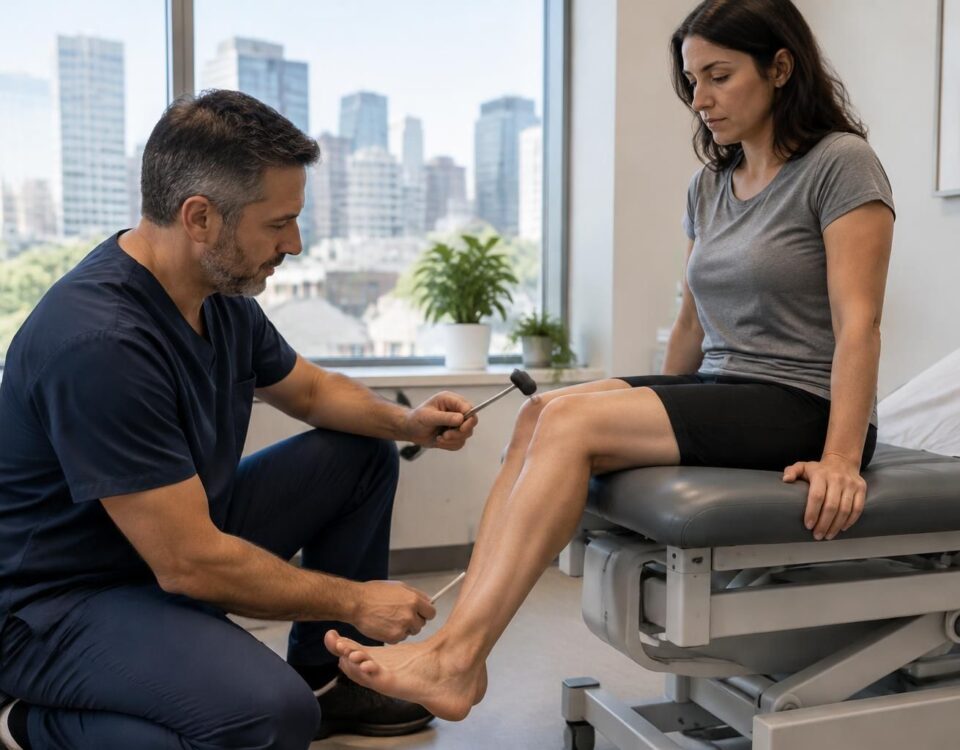
Sciatica and sports: when leg pain should slow you down
08/10/2026
Sciatica in Terrebonne: difference between L4-L5 and L5-S1
09/10/2026
IN BRIEF The difference between L4-L5 and L5-S1 sciatica depends on the affected disc and associated signs: pain, numbness, or weakness may follow different paths, but often overlap. In Montreal, the assessment relates symptoms to strength, sensitivity, and, if necessary, imaging to guide the next steps. No symptom or MRI result alone is sufficient to determine the cause. |
A herniated disc at L4-L5 may irritate the L5 root and lead to pain along the side of the leg and the top of the foot, sometimes extending to the big toe. An injury at L5-S1 may affect the S1 root and result in symptoms in the back of the calf or towards the outer edge of the foot, sometimes accompanied by difficulty standing on tiptoe.
These paths are indicative: symptoms vary and overlap. The level observed on imaging must be compared to pain, strength, sensitivity, and clinical examination to guide management.
Consult without delay in case of new or progressive weakness, foot drop, loss of bladder or bowel control, or numbness in the saddle region.
A herniated disc at L4-L5 or L5-S1 can irritate a nerve root and cause pain that radiates into the buttock or leg. The area of symptoms may provide clues, but it alone cannot identify the affected level. In Montreal, the assessment considers the pain path, strength, sensitivity, walking, and imaging results when relevant.
Understanding L4-L5 and L5-S1 Levels
The lumbar vertebrae are named according to their position. The L4-L5 disc is located between the fourth and fifth lumbar vertebrae. The L5-S1 disc is situated between the last lumbar vertebra and the sacrum. A protrusion or herniation at either of these levels can, in some cases, irritate a nerve root.
The terms “L4-L5” and “L5-S1” describe the location of a disc. They do not automatically confirm the cause of pain. An image must be compared to the symptoms and clinical examination. For an overview of potential links between sciatica and herniated discs, refer to the guide on sciatica and herniated discs.

Sciatica and disc herniation in Montreal: understanding the link
IN BRIEF Sciatica is a pain that radiates down the leg when a nerve root is irritated; a lumbar herniated disc can be the cause, but is not always responsible. In Montreal, an assessment helps to better understand the symptoms,…
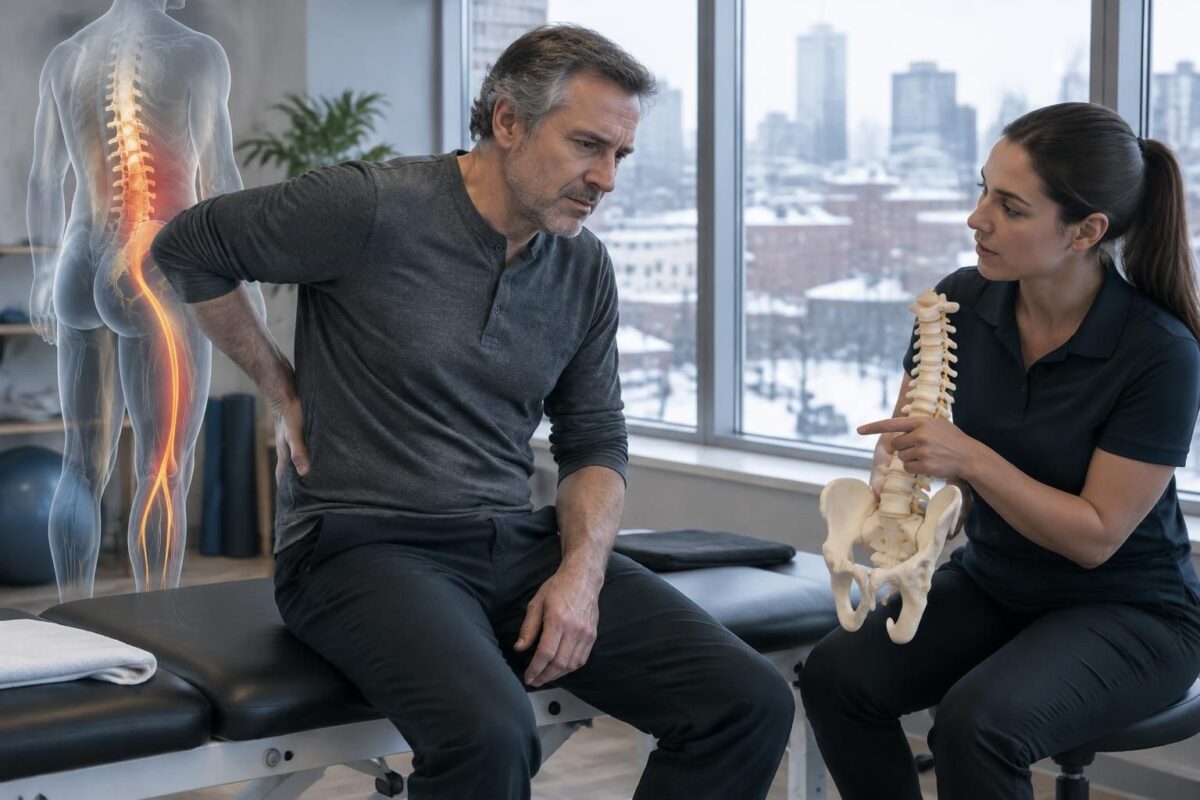
Sciatica in Montreal: lumbar roots and choice of a cautious treatment
IN BRIEF Sciatica is pain radiating from the buttock down the leg, often related to irritation of a lumbar root. In Montreal, a careful assessment helps to connect symptoms to function and to choose appropriate management: modified activity, rehabilitation, or…
Possible Differences Between Symptoms of L4-L5 and L5-S1
Signs Sometimes Associated with L4-L5
An injury affecting the L5 root can cause pain or numbness on the side of the leg, the top of the foot, or near the big toe. Some people also notice difficulty lifting the foot or toes. The presentation varies from person to person and may overlap with other roots.
Pain in the big toe can guide the assessment, but it is not sufficient to confirm an L5 injury. To learn more, read our page on pain in the big toe and the L5 root.
Signs Sometimes Associated with L5-S1
Irritation of the S1 root may be accompanied by symptoms in the back of the thigh or calf, along the outer edge of the foot, or under the foot. Weakness during certain foot movements may also be present. These indicators are general: they are not identical for everyone.
Tingling in the toes may appear in various profiles of sciatica. Their location, duration, and progression matter more than a single sign. Consult the page about tingling in the toes after sitting to better understand this symptom.

Sciatica in Montreal: how to interpret pain according to the leg path
IN BRIEF Sciatica refers to pain that can follow a nerve root from the lower back to the buttock and the leg. Its path, along with tingling, numbness, or weakness, helps guide the evaluation but is not sufficient to make…

Sciatica in Montreal: L5-S1, canal, foramen, and nerve compression
IN BRIEF Sciatica related to L5-S1 can occur when a nerve root is irritated or compressed, particularly due to narrowing of the spinal canal or the foramen, the opening through which the nerve exits the spine. It can cause pain,…
Why Pain Location Alone is Not Enough
The sensory and motor territories of nerve roots overlap. Two individuals with similar imaging findings may describe different symptoms. Conversely, similar symptoms may have distinct causes.
The professional therefore evaluates several elements: the pain pathway, sensitivity, strength, reflexes, walking, and affected activities. They also consider the duration of symptoms and their evolution. The page on the importance of pain localization in sciatica presents these indicators in detail.
An MRI image does not always identify the source of symptoms. Some disc abnormalities do not cause any pain. The clinician checks if the level, side, and type of abnormality match the examination results. To distinguish certain terms used in reports, consult our article on the difference between herniated disc and discopathy as well as the guide on sciatica and disc protrusion.
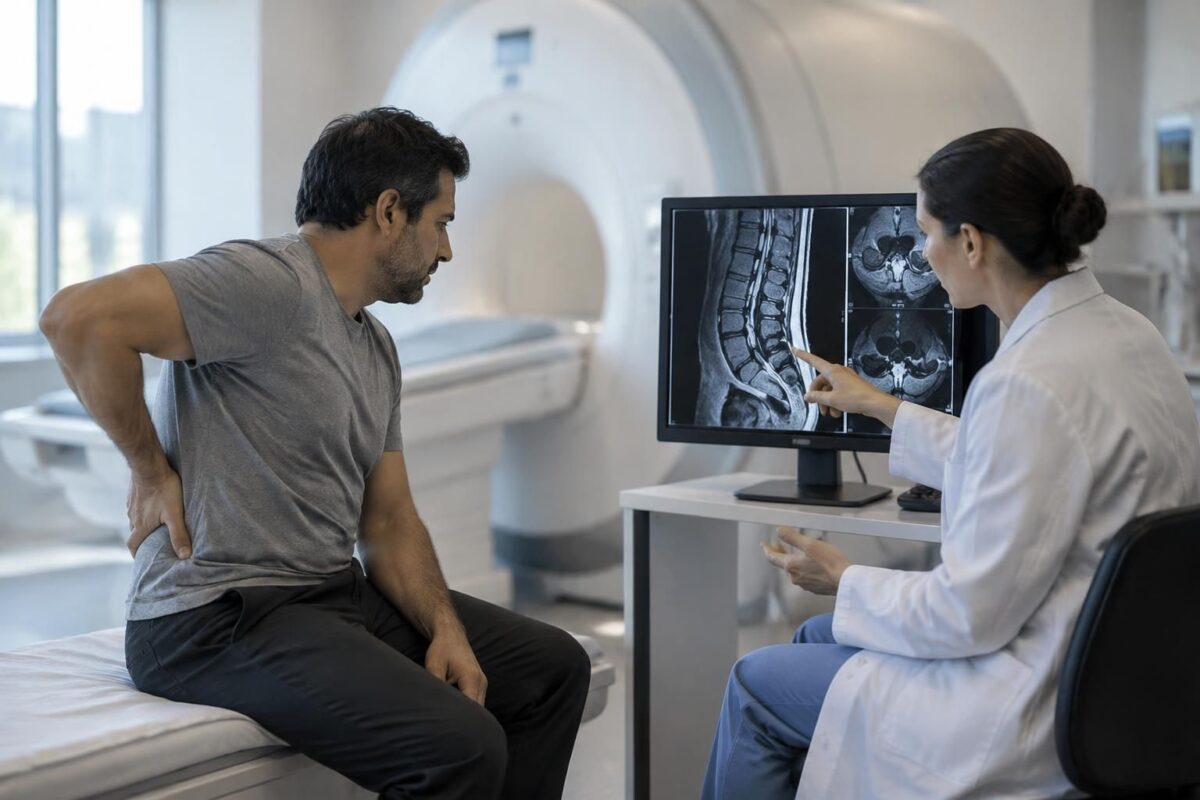
Sciatica in Montreal: why an MRI must be correlated with symptoms
IN BRIEF An MRI for sciatica shows structures in the lower back, but an anomaly alone does not prove the cause of the pain. It must be compared with the symptom pathway, the affected side, and the neurological examination. This…
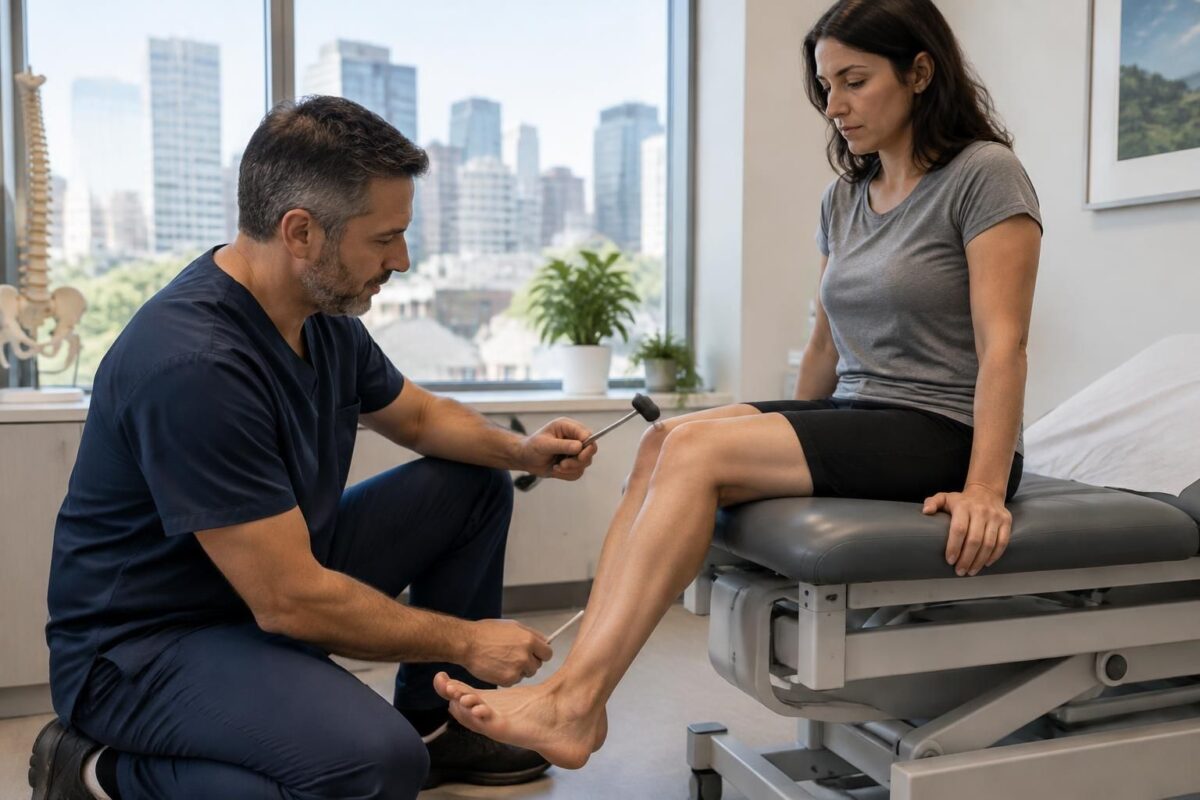
Sciatica in Montreal: reflexes, strength, and sensitivity in evaluation
IN BRIEF The evaluation of sciatica involves examining reflexes, muscle strength, and sensitivity, in addition to the pathway and evolution of pain. In Montreal, these observations help the healthcare professional identify potential neurological signs and guide the next steps. No…
How Does a Sciatica Assessment Work in Montreal?
An assessment begins with a precise description of the symptoms: their pathway, duration, intensity, factors that modify them, and their effect on sleep, work, or walking. The professional then examines strength, sensitivity, and the movements involved. They compare these results to the available examinations, if these are useful for management.
This approach helps determine the next steps and the signs to monitor. Imaging is not necessary in all cases. It may be considered based on context, progression, and whether it will alter treatment decisions. To learn more about a sciatica assessment in Montreal, check the information provided by clinic services.
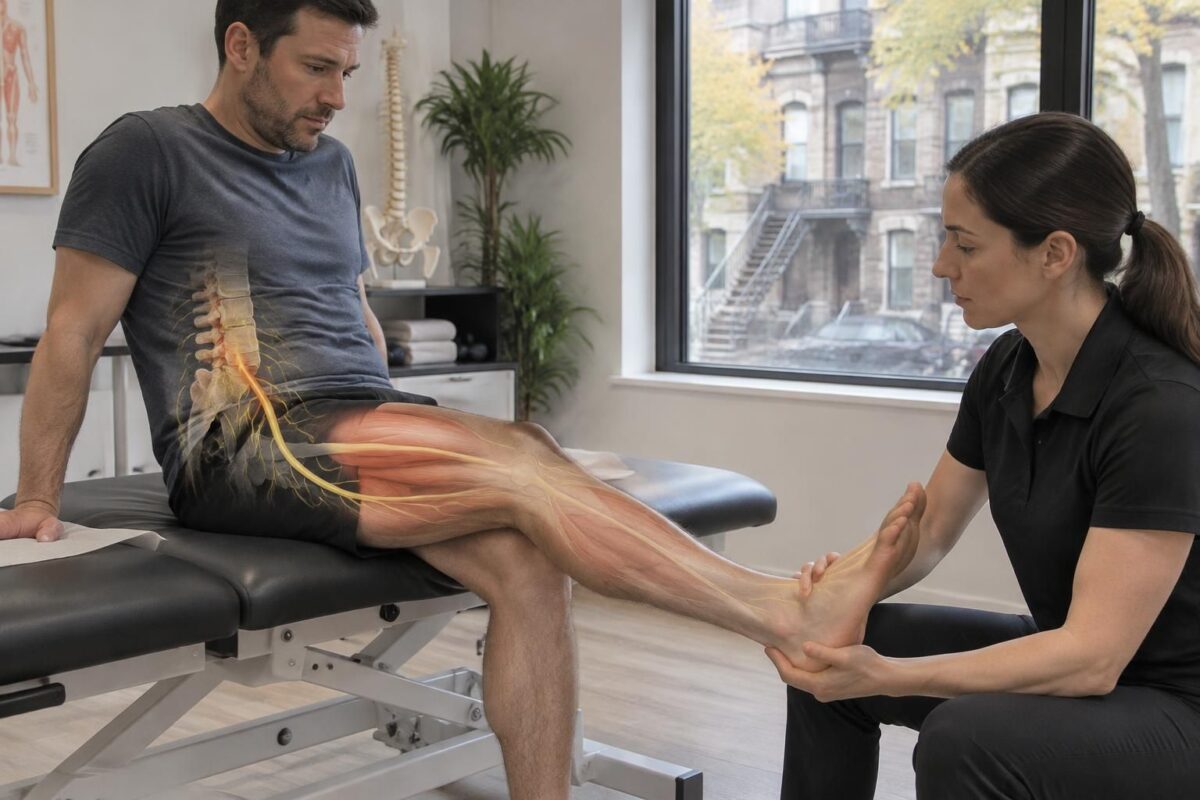
Sciatica in Montreal: Muscle Weakness Based on the Irritated Root
IN BRIEF Sciatica can cause muscle weakness when lumbar nerve roots are irritated. Depending on the affected root, it may become difficult to lift the foot or stand on tiptoes. In Montreal, an assessment of strength, sensation, and pain pathway…
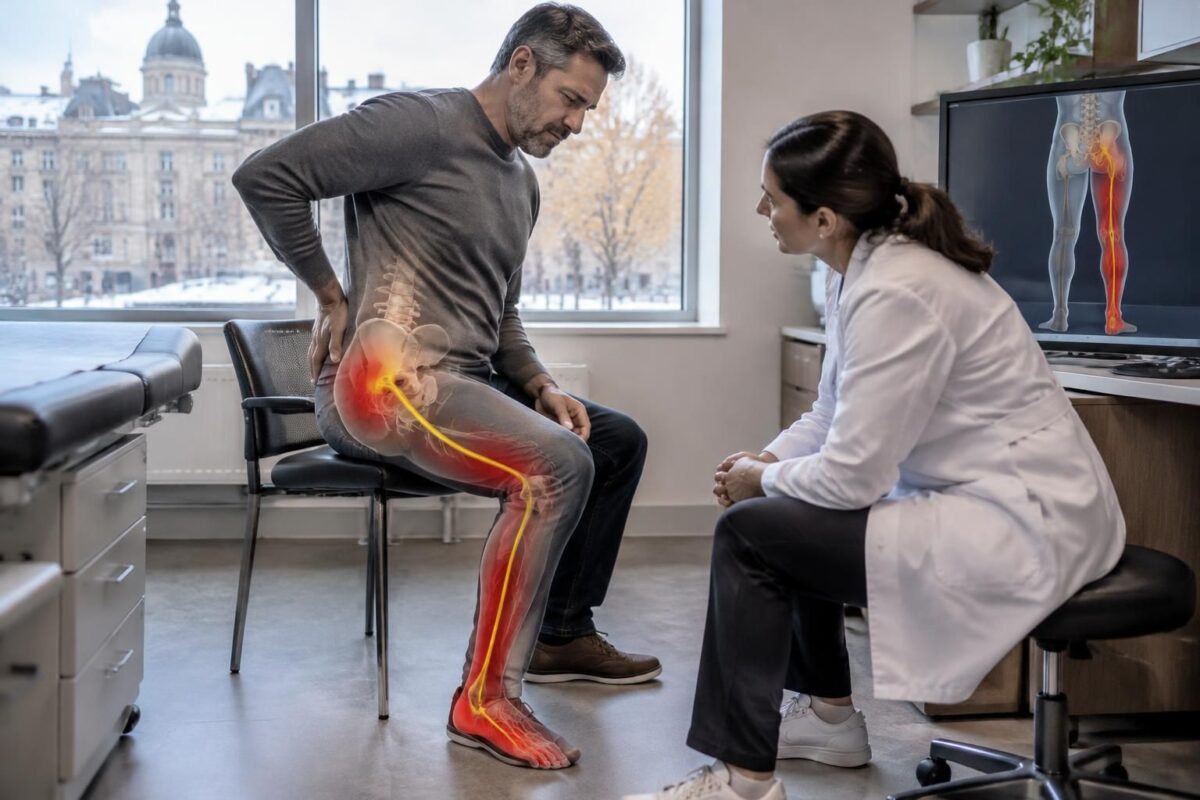
Sciatica in Montreal: nerve pain and sensory territory
IN BRIEF Sciatica is a nerve pain that radiates from the lower back or buttock down the leg. Its sensitive territory varies depending on the affected root and may include burning, tingling, or numbness down to the foot. In Montreal,…
Management Options According to the Profile
Many cases are initially approached with conservative care and monitoring of function. Choices depend on symptoms, examination, history, and progression. There is not a single approach that suits everyone.
At the TAGMED Clinic, the options offered may include specific osteopathy, motorized neurovertebral decompression, or the precision impactor, depending on the evaluation, the professional’s skills, and the services available. These treatments do not guarantee a result and do not replace a medical diagnosis or follow-up. The clinic can also help determine if medical referral or additional examination is indicated.
Progress is also assessed based on the regained abilities: walking, sleeping, working, or resuming important activities. A decrease in pain is useful to track, but it does not always sufficiently describe neurological progression.
When to request a quick or urgent evaluation?
A new, marked, or rapidly worsening weakness requires quick medical evaluation. A foot drop, a leg that gives way further, or a significant deterioration in walking should also be taken seriously.
Consult immediately in case of loss of control over the bladder or bowels, numbness in the saddle region or perineum, or major weakness that is progressing. A fever, significant trauma, severe symptoms in both legs, or general deterioration may also justify urgent evaluation.
Frequently asked questions about L4-L5 and L5-S1
Can an MRI alone confirm the cause of sciatica?
No. An MRI shows the structures of the back, but its results must correspond to the affected side, the symptom pattern, and the conclusions of the clinical examination.
Does pain in the big toe always mean L5 involvement?
No. This symptom may guide the evaluation, but it does not pinpoint a root with certainty. Strength, sensitivity, and other signs must also be examined.
Is an MRI needed for all sciatica?
No. Imaging is requested when the clinical context justifies it or when its result could change the management.
Can weakness in the leg wait for a routine appointment?
A new, significant, or progressive weakness deserves quick evaluation, especially if it alters walking or foot control.
About the author
Sylvain Desforges, B.Sc., D.O., N.D., Doctor of Osteopathy, is the founding president of TAGMED and the ACMA association. His practice focuses on chronic pain of the spine, lower back pain, and pain compatible with sciatica, particularly when symptoms radiate down to the buttock, leg, calf, foot, or toes.
Through SOS Sciatique, he publishes educational content on sciatica symptoms, possible causes, and non-surgical approaches that can be considered after an evaluation. At the TAGMED Clinic, care may include, depending on the case, motorized neurovertebral decompression, specific osteopathy, or precision impactor.
For an assessment related to sciatica treatment in Montreal and Mont-Royal or sciatica treatment in Terrebonne, check the available services at the TAGMED Clinic.
Medical disclaimer
The information and advice provided on this site do not replace the opinion, diagnosis, or treatment of a healthcare professional. Please note that Sylvain Desforges, B.Sc., D.O., N.D., Doctor of Osteopathy, is neither a medical doctor nor a physician and is not a specialist in a medical specialty as defined by the Quebec College of Physicians. Manual medicine, functional medicine, and sports medicine as described on this site exclude any medical treatment or diagnosis made by a doctor or specialist. Always consult your physician for any medical questions. For more details, please read our complete legal notice.
The information published on SOS Sciatique is provided for educational purposes. It does not replace a consultation, diagnosis, opinion, or treatment performed by a physician or another licensed healthcare professional. The author of this article is neither a doctor nor a specialist in a medical specialty recognized by the Quebec College of Physicians. The osteopathic, manual medicine, or functional support approaches described on this site are not medical acts and are not intended to replace medical follow-up.
Consult a physician or emergency service in case of loss of bladder or bowel control, anesthesia in the saddle area, significant or progressive weakness of the leg or foot, fever, recent trauma, severe pain, or rapid worsening.
Sciatica in Montreal: markers between L4-L5 and L5-S1
L4-L5 Herniation — L5 root often involved
- Pain or numbness: side of the leg, top of the foot, or big toe.
- Possible weakness: lifting the foot or big toe.
L5-S1 Herniation — S1 root often involved
- Pain or numbness: back of the calf or outer edge of the foot.
- Possible weakness: standing on tiptoes.
Key point: symptoms may overlap. The level of imaging should be correlated with the examination, strength, sensitivity, and progression.

In Montreal, sciatica associated with L4-L5 and sciatica associated with L5-S1 can cause pain that radiates down the leg, but their pathways and certain neurological signs may differ. The level indicated by imaging is not sufficient to identify the cause: it must be correlated with pain, strength, sensitivity, walking, and the evolution of symptoms. Here’s how to understand these differences and what steps to consider.
What do L4-L5 and L5-S1 mean?
These names refer to two spaces between the lumbar vertebrae. A herniated disc or another change at one of these levels can irritate a nerve root. Depending on its location, it may affect a different root: an L4-L5 disc issue often involves the L5 root, while an L5-S1 issue may affect the S1 root. These are possible presentations, not a rule for self-diagnosis.
It is therefore important to distinguish the disc level from the name of the potentially irritated nerve root. The MRI report describes images; clinical assessment checks if these results align with the symptoms and function.
Possible differences in symptoms
Irritation related to L4-L5
When the L5 root is affected, pain or tingling sensations can extend down the side of the leg and the top of the foot, sometimes reaching the big toe. Some people notice difficulty lifting the foot or the toes. These signs vary and are not present in everyone.
Irritation related to L5-S1
Affecting the S1 root may also be associated with symptoms at the back of the calf or toward the outer edge of the foot. Difficulty standing on tiptoes may also be assessed during the examination. Again, the sensory territories overlap: the location of pain alone does not confirm the level involved.
How to guide the evaluation?
For a sciatica in Montreal, prepare precise information: how long symptoms have been present, their pathway, what triggers or alleviates them, and activities that have become difficult. Report any numbness, changes in strength, or modifications in walking. An authorized professional can evaluate strength, sensation, reflexes, and relevant movements, then compare these observations to available tests.
Imaging is not necessary in every situation. It is considered when the clinical context justifies it or when its results may influence subsequent decisions. Avoid concluding that a visible anomaly automatically explains your pain; likewise, do not rely on a single test or symptom.
What recommendations to follow?
In the absence of warning signs, it is generally better to adapt activities rather than halt everything. Maintain, if possible, tolerated movements and gradually resume efforts. Conservative options, like exercise or rehabilitation, should be chosen according to your situation and reevaluated if pain, function, or neurological signs change.
An evaluation related to sciatica at TAGMED Clinic in Montreal / Mont-Royal may help discuss symptoms and possible options. Care depends on the evaluation and is provided by professionals according to their qualifications and scope of practice.
When to seek urgent help?
Consult promptly in case of new or progressive weakness, dropped foot, or increased leg weakness. New urinary or bowel issues, numbness in the saddle area, significant weakness, fever, or major deterioration require urgent medical evaluation. These situations should not wait for a routine appointment.
About the author
Sylvain Desforges, B.Sc., D.O., N.D., Doctor of Osteopathy, is the founding president of TAGMED and the ACMA association. His educational content focuses on chronic spinal pain and symptoms compatible with sciatica.
Medical disclaimer
This text provides general information and does not replace consultation, diagnosis, or treatment by an authorized healthcare professional. The author is neither a physician nor a specialist in a medical specialty recognized by the Collège des médecins du Québec. Results and timelines vary depending on each individual’s situation.
| L4-L5 | L5-S1 |
|---|---|
| Often affected root: L5 | Often affected root: S1 |
| Possible pain: side of the leg, top of foot, or big toe | Possible pain: back of the calf or outer edge of the foot |
| Possible weakness: lifting the foot or big toe | Possible weakness: standing on tiptoes |
| To remember: symptoms vary and do not solely confirm the affected level | To remember: symptoms vary and do not solely confirm the affected level |
| Evaluation: compare symptoms, strength, sensation, and imaging | Evaluation: compare symptoms, strength, sensation, and imaging |
Illustrative testimonials: understanding the difference between L4-L5 and L5-S1 in Montreal
Note: the narratives below are fictitious examples, written for educational purposes. They do not correspond to real patient testimonials and cannot solely determine a diagnosis based on symptoms.
“My pain went down the top of my foot” — example associated with L4-L5
In Montreal, a person describes pain in the lower back that travels through the buttock and the side of the leg, with tingling towards the top of the foot and the big toe. This pathway may be compatible with irritation of the L5 root, sometimes related to a disc issue at L4-L5. However, the location of symptoms varies and must be compared to strength, sensation, and gait.
“I mostly had pain behind my calf” — example associated with L5-S1
Another person reports pain that starts from the buttock and descends behind the thigh and calf, sometimes to the outer edge of the foot. This presentation may suggest irritation of the S1 root, especially when a disc problem affects the L5-S1 level. However, the pathway alone is not sufficient to confirm the cause or the level involved.
“My MRI mentioned L4-L5, but my symptoms didn’t exactly match”
An imaging result should be interpreted with caution. A visible anomaly at L4-L5 or L5-S1 does not automatically mean it explains the pain. The professional considers the affected side, the pathway of symptoms, strength, sensation, reflexes, and the evolution of function.
“I didn’t know if my numbness indicated L5 or S1”
The sensory territories associated with the nerve roots overlap and are not the same for everyone. Numbness in the foot, calf, or toes does not, on its own, distinguish L4-L5 from L5-S1. The clinical examination gathers several clues rather than relying on an isolated symptom.
“What helped me track my progress was my ability to walk”
To evaluate changes, pain is not the only useful marker. Walking, sleeping, working, and daily activities can also be tracked, as well as strength and sensitivity. Conservative management may be considered depending on the profile, with a reevaluation if function or neurological signs deteriorate.
In Montreal, a well-structured evaluation can help link symptoms, examination, and imaging results when relevant. Management options depend on each situation; a consultation does not guarantee a particular outcome and does not replace medical advice when needed.
Consult quickly in cases of new or progressive weakness, foot drop, or worsening of walking. New urinary or bowel problems, loss of sensation in the saddle area, or significant weakness require urgent medical evaluation.
Sciatica in Montreal: understanding the difference between L4-L5 and L5-S1
Sciatica refers to pain that sometimes follows the path of the sciatic nerve, from the lower back or buttock down to the leg. It may be accompanied by tingling, numbness, or weakness. In Montreal, people looking to understand their symptoms often encounter the terms L4-L5 and L5-S1. They indicate two levels located in the lower part of the lumbar spine, where a herniated disc or another change may, in some cases, irritate a nerve root.
Between two vertebrae is a disc that helps distribute loads and allows movement. At L4-L5, the disc is located between the fourth and fifth lumbar vertebrae; at L5-S1, it is located between the last lumbar vertebra and the sacrum. These levels are frequently observed when evaluating lower back pain with radiation, but their mere presence on an X-ray or MRI does not identify the cause of the symptoms.
An issue at the L4-L5 level may irritate the L5 root. Depending on the person, the pain or abnormal sensations may extend down the side of the leg and travel towards the top of the foot or the big toe. Certain movements of the foot or toes may also be affected. However, sensory territories overlap and vary from person to person: pain in this area is not sufficient to confirm an L5 issue.
At the L5-S1 level, irritation of the S1 root may be associated with symptoms at the back of the thigh or calf, or towards the outer edge of the foot. Changes in strength, especially during certain ankle movements, may sometimes be observed. Again, these descriptions are general guidelines, not a means to self-diagnose. A person’s symptoms do not always follow a “classical” pathway.
To distinguish between the two levels, the evaluation relates multiple elements: the path and evolution of pain, sensitivity, strength, reflexes, walking, and activities that have become difficult. Imaging examinations, when relevant, are interpreted alongside these data. A visible anomaly on an MRI may be present without explaining the symptoms; conversely, the decision to request imaging depends on the context and clinical question.
Management varies depending on function, neurological signs, history, and progression. A conservative approach may include, depending on the evaluation, activity advice, gradual progression of movements, and rehabilitation. At TAGMED Clinic, options may also include specific osteopathic care or motorized neurovertebral decompression, depending on the profile and available services. Interventions and recovery times are not the same for everyone.
Sylvain Desforges, B.Sc., D.O., N.D., is an osteopath and founding president of TAGMED clinics and the ACMA association. His practice focuses on chronic back pain and back pain associated with sciatica. His approach emphasizes the evaluation of the profile, function, and progression to guide individuals towards suitable options and evidence-based care. Care is provided by professionals according to their qualifications and scope of practice.
A new or progressive weakness, a foot drop, a leg giving way, or rapid deterioration in walking justifies a prompt medical evaluation. New urinary or bowel problems, loss of sensation in the saddle area or perineum, or major weakness require urgent medical evaluation. This information is educational and does not replace a diagnosis or follow-up by a licensed healthcare professional.
In Montreal, the difference between sciatica associated with the L4-L5 and L5-S1 levels is not determined solely by pain or an MRI image. The path of symptoms, strength, sensitivity, reflexes, and their evolution must be considered together: these levels may affect different nerve roots, but their signs overlap and vary from person to person.
L4-L5 and L5-S1: indicators, not a diagnosis on their own
A herniated disc at the L4-L5 level may irritate the L5 root. Symptoms may then manifest in the buttock, side of the leg, or top of the foot, sometimes extending to the big toe. At the L5-S1 level, irritation of the S1 root may, among other things, cause pain towards the back of the calf or the outer edge of the foot. These descriptions are general markers: they do not, on their own, confirm the level involved.
The sensory and motor territories overlap. For example, pain in the foot is not sufficient to identify a specific root. To better understand the clues associated with L4, L5, and S1, consult the guide on nerve roots and sciatica. The guide dedicated to pain along the outer edge of the foot and the S1 root also provides guidelines, without replacing a clinical examination.
Reading symptoms as a whole
Radiating pain, tingling, numbness, and weakness do not provide the same information. An assessment takes into account their location, duration, and triggers, but also gait, foot movements, sensitivity, and reflexes. The distinction between sciatic-type pain and pain that may be due to femoral neuralgia also depends on the pathway and examination; the guide sciatica or femoral neuralgia: how to differentiate them presents these general distinctions.
The link between discs and nerve roots must also be interpreted with caution. An image may show disc alteration without necessarily explaining the symptoms. To delve deeper into the subject, you can consult the explanations on the meaning of a disco-radicular conflict, as well as this guide on sciatica in the absence of a herniated disc.
The resources dedicated to herniated discs L4-L5 and L5-S1 and discopathies at these levels can complement this information. For an overview of symptoms and management options, also consult the complete guide on sciatica or the information page of the Omicron Clinic.
Why evolution and function matter
A structured approach involves describing the pathway of pain and its evolution, examining strength, sensitivity, and gait, and then correlating these observations with available exams when indicated. An MRI is not necessary for every radiating pain; its usefulness depends on the clinical context and the likelihood that it will influence management decisions.
In many cases, the first options are conservative and tailored to the person’s tolerance: maintaining possible activities, temporary adjustment of efforts, and gradual progression. The aim is to monitor not only the intensity of pain but also practical abilities such as walking, sleeping, working, or resuming certain tasks. Consulting a qualified professional can help clarify the next steps. To learn about available services for sciatica treatment in Montreal, visit the TAGMED Clinic; the care offered depends on the assessment and the professionals involved.
A new or rapidly progressing weakness, a dropped foot, a leg giving way further, new urinary or bowel disturbances, or numbness in the saddle area require prompt or urgent medical evaluation. A marked deterioration in gait, significant symptoms on both sides, major trauma, fever, or a general altered state also justify not waiting for a routine appointment.
About the author
Sylvain Desforges, B.Sc., D.O., N.D., Doctor of Osteopathy, is the founding president of TAGMED and the ACMA association. His practice is dedicated to chronic spinal pain, lower back pain, and pain compatible with sciatica, particularly when the pain extends to the buttock, leg, calf, foot, or toes.
Through SOS Sciatique, he publishes educational content on sciatica symptoms, possible causes, and non-surgical approaches that can be considered based on the assessment. At the TAGMED Clinic, care may include, depending on the case and available professionals, motorized neurovertebral decompression, specific osteopathy, or precision percussion.
Medical disclaimer
This page is provided for educational purposes and does not replace a consultation, diagnosis, advice, or treatment by a physician or another qualified healthcare professional. The author is neither a physician nor a specialist in a medical specialty recognized by the Collège des médecins du Québec. The osteopathy, manual medicine, or functional support approaches described on this site do not constitute medical acts and are not intended to replace medical follow-up.
Consult a doctor or an emergency service in case of loss of bladder or bowel control, numbness in the saddle area, significant or progressive weakness of the leg or foot, fever, recent trauma, severe pain, or rapid deterioration. For more details, please read the Legal Notice of SOS Sciatique.

Sylvain Desforges, B.Sc., D.O., N.D., docteur en ostéopathie
Dr Sylvain Desforges, B.Sc., D.O., N.D., osteopath, is the founding president of TAGMED and of the ACMA association. He dedicates his practice to chronic spinal pain, low back pain and symptoms compatible with sciatica, particularly when pain radiates toward the buttock, leg, calf, foot or toes.
Through SOS Sciatique, he publishes educational content on sciatica symptoms, possible causes such as disc herniation, disc narrowing, foraminal stenosis or irritation of a lumbar nerve root, as well as non-surgical approaches that may be considered according to the evaluation. At Clinique TAGMED, care may include, depending on the case, motorized neurovertebral decompression, specific osteopathic care or precision percussion.
For an evaluation related to sciatica treatment in Montreal / Mount Royal or sciatica treatment in Terrebonne, please consult the services available at Clinique TAGMED.
Medical disclaimer
The information published on SOS Sciatique is provided for educational purposes only and does not replace a consultation, diagnosis, opinion or treatment provided by a physician or another authorized healthcare professional. The author of this article is neither a medical doctor nor a specialist in a medical specialty recognized by the Collège des médecins du Québec. The osteopathic, manual medicine or functional support approaches described on this site do not constitute medical acts and are not intended to replace medical follow-up.
Consult a physician or emergency service in cases of loss of bladder or bowel control, anesthesia in the saddle area, significant or progressive weakness in the leg or foot, fever, recent trauma, severe pain or rapid worsening of symptoms. For more details, please read our Legal Notice.