Sciatica in Montreal: loss of sensitivity in the toes
17/09/2026
Sciatica and difficulty standing upright
17/09/2026
IN BRIEF
| In brief, Sciatica with loss of sensation in the toes describes a compression of the sciatic nerve that runs from the lower back to the feet, causing numbness and tingling. In Terrebonne, non-surgical approaches aim to identify the cause (among herniated disc, spinal stenosis, or piriformis syndrome) and to relieve the nerve signal through neurodynamics and ergonomics. The main benefits include improved mobility, long-term symptom relief, and prevention of recurrences through simple, everyday adjustments. |
In Terrebonne, sciatica can manifest as loss of sensation in the toes. The long and sensitive sciatic nerve can be compressed by a herniated disc, spinal stenosis, or a contraction of the piriformis, leading to tingling and decreased sensation in the toes. A precise diagnosis allows for targeting the cause and applying effective non-surgical solutions: neurodynamics, safe stretches, and ergonomics advice. Local support in Terrebonne can help you regain mobility and comfort and prevent recurrences.
Quick summary: this article explains the mechanisms of sciatica in Terrebonne associated with loss of sensation in the toes, possible causes like a herniated disc or piriformis syndrome, how to assess these signs, and which management options to prioritize in a specialized clinic without always resorting to surgery.
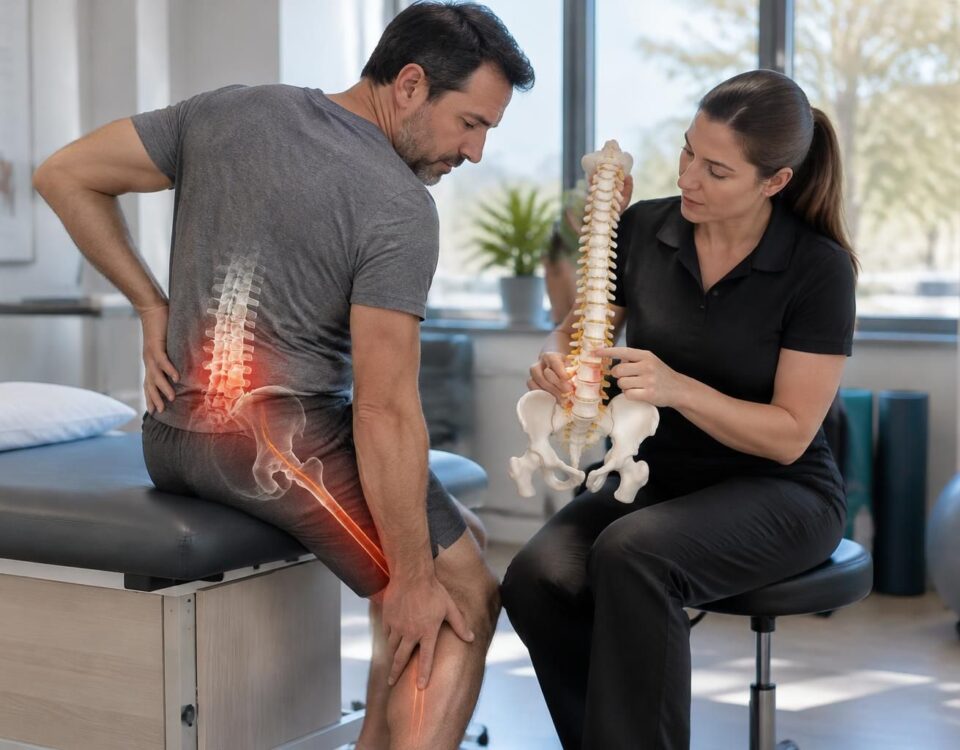
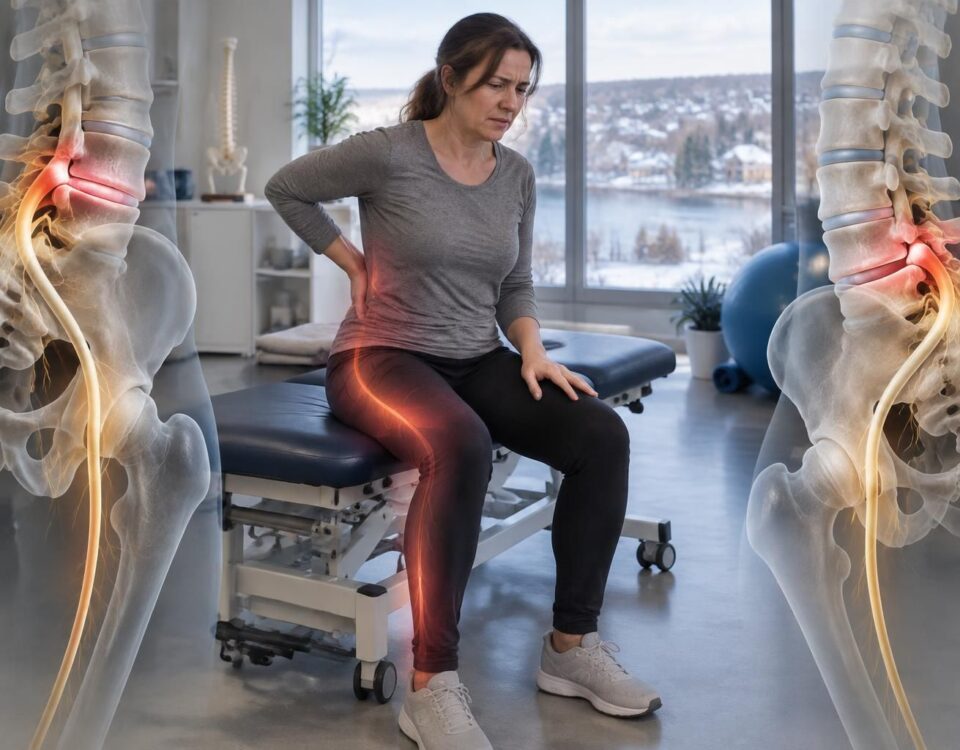
The pain and numbness related to sciatica originate from the sciatic nerve, the longest nerve in the body. It roots near the lumbar spine and extends to the toes. Compression or irritation can disrupt the nerve signal and manifest as a sensation of numbness, tingling, or loss of sensation in the toes.
Understanding Possible Causes
A lumbar herniated disc can push the disc nucleus against the nerve root, causing pain and sensory disturbances that extend down to the foot. Foraminal stenosis or spinal stenosis narrow the space around the nerves and can generate paresthesias when walking or standing. The piriformis syndrome is an extra-vertebral compression caused by an overly tight or spasmed gluteus muscle, which can mimic discopathy by irritating the sciatic nerve along its path through the buttock and thigh.
In all cases, an accurate diagnosis requires careful clinical evaluation and, if necessary, imaging. Understanding the exact location and origin of the nerve conflict is essential to avoid inappropriate treatments.
Signs That Require Consultation
Alert signals demand swift action: loss of bowel or bladder control, significant weakness in a leg or foot, genital numbness, severe pain. Bilateral involvement or rapidly worsening pain may indicate an emergency requiring immediate attention.
To guide your decision, a doctor should assess your reflexes, toe strength, and pain localization. Imaging, particularly MRI, aids in visualizing discs, nerves, and adjacent structures. The diagnosis remains largely clinical and manual, supplemented by imaging when necessary.
Therapeutic Approaches in Clinical Practice in Terrebonne
At TAGMED Clinic, the management may combine a motorized neurovertebral decompression, adapted osteopathy, and functional support. These options aim to relieve the nerve signal and maintain mobility without always resorting to surgery. Each case is individually assessed to determine the most effective and safe plan for you.
In the context of the discussed conditions, specific exercises or stretches are not detailed here. Personalized guidance is essential and should be offered by a healthcare professional after assessment.
To delve deeper into the mechanisms and signs to watch for, you can consult specialized resources on websites dedicated to sciatica and Terrebonne, such as the dedicated pages of sossciatique.com.
Additional information is available on other reference pages, including those discussing the relationship between lumbar location, pain, and radiation to the foot. To explore these links, visit the following resources: Sciatica and Emergency, Sciatica in Montreal, Thigh Weakness.
For information on management options in Terrebonne and Montreal, you can also consult TAGMED Clinic, and the site dedicated to neurovertebral decompression: neurovertebral decompression.
Daily Habits and Prevention
An appropriate work posture and healthy lifestyle habits greatly contribute to reducing the risk of recurrence. Maintaining body balance, strengthening the deep trunk muscles, and adopting habits that support the lumbar spine help limit pressure on the nerve roots. Maintaining a healthy weight and regularly engaging in low-impact activities can also be beneficial.
For more information and clarification on similar situations in Terrebonne, consult the following resources, which address similar cases and associated approaches:
- Sciatica in Terrebonne – pain in the leg after prolonged standing
- Nerve irradiation hip
- Difficulty lifting the foot
Medical Disclaimer: The information and advice provided on this site do not replace the opinion, diagnosis, or treatment of a healthcare professional. Please note that Dr. Sylvain Desforges, osteopath, is not a medical doctor and is not specialized in a medical specialty as defined by the Collège des médecins du Québec. Manual medicine, functional medicine, and sports medicine as described on this site exclude any medical treatment or diagnosis made by a physician or medical specialist. Always consult your doctor for any medical questions. For more details, please read our complete Legal Notice.
- Potential origin: Lumbar disc herniation or piriformis compression.
- Quick symptoms: Loss of sensation in the toes and paresthesias.
- Key assessment: Neurological examination + MRI/CT scan indication.
- Local context: Terrebonne — appropriate assessment and management in the area.
- Immediate actions: Ice in the acute phase, neutral position, relative rest.
- Treatment plan: Targeted non-surgical approach (osteopathy, neurodynamics).
- Recommended exercises: Light neurodynamics and gentle piriformis stretches.
- Prevention and follow-up: Ergonomics, regular physical activity, weight management.

This article provides clear recommendations on sciatica in Terrebonne when loss of sensitivity in the toes occurs. It explains why this sign arises, what the common causes are, how to quickly screen for situations requiring a consultation, and what non-surgical strategies can help to sustainably relieve the nerve signal, with practical advice suited to everyday life in the area.
Understanding the course of the sciatic nerve and toe numbness
The sciatic nerve originates at the lumbar segments and travels down to the toes. A compression at the lumbar level disrupts the nerve information upstream, giving a sensation of numbness or “foreign limb” in the foot. Understanding this course is essential to demystify the phenomenon: numbness in the toes is often the result of a nerve conflict located higher up in the spine, rather than a problem solely localized to the foot.

Sciatica L5-S1 in Terrebonne: why the pain can radiate down to the foot
IN BRIEF L5-S1 sciatica refers to pain related to irritation of a lumbar nerve root, which may start from the lower back and radiate into the buttock, leg, and down to the foot. The pathway varies: the top of the…

Sciatica in Terrebonne: painful journey according to roots L4, L5, and S1
IN BRIEF Sciatica in Terrebonne can cause pain, tingling, or weakness in the leg. The roots L4, L5, and S1 can guide the evaluation based on symptoms and changes in strength, sensitivity, or reflexes; their territories do overlap, however. Comparing…
Major causes of loss of sensitivity in the toes
Lumbar disc herniation
A disc pressing on a nerve root can cause radicular compression and tingling that radiates down to the toes. This cause is common in active adults and can be effectively treated when diagnosed early.
Spinal stenosis
Narrowing of the spinal canal, often related to age or osteoarthritis, can compress the nerves and lead to a sensation of numbness during walking or prolonged standing.
Piriformis syndrome
Tightness or spasms of the piriformis muscle in the buttock can strangle the sciatic nerve outside the vertebral canal, thus mimicking a disc herniation and causing tingling down to the feet, especially after prolonged sitting positions.

Sciatica in Terrebonne: what does irritation of the S1 root mean?
IN BRIEF An irritation of the S1 root can cause pain of a sciatica type in the buttock, the back of the leg, and the outer edge of the foot. Tingling, numbness, or difficulty walking on tiptoes may also occur.…

Sciatica in Terrebonne: what does irritation of the L5 root mean?
IN BRIEF L5 sciatica corresponds to irritation of the L5 nerve root, often felt from the lower back and buttock down the side of the leg, to above the foot and the big toe. It can cause pain, tingling, or…
Signs that require quick consultation
Some situations demand urgent care. Seek medical help if you notice a loss of control of the sphincters (incontinence), sudden or progressive weakness in the leg or foot, numbness in the genital area, or unbearable pain that does not subside at rest. If bilateral involvement affects both feet, or if the pain worsens rapidly, contact the appropriate medical services promptly. A clinical evaluation and, if necessary, imaging can specify the affected spinal level and the appropriate treatment.

Sciatica in Terrebonne: difference between L4-L5 and L5-S1
IN BRIEF The difference between L4-L5 and L5-S1 concerns the level of the lumbar discs and the sometimes irritated nerve roots: an L4-L5 injury often affects L5, while an L5-S1 injury often affects S1. The sensory pathways overlap; thus, an…

Sciatica S1 in Terrebonne: pain towards the calf and the outer edge of the foot
IN BRIEF S1 sciatica is pain related to irritation of a lumbar nerve root, which may radiate down to the buttock, back of the calf, and the outer edge of the foot. Tingling or weakness may also occur. In Terrebonne,…
Treatment and prevention strategies
Exercises and neurodynamics
Neurodynamics helps the nerve glide more freely within its sheath. Gentle, gradual movements, done softly and without force, can improve nerve mobility. Simple exercises in a lying position, such as controlled leg stretches, can complement the therapeutic approach. The goal is to reduce friction on the nerve root and prevent recurrences through a more flexible lumbar spine.
Management of inflammation and adaptation of daily gestures
In the acute phase, applying ice can help reduce inflammation around the nerve, followed by moderate heat to promote muscle relaxation and circulation. Relative rest and a gradual return to activities remain essential. Alternating ice and heat according to the phases can provide significant relief without maintaining prolonged inactivity.
Ergonomics and adapted physical activity
Adopt ergonomics suitable for work and sleep: adjust the height of the seat and desk, use a lumbar support, and favor a position that avoids strain on the lower back. Integrate core strengthening exercises and gentle activities like walking or swimming, while avoiding violent impacts. Maintaining a healthy weight and strengthening the deep muscles of the abdominal belt helps protect the spine and limit episodes of sciatica with numbness in the toes.
If you experience persistent loss of sensitivity in the toes, make an appointment with a healthcare professional for an assessment tailored to your situation in Terrebonne, to determine the precise diagnosis and the most effective treatment protocol.
About the author
Dr Sylvain Desforges, B.Sc., D.O., N.D., osteopath, is the founding president of TAGMED and the ACMA association. He dedicates his practice to chronic pain of the spine, lower back pain, and pain compatible with sciatica, particularly when the pain radiates down to the buttock, leg, calf, foot, or toes.
Through SOS Sciatique, he publishes educational content on the symptoms of sciatica, possible causes such as herniated discs, disc compression, foraminal stenosis, or irritation of a lumbar nerve root, as well as on non-surgical approaches that may be considered based on evaluation. At the TAGMED Clinic, care may include, depending on the case, motorized neurovertebral decompression, specific osteopathy, or precision pulsing.
For an assessment related to treatment of sciatica in Terrebonne, consult the available services at the TAGMED Clinic.
| Item | Concise description |
|---|---|
| Definition | The sciatic nerve originates from the lower back and can cause numbness in the toes when nerve transmission is disrupted. |
| Possible causes | Common causes: lumbar herniated disc, foraminal stenosis, or piriformis syndrome. |
| Typical signs | Numbness in the toes, sometimes tingling; pain that can radiate from the lower back to the leg. |
| Urgent signs to monitor | Loss of control of sphincters, sudden weakness or unbearable pain—consult immediately. |
| Recommended exams | Clinical examination + MRI to visualize disc and nerve; CT scan helps with bones and osteoarthritis. |
| Non-surgical approaches | Neurodynamics, gentle stretching, alternating ice/heat, adapted activity. |
| Action plan | Accurate diagnosis followed by a personalized plan based on the identified cause; targeting the compression. |
| Everyday prevention | Ergonomics, back strengthening and core stability, regular activity and weight management. |
| Expected outcome | Durable reduction of compression and gradual improvement of pain-free mobility. |
| Context in Terrebonne | Consult a local specialist for an appropriate assessment and concrete action plan. |
Testimonials about Sciatica in Terrebonne: loss of sensation in the toes
Testimonial 1 – Client in Terrebonne: I had a loss of sensation in my toes related to sciatica. After a precise evaluation, I was informed that the sciatic nerve can be compressed by a herniated disc or by a contracted piriformis muscle. Thanks to a personalized plan of stretches and neurodynamics, my sensations have returned, and my walking has become fluid again.
Testimonial 2 – Active patient in Terrebonne: the tingling persisted, especially after daily activities, which limited my movements. The approach focused on neurodynamics and ergonomic advice, and I regained signal in my toes with better stability in daily life.
Testimonial 3 – Active mother in Terrebonne: sciatica is not just pain, it can also numb the toes. I was offered a clear diagnosis and a plan including tailored exercises and measures to limit inflammation. I feel more in control and less limited by the pain.
Testimonial 4 – Light sports researcher in Terrebonne: after months of numbness, the program targeted the cause and strengthened the abdominal and back muscles. Result: reactivation of mobility and regained sensitivity in the feet, with a return to activities without fear of pain.
As part of the Sciatica program in Terrebonne, Dr. Sylvain Desforges embodies an approach focused on accurately understanding the sensory disorders of the feet and toes, often caused by compression of the sciatic nerve. An expert in osteopathy, naturopathy, and manual medicine, he is the founding president of TAGMED clinics and the ACMA association. His professional trajectory, marked by innovation in healthcare, aims to provide evidence-based care to optimize the health and well-being of his patients. His team combines rigorous diagnosis, advanced technologies, and personalized care for Sciatica in Terrebonne.
The sciatic nerve is the longest and largest nerve in the body, originating from the lower back and descending to the toes. When it is compressed somewhere along its path, the nerve signal can be disrupted, resulting in sensations of numbness, tingling, or loss of sensation in the toes. In the context of Terrebonne, this phenomenon is addressed through an approach aimed at identifying and treating the root cause, in order to restore smooth nerve circulation and normal tactile perceptions.
The most common causes of loss of sensation in the toes related to sciatica include herniated discs and degenerative processes that narrow the spinal canal (spinal stenosis). The first case occurs when the nucleus of a disc protrudes from its housing and directly irritates the nerve root; the second can result from arthritis and narrowing of the nerve passage, particularly in older individuals. The role of the piriformis muscle is also recognized: a contraction can compress the sciatic nerve outside the spinal canal, sometimes mimicking a herniation and causing tingling that spreads to the foot. Understanding these mechanisms is essential for developing therapeutic actions that sustainably release the leg and toes.
At Sciatique in Terrebonne, the evaluation relies on a comprehensive clinical approach and imaging when necessary. The exam may include reflex and strength tests, sensitivity assessments, and simple movements that accurately localize the affected vertebral level. Imaging, especially MRI, evaluates soft tissues and potential disc-nerve contact, while additional explorations may target bone and joint wear. This precise diagnostic approach avoids inappropriate treatments and guides towards an appropriate treatment plan.
The integrated treatment proposed by Dr. Desforges and his team relies on targeted osteopathic techniques and complementary approaches. Neurodynamics is prioritized to promote the safe gliding of the nerve within its sheath, gentle stretching, and joint mobilizations to increase space around irritated roots, along with advanced modalities such as spinal decompression, laser, and shockwave therapy when appropriate. This combination aims to reduce inflammation, restore spinal mobility, and rebalance the forces that compress the nerve, allowing for a quicker remission of symptoms in the toes.
In parallel, the program emphasizes patient education and daily life. Neurodynamic exercises and ergonomic strategies are provided to prevent recurrences and preserve foot mobility. Advice on maintaining a healthy weight, strengthening trunk muscles, and gentle physical activity routines complements the care. The goal is clear: to transform a sciatic episode with loss of sensation in the toes into a sustainable recovery, guided by multidisciplinary expertise and proven technological tools, within the Terrebonne area.
This conclusion details the sciatic conditions in Terrebonne associated with loss of sensation in the toes. It reminds us that the sciatic nerve, which travels from the lumbar region to the toes, can be compressed by a herniated disc, spinal stenosis, or extra-spinal compression related to a tight piriformis muscle. The objective is to understand the mechanisms, identify the real cause, and adapt a therapeutic approach that sustainably frees the nerve signal while preventing recurrences through daily habits and adapted activity.
The loss of sensation in the toes during sciatica is generally a reflection of discomfort or compression of the sciatic nerve on its path from the lumbar region to the feet. This numbness may accompany or precede pain and indicates a disruption in the flow of nerve information to the extremities. Understanding this anatomical link allows for the right clinical questions to be posed and guides additional examinations toward a specific cause without neglecting signs that may require prompt management.
Major causes to explore include lumbar disc herniation, spinal stenosis, and sometimes a piriformis syndrome that compresses the sciatic nerve outside the spine. Each situation requires specific assessment, as a herniated disc can affect differently depending on the level, and stenosis may be more common in older individuals. To delve further into mechanisms and symptoms, you can consult specialized resources such as Neuropathy of the Sciatic Nerve.
The diagnosis relies on a global clinical examination and simple tests (reflexes, toe strength, sensory evaluation). Imaging, particularly MRI, allows for visualization of soft tissues and checks if a disc is approximating a nerve root; CT scans can help evaluate arthritis or osteophytes. As specialized sources show, imaging alone is not sufficient: the diagnosis remains primarily clinical and guided by a manual approach. For complementary perspectives on causes and treatments, see the following resources: Sciatica – causes, symptoms and treatments and Sciatica L4-L5-L5-S1.
In terms of management, neurodynamics and targeted stretching play a key role in improving nerve glide within its sheath and reducing compression. Simple actions such as gentle mobilizations and stretches compatible with pain can help restore mobility and decrease irritation while avoiding positions that worsen symptoms. For exercises and concrete approaches associated with Terrebonne, you can consult local resources like Clinique TAGMED – Sciatica Treatment in Terrebonne.
Anti-inflammatory measures and heat or cold applications can help during acute and subacute phases. Cold can limit initial inflammation, while heat can relax muscle adjustments and promote circulation. A gradual approach, combining adapted physical activity and weight loss if necessary, helps reduce mechanical stress on nerve roots and prevent recurrences. For practical advice on impacts and gestures to favor while walking and taking breaks, see Sciatica and Frequent Breaks While Walking and Sciatica in Terrebonne – Pain and Numbness After Walking.
To go further and consider appropriate management in Terrebonne, do not hesitate to turn to professionals who can evaluate both spinal causes and musculoskeletal factors. Complementary resources and examples of symptoms and treatments can be consulted via Sciatica – Pain Towards the Little Toe and Root S1 and Sciatica in Terrebonne – Pain that Goes Down Then Up Towards the Buttock.
Additional resources to deepen understanding of mechanisms and management options include various publications and specialized sites, such as Return from Travel and Pain that Goes Down the Leg and Foot Pain and Sciatic Nerve, in order to adjust your approach based on the clinical context and the evolution of symptoms.

Sciatica L5 in Terrebonne: pain towards the big toe
IN SHORT L5 sciatica can cause pain or numbness that radiates to the big toe, sometimes with difficulty lifting the foot. This pathway is a clue, not a diagnosis: the examination compares strength, sensitivity, and gait, as the nerve territories…

Sciatica L5-S1 in Terrebonne: pain radiating to the heel or foot
IN BRIEF A L5-S1 sciatica often corresponds to irritation of the S1 root, which can cause pain that radiates from the buttock down to the calf, heel, or outer edge of the foot. Identifying the pathway of symptoms and changes…

Dr Sylvain Desforges, B.Sc., D.O., N.D., osteopath, is the founding president of TAGMED and of the ACMA association. He dedicates his practice to chronic spinal pain, low back pain and symptoms compatible with sciatica, particularly when pain radiates toward the buttock, leg, calf, foot or toes.
Through SOS Sciatique, he publishes educational content on sciatica symptoms, possible causes such as disc herniation, disc narrowing, foraminal stenosis or irritation of a lumbar nerve root, as well as non-surgical approaches that may be considered according to the evaluation. At Clinique TAGMED, care may include, depending on the case, motorized neurovertebral decompression, specific osteopathic care or precision percussion.
For an evaluation related to sciatica treatment in Montreal / Mount Royal or sciatica treatment in Terrebonne, please consult the services available at Clinique TAGMED.
Medical disclaimer
The information published on SOS Sciatique is provided for educational purposes only and does not replace a consultation, diagnosis, opinion or treatment provided by a physician or another authorized healthcare professional. The author of this article is neither a medical doctor nor a specialist in a medical specialty recognized by the Collège des médecins du Québec. The osteopathic, manual medicine or functional support approaches described on this site do not constitute medical acts and are not intended to replace medical follow-up.
Consult a physician or emergency service in cases of loss of bladder or bowel control, anesthesia in the saddle area, significant or progressive weakness in the leg or foot, fever, recent trauma, severe pain or rapid worsening of symptoms. For more details, please read our Legal Notice.