Sciatica in Montreal: foot pain, numbness, and tingling
11/08/2026
Sciatica and pain without lower back pain: is it possible?
11/08/2026
IN BRIEF
| Sciatica is pain that follows the path of the sciatic nerve, starting from the lower back or buttock and descending to the foot. In Terrebonne, it often presents as foot pain, numbness, and tingling. Its benefits lie in the quick relief of pain, reduction of inflammation, and improvement of mobility, while preventing recurrences through an adapted approach. Operation: a quick diagnosis allows for identifying the cause and proposing non-surgical approaches (exercises, manual therapy, postural advice) to reduce pressure on the nerve and promote recovery. Accessible in Terrebonne, this treatment offers local and practical management to return to an active, pain-free life. |
In Terrebonne, sciatica can present as foot pain that most often starts at the lower back or buttock and follows the path of the nerve down to the foot. It is frequently accompanied by numbness and tingling, which can limit walking and daily activities. A precise diagnosis and non-surgical approaches, tailored to your case, help relieve pain and prevent recurrences, with solutions available locally in Terrebonne.
This practical guide written by a health professional explains sciatica, which can affect Terrebonne and manifest as pain in the foot, numbness, and tingling. It describes the causes, assessment, treatment options, and measures to prevent recurrences. The goal is to provide you with clear information to understand your pain and act knowledgeably.
Understanding the Path and Typical Signs
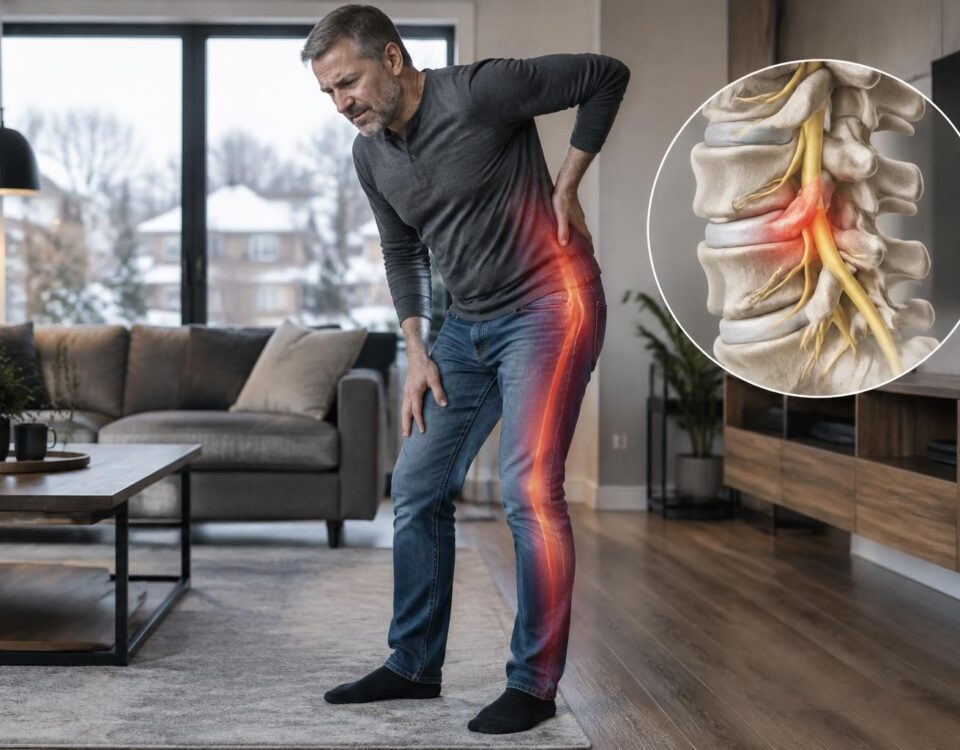
Sciatic pain follows the path of the largest nerve in the body. The sciatic nerve starts from the lower back, passes through the buttock, and descends into the leg down to the foot. The pain can be described as a burning sensation or an electric shock. It may be accompanied by numbness or tingling in the leg or foot.
These signs, taken together, help assess the extent of the disorder and its impact on daily mobility. To deepen your understanding, consult dedicated resources on the pain path and its manifestations.
Causes and Mechanisms Radiating to the Foot
The most common cause is a herniated disc that can compress the nerve roots. Other factors, such as poor posture or trauma, also contribute to nerve compression. Age and the condition of the back also play a role.
In some cases, repeated or prolonged episodes of effort and sedentarism worsen the pain by altering the dynamics of the back and nerve roots that extend to the foot. Understanding nerve pathways and irritation of the lumbar roots helps explain why the pain can extend so far.
To better understand these mechanisms and the associated options, you can explore specialized resources available on websites dedicated to sciatica.
Assessment and Diagnosis
The assessment is based on a clinical examination conducted by a qualified health professional. Pain, muscle strength, reflexes, and sensitivity in the lower limb are evaluated. Depending on the symptoms, imaging tests may be considered to specify the diagnosis and guide management.
To better understand the assessment and associated signs, consult specialized guides on pain, strength, and reflex evaluation, as well as resources dedicated to Terrebonne.
Treatment Options and Prevention
Management can combine non-surgical approaches and targeted interventions. In some cases, evaluation may lead to decompression options or interventions tailored to the underlying etiology. Motorized neurovertebral decompression may be considered after a complete and personalized evaluation.
At TAGMED clinic, located in Montreal or Terrebonne, osteopathic care and non-surgical approaches are offered according to the case. To learn more about the services offered, consult TAGMED Clinic.
Resources and information protocols help better understand safe treatments and available options. To access further information and specialized assessments, check the dedicated pages on the sites Sciatica in Terrebonne and associated resources.
Practical Advice and Prevention
Prevention involves maintaining an active lifestyle and good posture in daily life. Adopting habits that support the lumbar spine can reduce the risk of recurrence. Avoid positions that exacerbate pain and prioritize adapted activities, under supervision if necessary.
To guide your preventive approach and choose an option suitable for your situation, you can refer to the following resources on secure options according to your symptoms and local context.
Useful Resources and Recommended Links
For personalized evaluation and advice, consult the following resources:
Assessment pain, strength, and reflexes
Heel Pain and S1 Root Possible
To deepen your reading and compare approaches, you can also explore the pages Pain path and the guides offered by relevant professional associations.
Note that some resources provide a perspective on non-surgical options and choices to prioritize based on symptoms and clinical context. For clinical services, TAGMED Clinic can offer care related to neurovertebral decompression or specific osteopathy, depending on the evaluation.
Medical disclaimer: The information and advice provided on this site do not replace the advice, diagnosis, or treatment of a healthcare professional. Please note that Dr. Sylvain Desforges, osteopath, is neither a doctor of medicine nor a physician, and is not a specialist in a medical specialty as defined by the Collège des médecins du Québec. Manual medicine, functional medicine, and sports medicine as described on this site exclude any treatment or medical diagnosis made by a physician or medical specialist. Always consult your doctor for any medical questions. For more details, please read our full Legal Notice.
Axis: Targeted Path for Sciatica in Terrebonne
- Foot pain — starts in the lower back or buttock and radiates to the foot.
- Numbness — sensation of loss of sensitivity in the foot or leg.
- Tingling — pins and needles along the sciatic pathway.
- Actions and follow-up — seek consultation quickly in case of acute pain or marked weakness.
- Posture and exercise — prioritize an appropriate posture and regular exercises.
- Non-surgical approaches — osteopathy and adapted manual therapies.

This sheet presents the essential elements to understand Sciatica in Terrebonne with foot pain, numbness, and tingling, and offers practical recommendations to alleviate, prevent, and optimize your care without necessarily resorting to surgery.
Understanding the Pain Path and Symptoms in the Foot
Typical Signs and Sensations
Pain typically radiates from the lower back or buttock and can reach the foot along the sciatic nerve pathway. It may manifest as a sharp pain, a burning sensation, or a shooting pain along the leg. Numbness and tingling in the foot or toes are common, and the pain may be accompanied by muscle weakness that limits walking or stability during certain activities.
When Symptoms Become Concerning
Seek prompt consultation if you observe loss of urinary or bowel control, significant or progressive numbness around the saddle, very severe pain, or increasing weakness in the leg or foot. Signs such as fever, sudden and intense pain, or recent trauma require urgent medical evaluation.
Causes and Mechanisms in Terrebonne
Herniated Disc and Nerve Compression
The most common cause is a herniated disc that compresses the nerve roots, generating pain that “follows” the path of the nerve to the foot. Associated inflammation can intensify symptoms, especially during movements that stress the spine or exacerbate pressure on the nerve.
Other Contributory Factors
Factors such as poor posture, repeated strain, or prolonged periods of sitting can worsen or maintain nerve compression. Age, activity level, and certain injury histories can also influence the onset and progression of symptoms.
Preventing and Effectively Treating
Non-Medication Options
A comprehensive program focused on mobility, core strengthening of the back and lower limbs, as well as good posture can reduce recurrences. Simple measures such as weight management, active breaks, and adapting workplace ergonomics support prevention. Manual therapy techniques and personalized advice can help relieve pressure on the nerve roots while promoting gradual recovery.
Treatments and Interventions
To relieve pain and inflammation, non-pharmacological approaches along with targeted treatments may be proposed. When necessary, options such as targeted injections or specific adaptations of the spine may be considered after individual evaluation. The choice of treatment depends on the clinical context, pain location, and functional impact on your daily activities.
Exercises and Practical Tips
Appropriate Stretching and Mobilizations
Gentle stretches of the back and lower limbs can decrease pressure on the nerve and improve flexibility. It is essential to perform these movements under supervision or after seeking professional advice to avoid any exacerbation. The goal is to promote a balanced postural dynamic and support the spine during daily activities.
Lifestyle and Posture
Maintaining regular activity, prioritizing a neutral posture at work and during movements, and incorporating targeted strengthening exercises are key elements to limit repetitive episodes. If symptoms persist despite these measures, a specialized evaluation can adjust the treatment plan and optimize the return to an active life without significant pain.
| Axis | Concise Elements |
|---|---|
| Evaluation Axis | Assess the presence and association of foot pain, numbness, and tingling along the sciatic pathway in patients from Terrebonne. |
| Main Symptoms | Concise description: foot pain radiating from the lower back, with numbness and tingling. |
| Location and Pathway | Typical pathway: lower back → buttock → leg → foot; variations depending on nerve roots. |
| Functional Impact | Disrupts walking and daily activities; improvement possible with targeted exercises and adapted posture. |
| Common Local Causes | Frequent disc herniation and nerve irritation; prolonged posture and trauma as local factors. |
| Recommended Diagnosis | Clinical assessment and imaging if suspicion; referral to a specialist based on evaluation. |
| Treatment Options | Osteopathy and manual therapies; anti-inflammatories as per doctor; non-surgical approach favored based on evaluation. |
| Prevention and Lifestyle | Regular physical activity, back strengthening, gentle stretching, and good posture at work. |
| Red Flags | Red flags: loss of bladder/bowel control, progressive weakness, fever, or acute pain; consult quickly. |
| Follow-up and Timelines | Therapeutic follow-up and reevaluation after 4–6 weeks of conservative intervention. |
Testimonials on Sciatica in Terrebonne
In Terrebonne, Sophie, 54, shares that the foot pain associated with her sciatica severely disrupted her daily life. The numbness and tingling traversed her leg and hindered every step. After following the tailored care path, she notices a marked improvement: less pain, lighter walking, and regained sleep.
Marc, 38, a resident of Terrebonne, describes that the foot pain and pulling sensation were constantly recurring and made his days difficult. Thanks to the treatment received, the tingling has diminished, and he is gradually regaining the strength necessary to engage in his sports activities without fear.
Marie, 62, a resident of Terrebonne, explains she lived with a sciatica that turned every step into a challenge. The foot pain and numbness symptoms limited her walks, but after the treatment received, her mobility improved and her sleep stabilized.
Émilie, 45, in Terrebonne, suffered from persistent tingling that complicated her work and daily movements. By following the proposed plan, she noticed a reduction in pain in her foot and a decrease in numbness, allowing her to resume her usual activities with confidence.
Louis, 55, from Terrebonne, shares his experience: the foot pain and tingling had become a shadow over his daily life. After the care received, he describes a gradual dissipating of pain and a full return to his daily tasks without limitation.
In the Terrebonne area, sciatica is a condition that can disrupt the daily life of patients, with pain starting from the lower back or buttock and potentially radiating to the foot. Dr. Sylvain Desforges, an expert in osteopathy, naturopathy, and manual medicine, is a reference in this field. Founder and president of TAGMED clinics and the ACMA association, he places innovation at the heart of the management of chronic pain and the improvement of his patients’ well-being. His approach is based on clinical evidence and the integration of advanced technologies such as motorized neurovertebral decompression, laser therapy, and shock wave therapy.
For residents of Terrebonne who display signs of sciatica – pain described as burning or electric shock, numbness, or muscle weakness – the approach proposed by Dr. Desforges is holistic. He considers not only the symptoms but also the nerve pathway and the factors that may irritate or compress the nerve roots that supply the foot and leg.
The most common causes of this condition in the local context include a herniated disc, reduced intervertebral space, or repetitive postural tensions. The influence of age, sporting history, or recent trauma can affect the evolution of pain and the speed of recovery. In Terrebonne, as elsewhere, an accurate assessment allows for identifying the involved nerve roots and targeting treatment accordingly.
The proposed treatment plan combines specialized osteopathic techniques and interventions aimed at stimulating healing. One may utilize motorized neurovertebral decompression to reduce pressure on the nerve roots, specific osteopathy focused on vertebral mobility, and the use of a precision impactor when localized tension points require precise action. Depending on needs, complementary approaches such as laser or shock waves may be integrated to reduce inflammation and promote tissue recovery.
Beyond direct treatments, Dr. Desforges attaches great importance to prevention and patient education. He offers targeted exercise programs, posture advice, and trunk strengthening strategies to limit recurrences and improve the function of the affected limb. The goal is to enable everyone to regain normal and sustainable daily activity while minimizing pain and sensations of numbness or tingling.
For those concerned about their health in Terrebonne, this specialist’s approach illustrates the alliance between science and practice. The proposed care aims to optimize overall health and well-being, offering care that combines expertise and modern technologies for a rapid return to an active life without limitations. To learn more about his approach and available services, contact TAGMED Clinic.
This quick summary describes sciatica in Terrebonne, with pain in the foot, numbness, and tingling, explaining possible causes, nerve pathway mechanisms, treatment options, and prevention tips to improve the management and quality of life for local patients.
In Terrebonne, sciatica that radiates down to the foot is often caused by compression of the lumbar nerve roots. This compression can result from a herniated disc, shortening, or pain related to poor posture and repetitive strain. The pathway of the sciatic nerve explains why symptoms may extend to the foot and can be accompanied by numbness and tingling, sometimes described as electric shocks during certain movements.
To understand the mechanisms and local causes, it is beneficial to rely on a specialized assessment. The sciatica assessment in Terrebonne helps identify the affected roots and establish a tailored management plan. Explanatory resources such as the relationship between lumbar disc – sciatic nerve help to understand why pain can reach the foot.
In terms of treatment and prevention, non-surgical approaches play a central role. Initial relief may rely on moderate rest and the use of anti-inflammatories, with, if necessary, injections targeting inflammation. Furthermore, a suitable and active program, strengthening back muscles and improving posture, is recommended to reduce the risk of recurrence and enhance daily function. To delve into the available options, you can consult resources on explanations related to pain to the foot and the mechanisms involved in sciatic pain in Terrebonne.
Exercises and preventive actions also play a key role. Gentle stretches of the back and legs, combined with progressive strengthening of the abdominal and back muscles, can reduce nerve compression and improve mobility. It is important to perform these exercises under supervision or with professional guidance to avoid worsening the condition. For practical advice and exercise examples, refer to resources dedicated to sciatica and prevention, especially those addressing pain in the leg and its relationship with the back.
Finally, certain signals require prompt attention. If you experience loss of bladder or bowel control, a sensation of numbness in the saddle area, significant or progressive weakness of a limb, fever, or recent trauma associated with acute pain, consult a healthcare professional without delay. To learn more about typical scenarios and affected areas, you can refer to specialized resources such as sciatic pain and foot and numbness and affected areas.
For a practical overview of mechanisms and access pathways for assessment and treatment in the Terrebonne context, the recommended resources above provide useful and reliable starting points.

Sciatica L5 in Terrebonne: pain towards the big toe
IN SHORT L5 sciatica can cause pain or numbness that radiates to the big toe, sometimes with difficulty lifting the foot. This pathway is a clue, not a diagnosis: the examination compares strength, sensitivity, and gait, as the nerve territories…

Sciatica L5-S1 in Terrebonne: pain radiating to the heel or foot
IN BRIEF A L5-S1 sciatica often corresponds to irritation of the S1 root, which can cause pain that radiates from the buttock down to the calf, heel, or outer edge of the foot. Identifying the pathway of symptoms and changes…
Sciatica L4-L5 in Terrebonne: understand the possible symptoms
IN BRIEF The L4-L5 sciatica often corresponds to irritation of the L5 nerve root, sometimes related to a disc herniation. It can cause pain from the lower back to the buttock, the side of the leg, and the top of…

Sciatica in Terrebonne: how to describe your symptoms during a consultation
IN BRIEF Sciatica is pain or a tingling sensation that descends from the lower back or buttock down the leg. In Terrebonne, describing its path, duration, triggers, and effects on walking helps the professional assess the symptoms and guide the…

Sciatica in Terrebonne: nerve symptoms not to be taken lightly
IN BRIEF Sciatica is pain that can radiate from the lower back or buttock down to the leg, sometimes accompanied by tingling, numbness, or weakness. In Terrebonne, an assessment helps to examine the pathway of symptoms, function, and possible lumbar…

Sciatica in Terrebonne: pain that descends into the leg upon waking
IN SHORT Sciatica is pain that starts from the lower back or buttock and radiates down the leg; it may be more pronounced upon waking. A herniated disc is a possible cause, but only a professional can assess the origin…

Sciatica in Terrebonne: pain that increases during sitting-standing transitions
IN BRIEF Sciatica can cause pain that increases when moving from sitting to standing, although this sign alone is not sufficient to determine the cause. In Terrebonne, assessing when the pain appears, its path through the leg, and its evolution…

Sciatica in Terrebonne: radiating pain in the leg after physical exertion
IN BRIEF The sciatica in Terrebonne refers to pain that can start in the lower back and radiate down the leg, sometimes after physical effort. A descending pain does not always indicate an injury to the sciatic nerve: an evaluation…

Dr Sylvain Desforges, B.Sc., D.O., N.D., osteopath, is the founding president of TAGMED and of the ACMA association. He dedicates his practice to chronic spinal pain, low back pain and symptoms compatible with sciatica, particularly when pain radiates toward the buttock, leg, calf, foot or toes.
Through SOS Sciatique, he publishes educational content on sciatica symptoms, possible causes such as disc herniation, disc narrowing, foraminal stenosis or irritation of a lumbar nerve root, as well as non-surgical approaches that may be considered according to the evaluation. At Clinique TAGMED, care may include, depending on the case, motorized neurovertebral decompression, specific osteopathic care or precision percussion.
For an evaluation related to sciatica treatment in Montreal / Mount Royal or sciatica treatment in Terrebonne, please consult the services available at Clinique TAGMED.
Medical disclaimer
The information published on SOS Sciatique is provided for educational purposes only and does not replace a consultation, diagnosis, opinion or treatment provided by a physician or another authorized healthcare professional. The author of this article is neither a medical doctor nor a specialist in a medical specialty recognized by the Collège des médecins du Québec. The osteopathic, manual medicine or functional support approaches described on this site do not constitute medical acts and are not intended to replace medical follow-up.
Consult a physician or emergency service in cases of loss of bladder or bowel control, anesthesia in the saddle area, significant or progressive weakness in the leg or foot, fever, recent trauma, severe pain or rapid worsening of symptoms. For more details, please read our Legal Notice.