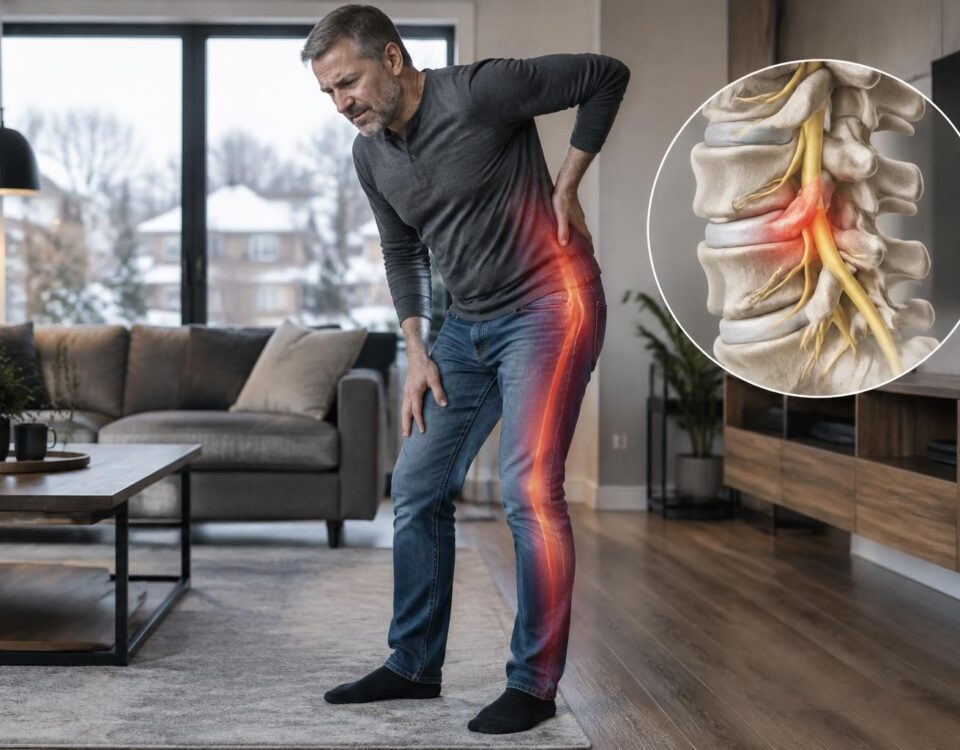
Sciatica in Montreal: pain in the leg after prolonged standing
15/09/2026
Sciatica and pain when going up stairs
15/09/2026
IN BRIEF
| In brief, Sciatica in Terrebonne is pain that starts in the lower back and radiates to the leg after a prolonged standing due to irritation or compression of the sciatic nerve. The key benefits of appropriate support include rapid pain reduction, improved mobility, prevention of recurrences, and gradual return to activities, thanks to a personalized plan combining assessment, progressive exercises, and posture advice. In Terrebonne, this process is accessible in-office or at home and aims to enable the patient to return to their daily activities without pain while strengthening deep muscles and movement tolerance. |
The sciatica in Terrebonne often presents as pain in the leg after a prolonged standing. This pain may result from irritation or compression of the sciatic nerve and can be accompanied by sensations of tingling or weakness.
Our offer combines physiotherapy and osteopathy approaches to calm irritation, restore movement, and prevent recurrences. The goal is to understand the triggers (posture, repetitive movements, loads) and to rebalance the body to regain confidence in daily movements.
For personalized support, quickly obtain an assessment and a plan of progressive exercises tailored to your situation in Terrebonne. Contact us and start effective rehabilitation now.
Dr Sylvain Desforges, B.Sc., D.O., N.D., osteopath, is the founding president of
TAGMED
and of the ACMA association. He dedicates his practice to chronic pain of the spine, lower back pain, and pain consistent with sciatica, especially when the pain radiates to the buttock, leg, calf, foot, or toes.
Through SOS Sciatique, he publishes educational content on the symptoms of sciatica, possible causes such as herniated discs, disc pinching, foraminal stenosis, or irritation of a lumbar nerve root, as well as non-surgical approaches that may be considered based on evaluation. At TAGMED Clinic, care may include, depending on the case, motorized neurovertebral decompression, specific osteopathy, or precision percussion.
For an evaluation related to
sciatica treatment in Montreal / Mont-Royal
or to
sciatica treatment in Terrebonne,
consult the available services at the
TAGMED Clinic.
Quick summary: this article explains why sciatica may occur after a prolonged standing, what signs to look for, how to evaluate potential causes, and which approaches to prioritize in Terrebonne to limit pain and restore mobility. The objective is to understand the trigger, avoid movements that worsen the condition, and prioritize an adapted rehabilitation approach in collaboration with the professionals at TAGMED Clinic.
Sciatica and Pain After Prolonged Standing
Sciatica is pain related to irritation or compression of the sciatic nerve, which originates in the lumbar region at the L4 to S1 roots and descends along the buttock and leg down to the foot. Prolonged standing can promote this irritation, especially if accompanied by poor posture or a tense lumbar muscle.
The pain may present as an electric shock, burning, or pulling sensation that radiates to one side of the leg. Tingling, numbness, or weakness in the leg may accompany the pain. When lower back pain and pain in the leg occur together, it is often referred to as lumbosciatica.
Common causes include a herniated disc, but other factors also play a role: discopathy, a narrow lumbar canal, tension in the pelvic or gluteal muscles, prolonged posture at work, trauma, or pregnancy. Sedentary behavior and lack of movement can exacerbate symptoms.
Between 2 and 3% of adults over 30 experience sciatica at some point, indicating that it is a common issue. Each case remains unique, and the painful pathway, intensity, and history guide management.
Signs and Diagnosis: When to Be Concerned
Warning signs requiring prompt evaluation by a physician include: significant loss of strength in one leg or foot, urinary or digestive disorders, anesthesia in the perineal region, unbearable pain despite treatment, fever, recent trauma, unexplained weight loss, or pain after a major accident. Sciatica that causes marked weakness or neurogenic symptoms may require specialized care.
For less severe signs, an assessment with a physiotherapist or osteopath can help identify triggering factors and plan a safe return to movement. Examinations such as X-rays, CT scans, or MRIs may be considered by a physician if necessary.
To delve deeper into the signs and indicators, you can consult dedicated resources on Sciatica and Loss of Strength.
Causes, Triggers, and Risk Factors
Typical causes after prolonged standing include: root compression due to disc injury, an irritated or protruding disc, a narrow lumbar canal, and muscle tension in the pelvis or buttocks. Repetitive movements, improper sitting posture, and lack of active breaks can worsen the pain.
In Terrebonne and generally, other elements like stress and sustained fatigue can intensify perceived pain, but the main cause remains the relationship between the nerve and the lumbar spine. To better understand the mechanisms, illustrative resources are available notably on Sciatica in Terrebonne.
Additional information is available on specialized sites that describe the link between pain, radiations, and posture during prolonged standing.
What to do in Terrebonne: clinical approach and management pathways
At TAGMED Clinic, non-surgical approaches can be discussed after a suitable evaluation. The physician or osteopath can guide towards options that suit each patient, prioritizing safety and the tolerance of procedures. To learn more about the options available in Terrebonne, you can refer to Sciatica treatment in Terrebonne.
The management aims to reduce pain, improve mobility, and decrease the risk of recurrence. Holistic approaches may be proposed to correct associated risk factors, such as adjustments to the workplace and simple strategies to stay active without worsening pain.
Additional resources on sciatica and the risks of weakness in the thigh and leg can be consulted via weakness in the thigh and other related pages.
Practical tips and daily prevention
Changing position every 30 to 45 minutes while standing or sitting can prevent nerve irritation. Opt for moderate and regular activities, and avoid prolonged periods of inactivity that can increase stiffness and pain.
It is useful to check the ergonomics of the workstation and adopt habits that promote good posture. Additional resources on prevention measures and signs to watch for are available at numbness of the foot while walking.
For more information on treatment options presented at TAGMED Clinic and their comparative effectiveness, see the following resources: Sciatica and standing and Physio and prevention.
References and additional resources
For a suitable approach, consult the following resources and discuss them with your doctor or osteopath:
– SCIATICA, signs and practical advice: Sciatica – loss of strength
– Terrain and radiation: Sciatica Terrebonne – pain in the hip
– General approaches and understanding of pain: Sciatic nerve – understanding the pain
– Detection and evolution of signs: Sign of loss of strength
Useful public and professional resources to better understand management and available options are also accessible through osteopathy training institutions such as NUMSS and NAO (National University of Medical Sciences, National Academy of Osteopathy).
Useful links to additional information sites on sciatica and non-surgical approaches are available on the authorized domains: SOS Sciatica and TAGMED Clinic.
Medical disclaimer: The information and advice provided on this site do not replace the opinion, diagnosis, or treatment of a healthcare professional. Please note that Dr. Sylvain Desforges, osteopath, is neither a medical doctor nor a physician, and is not a specialist in a medical specialty as defined by the Collège des médecins du Québec. Manual medicine, functional medicine, and sports medicine as described on this site exclude any treatment or medical diagnosis made by a physician or specialist doctor. Always consult your physician for any medical questions. For more details, please read our complete Legal Notice.
- Signs: radiating pain in the leg after prolonged standing
- Numbness or tingling in the lower limb
- Lower back pain associated with or worsened by walking
- Loss of strength or urinary/digestive issues requiring prompt assessment
- Actions: gentle activities and active rest with breaks
- Short and regular walking, avoid sudden exertions
- Heat or cold as tolerated
- Prompt consultation with a physiotherapist or doctor in Terrebonne
- Personalized rehabilitation and progression of exercises
- Work and posture adjustment: desk, chair, screen

This article provides recommendations for sciatica that manifests in the leg after prolonged standing in Terrebonne. You will find typical signs, possible causes, steps to take with a physiotherapist, and practical advice to relieve pain and prevent recurrences.
Understanding sciatica after prolonged standing
Sciatica is pain related to irritation or compression of the sciatic nerve. This nerve originates in the lower back and runs down the leg. Pain that starts from the lower back or one buttock and radiates to the leg is typical, sometimes with burning sensations, electric shocks, or numbness. When pain simultaneously affects both the lower back and the leg, it is referred to as lumbosciatica.
Typical signs and triggers after standing
The most telling symptoms include pain that radiates from one side of the pelvis down the leg, often worsened by prolonged standing or sitting posture. Tingling, a feeling of weakness in the leg, or difficulty walking may accompany the pain. In the context of Terrebonne, these manifestations can appear after days of work in a standing position, during certain professional or domestic activities.
When pain is accompanied by other signs
Warning signs such as a significant loss of strength in the leg, urinary problems, perineal numbness, fever, or intense pain despite treatment require rapid evaluation by a doctor. If the pain persists beyond six weeks or frequently recurs, a reevaluation is useful to adjust the management plan.
Common causes and aggravating factors
The most frequent cause is a herniated disc, but other factors can contribute to the symptoms: discopathy, spinal stenosis, piriformis syndrome, prolonged postures, trauma, and even pregnancy. Sedentariness and repetitive actions can maintain irritation of the sciatic nerve. These mechanisms can manifest after a period of prolonged standing, where the nerve is stressed and irritated by tension or repeated movements.
What the physiotherapist does and what you can do
The physiotherapist typically begins with a personalized assessment to identify the factors that maintain the pain and to establish an adapted plan. The approach often combines gentle mobilizations, targeted stretches, postural exercises, and gradual strengthening of the deep muscles, accompanied by core stability and breathing exercises. The goal is to reduce pain, improve mobility, and prevent recurrences.
The approach emphasizes both movement and daily ergonomics: work posture, lifestyle hygiene, and gradual progression of activities. Strict rest is generally not recommended, as it can increase stiffness and fear of movement. Between sessions, prioritize simple and repeated actions throughout the day to maintain tolerance to movement.
Practical recommendations in Terrebonne
Change positions every 30 to 45 minutes when standing or sitting; prioritize active breaks and short, regular walks. Arrange your workstation to promote low tension on the lower back and hips. Integrate simple exercises to strengthen trunk and deep muscles, validated by your physiotherapist, and adapt your physical activity to the rhythm of your pain.
In case of pain after prolonged standing, favor periods of moderate activity rather than complete rest. Apply hot or cold methods according to what your body tolerates, and seek professional evaluation if the pain persists or worsens. For the residents of Terrebonne, coordinated care with a local physiotherapist can facilitate a return to walking and daily activities without irradiation.
The ultimate goal is to regain autonomy in your daily activities: understanding what to avoid temporarily, what to reintroduce, and which exercises to keep to limit recurrences. It is through this collaboration between patient and professional that the prevention of a new crisis related to prolonged standing is played out.
| Element | Concise text |
|---|---|
| Trigger | Pain triggered or amplified by prolonged standing, occurring at the end of the day. |
| Location and path | Radiation along the sciatic nerve, from the lower back to the leg, sometimes down to the foot. |
| Typical symptoms | Electric pain or burning, numbness, and sometimes weakness while walking. |
| Possible causes | Frequent herniated disc, spinal stenosis, piriformis syndrome, and prolonged posture. |
| Warning signs | Loss of strength, urinary problems, or intense pain requiring medical evaluation. |
| First action in physio | Rapid assessment, gentle mobility, and gradual return to activity; consider a physio consultation for a personalized plan. |
| Rehabilitation goals | Reduce pain, regain mobility, and prevent recurrences. |
| Average duration | Several weeks; variable progression depending on cases and individual factors. |
| Preventive advice | Alternate positions, walk regularly, optimize work posture, and strengthen the back. |
Testimonials about sciatica in Terrebonne — pain in the leg after prolonged standing
Marc L., Terrebonne: “After a day spent standing, my sciatica pulled in my leg and I had a hard time standing. Osteopathy sessions calmed the irritation, and I learned to move without fear. Today, the pain is much less frequent, and I can stand longer without pain.”
Élise M., Terrebonne: “The sciatica went down along my leg after standing for work. The treatment targeted the causes, and I received simple exercises to do regularly. I am living comfortably and regaining my daily activities without fear of triggering the pain.”
Thierry P., Terrebonne: “I work in a factory, and prolonged standing caused a sciatica that forced me to stop. After a few sessions, the signals are less strong, and I can resume my movements and tasks without sharp pain.”
Sophie R., Terrebonne: “My doctor spoke of non-surgical possibilities, and osteopathy was the key. The pain in my leg is decreasing, and I require less effort to stay standing. I recommend this for those who suffer after standing jobs.”
Ahmed C., Terrebonne: “Home and office sessions, reassuring practice. The diagnosis and rehabilitation plan were clear. Since then, my sciatica no longer requires breaks every hour, and I can sustain my professional activities without pain.”
Dr. Sylvain Desforges, expert in osteopathy, naturopathy, and manual medicine, is the founding president of the TAGMED clinics and the ACMA association. With a career dedicated to innovation in healthcare, he specializes in chronic pain management and in integrating advanced technologies to optimize the quality of life of his patients. In his practice in Terrebonne, he focuses on offering an individualized approach for patients suffering from sciatica, especially when pain radiating into the leg occurs after prolonged standing.
His work begins with a precise assessment to distinguish typical signs of sciatica and to determine if the sciatic nerve is irritated or compressed. The pathway of the nerve, which originates in the lower back and extends to the foot, is clarified for each patient, allowing for the identification of triggering factors related to prolonged standing, poor posture, or muscle tension. This approach recognizes that lower back pain and leg pain can vary significantly from one individual to another and requires careful clinical analysis, supplemented, if necessary, by additional examinations.
In terms of treatment, Dr. Desforges favors a non-surgical and functional approach. The goal is to calm irritation, restore movement, and give the body back its ability to move with confidence. The approach combines specific osteopathy, gentle mobilizations, deep muscle strengthening exercises, and postural advice tailored to the patient’s work and life environment. For some cases, the integration of technologies such as motorized lumbar decompression, laser, and shockwave therapy may be considered when the assessment justifies it, in order to increase the chances of progress without surgical intervention.
The therapeutic pathway aims to reduce pain, recover mobility, and prevent recurrences. The patient is encouraged to gradually resume standing activity and adopt ergonomic habits at work to limit painful episodes. The sessions in Terrebonne are personalized, with an alternation between office consultations and home visits based on mobility options and clinical needs. The process relies on clear communication, measurable objectives, and regular reassessment to adjust the treatment plan.
Over the course of the meetings, a pain mapping may be used to track the evolution of the sciatic pathway and adjust interventions accordingly. The team emphasizes prevention and patient autonomy, so that everyone can manage their pain and limit the impact of prolonged standing on the leg. This evidence-based approach is distinguished by its personalization, designed for patients in Terrebonne to sustainably improve their quality of life.
In addition, Dr. Desforges remains attentive to signals that require a medical consultation and collaborates closely with local professionals to ensure comprehensive and coordinated care, tailored to each stage of the path of the patient suffering from sciatica.
Quick summary: This conclusion presents the mechanisms and solutions for sciatica related to prolonged standing in Terrebonne, including pain in the leg, alarm signals, the role of the physiotherapist, and practical advice to regain mobility and autonomy. You will find reliable resources to delve deeper and act quickly.
Sciatica after a period of standing can result from irritation or compression of the sciatic nerve, which runs from the lower back down the leg. Common causes include a herniated disc, discopathy, or a narrow lumbar canal; poor posture, repetitive movements, or trauma can also trigger irritation. Typical symptoms include pain that starts from the lower back or buttock and radiates down the leg, sometimes accompanied by tingling and weakness while walking.
The role of the physiotherapist in Terrebonne is to conduct a personalized assessment and identify factors that maintain the pain (posture, hip mobility, muscle tone, sleep, stress). The management combines gentle mobilizations, targeted stretching, and a gradual strengthening of deep muscles to decrease pain and restore movement tolerance. The objective is to improve walking and daily movements without imposing excessive rest that can hinder progress.
To complement your care, several practical resources explain when to consult and which options to prioritize. For example, the Ameli guide provides clear guidelines on when to consult (What to do when to consult), and SantéPlusPort details exercises and relief techniques (exercises and relief). Other resources explain why pain may radiate down the leg (why pain goes down the leg).
In Terrebonne, certain situations described in specialized resources can be observed: pain may radiate to the outer edge of the foot after prolonged walking (Terrebonne – foot), or appear after a few minutes of walking (appears after a few minutes). For broader or more specific cases in Montreal, you can consult dedicated pages such as Montreal or incomplete pathway.
For those seeking practical advice and care options, you can also explore resources dedicated to sciatica via Qare (Leg) and guides from professionals in chiropractic and osteopathy, such as Chiropractic Terrebonne.
Finally, to promote prevention and autonomy, avoid strict resting, alternate sitting positions, walk regularly, and adapt your workspace. Resources like Ameli and Qare offer advice and consultation options when pain persists, and professionals in Terrebonne can intervene quickly to assess your situation.

Sciatica S1 in Terrebonne: pain towards the calf and the outer edge of the foot
IN BRIEF S1 sciatica is pain related to irritation of a lumbar nerve root, which may radiate down to the buttock, back of the calf, and the outer edge of the foot. Tingling or weakness may also occur. In Terrebonne,…

Sciatica L5 in Terrebonne: pain towards the big toe
IN SHORT L5 sciatica can cause pain or numbness that radiates to the big toe, sometimes with difficulty lifting the foot. This pathway is a clue, not a diagnosis: the examination compares strength, sensitivity, and gait, as the nerve territories…

Sciatica L5-S1 in Terrebonne: pain radiating to the heel or foot
IN BRIEF A L5-S1 sciatica often corresponds to irritation of the S1 root, which can cause pain that radiates from the buttock down to the calf, heel, or outer edge of the foot. Identifying the pathway of symptoms and changes…
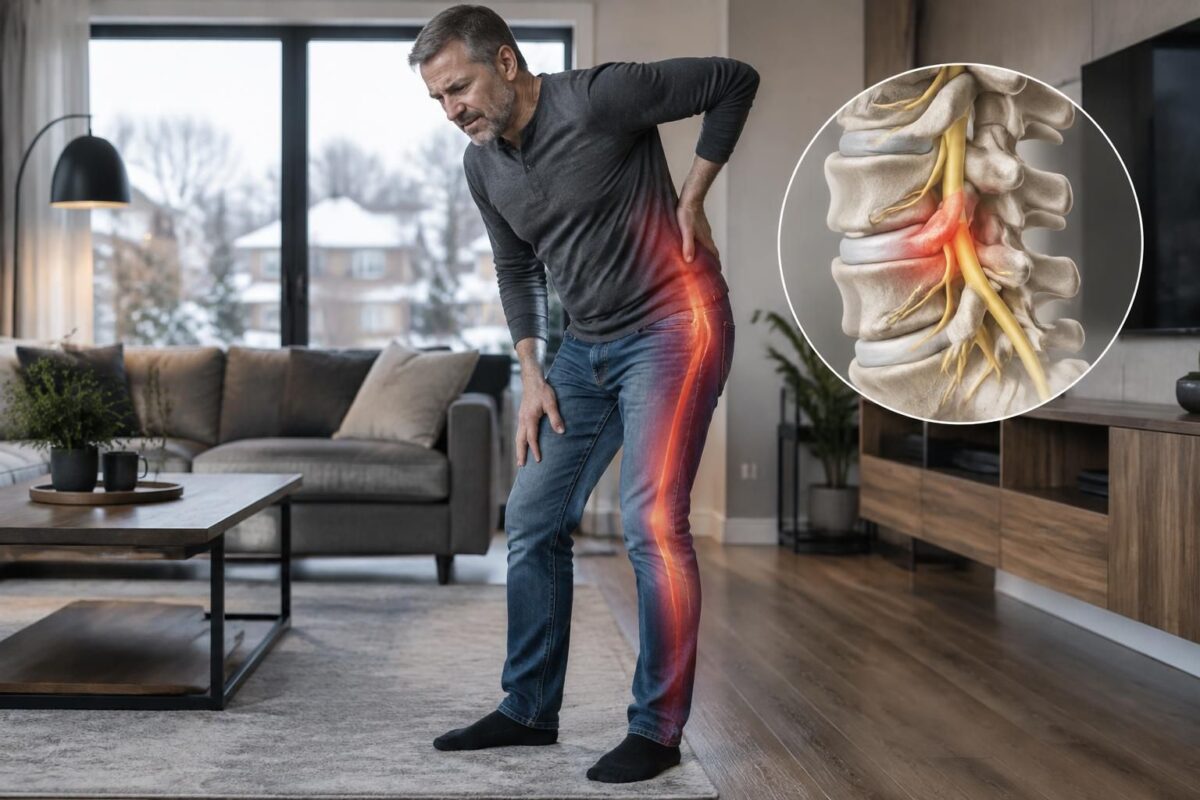
Sciatica L4-L5 in Terrebonne: understand the possible symptoms
IN BRIEF The L4-L5 sciatica often corresponds to irritation of the L5 nerve root, sometimes related to a disc herniation. It can cause pain from the lower back to the buttock, the side of the leg, and the top of…

Sciatica in Terrebonne: how to describe your symptoms during a consultation
IN BRIEF Sciatica is pain or a tingling sensation that descends from the lower back or buttock down the leg. In Terrebonne, describing its path, duration, triggers, and effects on walking helps the professional assess the symptoms and guide the…

Sciatica in Terrebonne: nerve symptoms not to be taken lightly
IN BRIEF Sciatica is pain that can radiate from the lower back or buttock down to the leg, sometimes accompanied by tingling, numbness, or weakness. In Terrebonne, an assessment helps to examine the pathway of symptoms, function, and possible lumbar…

Sciatica in Terrebonne: pain that descends into the leg upon waking
IN SHORT Sciatica is pain that starts from the lower back or buttock and radiates down the leg; it may be more pronounced upon waking. A herniated disc is a possible cause, but only a professional can assess the origin…
Sciatica in Terrebonne: pain that increases during sitting-standing transitions
IN BRIEF Sciatica can cause pain that increases when moving from sitting to standing, although this sign alone is not sufficient to determine the cause. In Terrebonne, assessing when the pain appears, its path through the leg, and its evolution…

Dr Sylvain Desforges, B.Sc., D.O., N.D., osteopath, is the founding president of TAGMED and of the ACMA association. He dedicates his practice to chronic spinal pain, low back pain and symptoms compatible with sciatica, particularly when pain radiates toward the buttock, leg, calf, foot or toes.
Through SOS Sciatique, he publishes educational content on sciatica symptoms, possible causes such as disc herniation, disc narrowing, foraminal stenosis or irritation of a lumbar nerve root, as well as non-surgical approaches that may be considered according to the evaluation. At Clinique TAGMED, care may include, depending on the case, motorized neurovertebral decompression, specific osteopathic care or precision percussion.
For an evaluation related to sciatica treatment in Montreal / Mount Royal or sciatica treatment in Terrebonne, please consult the services available at Clinique TAGMED.
Medical disclaimer
The information published on SOS Sciatique is provided for educational purposes only and does not replace a consultation, diagnosis, opinion or treatment provided by a physician or another authorized healthcare professional. The author of this article is neither a medical doctor nor a specialist in a medical specialty recognized by the Collège des médecins du Québec. The osteopathic, manual medicine or functional support approaches described on this site do not constitute medical acts and are not intended to replace medical follow-up.
Consult a physician or emergency service in cases of loss of bladder or bowel control, anesthesia in the saddle area, significant or progressive weakness in the leg or foot, fever, recent trauma, severe pain or rapid worsening of symptoms. For more details, please read our Legal Notice.