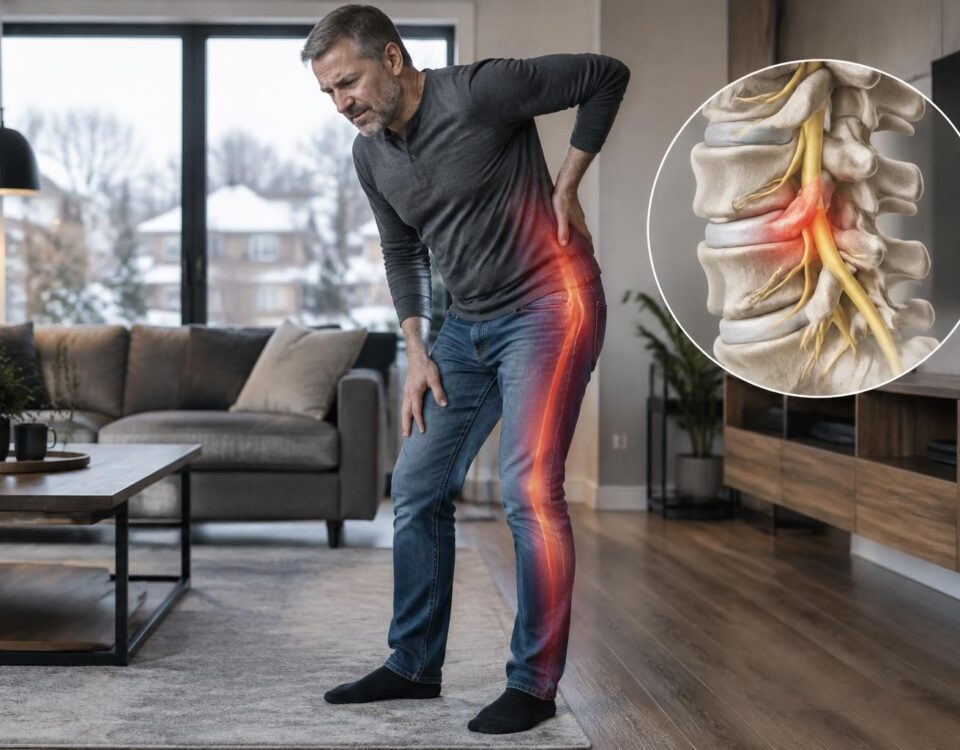
Sciatica in Montreal: pain that descends but then rises back up towards the buttock
12/09/2026
Sciatica and loss of balance: symptom to assess
12/09/2026
IN BRIEF The sciatica in Terrebonne is a pain that follows the path of the sciatic nerve: it starts from the lower back or buttock, descends into the thigh, calf, or foot, and can ascend back towards the buttock. This approach favors an assessment centered on symptoms and function rather than an isolated image, with a graduated care plan and non-surgical options tailored to the patient’s profile. In Terrebonne, this service offers structured follow-up, advice on activity, and non-invasive options, and can direct to targeted examinations or specialized advice if warning signs appear. |
In the context of a sciatica in Terrebonne, pain that starts from the lower back or buttock and spreads along the leg is often due to irritation of a lumbar nerve root. The common description indicates a pain that descends, then ascends towards the buttock, testifying to a specific pathway and neurological signs. The evaluation prioritizes the pathway, function, strength, and sensation rather than isolated imaging, in order to confirm radicular pain and rule out other causes. A conservative approach focused on appropriate activity and rehabilitation is often proposed, with imaging or specialized advice only if warning signs appear or if symptoms persist or worsen.
This fact sheet authored by a healthcare professional explains the common dynamics of a sciatica in Terrebonne, where the pain descends along the leg but may ascend towards the buttock. It details how to distinguish radicular pain from referred pain, which evaluations to prioritize, and what non-surgical options to propose at the TAGMED Clinic in Terrebonne. The text also recalls the signs that justify a rapid consultation and the principles of measurable follow-up to guide therapeutic decisions.
Clinical guidelines and signs to monitor
Guideline 1: a painful pathway that starts from the lower back or buttock and descends towards the calf or foot increases the likelihood of a nerve component, although it is not sufficient alone to establish a diagnosis.
Guideline 2: the presence of tingling, numbness, or weakness further indicates a neurogenic involvement and must be described precisely.
Guideline 3: the hip, pelvis, certain lumbar joints, and even vascular causes can sometimes mimic a sciatica.
Evaluation and diagnosis
A useful evaluation connects symptoms to function and neurological examination rather than to isolated imaging. The history of symptoms specifies the pathway, duration, and intensity. The examination focuses on strength, sensitivity, gait, and tests suited to the presentation.
Imaging may be considered when warning signs exist, when the evolution justifies it, or when results could influence therapeutic decisions. The clinical context helps distinguish radicular irritation from other sources of leg pain.
Therapeutic approach and care plan
A conservative approach prioritizes maintaining tolerated activities, gradual progression, and rehabilitation tailored to the clinical profile, with regular monitoring. At the TAGMED Clinic, neurovertebral decompression can be discussed for certain selected patients after an objective reevaluation. This option is neither universal nor guaranteed, and its utility depends on the overall profile of the patient.
A medical management may become relevant depending on severity, duration, imaging, and neurological signs. In practice, targeted non-pharmacological measures are prioritized first, with a referral to specialists when necessary. To find out more about non-surgical choices and options available in your area, consult the resources on the TAGMED site and related resources on sossciatique.com.
Emergencies and quick referrals
Consult quickly in case of new or rapidly progressing weakness, foot drop, or new urinary or intestinal signs, or if bowel symptoms appear. Significant bilateral symptoms, major trauma, fever, or general deterioration require urgent medical evaluation.
Plan and follow-up
A structured follow-up allows for measuring progress and adjusting the strategy. The plan includes measurable objectives, precautions to be followed, and criteria for modifying or stopping treatment. The evaluation must track the evolution of pain, function, and neurological signs and rely on measures that matter for walking and daily activities.
Walking and tolerated activity remain preferable to prolonged inactivity when symptoms allow. Imaging is not automatic and becomes relevant when warning signs exist or when results could change the course of action.
Resources and local management
For individuals living in Terrebonne and seeking specialized evaluation, the TAGMED Clinic – Terrebonne offers an integrated approach focused on the pathway of symptoms, function, and neurological signals. Additional information and guides on sciatica are available at sossciatique.com.
To learn more about causes and non-surgical treatments, you can consult the following resources: Sosiatique Montréal, Sossiatique – electrical sensations, and incomplete pathway. General information and management options are also published on TAGMED Clinic.
To deepen the diagnostic framework and options in Terrebonne and Montreal, one can consult reference resources such as Sciatica and vibrations in a sitting position and neurovertebral decompression.
Useful links and additional context from authorized sources include: sciatic in Terrebonne and TAGMED Terrebonne.
To learn more about associated pathologies and non-surgical options, you can also check the dedicated pages of sossciatique and the TAGMED pages in Montreal and Terrebonne.
Medical disclaimer: The information and advice provided on this site do not replace the opinion, diagnosis, or treatment of a healthcare professional. Please note that Dr. Sylvain Desforges, osteopath, is neither a medical doctor nor a physician, and is not a specialist in a medical specialty as defined by the Collège des médecins du Québec. Manual medicine, functional medicine, and sports medicine as described on this site exclude any treatment or medical diagnosis made by a physician or a specialist doctor. Always consult your physician for any medical questions. For more details, please read our full Legal Notice.
Sciatica in Terrebonne: pain that descends but then rises towards the buttock
- Path and rise: pain that descends from the lower back or buttock, then may rise towards the buttock and reach the thigh/foot.
- Sensory signs: tingling or numbness, precise localization to describe.
- Imitation: hip, pelvis, lumbar, or vascular disorders can mimic sciatica.
- Neurological emergencies: new weakness, saddle anesthesia, urinary or intestinal disturbances.
- Effective assessment: relate symptoms to function and neurological examination, not just imaging.
- Indicator 1: path under the knee towards the calf/foot increases radicular probability.
- Indicator 2: numbness or weakness points towards neurological involvement and requires precise description.
- Indicator 3: the hip, pelvis, and certain lumbar joints can imitate sciatica.
- Plan and action: history of symptoms, function and neurology, possible imaging, plan and reevaluation.
- Conservative management: tolerated activities, gradual progression, and regular reevaluation.

This sheet provides recommendations for Sciatica in Terrebonne described by pain that descends into the leg and then rises towards the buttock. It emphasizes the importance of assessing the painful trajectory, neurological signs, and function to prioritize a conservative and personalized approach. The goal is to clarify the next step to take, avoid unnecessary tests, and establish a concrete plan with follow-up and reevaluation.
Understand the path and identify the signals
The pain that descends and then rises towards the buttock may reflect irritation of a lumbar nerve root. The pathway, sensations, and impact on walking or muscle strength help distinguish radicular pain from referred pain. A useful assessment links symptoms to function and neurological examination, rather than to an isolated image.
Indicator 1
A path under the knee extending towards the calf or foot increases the likelihood of a nerve component, but is not sufficient alone to make a diagnosis.
Indicator 2
Tingling, numbness, or weakness further points to neurological involvement and should be described precisely.
Indicator 3
The hip, pelvis, certain lumbar joints, muscles, and vascular causes can sometimes imitate sciatica.
Evaluate and plan care
Clinical evaluation should link symptoms to function and neurology, and not be limited to an isolated image. The history of symptoms, examination of function, and presence of neurological signs guide the choice of the next steps.
Conservative approach
Maintain tolerated activities, gradual progression of exercises, rehabilitation, and measures tailored to the clinical profile. The goal is to avoid prolonged rest and promote a measured return to daily and professional activities.
Neurovertebral decompression
Motorized decompression may be discussed with select patients. It is neither universal nor guaranteed and requires objective reevaluation before being considered.
Medical referral
Depending on severity, duration, and neurological signs, an injection, investigation, or specialized advice may become relevant to clarify management.
Emergencies and warning signs
Consult quickly in case of new or progressive weakness, appearance of a foot drop, urinary or intestinal disturbances, saddle anesthesia, or associated fever. Significant bilateral signs, major trauma, or rapid deterioration require urgent medical evaluation, not routine management.
Practical questions and follow-up
A structured follow-up allows for measuring progress and adjusting the plan if necessary. Before any treatment, define a baseline measure (walking distance, ability to lift the foot, sleep, pain) and a reevaluation date. Appropriate walking and significant activity remain preferable to prolonged inactivity when neural signs are stable.
Are you considering an evaluation of your sciatica in Terrebonne? An initial consultation can help clarify the likely cause, the signs to watch for, and the relevance of a conservative approach or complementary options.
| Assessment Axis | Concise Description |
|---|---|
| Trajectory and Pattern | Pain starting from the lower back or buttock and descending down the leg; may radiate back towards the buttock depending on the nerve pathway. |
| Neurological Signs | Numbness, tingling, or weakness; describe the territory precisely. |
| Emergencies and Alerts | New or progressive weakness, loss of bladder control, saddle anesthesia, fever, or rapid pain requiring swift evaluation. |
| Differential Diagnosis | Imitates sciatica: hip, pelvis, lumbar, or vascular/muscular causes. |
| Key Clinical Exam | Stance, strength, sensitivity, and reflexes; tests adapted according to presentation. |
| Imaging | Not automatic; useful in the presence of alert signs, neurological deficit, or persistence that may change management. |
| Therapeutic Approach | Tolerable activities, gradual progression, and rehabilitation tailored to the clinical profile. |
| Neurovertebral Decompression | Motorized traction discussed with certain patients; requires objective reevaluation. |
| Plan and Reevaluation | Measurable goals, precautions, and criteria for modifying or stopping the plan; monitor stance and sleep. |
| When to Consult Quickly | Alert signs or rapid deterioration requiring urgent medical evaluation. |
Testimonials on Sciatica in Terrebonne: Pain that Descends Then Rises Back to the Buttock
“In Terrebonne, I experienced a pain that descends from the lower back to the buttock, and it sometimes radiated back up towards the thigh. The evaluation connected my signs to function and gait, rather than relying solely on imaging. Thanks to a progressive conservative treatment plan, my mobility improved and the pain became significantly more tolerable.”
“I came in for a pain that descends down the leg and rises back up to the buttock. In Terrebonne, the clear explanation and gradual approach reassured me. The follow-up allowed me to measure progress and adapt exercises; after a few weeks, I was able to walk again without constant pain, and my sleep improved.”
“As a resident of Terrebonne, I found that pain that descends doesn’t necessarily mean surgery. The evaluation highlighted the importance of function and neurological signals; with targeted exercises and activity advice, the pain often rises back to the buttock but becomes manageable quickly.”
“My case involved pain that descends, then rises back to the buttock, causing constant concern. The gradual approach in Terrebonne allowed me to progress safely and avoid excessive testing. Today, the pain is better controlled, and my quality of life has returned.”
Sciatica in Terrebonne: Pain that Descends Then Rises Back to the Buttock
In the context of Terrebonne, sciatica pain may present as descending down the leg, starting from the lower back or buttock and then rising back to the buttock. This pattern, alternating between radiation and return, is a key signal to identify irritation of a lumbar nerve root. Understanding the trajectory, sensory signs, and intensity helps differentiate radicular pain from referred pain and quickly direct toward appropriate care.
Our approach is focused on the alignment between symptoms, examination, and imaging when relevant. It relies on a rigorous clinical assessment that connects signs to function and neurological protection rather than an isolated image. The goal is to specify the likely cause, assess the impact on walking and activities, and establish a plan that evolves with you, based on results and functional feedback.
Marker 1 A descending trajectory below the knee towards the calf or foot increases the likelihood of a nerve component, but this trajectory alone is not sufficient for a definitive diagnosis.
Marker 2 Tingling, numbness, or weakness further indicate neurological involvement and must be described precisely to inform follow-up and clinical decisions.
Marker 3 The hip, pelvis, certain lumbar joints, muscles, and even vascular causes can imitate sciatica. The clinical context helps distinguish radicular irritation from other painful origins in the leg.
An important point is to interpret pain, numbness, and weakness according to their distribution, progression, and functional impact. A neurological or vascular emergency must be excluded before pursuing routine management. The examination may include gait, strength, sensitivity, and tests tailored to the presentation, to guide the therapeutic strategy.
Symptom history: trajectory, duration, intensity, quality of sleep, walks and positions that worsen or relieve, recurrences and treatments already tried. Function and neurology: assessment of strength, sensitivity, gait, and relevant tests according to the clinical picture. Imaging: it is not automatic; it is considered when results could modify management, especially in the presence of alert signs or persistence of symptoms. Plan and reevaluation: defining measurable goals, precautions, and criteria for modifying or stopping the plan.
Conservative approach: maintenance of tolerated activities with gradual progression, rehabilitation, and measures adjusted to the clinical profile. Neurovertebral decompression: motorized traction discussed with selected patients; it is neither universal nor guaranteed and requires objective reevaluation. Medical referral: an injection, investigation, or specialist opinion may become relevant depending on severity, duration, imaging, and neurological signs.
When to consult quickly or in an emergency? New, significant, or rapidly progressive weakness; recent foot drop or a leg that increasingly gives way; new urinary or bowel disturbances; numbness in the saddle area or perineum; significant bilateral symptoms, major trauma, fever, or general deterioration. These signs require rapid medical evaluation and should not wait for a routine appointment.
A structured follow-up allows for measuring progress and adjusting the strategy as needed. The evaluation aims to map the painful journey, compare the strength of both sides, identify positions that centralize or worsen symptoms, and measure important functional activities. A reassessment date and clear stop or escalation criteria must be defined before starting treatment.
In case of persistent pain in Terrebonne, a specialized consultation can help clarify the likely cause and determine whether conservative management or referral to complementary options is indicated. This approach aims to quickly get you back in action, with a personalized and measured plan, tailored to your life and goals.
This quick summary explains how sciatica in Terrebonne can manifest as pain that travels down the leg and then rises towards the buttock, and why a function- and neurological sign-focused evaluation guides treatment choices. A progressive and non-invasive approach, combined with good identification of warning signals, helps avoid unnecessary treatments and directs toward the best strategy, whether it involves conservative measures or specialized referral.
Summary and Recommendations
Marker 1: a painful journey that descends below the knee towards the calf or foot increases the likelihood of a neurological component but is not sufficient to make a definitive diagnosis. For further information, consult resources related to leg pain and sciatica.
Marker 2: paresthesias, numbness, or weakness further suggest neurological involvement and must be described accurately. The neurological evaluation guides the decision of conservative options or targeted imaging.
Marker 3: the hip, pelvis, certain lumbar joints, muscles, and vascular causes can sometimes mimic sciatica. The approach must always check function and neurological signs before concluding.
The clinical context is key: a useful evaluation links symptoms to function and neurological signs rather than imaging alone. For a practical reference, the site dedicated to the treatment of sciatica in Terrebonne offers clear protocols and criteria for resuming activities sciatica treatment Terrebonne.
In practice, the evaluation may include observation of walking, assessment of strength, sensation, and tests tailored to the clinical picture, with imaging considered only if it can genuinely change the direction of the care plan. For additional information on practical implications, see the resources associated with Terrebonne and Montreal Sciatica in Terrebonne – buttock pain that descends down the leg and sciatica and pain that rises towards the buttock.
Treatment plan and follow-up: a conservative approach is preferred, with maintenance of tolerated activities, gradual progression, and rehabilitation tailored to the clinical profile. In selected cases, a neurovertebral decompression may be discussed, but it is neither universal nor guaranteed and requires an objective reassessment. For medical guidance and scenarios that may necessitate an injection, investigation, or specialized opinion, management is refined according to severity and neurological signs L5 and radicular pathways and associated resources Guide Terrebonne.
For information and concrete examples regarding causes and examination pathways, also refer to general resources on sciatica and associated pains Sciatica in Montreal – pain that descends then rises and appearance after a few minutes of walking.
To understand the mechanisms and differentiate radicular irritation from other painful causes, consult the additional resources provided, including those explaining why pain may rise towards the buttock and how this influences the treatment plan Terrebonne – buttock pain → leg and numbness and checks in Montreal.
Finally, progression and follow-up are essential: a baseline measurement and reassessment points allow for adjusting the plan and avoiding inappropriate treatments. For specific questions related to diagnosis and management in Terrebonne, the site offers resources and related guides that help compare options and plan suitable management Sciatica treatments in Terrebonne.

Sciatica S1 in Terrebonne: pain towards the calf and the outer edge of the foot
IN BRIEF S1 sciatica is pain related to irritation of a lumbar nerve root, which may radiate down to the buttock, back of the calf, and the outer edge of the foot. Tingling or weakness may also occur. In Terrebonne,…

Sciatica L5 in Terrebonne: pain towards the big toe
IN SHORT L5 sciatica can cause pain or numbness that radiates to the big toe, sometimes with difficulty lifting the foot. This pathway is a clue, not a diagnosis: the examination compares strength, sensitivity, and gait, as the nerve territories…

Sciatica L5-S1 in Terrebonne: pain radiating to the heel or foot
IN BRIEF A L5-S1 sciatica often corresponds to irritation of the S1 root, which can cause pain that radiates from the buttock down to the calf, heel, or outer edge of the foot. Identifying the pathway of symptoms and changes…
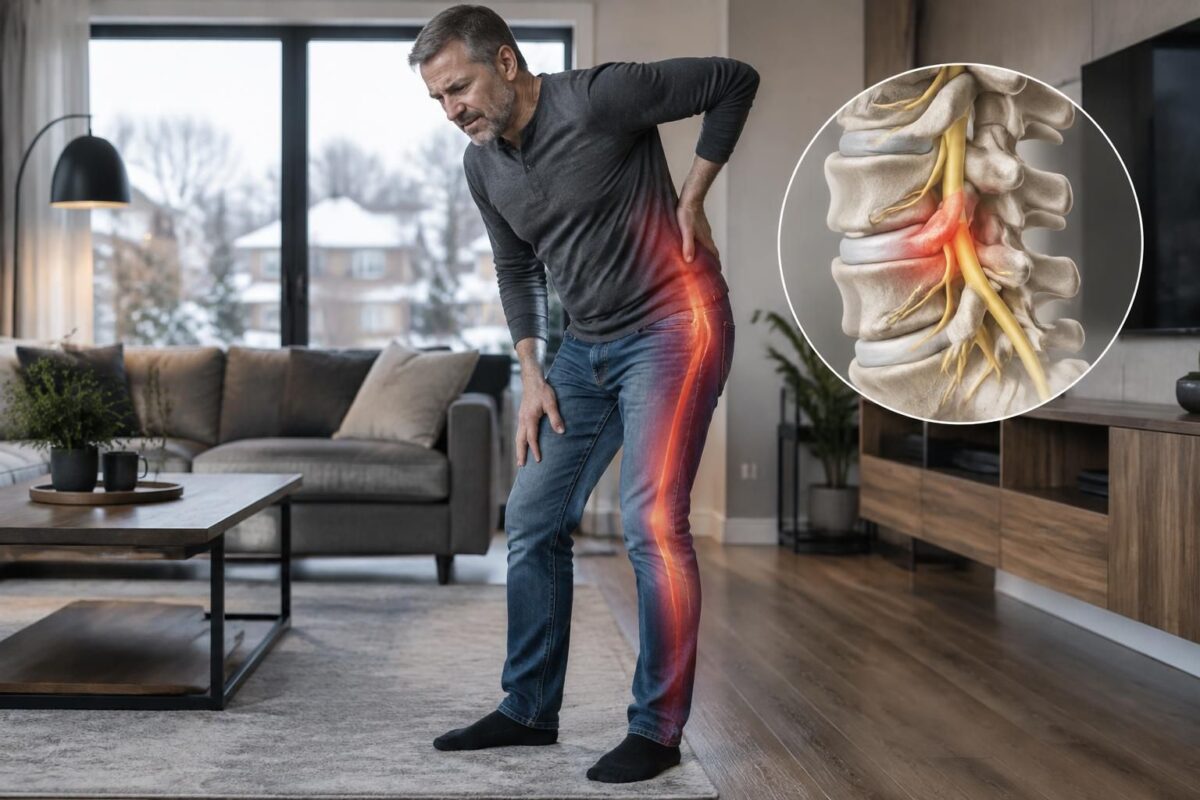
Sciatica L4-L5 in Terrebonne: understand the possible symptoms
IN BRIEF The L4-L5 sciatica often corresponds to irritation of the L5 nerve root, sometimes related to a disc herniation. It can cause pain from the lower back to the buttock, the side of the leg, and the top of…

Sciatica in Terrebonne: how to describe your symptoms during a consultation
IN BRIEF Sciatica is pain or a tingling sensation that descends from the lower back or buttock down the leg. In Terrebonne, describing its path, duration, triggers, and effects on walking helps the professional assess the symptoms and guide the…

Sciatica in Terrebonne: nerve symptoms not to be taken lightly
IN BRIEF Sciatica is pain that can radiate from the lower back or buttock down to the leg, sometimes accompanied by tingling, numbness, or weakness. In Terrebonne, an assessment helps to examine the pathway of symptoms, function, and possible lumbar…

Sciatica in Terrebonne: pain that descends into the leg upon waking
IN SHORT Sciatica is pain that starts from the lower back or buttock and radiates down the leg; it may be more pronounced upon waking. A herniated disc is a possible cause, but only a professional can assess the origin…

Sciatica in Terrebonne: pain that increases during sitting-standing transitions
IN BRIEF Sciatica can cause pain that increases when moving from sitting to standing, although this sign alone is not sufficient to determine the cause. In Terrebonne, assessing when the pain appears, its path through the leg, and its evolution…

Dr Sylvain Desforges, B.Sc., D.O., N.D., osteopath, is the founding president of TAGMED and of the ACMA association. He dedicates his practice to chronic spinal pain, low back pain and symptoms compatible with sciatica, particularly when pain radiates toward the buttock, leg, calf, foot or toes.
Through SOS Sciatique, he publishes educational content on sciatica symptoms, possible causes such as disc herniation, disc narrowing, foraminal stenosis or irritation of a lumbar nerve root, as well as non-surgical approaches that may be considered according to the evaluation. At Clinique TAGMED, care may include, depending on the case, motorized neurovertebral decompression, specific osteopathic care or precision percussion.
For an evaluation related to sciatica treatment in Montreal / Mount Royal or sciatica treatment in Terrebonne, please consult the services available at Clinique TAGMED.
Medical disclaimer
The information published on SOS Sciatique is provided for educational purposes only and does not replace a consultation, diagnosis, opinion or treatment provided by a physician or another authorized healthcare professional. The author of this article is neither a medical doctor nor a specialist in a medical specialty recognized by the Collège des médecins du Québec. The osteopathic, manual medicine or functional support approaches described on this site do not constitute medical acts and are not intended to replace medical follow-up.
Consult a physician or emergency service in cases of loss of bladder or bowel control, anesthesia in the saddle area, significant or progressive weakness in the leg or foot, fever, recent trauma, severe pain or rapid worsening of symptoms. For more details, please read our Legal Notice.