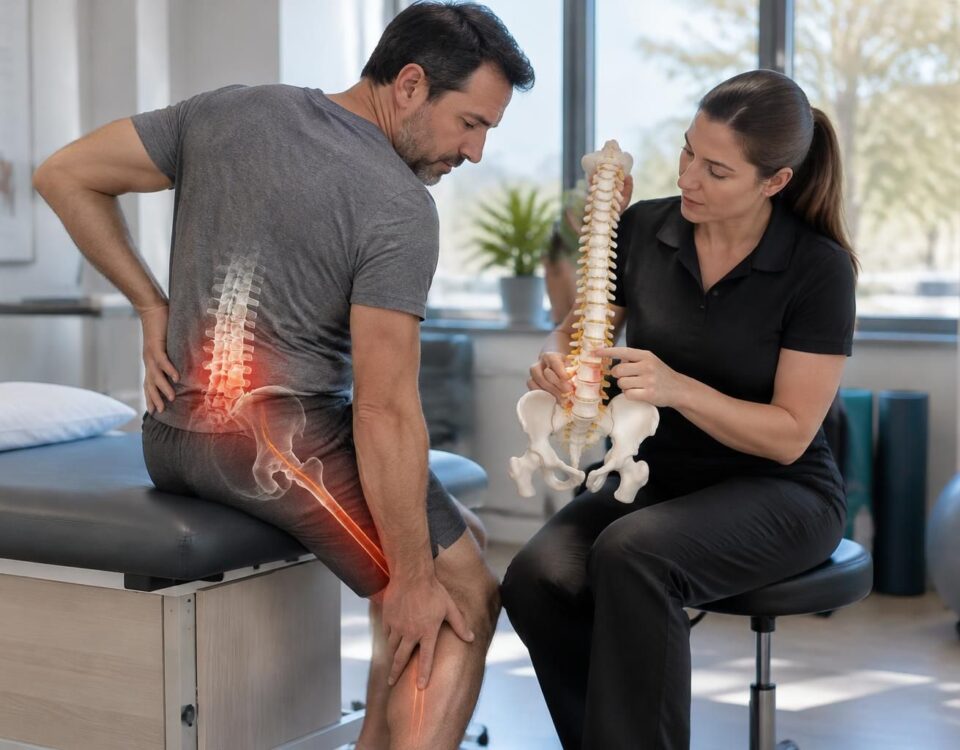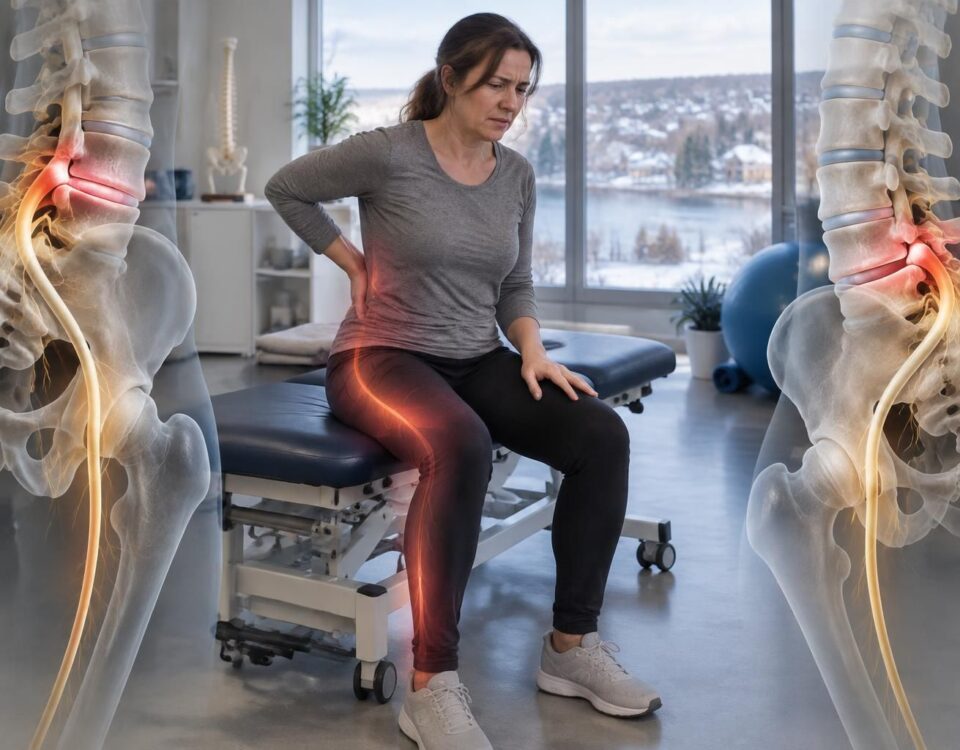
Sciatica in Montreal: why the location of the pain is important
31/07/2026
Sciatica and pain that increases when standing
31/07/2026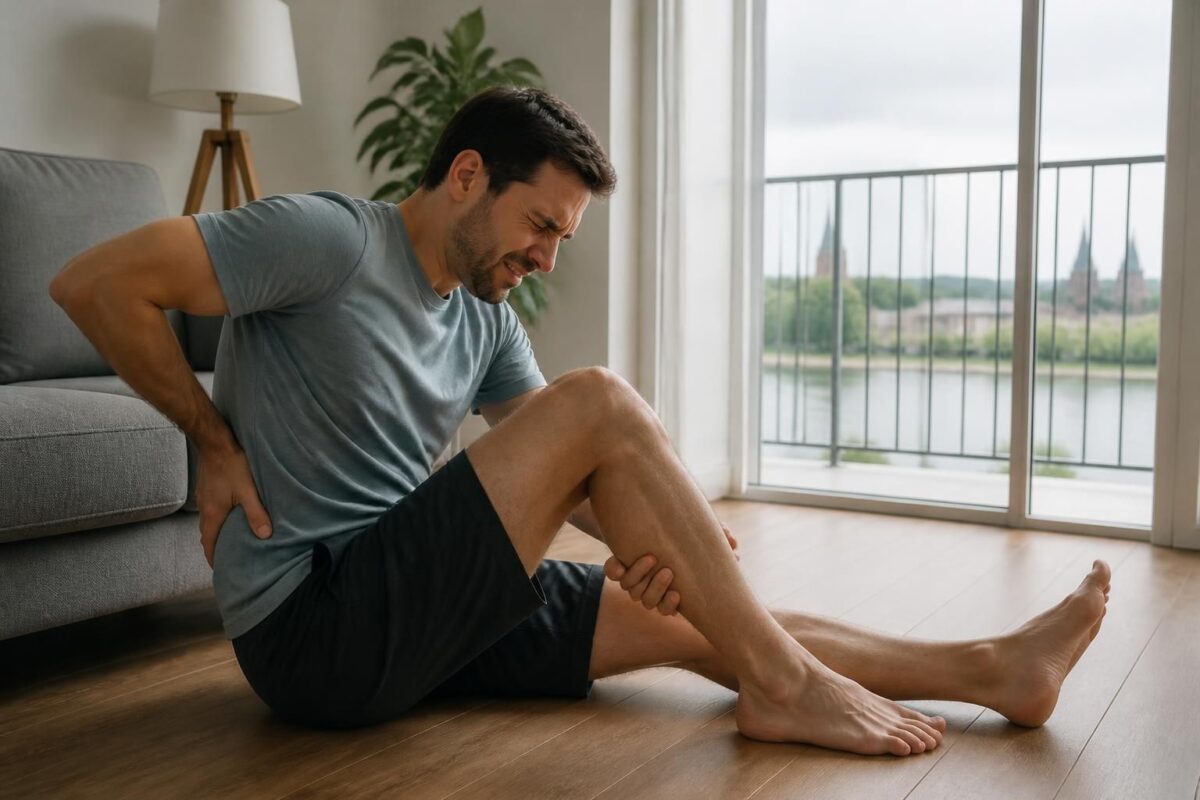
IN BRIEF
| In brief, sciatica is a radicular pain that follows the path of a lumbar nerve root. The location of the pain allows us to identify the nerve root involved and tailor a non-surgical treatment. This approach simplifies diagnosis and quickly improves mobility through progressive movement, gentle exercises, and postural advice. Available in Terrebonne, it aims to restore safety and confidence in the body without resorting to surgery. |
In Terrebonne, the location of the pain is a key indicator for understanding and treating sciatica. It helps identify the nerve origin and orient care towards the right nerve, without solely relying on imaging.
Specifically, sciatic pain follows the nerve path: it starts from the buttock and descends along the back of the thigh and leg, sometimes down to the foot. In contrast, femoral neuralgia mainly affects the front of the thigh and may radiate to the knee.
This precise localization guides the choice of suitable non-surgical approaches, such as gentle exercises and osteopathic techniques, and allows targeting rehabilitation on the affected nerve segments while monitoring for warning signs that require prompt consultation.
This article, written by a health professional, explains why the location of the pain in sciatica is crucial in Terrebonne. It shows how to differentiate sciatica from femoral neuralgia based on the path, and how this information guides a non-invasive and personalized TAGMED Clinic treatment.
Sciatic pain follows the path of the sciatic nerve. Its precise location helps identify the involved nerve and guide the care plan. Femoral pain (or femoral neuralgia) follows the front of the thigh. This geographical distinction is the key marker for understanding nerve irritation and choosing appropriate approaches.
Pathway and differentiation between sciatica and femoral neuralgia
Sciatica typically radiates from the buttock to the back of the thigh and leg, sometimes down to the foot. Femoral neuralgia affects the front of the thigh, starting from the groin and extending towards the knee. This precise location helps identify the affected nerve root and target treatment without hesitation on inflammation or compression.
What location reveals for diagnosis
The location provides information about the nerve involved and contributing factors. It also distinguishes mechanical signs from inflammatory signals. For a deeper understanding of the mechanisms and aggravating factors, consult the associated resources on localization and causes (difference between cause and aggravating factor).
Impact on non-surgical treatment
When we understand the painful pathway, we can direct the care towards non-invasive and personalized approaches. In Terrebonne, the offered options prioritize gentle movement, management of nerve sensitivity, and postural support, without consistently resorting to invasive interventions. For a practical overview of these approaches, see the dedicated pages (non-invasive and personalized approach).
When imaging is not enough
In practice, imaging may show structural elements while pain often depends on nerve hypersensitivity and an overall context (stress, posture, activity). To understand why imaging does not always suffice, you can consult the following resources (imaging and pain).
What sources say about mechanisms
Nerve pain can persist even in the absence of major compression. Factors such as local inflammation and disturbances in the central nervous system play a role. To understand the mechanical and inflammatory foundations, see mechanical causes and nerve inflammation.
Resources and local care
In Terrebonne, a comprehensive evaluation can combine osteopathy and functional advice, with suitable non-surgical options. Relevant information and services can be found on the TAGMED Clinic page (Sciatica Treatment Terrebonne) and on resources specific to the non-invasive approach (Non-invasive and personalized approach). For factors to evaluate before care, consult Factors to evaluate before care.
To understand non-structural mechanisms and non-surgical options, additional useful resources are available at sciatica mechanical causes and nerve inflammation and why imaging is not enough.
For further study, other relevant resources and associations mentioned in this context remain available, including the references related to TAGMED and the multidisciplinary approach. Complementary links lead you to information about the difference between cause and aggravating factor and about movement-centered and comfort-focused approaches.
If you would like to schedule an evaluation, contact the TAGMED Clinic in Terrebonne or Montreal to discuss non-surgical approaches and a personalized plan focused on safe and progressive movement, breathing, and relaxation.
Medical disclaimer: The information and advice provided on this site do not replace the opinion, diagnosis, or treatment of a health professional. Please note that Dr. Sylvain Desforges, osteopath, is neither a medical doctor nor a physician, and is not a specialist in a medical specialty as defined by the Collège des médecins du Québec. Manual medicine, functional medicine, and sports medicine as described on this site exclude any treatment or medical diagnosis made by a physician or specialist. Always consult your doctor for any medical questions. For more details, please read our full Legal Notice.
- Painful journey: sciatica usually radiates along the back of the thigh and leg; femoral neuralgia affects the front of the thigh.
- Involved roots: sciatica (L4-L5-S1), femoral neuralgia (L2-L4).
- Key indicator: precise location helps target the nerve and guide treatment.
- Alarm signals: significant loss of strength, sphincter disorders, or pain with paralysis: emergency.
- Therapeutic plan: prioritize non-surgical approaches tailored to the nerve pathway.
- Pain management: gradual movement, gentle exercises, and breathing to reduce nerve sensitivity.
- Posture and movement: dynamically adjusting posture and varying movements to avoid irritation.
- Non-structural factors: stress, sleep, and daily habits influence pain and recovery.

This article explains why the location of pain in sciatica in Terrebonne is essential: it helps identify the irritated nerve root, adjust non-surgical treatment, and avoid unnecessary examinations while remaining vigilant about signs of urgency. In practice, knowing where the pain is located – in the buttock and along the back of the leg, or at the front of the thigh – quickly guides the professional to the correct diagnosis and the most effective therapeutic actions, without relying solely on imaging.
Understanding the Importance of Pain Location
Location is not just a simple map; it indicates the pathway of the affected nerve and determines which root is irritated. Pain that follows the sciatic nerve pathway typically appears in the buttock and travels down the back of the thigh and leg, sometimes to the foot. In contrast, femoral pain concerns the front of the thigh, starting from the groin and extending towards the knee. This geographical difference is the number one criterion for distinguishing radiculalgia and guiding the treatment plan.
What Location Reveals About Diagnosis and Treatment
The diagnosis relies on identifying the painful pathway and appropriate clinical tests, such as Lasègue or Léri signs, which reproduce the pain when the nerve is put under tension. Precise localization allows targeting the irritated source and prioritizing adapted non-surgical approaches: work on movement, gentle rehabilitation, and nerve stress management. In Terrebonne, a multidisciplinary approach can combine osteopathy, physiotherapy, and postural advice to restore the nerve and spine to a healthy dynamic without systematically resorting to surgery.
Imaging: What It Can and Cannot Explain
Radiological examinations show structures (discs, foramina, stenoses) but do not always describe the functional state of the nerve or the intensity of the pain experienced by the patient. An image can be reassuring, yet the pain may persist, or vice versa. This is why it is crucial to associate imaging with a complete clinical assessment and understanding of neural mechanisms: hypersensitivity, pain cycles, and psychosocial factors that influence the pain experience.
Concrete Strategies for Terrebonne
For effective management in Terrebonne, prioritize an active and progressive approach, centered on movement and breathing control. Incorporate gentle and adapted exercises, encourage a dynamically adjusted posture, and work on breathing to relax the psoas and modulate nerve reactivity, helping to reduce nerve sensitivity without imposing immobilization. A local consultation may aim for a comprehensive assessment: clear explanation of pain, personalized action plan, and guided progression of daily activities.
Examples of Signs to Monitor
Monitor alert signs such as paralysis, sphincter disorders, hyperalgesic pain that persists despite treatments, or significant loss of strength in the leg. In the presence of these red flags, seek prompt emergency care. For other cases, a graduated and adapted approach can gradually restore mobility, confidence, and comfort.
Warning Signs and When to Seek Emergency Care
In case of paralysis or disrupted bowel or bladder control, do not wait: go to the emergency services. For other situations, a local and multidisciplinary evaluation in Terrebonne allows for the establishment of a realistic and effective plan, focused on movement, breathing, and reducing nerve sensitivity, to restore your daily life without excessive pain.
| Key Element | Impact in Terrebonne |
|---|---|
| Location | Sciatica: buttock and back of the leg to the foot; Femoral neuralgia: front of the thigh from the groin to the knee. |
| Nerve Origin | Sciatica: sciatic nerve (L4-L5-S1); Femoral neuralgia: femoral nerve (L2-L4). |
| Pain Pathway | Sciatica: pathway buttock → leg → foot; Femoral neuralgia: pathway groin → front thigh → knee. |
| Distinctive Sign | Sciatica: posterior pain; Femoral neuralgia: anterior pain. |
| Imaging vs Diagnosis | Imaging can be reassuring or may not explain the pain; clinical diagnosis prevails. |
| Emergencies | Paralysis, sphincter disorders, or unbearable pain require emergency care. |
| Non-Surgical Approach | Active rehabilitation and gradual movement; comprehensive approach tailored for Terrebonne. |
| Posture and Movement | Dynamically adjusting posture and varying movements to reduce irritation and nerve sensitivity. |
| Short-Term Goal | Reduce nerve sensitivity and restore daily activities without pain. |
Testimonials: Sciatica in Terrebonne — Why Pain Location Matters
“In Terrebonne, the location of my pain changed everything. The pain started in my buttock and traveled down my leg to my foot, which directed the diagnosis towards a sciatica that was very specific and guided targeted treatment. Result: I am gradually returning to my activities without that electric sensation that once paralyzed me.”
“At first, I thought it was muscular pain, but the team in Terrebonne distinguished a femoral neuralgia based on its trajectory: pain in the front of the thigh rather than in the back or the back of the leg. This localization allowed us to adapt the exercises and care, and I noticed a rapid improvement.”
“As an athlete, knowing exactly where the pain radiates helped me adjust my training plan. In Terrebonne, I was shown that the exact location of the involved nerve determines the movements to prioritize and those to avoid, which allowed me to resume my sessions safely and without relapse.”
“The precision of the localization reassured me: it was not a generalized pathology, but irritation of a nerve according to its trajectory. In Terrebonne, the diagnosis relies on the pain trajectory and simple tests, which spared me unnecessary treatments and provided me with a clear pathway to recovery.”
“I was asked to describe exactly where my pain started and where it went. This mapping defined everything: the pain was localized around the sciatic nerve, and not elsewhere. Thanks to this approach, I was able to follow an active and effective rehabilitation plan, specific to Terrebonne, which allowed me to regain my daily movements.”
Dr. Sylvain Desforges, an expert in osteopathy, naturopathy, and manual medicine, embodies a multidisciplinary approach to low back pain and neuralgias. As the founding president of the TAGMED clinics and leader of the ACMA association, he works to integrate advanced technologies and evidence-based practices to optimize the health and well-being of his patients. His journey is guided by a simple belief: understanding the origin and trajectory of pain precisely allows for adjusting treatment and providing a better quality of life without systematically resorting to surgery.
In the context of so-called Sciatica in Terrebonne, the localization of pain is not just an anatomical curiosity: it conditions the entire diagnostic reasoning and therapeutic plan. The distinction between Sciatica and Femoral neuralgia relies on the radiating trajectory and the nerve concerned. Sciatic pain follows the trajectory of the sciatic nerve, often starting from the buttock and traveling down the back of the leg to the foot, while femoral neuralgia radiates to the front of the thigh, from the groin to the knee. This precise localization immediately points to the involved nerve roots (L4-L5-S1 for sciatica, L2-L4 for femoral neuralgia) and guides the choice of non-surgical treatments adapted to the painful territory.
For Dr. Desforges, localization is also an indicator of underlying mechanisms: potential mechanical compression associated with inflammatory factors, but also nerve hypersensitivity and influences that escape classic imaging. Imaging can reveal anomalies, but it does not tell everything about the experienced pain. This is why his approach prioritizes thorough clinical evaluation — questioning the pain trajectory, mechanical signs, Lasègue and Léri tests, evaluation of muscle strength and reflexes — to clearly distinguish a radiculopathy from localized back pain. This dynamic approach allows targeting the gestures, postures, and exercises that bring the nerve back to a cautious and progressively tolerable state.
In Terrebonne, Dr. Desforges promotes a non-surgical and functional care approach that teaches patients to move painlessly, breathe correctly, and adopt a dynamically corrective posture that supports mobility. His approach integrates precise osteopathic techniques, ergonomic advice, and, when relevant, complementary therapies such as neurovertebral decompression or targeted procedures, always within a framework based on evidence. The goal is to reduce the sensitivity of the nervous system and restore reliable mobility, so that every daily gesture becomes possible again without risk or fear.
This work is rooted in a holistic vision where the precise localization of pain becomes a lever for autonomy. By understanding where the pain starts and where it goes, the practitioner and the patient can together chart a clear and realistic therapeutic trajectory, reduce pain cycles, and restore lasting confidence in the body. Dr. Sylvain Desforges — thanks to his TAGMED team and his commitment to integrative and individualized practice — guides patients in Terrebonne towards better pain absence, a regained quality of life, and a respectful active recovery according to each individual’s pace.
Quick summary: in Terrebonne, locating pain is the main lever to differentiate Sciatica from femoral neuralgia, guide diagnosis, and orient effective non-surgical approaches. Understanding the pain trajectory allows targeting the irritated root, addressing inflammation, and restoring mobility while remaining vigilant to warning signs requiring immediate care.
Why Localization Influences Diagnosis
The localization of the pain trajectory often determines which nerve root is involved: the sciatic nerve irrigates the thigh and leg from the back, while the femoral nerve affects the front of the thigh. This geographical distinction is the number one criterion for differentiating sciatica from femoral neuralgia and adapting the treatment strategy. To deepen the trajectory and know how to act, refer to this article dedicated to pain mapping before making a decision: Sciatica in Terrebonne – understanding the pain trajectory before acting.
Signals and Symptoms to Watch For
Depending on the trajectory, the symptoms differ: pain starting from a buttock and traveling down the back of the thigh and leg may signal sciatica, while pain focused on the front of the thigh may indicate femoral neuralgia. In addition to localization, observe for paresthesias, weaknesses, and variations in intensity while walking. To avoid hasty decisions and better understand the options available, refer to dedicated resources: sciatic pain in Montreal – how to avoid hasty decisions, and pain that increases while walking.
How the pathway guides therapeutic decisions
The painful pathway is a clinical compass: it guides the choice of tests, the priority of interventions, and the type of non-surgical intervention. Imaging can complement the diagnosis but is not sufficient on its own to explain persistent pain: nerve hypersensitivity and non-structural factors often play a major role. Approaches such as osteopathy, gentle physiotherapy, and targeted exercises can be adjusted depending on whether the pain follows the pathway from the thigh to the foot or is localized at the front of the thigh. To understand how the pathway influences practical management, also explore resources such as La Sciatique Solution and Nerve Sciatica – pathway and causes of pain.
Integration of resources and practical advice
For effective management in Terrebonne, combining a precise clinical examination, an understanding of the painful pathway, and postural advice paired with movement is key. The path to reducing nerve sensitivity involves progressive movement, guided breathing, and a dynamic posture that mobilizes the pelvis and back without repeated irritations. Beyond radiological images, complementary resources can illuminate your journey: acute pain or persistent pain, retroverted pelvis – why the pain can descend, and cruralgia-sciatica. For practical advice and concrete examples in Terrebonne, refer to La Sciatique Solution and explore non-surgical approaches when relevant.
Additionally, resources like Sciatica in Terrebonne – understand the pathway and acute pain vs persistence provide clear guidelines for recognizing the nerve origin and guiding the first actions to take in daily life.

Sciatica in Terrebonne: painful journey according to roots L4, L5, and S1
IN BRIEF Sciatica in Terrebonne can cause pain, tingling, or weakness in the leg. The roots L4, L5, and S1 can guide the evaluation based on symptoms and changes in strength, sensitivity, or reflexes; their territories do overlap, however. Comparing…

Sciatica in Terrebonne: what does irritation of the S1 root mean?
IN BRIEF An irritation of the S1 root can cause pain of a sciatica type in the buttock, the back of the leg, and the outer edge of the foot. Tingling, numbness, or difficulty walking on tiptoes may also occur.…

Sciatica in Terrebonne: what does irritation of the L5 root mean?
IN BRIEF L5 sciatica corresponds to irritation of the L5 nerve root, often felt from the lower back and buttock down the side of the leg, to above the foot and the big toe. It can cause pain, tingling, or…

Sciatica in Terrebonne: difference between L4-L5 and L5-S1
IN BRIEF The difference between L4-L5 and L5-S1 concerns the level of the lumbar discs and the sometimes irritated nerve roots: an L4-L5 injury often affects L5, while an L5-S1 injury often affects S1. The sensory pathways overlap; thus, an…

Sciatica S1 in Terrebonne: pain towards the calf and the outer edge of the foot
IN BRIEF S1 sciatica is pain related to irritation of a lumbar nerve root, which may radiate down to the buttock, back of the calf, and the outer edge of the foot. Tingling or weakness may also occur. In Terrebonne,…

Sciatica L5 in Terrebonne: pain towards the big toe
IN SHORT L5 sciatica can cause pain or numbness that radiates to the big toe, sometimes with difficulty lifting the foot. This pathway is a clue, not a diagnosis: the examination compares strength, sensitivity, and gait, as the nerve territories…

Sciatica L5-S1 in Terrebonne: pain radiating to the heel or foot
IN BRIEF A L5-S1 sciatica often corresponds to irritation of the S1 root, which can cause pain that radiates from the buttock down to the calf, heel, or outer edge of the foot. Identifying the pathway of symptoms and changes…
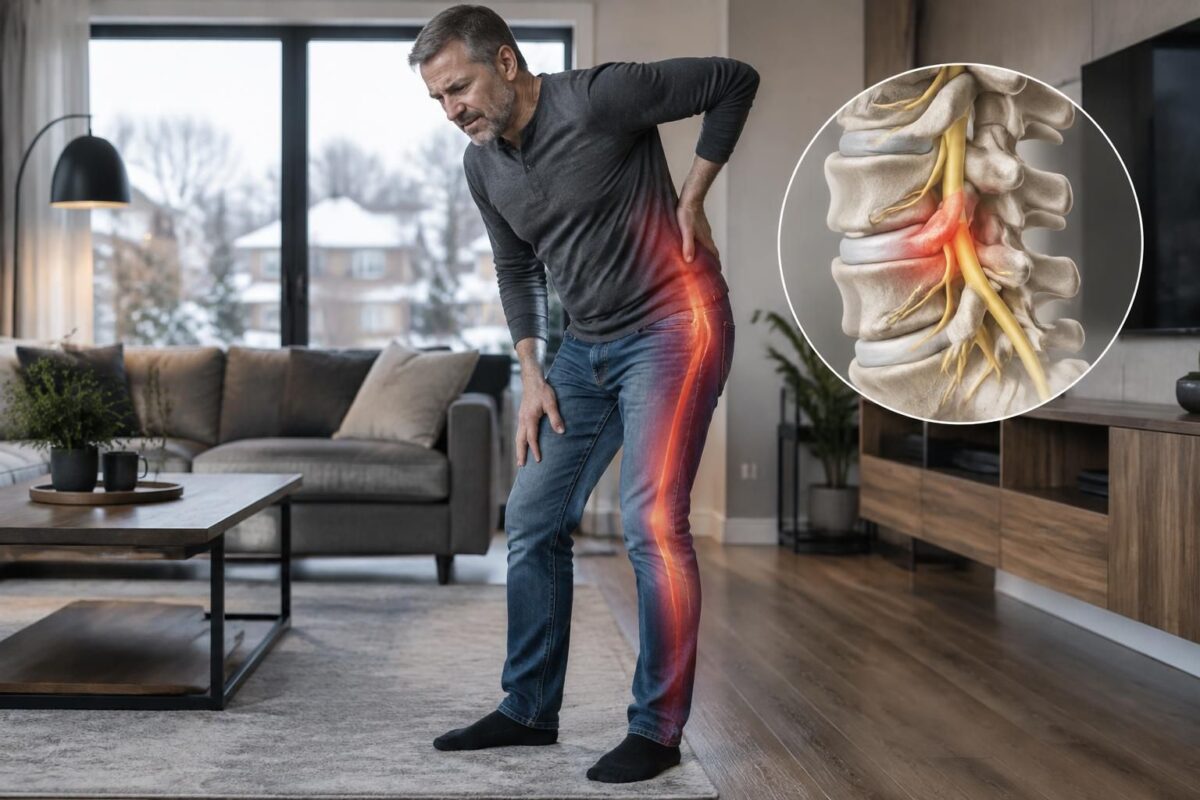
Sciatica L4-L5 in Terrebonne: understand the possible symptoms
IN BRIEF The L4-L5 sciatica often corresponds to irritation of the L5 nerve root, sometimes related to a disc herniation. It can cause pain from the lower back to the buttock, the side of the leg, and the top of…

Dr Sylvain Desforges, B.Sc., D.O., N.D., osteopath, is the founding president of TAGMED and of the ACMA association. He dedicates his practice to chronic spinal pain, low back pain and symptoms compatible with sciatica, particularly when pain radiates toward the buttock, leg, calf, foot or toes.
Through SOS Sciatique, he publishes educational content on sciatica symptoms, possible causes such as disc herniation, disc narrowing, foraminal stenosis or irritation of a lumbar nerve root, as well as non-surgical approaches that may be considered according to the evaluation. At Clinique TAGMED, care may include, depending on the case, motorized neurovertebral decompression, specific osteopathic care or precision percussion.
For an evaluation related to sciatica treatment in Montreal / Mount Royal or sciatica treatment in Terrebonne, please consult the services available at Clinique TAGMED.
Medical disclaimer
The information published on SOS Sciatique is provided for educational purposes only and does not replace a consultation, diagnosis, opinion or treatment provided by a physician or another authorized healthcare professional. The author of this article is neither a medical doctor nor a specialist in a medical specialty recognized by the Collège des médecins du Québec. The osteopathic, manual medicine or functional support approaches described on this site do not constitute medical acts and are not intended to replace medical follow-up.
Consult a physician or emergency service in cases of loss of bladder or bowel control, anesthesia in the saddle area, significant or progressive weakness in the leg or foot, fever, recent trauma, severe pain or rapid worsening of symptoms. For more details, please read our Legal Notice.