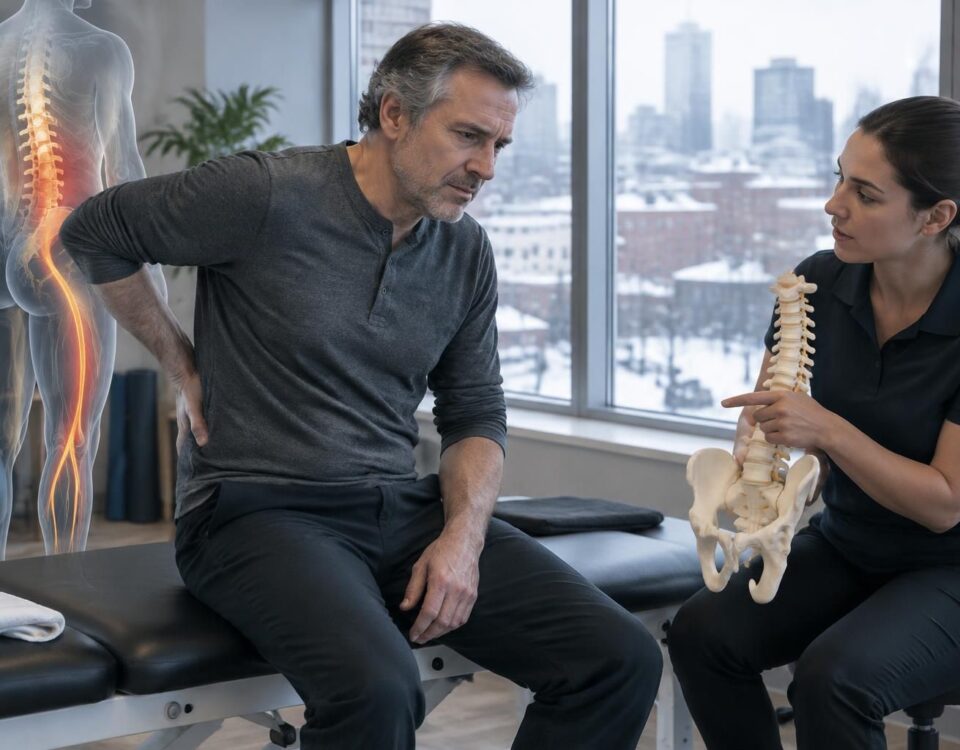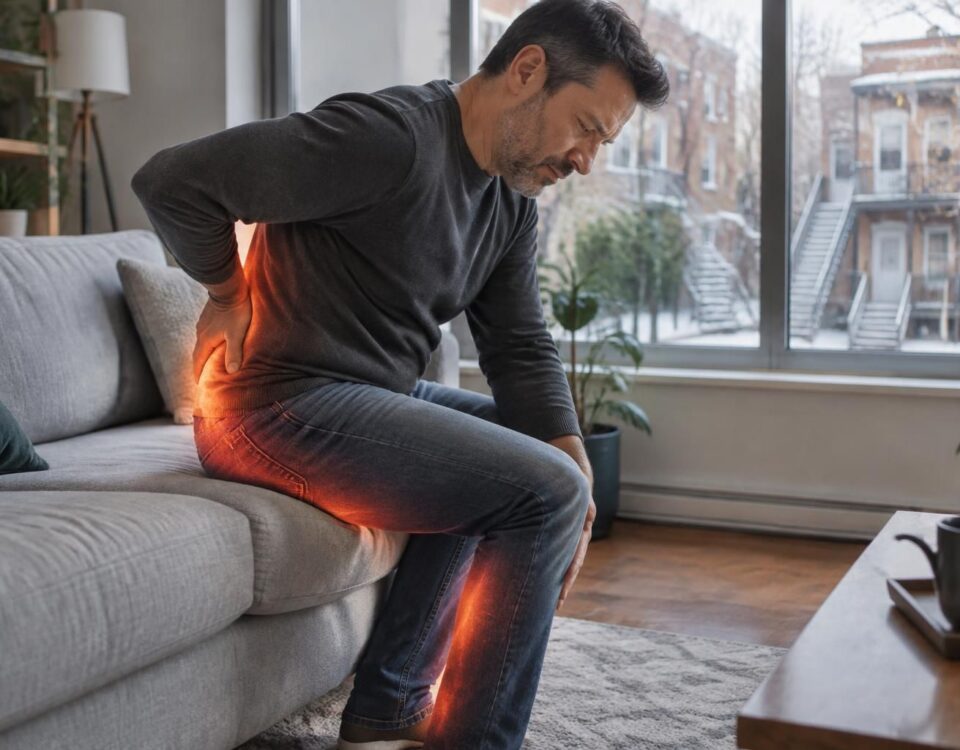
Sciatica and daily walking: how to respect tolerance
04/10/2026
Sciatica L4-L5 in Terrebonne: understand the possible symptoms
05/10/2026
IN BRIEF
| L4-L5 sciatica refers to a pain that may occur when a lumbar nerve root is irritated, sometimes related to a herniated disc. It can cause pain, tingling, or weakness in the buttock and leg; symptoms vary and cannot, on their own, confirm their origin. In Montreal, an assessment helps correlate symptoms, strength, and function to guide the next steps. |
A L4-L5 associated sciatica can cause lower back pain that radiates into the buttock and leg, sometimes down to the top of the foot or the big toe. Tingling, numbness, or weakness may also occur. However, symptoms vary and do not, by themselves, identify the affected nerve root.
In Montreal, an assessment can relate the pain’s trajectory, strength, sensitivity, walking, and, if necessary, imaging results. New or progressive weakness, a foot drop, or urinary or bowel issues require rapid medical evaluation.
Pain that originates from the lower back and radiates down the leg may be associated with irritation of a lumbar nerve root. At the L4-L5 region, possible signs include radiating pain, tingling, decreased sensitivity, or weakness of the foot. Their path varies from person to person. Therefore, the examination should correlate symptoms, strength, sensitivity, reflexes, and imaging results, rather than concluding from an isolated sign. The term L4-L5 sciatica often refers to symptoms related to nerve irritation near the disc located between the L4 and L5 vertebrae. A hernia or protrusion at this level can sometimes irritate a nerve root. However, seeing an anomaly on an image is not enough to prove that it explains the pain. The L5 root can be affected by a hernia located between L4 and L5. A more lateral involvement may also concern the L4 root, which exits nearby. The affected level therefore depends on the precise location of the anomaly and its concordance with the examination. For a general overview, refer to our page on nerve roots and sciatica. Irritation of the L4 root may be associated with pain or altered sensitivity in the front of the thigh or near the knee. Certain knee movements may also seem weaker. A change in the patellar reflex may be part of the examination, but it alone cannot diagnose. Irritation of the L5 root can produce symptoms on the side of the leg, the top of the foot, or near the big toe. Some people notice difficulty in raising the foot or big toe. Pain may radiate below the knee, but its trajectory is not identical for everyone. Pain towards the top of the foot is addressed in this guide on pain on the top of the foot and the L5 root. Nerve territories overlap. Therefore, pain in the big toe does not, by itself, confirm an L5 lesion. Sensitivity, strength, walking, and symptom progression provide additional information. To better understand possible signs, also refer to this page on pain that radiates below the knee. Symptoms may vary over days. Their intensity and trajectory can depend on position, activities, sensitivity of the nerve root, and evolution of the problem. A changing trajectory does not, by itself, identify the cause or level affected. This guide explains why sciatic pain may change path. The size of a protrusion does not always predict the intensity of the pain. Symptoms also depend on the reaction of the tissues and the nerve. A small protrusion can sometimes coexist with significant pain. Conversely, some imaging anomalies do not cause symptoms. Persistent pain deserves an evaluation that considers the whole picture. An evaluation begins with describing the pain: its trajectory, duration, intensity, triggering factors, and activities it limits. The professional can then examine strength, sensitivity, reflexes, and walking. They compare these observations to the history and available examinations, when relevant. An MRI does not automatically designate the responsible root. The observed side and level must correspond to the symptoms and the signs from the examination. Guides on persistent sciatica associated with a herniated disc and on L4-L5 and L5-S1 levels provide additional information. Management depends on the profile, function, and neurological evolution. It can include information, temporary adaptation of certain activities, and conservative approaches chosen according to the assessment. Imaging, infiltration, or a specialist opinion may be considered by a medical professional as indicated. At the TAGMED Clinic in Montreal / Mont-Royal, a consultation can help examine available options, including specific osteopathy or motorized neurovertebral decompression when these approaches are deemed relevant. No results can be guaranteed. Progress is also measured by walking, sleep, and resuming important activities, not just by a pain score. To better distinguish the signs observed in sciatica, you can consult this page on sciatica assessment in Montreal. New or increasing weakness, a foot drop, or a leg that gives way more requires rapid medical evaluation. One should also consult without delay in the event of new urinary or bowel issues, numbness in the saddle area, significant symptoms in both legs, fever, major trauma, or general deterioration. These signs should not wait for a routine appointment. In the presence of new urinary or bowel problems, numbness of the saddle area, or rapidly progressive weakness, go to the emergency room or contact emergency services. No. The sensation in the big toe may contribute to the assessment, but it must be compared to strength, other sensitive areas, and the rest of the examination. No. The areas of sensitivity and motor functions can overlap. Individual variations make the overall examination important. No. The image must be interpreted alongside the symptoms, examination, and progression. A visible anomaly may not be the source of the pain. Not necessarily. The duration of pain is not sufficient to determine the condition of the nerve. An assessment can clarify the signs to monitor and the next steps. Sylvain Desforges, B.Sc., D.O., N.D., Doctor of Osteopathy, is the founding president of TAGMED and the ACMA association. He devotes his practice to chronic pain of the spine, low back pain, and pain associated with sciatica, particularly when the pain radiates to the buttock, leg, calf, foot, or toes. Through SOS Sciatique, he publishes educational content on the symptoms of sciatica, possible causes like disc herniation, disc compression, foraminal stenosis, or irritation of a lumbar nerve root, as well as non-surgical approaches that may be considered based on the assessment. At the TAGMED Clinic, care may include, as appropriate, motorized neurovertebral decompression, specific osteopathy, or precision percussion. For an assessment related to the sciatica treatment in Montreal / Mont-Royal or the sciatica treatment in Terrebonne, check the services available at TAGMED Clinic. The information published on SOS Sciatique is provided for educational purposes and does not replace a consultation, diagnosis, opinion, or treatment carried out by a physician or another licensed healthcare professional. The author of this article is neither a doctor nor a specialist in a medical specialty recognized by the Collège des médecins du Québec. The osteopathy, manual medicine, or functional support approaches described on this site do not constitute medical acts and are not intended to replace medical follow-up. Consult a doctor or emergency service in case of loss of bladder or bowel control, anesthesia in the saddle area, significant or progressive weakness of the leg or foot, fever, recent trauma, severe pain, or rapid deterioration. For more details, please read our Legal Notice. Medical Disclaimer: The information and advice provided on this site do not replace the advice, diagnosis, or treatment of a healthcare professional. Please note that Sylvain Desforges, B.Sc., D.O., N.D., Doctor of Osteopathy, is neither a medical doctor nor a physician, and is not a specialist in a medical specialty as defined by the Collège des médecins du Québec. The manual medicine, functional medicine, and sports medicine described on this site exclude any treatment or medical diagnosis made by a doctor or medical specialist. Always consult your physician for any medical questions. For more details, please read our Full Legal Notice.What symptoms can accompany irritation of L4 or L5?
Why can the pain trajectory change?
How does the assessment link symptoms and the L4-L5 level?
When to seek rapid or urgent evaluation?
Frequently asked questions about L4-L5 sciatica
Does the big toe confirm an L5 lesion?
Are the symptoms of L4 and L5 always distinct?
Does an MRI always confirm the cause of sciatica?
Does persistent pain mean the nerve is damaged?
About the Author
Medical Warning
Key Point: no symptom or imaging result alone can confirm the involvement of an L4 or L5 root.Sciatica L4-L5 in Montreal: Possible Symptoms and Assessment Guidelines
Signs Sometimes Associated
Elements to Evaluate

A sciatica associated with an L4-L5 disc problem can cause pain that starts from the lower back or buttock and radiates down the leg, sometimes to the foot. Tingling, numbness, or decreased strength may also occur. However, the path of symptoms varies from person to person: it is not sufficient on its own to determine which structure is affected. In Montreal, careful assessment allows for correlating symptoms, function, and, if necessary, imaging results.
What does “sciatica L4-L5” mean?
L4-L5 refers to the space between two lumbar vertebrae, where a disc is located. A herniation or other irritation at this location can sometimes affect a nerve root. Depending on its position and the individual’s characteristics, irritation may particularly involve the L5 root, but the disc level alone cannot confirm the source of the pain.
The term sciatica generally describes pain or unusual sensations that follow part of the course of the sciatic nerve. The presentation may include low back pain, but this is not always present. Some primarily feel discomfort in the buttock or leg.

Herniated Disc L5-S1 and Sciatica in Montreal: Common Symptoms
IN BRIEF A L5-S1 disc herniation is a displacement of the disc located between the last two lumbar vertebrae and the sacrum; if it irritates a nerve root, it can cause sciatica. The pain often radiates from the buttock down…
Possible Symptoms When L5 is Involved
Pain and Sensations in the Leg
Pain may extend along the side of the leg and reach the top of the foot or big toe. Tingling, a burning sensation, or numbness may accompany this radiation. These manifestations do not always follow the same path: sensory territories overlap and vary from individual to individual.
Changes in Strength and Function
Nerve irritation may sometimes be accompanied by difficulty in lifting the foot or big toe or walking normally. A feeling of reduced stability in the leg deserves particular attention, especially if it appears recently or worsens. Strength should be evaluated with other factors, such as sensitivity, reflexes, and observation of gait; a single movement does not allow for a diagnosis.

Sciatica and disc herniation in Montreal: understanding the link
IN BRIEF Sciatica is a pain that radiates down the leg when a nerve root is irritated; a lumbar herniated disc can be the cause, but is not always responsible. In Montreal, an assessment helps to better understand the symptoms,…
How to Describe Your Symptoms Better
Before a consultation, note the trajectory of the pain, its duration, intensity, and the activities that trigger or relieve it. Also mention any changes in sensitivity, difficulties walking, climbing stairs, or performing your usual tasks. This information helps to examine the situation as a whole.
The evaluation may include an examination of strength, sensitivity, reflexes, and gait. If imaging is available, its results should be compared to the symptoms and examination: an anomaly on the MRI does not automatically prove that it explains the pain.
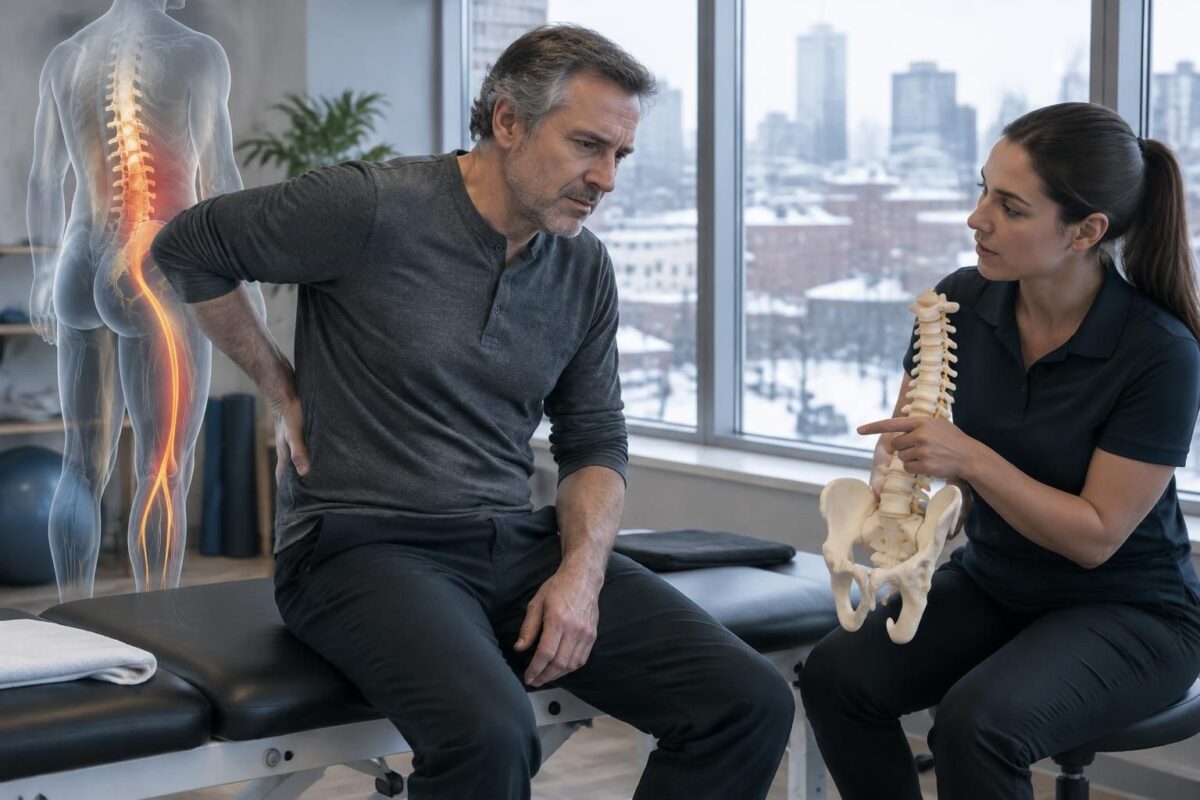
Sciatica in Montreal: lumbar roots and choice of a cautious treatment
IN BRIEF Sciatica is pain radiating from the buttock down the leg, often related to irritation of a lumbar root. In Montreal, a careful assessment helps to connect symptoms to function and to choose appropriate management: modified activity, rehabilitation, or…
What steps to consider?
In the absence of worrying signs, it may be appropriate to maintain tolerated movements, temporarily adapt activities that exacerbate symptoms, and gradually resume efforts. Conservative options, such as exercise or rehabilitation, should align with the individual’s profile and progression. A consultation in Montreal may help clarify the next steps and the criteria for reevaluation.

Sciatica in Montreal: how to interpret pain according to the leg path
IN BRIEF Sciatica refers to pain that can follow a nerve root from the lower back to the buttock and the leg. Its path, along with tingling, numbness, or weakness, helps guide the evaluation but is not sufficient to make…
When to seek help quickly?
A new, significant, or progressive weakness, a foot drop, or a leg giving way justifies a rapid medical evaluation. New urinary or bowel issues, numbness in the saddle area, significant symptoms in both legs, fever, or major trauma require urgent attention. These signs should not wait for a routine appointment.
This information is educational and does not replace a diagnosis or consultation with a licensed healthcare professional.
| Indicator | Possible Signs |
|---|---|
| L4-L5 | A problem at this level may irritate a nerve root and cause pain radiating down the leg. |
| Path associated with L4 | Pain or numbness sometimes towards the front of the thigh or knee. |
| Strength associated with L4 | Certain knee movements may be affected. |
| Path associated with L5 | Symptoms sometimes on the side of the leg, the top of the foot, or the big toe. |
| Strength associated with L5 | A movement of the foot or big toe may be diminished. |
| Interpretation | The symptoms overlap: no isolated sign confirms the affected root. |
| Evaluation | The path, strength, sensitivity, reflexes, and gait are considered together. |
| Consult quickly | New or progressive weakness, foot drop, new urinary issues, or saddle numbness. |

Sciatica in Montreal: L5-S1, canal, foramen, and nerve compression
IN BRIEF Sciatica related to L5-S1 can occur when a nerve root is irritated or compressed, particularly due to narrowing of the spinal canal or the foramen, the opening through which the nerve exits the spine. It can cause pain,…
Fictitious testimonies to better recognize different presentations
Note: the narratives below are fictional and composite. They illustrate possible experiences but do not represent real patient testimonies nor allow for a diagnosis. A visible lesion at the L4-L5 level does not necessarily cause the same symptoms in everyone.
“The pain was radiating from the buttock down to the top of the foot.” In this example, the person notices lower back pain extending into the buttock, the side of the leg, and sometimes the top of the foot. This trajectory may be consistent with nerve irritation, particularly of the L5 root, but other causes can produce similar sensations. Thus, the path of the pain is not sufficient to confirm the affected level.
“My big toe felt less easy to lift.” A person may also report weakness or unusual fatigue in certain movements of the foot or toes. During an evaluation, strength is examined alongside other factors—such as sensitivity, gait, and reflexes—rather than being interpreted from a single movement.
“I mostly had tingling, with little back pain.” A possible sciatica at the L4-L5 level does not always manifest as marked lower back pain. Numbness, tingling, or pain in the leg may be more pronounced. Their location varies, and sensory territories overlap; an isolated symptom cannot definitively identify a root.
“The MRI showed L4-L5, but I wanted to know if that really explained my symptoms.” An image must be correlated with the affected side, the felt trajectory, the neurological exam, and the evolution of function. An imaging anomaly does not automatically prove it is responsible for the pain. It is this concordance that helps guide the next steps.
What the evaluation may examine: the healthcare professional may inquire about the duration of symptoms, the activities that trigger them, their progression, and the affected abilities. The examination may include strength, sensitivity, reflexes, gait, and tests tailored to the clinical picture. The proposed care or referrals depend on this evaluation; they may include activity modification, exercise, or a medical consultation as needed.
In Montreal, an evaluation can help clarify the symptoms and discuss options suitable to your situation. Results and the pace of improvement vary depending on the cause, history, and neurological evolution; no outcome can be guaranteed in advance.
Consult a healthcare professional quickly if new or progressive weakness occurs, if the foot becomes difficult to lift, or if walking deteriorates. New urinary or bowel issues, loss of sensation in the saddle area or perineum, significant weakness, fever, or rapid deterioration require urgent medical evaluation.
Medical information: this content is provided for educational purposes and does not replace a consultation, diagnosis, or treatment by a licensed healthcare professional. It does not determine if your symptoms stem from the L4-L5 level.
Pain that starts from the lower back and radiates into the buttock or leg may be consistent with sciatica, but its path is not sufficient to determine the cause. In Montreal, as elsewhere, symptoms associated with the L4-L5 level vary based on the affected structure, possible irritation of a nerve root, and individual circumstances. A comprehensive evaluation allows for better understanding of the picture and choosing appropriate next steps.
Between the lumbar vertebrae L4 and L5 lies a disc that helps distribute loads and allow for back movements. When it deforms, for example in the presence of a herniated disc, it can irritate a nearby nerve root. An injury at this level may particularly affect the L5 root, but the exact level depends on the location of the disc bulge. An MRI alone cannot confirm which structure explains the symptoms.
When the L5 root is irritated, pain can radiate to the buttock, the side of the leg, and then towards the top of the foot or the big toe. Some people describe sharp pains, burning sensations, or electric shocks; others feel tingling or a numb area instead. The distribution is not the same for everyone: sensory territories overlap and do not always follow a perfectly clear pattern.
A change in strength can also occur. It may become more difficult to lift the foot or the big toe, to walk on the heels, or to maintain a normal gait. These signs should be evaluated carefully, especially if they are new, pronounced, or progressing. However, an isolated movement does not confirm an L5 injury: strength, sensitivity, reflexes, gait, and the evolution of symptoms are considered together.
The assessment generally begins with a precise description of the symptoms: their path, duration, intensity, the movements that aggravate them, and the factors that alleviate them. The examination can then focus on mobility, sensitivity, strength, and gait. If imaging tests are available and relevant, their results are compared to clinical findings. This concordance is more useful than a radiological anomaly taken in isolation.
Management depends in particular on function, history, and neurological evolution. Depending on the profile, options may include information, temporary adjustment of certain activities, a gradual return to tolerated movements, and appropriate conservative approaches. Medical referral or additional tests may be considered based on indications. At TAGMED Clinic, a consultation in Montreal / Mont-Royal can help examine the functional profile and discuss possible options, without replacing medical follow-up when necessary.
Consult a healthcare professional quickly if weakness appears or worsens, if the foot drops, or if the leg gives way further. New urinary or bowel issues, numbness in the saddle region, significant weakness, fever, recent trauma, or rapid deterioration require urgent medical evaluation. These signs should not wait for a routine appointment.
About the author
Sylvain Desforges, B.Sc., D.O., N.D., Doctor of Osteopathy, is the founding president of TAGMED and the ACMA association. He dedicates his practice to chronic spinal pain, particularly low back pain and symptoms consistent with sciatica. His educational content addresses possible causes, signs to watch for, and non-surgical approaches that may be considered based on assessment. At TAGMED Clinic, care may include, as appropriate, motorized neurovertebral decompression, specific osteopathy, or precision percussion.
Medical Disclaimer
This text is provided for educational purposes and does not replace consultation, diagnosis, advice, or treatment by a physician or other licensed healthcare professional. The author is neither a doctor nor a specialist in a medical specialty recognized by the Collège des médecins du Québec. Osteopathy, manual medicine, or functional support approaches do not constitute medical acts and do not replace medical follow-up.
In Montreal, pain attributed to the L4-L5 region may be accompanied by symptoms in the lower back, buttock, or leg, sometimes extending to the foot. Their path, changes in sensitivity or strength, and their evolution help guide the evaluation, but no isolated symptom or imaging result alone can confirm the affected nerve root.
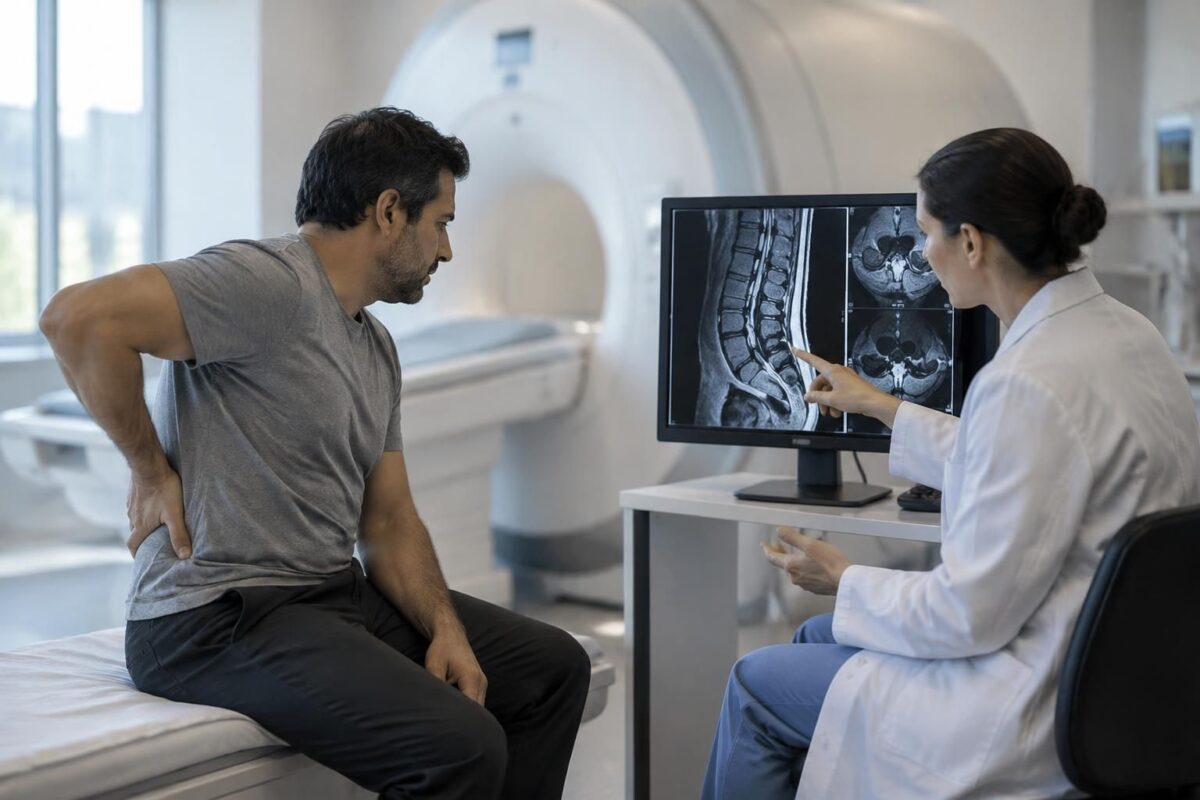
Sciatica in Montreal: why an MRI must be correlated with symptoms
IN BRIEF An MRI for sciatica shows structures in the lower back, but an anomaly alone does not prove the cause of the pain. It must be compared with the symptom pathway, the affected side, and the neurological examination. This…
Understanding Possible Symptoms of L4-L5 Sciatica
A disc injury at the L4-L5 level can irritate a nerve root and contribute to pain that starts in the lower back and radiates down the leg. Depending on the affected structure and clinical situation, the pain may be accompanied by tingling, a burning sensation, or numbness. To better recognize the different presentations, you can consult this guide on pain radiating from the lower back to the leg and this article on tingling, burning, or numbness associated with sciatica.
The L4-L5 level does not automatically mean that symptoms will follow a specific path. Irritation of the L5 root may be associated with sensations on the side of the leg or the top of the foot, and even with difficulty lifting the foot or walking on the heels. However, sensory and motor territories overlap and vary from person to person. For example, pain on the outer edge of the foot alone is not sufficient to identify a root: this article on pain radiating to the outer edge of the foot illustrates the importance of considering the whole picture.
Difficulty walking on the heels may warrant particular attention if it is new or worsening. It may be part of the elements examined to assess foot function, but does not confirm an L5 injury on its own. To understand this sign, consult the guide on walking on heels and possible L5 root injury. Similarly, numbness that appears after walking should be interpreted with its context, duration, and evolution.
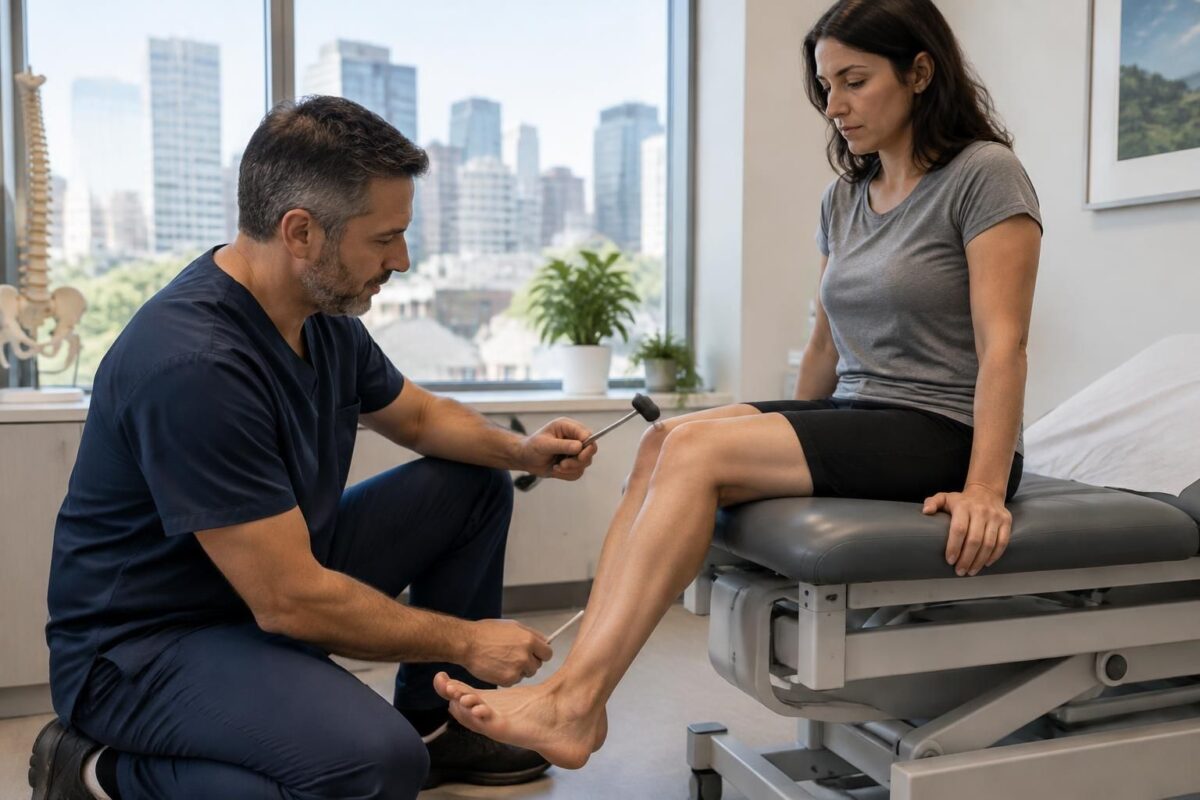
Sciatica in Montreal: reflexes, strength, and sensitivity in evaluation
IN BRIEF The evaluation of sciatica involves examining reflexes, muscle strength, and sensitivity, in addition to the pathway and evolution of pain. In Montreal, these observations help the healthcare professional identify potential neurological signs and guide the next steps. No…
Why the Examination Must Connect Multiple Clues
A relevant assessment takes into account the path of the pain, its duration, triggers, and what soothes it. It may also examine strength, sensitivity, reflexes, gait, and activities that have become difficult. Imaging results, when available and useful, are compared with these observations: a visible anomaly on MRI is not automatically the cause of the symptoms. To delve deeper into the link between disc herniation and sciatica, consult the guide on sciatica and disc herniation, as well as resources dedicated to L4-L5 discopathy and sciatica evaluation in Montreal.
Pain that radiates down the leg is not necessarily caused by a disc herniation: several factors can produce similar symptoms. A general overview of symptoms and evaluation pathways is also offered by this resource on sciatica. Diagnosis and next steps depend on the person’s history, examination, and, when indicated, additional tests.
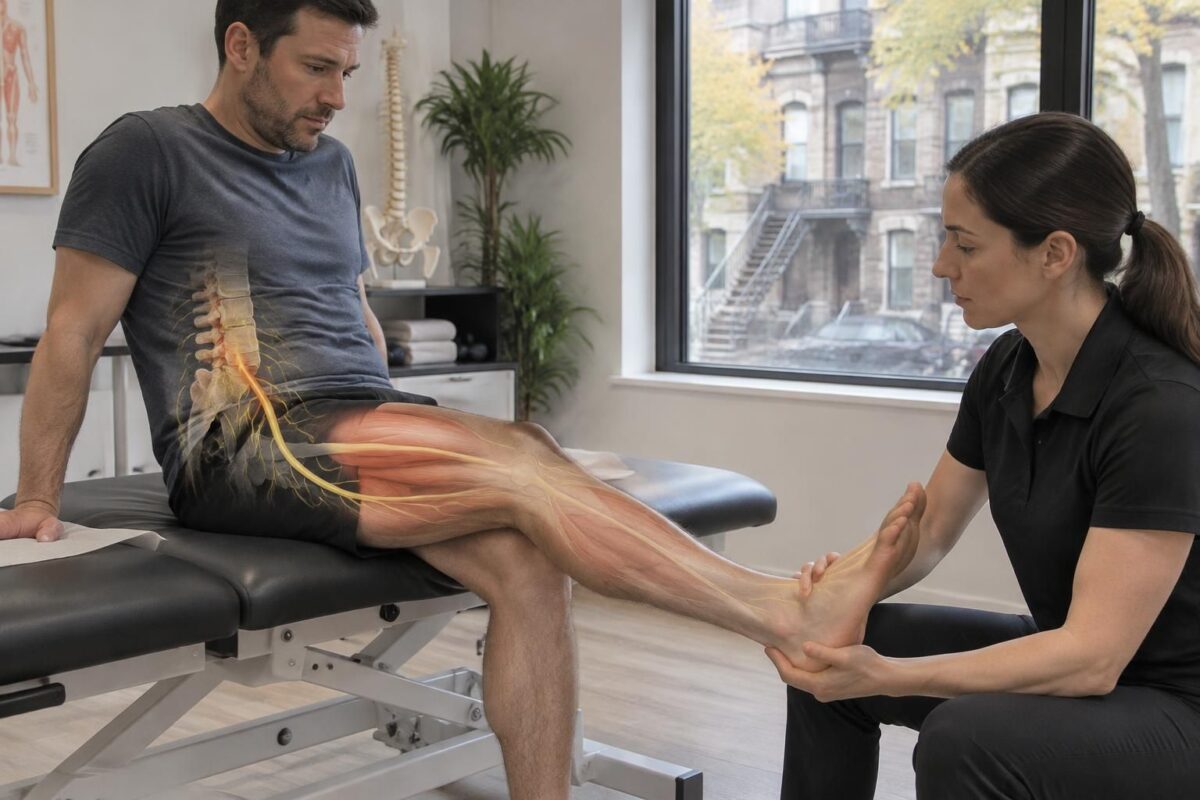
Sciatica in Montreal: Muscle Weakness Based on the Irritated Root
IN BRIEF Sciatica can cause muscle weakness when lumbar nerve roots are irritated. Depending on the affected root, it may become difficult to lift the foot or stand on tiptoes. In Montreal, an assessment of strength, sensation, and pain pathway…
Evolution, Options, and Warning Signs
Care depends particularly on the intensity of symptoms, their duration, and function. According to the assessment, options may include self-management advice, temporary adjustments to certain activities, exercises, or rehabilitation. Medical guidance or imaging may be considered when the situation warrants it. The goal is to monitor not only pain but also walking, sleep, work, and important daily capabilities. Recovery approaches and timelines vary from person to person.
A new, significant, or progressive weakness, a foot drop, or a deteriorating gait requires rapid medical evaluation. New urinary or bowel disorders, loss of sensation in the saddle or perineal region, or major weakness are signs that may necessitate urgent care. If these symptoms are present, do not just wait for a routine appointment.
At the Clinique TAGMED, in Montreal / Mont-Royal, a consultation can help examine the functional profile and discuss options compatible with the assessment. To learn more about services related to sciatica treatment in Montreal, contact the clinic. A consultation does not replace a medical diagnosis and does not guarantee a particular outcome.
About the Author
Sylvain Desforges, B.Sc., D.O., N.D., Doctor of Osteopathy, is the founding president of TAGMED and the ACMA association. His practice focuses notably on chronic spinal pain, lower back pain, and pain compatible with sciatica.
Through SOS Sciatique, he publishes educational content on sciatica symptoms, possible causes — including herniated discs, disc pinching, foraminal stenosis, or irritation of a lumbar nerve root — and non-surgical approaches that may be considered based on the assessment. At Clinique TAGMED, care may include, as appropriate, motorized neurovertebral decompression, specific osteopathy, or a precision impactor.
Medical Disclaimer
The information published on SOS Sciatique is provided for educational purposes and does not replace a consultation, diagnosis, opinion, or treatment performed by a physician or another authorized health professional. The author of this article is neither a physician nor a specialist in a medical specialty recognized by the Quebec College of Physicians. The osteopathy, manual medicine, or functional support approaches described on this site do not constitute medical acts and are not intended to replace medical follow-up.
Consult a physician or emergency service in case of loss of urinary or bowel control, anesthesia in the saddle area, significant or progressive weakness of the leg or foot, fever, recent trauma, severe pain, or rapid deterioration. For more details, please read our Legal Notice.

Sylvain Desforges, B.Sc., D.O., N.D., docteur en ostéopathie
Dr Sylvain Desforges, B.Sc., D.O., N.D., osteopath, is the founding president of TAGMED and of the ACMA association. He dedicates his practice to chronic spinal pain, low back pain and symptoms compatible with sciatica, particularly when pain radiates toward the buttock, leg, calf, foot or toes.
Through SOS Sciatique, he publishes educational content on sciatica symptoms, possible causes such as disc herniation, disc narrowing, foraminal stenosis or irritation of a lumbar nerve root, as well as non-surgical approaches that may be considered according to the evaluation. At Clinique TAGMED, care may include, depending on the case, motorized neurovertebral decompression, specific osteopathic care or precision percussion.
For an evaluation related to sciatica treatment in Montreal / Mount Royal or sciatica treatment in Terrebonne, please consult the services available at Clinique TAGMED.
Medical disclaimer
The information published on SOS Sciatique is provided for educational purposes only and does not replace a consultation, diagnosis, opinion or treatment provided by a physician or another authorized healthcare professional. The author of this article is neither a medical doctor nor a specialist in a medical specialty recognized by the Collège des médecins du Québec. The osteopathic, manual medicine or functional support approaches described on this site do not constitute medical acts and are not intended to replace medical follow-up.
Consult a physician or emergency service in cases of loss of bladder or bowel control, anesthesia in the saddle area, significant or progressive weakness in the leg or foot, fever, recent trauma, severe pain or rapid worsening of symptoms. For more details, please read our Legal Notice.