

Sciatic pain in Montreal: how to avoid hasty decisions
29/07/2026
Sciatica and pain that increases while sitting
29/07/2026
IN BRIEF
| In brief, sciatica in Terrebonne is a pain that starts in the lower back and may radiate to the buttock and leg, often due to irritation of a lumbar root. This approach prioritizes a comprehensive assessment before any treatment to avoid hasty decisions and inappropriate treatments. Benefits include precise identification of the origin, access to appropriate non-surgical options, and a secure progression of the care plan. How does it work? In Terrebonne, the team follows a structured process: understanding the pain pathway, evaluating neurological signs and limitations, then proposing non-surgical options such as motorized neurovertebral decompression or specific osteopathy based on the assessment, while remaining vigilant about warning signs that require prompt consultation. |
In Terrebonne, sciatica should not lead you to hasty decisions. A reliable diagnosis relies on a comprehensive assessment that links the pain pathway, neurological signs, and potential causes such as disc herniation or pinching. Rather than rushing into surgery, we prioritize appropriate non-surgical options tailored to the patient profile, including motorized neurovertebral decompression, specific osteopathy, or the use of a precision impactor, when the assessment allows it.
Warning signs warrant a prompt consultation: progressive weakness, loss of urinary or bowel control, saddle anesthesia, or pain that rapidly worsens.
With a structured and progressive approach, the goal is to quickly determine if a non-surgical approach may be effective, while avoiding inappropriate treatments.
This article, written by an expert healthcare professional, explains how to avoid hasty decisions when facing sciatica in Terrebonne. It describes the underlying mechanisms, warning signs, the importance of a structured evaluation, and the appropriate non-surgical options after a thorough assessment at Clinique TAGMED.
Understanding Sciatica and Its Assessment Framework
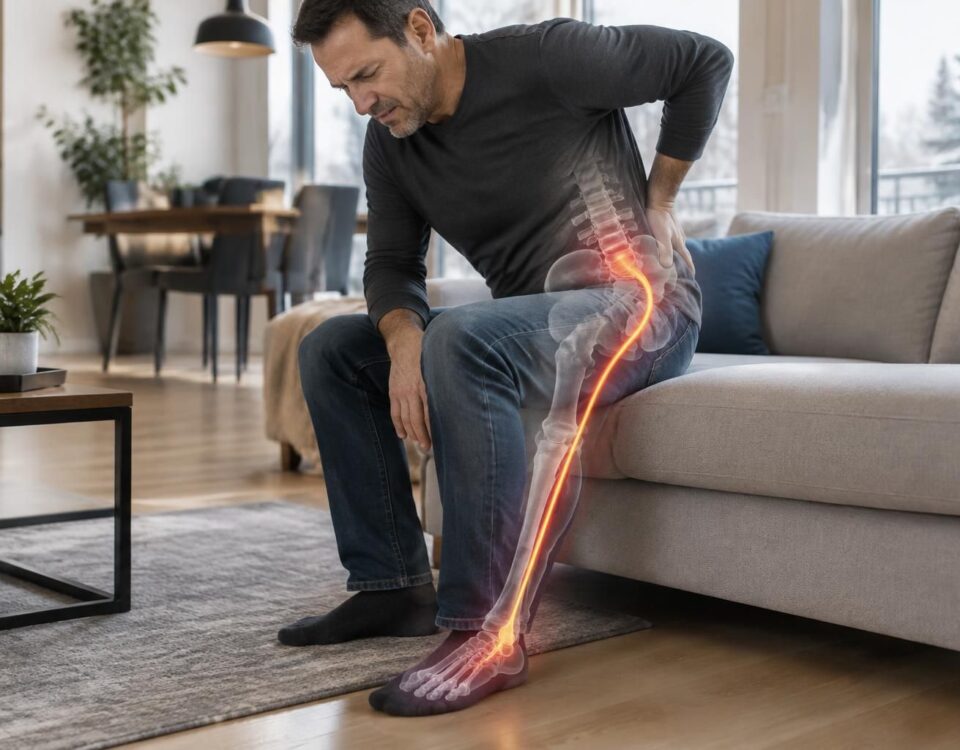
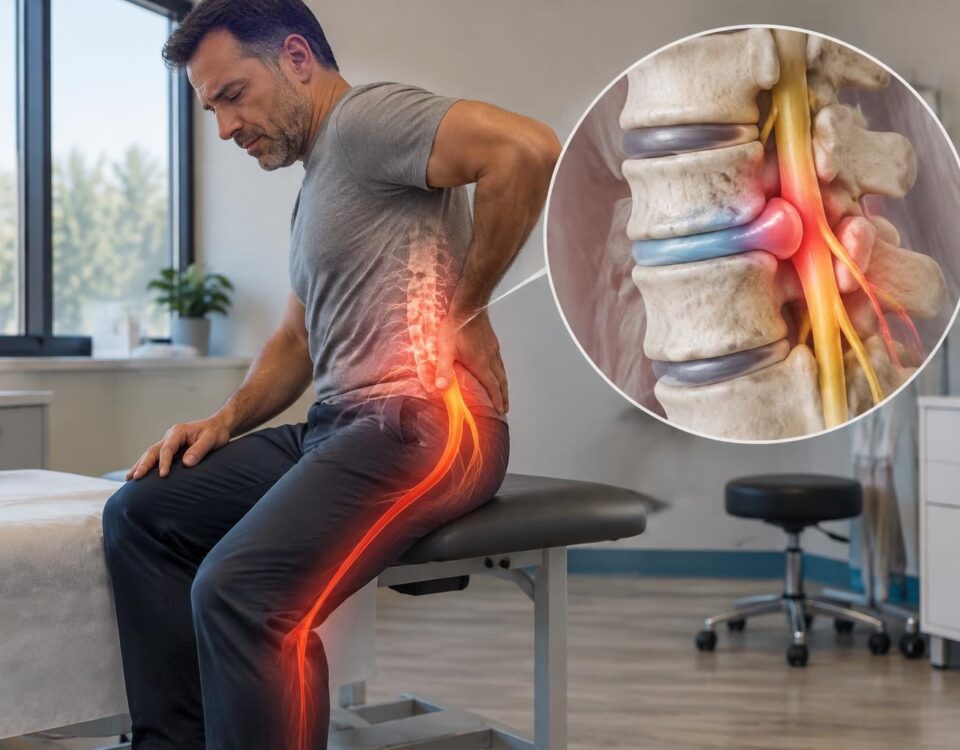
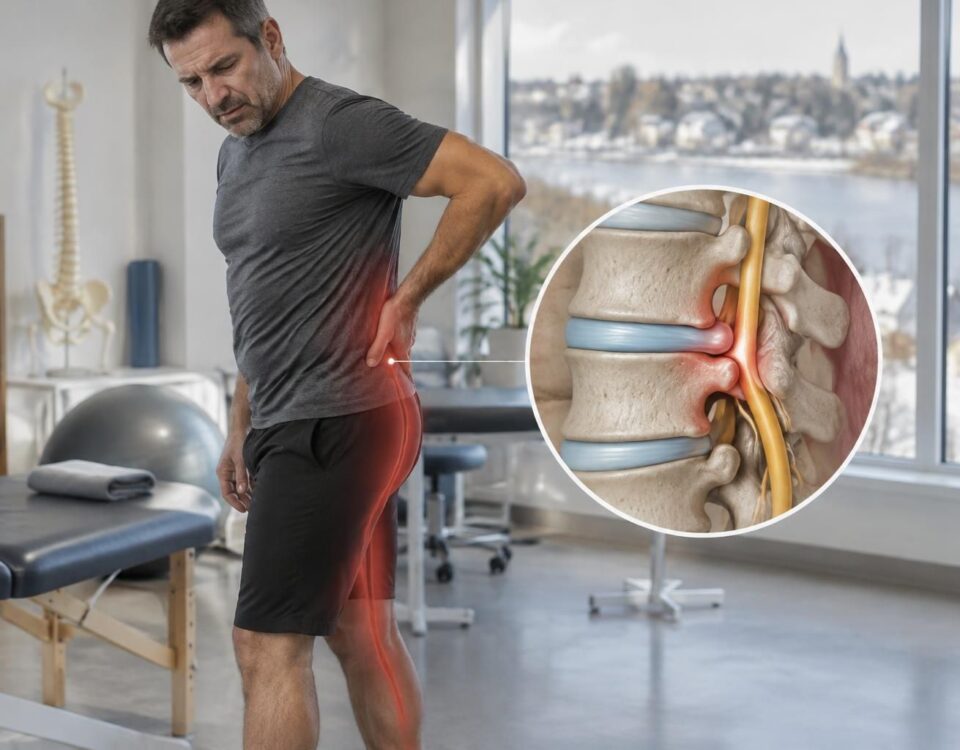
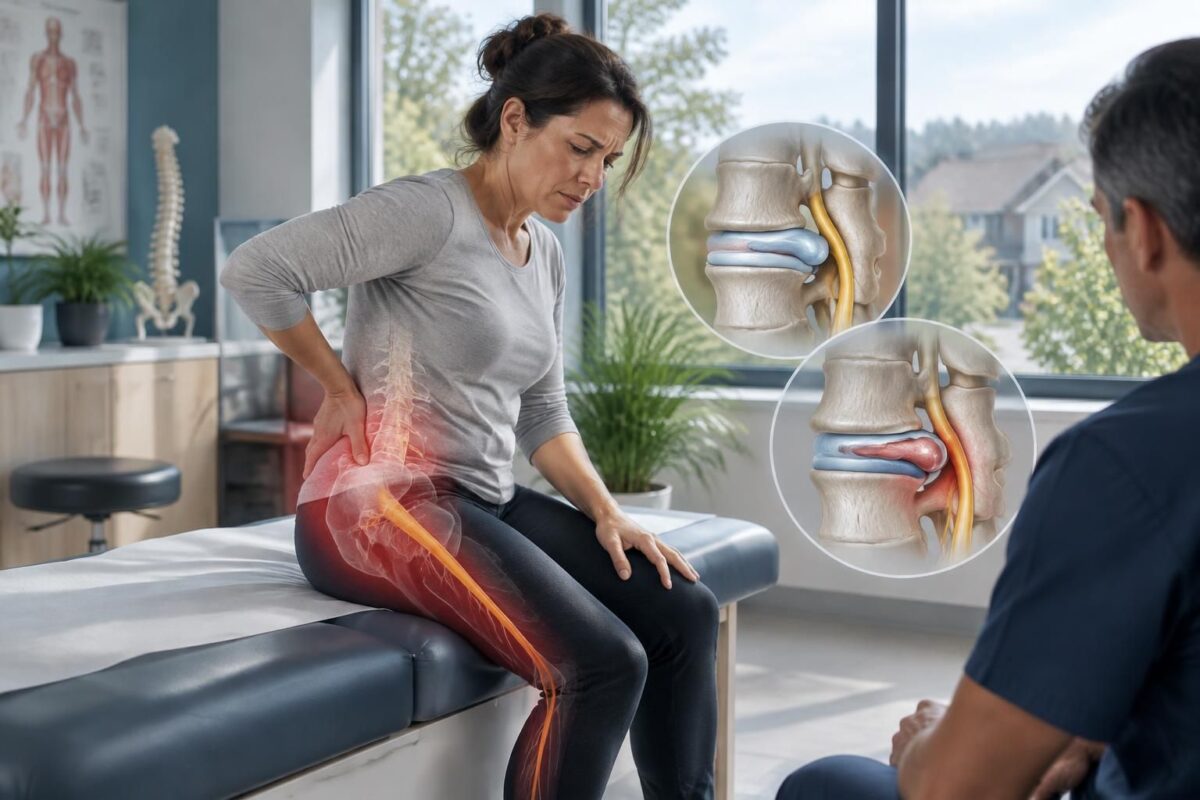
Sciatica is a pain that starts in the lower back and can radiate to the buttock, leg, or foot. It is often accompanied by tingling, numbness, or weakness in the leg. In most cases, it is related to a disc herniation that compresses the sciatic nerve. The disc may project part of its contents between vertebrae, causing pain and neurological symptoms. The process is mainly related to the aging of discs but can also follow trauma. Other causes exist but are less common. To better understand, the assessment must link the pain pathway, symptoms, and neurological signs.
For reliable and structured information, refer to specialized resources and your clinician. Accessible articles and guides on dedicated websites can shed light on the subject and help distinguish symptoms, origins, and possible treatments. Resources such as pain radiating from the lower back to the leg and pain worsened while standing and foraminal compression provide useful benchmarks for understanding the painful journey.
Note: the non-surgical approaches proposed after assessment may be considered based on the patient’s profile. For a cautious and structured approach, contact Clinique TAGMED in Terrebonne and explore the options suitable for your case.
Why Avoid Hasty Decisions
Making a hasty decision can lead to inappropriate treatments and limited outcomes. A comprehensive assessment links the painful pathway, sensations, and neurological signs to watch for. This approach ensures not to rely on a single element and avoids procedures that do not target the real cause. A structured approach enhances the safety and effectiveness of the care plan.
Structured Assessment in Terrebonne
At TAGMED Terrebonne, the assessment is based on four clear axes: history, pain pathway, mobility tests, and care plan. The goal is to understand the pain profile, identify limitations, and propose tailored solutions without surgery when relevant. The pain pathway aids orientation but does not replace a complete clinical examination conducted by a professional.
Based on the assessment, it may be appropriate to consider non-surgical options. These approaches are based on the analysis of individual tolerances and aim to improve function without unnecessary aggression. For more information on a graduated and cautious approach, consult the dedicated resources in Montreal and Terrebonne at in a graduated and cautious approach.
Relevant Non-Surgical Options
Depending on the assessment, non-surgical solutions may be considered. Among them are motorized neurovertebral decompression, specific osteopathy, and, when tolerances allow, a targeted instrumental intervention. These choices rely on a complete clinical analysis and do not guarantee specific outcomes. Inappropriate exercises or stretches should be avoided when the goal is to treat a disc or foraminal pathology.
For better understanding of the framework and options, visit the following resources: neurovertebral decompression, Clinique TAGMED – Terrebonne, and graduated and cautious approach in Montreal. Additional information on the pain pathway and mechanisms of sciatica is also available on sciatica and pain radiating from the lower back to the leg and pain worsened while standing and foraminal compression.
Warning Signs and When to Consult Promptly
Some situations require a quick consultation. A progressive weakness, a loss of urinary or bowel control, saddle anesthesia, or pain that worsens rapidly necessitate urgent evaluation and, if needed, emergency care.
Find out about TAGMED Terrebonne and resources
To start a cautious and appropriate approach to your sciatic pain in Terrebonne, contact TAGMED Clinic in Terrebonne at 450-704-4447. The team offers a structured assessment and tailored care without surgery when possible. Access to care is facilitated by the resources available at TAGMED Clinic.
The painful pathway guides the evaluation, but does not replace a thorough clinical examination. The goal is to link the pathway, symptoms, and signs to monitor in order to choose a safe and suitable approach.
Notes on training and associations
Professionals can be trained by recognized institutions such as NUMSS, NAO, National University of Medical Sciences, or National Academy of Osteopathy. For professional associations, relevant standards can align with ACMA, the College of Canadian Osteopaths, and the Collège des Ostéopathes Canadiens, without citing other organizations.
To deepen the information, educational resources available on sciatica and painful pathway allow for linking cause and treatment. Other useful resources include sciatic pain in Terrebonne when walking becomes difficult and foraminal compression and pain while standing.
Note that TAGMED services are not covered by RAMQ. Receipts can be provided according to the patient’s private insurance contract.
Medical disclaimer: The information and advice provided on this site do not replace the opinion, diagnosis, or treatment of a healthcare professional. Please note that Sylvain Desforges, B.Sc., D.O., N.D., Doctor of Osteopathy, is neither a doctor of medicine nor a physician, and is not a specialist in a medical specialty as defined by the Collège des médecins du Québec. Manual medicine, functional medicine, and sports medicine as described on this site exclude any medical treatment or diagnosis made by a physician or medical specialist. Always consult your doctor for any medical questions. For more details, please read our complete Legal Notice.
Structured assessment
Cautious treatment approach

This article provides practical recommendations to avoid rushed decisions in the face of sciatic pain in Terrebonne, prioritizing a structured assessment and appropriate non-surgical options. You will discover how to identify warning signs, understand possible mechanisms, and choose a progressive and safe approach without yielding to haste or inappropriate solutions.
Understanding the risks of rushed decisions
In the face of pain radiating down the leg, it is common to quickly seek a miracle solution or resort to invasive actions. However, science shows that sciatica can result from several lumbar mechanisms (herniated disc, protrusion, stenosis) and that each case requires a personalized evaluation. Adopting a too-quick approach can lead to treatments that do not correspond to the actual source of pain and the painful pathway.

Sciatica in Terrebonne: herniated disc with foot numbness
IN BRIEF Sciatica related to a herniated disc can irritate a nerve root and cause pain that radiates down the leg, sometimes with a numbness in the foot. In Terrebonne, an evaluation helps to better understand the symptoms and consider…

Sciatica in Terrebonne: lumbar disc and nerve root inflammation
IN BRIEF Lumbar disc-related sciatica occurs when irritation or inflammation of a nerve root causes pain that may radiate from the buttock down to the leg. In Terrebonne, an evaluation can help better understand the cause of symptoms and identify…
Warning signs to monitor
Warning signs necessitate a rapid consultation and, if necessary, emergency care. Be attentive to a progressive weakness of the leg, a loss of urinary or bowel control, saddle anesthesia, or a rapidly worsening pain. If any of these elements appears, prioritize a medical evaluation without delay and avoid attempting aggressive manipulations or stretching.

Sciatica and disc pinching in Terrebonne: when space decreases
IN BRIEF The disc bulge corresponds to a reduction in the space between two vertebrae; it can sometimes contribute to nerve irritation and sciatica, with pain that radiates down the buttock or leg. In Terrebonne, an assessment allows for a…

Sciatica and disc bulge in Terrebonne: possible cause of nerve irritation
IN BRIEF A disc bulge is a protrusion of a disc that can irritate a nerve root and cause sciatica, with pain in the buttock or leg. In Terrebonne, an evaluation allows for the search for the cause of the…
Structured assessment before any treatment
To avoid hasty choices, prioritize a structured assessment that relies on four axes: the history of the pain, the precise pathway, mobility tests, and a personalized care plan. Linking the pathway of pain to symptoms and neurological signs allows for better understanding of the origin and avoids hasty conclusions based on a single element. This approach promotes appropriate and safe therapeutic actions.
Sciatica in Terrebonne: disc protrusion or disc herniation?
IN BRIEF A disc bulge is a swelling of the disc, while a herniated disc involves a more pronounced protrusion of its contents; both can irritate a nerve root and cause sciatica. Symptoms alone do not always allow for distinction…

Sciatica disc in Terrebonne: why the pain travels down the leg
IN SHORT The disc-related sciatica occurs when a lumbar disc irritates a nerve root, which can cause pain to radiate down the buttock and leg. In Terrebonne, an assessment helps to better understand the cause of the symptoms and consider…
Relevant non-surgical options based on evaluation
Based on the evaluation, non-surgical options may be appropriate to relieve pain and restore function without resorting to surgery. Among these, motorized neurovertebral decompression may be considered when mechanical constraints on the discs and nerve roots allow, specific osteopathy adapts to the patient’s mobility and tolerance, and, where appropriate, a targeted instrumental intervention may be considered. Each option should be discussed in the context of a progressive plan tailored to your profile.
When to Favor Each Option
Neurovertebral decompression can be useful if a disc compression is suspected and the expected outcomes remain compatible. Specific osteopathy aims to adapt movements to your mobility and tolerances to promote functional rebalancing. The precision impactor is considered when there is a specific mechanical dysfunction and after a thorough evaluation. These choices remain conditional and do not guarantee results: they are part of a cautious and personalized approach.
Practical Tips for Terrebonne
To avoid ill-suited treatments, prioritize a complete evaluation and a gradual plan. Avoid forced movements and stretches that worsen pain, and seek clinical confirmation before undertaking heavy therapies. Work with local professionals who consider the pain trajectory, neurological signs, and daily functional goals to prioritize non-surgical solutions when relevant.
| Element | Concise Advice |
|---|---|
| Origin and Trajectory | Sciatica is often due to irritation of a lumbar root; the trajectory aids evaluation but requires a complete clinical examination. |
| Immediate Warning Signs | Progressive weakness, incontinence, saddle anesthesia, rapidly worsening pain require rapid assessment. |
| Recommended Evaluation | Opt for a structured evaluation (History, trajectory, tests, plan) to avoid hasty conclusions. |
| Non-Surgical Options | Take advantage of motorized neurovertebral decompression and specific osteopathy, depending on the evaluation. |
| Risk of Hasty Decisions | Avoid aggressive stretches and inappropriate manipulations that worsen pain. |
| Progression Plan | Prefer a gentle and tolerated progression, with monitoring of signs. |
| Activity and Posture | Stay active without forcing; favor core stability, walking, and active breaks. |
| Follow-Up and Reassessment | Reassess if pain persists > 4-6 weeks or in the presence of neurological signs; prioritize consulting a professional. |
| Medical Emergencies | Contact emergency services in case of loss of urinary control, intestinal, saddle anesthesia, or rapidly worsening pain. |
“In Terrebonne, I realized that avoiding hasty decisions requires a complete evaluation of my pain. I thought my sciatica was due to a herniated disc, but I was explained the pain trajectory and warning signs, and I chose non-surgical options before any surgery.”
“Instead of rushing into an intervention, the practitioner presented me with a suitable combination: motorized neurovertebral decompression, specific osteopathy, and a gradual plan. This approach allowed me to reduce pain without taking unnecessary risks and respecting my tolerances.”
“I came in without being able to differentiate between pain and urgency. Thanks to the structured evaluation in Terrebonne, I learned to monitor warning signs and not to delay treatment when necessary. This helped me avoid hasty actions.”
“The doctor linked the pain trajectory to my sensations and explained when a non-surgical approach could be sufficient. With the gradual plan, I felt supported and secure, without pressure for invasive actions.”
“As a worker who has spent a long time sitting, I appreciate that we started with gentle movements and guided exercises rather than forcing manipulations. The support in Terrebonne helped me avoid hasty decisions and regain normal activity.”
“The pain trajectory helped me understand that each case is unique. The team evaluated the four axes: history, trajectory, tests, and plan, and adjusted treatments based on my tolerance and goals, without promising miracles.”
“I recommend TAGMED Terrebonne for their cautious and personalized approach: a complete evaluation, non-surgical options, and a gradual framework that avoids hasty decisions.”
Sylvain Desforges, a recognized osteopath and pioneer in practical and responsible care, uses his experience to help patients suffering from sciatica in the Terrebonne area. At 59, he heads the TAGMED clinics and the ACMA association, and he works with a simple conviction: each pain journey deserves an evidence-based approach, a thorough evaluation, and an adapted progression. His approach aims to avoid hasty decisions that can lead to poorly targeted treatments and to prioritize non-surgical options whenever possible and safe.
For him, the core of managing sciatica pain rests on a structured evaluation that connects the painful trajectory, neurological symptoms, and signs to monitor. In his consultations in Terrebonne, the goal is to understand the history of the pain, observe the exact trajectory that may rise or descend to the leg, and examine the patient’s tolerance to different movements. This methodology helps avoid hasty assumptions and paves the way for personalized solutions that consider both the clinical record and the patient’s functional goals.
The doctor particularly emphasizes non-surgical options tailored to each individual’s profile. Among the preferred choices when the evaluation allows are motorized neurovertebral decompression, specific osteopathy, and, if necessary, an instrument-assisted intervention. These approaches do not claim to offer a guaranteed result, but they rely on a thorough clinical analysis and on a gradual, safe, and patient-tolerated progression. The central idea is to treat pain and improve function without systematically resorting to surgery, while remaining vigilant to signs that require rapid referral to specialized services.
Prudence is at the heart of this Terrebonne approach. Dr. Desforges emphasizes the importance of listening to warning signals and recognizing the limits of treatments that could worsen the situation if poorly applied. Gradual weakness, loss of urinary or bowel control, anesthesia of the stool, or rapidly worsening pain are criteria that necessitate urgent evaluation and management. This vigilance helps avoid hasty decisions and guide the patient toward the options best suited to their profile, while preserving the safety and dignity of care.
Beyond Terrebonne, Dr. Desforges promotes a patient-centered care philosophy that combines clinical knowledge, advanced technologies, and personalized support. His commitment is to provide clear, transparent, and progressive pathways that connect painful trajectories, symptoms, and care plans. In practice, this means working closely with the patient to jointly choose a non-surgical pathway when justified, with regular follow-ups to adjust the plan based on progress and feedback.
This conclusion summarizes a cautious approach to sciatic pain in Terrebonne, focused on avoiding hasty decisions. It emphasizes a comprehensive evaluation that links the painful trajectory, symptoms, and warning signs, and prioritizes non-surgical options when the patient’s profile allows, such as motorized neurovertebral decompression, specific osteopathy, and precision percussion. The goal is to guide toward personalized and safe care without prematurely resorting to surgery, while relying on local resources and clear recommendations.
In Terrebonne, the aim is to avoid unsuitable treatments by relying on a structured evaluation that connects the pain pathway to neurological signs and favors non-surgical solutions when possible. This approach is based on options such as motorized neurovertebral decompression and specific osteopathy, while remaining realistic about what each approach can offer and avoiding unjustifiable promises made by some resources to avoid promising.
This approach is based on four clear axes – history, trajectory, tests, and care plan – in order to obtain an overview of the pain, identify warning signs, and propose non-surgical options suited to the evaluation. For more in-depth information, consult the article on the cautious approach in Terrebonne.
It is crucial to remain attentive to warning signs such as gradual weakness, loss of urinary control, or rapidly worsening pain. In such cases, a quick consultation and, if necessary, emergency management are indicated. For appropriate guidance, do not hesitate to refer to specialized resources and to prioritize an evaluation that connects the pain pathway to the overall clinical profile.
To avoid relying exclusively on imaging, clinical evaluation remains essential: imaging does not always suffice to explain the pain and must be integrated into a holistic approach. Useful resources and advice exist and can guide your decision without favoring a one-size-fits-all solution .
To initiate a safe process in Terrebonne, contact the TAGMED Clinic in Terrebonne at 450-704-4447. A structured evaluation and non-surgical options can be offered, with progression tailored to your tolerance and goals. Associated resources and additional guides are available via the links below.
Helpful resources and relevant links: Cautious approach in Terrebonne, imaging and pain, personalized evaluation, walking and pain, avoid promises, IMAGING and pain, and other resources like SOS Sciatique to deepen your understanding.

L4-L5 disc herniation and sciatica in Terrebonne: pain towards the foot
IN BRIEF A L4-L5 disc herniation can irritate a nerve root and cause sciatica, with pain that radiates from the buttock down to the leg or foot. In Terrebonne, an evaluation helps better understand the origin of the symptoms and…

Lumbar disc herniation L5-S1 and sciatica in Terrebonne: common symptoms
IN BRIEF A L5-S1 disc herniation can irritate a nerve root and cause sciatica: lower back pain radiating to the buttock or leg, tingling, numbness, or weakness. In Terrebonne, an assessment helps to better understand the symptoms and guide management…

Sylvain Desforges, B.Sc., D.O., N.D., docteur en ostéopathie
Dr Sylvain Desforges, B.Sc., D.O., N.D., osteopath, is the founding president of TAGMED and of the ACMA association. He dedicates his practice to chronic spinal pain, low back pain and symptoms compatible with sciatica, particularly when pain radiates toward the buttock, leg, calf, foot or toes.
Through SOS Sciatique, he publishes educational content on sciatica symptoms, possible causes such as disc herniation, disc narrowing, foraminal stenosis or irritation of a lumbar nerve root, as well as non-surgical approaches that may be considered according to the evaluation. At Clinique TAGMED, care may include, depending on the case, motorized neurovertebral decompression, specific osteopathic care or precision percussion.
For an evaluation related to sciatica treatment in Montreal / Mount Royal or sciatica treatment in Terrebonne, please consult the services available at Clinique TAGMED.
Medical disclaimer
The information published on SOS Sciatique is provided for educational purposes only and does not replace a consultation, diagnosis, opinion or treatment provided by a physician or another authorized healthcare professional. The author of this article is neither a medical doctor nor a specialist in a medical specialty recognized by the Collège des médecins du Québec. The osteopathic, manual medicine or functional support approaches described on this site do not constitute medical acts and are not intended to replace medical follow-up.
Consult a physician or emergency service in cases of loss of bladder or bowel control, anesthesia in the saddle area, significant or progressive weakness in the leg or foot, fever, recent trauma, severe pain or rapid worsening of symptoms. For more details, please read our Legal Notice.