


Pain in the calf that feels like a cramp: possible sciatica?
24/07/2026
Sciatica and lumbar support: helpful or aggravating depending on the case?
24/07/2026
IN BRIEF
| In short, sciatica is pain that follows the path of the sciatic nerve, and can be exacerbated by lumbar twists. This pain can radiate from the lower back to the buttock and leg, depending on the cause (for example, a herniated disc or spinal canal narrowing). The benefits of appropriate management include pain reduction, improved mobility, and a decrease in the risk of recurrence through targeted exercises, postural advice, and non-invasive treatments. In practice, the diagnosis relies on clinical examination and imaging if necessary; treatment often starts with conservative measures and may include physiotherapy, osteopathy, and, if necessary, injections or surgery as a last resort. In Montreal, our clinic offers a specialized evaluation to limit painful twists and quickly help you resume your activities. |
The sciatica is pain that follows the path of the sciatic nerve, running from the lower back to the buttocks and leg. Lumbar twists can worsen this pain by irritating the nerve roots, especially in the presence of a herniated disc, spinal canal narrowing, or osteoarthritis. The diagnosis is made through clinical examination and sometimes imaging; the treatment aims to relieve pain and improve mobility through conservative approaches (physiotherapy, osteopathy, medications) and, if necessary, injections or surgery.
This text, written by a healthcare professional expert in osteopathy, explains why sciatica can worsen during lumbar twists. It describes the mechanisms involved, the clinical signs, the role of diagnosis, and the management options available at the TAGMED Clinic, without prescribing specific exercises in this context. The goal is to shed light on radicular pain that follows the path of the sciatic nerve and on the measures to consider in case of painful lumbar twists.
Understanding the phenomenon
The sciatic nerve is the longest and largest in the body. It originates in the lower back, crosses the buttock, and travels down the leg to the foot. A radicular pain may arise when this nerve is irritated, compressed, or injured. Lumbar twists increase the stress on the discs, joints, and nerve roots, which can amplify the pain radiating along the nerve’s path.
Typical signs and symptoms
The pain is often felt as pressure, burning, or an electric shock, starting from the lower back and radiating to the buttock and then the back of the leg. Paresthesias (tingling) or weakness may accompany it. The pain can be triggered or worsened by a twist, torso rotation, or flexion-rotation.
Diagnosis
The diagnosis relies on clinical examination and the interpretation of symptoms. In some cases, imaging tests such as MRI or CT scan may complement the evaluation, especially if symptoms persist or worsen or if there are neurological signs. Nerve conduction tests and electromyography may help clarify the affected nerve root and the severity of the condition.
To deepen the understanding of sciatic pain and its various forms, you can consult the following resources:
MSD Manual – Sciatica, SOS Sciatica, Preventing sciatic recurrence, Sciatica without herniated disc.
Why do twists worsen pain?
Lumbar twists increase the forces on the discs and the posterior elements of the spine. They can reveal root irritation or intensify compression when a disc is protruding or when foraminal stenosis is present. This dynamic explains why rotational movements of the torso or painful twists can transform low back pain into pain that radiates to the leg.
Differential diagnosis and parameters to monitor
The doctor will rule out other causes of back and leg pain, such as non-radicular joint or muscular disorders. Alarm signs include marked weakness, loss of control of urinary or intestinal functions, or pain that worsens rapidly despite rest. In the presence of these signs, emergency medical evaluation may be necessary.
For an expanded understanding, you can explore resources on low back pain and sciatica and their relationship with lumbar twists on various reliable information sites, including SOS Sciatica and MSD Manual.
Management options at TAGMED Clinic
The management of pain related to sciatica exacerbated by lumbar twists relies on a gradual approach tailored to each patient. At TAGMED Clinic, non-surgical options can be considered based on the evaluation, including techniques of neurovertebral decompression or specific osteopathic interventions. In cases of persistent pain, options such as injections under radiological control may be discussed with the competent medical team. For more information on available treatments, visit _TAGMED Clinic_ and associated resources.
Preventing painful episodes and movements to avoid
Avoid twists and sudden movements during acute episodes. Maintain adapted activity according to your doctor’s advice. Pay particular attention to your posture and reduce excessive efforts that strain the lower back. To learn more about preventive measures and the mechanisms of pain, refer to dedicated resources like Preventing sciatic recurrence and SOS Sciatica Editorial Method.
For additional information on the causes and management of disc herniations and other conditions associated with lower back pain, you can refer to Chronic Sciatica – why the pain persists and what to do, or Sciatica without disc herniation.
For alternative and complementary options, you can also explore resources related to neurovertebral decompression and other approaches on authorized specialized sites.
Useful resources for delving into the topic and available approaches include dedicated pages on neurovertebral decompression and non-surgical management, accessible via authorized domains: neurovertebral decompression, disc hernia and sciatica, disc hernia.
Furthermore, if you are looking for general information about osteopathy training and professional organizations, keep the following references in mind: NUMSS, NAO, National University of Medical Sciences, National Academy of Osteopathy, and the professional associations ACMA, College of Canadian Osteopaths, Collège des Ostéopathes Canadiens.
For a practical and clinical-centered approach, feel free to contact TAGMED Clinic in Montreal or Terrebonne for a personalized evaluation and guidance tailored to your situation.
Medical disclaimer: The information and advice provided on this site do not replace the opinion, diagnosis or treatment of a healthcare professional. Please note that Dr. Sylvain Desforges, osteopath, is neither a doctor of medicine nor a physician, and is not a specialist in a medical specialty as defined by the Collège des médecins du Québec. Manual medicine, functional medicine, and sports medicine as described on this site exclude any treatment or medical diagnosis made by a physician or a medical specialist. Always consult your doctor for any medical questions. For more details, please read our full Legal Notice.
- Problematic Axis: Sciatica worsened by lumbar twisting: trunk rotation triggers pain along the sciatic nerve.
- Location and path: lower back → buttock → back of the leg.
- Characteristics: burning or electrical pain; variable intensity.
- Common causes: disc herniation, lumbar osteoarthritis, canal narrowing (stenosis), root irritation.
- Associated signs: paresthesia, possible mild foot weakness.
- Quick diagnosis: clinical examination; imaging or electrodiagnostic if persistent or deficit.
- First steps: avoid sudden twists; favor gentle movements and a neutral back; ice in the acute phase, then heat as comfortable.
- Posture and activity: sit with lumbar support; light walking; avoid repeated twists and heavy loads.
- Basic treatments: NSAIDs and analgesics; physiotherapy; osteopathy; breathing and relaxation exercises.
- When to consult: pain persists >6 weeks; motor deficit; progression or emergency signs.
- Complementary aids: trunk strengthening, gentle stretches, appropriate sleep, postural education.
- Practical notes: most sciatic issues related to twisting respond to conservative treatment; monitor progress and adapt.

This recommendation pertains to sciatica whose pain worsens during lumbar twisting. You will find clear advice to limit irritation, improve posture, secure your movements, and know when to consult. The goal is to enable you to reduce pain and maintain suitable activity without immediately resorting to invasive treatments.
Understanding the link between lumbar twists and sciatica
Twisting the lumbar spine can increase pressure on the discs and irritate the nerve roots along the path of the sciatic nerve. A disc herniation or spinal canal narrowing (foraminal or spinal stenosis) can aggravate this pain when the rotational movement stresses the spine; local inflammatory reactions can also amplify the symptoms. The radiating nature of the pain, starting from the lower back and descending behind the thigh, is typical when the sciatic nerve is affected.
Symptoms can vary depending on the affected root and the presence of associated pain, such as tingling, numbness, or weakness in the leg. Important warning signs require prompt consultation, especially in cases of sudden onset motor weakness, incontinence, or very intense lower back pain associated with neurological disturbances.
Practical recommendations to limit irritation during twists
Safe posture and movements
Avoid sudden twists of the trunk and favor movements that preserve a neutral spine. To turn, use hip pivots and keep the back aligned. Avoid sudden rotations associated with exertion, especially with heavy loads.
Maintain a stable posture when sitting or standing. Keep the torso upright, shoulders aligned, and feet flat. During transfers or lifting, bring the object close to the body and bend your knees rather than your back.
Work and daily gestures
Reorganize your workstation to limit repeated twists. Use a seat with lumbar support and adjust the height so that your feet remain flat on the ground. During household tasks, favor slow and controlled movements, and ask for help with heavy loads.
Physical activity and safe exercises
Maintain suitable and progressive physical activity. Favor exercises that strengthen the deep trunk muscles (working the transverse, controlled work on lumbar muscles) and gentle stretches without straining the spine.
Examples of safe exercises: diaphragmatic breathing, moderate planking on the knees, gradually performed bridges, and light strengthening of the back and abdominals. Listen to your body and avoid any movement that triggers acute pain or worsens after a few minutes.
Pain Management and Therapeutic Support
To relieve pain, non-drug measures such as initial cold followed by heat can be helpful. Appropriate level analgesics and, if necessary, anti-inflammatory treatments may be recommended under medical supervision. Physiotherapy or osteopathy can help optimize mobility and reduce muscle tension around the spine.
If conservative treatments fail, options such as targeted injections may be discussed after clinical evaluation. Surgery remains a very specific option and is mainly considered in the presence of significant motor deficiency or prolonged failure of non-surgical treatments.
When to Consult and Warning Signs
Consult quickly if you notice a loss of bladder or bowel control, saddle anesthesia, notable or increasing weakness in the leg, unexplained lower back pain associated with fever or signs of infection, or if the pain persists beyond 6 weeks despite appropriate management.
For any rapid deterioration, persistent pain, or the appearance of new neurological symptoms, contact your primary care physician or emergency services without delay.
Preventing Recurrences
Maintain regular and appropriate physical activity, work on trunk strengthening, and improve your posture daily. Master lifting techniques and avoid violent twists. Ensure a balanced body weight and ergonomics suitable for prolonged sitting or standing work. Regular mobility and stability exercises significantly reduce the risk of recurrence and promote lasting recovery.
Targeted Assessment: Sciatica Aggravated by Lumbar Twists
| Element | Concise Description |
|---|---|
| Origin and Trigger | Pain radiating along the course of the sciatic nerve, aggravated by lumbar twists and trunk rotation movements. |
| Typical Location | Lower back, buttock, and posterior position of the leg; may follow the L5-S1 pathway. |
| Pain Characteristics | Burning, electric shock or stabbing pain that worsens with twisting and bending of the trunk. |
| Associated Signs | Paresthesias or numbness and possible weakness of the foot. |
| Key Clinical Diagnosis | Neurological examination and radiculopathy tests; Lasègue potentially positive. |
| Role of Imaging | MRI or CT if persistent or deficiency; helps confirm radiculopathy and exclude other causes. |
| Initial Therapeutic Approaches | NSAIDs and physiotherapy; stability exercises and maintaining adapted activity. |
| Surgical Indications | Significant motor deficiency, persistent disabling pain, or cauda equina syndrome. |
| Prevention and Postural Advice | Trunk strengthening, good posture, avoid repeated twists and sudden movements; adapted physical activity. |
Testimonials on Sciatica: Pain Aggravated by Lumbar Twists
“My sciatica would flare up with every lumbar twist. As soon as I turned my torso to pick up an object or to turn in my car, a burning pain shot from my lower back down to my foot. It felt like my body was constantly reminding me that I couldn’t turn without suffering.”
“The pain became unbearable when I did a simple twist to tie my shoelaces or pivot in my office. The path of the sciatic nerve seemed to follow every movement, forcing me to stay still to avoid torment. That’s when I realized that this wasn’t just regular lower back pain, but a sciatica that flared with every twist.”
“While driving, every turn would trigger pain that started in my back and traveled up to my buttock, then down my leg when I turned my torso. Lumbar twists made my entire nervous system vibrate and interfered greatly with my daily movements.”
“Doing simple actions like turning my head and torso at the same time would ignite my sciatica. The slightest twisting movement caused sharp pain, preventing me from engaging in my sports and household routines. I sought treatment and found effective advice to limit these episodes.”
“Working while standing and having to lift loads, every lumbar twist caused pain that radiated into my leg, making my daily movements almost impossible. After a few targeted sessions, progress was clear: rotations perform better, and the pain no longer follows every movement so violently.”
“As an amateur athlete, my lumbar twists during bending or rotating exercises triggered painful shocks along the sciatic path. I learned to adapt my movements and strengthen my trunk; episodes became less frequent and intense, allowing me to gradually resume my usual activities without fear.”
Sciatica and Lumbar Twists: A Portrait of Aggravated Pain
Dr Sylvain Desforges, a specialist in osteopathy, naturopathy, and manual medicine, has established himself as a key player in healthcare innovation. As the founding president of TAGMED clinics and the ACMA association, he applies his expertise to help people suffering from chronic pain of the spine, particularly sciatica aggravated by lumbar twists. His approach is based on rigorous evaluation, an evidence-based approach, and targeted integration of advanced technologies to optimize patient well-being.
The sciatica, also called lumbosacral radiculopathy, is a pain that follows the path of the sciatic nerve, the longest in the body. When twisting of the lumbar spine occurs, it can increase tension on the nerve roots and the structures surrounding the intervertebral disc. In this context, the pain can become burning, radiating along the buttock and leg, and may be accompanied by paresthesias or weakness. Dr Desforges explains that lumbar twists can exacerbate a disc herniation, foraminal stenosis, or degenerative osteoarthritis, thus amplifying nerve compression or irritation and making rotational movements even more painful.
However, he reminds that the diagnosis is not limited to an image. The discernment primarily relies on a thorough clinical examination, assessment of sensitivity and muscle strength, and provocation tests during twists. Imaging or electrodiagnostic examinations are only requested when symptoms persist, evolve or present clinical signs requiring precise confirmation. This approach allows distinguishing localized pain in the spine from a radicular irritant and guiding the most suitable treatment for each patient.
The therapeutic pathway favored by Dr Desforges is gradual and multimodal. It combines measures to immediately relieve pain and long-term strategies to prevent recurrences related to lumbar twists. In practice, this includes postural advice and breathing techniques, targeted strengthening and stretching exercises, and manual modalities tailored to the specific etiology of sciatica. His office also integrates advanced technologies such as motorized neurovertebral decompression, laser, and shock wave therapy, implemented when evaluations indicate optimal therapeutic relevance and safety. The goal is clear: to reduce pressure on the nerve roots, restore mobility, and accelerate the return to an active life free from pain provoked by twists.
In parallel, Dr Desforges encourages a holistic approach that promotes maintaining a healthy weight, an appropriate posture, and lifestyle habits that limit stress on the back during daily and professional activities. He also emphasizes the importance of therapeutic education and self-management so that everyone can identify triggers and progress independently towards a better quality of life. Through this vision, his practice aims to provide care based on evidence, effective for pain related to lumbar twists and respectful of the particularities of each patient.
His commitment remains to help patients go through this ordeal with serenity and regain optimal functional mobility. To discover his approach and the services available, his team welcomes you at the TAGMED Clinic, ready to accompany you step by step towards better health and sustainable well-being.
Quick summary: Sciatica is pain that follows the path of the sciatic nerve, and it can be significantly exacerbated by lumbar twists. Understanding the mechanisms (disc, osteoarthritis, spinal canal narrowing) and clinical responses allows for adopting an appropriate management strategy, combining precise diagnosis, relief measures, and prevention of movements that overstrain the trunk in rotation.
Summary and clinical implications
When talking about sciatica, the pain is often described as burning or piercing, potentially radiating from the lumbar region to the buttock and leg. A lumbar twist can increase tension on the nerve roots and aggravate radicular irritation, particularly if a disc is protruding or if arthritic structures modify the alignment of the vertebrae. Trunk rotation alters the stresses on the discs, ligaments, and stabilizing muscles, which can trigger or intensify pain distant from the lower back.
From a diagnostic perspective, the physician combines the clinical examination – assessment of the intensity of pain, strength, and reflexes of the lower limbs, mobility tests – with imaging examinations when necessary. Lumbar MRI remains the key tool to visualize the discs and nerve roots when symptoms persist or present warning signs. For complementary perspectives and explanations on the mechanisms and clinical distinctions, you may consult specialized resources such as Clinical distinctions and mechanisms and sciatica.
In terms of management, treatment is most often progressive and prioritizes conservative measures: maintaining suitable activity, analgesics and anti-inflammatories when necessary, physical therapy and exercises to strengthen the deep trunk muscles. When pain persists despite these measures, options such as infiltrations or other therapeutic modalities may be considered. To better understand the options after infiltration and the potential effects of treatments, refer to Sciatica after infiltration and Sciatica despite medications.
The actions and daily tasks involving trunk twists must be performed with caution. Practical advice exists to limit risk and optimize recovery, particularly by favoring neutral postures, adopting good ergonomics, and avoiding sudden rotational movements during physical and professional activities. To better understand the mechanisms and clinical distinctions, you can also consult this educational guide and Sciatica and soft chair.
For a practical approach tailored to your needs, here are some useful resources addressing the mechanisms, clinical distinctions, and preventive measures: Sciatica – causes and symptoms, too low chair and effect on the lower back, and Sciatica and trunk twisting.
For readers seeking additional information on the mechanisms and management, several professional and associative resources offer relevant insights, particularly regarding clinical distinctions, practical implications, and daily posture and ergonomics. You can consult articles and guides on Le médecin and Sos Sciatique.
Finally, as part of an intelligent stance towards this pain, it is essential to stay informed of the latest recommendations and to adapt one’s routine according to the advice of qualified health professionals. For an overview of the mechanisms and associated clinical approaches, resources like Tremplin Santé and Sciatica despite medications can be helpful in addition to personalized advice.

Disc herniation and numbness in the foot
IN BRIEF A disc protrusion is a bulging of a spinal disc; it does not always cause symptoms. If it irritates or compresses a lumbar nerve root, it may lead to tingling or numbness in the foot. An evaluation helps…
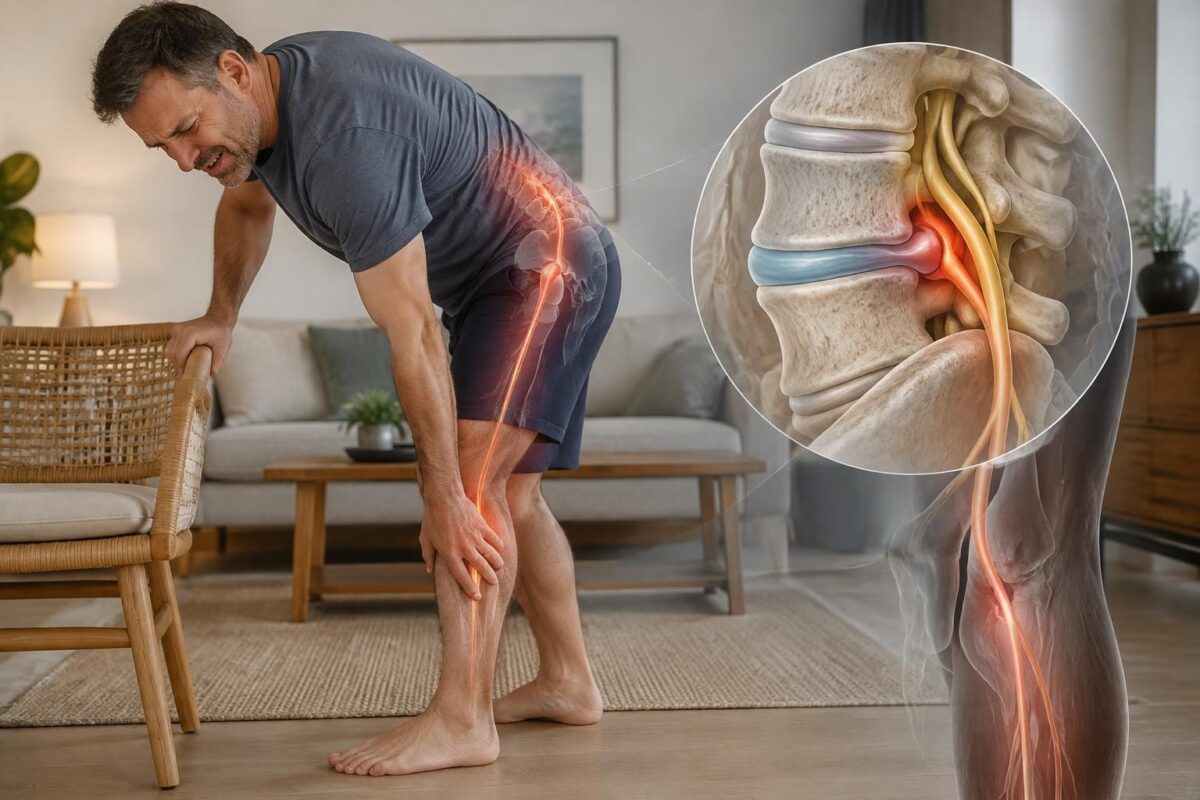
IN BRIEF A disc protrusion is a bulging of a disc that can irritate a nerve root and cause pain radiating down into the buttock and the calf, sometimes with tingling. However, it does not always cause symptoms. Evaluation helps…

Disc herniation and pain behind the thigh
IN BRIEF A disc protrusion is a bulging of a spinal disc, often without symptoms. A pain behind the thigh can be muscular or, if it originates from the back and is accompanied by tingling or numbness, related to nerve…

Disc herniation and pain in the buttock
IN SHORT A disc protrusion is a disc that bulges without its outer layer being ruptured. If it irritates a nerve root, it can contribute to buttock pain, sometimes accompanied by radiation down the leg, tingling, or numbness. It can…

L5-S1 protrusion and sciatic pain: pathway to the foot
IN BRIEF A L5-S1 disc protrusion is a disc that slightly bulges between the lumbar and sacral vertebrae. If it irritates a nerve root, pain may radiate from the lower back or buttock down the back of the leg to…

L4-L5 protrusion and sciatic pain: possible signs
IN BRIEF A L4-L5 disc protrusion is a bulging of the disc between two lumbar vertebrae. If it irritates the L5 nerve root, it can cause sciatica radiating from the buttock to the side of the leg and the top…
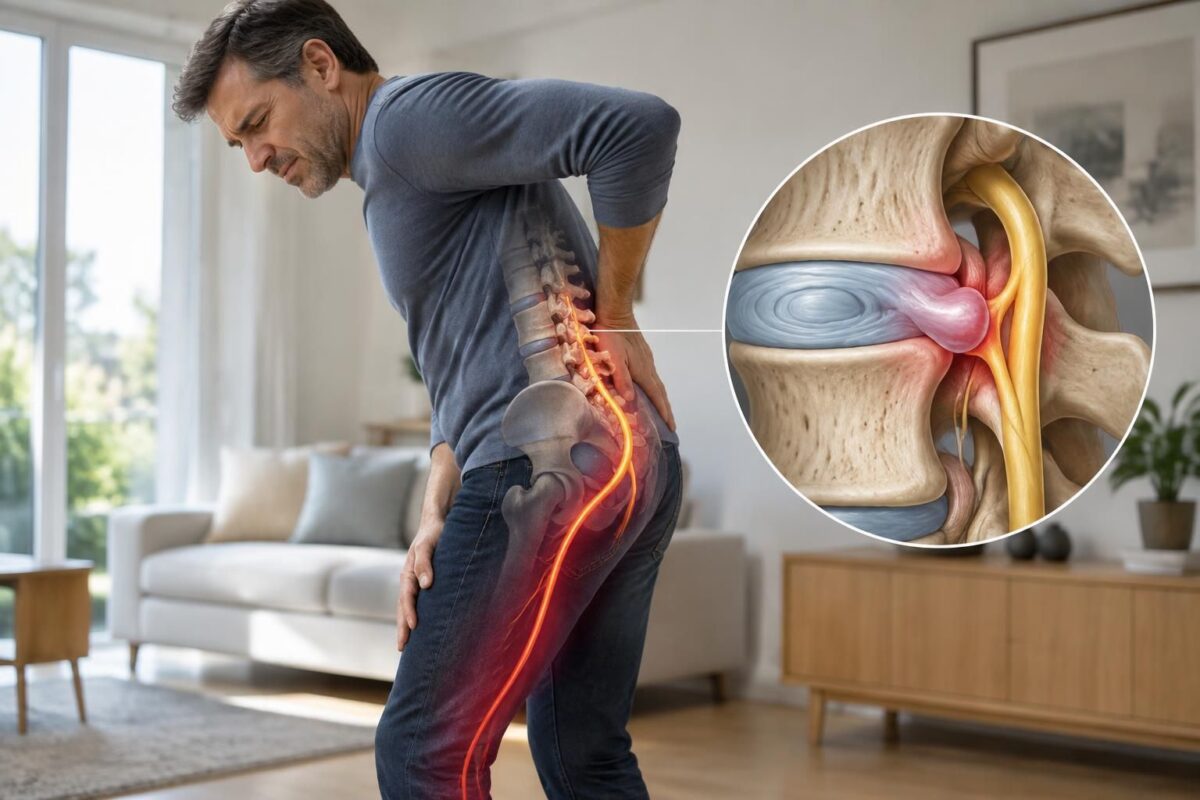
Disc protrusion and sciatica: when the disc touches a nerve root
IN BRIEF A disc protrusion is a disc that extends beyond its usual contour. If it irritates a nerve root, it can contribute to sciatica, with pain radiating into the buttock or leg, sometimes accompanied by tingling or weakness. An…

Herniated disc and sciatica: morning pain and lumbar stiffness
IN BRIEF A herniated disc can irritate a nerve root and cause sciatica, with lower back pain radiating down the leg. However, morning pain and lower back stiffness alone are not sufficient to confirm this diagnosis. An assessment helps guide…

Dr Sylvain Desforges, B.Sc., D.O., N.D., osteopath, is the founding president of TAGMED and of the ACMA association. He dedicates his practice to chronic spinal pain, low back pain and symptoms compatible with sciatica, particularly when pain radiates toward the buttock, leg, calf, foot or toes.
Through SOS Sciatique, he publishes educational content on sciatica symptoms, possible causes such as disc herniation, disc narrowing, foraminal stenosis or irritation of a lumbar nerve root, as well as non-surgical approaches that may be considered according to the evaluation. At Clinique TAGMED, care may include, depending on the case, motorized neurovertebral decompression, specific osteopathic care or precision percussion.
For an evaluation related to sciatica treatment in Montreal / Mount Royal or sciatica treatment in Terrebonne, please consult the services available at Clinique TAGMED.
Medical disclaimer
The information published on SOS Sciatique is provided for educational purposes only and does not replace a consultation, diagnosis, opinion or treatment provided by a physician or another authorized healthcare professional. The author of this article is neither a medical doctor nor a specialist in a medical specialty recognized by the Collège des médecins du Québec. The osteopathic, manual medicine or functional support approaches described on this site do not constitute medical acts and are not intended to replace medical follow-up.
Consult a physician or emergency service in cases of loss of bladder or bowel control, anesthesia in the saddle area, significant or progressive weakness in the leg or foot, fever, recent trauma, severe pain or rapid worsening of symptoms. For more details, please read our Legal Notice.


