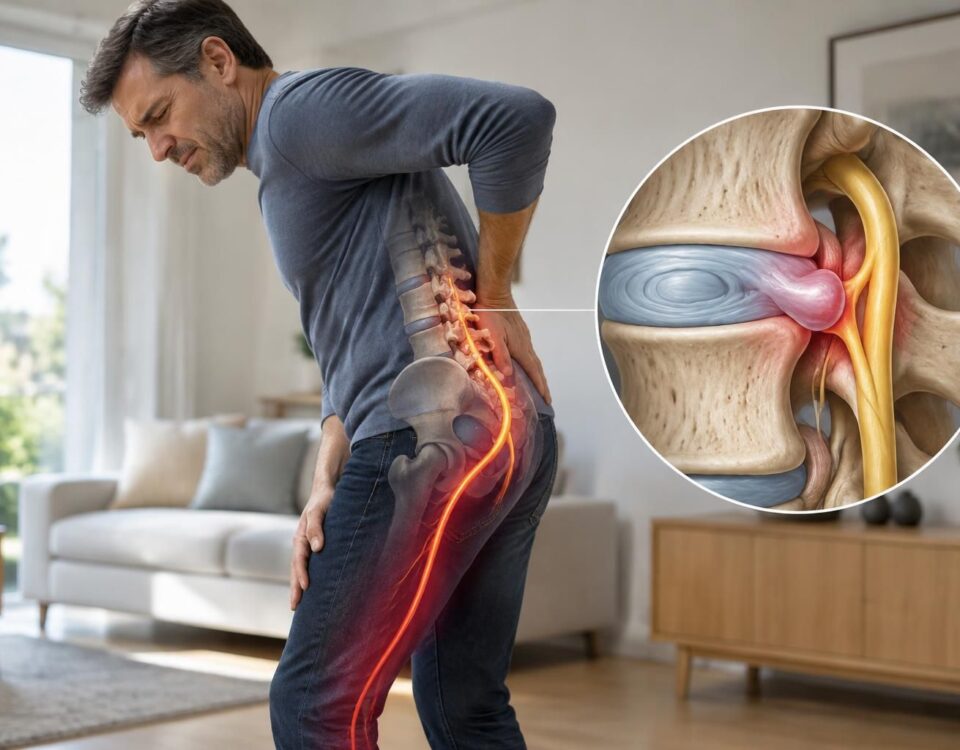
Sciatica in Terrebonne: what to do when stretching worsens the pain?
24/07/2026
Sciatica and high chair: leg pain
24/07/2026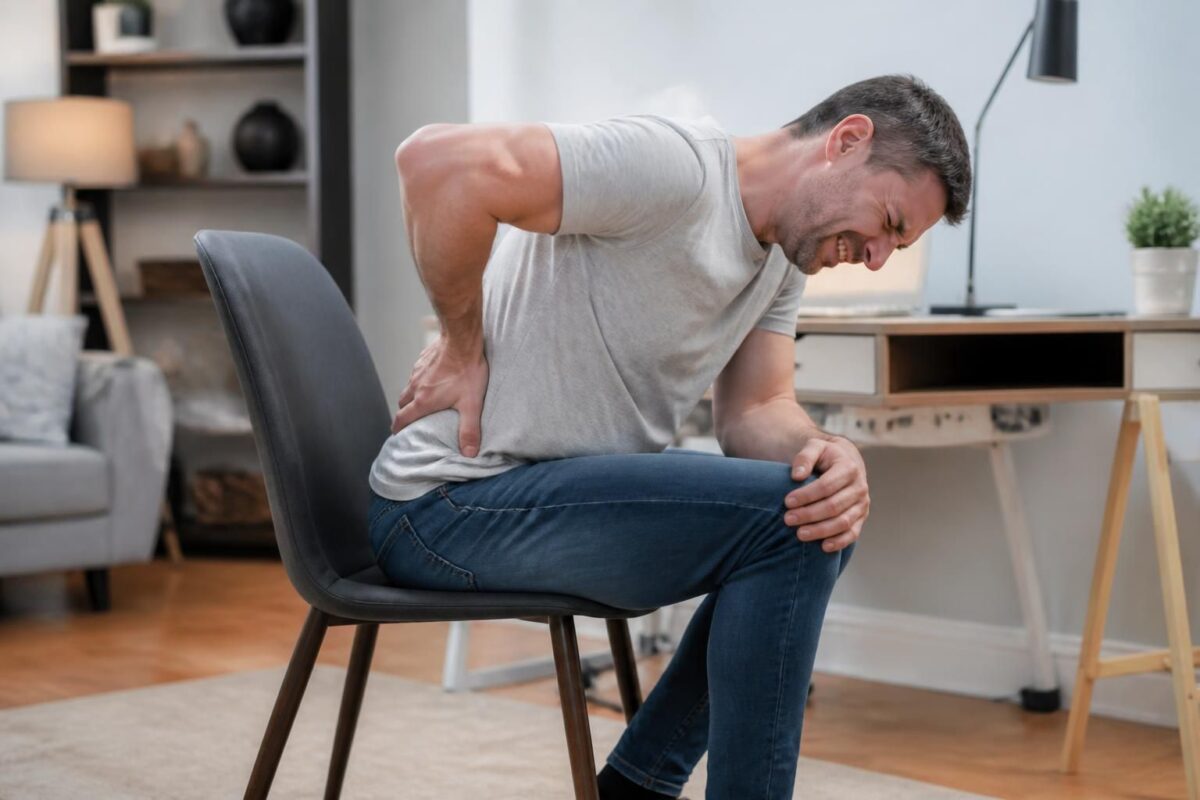
IN BRIEF |
In brief, sciatica aggravated by trunk flexion is pain that follows the path of the sciatic nerve and intensifies when you bend forward. It can limit sitting and movement and often results from disc irritation, lumbar osteoarthritis, or piriformis syndrome. The benefits of prompt management include quick relief, better centralization of symptoms, and a faster return to activity through an active approach combining education and targeted exercises, possibly supplemented by appropriate therapies. In Montreal, this service is particularly recommended for active individuals looking to quickly resume their activities and prevent recurrences. |
Sciatica is pain that follows the path of the sciatic nerve, often felt behind the leg and may be accompanied by tingling or numbness.
When the pain worsens with trunk flexion, it often suggests irritation of the nerve roots associated with a disc protrusion or herniation or lumbar canal stenosis, especially at the L4-L5 or L5-S1 segments.
The diagnosis is based on clinical examination and history, and may require imaging. Treatment prioritizes appropriate exercises, physiotherapy maneuvers, and local approaches (ice/heat), supplemented as necessary by medications or injections depending on the context.
About the author
Dr. Sylvain Desforges, B.Sc., D.O., N.D., osteopath, is the founding president of
TAGMED
and the ACMA association. He dedicates his practice to chronic pain of the spine, lower back pain, and pain compatible with sciatica, particularly when the pain radiates to the buttock, leg, calf, foot, or toes.
Through SOS Sciatica, he publishes educational content on the symptoms of sciatica, possible causes such as disc herniation, disc pinching, foraminal stenosis, or irritation of a lumbar nerve root, as well as non-surgical approaches that may be considered based on the evaluation. At the TAGMED Clinic, care may include, depending on the case, motorized neurovertebral decompression, specific osteopathy, or precision impactor.
For an assessment related to
sciatica treatment in Montreal / Mont-Royal
or to
sciatica treatment in Terrebonne,
consult the available services at the
TAGMED Clinic.
Medical disclaimer
The information published on SOS Sciatica is provided for educational purposes and does not replace a consultation, diagnosis, advice, or treatment performed by a physician or other licensed health professional. The author of this article is neither a physician nor a specialist in a medical specialty recognized by the Collège des médecins du Québec. The approaches of osteopathy, manual medicine, or functional support described on this site do not constitute medical acts and are not intended to replace medical follow-up.
Consult a doctor or emergency service in case of loss of bowel or bladder control, numbness in the saddle area, significant or progressive weakness of the leg or foot, fever, recent trauma, severe pain, or rapid worsening. For more details, please read our
Legal Notice.
Sciatica can be explained by several mechanisms. Some situations involve a disc protrusion or herniation at multiple levels, while others depend on a degenerative process such as lumbar osteoarthritis or disorders of the muscles and fascia around the sciatic nerve. One of the key elements is the reaction of the sciatic nerve when bending the trunk forward (trunk flexion). This position can increase pressure on the discs and nerve roots, worsening the pain that usually radiates in the buttock, thigh, or leg.
The pain associated with sciatica can become more pronounced when the trunk is flexed. This aggravation is common in individuals with a disc herniation or foraminal stenosis, but it can also occur with a piriformis syndrome or a local muscle contraction. The common feature is that the movement of flexion increases tension on the nerve structures and can intensify the pain that follows the path of the sciatic nerve.
Understanding the mechanism and triggering factors
When bending, the lumbar spine adopts a position that can accentuate the internal pressure of the disc and the stretching of the nerve roots. In some individuals, this can trigger pain that starts from the lower back or buttocks and descends along the leg. The degree of inflammation, the location of the disc herniation, and local sensitivity determine whether the movement worsens the symptoms or not.
Factors that may influence aggravation by flexion include: prolonged flexed posture, sudden movements involving trunk flexion, and reduced mobility of the lumbar structures. In some cases, sitting with the hips flexed can amplify symptoms, while standing up and lightly mobilizing may sometimes provide temporary relief.
Warning signs and diagnosis
Typical signs accompanying sciatic pain include radiation along the path of the nerve, numbness or tingling, and possible muscle weakness. Worsening during flexion is a useful but not exclusive indicator. A professional evaluates the history, conducts a clinical examination, and determines the need for imaging (CT scan or MRI) to specify the exact cause and guide the treatment plan.
Management options and practical advice
As part of Clinique TAGMED, interventions can be adapted according to the precise diagnosis. Treatments may include motorized neurovertebral decompression and specific osteopathy, two non-invasive approaches aimed at reducing strain on the nerves and lumbar structures. The choice depends on clinical evaluation and patient goals. To discuss available options in your region, consult Clinique TAGMED.
Additionally, certain non-pharmacological approaches may be useful. These include advice on posture, activity adaptation, and maintaining an appropriate level of activity. Medications may be considered after medical evaluation, depending on individual needs and risks, but they do not constitute a long-term solution without professional follow-up.
The use of more advanced treatments, such as neurovertebral decompression or targeted interventions, is discussed on a case-by-case basis and depending on the exact cause of the pain. In persistent and disabling cases, a discussion with your physician and your osteopath is recommended to evaluate available options suitable for your situation.
To delve deeper, here are additional resources on the subject:
- Sciatica and soft chairs
- Sciatica and trunk flexion
- Chair too low and effect on the lower back
- Treatment in Terrebonne – what to avoid
- Chronic sciatica – persistence and actions
For more general information on the causes and mechanisms of pain related to the sciatic nerve, you can also consult recognized resources, while favoring local and professional information tailored to your case.
For specific management aspects, consulting professionals affiliated with recognized associations may be considered, notably the following organizations: ACMA (Canadian Alliance of Alternative Medicine), College of Canadian Osteopaths, and the Canadian College of Osteopaths.
If you would like a personalized assessment and options tailored to your situation, click here to contact a consultation in Montreal or Terrebonne.
– End of the article –
Medical disclaimer: The information and advice provided on this site do not replace the opinion, diagnosis, or treatment of a health professional. Please note that Dr. Sylvain Desforges, osteopath, is neither a medical doctor nor a physician and is not specialized in a medical field as defined by the Collège des médecins du Québec. Manual medicine, functional medicine, and sports medicine as described on this site exclude any treatment or medical diagnosis made by a physician or specialist. Always consult your doctor for any medical questions. For more details, please read our full Legal Notice.
- Typical symptoms: pain radiating from the buttock to the leg during trunk flexion.
- Relation to movement: worsening during flexion, improvement during extension or at rest.
- Affected areas: buttock, posterior thigh, sometimes foot.
- Signs to watch for: weakness, loss of sensation, significant nighttime pain.
- Quick approach: ice or heat on the lower back; avoid prolonged flexion.
- Guided exercises: mobility and stability recommended by a professional; avoid aggravating movements.
- When to consult: persistence > 2–4 weeks, or warning signs.
- Treatment plan: physiotherapy, posture, adapted activity; medication under supervision if necessary.
- Prevention: neutral posture, active breaks, strengthening of the back and abdomen.

This summary explains why sciatic pain may worsen during trunk flexion, what the causes might be, and what practical strategies you can use to relieve and prevent flare-ups without necessarily resorting to surgery.
Understanding why trunk flexion worsens pain
Trunk flexion often increases the load on the lumbar structures and can reduce the space around the nerve roots, promoting irritation of the sciatic nerve. This position stimulates pressure on the discs and can amplify symptoms radiating into the leg. Recognizing this link between posture and the onset of pain is crucial for adapting your movements and daily activities.
In the presence of sciatic pain that moves to the buttock or leg during bending movements, it is essential to assess whether the pain is focused on the back or follows the path of the nerve. This distinction guides the choice of treatment axes and prioritization of exercises. Appropriate management can help restore functional mobility without worsening the symptoms.

L5-S1 protrusion and sciatic pain: pathway to the foot
IN BRIEF A L5-S1 disc protrusion is a disc that slightly bulges between the lumbar and sacral vertebrae. If it irritates a nerve root, pain may radiate from the lower back or buttock down the back of the leg to…
Potential causes when flexion worsens pain
Herniated disc or protrusion
A herniated disc or protrusion can irritate a nerve root during flexion, causing pain that radiates along the path of the sciatic nerve. This cause is common in active adults and can be associated with sudden movements or heavy loads.
Facet syndrome and lumbar osteoarthritis
Joint injuries at the level of the facets vertebrae or lumbar osteoarthritis can also cause pain that increases with flexion, particularly while walking or in a prolonged standing position. Irritation of these joints can mimic sciatica and may require targeted evaluation.
Muscle tension and piriformis syndrome
Tension or muscle spasms in the hip area can amplify radiations, especially if the piriformis muscle compresses or irritates the sciatic nerve. Piriformis syndrome is a common cause of aggravation during hip flexion and opening movements.

L4-L5 protrusion and sciatic pain: possible signs
IN BRIEF A L4-L5 disc protrusion is a bulging of the disc between two lumbar vertebrae. If it irritates the L5 nerve root, it can cause sciatica radiating from the buttock to the side of the leg and the top…
Evaluate and act quickly
When pain is pronounced by flexion, prioritize an evaluation that distinguishes a discal cause from a joint or muscular cause. A professional can propose a graduated plan of conservative treatments and decide, if necessary, on imaging tests to clarify the exact origin and adapt therapeutic actions.
When to consult quickly
Consult if the pain persists beyond a few weeks, is accompanied by marked weakness or loss of urinary/bowel control, or if symptoms worsen rapidly despite usual measures.
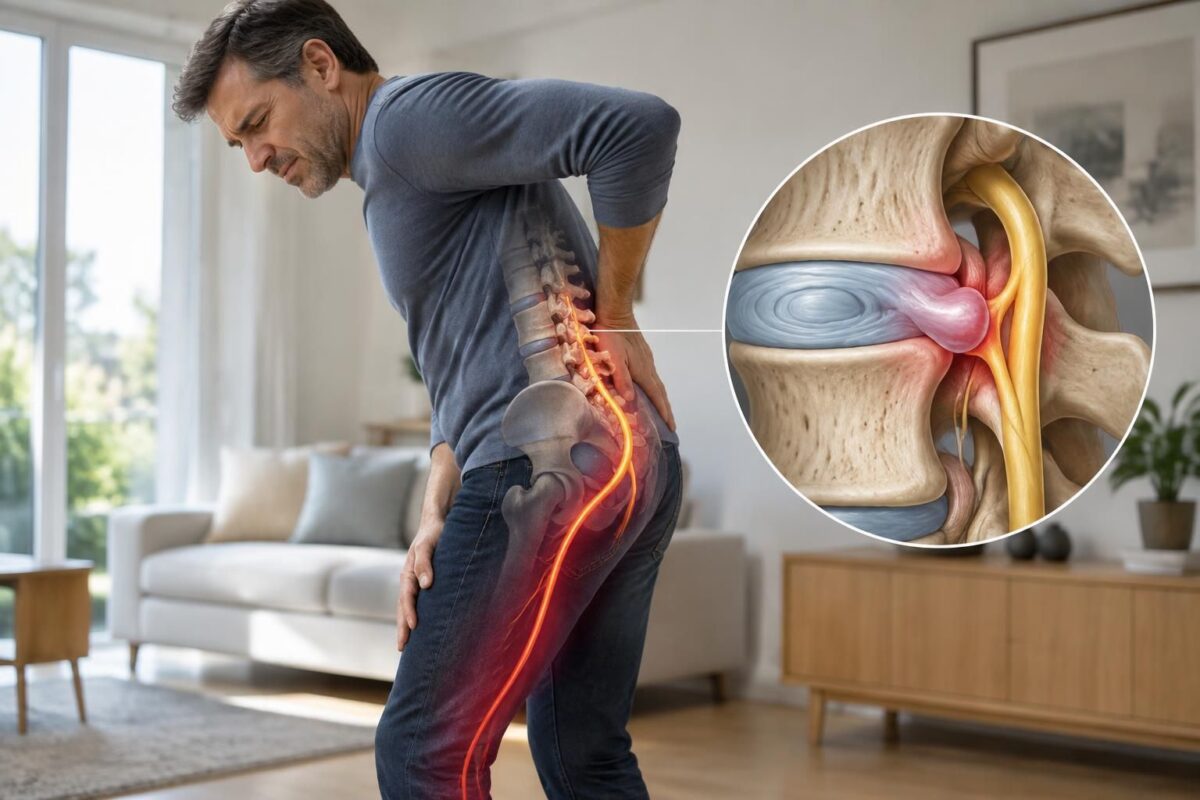
Disc protrusion and sciatica: when the disc touches a nerve root
IN BRIEF A disc protrusion is a disc that extends beyond its usual contour. If it irritates a nerve root, it can contribute to sciatica, with pain radiating into the buttock or leg, sometimes accompanied by tingling or weakness. An…
Practical strategies for relief and prevention
Adopt measures that limit strain on the nerve and favor a gradual recovery. Favor neutral postures and movements that preserve lumbar space when you move or sit down.
Integrate targeted mobility and strengthening exercises, mapping a progression suitable to your pain. Avoid sustained flexions without guidance and favor controlled extensions when tolerated.
Use complementary methods such as local heat during painful phases and stress management techniques to facilitate sleep and recovery. Finally, coordinate your efforts with a healthcare professional to adjust the plan based on your response to treatment and the evolution of your symptoms.

Herniated disc and sciatica: morning pain and lumbar stiffness
IN BRIEF A herniated disc can irritate a nerve root and cause sciatica, with lower back pain radiating down the leg. However, morning pain and lower back stiffness alone are not sufficient to confirm this diagnosis. An assessment helps guide…
Concrete action plan
– Detect positions that aggravate and those that relieve during your daily activities.
– Implement a progressive exercise program under supervision to centralize and reduce nerve irritation.
– Favor alternatives that decrease flexion strain and promote lumbar stability, with regular review of your progress by a specialist.

Herniated disc and sciatica: night pain and factors to watch out for
IN BRIEF A herniated disc can irritate a nerve root and cause sciatica, sometimes more bothersome at night. Night pain alone is not enough to determine the cause: its variation according to positions, neurological examination and, if necessary, imaging help…
Comparison table: Sciatica aggravated by trunk flexion
| Aspect | Description |
|---|---|
| Relationship with flexion | Pain worsens during trunk flexion |
| Possible causes | Herniation or disc protrusion, lumbar osteoarthritis, narrow lumbar canal, piriformis syndrome |
| Typical symptoms | Pain in the buttock/leg possibly reaching the foot; paresthesia or weakness |
| Examination and diagnosis | Clinical examination; imaging as needed |
| Aggravating factors | Prolonged sitting, coughing/sneezing, movements that irritate the root |
| Initial approach | Relative rest, ice or heat depending on symptoms; neutral posture and physiotherapy/osteopathy |
| Therapeutic options | Conservative treatment; medications; manual therapy; exercises; injections if necessary |
| Self-management | Avoid twisting, favor postures that centralize symptoms; regular movement |
| When to seek emergency help | Extremely strong pain; loss of urinary/bowel control; marked weakness |

Herniated disc and sciatica: why the leg can be numb
IN BRIEF A sciatica is pain related to the irritation of a nerve root, sometimes caused by a <strongherniated disc. Pressure on the nerve can cause tingling, loss of sensation, or weakness in the leg. A healthcare professional can assess…
Testimonials on Sciatica and pain aggravated by trunk flexion
Marie, 38 years old suffers from sciatica that worsens every time she performs a trunk flexion. This intense pain radiates from her lower back to the lower limb and prevents her from sitting for long. After appropriate care, she notices a significant reduction in symptoms and better mobility during movements that involve bending, allowing her to resume her daily activities with less apprehension.
Lucas, 52 years old describes a sciatica pain that worsens particularly during trunk flexion when lifting heavy objects. Treatment sessions and guided exercises provide him with a gradual decrease in pain and a regained ability to walk and work without sharp pains.
Sophie, 41 years old finds that her sciatica increases when she performs trunk flexion at her desk. After following the program proposed by her therapist, she benefits from better stability and longer relief, allowing her to rest without the pain returning immediately.
Émilie, 29 years old notices that her sciatica is significantly exacerbated by trunk flexion during her workouts. Thanks to targeted support, she gradually regains flexibility and can safely resume her physical activities.
Jean, 60 years old explains that sciatica bothers him mainly when he leans forward or stands, with trunk flexion triggering the pain. Following therapeutic intervention, he experiences a reduction in radiations and a more stable pain over the weeks.

Herniated disc and sciatica: causes of recurring pain
IN BRIEF A herniated disc can irritate or compress a nerve root and cause sciatica, with pain radiating from the lower back to the buttock or leg and possibly returning. Symptoms and their causes are not always the same: an…
Sciatica and pain aggravated by trunk flexion
Sciatica is pain that follows the path of the sciatic nerve, the longest nerve in the body. When it is triggered or worsened by trunk flexion, it often reveals radicular irritation or compression at the lumbar level. This dynamic may manifest as sharp pain, burning, or an electrical sensation that travels up the leg, with or without numbness and muscle weakness. In some cases, the pain extends to the foot or toes and may be more pronounced in sitting position or during certain movements.
Anatomically, the lumbar region is structured around the intervertebral discs, vertebrae, and nerve roots that emerge from the spinal cord to become the sciatic nerve. Pathologies associated with trunk flexion often involve the discs (protrusions or herniations), osteoarthritis, or lumbar canal stenosis, which can irritate or compress the nerve roots. The typical mechanism is that a displaced or weakened disc presses on a nerve root when the trunk flexes, generating painful irradiation along the nerve pathway.
Potential causes of these pains in the context of flexion also include irritation mechanisms at the zygapophyseal joints (lumbar osteoarthritis), a piriformis syndrome, or localized muscle contractions. In the context of pregnancy, hormonal and anatomical changes can also promote sciatic pain exacerbated by certain flexion postures, which are safe for the baby but require appropriate management.
The diagnosis relies on the association of typical symptoms and a rigorous clinical examination. Signs are sought for irradiation behind the thigh or calf, motor or sensory signs, and pain amplification with effort or position. Imaging may be useful when the diagnosis remains uncertain or in the presence of warning signs, to identify a disc herniation, foraminal stenosis, or other mechanical factors contributing to irritation. The goal is to distinguish a sciatica from other lumbar pains and establish a precise cause to guide treatment.
In clinical practice, the management of sciatica related to trunk flexion relies on a multidisciplinary and progressive approach. The aim is to reduce inflammation, improve mobility, and strengthen the supporting muscles of the spine. Simple advice such as avoiding positions that worsen the pain, favoring neural mobility exercises, and strengthening programs can guide rehabilitation. Targeted manual techniques, thermal modalities, and adapted exercise programs play a key role in reducing irradiation and improving functional outcomes.
The prognosis depends on the specific cause and response to treatment. Early and appropriate management often leads to significant improvement within a few weeks, with slower recovery when irritation is diffuse or when deep structures are heavily stressed by repeated flexion. Support from a healthcare professional allows for adjustments to measures and avoidance of movements that could aggravate the pain.
Written by Dr Sylvain Desforges, osteopath, expert in manual approaches and management of lumbar pain, this text offers a detailed and practical view of sciatica associated with trunk flexion, aiming to enlighten patients and professionals on the mechanisms, diagnosis, and therapeutic options suitable for each situation.
This text explains why sciatica can be severely painful during trunk flexion, what the possible causes are, and which practical approaches can reduce pain while preserving mobility. You will see the mechanisms, key signs, and care options, with clear advice for daily action and resources to deepen the subject.
Trunk flexion can increase the pressure at the back of the disc and irritate the nerve roots responsible for sciatica. This position often intensifies pain in the buttock and leg and may reveal a discal origin, but other structures such as the piriformis syndrome, lumbar osteoarthritis, or lumbar stenosis can produce similar symptoms. A thorough clinical examination allows for differentiation of these mechanisms, and if necessary, imaging (MRI or CT scan) may be requested to clarify the diagnosis.
In practice, the movements and postures that reduce symptoms, termed centralization, guide the treatment plan. When the pain worsens with flexion, gestures that promote lumbar extension and progressive strengthening of the back and trunk muscles are prioritized. Conservative approaches, such as physiotherapy focused on neural mobility and targeted exercises, remain a priority in the acute phase and often allow for significant improvement without immediate recourse to surgery.
To understand the mechanisms and management options, it may be helpful to consult specialized resources such as Vidal, which describe sciatica pain and its management, as well as dedicated content on Sciatica despite physiotherapy and recovery phases on SOS Sciatica. These resources provide practical benchmarks to adapt your exercises and daily life.
Non-pharmacological approaches often combine simple and effective actions: maintaining suitable activity, favoring extension exercises rather than remaining in prolonged flexion, and integrating techniques like the McKenzie method or neural mobilization under professional supervision. The goal is to promote the centralization of symptoms and improve tolerance to effort while avoiding repetitive tensions on the back.
Complementary options may be considered if pain persists despite conservative measures, depending on the specific identified cause (discal, articular, or muscular). In some cases, intermediate treatments, or even injections, may be discussed with the physician, but they do not replace a comprehensive approach adapted to your personal context.
To deepen and compare the different approaches according to your situation, you can consult other useful resources such as Doctissimo on sciatica (, or dedicated pages on symptoms and available therapeutic choices on UnrsaSante and other expert resources listed below.
Learn about the triggering factors and the gestures to adopt to limit the risk of recurrence: improved posture, regular physical activity, strengthening of the trunk and back muscles, and stress management. For better management, discuss with a healthcare professional who can adjust the exercises, progress, and therapeutic options to your specific situation.
Additional resources and further exploration
– Sciatic pain and locomotor equipment: Vidal
– Sciatica and treatment despite physiotherapy: SOS Sciatica
– Recovery phase of sciatica: Recovery Phase
– Sciatica and pain on the top of the foot (L5 root): Sciatica and pain on the top of the foot
– Doctissimo – Sciatalgia: Doctissimo
– Other resources and perspectives: Indirect Medicine, Unrsante, Montreal – Sciatica treatment, Aidiagme.
Herniated disc and sciatica: when to reassess symptoms
IN BRIEF A herniated disc can irritate a nerve root and cause sciatica, with pain that radiates down the leg. Reevaluating symptoms helps to track their evolution and determine if medical advice or tests are necessary, without assuming that surgery…

Dr Sylvain Desforges, B.Sc., D.O., N.D., osteopath, is the founding president of TAGMED and of the ACMA association. He dedicates his practice to chronic spinal pain, low back pain and symptoms compatible with sciatica, particularly when pain radiates toward the buttock, leg, calf, foot or toes.
Through SOS Sciatique, he publishes educational content on sciatica symptoms, possible causes such as disc herniation, disc narrowing, foraminal stenosis or irritation of a lumbar nerve root, as well as non-surgical approaches that may be considered according to the evaluation. At Clinique TAGMED, care may include, depending on the case, motorized neurovertebral decompression, specific osteopathic care or precision percussion.
For an evaluation related to sciatica treatment in Montreal / Mount Royal or sciatica treatment in Terrebonne, please consult the services available at Clinique TAGMED.
Medical disclaimer
The information published on SOS Sciatique is provided for educational purposes only and does not replace a consultation, diagnosis, opinion or treatment provided by a physician or another authorized healthcare professional. The author of this article is neither a medical doctor nor a specialist in a medical specialty recognized by the Collège des médecins du Québec. The osteopathic, manual medicine or functional support approaches described on this site do not constitute medical acts and are not intended to replace medical follow-up.
Consult a physician or emergency service in cases of loss of bladder or bowel control, anesthesia in the saddle area, significant or progressive weakness in the leg or foot, fever, recent trauma, severe pain or rapid worsening of symptoms. For more details, please read our Legal Notice.