
Sciatica and pain that increases when standing
31/07/2026
Sciatica Treatment Terrebonne: Evaluation of Pain, Strength, and Reflexes
01/08/2026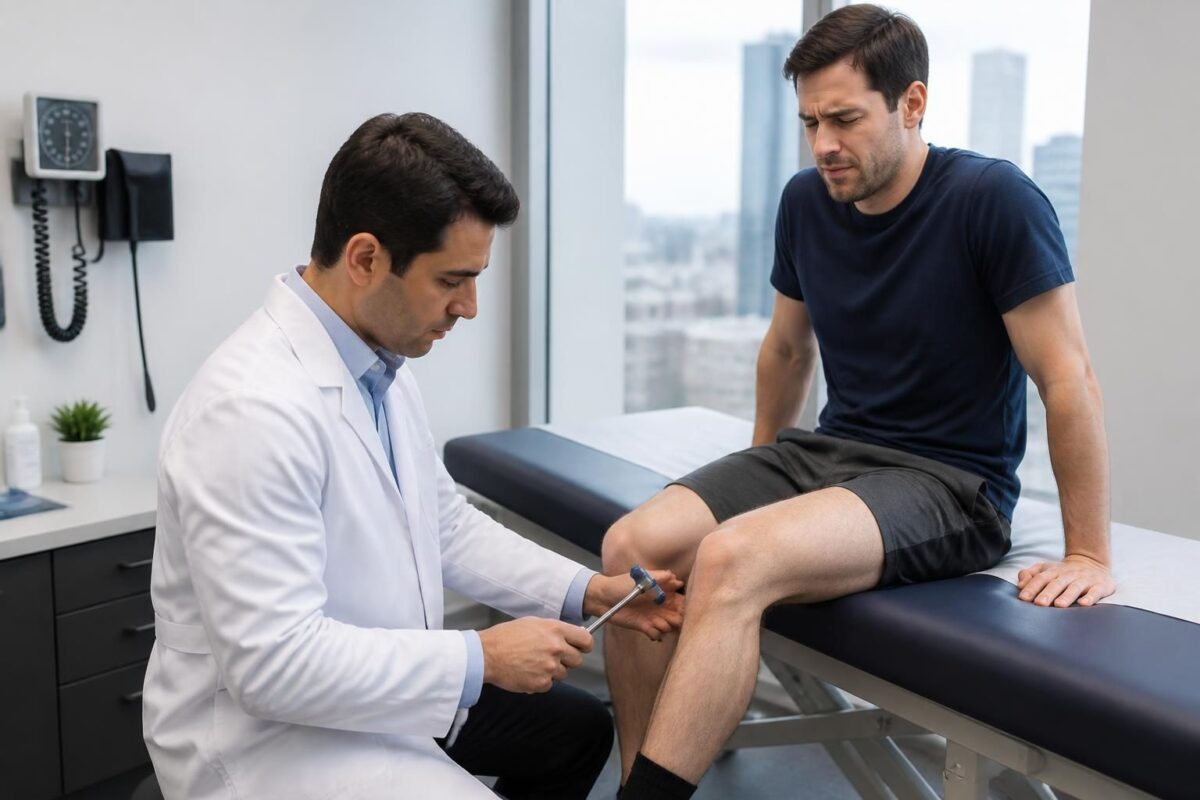
IN BRIEF
| The Sciatic Treatment involves quickly assessing pain, strength, and reflexes to identify a radicular impairment and guide a personalized plan. Benefits: accurate diagnosis, non-surgical therapeutic options, lasting pain reduction, and improved mobility. Functioning: after identifying the cause, a combination of rehabilitation, osteopathy, and, if relevant, neurovertebral decompression is proposed and adapted to the patient’s progression. Locally, this service is accessible in Montreal and the surrounding areas (Mont-Royal, Terrebonne), to treat pain radiating in the buttock, leg, or foot and prevent recurrences without a systematic reliance on surgery. |
Sciatic treatment Montreal: rapid and targeted assessment to guide the care plan.
- Pain: precise assessment of location, radiation (buttock, thigh, calf, or foot), intensity, and factors that aggravate or relieve the pain.
- Strength: control of muscle strength in the lower limbs to detect any weakness or motor deficit.
- Reflexes: tests of neurological reflexes to identify any radicular impairment.
- Personalized plan: based on the results and any imaging, proposal of conservative options (neurovertebral decompression, osteopathy, rehabilitation) before any surgical intervention.
- Accessible in Montreal and at the sites in Mont-Royal and Terrebonne for integrated and multidisciplinary care.
This practical guide, written by a health professional expert in manual approach, presents a clear method for assessing sciatica in Montreal. It explains how to measure pain, muscle strength, and reflexes. It also describes non-surgical options available at the TAGMED Clinic, with an emphasis on precise assessment and personalized follow-up between Montreal and Terrebonne.
Pain and Radiation Pathway Assessment
The path of the pain is identified, generally starting from the lower back and possibly radiating to the buttock, thigh, calf, or foot. The intensity, duration, factors that aggravate or relieve, and the impact on daily activities are noted. This step allows distinguishing radicular pain from other sources.
To guide treatment, reference materials that describe nerve radiation and non-surgical options suitable for Montreal and Terrebonne are consulted. Sciatic Evaluation Montreal and Sciatic Treatment Montreal detail this step.
Strength and Neuromuscular Function Assessment
We check the strength of the main muscle groups involved in walking and body support, including the quadriceps, hamstrings, tibialis anterior, and hip abductors. We also assess the ability to lift the foot and perform active movements. These tests help to detect weakness of radicular origin and guide care.
The results guide the choice of non-surgical treatments proposed in Montreal and Terrebonne, and the establishment of an adapted rehabilitation plan.
Reflexes and Neurological Tests
We check reflexes, including patellar and Achilles reflexes, and perform simple neurological tests to identify any nerve damage. Tests like the Lasègue help confirm irritation of a lumbar root. A loss of sensitivity or progressive weakness is a warning signal requiring rapid assessment.
Treatment Plan and Non-Surgical Options
After the evaluation, the care plan prioritizes conservative approaches when possible. At the TAGMED Clinic, non-surgical options include neurovertebral decompression when the indication is clear, along with osteopathic interventions and pain management advice. The use of non-invasive solutions is favored to reduce pain and improve mobility without surgery.
To understand the mechanisms and options, you can consult Understanding Pain Before Choosing a Treatment and Non-Surgical Options to Consider.
Neurovertebral Decompression and Care Coordination
Neurovertebral decompression is a non-surgical approach that may be considered when sciatica is related to disc or radicular impairment. This technique aims to reduce mechanical stress on the spinal structures and improve the space around the nerve roots, without resorting to surgery. It integrates into a multidisciplinary management plan that may include osteopathy and postural adjustments. For more information, refer to Neurovertebral Decompression Montreal and Sciatica: nerve compression or chemical irritation.
Why TAGMED in Montreal and Terrebonne
The TAGMED clinic offers a comprehensive evaluation and a personalized treatment plan, focused on accurately identifying the cause and on careful and gradual pain management. Patients benefit from a coordinated path between the sites of Montreal, Mont-Royal, and Terrebonne, with cutting-edge non-invasive treatments and multidisciplinary support. To learn more about the approaches and services, visit TAGMED Clinic – Sciatic Treatment.
For additional information and resources on non-surgical treatments, you can consult the following pages: Rehabilitation and treatment of sciatica, Non-surgical options in Montreal, and Sciatica assessment Montreal.
Medical disclaimer: The information and advice provided on this site do not replace the opinion, diagnosis, or treatment of a healthcare professional. Please note that Dr. Sylvain Desforges, osteopath, is neither a medical doctor nor a physician, and is not a specialist in a medical specialty as defined by the Collège des médecins du Québec. Manual medicine, functional medicine, and sports medicine as described on this site exclude any treatment or medical diagnosis made by a physician or specialist. Always consult your physician for any medical questions. For more details, please read our full Legal Notice.
“Medical disclaimer: The information and advice provided on this site do not replace the opinion, diagnosis, or treatment of a healthcare professional. Please note that Dr. Sylvain Desforges, osteopath, is neither a medical doctor nor a physician, and is not a specialist in a medical specialty as defined by the Collège des médecins du Québec. Manual medicine, functional medicine, and sports medicine as described on this site exclude any treatment or medical diagnosis made by a physician or specialist. Always consult your physician for any medical questions. For more details, please read our full Legal Notice.”
- Pain: path and intensity in the buttock, leg, or foot
- Radicular symptoms: burning, tingling, numbness
- Differential diagnosis: sciatica vs. femoral neuralgia or referred pain
- Triggers: prolonged sitting, coughing, and sneezing
- Functional assessment: restrictions in daily activities
- Imaging: MRI or X-ray indication as warranted
- Strength: dorsiflexion and muscle resistance tests
- Reflexes: Achilles tendon and patellar reflex, asymmetries
- Neurological examination: sensation, motor skills, and coordination
- Tension tests: Lasègue and pain variations
- Treatment plan: conservative approach — decompression if indicated
- Follow-up: regular reassessment and adjustment of the protocol

This article provides practical recommendations for the assessment of sciatica in Montreal, focusing on pain, muscle strength, and reflexes, to quickly guide the most appropriate treatment. A rigorous assessment allows for distinguishing radiculopathy from other lower back pains and guiding conservative therapeutic actions, including non-surgical approaches.
Pain assessment and its path
The first step is to accurately document the path of the pain, its location, and its character (burning, stabbing, tingling). Pain radiating from the lumbar region to the buttock, thigh, calf, or foot suggests irritation or compression of a lumbar nerve root. The assessment should also consider aggravating factors (twisting, bending, effort) and moments of relief, as well as the impact on daily activities and sleep. A nerve pathway-focused approach helps differentiate disc herniation from other sources of pain.
Key points to check
Look for signs such as pain worsening with effort, coughing, or sneezing, and observe any change in the pain pattern (centralization or radiculization). Pay attention to alarm signs: loss of bladder or bowel control, saddle anesthesia, fever, or unexplained pain associated with trauma, which require urgent medical evaluation.
Assessment of strength and motor control
The muscle strength test should be systematic and reproducible in order to document the extent of potential weakness related to radiculopathy. Ask the patient to resist targeted movements (trunk extension, dorsiflexion and foot extension, knee flexion, hip abduction) and note the scores on a scale of 0 to 5. Progressive or asymmetric weakness often indicates a radicular involvement requiring adapted management and enhanced follow-up.
Objectives of strength assessment
The objective is to determine if muscle strength is sufficient for daily and professional activities, to identify muscle groups to target in rehabilitation, and to monitor progress after the initial conservative interventions.
Reflexes and sensitivity
Tendon reflexes (patellar reflex and Achilles reflex) allow for evaluating the integrity of the lumbar nerve network and the nerve transmission to the lower limb. In parallel, the evaluation of dermatomal sensitivity (L4, L5, S1 for example) and areas of paresthesia helps specify the involved root. Abnormal results suggest radiculopathy and guide towards further examinations or adjustments to the treatment plan.
Interpretation and follow-up
Decreased or absent reflexes, associated with weakness or sensory disturbances, strengthen the indication for multidisciplinary management and may influence the choice between rehabilitation, gentle decompression, and, if applicable, referral to a specialized consultation.
Integration and treatment plan
The integration of data on pain, strength, and reflexes allows for the creation of a personalized and progressive care plan. In the event of warning signs or persistent symptoms despite conservative measures, additional evaluation (imaging, specialist consultation) may be necessary. Treatment in Montreal generally favors non-surgical approaches, such as targeted rehabilitation, osteopathy, and decompression techniques when indicated, to restore mobility, reduce nerve irritation, and prevent relapses. Regular follow-up is essential to adjust the volume and intensity of sessions based on the evolution of pain, strength, and neuromuscular control.
| Evaluation Item | Impact on Treatment |
|---|---|
| Pain radiating to buttock/leg/foot | Indicates the direction of the plan: prioritize a radicular approach and decompression when disc or foraminal is likely. |
| Pain assessment (scale) | Guides the acceptable intensity and sets the goals for reduction and progression of exercises. |
| Strength of muscles innervated by lumbar roots | Determines the level of targeted rehabilitation and the criteria for resuming activity. |
| Progressive weakness (leg/foot) | Signals a potential emergency: prompt management and monitoring of deficits. |
| Deep tendon reflexes (patellar/Achilles) | Indicates neurological involvement and guides investigation choices and exercise safety. |
| Sensitivity and paresthesias | Localizes nerve irritation and adjusts the stimulation and stretching program. |
| Nerve tension tests (Lasègue) | Confirms radicular irritation and guides towards conservative decompression or clinical progression. |
| Symptom pathway | Helps target the root and distinguishes discal, foraminal, or piriformis syndrome to adjust the plan. |
Testimonials on Sciatica Treatment in Montreal: assessment of pain, strength, and reflexes
“Following sciatic pain that radiated down to my foot, I consulted in Montreal. The team conducted a thorough assessment by measuring pain, strength, and reflexes. This precise approach allowed for understanding the cause and choosing a personalized treatment, without surgery. Today, the pain has significantly decreased and I am returning to my daily activities.”
“The assessment in Montreal began with mapping the painful pathway and testing strength and reflexes. I appreciated the clarity of explanations and how the results guided the rehabilitation program. My pain is less present and my mobility has returned.”
“As an athlete, sciatica slowed me down. The team evaluated not just my pain, but also my strength and reflexes, then adapted the plan with targeted exercises and neurovertebral decompression. Result: less pain, more stability, and a quicker return to training.”
“I was impressed by the structured approach: we start by assessing pain, then test strength and reflexes, to precisely locate the root of the problem. In Montreal, this allowed for proposing effective conservative solutions and a better quality of life.”
“After several weeks, the initial assessment of pain, strength, and reflexes guided a personalized program. The sciatica is under control, and I can once again enjoy family outings.”
As part of the sciatica treatment in Montreal, the approach is based on a precise assessment of pain, muscle strength, and osteoneuromuscular reflexes. This process begins with a comprehensive history, which maps the pain pathway, identifies aggravating factors, and pinpoints times of maximum symptom intensity. Information is also collected on radiation to the buttock, thigh, calf, or foot, as well as on affected daily activities and previous treatments. This step aims to distinguish sciatica linked to a disc cause from referred or muscular pain.
The core of the evaluation then relies on neuromuscular and neuro-orthopedic examination. The leg pain is assessed in relation to the lower back and lumbar foramen while measuring the muscle strength of key groups: quadriceps, hamstrings, anterior tibial, and foot muscles. Reflex tests (patellar and Achilles) check the integrity of nerve pathways and identify potential radicular impairments. Nerve tension tests such as Lasègue and the lumbar drawer test complete the assessment to locate the involved nerve root and estimate the degree of irritation.
A sensory evaluation and a sensitivity evaluation complement this assessment, to detect hypoesthetic areas or the onset of numbness. This multidimensional approach allows for establishing a functional profile of the patient and identifying warning signs requiring urgent management. If necessary, additional examinations such as imaging (MRI, X-ray) or electromyographic tests may be considered to confirm the cause and guide the treatment plan, while remaining focused on clinical results and the patient’s response.
On the therapeutic front, the goal is to propose a conservative approach tailored to each patient. This may include neurovertebral decompression when indications are met, combined with personalized rehabilitation and trunk strengthening exercises to improve lumbar stability. Osteopathy and manual therapies can facilitate better mobility and reduce muscle tensions that irritate nerve roots. Guidance on posture, walking habits, and pain management completes the program, with coordination between physiotherapy, osteopathy, and, if necessary, appropriate medication management.
The care pathway aims at a sustainable reduction of pain, an improvement in mobility, and a prevention of recurrences. The plan is personalized and evolves with the patient, prioritizing realistic and measurable goals. The number of sessions varies according to the specific cause of radiculopathy, the response to treatment, and functional evolution, generally as part of a progressive and safe program. By prioritizing an integrated and patient-centered approach, sciatica treatment in Montreal seeks to restore to the patient a better quality of life and regained autonomy in daily activities.
This conclusion summarizes the key elements of treating sciatica in Montreal, emphasizing pain assessment, strength, and reflexes to guide a personalized and non-invasive approach when possible. It also highlights the concrete options available in Montreal and Terrebonne, as well as the importance of distinguishing the exact source of pain to guide treatment.
A comprehensive assessment is the foundation of the therapeutic process: it identifies the pain pathway, measures muscle strength and reflexes, and looks for neurological signs that indicate nerve irritation or compression. The use of a targeted clinical examination and, if necessary, imaging (MRI, X-ray) helps clarify the cause (herniated disc, foraminal stenosis, piriformis, etc.) and differentiate disc-related origins from other pain sources. For appropriate guidance, consult the dedicated resources for assessment and imaging available in Montreal.
The diagnosis relies on a thorough clinical analysis, neurological tests, and correlation with imaging data when available. This step allows for distinguishing pain from disc or radicular origin from discomfort related to other structures. In cases of significant radiation in the buttock, thigh, or foot, breaking down the underlying cause guides treatment choices and long-term prognosis. To explore these elements further, refer to the guides and pages dedicated to neurological assessment and care plan orientation.
Regarding conservative treatment options, the key is the personalized approach: neurovertebral decompression may be considered when the condition warrants, complemented by physiotherapy and osteopathy to optimize mobility, strengthen the core, and correct mechanical tensions. This strategy aims to reduce nerve irritation, improve mobility, and prevent recurrences, while avoiding, when possible, the need for surgery. For more information on non-surgical treatments and their indications, consult the resources dedicated to sciatica treatment in Montreal and Terrebonne.
Safety and warning signs should not be overlooked. A pain accompanied by loss of urinary or bowel control, saddle numbness, significant progressive weakness, or a “foot drop” requires urgent medical evaluation. Night pain, fever, or recent trauma also necessitate prompt management. To understand these signals and interpret them within a comprehensive evaluation, refer to the dedicated pages on neurological signs and safety advice in emergency situations.
To facilitate access to care, TAGMED Clinic offers assessments and treatments in Montreal and Terrebonne. You can make an appointment and get information on the treatment of sciatica in Montreal, or discover the services offered in Terrebonne through the associated resources. Additional options, including counseling and referrals, are available to guide your rehabilitation journey and prevent recurrences. To enrich your understanding and access supplementary information, you may consult the dedicated pages on treatment and assessment in Montreal and Terrebonne.
To further your journey, external resources on pain location, progression during walking, and mechanical approaches will help you contextualize your situation and prepare for your consultation. For example, articles explaining why the location of pain influences diagnosis and why certain treatments are not suitable for everyone can be useful in your approach. Guides on neurological assessment and comprehensive care plans will assist you in discussing with your healthcare professional and making informed decisions.

Sciatica L5 in Montreal: pain towards the big toe
IN BRIEF L5 sciatica refers to pain that can follow from the lower back or buttock down the leg to the big toe. This pathway can guide the evaluation, but does not alone confirm the involved nerve root. In Montreal,…

Sciatica L4-L5 in Montreal: understanding possible symptoms
IN BRIEF L4-L5 sciatica refers to a pain that may occur when a lumbar nerve root is irritated, sometimes related to a herniated disc. It can cause pain, tingling, or weakness in the buttock and leg; symptoms vary and cannot,…

Sciatica in Montreal: nerve symptoms not to be taken lightly
IN BRIEF Sciatica refers to pain that may radiate from the lower back or buttock down the leg, sometimes accompanied by tingling, numbness, or weakness. In Montreal, an evaluation can help seek the cause and guide appropriate care, without deducing…

Sciatica in Montreal: Pain that Radiates Down the Leg Upon Waking
IN BRIEF Sciatica is a nerve pain that starts in the lower back or buttock and radiates down the leg, sometimes to the foot; it may be more pronounced upon waking. In Montreal, an assessment helps to better understand symptoms…

Sciatica in Montreal: pain that worsens during sitting-standing transitions
IN BRIEF Sciatica is pain that starts in the lower back or buttock and may radiate down the leg. Pain that increases when moving from a sitting to a standing position may be influenced by irritation of a nerve root…

Sciatica in Montreal: radiation in the leg after physical effort
IN BRIEF Sciatica is a pain that starts from the lower back or the buttock and radiates down the leg; it can appear after physical exertion. In Montreal, an assessment helps identify aggravating movements and guide care. Acupuncture can be…

Sciatica in Montreal: burning in the foot and possible nerve compression
IN BRIEF Sciatica is an irritation or compression of a nerve that can cause pain radiating from the buttock down the leg and into the foot, sometimes accompanied by a burning sensation, tingling, or numbness. In Montreal, an assessment helps…

Sciatica in Montreal: foot pain without lower back pain
IN SHORT A foot pain without lower back pain may sometimes be linked to nerve irritation compatible with sciatica, but other causes are possible. In Montreal, an evaluation allows for examining symptoms and function to guide management according to their…

Dr Sylvain Desforges, B.Sc., D.O., N.D., osteopath, is the founding president of TAGMED and of the ACMA association. He dedicates his practice to chronic spinal pain, low back pain and symptoms compatible with sciatica, particularly when pain radiates toward the buttock, leg, calf, foot or toes.
Through SOS Sciatique, he publishes educational content on sciatica symptoms, possible causes such as disc herniation, disc narrowing, foraminal stenosis or irritation of a lumbar nerve root, as well as non-surgical approaches that may be considered according to the evaluation. At Clinique TAGMED, care may include, depending on the case, motorized neurovertebral decompression, specific osteopathic care or precision percussion.
For an evaluation related to sciatica treatment in Montreal / Mount Royal or sciatica treatment in Terrebonne, please consult the services available at Clinique TAGMED.
Medical disclaimer
The information published on SOS Sciatique is provided for educational purposes only and does not replace a consultation, diagnosis, opinion or treatment provided by a physician or another authorized healthcare professional. The author of this article is neither a medical doctor nor a specialist in a medical specialty recognized by the Collège des médecins du Québec. The osteopathic, manual medicine or functional support approaches described on this site do not constitute medical acts and are not intended to replace medical follow-up.
Consult a physician or emergency service in cases of loss of bladder or bowel control, anesthesia in the saddle area, significant or progressive weakness in the leg or foot, fever, recent trauma, severe pain or rapid worsening of symptoms. For more details, please read our Legal Notice.