Osteopathic manipulations to reduce chronic joint pain
29/06/2026
Osteopathy and overall well-being: regaining physical and mental balance
29/06/2026
In short
|
In short, Osteopathy in post-operative rehabilitation is a gentle approach that supports the recovery after surgery by improving the circulation, the mobility and the healing. It allows a pain reduction, a decrease in fatigue and a faster return to activity. Through targeted and gentle manipulations, it promotes the release of tensions, stimulates the oxygenation of tissues and supports the healing process without drugs. accessible to Montreal and in the region, this approach is part of a program of Multidisciplinary rehabilitation To optimize the final result and improve the welfare. |
Osteopathy is an approach fresh which can accompany post-operative rehabilitation by promoting Tissue recovery and theImproving mobility after the intervention. thanks to Targeted manual techniques, it contributes to Reduce the pain, to optimize the healing and reduce the fatigue. Typical gestures — Joint manipulations, stretches, drainage and work on the fascia — strengthen the circulation and tissue oxygenation, while limiting adhesions.
- pain reduction and improved comfort.
- Prevention of complications and support for mobility.
- Reduction of fatigue and improved sleep.
- Integration into a Multidisciplinary program rehabilitation for global recovery.
This article, written by an expert health professional, explains why Osteopathy is beneficial for people in Postoperative rehabilitation. We address the mechanisms of action, the techniques used, the impact on pain and fatigue, as well as the importance of a multidisciplinary approach. The objective is to provide clear and concrete elements to optimize the recovery of activities and the quality of life after an intervention.
Understanding the role of osteopathy in rehabilitation
Osteopathy is a manual medicine that acts on tissues, joints and the nervous system. It aims to remove mobility restrictions and promote effective circulation. After surgery, these interventions can support overall recovery and comfort during convalescence. The practitioner assesses the operative context, surgery-related limitations and functional goals of the patient.
Mechanisms of action
Osteopathic techniques target muscle tension, joint restrictions and fascia imbalances. This improves mobility, stimulates vascularization and oxygenation of tissues, and promotes relaxation of the nervous system. These effects contribute to a decrease in pain and feeling tired, while supporting better sleep and a reduction in stress related to surgery.
osteopathic techniques used after an intervention
The sessions are based on joint mobilization, fascia work and drainage techniques to promote recovery. Each session is adapted to the type of surgery and the convalescence stage. No specific exercise requirements are provided under this approach. To learn more, please refer to the following resources on recognized sites:
Why osteopathy is essential for postoperative rehabilitation
Osteopathy and sports recovery — Non-invasive approach
For additional information on the overall benefits observed and mechanisms compatible with post-operative recovery, you can also consult specialized resources on Osteopathy and pain related to osteoarthritis.
Impact on pain, fatigue and sleep
Pain management is a central element of the postoperative period. Osteopathic gestures can modulate the pain by local action and by reducing tension around the operated area. This approach promotes general muscle relaxation and may decrease painful perception. At the same time, improving circulation and reducing stress contribute to better sleep quality and decreased postoperative fatigue.
Prevention of complications and improved healing
Better vascularization and a reduction in tensions around the operated areas support more harmonious healing. Osteopathy can also help prevent certain complications related to prolonged immobilization and maintain a posture consistent with the gradual resumption of activities. Specialized resources describe how an osteopathic approach helps to optimize recovery and postoperative stability.
Integration into the rehabilitation program
To take full advantage of the benefits, osteopathy must be part of a global rehabilitation program, in collaboration with other health professionals. This multidisciplinary approach may include physiotherapists, doctors, orthotists and other specialists depending on the context. The objective is to coordinate care, to adapt the interventions to the evolution of the patient and to optimize each step of the recovery.
Additional resources on the integration of osteopathy in post-operative rehabilitation are available, including through specialized publications and reference sites such as:
Osteopathy and post-operative recovery — Osteo Rive
Osteopathy and post-surgery rehabilitation – Results
Example of care pathways
The course of care begins with a history and clinical examination. Then the osteopathic diagnosis determines the restrictions and imbalances to be corrected. The osteopathic treatment is adapted to the profile and surgery. Advice and recommendations complete the session to support recovery. The follow-up may change depending on the progress of the patient and can be part of a multidisciplinary care.
Why choose us
A patient-centric, clinical-based approach promotes more tolerable and faster recovery. Our practice favors close coordination with health professionals to optimize results and ensure maximum safety during post-operative rehabilitation. For more information, consult resources on the mechanisms of action and results observed in post-operative and sporting contexts:
Osteopathy – Sustainable solution for daily well-being
How osteopathy acts on neuropathic pain
Medical Disclaimer: The information and advice provided on this site does not replace the health professional’s diagnosis or treatment. Please note that Losteopath is neither a doctor of medicine nor a doctor, and is not a specialist in a medical specialty as defined by the Collège des Médecins du Québec. Manual medicine, functional medicine and sports medicine as described on this site exclude any medical treatment or diagnosis made by a doctor or specialist doctor. Always consult your doctor for any medical questions. For more details, please read our full legal notice.
- Pain Reduced postoperative thanks to gentle manipulations and muscle relaxation.
- Mobility Improved joints after immobilization.
- Circulation blood and lymphatic drainage stimulated, to decrease edema.
- Healing Optimized by better tissue vascularization.
- adherence and stiffness prevented by stretching and fascia techniques.
- Fatigue and reduced stress, with improved sleep.
- Neuropathic pain and attenuated nervous tension around the operated area.
- Rehabilitation rhythm Optimized thanks to a posture and harmonized movements.
- Complications Warned (DVT and other malfunctions) by gentle mobilization and appropriate advice.
- Multidisciplinary course For a coherent and coordinated rehabilitation.

Following surgery, convalescence is a decisive step. theosteopathy, practiced in such a way fresh and adapted, can support the Postoperative rehabilitation By promoting the circulation, the mobility and the quality of life, while reducing the pain and the fatigue.
Understanding the role of post-operation osteopathy
Osteopathy is an alternative medicine that uses manual techniques to release tension and restore tissue balance. In the post-operative period, these gestures promote better vascularization and optimal functioning of the nervous system, which can accelerate healing and reduce stiffness associated with immobilization.

How osteopathy improves the quality of life of active people
In short In short, theosteopathy is a global approach that Optimizes mobility and the function of the body of ACTIVE PEOPLE, for a better quality of life. It helps prevent injury and reduce Musculoskeletal pain While promoting the Sports recovery.…
Techniques adapted to convalescence
Joint manipulations and stretching
Targeted manipulations help restore the mobility of joints and segments that have been limited by operation or prolonged rest.
Soft stretches prevent grip and maintain muscle flexibility, facilitating a resumption of daily and sporting activities.
Fascia and drainage techniques
Fascia approaches and lymphatic drainage techniques support circulation and edema reduction, which decreases pain and accelerates the return to stable energy.

Osteopathy and sports recovery: prepare the body for lasting performance
In short In short, Osteopathy and Sports recovery is one Global manual approach that sustainably prepares the body for the effort by restoring mobility and circulation After the effort. It is a discipline that acts on the sinews, the joints,…
Pain Reduction and Comfort Improvement
By stimulating natural mechanisms of soothing and releasing tensions around the operated area, osteopathy can significantly reduce the painful sensation and promote more restorative breathing and sleep.
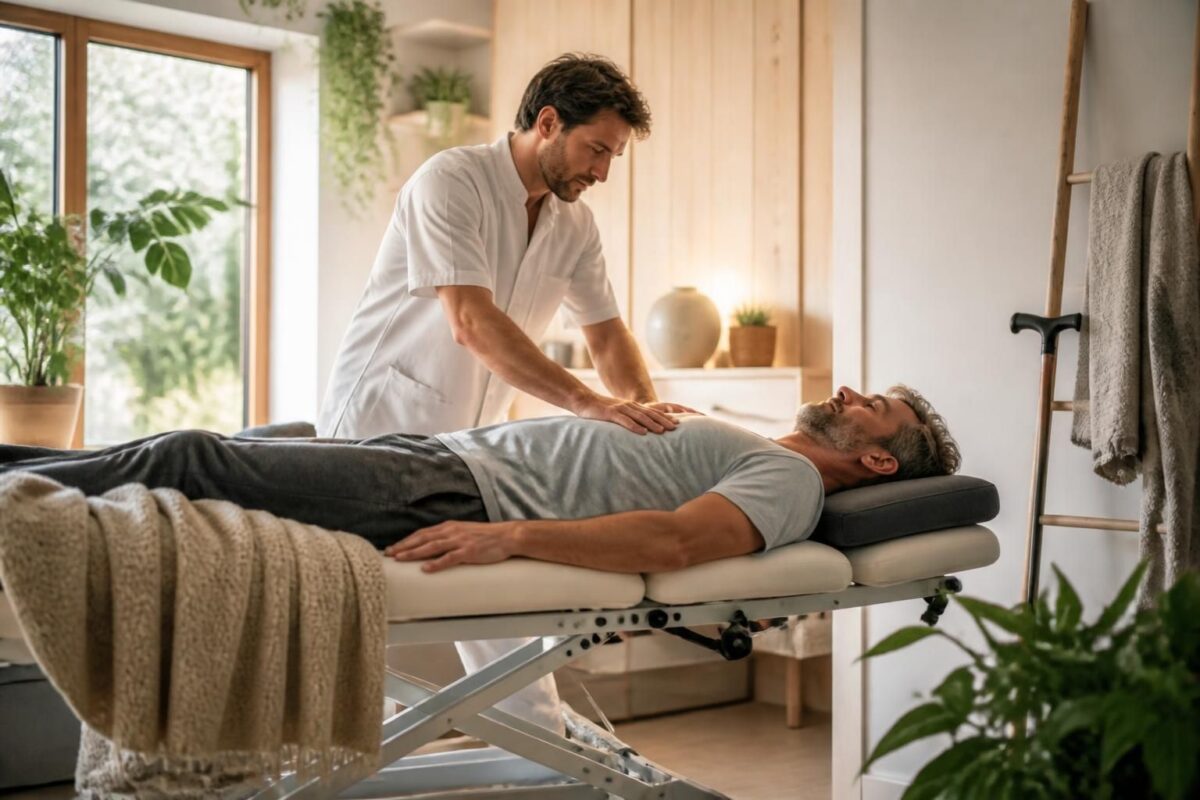
Why Osteopathy Is Essential For Recovery People
In short In short, Osteopathy in convalescence is an approach manual and holistic which helps to accelerate the recovery by restoring The balance, the mobility and a good circulation fabrics. it contributes to Reduce the pain, support the Back to…
Impact on fatigue and well-being
The decrease in stress and the overall balance of the body contribute to better endurance on a daily basis. A holistic approach can improve sleep and mindset, essential elements for effective rehabilitation.

Osteopathic manipulations to strengthen post-traumatic muscles
In short In short, Osteopathic manipulations for Strengthen post-traumatic muscles constitute a gentle manual approach aimed at restoring the mobility, reduce the pain and facilitate the Functional rehabilitation After a injury. What is Is it? A series of precise gestures…
Integration into a multidisciplinary program
To maximize the results, osteopathy is part of a coordinated course with physiotherapists, doctors and other professionals. Each session adjusts the techniques to the type of surgery and the recovery stage, with regular follow-up to adapt the plan.

Osteopathy and prevention of work-related musculoskeletal disorders
In short theosteopathy is one Manual approach that restores body balance and prevents MSD related to work. Its advantages: reduction of tension, improvement of mobility and prevention of chronic pain. She is preventive and healing, suitable for office and trades…
Prevent complications and promote healthy healing
By acting on posture, circulation and mobility, osteopathy can help prevent complications and promote more harmonious healing, while limiting pain and tension around scars.
| Axis | Concise impact |
|---|---|
| Postoperative pain | Decrease in pain and better comfort thanks to soft techniques. |
| Mobility and amplitude | Improvement of the mobility joint andamplitude, facilitating rehabilitation. |
| Circulation and edema | Stimulation of the circulation and lymphatic drainage To reduce edema and tension. |
| Healing and soft tissue | Support from the healing and prevention of adherence. |
| Sleep and well-being | reduction of stress and improvement of sleep quality, key recovery factor. |
| Prevention of complications | prevention of complications and maintaining a posture adapted. |
| Therapeutic coordination | Approach coordinate with physiotherapist and other professionals for a recovery overall. |
| Recovery and return to activity | Shortening of recovery time and faster return to Daily activities. |
After my post-operative rehabilitation following a lumbar intervention, I noticed a pain reduction and an Progressive mobility treated areas. Osteopathy offered me an accompaniment Soft and personalized, facilitating a Comfortable healing and a faster resumption of daily activities.
I felt like I was blocked by the stiffness Around the scar after my knee arthroplasty. Thanks to Osteopathic techniques, the circulation and lymphatic drainage were stimulated, which allowed a more fluid healing and an pain reduction.
After hip surgery, regular sessions helped me relax tense muscles and to prevent Scar adhesions. Result: a Mobility found, less than fatigue and one sleep Improved.
For cervical spine surgery, the osteopathic approach improved my posture and my coordination, facilitating rehabilitation exercises and the return to my usual activities.
Integrate osteopathy into a Multidisciplinary program with physiotherapist and doctor allowed a stress reduction and an Improved quality of life, while accelerating the recovery.
The work on the fascia and the connective tissues helped release tensions around the scar, reducing pain and preventing long-term movement limitations.
Sylvain Desforges, Expert in osteopathy, naturopathy and manual medicine, is the Founding President of tagmed and association acma. With a career dedicated toHealthcare innovation, he specializes in Management of the chronic pain and the integration of advanced technologies such as spinal decompression, laser and shockwave therapy. His approach is based on evidence-based care Aiming to optimize the recovery and well-being of patients in post-operative rehabilitation. His approach revolves around personalized support that takes into account the tissue, movement and balance of the body as a whole.
As part of the Postoperative rehabilitation, theosteopathy Offers a gentle and holistic care philosophy that complements surgical and physiotherapy treatments. By promoting the release of muscle tension, the improvement of circulation and the proper functioning of the nervous system, it acts as a Support pillar For smoother recovery. This approach aims not only to reduce pain, but also to restore the mobility joints and support better quality healing.
The concrete benefits of postoperative osteopathy lie in a pain reduction Thanks to careful manipulations that promote the release of tensions around the operated area, also stimulating the self-repair mechanisms of the body. At the same time, the sessions contribute to reducing the fatigue and the stress associated with surgical intervention, by rebalancing global tensions and supporting more restful sleep. This synergy between body and mind acts as a strong lever to support patients in the first critical weeks of convalescence.
Among the techniques commonly used, the osteopath adapts his approach to the healing stage and type of surgery. The Joint manipulations Restore the mobility of the joints sometimes limited by post-operative immobilization. The Muscle stretching aim to prevent adhesions and improve flexibility. The Draining massages Accelerate blood and lymph circulation, facilitating the elimination of toxins and reducing swelling. Finally, the Fascia techniques Release connective tissue tension to optimize flexibility and prevent diffuse pain associated with scarring.
Beyond the physical benefits, osteopathy acts as a vector ofOptimization of well-being and motivation for the patient. By improving the proprioception And the postural balance, it facilitates the gradual resumption of daily and sports activities. It can also complement other plural approaches such as physiotherapy and, when necessary, psychological support, in order to ensure coherent and lasting rehabilitation.
Integrated into a Global rehabilitation program, osteopathy offers appropriate care that evolves with the needs of the patient. In collaboration with a multidisciplinary team (physiotherapists, doctors, orthotists, hypnotherapists, podiatrists), it makes it possible to optimize each step of recovery, from the reduction of pain to the restoration of mobility and quality of life. Thanks to his know-how and his experience in the application of complementary manual approaches, Sylvain Desforges offers an effective way for a faster and more serene post-operative recovery, without compromising safety and the healing process.
This summary highlights why Osteopathy is beneficial for people in Postoperative rehabilitation. By favoring Soft manual techniques, it aims to reduce the pain, improve the mobility, accelerate the healing and support the General well-being, while integrating into a Multidisciplinary rehabilitation program.

The benefits of osteopathy to treat muscle imbalances
In short theosteopathy is a manual approach to restore themuscle harmony and postural considering the body as a whole. Its main benefits include the reduction of aches and tensions, the improvement of the mobility and from the posture, and prevention…
Essential Mechanisms and Benefits
The osteopathic approach acts on the soft goods, the joints and the the nervous system To release tensions, promote better circulation and optimize the proprioception. Through targeted and adaptable manipulations at each recovery step, it contributes to restoring the mobility muscle and joint chains, to prevent adherence and to support a more homogeneous healing.
Post-operatively, these effects result in a pain reduction and a gradual improvement in the mobility, thus facilitating rehabilitation sessions and daily activities. The techniques also promote better vasodilation and appropriate tissue oxygenation, contributing to a smoother overall recovery.
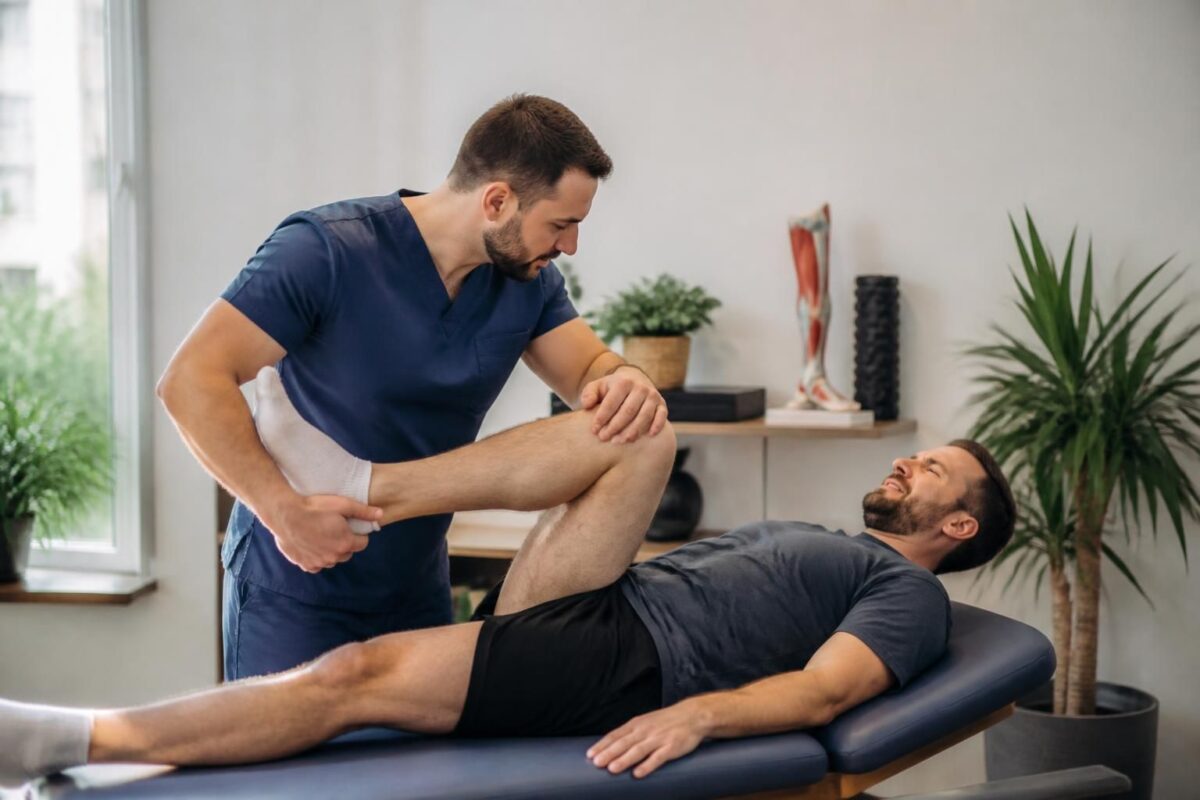
Osteopathy and chronic leg pain: regaining an optimal quality of life
In short In short, Osteopathy is one Global manual approach aimed at reducing Chronic leg pain and improve the quality of life. What is it? Non-drug therapy using the hands to identify restrictions and treat lesional chains. How does it…
Pain reduction and stress management
gentle manipulations stimulate endorphin mechanisms and induce lasting muscle relaxation around the operated area, which results in a pain reduction and an Improved sleep. This approach also contributes to diminishing anxiety related to recovery and stabilizing mental status, facilitating engagement in re-education.
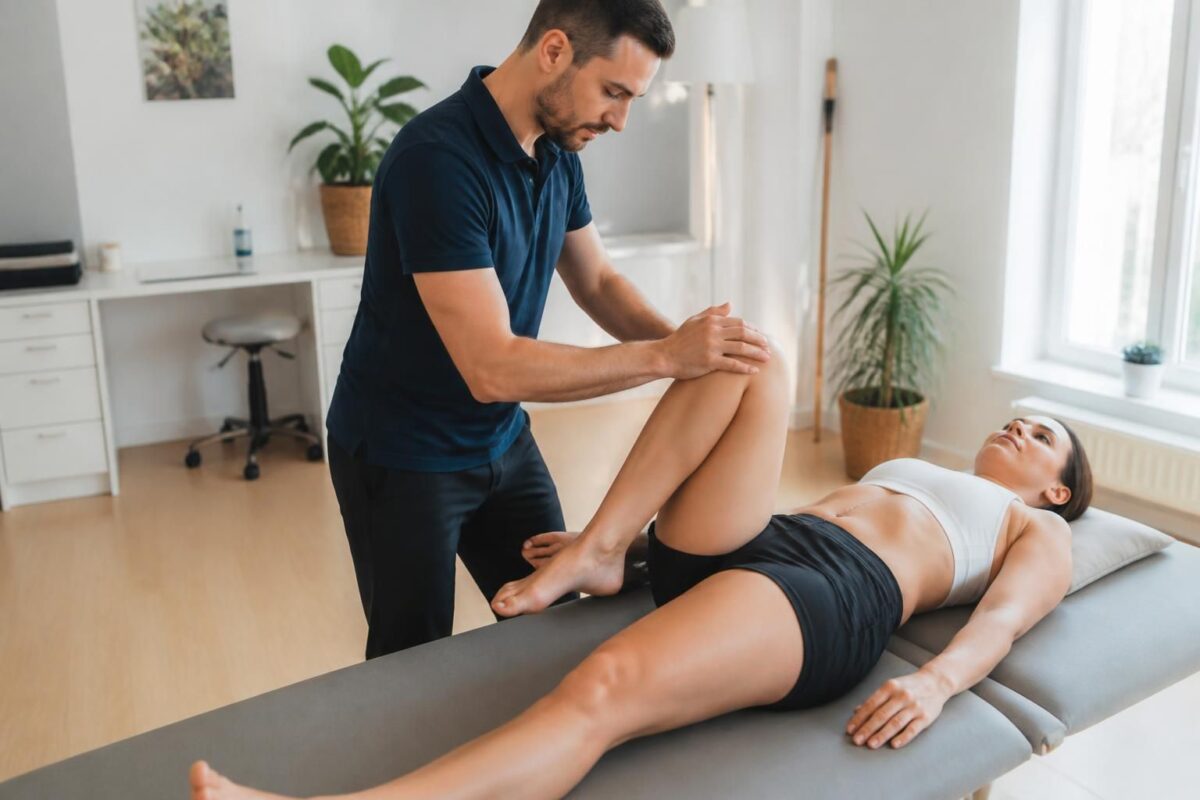
How osteopathy supports recovery after complex surgery
In short In short, Post-operative osteopathy is an approach fresh which supports the recovery After a Complex surgery. It helps to reduce the pain and the fatigue, improves the mobility and accelerates the healing thanks to a better vascularization and…
Impact on healing and prevention of complications
A good vascularization and oxygenation of the tissues are supported by osteopathic techniques, which contributes to a healing more effective and reduced adhesions. By gently mobilizing the affected areas, osteopathy can help prevent complications such as chronic pain or long-term functional limitations, while promoting faster resumption of activities and more serene rehabilitation.
Integration into a rehabilitation program
To optimize the results, osteopathy is part of a Multidisciplinary rehabilitation program Including physiotherapy, medical follow-up and possibly psychological approaches. This collaboration makes it possible to adjust the care to the evolution of each patient and to maximize the impact on the overall recovery.
Resources and Deepening
To go further, you can consult dedicated resources that describe the benefits of osteopathy in postoperative recovery and the underlying mechanisms, including:
- Osteopathy and recovery after surgery
- Techniques to release physical tension
- #ATFP_CLOSE_TRANSLATE_SPAN#How osteopathy can support post-operative recovery
- Why osteopathy is beneficial in postoperative rehabilitation
- Improved musculoskeletal health
- Osteopathy for physically demanding professions
- Pre and postoperative support
- Osteopathy and recovery after sprain
- Osteopathy rehabilitation

Sylvain Desforges, B.Sc., D.O., N.D., docteur en ostéopathie
Dr Sylvain Desforges, B.Sc., D.O., N.D., osteopath, is the founding president of TAGMED and of the ACMA association. He dedicates his practice to chronic spinal pain, low back pain and symptoms compatible with sciatica, particularly when pain radiates toward the buttock, leg, calf, foot or toes.
Through SOS Sciatique, he publishes educational content on sciatica symptoms, possible causes such as disc herniation, disc narrowing, foraminal stenosis or irritation of a lumbar nerve root, as well as non-surgical approaches that may be considered according to the evaluation. At Clinique TAGMED, care may include, depending on the case, motorized neurovertebral decompression, specific osteopathic care or precision percussion.
For an evaluation related to sciatica treatment in Montreal / Mount Royal or sciatica treatment in Terrebonne, please consult the services available at Clinique TAGMED.
Medical disclaimer
The information published on SOS Sciatique is provided for educational purposes only and does not replace a consultation, diagnosis, opinion or treatment provided by a physician or another authorized healthcare professional. The author of this article is neither a medical doctor nor a specialist in a medical specialty recognized by the Collège des médecins du Québec. The osteopathic, manual medicine or functional support approaches described on this site do not constitute medical acts and are not intended to replace medical follow-up.
Consult a physician or emergency service in cases of loss of bladder or bowel control, anesthesia in the saddle area, significant or progressive weakness in the leg or foot, fever, recent trauma, severe pain or rapid worsening of symptoms. For more details, please read our Legal Notice.