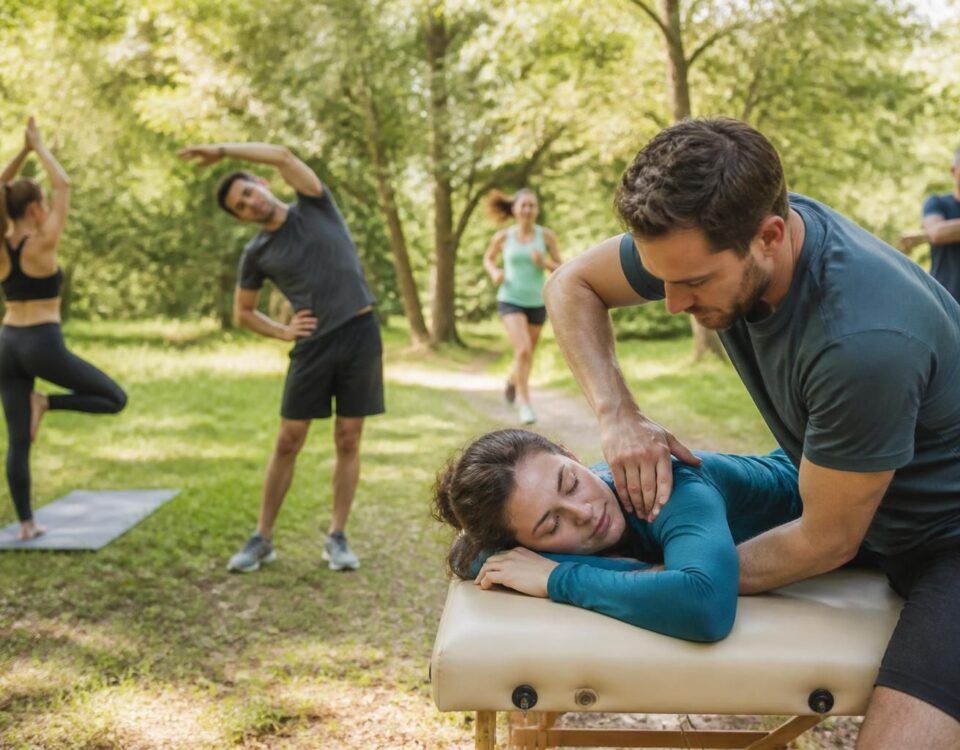
Osteopathy and sports recovery: prevent recurrent injuries
28/06/2026
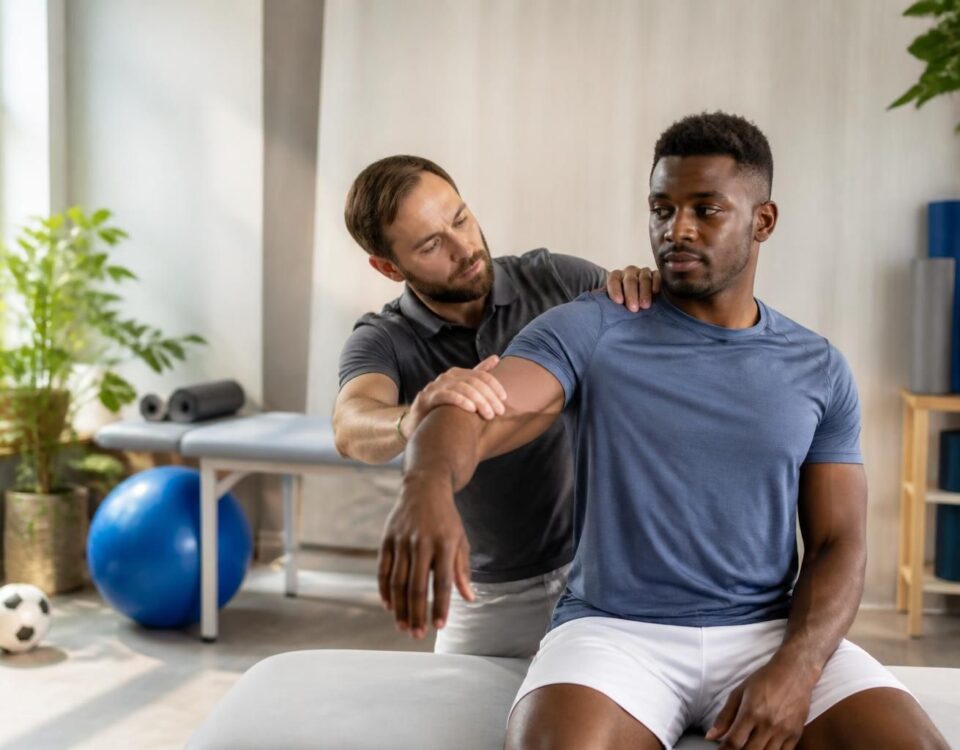
How osteopathy acts on inflammatory pain
28/06/2026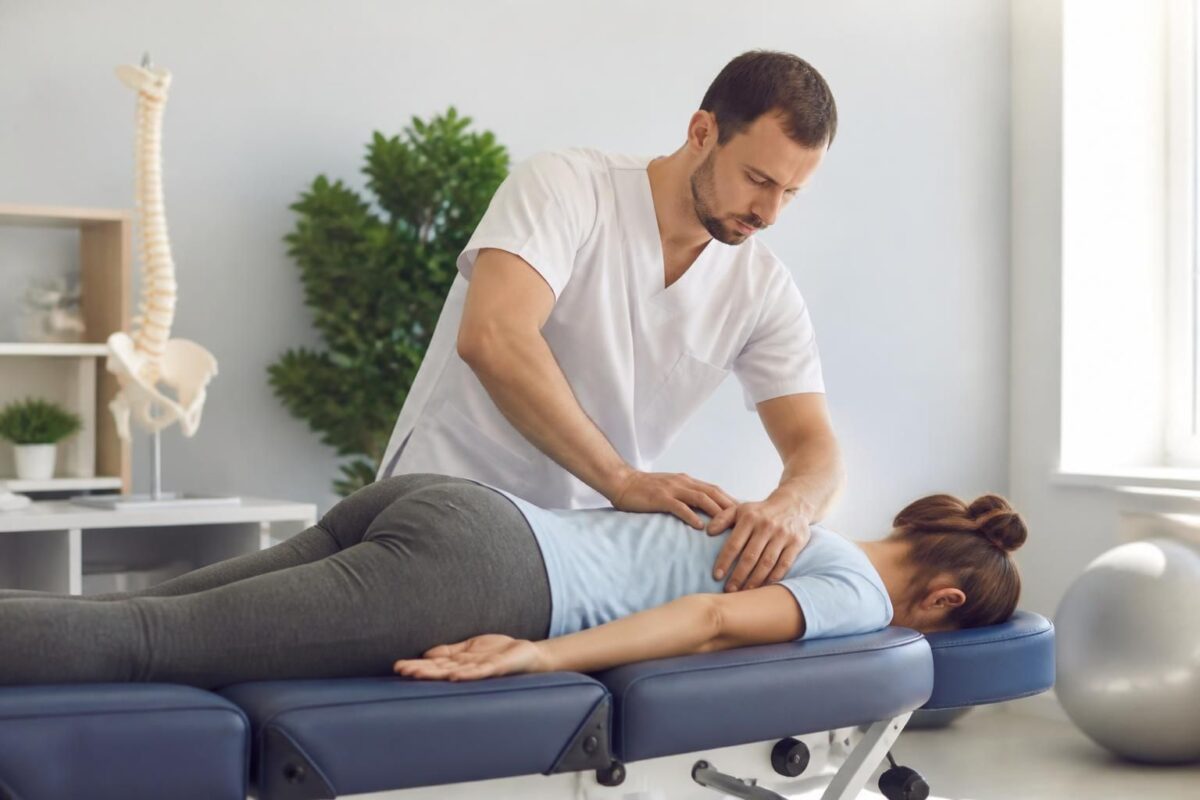
In short
| In short, theosteopathy in rehabilitation is an approach manual and overall which promotes the mobility, reduces the pain and supports the recovery after injury or surgery. What is it? a discipline that evaluates the body as a whole and acts on the Functional causes rather than on a single symptom. What are the advantages? Improvement of the mobility, reduction of pain, and welfare General. How does it work? A listening and an evaluation initials, then adapted gestures (soft mobilizations, work myofascial) and personalized advice; possible coordination with other professionals. In Montreal, this service is particularly useful for the Post-traumatic rehabilitation and overall recovery, while remaining non-invasive and safe. |
Osteopathy is a valuable approach for people in rehabilitation because it acts on body unity and stimulates Self-healing To facilitate recovery after injury, surgery or immobilization period.
- Overall assessment To identify the restrictions that hinder rehabilitation and adjust the treatment according to your course.
- Soft manual techniques and adapted to restore mobility, reduce pain and promote normal muscle and joint function.
- Functional advice and simple exercises at home that accelerate progress and support rehabilitation.
- Approach complementary to medical follow-up, which optimizes recovery without replacing the treatments necessarily indicated.
This article, written by a health professional expert in osteopathy, explains why osteopathy is essential for people in rehabilitation. It describes the foundations, benefits and role of osteopathy in recovery after injury, surgery, or musculoskeletal pain. The objective is to clarify the functioning of the approach and to help choose a competent practitioner.
An approach centered on body unity and mobility
theosteopathy considers the body as an interdependent whole. The practitioner performs a Overall assessment And researches the functional cause of the disorders, not just the local symptom. This logic makes it possible to guide rehabilitation in a coherent and lasting way.
Techniques adapted to each patient
The gestures used vary according to the patient’s history and objectives. We favor Soft joint mobilizations, of Myofascial releases and, when indicated, approaches cranio-sacral or visceral. The treatment is adjusted to each situation, with particular attention paid to patient tolerance and safety.
The role of the practitioner in the context of a multidisciplinary rehabilitation
Osteopathy is part of a coordinated care setting with other professionals. The practitioner can collaborate with doctors, physiotherapists and other stakeholders to support recovery. The training and professional framework respect the reference standards, in particular via recognized structures such as NUMSS, NAO, National University of Medical Sciences and National Academy of osteopathy. Professional associations such as ACMA and the College of Canadian Osteopaths oversee practice and ethics.
What can osteopathy bring during rehabilitation
In concrete terms, osteopathy can contribute to Reduce the pain, to Improve mobility and optimize the fabric environment to promote recovery. This approach can also support sleep and stress management, which facilitates the rehabilitation process and return to activity.
When to consult and how to prepare
A consultation may be considered after an injury, surgery or during a complex rehabilitation process. The practitioner explains the envisaged actions and goals, and obtains informed consent. Clear communication and a relationship of trust are essential.
Limitations and security
Osteopathy does not replace a medical diagnosis. It is practiced in compliance with contraindications and may require referral to a doctor or specialist when necessary. Patient safety is a priority in every session.
Resources and references
To deepen, several information resources remain relevant. For example, resources dedicated to the importance of osteopathy for active people and the re-education benefits can be viewed at the following sites:
Why osteopathy is essential for active people
The benefits of osteopathy to reduce sciatic pain
How Osteopathy Supports Recovery After Tendinitis
Osteopathy and joint mobility: regaining freedom of movement
For general information on osteopathy and its role in rehabilitation, you can consult Tagmed Clinic.
Quick Comparison Table
| Therapy | Efficiency in rehabilitation | remarks |
|---|---|---|
| osteopathy | High for mobility and pain | Global and personalized approach |
| Physiotherapy | Average to variable depending on the case | recognized utility, but may be less suitable without a global approach |
For more information on specific mechanisms and indications, additional resources exist on the sites below, in particular in areas dealing with neurovertebral decompression and associated pathologies:
Herniated disc and rehabilitation
Carpal tunnel syndrome and rehabilitation
Medical Disclaimer: The information and advice provided on this site does not replace the health professional’s diagnosis or treatment. Please note that Sylvain Desforges osteopath is neither a doctor of medicine nor a doctor, and is not a specialist in a medical specialty as defined by the Collège des Médecins du Québec. Manual medicine, functional medicine and sports medicine as described on this site exclude any medical treatment or diagnosis made by a doctor or specialist doctor. Always consult your doctor for any medical questions. For more details, please read our full legal notice.
Why osteopathy is essential for people in rehabilitation
- pain reduction and mobility found to resume daily activities.
- Stabilization and Engine control improved for rehabilitation actions.
- compensation prevention and postural imbalances.
- Functional support daily activities and rehabilitation exercises.
- Adaptability of the protocol according to the stage and the objectives.
- Multidisciplinary collaboration For a consistent and effective journey.
- Preparation for effort and recovery improved after the sessions.
- Autonomy and security reinforced thanks to personalized support.

losteopathy is an essential approach in re-education Because it favors a global vision of the body to restore mobility, support recovery and prevent relapses. This article offers practical recommendations to understand why it is useful and how it can be integrated harmoniously into the care pathway.
An approach centered on body unity and rehabilitation
As part of rehabilitation, losteopathy is based on the idea that the body functions as a whole. By rebalancing tensions, improving tissue mobility and optimizing circulation, it helps to restore natural self-regulation and healing mechanisms.
Overall assessment and differential diagnosis
During the first consultation, the osteopath carries out a Overall assessment which exceeds the painful area. By observing posture, joint mobility and relationships between systems, it identifies root causes and distinguishes local pain from a wider imbalance affecting, for example, the diaphragm, fascias or the nervous system.
Adapted techniques and gestures in rehabilitation
The gestures are chosen according to the patient and his stage of rehabilitation. We favor Sweet mobilizations To restore joint slippage, techniques myofasciales To release tensions in connective tissues, and, when relevant, cranio-sacral or visceral approaches. The practitioner also combines postural work and muscle strengthening tips to support recovery.
Role of advice and self-management
Beyond the gestures, the osteopath offers exercises to do at home, ergonomic recommendations and sleep and stress management strategies. this dimension self-management Increases treatment efficacy and promotes a gradual resumption of daily activities.

How osteopathy improves the quality of life of active people
In short In short, theosteopathy is a global approach that Optimizes mobility and the function of the body of ACTIVE PEOPLE, for a better quality of life. It helps prevent injury and reduce Musculoskeletal pain While promoting the Sports recovery.…

Osteopathy and sports recovery: prepare the body for lasting performance
In short In short, Osteopathy and Sports recovery is one Global manual approach that sustainably prepares the body for the effort by restoring mobility and circulation After the effort. It is a discipline that acts on the sinews, the joints,…
Integration of osteopathic gestures in the rehabilitation course
Integrating osteopathy into the rehabilitation course optimizes critical recovery phases, reduces pain and improves coordination between musculoskeletal tissues and the nervous system. This approach promotes a more fluid resumption of movements and sports or professional activities.
Mobilizations, releases and strengthening
The techniques used are intended to release movement limitations and prevent compensation that may appear after injury or surgery. At the same time, targeted exercises strengthen muscle groups and improve balance, which are essential to stabilize functional progression.
Non-manual approaches and recovery strategies
Advice on diet, sleep and stress management complements the technical gestures. These factors influence recovery, exercise tolerance and overall patient resilience over time.
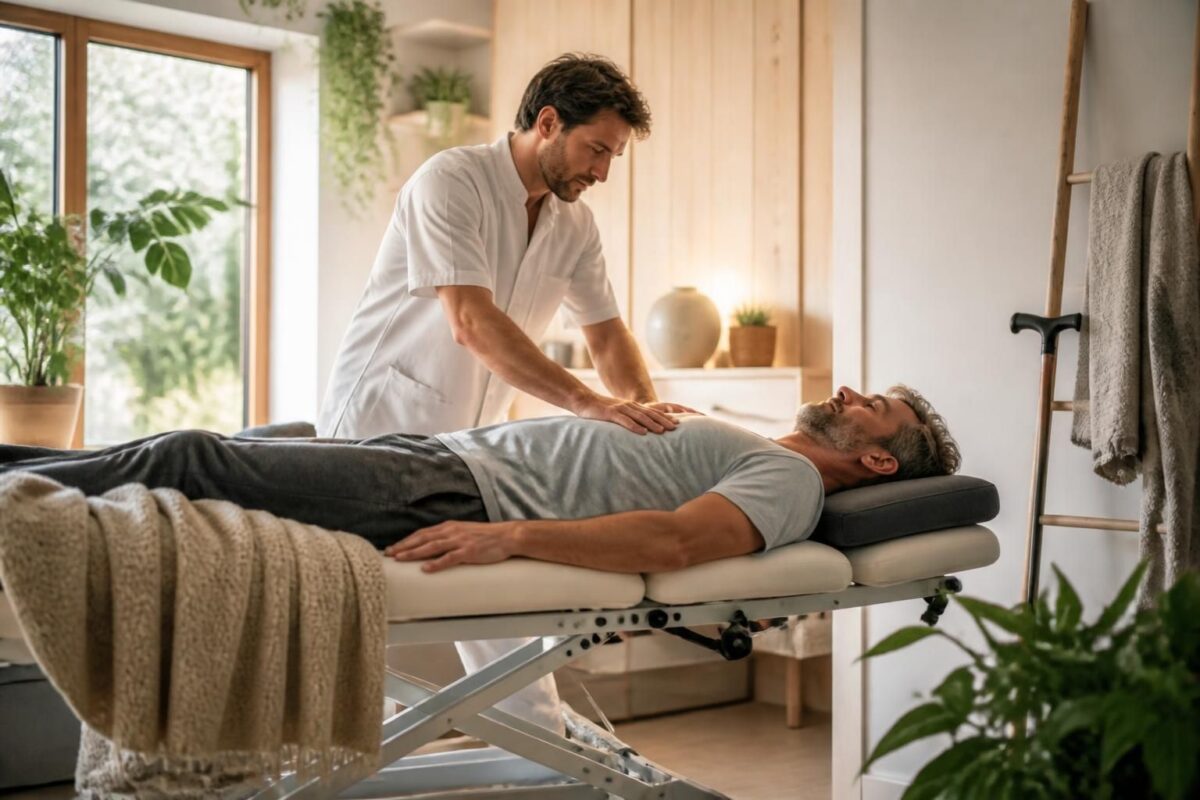
Why Osteopathy Is Essential For Recovery People
In short In short, Osteopathy in convalescence is an approach manual and holistic which helps to accelerate the recovery by restoring The balance, the mobility and a good circulation fabrics. it contributes to Reduce the pain, support the Back to…

Osteopathic manipulations to strengthen post-traumatic muscles
In short In short, Osteopathic manipulations for Strengthen post-traumatic muscles constitute a gentle manual approach aimed at restoring the mobility, reduce the pain and facilitate the Functional rehabilitation After a injury. What is Is it? A series of precise gestures…
Security, framework and collaboration
Patient safety is at the heart of the practice. Osteopathy is practiced within the framework of professional ethics and informed consent. The work is done in complementarity with other health professionals for consistent and adapted care for each rehabilitation course.
Role of the patient and respect of contraindications
The patient is an actor in his recovery: he communicates his feelings, respects the contraindications and engages in the proposed rehabilitation plan. This collaboration maximizes the effectiveness of treatments and reduces risks.

Osteopathy and prevention of work-related musculoskeletal disorders
In short theosteopathy is one Manual approach that restores body balance and prevents MSD related to work. Its advantages: reduction of tension, improvement of mobility and prevention of chronic pain. She is preventive and healing, suitable for office and trades…

The benefits of osteopathy to treat muscle imbalances
In short theosteopathy is a manual approach to restore themuscle harmony and postural considering the body as a whole. Its main benefits include the reduction of aches and tensions, the improvement of the mobility and from the posture, and prevention…
When to consider osteopathy in rehabilitation
In periods of rehabilitation, osteopathy can occur after an acute injury to facilitate recovery, after surgery to optimize the return to mobility, or when a patient experiences persistent pain without obvious cause. In any case, it is an active support for functional restoration and well-being.
| Aspect | Impact in rehabilitation |
|---|---|
| Overall assessment | Identify theFunctional origin and guide it rehabilitation plan. |
| pain reduction | Releases tension and allows you to undertake exercises with More comfort. |
| Improving mobility | Release restrictions and restoreJoint amplitude. |
| Progress and follow-up | accompanies throughout the course with gestures suitable and secure progress. |
| Self-healing stimulation | Supports the mechanisms ofself-regulation body for effective recovery. |
| relapse prevention | transmission of gestures and postures to limit relapses. |
| Program Customization | Adaptation of techniques and exercises to your objective and to your pace. |
| Security and Ethics | informed consent and adaptation of gestures according to contraindications. |
| Multidisciplinary collaboration | Coordination with doctor, physiotherapist and other professionals for a Full support. |
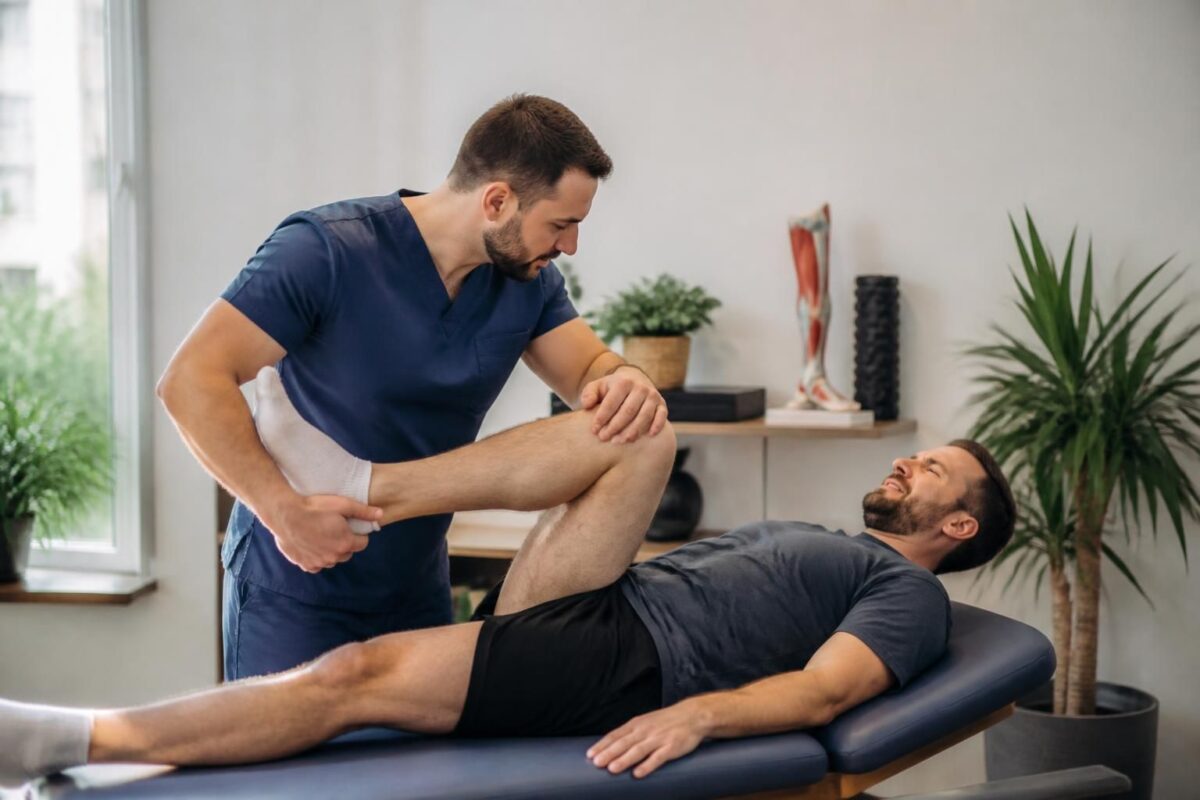
Osteopathy and chronic leg pain: regaining an optimal quality of life
In short In short, Osteopathy is one Global manual approach aimed at reducing Chronic leg pain and improve the quality of life. What is it? Non-drug therapy using the hands to identify restrictions and treat lesional chains. How does it…
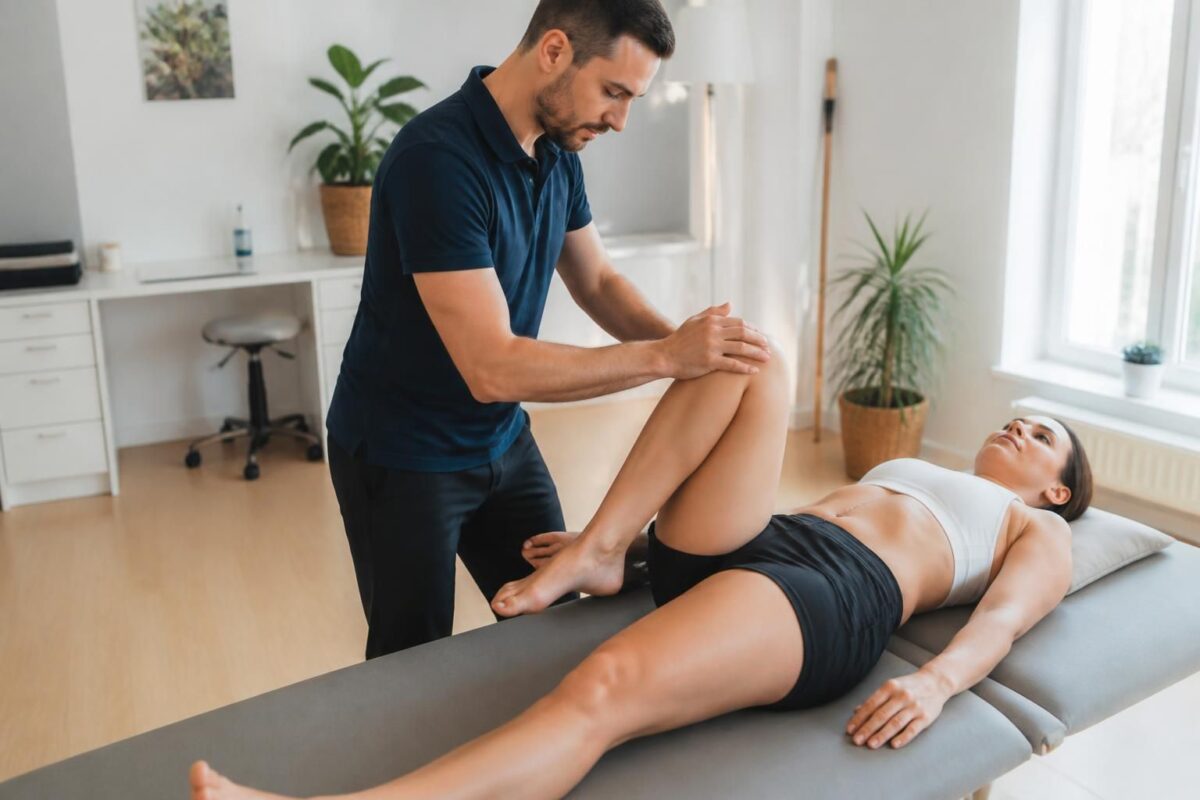
How osteopathy supports recovery after complex surgery
In short In short, Post-operative osteopathy is an approach fresh which supports the recovery After a Complex surgery. It helps to reduce the pain and the fatigue, improves the mobility and accelerates the healing thanks to a better vascularization and…
Testimonials: why osteopathy is essential in rehabilitation
Marie, 42, in rehabilitation after an ankle fracture, testifies: “Before my rehabilitation course, each step was painful and I was afraid of not moving freely. theosteopathy allowed me to spot unsuspected tensions and, thanks to an accompaniment personalized, to find a mobility sustainable and a confidence in my abilities. »
Paul, 35, in rehabilitation after knee arthroscopy, underlines: “What convinced me was the approach overall and attentive listening to the practitioner. theosteopathy balanced tensions around the knee and integrated simple exercises that I can do at home, which accelerates my recovery. »
Léa, 60, in rehabilitation after arthritic disorders, shares: “I found a mobility and an pain reduction without depending solely on drugs. The approach personalized And the daily posture and exercise advice helped me to resume my daily activities. »
Emma, 28, in rehabilitation after a sprain, explains: “Theosteopathy Helped me avoid repeated sessions without progression. The practitioner took the time to explain the gestures and integrated sessions of strengthening and ofPostural education which facilitate the return to my sports activities. »
Thomas, 16, in rehabilitation after a sports injury, concludes: “We immediately feel that the objective is not only to block the pain, but to work the coordination and the stability to prevent recurrences. Thanks to the team and the approach holistic, I am more confident in my recovery. »
Sylvain Desforges, expert in osteopathy, Naturopathy and manual medicine, is the founding president of TagMed and the ACMA association. With a career dedicated to innovation in health care, he specializes in the management of chronic pain and the integration of advanced technologies such as decompression vertebral, the laser and shockwave therapy. Its mission is to offer evidence-based care in order to optimize the health and well-being of its patients, particularly in the re-education.
As part of the re-education, theosteopathy appears as an essential lever to restore the function, reduce limitations and promote sustainable recovery. Dr. Desforges takes a holistic approach that considers the body as a united system, where fascial tensions, respiratory mechanisms and the nervous system can influence the pain and the mobility.
The evaluation of a patient in rehabilitation is global: anamnesis, posture, mobility of the joints, and relationships between the systems. This approach makes it possible to identify root causes such as mobility restrictions, postural imbalances or visceral and neuromuscular dysfunctions, in order to propose an adapted and progressive care plan.
The techniques used include Soft joint mobilizations, of Myofascial releases, and functional recovery approaches combining postural advice and specific exercises. The approach is personalized: each gesture adapts to the patient’s history, to its stage of rehabilitation and to its objectives, to support a gradual return to daily and sporting activities.
The integration of advanced technologies offers an additional dimension: decompression vertebral to alleviate pressure, laser To promote tissue recovery and shock waves to stimulate repair and traffic. Used at the right time and according to the clinical evaluation, these options complement manual gestures and accelerate the rehabilitation process.
Beyond the technical gesture, the message also focuses on safety and ethics: informed consent, appropriate progress and work in collaboration with other care professionals. The goal is to reduce the pain, to improve the mobility and pave the way for a autonomy sustainable in daily and sporting life.
In summary, theosteopathy Dedicated to re-education Offers a human and structured approach that promotes functional recovery, while accompanying the patient towards a better quality of life. To learn more about the approach and services available, contact Clinique TagMed.
This approach osteopathic is essential for people in re-education Because it proposes a global approach, centered on the body as a whole, and aims to restore the mechanisms of self-healing. favoring the mobility tissues and structures, it has the effect of reducing pain, improving function and supporting a gradual resumption of activities. This article highlights why osteopathy stands out as a pillar in rehabilitation courses and how it can be effectively integrated into multidisciplinary care.
As part of the re-education, osteopathy acts on functional causes and imbalances that can limit recovery after injury, surgery or intense effort. It is based on a Overall assessment and a logic of clinical reasoning that favors the interactions between the musculoskeletal, nervous and visceral systems. By acting on tensions, fascias and joints, it facilitates the circulation of fluids and promotes better muscle coordination, which can accelerate the return to autonomy and normal activity.
Several technical levers enter the osteopathic arsenal during a rehabilitation program. Among them, the gentle mobilizations of the joints make it possible to restore the sliding of surfaces and to improve mobility, while myofascial techniques release the tensions linked to the fascias and connective tissues. More specific approaches, such as cranio-sacral or visceral techniques, can be proposed on indication, in addition to a targeted rehabilitation plan. Finally, postural work and muscle strengthening and balance advice complete the treatment to sustain progress.
For people in rehabilitation, osteopathy can contribute to more effective recovery after intense physical exertion and relapse prevention, by acting on neuromuscular coordination and body stability. It can also support the management of joint and muscle pain as part of a global movement plan, as suggested by the resources dedicated to the personalized management of leg pain and recovery after exercise (Custom support, Recovery after an effort). To better understand the principles and benefits, you can consult the specialized resources (Principles and benefits).
It is important to remember that osteopathy acts in addition to medical care. In rehabilitation, it is based on principles of safety and ethics, with an evaluation adapted to each patient and a progression adapted to the state of health, age and objectives. To learn more about application contexts and associated approaches, resources such as technical guides and reference files provide useful insights (Osteopathy – Cinga, Osteopathy – for whom and why). For athletes and people in post-operative rehabilitation, resources document the benefits and secure protocols (Osteopathic rehabilitation – Safety, postoperative).
In practice, to get the most out of osteopathy in rehabilitation, it is recommended to choose a practitioner adapted to your needs, to establish a clear communication on the objectives and gestures proposed, and to integrate the osteopathic intervention into a global plan including exercises at home, adapted lifestyle and follow-up with other health professionals. Additional resources and testimonies help to shed light on this journey and optimize long-term results (Joint pain – Solutions, Sports injuries). Finally, articles and reference guides explain how osteopathy can be integrated into a proactive approach to aging and resuming activities, with a focus on safety and effectiveness (Active aging).

Sylvain Desforges, B.Sc., D.O., N.D., docteur en ostéopathie
Dr Sylvain Desforges, B.Sc., D.O., N.D., osteopath, is the founding president of TAGMED and of the ACMA association. He dedicates his practice to chronic spinal pain, low back pain and symptoms compatible with sciatica, particularly when pain radiates toward the buttock, leg, calf, foot or toes.
Through SOS Sciatique, he publishes educational content on sciatica symptoms, possible causes such as disc herniation, disc narrowing, foraminal stenosis or irritation of a lumbar nerve root, as well as non-surgical approaches that may be considered according to the evaluation. At Clinique TAGMED, care may include, depending on the case, motorized neurovertebral decompression, specific osteopathic care or precision percussion.
For an evaluation related to sciatica treatment in Montreal / Mount Royal or sciatica treatment in Terrebonne, please consult the services available at Clinique TAGMED.
Medical disclaimer
The information published on SOS Sciatique is provided for educational purposes only and does not replace a consultation, diagnosis, opinion or treatment provided by a physician or another authorized healthcare professional. The author of this article is neither a medical doctor nor a specialist in a medical specialty recognized by the Collège des médecins du Québec. The osteopathic, manual medicine or functional support approaches described on this site do not constitute medical acts and are not intended to replace medical follow-up.
Consult a physician or emergency service in cases of loss of bladder or bowel control, anesthesia in the saddle area, significant or progressive weakness in the leg or foot, fever, recent trauma, severe pain or rapid worsening of symptoms. For more details, please read our Legal Notice.