




Sylvain Desforges, osteopath: experience in neurovertebral decompression
A practice dedicated to spinal pain, symptoms compatible with sciatica, and the assessment of non-surgical approaches tailored to each individual.
Sylvain Desforges, B.Sc., D.O., N.D., has been practicing in the field of manual medicine since 1991 and has used neurovertebral decompression since 2007. He sees patients at the TAGMED clinics in Montreal/Mont-Royal and Terrebonne.
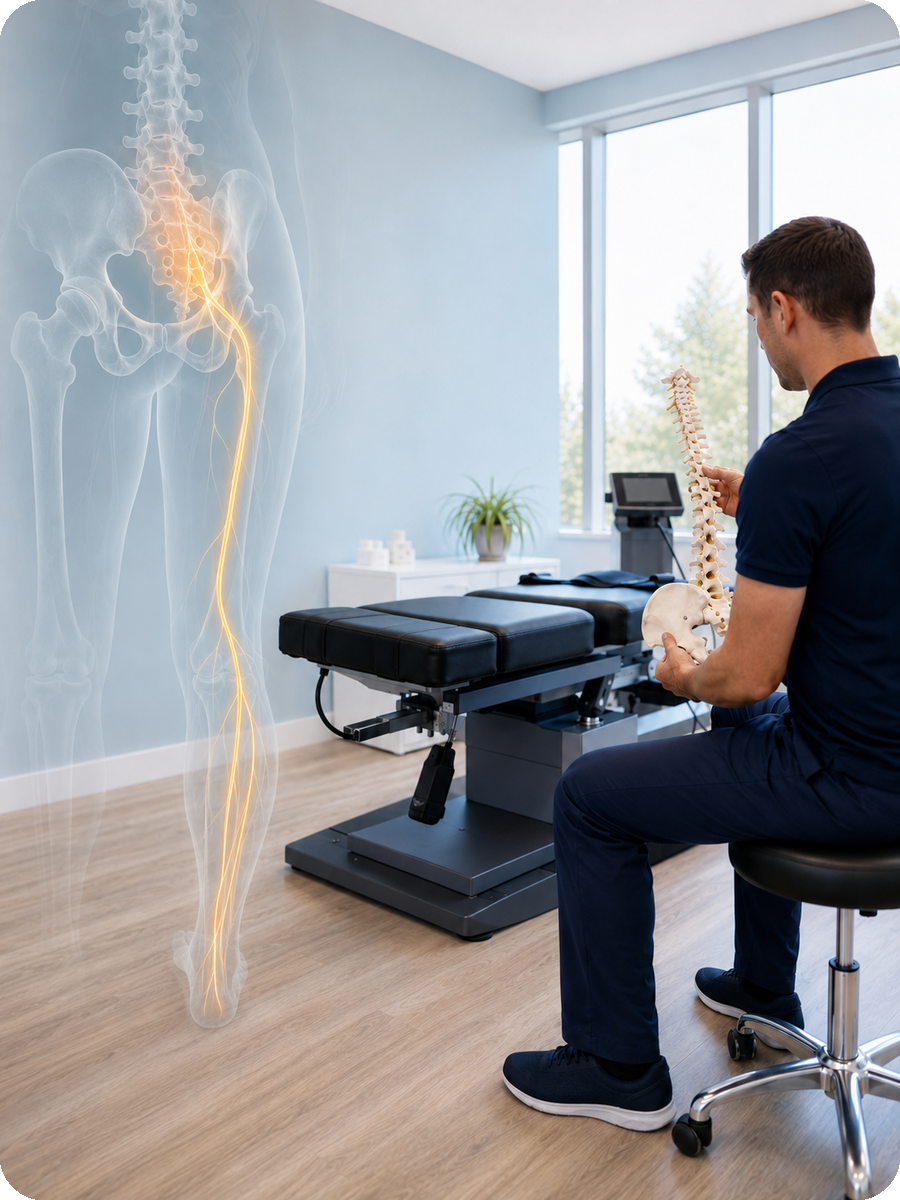
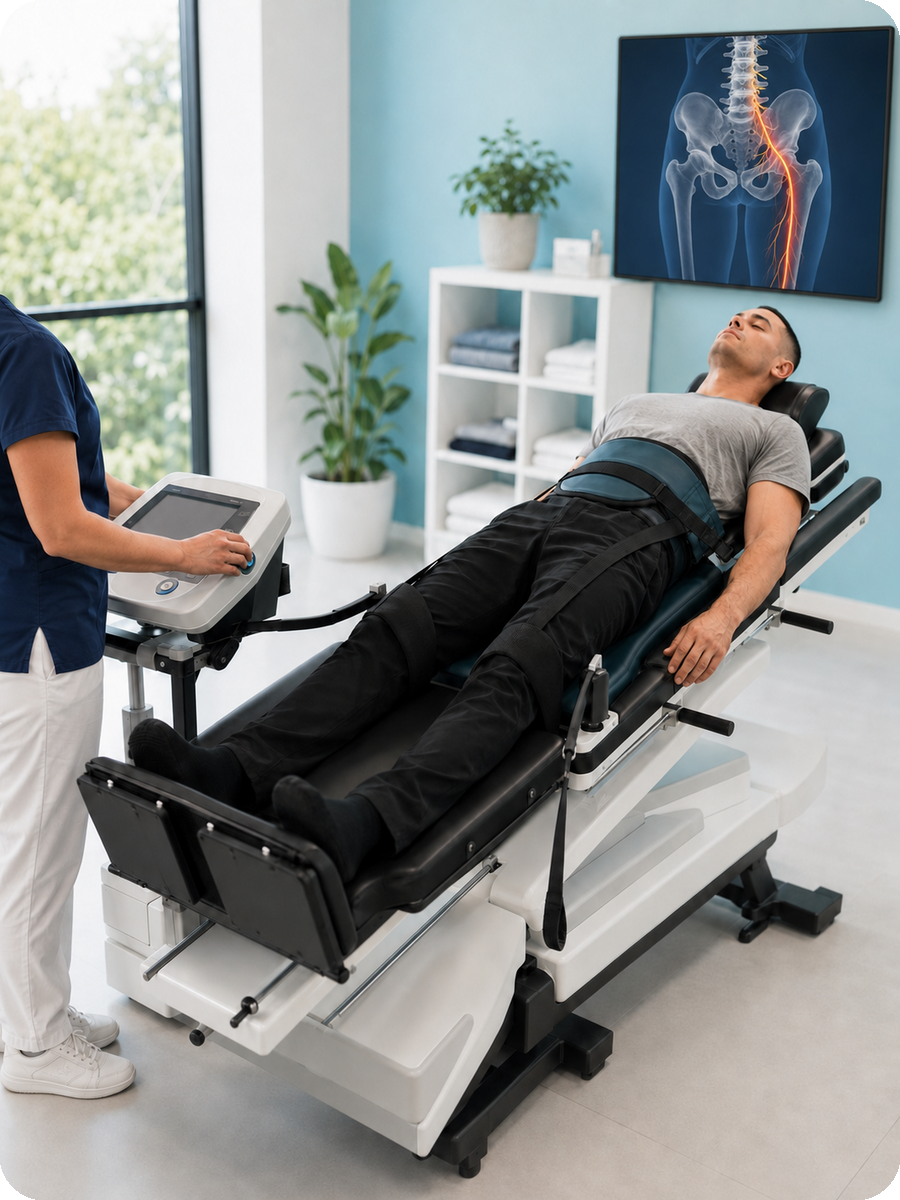
A pathway focused on the spine and chronic pain
Sylvain Desforges focuses a significant part of his practice on lumbar and cervical pain, symptoms radiating down the leg, pain associated with certain disc injuries, and persistent functional limitations.
He is also presented as the founding president of the ACMA Association. His professional profile mentions training in osteopathy and naturopathy as well as a diploma from FIFA in football medicine. These elements describe his background; they do not grant him the status of a doctor in Quebec.
- Osteopathy and manual medicine.
- Motorized neurovertebral decompression since 2007.
- Evaluation of mechanical and functional factors.
- Experience with patients presenting persistent spinal pain.
- Publication of educational content on sciatica and spinal health.
An assessment before any treatment proposal
Back pain or pain radiating down the leg can have several causes. Therefore, decompression should not be proposed solely based on a symptom, an X-ray, or an MRI taken in isolation.
Understanding
Review the onset of symptoms, their progression, aggravating positions, sleep, work, and treatments already attempted.
Examine
Observe mobility, walking, strength, sensitivity, and reactions to movements within the limits of the scope of practice.
Check Eligibility
Compare symptoms with available examinations and look for contraindications or signs that require a doctor.
Reassess
Monitor pain, function, and tolerance, then modify or discontinue the approach if progress is not favorable.
What is motorized neurovertebral decompression?
Neurovertebral decompression is a form of controlled mechanical traction applied to the lumbar or cervical spine using a specialized table. The protocol may vary depending on the device, the treated area, the force used, the duration, and the patient’s response.
The declared clinical objective is to temporarily modify the mechanical constraints felt in the spine and improve functional tolerance in certain individuals. It does not automatically ‘reposition’ a disc, does not guarantee its regeneration, and is not suitable for all causes of pain.
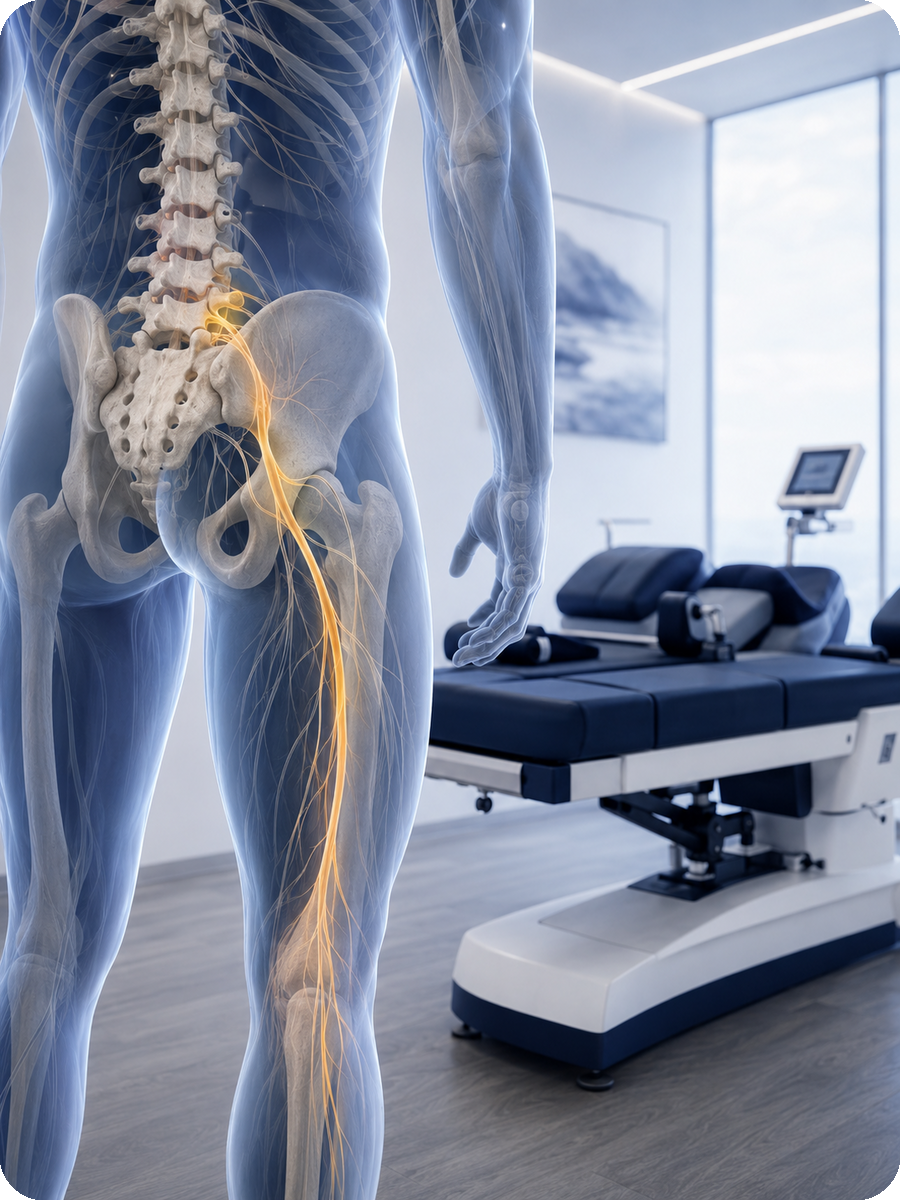
In what situations can this approach be discussed?
The presence of a herniated disc or a degenerative change on an image is not sufficient to determine treatment. Symptoms, function, examination, and evolution must be consistent.
| Situation | What needs clarification | Cautious guidance |
|---|---|---|
| Low back pain with radiation | Pathway, numbness, weakness, aggravating factors, and duration. | Clinical evaluation prior to any mechanical intervention. |
| Hernia or disc protrusion known | Correlation between imaging, the affected side, and symptoms. | Compare activity, rehabilitation, and other options with decompression. |
| Stenosis or degenerative changes | Walking tolerance, standing position, weakness, and progression. | Seek medical advice when symptoms are significant or evolving. |
| Cervical pain radiating into the arm | Strength, sensitivity, coordination, trauma, and neurological signs. | Exclude situations requiring medical investigation. |
Safety, limits, and contraindications
A careful selection of patients is essential. The following list is general and does not replace the individualized assessment by a licensed professional.
Situations to report
Recent fracture, recent spinal surgery, significant osteoporosis, active inflammatory disease, pregnancy, or implanted medical device.
Medical guidance
Suspected infection, tumor, fracture, progressive neurological deficit, or unexplained general symptoms.
Stop and reevaluation
Pain that worsens, increasing numbness, new weakness, discomfort, or lasting aggravation after a session.
Request an evaluation at the TAGMED Clinic
A first consultation aims to clarify the reason, symptoms, available tests, and options that can be discussed. Services are not covered by RAMQ. Osteopathy receipts may be issued, and their eligibility depends on the patient’s insurance contract.
The TAGMED Clinic does not offer physiotherapy, chiropractic, injections, naturopathy, or functional medicine as part of the treatments for sciatica presented on SOS Sciatica.
TAGMED Clinic Terrebonne
1150 Lévis Street, Suite 200
Terrebonne, QC, J6W 5S6
Phone: 450-704-4447
Regular availability: Monday, Wednesday, and Friday
TAGMED Clinic Montreal / Mont-Royal
1140 Beaumont Avenue
Mont-Royal, QC, H3P 3E5
Phone: 1-877-672-9060
Regular availability: Tuesday and Thursday
Sources and information verification
The experience dates and professional information above come from the public profiles of Sylvain Desforges and Clinique TAGMED. The fictitious or unidentifiable claims from the old page, including the references « Doe », « Smith » and « Brown », have been removed.
Professional profile
Clinical recommendation
NICE NG59 — Low back pain and sciatica: recommendations
This recommendation is cited to honestly present the position of an independent organization on traction, activity, exercise, and manual therapies.
Frequently asked questions
Is Sylvain Desforges a doctor?
No. He is presented as an osteopath, B.Sc., D.O., N.D. He is neither a doctor nor a specialist in a medical specialty recognized by the Collège des médecins du Québec.
Since when has he been using neurovertebral decompression?
His professional profile indicates that he has been using neurovertebral decompression since 2007.
Is decompression suitable for all disc hernias?
No. The presence of a hernia on imaging is not enough. Symptoms, examination, progression, contraindications, and other options must be considered.
Can decompression guarantee recovery?
No. No results can be guaranteed. The response varies and the absence of improvement should lead to reevaluation.
Is a medical prescription necessary?
The administrative procedure depends on the service and the situation. A medical consultation remains necessary when a diagnosis, prescription, investigation, or warning sign exceeds the scope of osteopathy practice.
What documents should be brought to the first consultation?
Bring, if available, imaging reports, a list of medications, previous diagnoses, and a summary of treatments already tried.
Are treatments covered by RAMQ?
No. Services are not covered by RAMQ. Osteopathy receipts can be provided; check their eligibility directly with your insurer.
Would you like to know if this approach can be discussed?
An evaluation can help clarify your situation, necessary precautions, and reasonable options. In the presence of progressive weakness, urinary or bowel issues, saddle anesthesia, fever, significant trauma, or rapid deterioration, consult a medical service first.
Sylvain Desforges, B.Sc., D.O., N.D., osteopath
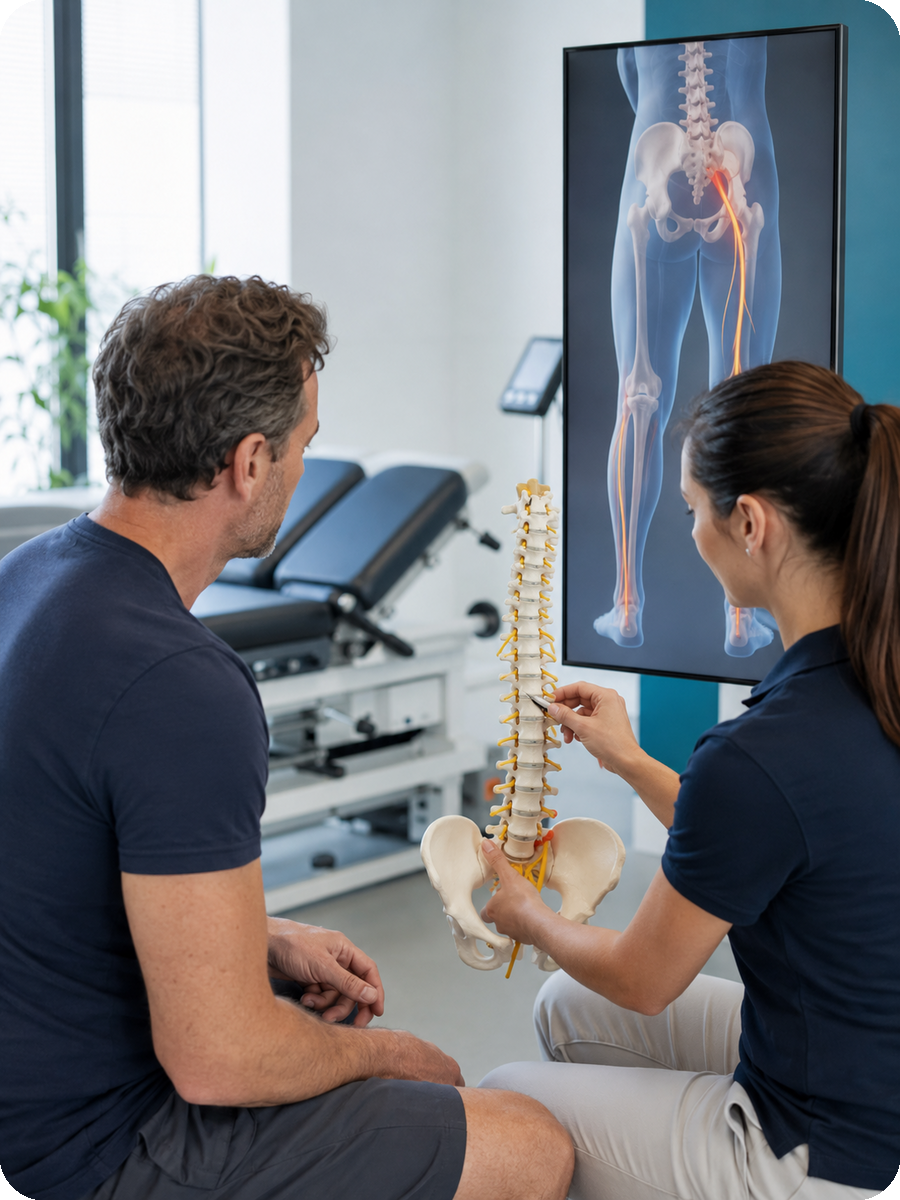
Editorial information, sources and limitations
This content is intended to inform patients about sciatica, possible causes, warning signs, and care options. It does not replace an individualized assessment.
Reference sources
References are selected according to the subject of the page: guidelines, systematic reviews, then institutional resources.
- NICE NG59 – Low back pain and sciatica in over 16s — National guideline
- HAS – Management of patients with common low back pain — French national guideline
- Cochrane – Corticosteroid injections for treatment of sciatica — Systematic review
- NCBI Bookshelf – Sciatica — Clinical institutional resource
Complementary resources from the TAGMED network
These internal resources complement the clinical information and thematic linking. They do not replace national guidelines or systematic reviews.
Editorial note on decompression
Clinical resource from the TAGMED network; it does not replace national guidelines. Some guidelines use the term “traction” and recommend caution for low back pain with or without sciatica. Any decompression option should therefore be presented as an individualized clinical approach, with limitations, indications, and contraindications clearly explained.
Limitations of this information
The information on this page is general. It does not constitute a diagnosis, prescription, or guarantee of results. Pain radiating into the leg may have several causes; assessment should consider clinical history, examination findings, symptom progression, and, when appropriate, complementary tests.
When to seek urgent medical care
Seek urgent medical care if you experience loss of bladder or bowel control, saddle anesthesia, major or progressive leg weakness, unexplained fever, pain after significant trauma, or severe pain that rapidly worsens.
