


Sciatica and back twist: why some rotational movements aggravate the pain
A back twist can sometimes trigger or aggravate sciatic pain, especially when combined with trunk flexion, load lifting or sudden movement.
Torsion is not automatically dangerous. She becomes especially worrying when she lowers the pain in the buttocks, the back of the thigh, the calf, the foot or the toes, or when she increases tingling, numbness or weakness.
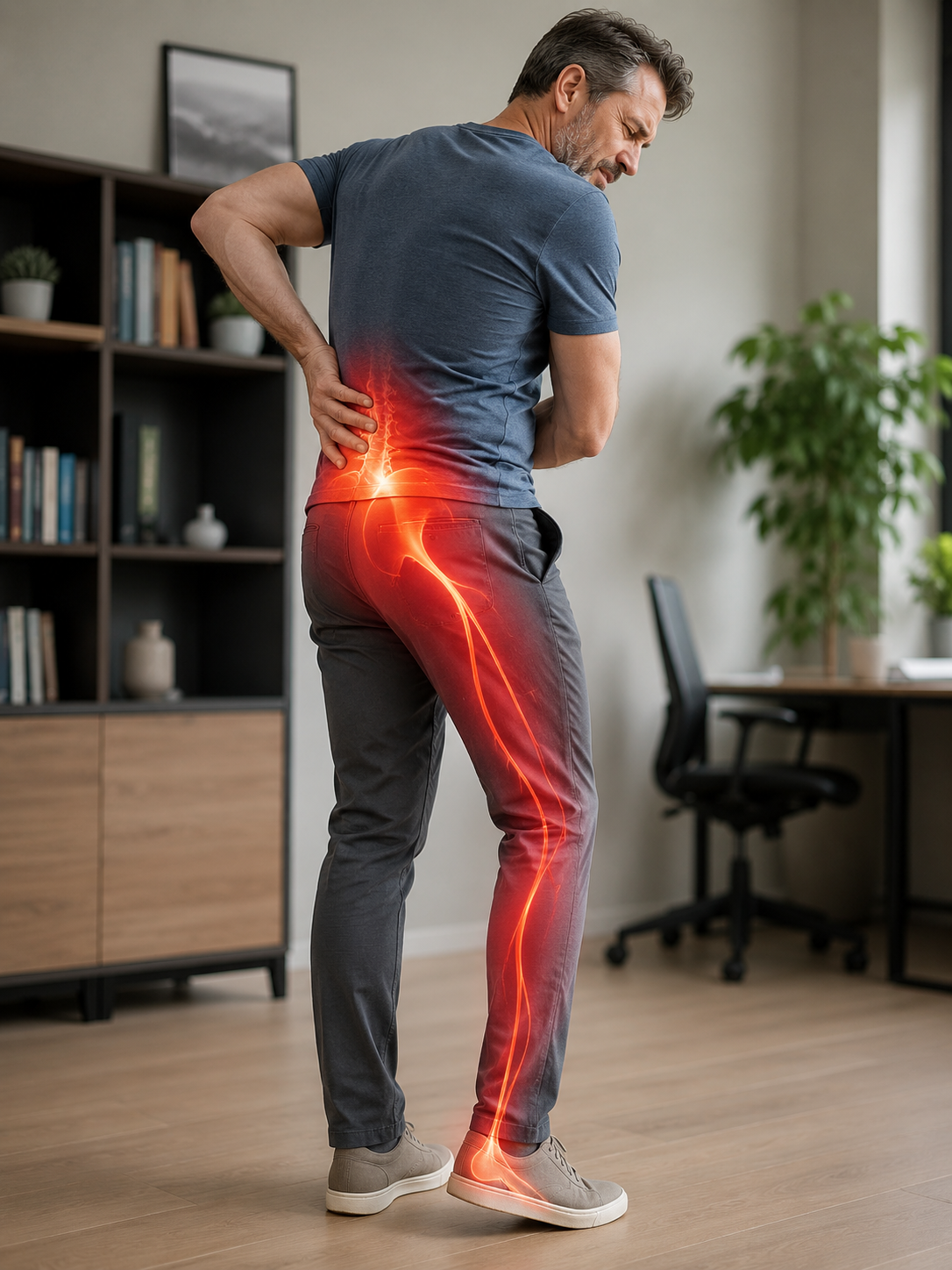
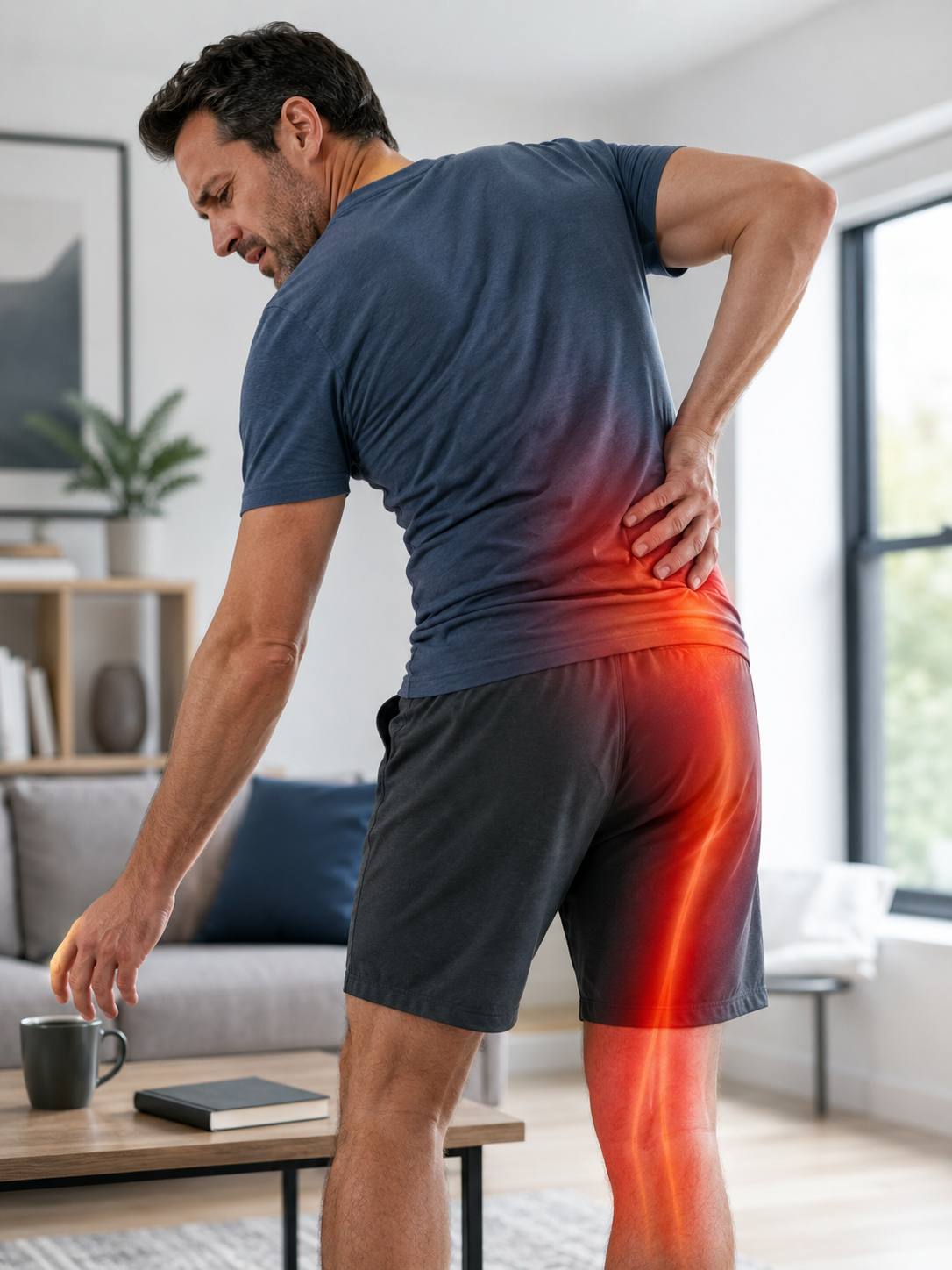
Common situations where torsion can aggravate
Back twist can occur in very simple gestures: turning around to grab an object, get out of the car, move a box, shovel, garden, vacuum, turn in the bed or rotate quickly during an activity.
The movement becomes more worrying when it reproduces a typical path of sciatica: pain in the buttocks, behind the thigh, in the calf, the heel, the foot or the toes. Local back pain does not have the same significance as pain that goes down into the leg.
| Situation | Why this can make it worse | Sign to watch |
|---|---|---|
| turn up | Combines load, flexion and lumbar rotation. | Pain going down to the thigh, calf or foot. |
| whirl | rapid movement on an already sensitive structure. | Electric shock or sudden pain in the leg. |
| get out of the car | Rotation of the pelvis and trunk after prolonged sitting. | Buttock, calf, foot or numbness when you get up. |
| Garden or shovel | Bending, repeated rotation and variable load. | Symptoms that increase after repetition. |
| Turn in bed | rotation of the pelvis and trunk in the sensitive position. | nocturnal pain going down in the leg. |
Signs that the twist is poorly tolerated
A twist can be simply uncomfortable without being serious. It becomes more worrying when it changes the territory of pain or increases neurological signs.
coming down
Pain that passes from the lower back to the butt, thigh or calf after a twist should be monitored.
shock
A current feeling in the leg during a rotation can suggest nervous irritation.
tingling
Tingling that appears in the foot or toes after a rotational movement should be noted.
Numbness
A numbness that increases after a torsion deserves a more careful assessment.
Weakness
A foot that hangs, a loose leg or difficulty in pushing changes the level of safety.
Prolonged pain after the gesture
An aggravation that lasts a long time after the movement is more significant than a brief discomfort.
Torsion, lumbar disc and nerve root
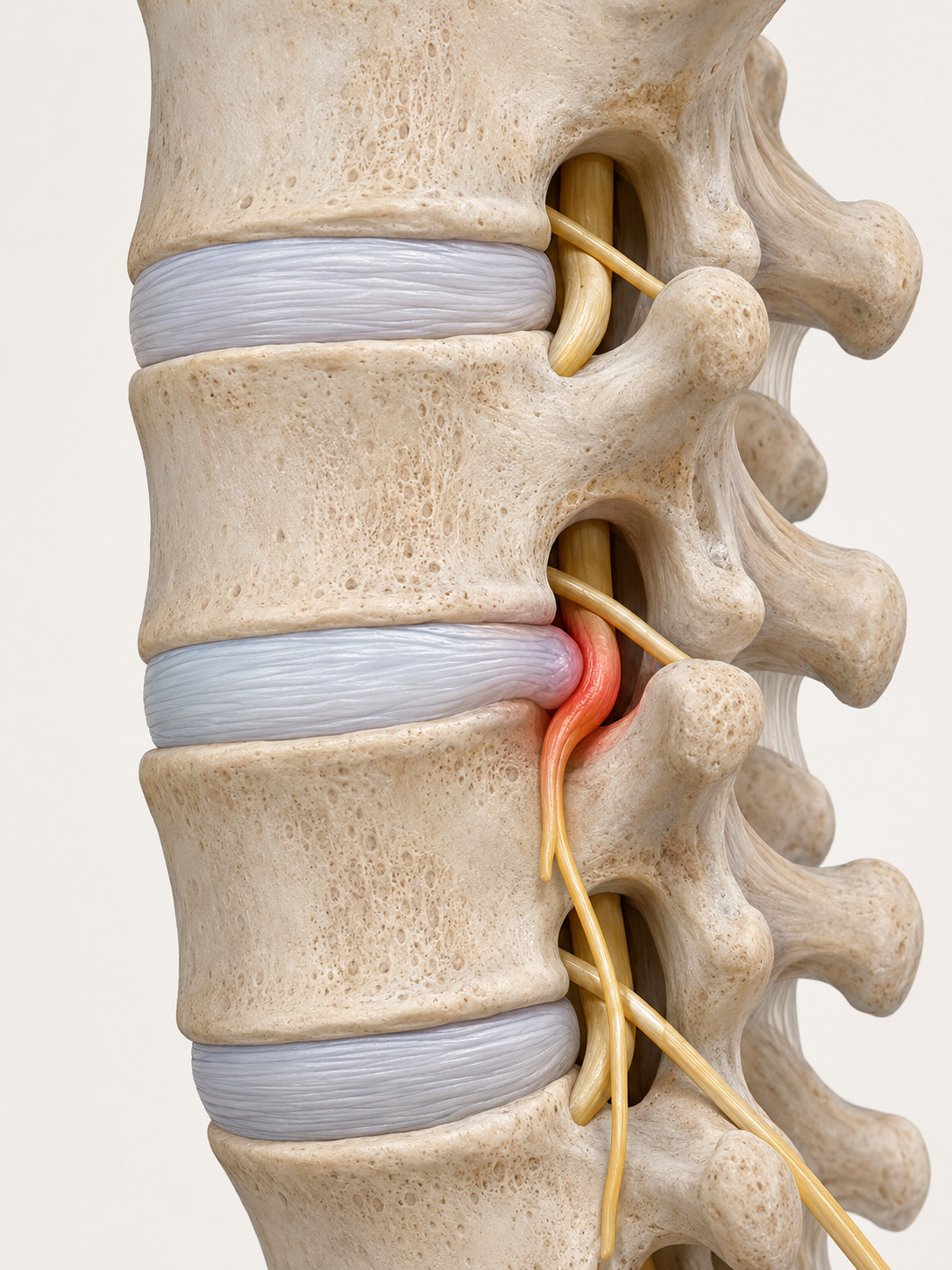
In some disc profiles, combined movements may be more difficult to tolerate. A disc herniation, protrusion, or bulge can irritate a nerve root, especially if the movement combines flexion, rotation and load.
Torsion can also influence the posterior joints, foramen or tissues around the nerve root. However, automatic conclusions should be avoided: some torsion pain comes more from a joint, muscle, hip or sacroiliac region.
- Torsion + bending: combination to watch.
- Torsion + load: caution if the pain goes down.
- Sudden torsion: Can trigger sharp pain in a sensitive profile.
- Torsion with numbness: territory to be specified.
- Torsion with weakness: recommended quick assessment.
Painful twist: what can she suggest?
A pain triggered by torsion can have several causes. It may be related to mechanical lumbar pain, disc irritation, nerve root, lumbar joint, hip, sacroiliac or muscle pain.
| torsional reaction | possible interpretation | important issue |
|---|---|---|
| Local lower back pain | Mechanical low back pain or joint irritation possible. | Does the pain descend into the leg? |
| Pain in the buttock | Lumbar, gluteal or sacroiliac origin possible. | Does the pain descend under the knee? |
| calf or foot pain | More suspicious lumbar nerve irritation. | Is there numbness or tingling? |
| Torsion with load | higher mechanical stress. | Does pain increase after exercise? |
| Torsion with weakness | possible neurological sign. | Does the foot hang or does the step change? |
Why personalized evaluation is essential
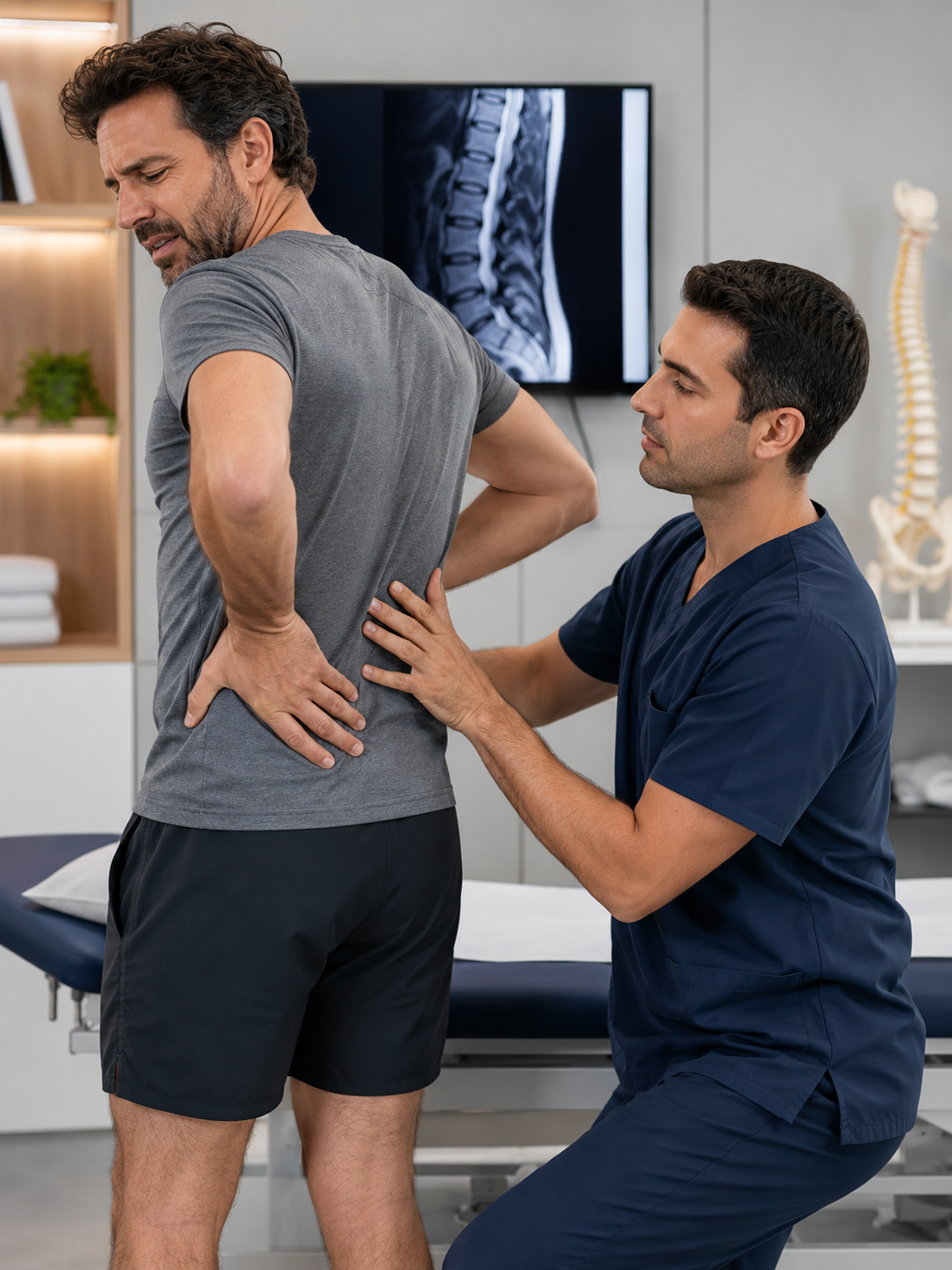
A pain triggered by a twist is not enough to determine the cause. You have to compare what happens during the movement, immediately after, then in the hours that follow. Local pain does not have the same significance as pain that descends into the calf or foot.
The evaluation aims to identify aggravating movements, better tolerated movements, pain path, numbness, strength, walking and warning signs. This approach makes it possible to avoid too generic advice and poorly adapted exercises.
Motion reaction
Observe if the twist only increases the back or lowers the pain lower.
Neurological signs
Check strength, sensitivity, walking and evolution after movement.
What to do if a twist aggravates sciatica?
The first step is to temporarily avoid repeating twists that lower the pain lower into the leg or increase neurological symptoms. It may be useful to note the exact situations: car, bed, lift, work, sport, gardening or household.
According to the assessment, non-surgical and non-invasive approaches can be discussed. If the painting evokes a disc or root origin, the approach should aim for the probable cause: disc, foramen, lumbar canal, disc pinching, stenosis or other mechanical factor.
| Profile | Priority | Why |
|---|---|---|
| Local painful twist | Analyze lumbar mechanics, hip and pelvis. | It is not automatically aggravated sciatica. |
| Twisting that brings down the pain | Avoid repeating the aggravating movement. | The downward path increases caution. |
| Torsion with numbness | Identify the territory and the evolution. | These signs may indicate nervous irritation. |
| Torsion with weakness | rapid reassessment. | The loss of strength changes the level of security. |
Back torsion and clinical orientation
An educational page like this serves to better understand the possible reactions, but it does not replace an evaluation. Pain aggravated by torsion should be interpreted according to its path, duration, reaction after movement, neurological signs and aggravating factors.
For a local appointment or a geolocated treatment page, the main conversion page must be hosted on the TagMed Clinic website in order to avoid SEO cannibalization with the educational content of SOS Sciatica.
The educational pages of SOS Sciatica must explain the causes and guide the reader. The local treatment, appointment and conversion pages should remain on the TagMed Clinic website.
Understand the reaction
Local back pain and pain that goes down to the foot do not have the same meaning.
Adapt precautions
The probable cause must guide the advice, rather than a general ban on turning your back.
Frequently Asked Questions about Sciatica and Back Torsion
Is back twisting bad for sciatica?
Not always. It becomes especially worrying if it lowers the pain lower in the leg, increases numbness or triggers weakness.
Why do I hurt when I turn my back?
Rotation can change stress on discs, lumbar joints, foramen and nerve roots. The cause depends on the journey and the associated signs.
lifting a load by turning can it make sciatica worse?
Yes I do. The flexion, rotation and load combination can be poorly tolerated in certain disc or nervous profiles.
Can a twist aggravate a herniated disc?
In some people, yes, especially if the twist is combined with flexion or load and if the pain goes down in the leg.
Should I avoid any rotation?
No. Above all, it is necessary to avoid rotations which clearly aggravate the nerve path or the neurological signs. The goal is not complete immobility.
Does local back pain during a twist mean sciatica?
Not necessarily. Local lumbar pain can be mechanical. Sciatica is more suspicious if the pain descends into the leg or foot.
What signs should be consulted quickly?
Progressive weakness, falling foot, extending numbness, loss of urinary or intestinal control or stool anesthesia should be assessed quickly.
Why does the pain drop lower after a twist?
This may indicate that the movement increases the irritation of a nerve root or the tension on the sciatic path. An evaluation can help clarify the mechanism.
Can twisting in the bed make sciatica worse?
Yes, in some patients. Turning abruptly into the bed can combine rotation of the pelvis and trunk in a sensitive position.
When to resume rotations?
Recovery depends on probable cause, decrease in symptoms, strength, sensitivity and progressive tolerance. It must be adapted to the profile.
Does turning your back lower your pain?
A personalized assessment can help determine whether the torsion aggravates nerve irritation or whether the pain comes from another lumbar, gluteal, joint or mechanical cause.
Dr Sylvain Desforges, B.Sc., D.O., N.D., Osteopath
Editorial information, sources and limitations
This content is intended to inform patients about sciatica, possible causes, warning signs, and care options. It does not replace an individualized assessment.
Reference sources
References are selected according to the subject of the page: guidelines, systematic reviews, then institutional resources.
- NICE NG59 – Low back pain and sciatica in over 16s — National guideline
- HAS – Management of patients with common low back pain — French national guideline
- Cochrane – Corticosteroid injections for treatment of sciatica — Systematic review
- NCBI Bookshelf – Sciatica — Clinical institutional resource
Complementary resources from the TAGMED network
These internal resources complement the clinical information and thematic linking. They do not replace national guidelines or systematic reviews.
Editorial note on decompression
Clinical resource from the TAGMED network; it does not replace national guidelines. Some guidelines use the term “traction” and recommend caution for low back pain with or without sciatica. Any decompression option should therefore be presented as an individualized clinical approach, with limitations, indications, and contraindications clearly explained.
Limitations of this information
The information on this page is general. It does not constitute a diagnosis, prescription, or guarantee of results. Pain radiating into the leg may have several causes; assessment should consider clinical history, examination findings, symptom progression, and, when appropriate, complementary tests.
When to seek urgent medical care
Seek urgent medical care if you experience loss of bladder or bowel control, saddle anesthesia, major or progressive leg weakness, unexplained fever, pain after significant trauma, or severe pain that rapidly worsens.