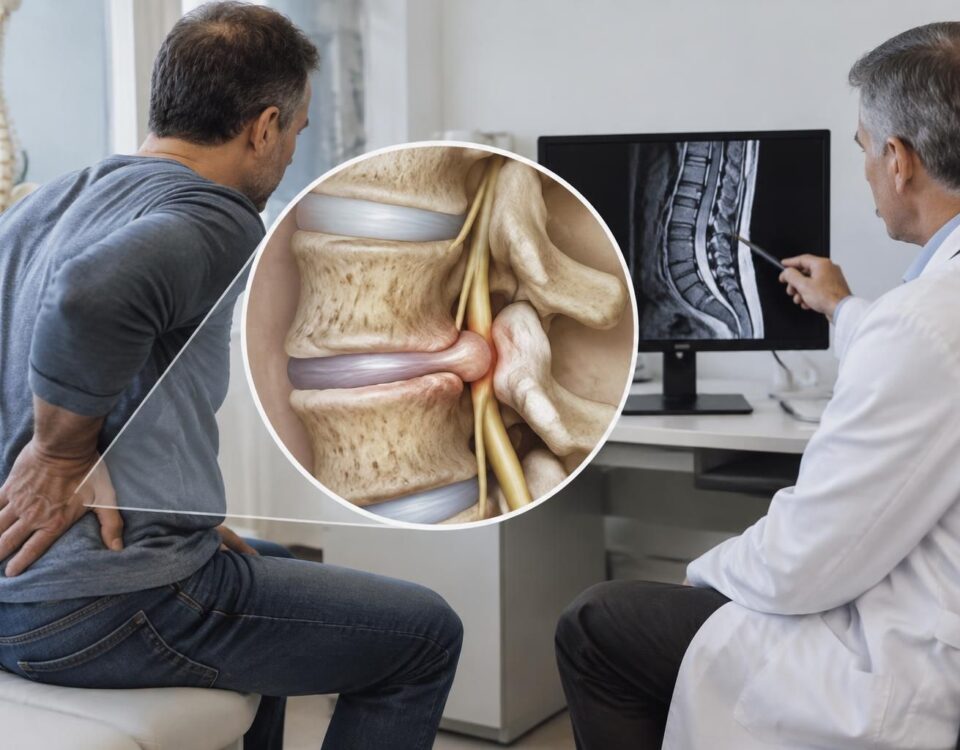
Sciatica and low sitting position: why this can worsen
15/07/2026
Sciatica: why the pain pathway helps to identify the cause
15/07/2026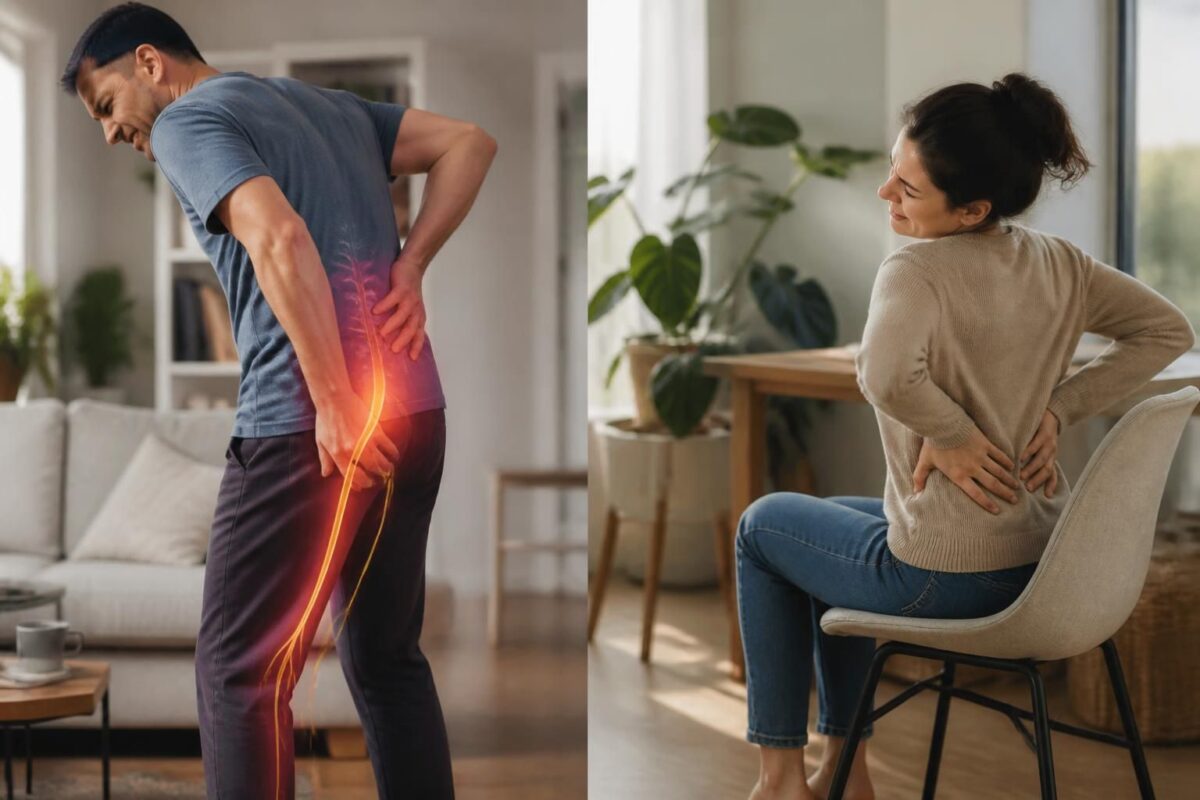
IN BRIEF |
| In brief, sciatica is a nerve pain caused by irritation or compression of a lumbar root, most often L5 or S1, which radiates from the lower back to the buttock and leg. It is distinguished from a mechanical pain in the lower back by its path and typical signs (radiation, tingling, possible weakness). The diagnosis clarifies the origin and allows for prompt and appropriate management: progressive physical activity, physiotherapy, anti-inflammatory treatments, and, if necessary, non-surgical options; surgery remains exceptional. In Montreal, this framework helps direct towards specialized care and prioritize effective conservative solutions. |
Sciatica is a nerve pain due to irritation or compression of the lumbar roots (mainly L5/S1) of the sciatic nerve. It typically follows the path from the lower back to the buttock, then to the leg and sometimes down to the foot, with a burning sensation or electric shock-like pain.
- Origin: common mechanical causes such as herniated disc, foraminal or lumbar canal stenosis, and arthritis.
- Manifestation: pain radiating down the leg, sometimes accompanied by tingling or weakness.
- Management: adapted activity, physiotherapy, and anti-inflammatories; injections or rare surgery in case of persistence or neurological deficit.
Sciatica: nerve pain or mechanical pain? This article written by a healthcare expert clearly and directly explains how to distinguish nerve pain related to the sciatic nerve from mechanical pain arising from lumbar structures. You will discover the mechanisms, key signs, and management options to guide your care journey without unnecessary detours.
Sciatica is a pain that can arise from two main origins. Nerve pain occurs when the sciatic nerve is irritated or compressed, causing radiculopathy that follows the path of the nerve in the leg. Mechanical pain results from dysfunction of the spinal structures, such as the joint surfaces or the disc, and is mainly felt in the lower back or a localized area without clear radiation. Both forms may coexist in the same person, which can sometimes complicate the diagnosis and treatment choice.
What is sciatica?
Sciatica refers to pain related to irritation or compression of a lumbar nerve root, most often L5 or S1. It can start at the lumbar level and radiate to the buttock, thigh, and leg, sometimes down to the foot. When lower back pain accompanies pain in the leg, it is referred to as lumbosciatica. The sciatic nerve is the longest in the body, and its path explains why pain felt far from the spine may reflect a lumbar issue.
In situations where the pain follows the path of the nerve, it is referred to as nerve pain. Conversely, some local low back pain without obvious radiation falls under a mechanical mechanism involving joints or discs. This distinction guides the choice of treatments and avoids diagnostic delays.
Typical signs and symptoms
Nerve pain is often described as sharp, electric shock-like, or stabbing. It may be accompanied by tingling, numbness, and muscular weakness. Irritation may worsen with effort, coughing, or prolonged sitting. The pain can travel down the leg and reach the calf or foot.
Mechanical pain is frequently localized in the lower back, aggravated by movement or repeated flexion/extension, and may be associated with stiffness. It may not necessarily follow a “radicular” path and does not always progress along the nerve pathway.
Neurological signs such as targeted weakness, decreased reflexes, or difficulty walking on tiptoe or heel suggest a more pronounced nerve involvement and require prompt evaluation.
Common causes and mechanisms
The most common causes include a herniated lumbar disc that compresses a nerve root, a foraminal or central stenosis that narrows the nerve passage, and degenerative processes such as arthritis or lumbar canal narrowing. Less frequently, local mechanical factors or rarer radicular conditions may play a role. For details on causes and diagnosis, see the dedicated resources on sossciatique.com.
The path of the sciatic nerve starts from the lumbar roots and travels to the buttock, the back of the thigh, then to the tibia and foot. This anatomy explains why lumbar involvement can present far from the spine and why symptoms may affect only one leg.
Diagnosis and evaluation
Diagnosis is based on clinical examination and symptom analysis. Simple tests can confirm the radicular nature, such as the Lasègue sign. Further tests may be indicated if pain persists or if neurological signs appear. For additional information on diagnosis and associated approaches, consult the dedicated resources on sossciatique.com.
Early detection of elements indicating nerve-origin pain helps quickly direct towards appropriate treatment options and anticipate coordinated follow-up, especially in cases of evolving neurological signs.
Treatment options and care pathway
Treatment for sciatica is generally multimodal and aims to reduce pain, restore function, and prevent recurrences. Non-surgical approaches prioritize measures focused on reducing nerve irritation and controlling symptoms. Common options include appropriate medical treatments and targeted non-surgical interventions. To explore the options offered at the TAGMED Clinic, click on TAGMED Clinic.
For cases requiring a specialized approach, techniques of neurovertebral decompression may be considered depending on the assessment. Information on decompression and associated indications is available on Neurovertebral Decompression.
Pharmacological options include analgesics and anti-inflammatories, sometimes treatments targeting nerve pain. In cases of persistent pain, epidural injections may be considered. To understand the contexts of injection and their relative effectiveness, refer to the resources on Sciatica and pain that increases when sitting and pain and loss of sensitivity.
Neurovertebral decompression and other specialized interventions may be part of a care pathway depending on the assessment. For a consolidated clinical framework in Montreal or Terrebonne, care at the TAGMED Clinic and associated options may be considered. To learn more about the approaches offered, refer to Sciatica in Terrebonne and sciatic decompression Terrebonne.
In some cases, surgery may be considered when symptoms persist despite well-conducted treatment or when a neurological deficit progresses. For an overview, see the resources on pain when sitting and possible disc cause.
When to Consider Surgery
Surgery is rarely necessary but may be indicated in cases of persistent pain despite appropriate treatment, progressive neurological deficit, or significant impairment of quality of life. The choice depends on the cause and severity of the symptoms. For a practical perspective and additional references, you can consult the dedicated resources on specialized pages in the relevant field.
Preventing and Monitoring Your Condition
Preventing recurrences involves continuous assessment and appropriate follow-up. Maintaining adapted activity and adopting good postures help reduce triggering factors. Regular follow-up with your healthcare professional is recommended to adjust treatment and monitor symptom progression. For practical advice and useful resources, refer to the informative content on Sciatica and pain at the restaurant or cinema and in Terrebonne.
For additional resources and concrete cases, you can consult Causes and diagnosis and pain and loss of sensitivity.
Medical disclaimer: The information and advice provided on this site do not replace the opinion, diagnosis, or treatment of a healthcare professional. Please note that Dr. Sylvain Desforges, osteopath, is neither a medical doctor nor a physician and is not a specialist in a medical specialty as defined by the Collège des médecins du Québec. Manual medicine, functional medicine, and sports medicine as described on this site exclude any treatment or medical diagnosis made by a physician or specialist doctor. Always consult your physician for any medical questions. For more details, please read our full Legal Notice.
Nerve pain (sciatic nerve)
- Origin: irritation or compression of the sciatic nerve (L5–S1).
- Path: pain that follows the sciatic nerve to the buttock, thigh, and leg.
- Characteristics: intense pain, type of stabbing or electric shocks, sometimes paresthesias.
- Associated signs: weakness or loss of sensation in the leg or foot.
- Aggravating factors: prolonged sitting, coughing, or exertion.
- Therapeutic implication: targeted nerve approach (physiotherapy, anti-inflammatories, infiltrations); rare surgery if progressive deficit.
Mechanical pain (lumbar)
- Origin: non-radiating lumbar pain related to musculoskeletal-ligamentous issues, osteoarthritis, or lumbar canal stenosis.
- Characteristics: localized pain in the back, worsened by movement and exertion; little or no radiation.
- Associated signs: generally no neurological deficit; preserved strength and reflexes.
- Triggers: posture, overload, lack of activity.
- Management: physiotherapy, adapted physical activity, analgesics/anti-inflammatories; active maintenance without prolonged rest.
- Evolution: usual improvement with appropriate management; possible recurrences if failed care or poor rehabilitation.
.liste-two-col {
display: grid;
grid-template-columns: 1fr 1fr;
gap: 28px;
}
.liste-two-col h4 {
margin-top: 0;
}
.liste-two-col ul {
padding-left: 0;
margin-top: 0;
}
.liste-two-col li { margin: 6px 0; }
@media (max-width: 800px) {
.liste-two-col { grid-template-columns: 1fr; }
}

In this practical article on sciatica, we clearly distinguish between nerve pain (radicular) and mechanical pain, and we provide simple guidelines to recognize and treat them without awaiting surgery. You will understand the mechanisms, typical symptoms, and concrete actions to prioritize based on the origin of the pain, in order to quickly regain control of your mobility and daily life.
Understanding Nerve Pain (Radicular) and Mechanical Pain
Nerve pain is related to the irritation or compression of a lumbar nerve root, most often L5 or S1. It typically manifests as a shooting, sharp, or pulling pain that follows the path of the sciatic nerve: buttock, thigh, leg, sometimes the foot. It may be accompanied by tingling or weakness and often shows some variability depending on movements and positions. Mechanical pain, on the other hand, is of musculoskeletal origin (muscles, joints, disc). It is characterized by localized discomfort in the lower back or buttock, which worsens with movement, bending, or effort, and subsides at rest.
How to distinguish them in daily life?
In practice, ask yourself where the pain is located, what type it is (pulling, burning, electric shock, or dull sensation), and how it evolves with activity or rest. Nerve pain often follows the path of the nerve and may be accompanied by neurological signs (weakness, difficulty walking on toes or heels). Mechanical pain tends to be more centered in the lower back or buttock and varies with movement or posture. Rapid improvements with strict rest are not typical of radicular pain, and persistent symptoms beyond a few weeks warrant a medical evaluation. Warning signs, such as loss of bladder control or significant numbness, require an urgent consultation.
Concrete action plan based on the origin
For nerve pain
Stay active, but without forcing painful movements. Opt for gentle and regular activities, such as walking, and prioritize targeted physical therapy sessions to improve mobility and reduce inflammation around the nerve. Progressively work on strengthening the core and appropriate stretches. Anti-inflammatory or pain-relieving treatments may be recommended by your doctor, and injections or further evaluations may be considered if symptoms persist. Avoid prolonged rest, which can hinder nerve recovery.
For mechanical pain
Focus on strengthening and stabilizing the lumbar spine, muscle stretching, and improving posture. Physical therapy can help decrease pain and restore mobility, with a progressive program tailored to your level. Use simple measures like heat, active breaks, and a routine of daily exercises to prevent recurrence. The goal is to return to your usual activities while protecting your back and avoiding movements that trigger pain.
When to request examinations and who to consult?
Consult quickly in the presence of warning signs: loss of bladder control, progressive weakness, pain that worsens despite treatment, fever, or trauma. If the pain persists beyond 6 weeks or there are significant neurological signs, a medical evaluation and potentially imaging (MRI) may be warranted to clarify the origin and adjust the treatment plan.
Prevention and long-term management
To reduce the risk of recurrence, adopt a suitable regular physical activity, strengthen core muscles, and work on daily posture. Maintain a balance between movement and rest, vary your movements, and incorporate stretching and postural control exercises into your routine. A multidisciplinary approach, combining practical advice, physical therapy, and potential medical adjustments, is key to less frequent and less disabling sciatica.
| Element | Concise interpretation |
|---|---|
| Origin | Nerve pain when irritation or compression of a lumbar root (L5/S1) with radiation along the sciatic nerve. |
| Path | Nerve pain follows the path of the nerve; mechanical pain remains localized in the spine and does not follow this path. |
| Triggers | Nerve pain is aggravated by prolonged sitting and efforts; mechanical pain increases with movements of the back and twisting. |
| Location | Nerve pain may affect the buttock, thigh, calf, and foot; mechanical pain is primarily at the lumbar level. |
| Associated signs | Possible neurological signs (weakness, paresthesias); mechanical pain may be without marked motor deficits. |
| Key examination | Positive Lasègue test suggests a nerve origin; neurological deficit confirms radicular involvement; otherwise, mechanical orientation. |
| Imaging | MRI/CT useful for detecting herniation or foraminal narrowing; in mechanical pain, imaging is often not initially decisive. |
| Initial management | Adapted activity, physical therapy, and anti-inflammatories; persistence justifies specialized evaluation and targeted options based on the context. |
Sciatica: nerve pain or mechanical pain? Testimonials
Claire, 39: At first, I thought my lower back pain was purely mechanical and related to effort. Quickly, the pain migrated to my buttock and leg and turned into nerve pain along the sciatic nerve, with electric sensations that stopped me in my activities.
Marc, 52: My doctor distinguished a local mechanical pain in the back from nerve pain when the sciatic nerve was irritated. The main symptom was deep pain in the lower back that then radiated into the leg, with occasional electric shocks.
Sophie, 34: Upon examination, I understood that my pain was a radiculalgia related to nerve irritation and not an isolated low back pain. This distinction guided the exercises and therapeutic approaches I pursued.
Laurent, 48: The difference between nerve pain and mechanical pain is crucial as treatments differ. Thanks to an accurate assessment, I was able to target appropriate decompression and strengthening techniques and return to my activities faster.
Émilie, 60: During the acute phase, my mechanical pain was localized. Later, signs of nerve pain appeared due to irritation of the sciatic nerve, which led me to adjust my rehabilitation and activity program.
Julien, 29: What I learned is that sciatica can be nerve pain with shocks or mechanical pain due to stiffness and tension. An accurate evaluation allowed me to adopt the appropriate treatment and avoid unnecessary interventions.
Dr Sylvain Desforges, osteopath, naturopath, and expert in manual medicine, is the founding president of the clinics TAGMED and the association ACMA. His career is guided by a quest for innovation in healthcare and a patient-centered approach. A specialist in chronic pain of the spine and lower back pain, he focuses on clarifying the mechanisms underlying Sciatica, to provide effective management without necessarily resorting to surgery. His commitment to evidence-based practice aims to optimize the health and well-being of everyone.
To understand Sciatica, he clearly distinguishes between two axes that often cause confusion among patients: true nerve pain related to irritation or compression of a lumbar nerve root (radiculopathy), and mechanical pain that can limit activity without necessarily involving an injured nerve root. The sciatic nerve, originating from several lumbar roots (L4 to S3), runs down the back of the leg to the foot. When irritation or compression occurs, pain may manifest at the lumbar level but can also project into the buttock, thigh, leg, and even the foot. This distinction is essential for guiding treatment and avoiding poorly suited therapeutic paths.
In his practice, Dr. Desforges combines rigorous clinical assessment with an understanding of radicular pathways. Diagnosis relies on a precise history, targeted physical tests, and, when necessary, imaging or further explorations. He emphasizes that pain can be felt along the nerve pathway without the primary source necessarily being located at the lumbar spine, and summarizes that radiculopathy can coexist with mechanical lower back pain. This approach allows for a clear distinction between nerve-related Sciatica and simple back pain, and adapts the care plan accordingly.
On the therapeutic front, Dr. Desforges prioritizes non-surgical strategies, based on evidence and tailored to each patient. The arsenal he mobilizes includes specialized osteopathy and gentle release techniques, rehabilitation programs, and approaches aimed at restoring movement rather than immobilizing it. He also integrates advanced technologies such as motorized neurovertebral decompression, laser therapy, and shockwave therapy when their usage is justified by the evaluation. The goal is to reduce inflammation, promote recovery of functions, and limit the risks of recurrence through a personalized and progressive approach.
His philosophy is based on the idea that the key is not immobility, but the right balance between protection and movement. In practice, this means encouraging appropriate activity, targeted exercises, and educating the patient to understand the origin of the pain and the levers for improvement. This approach aims for a sustainable improvement in mobility, muscle strength, and quality of life, while minimizing the risks of unnecessary invasive treatment.
For patients seeking structured support around Sciatica, Dr. Desforges offers a multidisciplinary approach within the TAGMED clinics, combining osteopathic expertise, manual methods, and modern technologies. His goal is clear: to transform dreaded pain into a clear, effective, and respectful care pathway. To learn more about his approach and the available services, contact the TAGMED Clinic and its dedicated team.
Quick summary: Sciatica is pain that follows the pathway of the sciatic nerve, most often of nerve origin (radiculopathy). However, mechanical mechanisms (herniated disc, foraminal stenosis, lumbar osteoarthritis) can maintain or aggravate this pain, necessitating a multidisciplinary and progressive approach. This article clarifies the key concepts: differences between nerve pain and mechanical pain, involved mechanisms, clinical signs, typical duration, and care options, both medical and surgical, with associated resources for further exploration of each aspect.
The pain associated with sciatica most often relies on nerve irritation or compression of the lumbar roots, most frequently L5 or S1, causing radiculopathy that radiates into the buttock and leg. This pain is primarily nerve-related, but is often modulated by mechanical factors: position, movement, effort, and spinal pathologies that maintain the process. Understanding this interplay is key to guiding treatment without waiting for a one-size-fits-all solution.
Clinically, you will typically observe pain starting in the lower back and then traveling through the buttock, thigh, and leg, sometimes to the foot. Signs such as muscle weakness, reduced reflexes, or difficulties walking on the toes or heel reinforce the idea of nerve involvement and justify a quick evaluation. The diagnosis is based on a structured clinical examination and may be complemented by targeted investigations when necessary to identify the affected root and the potential presence of a correctable mechanical factor.
In terms of management, the strategy is graduated and adapted to the intensity of the symptoms. Medical treatments (analgesics, anti-inflammatories) and physiotherapy play a central role, maintaining adapted activity and reducing strict bed rest. When inflammation around the nerve persists, options like injections may be considered to reduce irritation and delay potential surgery. Non-drug approaches, such as massage and targeted exercises, can improve comfort and mobility without directly addressing the cause, but they usefully complement the overall plan.
Situations requiring surgical intervention remain rare and targeted: persistence of disabling pain despite well-managed treatment, or rapid onset of evolving neurological deficits or significant motor deficit. The type of intervention will depend on the cause (discectomy, foraminal decompression, or, in rare cases, lumbar arthrodesis) and the overall assessment of the patient. The objective is always to restore function and improve quality of life with minimal long-term impact. To deepen mechanical aspects and surgical indications, you can consult specialized resources such as dedicated guides and articles.
To enrich your understanding and access additional resources, you can explore the following pages: Doctissimo – Everything you need to know about sciatica, SOS Sciatica – Pain in the buttocks and possible lumbar cause, Tremplin Santé – Clinical distinctions and mechanisms, SOS Sciatica – Possible mechanical causes, SOS Sciatica – Graduated approach, SOS Sciatica – Numbness, MédecinDirect – Sciatica, Le Médecin – Sciatalgia, Vidal – Sciatica pain.
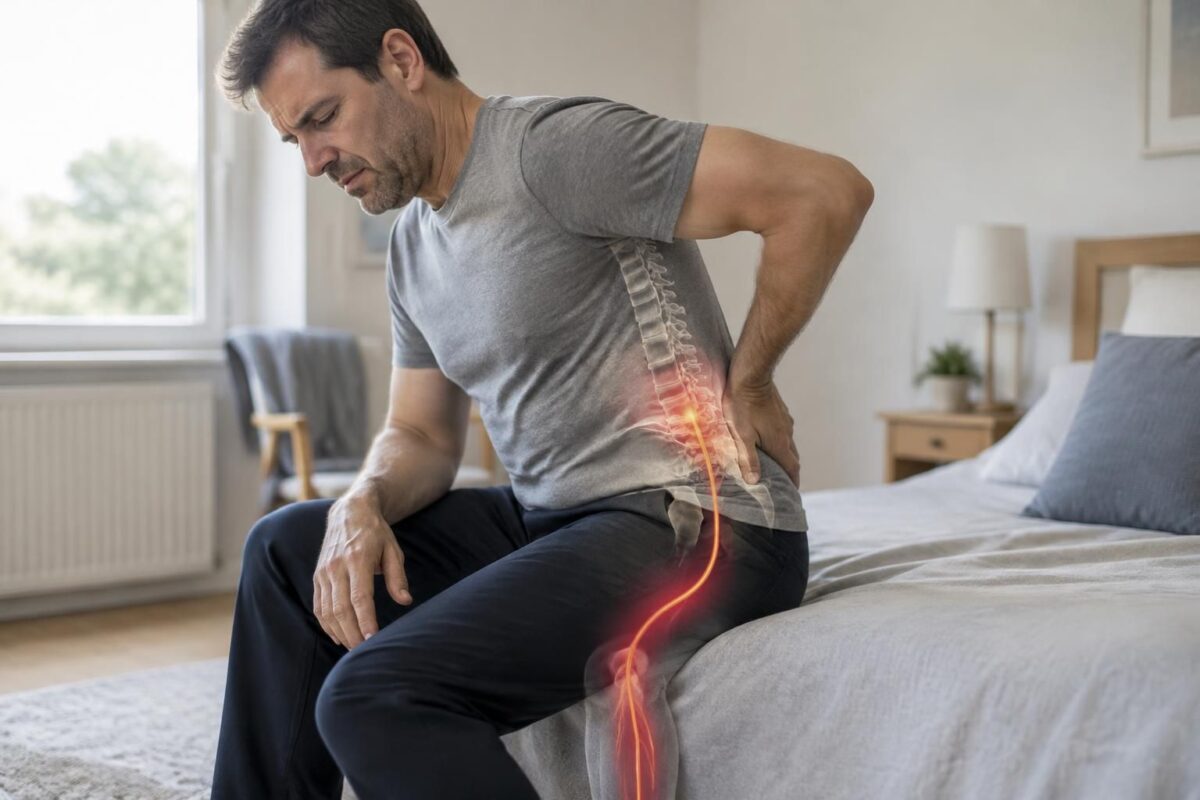
Disc herniation and persistent pain in the leg
IN BRIEF A disc protrusion is a bulging of a disc that can irritate a nerve and cause persistent pain in the leg, sometimes accompanied by tingling or numbness. Imaging alone does not confirm the origin of the symptoms: clinical…
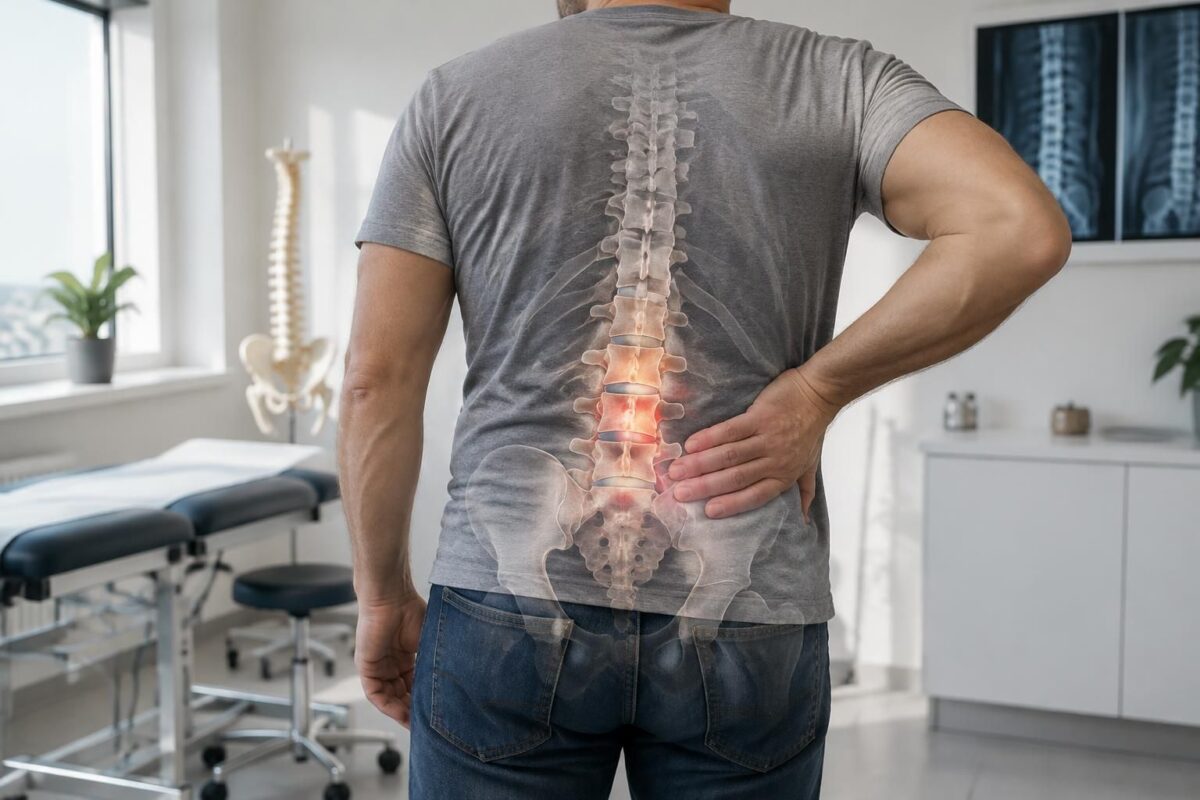
Disc herniation and lumbar degeneration
IN BRIEF A lumbar disc protrusion is a bulging of a disc often related to disc degeneration. It does not always cause symptoms but can contribute to lower back pain or pain radiating down the leg if a nerve is…
Disc protrusion and disc pinching: combined mechanisms
IN BRIEF A disc protrusion is a bulging of the disc, while a disc narrowing refers to a decrease in its height. These changes can coexist and sometimes irritate a nerve root, leading to pain or radiation, but they can…

Disc herniation and associated foraminal stenosis
IN BRIEF A disc protrusion associated with foraminal stenosis occurs when a bulging disc coexists with a narrowing of the opening through which a nerve root passes. This association can lead to lower back pain radiating into the leg, tingling,…

Spinal disc protrusion and nerve inflammation
IN BRIEF A disc protrusion is a bulging of the disc that can irritate or compress a nerve, without necessarily causing symptoms. When it leads to nerve inflammation, it can cause pain in the back or neck, sometimes accompanied by…

Disc protrusion and irritation of L5
IN SHORT A disc protrusion is a bulging of the disc that can irritate the L5 root and cause lower back pain radiating to the buttock, leg, or foot, sometimes with tingling or weakness. MRI alone is not sufficient to…

Disc protrusion and pain after twisting the back
IN BRIEF A disc protrusion is a bulging of the disc that can contribute to pain after a back twist, but it alone does not confirm the cause. The pain can remain in the lower back or radiate to the…

Disc herniation and pain after lifting
IN BRIEF A disc protrusion is a bulging of a disc between the vertebrae. Pain that appears after lifting a load does not prove that it is the cause: the MRI must be interpreted alongside the symptoms and the clinical…

Dr Sylvain Desforges, B.Sc., D.O., N.D., osteopath, is the founding president of TAGMED and of the ACMA association. He dedicates his practice to chronic spinal pain, low back pain and symptoms compatible with sciatica, particularly when pain radiates toward the buttock, leg, calf, foot or toes.
Through SOS Sciatique, he publishes educational content on sciatica symptoms, possible causes such as disc herniation, disc narrowing, foraminal stenosis or irritation of a lumbar nerve root, as well as non-surgical approaches that may be considered according to the evaluation. At Clinique TAGMED, care may include, depending on the case, motorized neurovertebral decompression, specific osteopathic care or precision percussion.
For an evaluation related to sciatica treatment in Montreal / Mount Royal or sciatica treatment in Terrebonne, please consult the services available at Clinique TAGMED.
Medical disclaimer
The information published on SOS Sciatique is provided for educational purposes only and does not replace a consultation, diagnosis, opinion or treatment provided by a physician or another authorized healthcare professional. The author of this article is neither a medical doctor nor a specialist in a medical specialty recognized by the Collège des médecins du Québec. The osteopathic, manual medicine or functional support approaches described on this site do not constitute medical acts and are not intended to replace medical follow-up.
Consult a physician or emergency service in cases of loss of bladder or bowel control, anesthesia in the saddle area, significant or progressive weakness in the leg or foot, fever, recent trauma, severe pain or rapid worsening of symptoms. For more details, please read our Legal Notice.