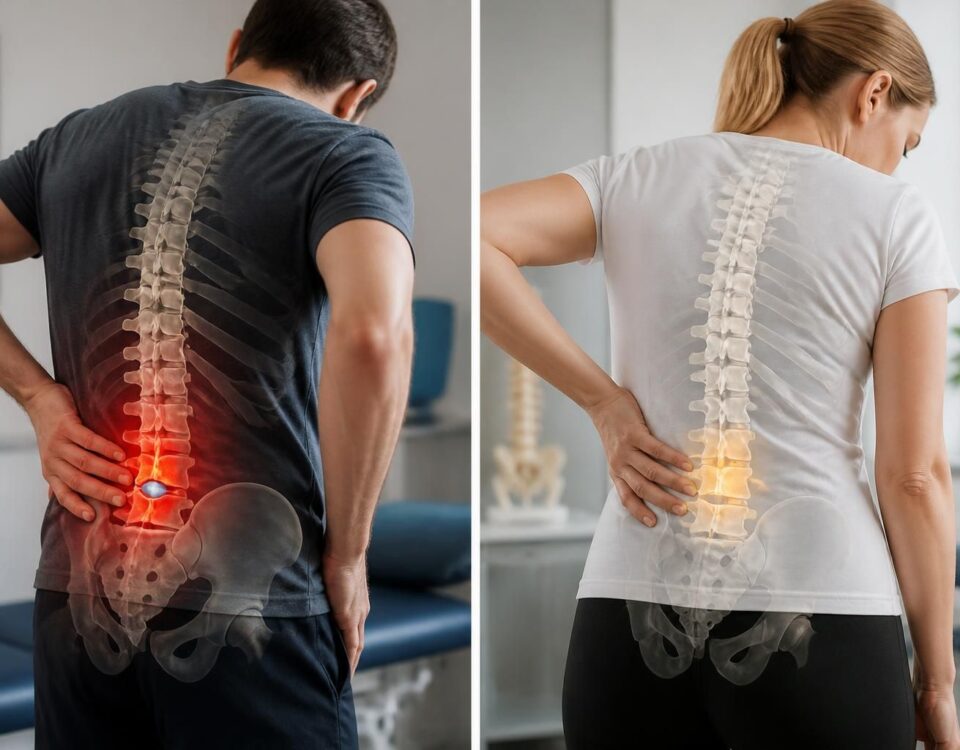
Pain in the buttock without back pain: could it be sciatica?
09/07/2026
Sciatica and calf pain when sitting
09/07/2026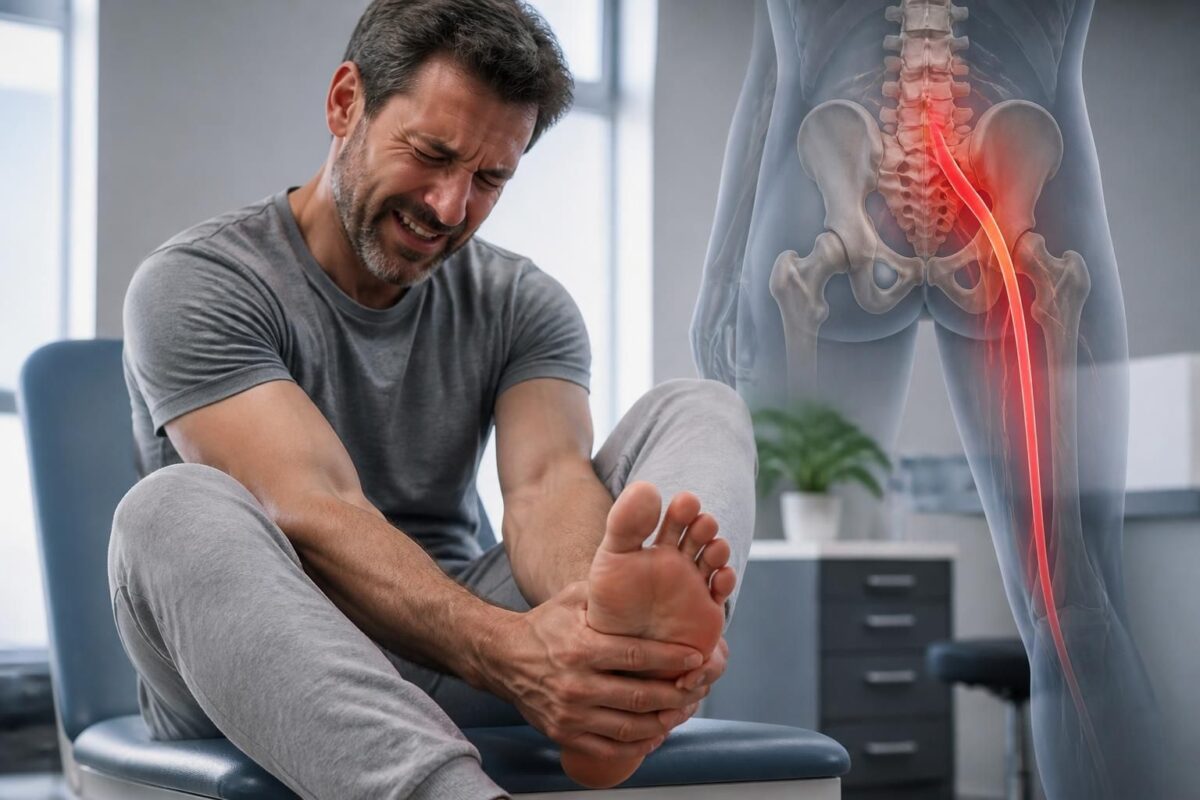
IN BRIEF
What is sciatica? Sciatica is a radicular pain that follows the path of the sciatic nerve, starting from the lower back and descending to the buttock and the back of the leg down to the foot. It most often results from a compression or irritation of a lumbar root, usually L5 or S1. Advantages and applications: Understanding this mechanism allows for quick choices of conservative and effective approaches (relative rest, painkillers, and physiotherapy) and can lead to improvement within weeks without surgery in the majority of cases. This knowledge also helps to identify signs that require urgent medical evaluation. How does this phenomenon work? The diagnosis is primarily clinical and can be confirmed by imaging if necessary (MRI or CT scan). Treatment combines relief measures and rehabilitation, with additional options (injections or surgery) depending on the progression. Pain may be accompanied by paresthesias and, in some cases, motor deficits. In Montreal, this service is particularly relevant for individuals presenting with pain radiating to the foot and suspicion of an irritated nerve root. |
Sciatica is a pain that follows the path of the sciatic nerve, from the lower back to the buttock and the back of the leg, and may reach the foot.
It usually results from the irritation or compression of a lumbar nerve root, with the most common cause being a herniated disk.
The diagnosis is essentially clinical, supplemented by imaging examinations if necessary to confirm the location and guide treatment.
Treatment primarily aims for relief and resumption of activity: relative rest, medications (painkillers and anti-inflammatories), physiotherapy, and sometimes injections; surgery is considered only in cases of failure or emergency situations.
Clear summary: Sciatica manifests as pain that follows the path of the sciatic nerve. It may start in the lower back and radiate to the buttock, the back of the thigh, and the calf, down to the foot. This pain is often due to irritation or compression of a nerve root, most commonly L5 or S1, sometimes linked to a herniated disk. This article describes typical causes, signs, diagnosis, and treatment options, with a practical look at the care available at the TAGMED Clinic and relevant online resources. In a clinical setting, the doctor evaluates the pain by its path, motor and sensory signs, and imaging results when necessary. The goal is to relieve pain quickly and restore function while avoiding unnecessary procedures. To learn more, refer to the following resources: To understand the links between sacroiliac pain and sciatica, see Sciatica or Sacroiliac Pain. For typical symptoms and assessment advice, visit Sciatica: Symptoms. For information on pain aggravated when sitting, consult pain that increases when sitting. For details on causes and treatments, see Sciatica: Causes, Symptoms, and Treatments. For general information and advice, look at sciatic pain and the foot. For the links between foot pain and sciatica, consult foot or toe pain and sciatica. To distinguish between lower back pain and nerve pain in Montreal, visit Sciatica in Montreal. For cases of sciatica with a numb foot, see Sciatica and Numb Foot. For situations involving calf cramps, see Sciatica or Calf Cramp. To understand sciatica pain and buttock pain when sitting, consult buttock pain when sitting.
The sciatic nerve is the longest and largest nerve. It originates from several lumbar and sacral roots and then travels to the buttock, the back of the thigh, and the calf. It then divides at the knee into the tibial nerve and the fibular nerve, which innervate the foot and toes. An irritation or compression of a nerve root can trigger pain that follows the entire path of the nerve down to the foot. Pain is often described as burning, shooting, or electrical in nature. Paresthesias and numbness may accompany this pain. A decrease in sensitivity or muscle weakness may appear in the foot or ankle, depending on the affected root. The main mechanism is compression or irritation of a nerve root at the lumbar level, most often related to a disc injury or another condition of the spine.What is the sciatic nerve and why the pain may affect the foot
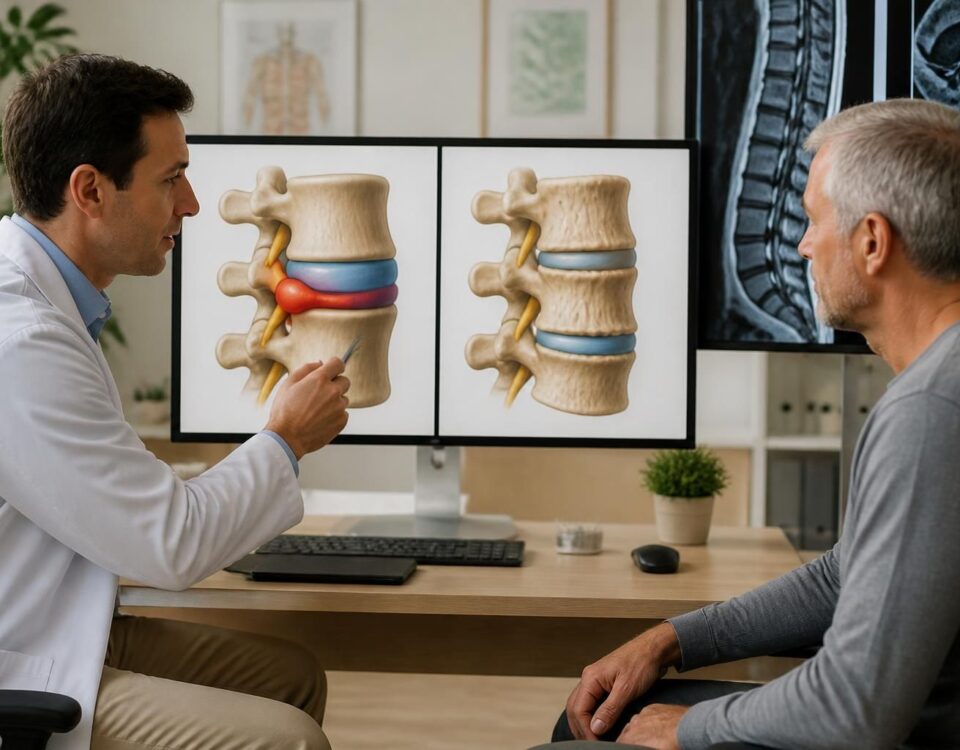
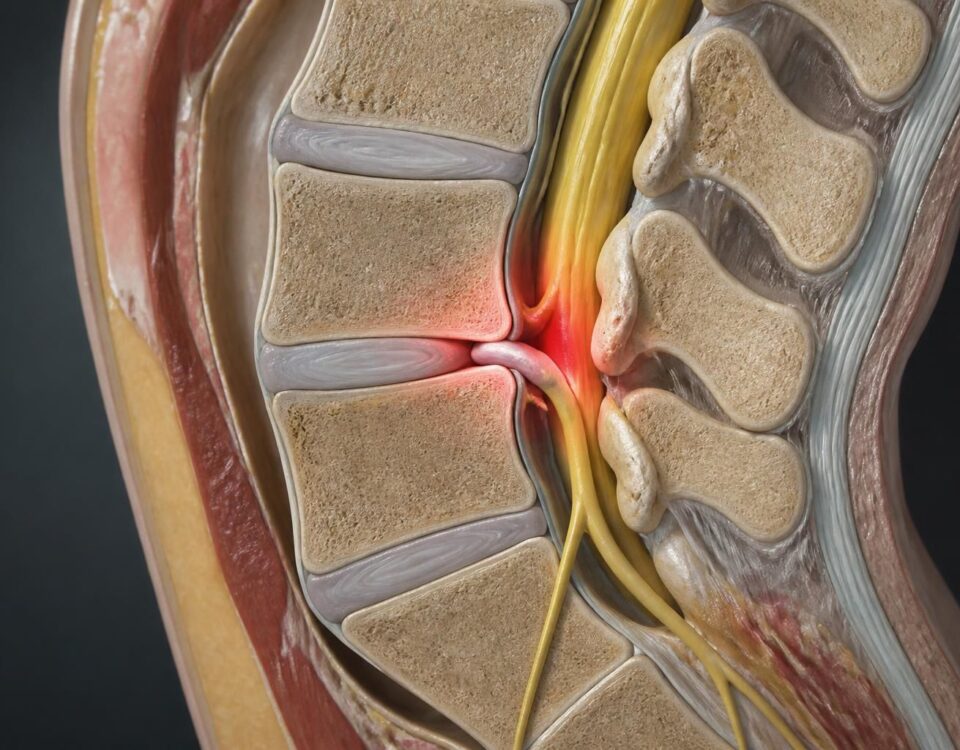
Lumbar disc herniation is the main cause. The nucleus of the disc can compress a nerve root at L5 or S1, causing pain that descends along the path of the nerve down to the foot. Foraminal stenosis or spinal stenosis can narrow the passages where nerves pass and cause radicular pain, especially when walking. Spondylolisthesis is the slipping of one vertebra over the one below. It can reduce the space of the foramen and compress the nerve roots. Piriformis syndrome is compression of the sciatic nerve by the piriformis muscle. The pain may simulate sciatica without a vertebral origin. Sciatica during pregnancy may occur in about 1% of women; it usually resolves after childbirth. Other possible causes (less common): tumors, infections, epidural hematoma, or vertebral fractures.Frequent causes of sciatica and impact on the foot
Radicular pain follows the territory of the affected root. Sciatica L5: pain that radiates towards the back of the foot and the big toe. Sciatica S1: pain towards the heel and the sole of the foot down to the little toes. Paresthesias often appear: tingling, prickling, or a “electric current” sensation along the path. Motor deficit may be observed, particularly muscle weakness in the muscles that lift the foot (L5) or that push onto the tips of the toes (S1). The warning signs require urgent consultation: rapid loss of strength in the foot, urinary problems, perineal anesthesia, marked bilateral pain, associated fever.Typical signs and symptoms
The evaluation is based on history and clinical examination. The doctor tests the Achilles reflex (S1) and the patellar reflex (L5), muscle strength, and sensitivity in the radicular territory. Imaging is used as needed. The lumbar MRI is the reference examination to visualize discs, nerves, and soft tissues. A CT scan can be useful if MRI is not possible. An EMG can help locate the affected root and assess the duration of nerve impairment.Diagnosis and medical examination
In 80% of cases, sciatica heals spontaneously in 4 to 6 weeks with non-surgical treatment guided by a healthcare professional. Typical non-surgical options include pain relief measures, anti-inflammatories, and, if necessary, oral corticosteroids. Muscle relaxants and treatments aimed at nerve pain may be considered depending on symptoms. In cases where pain persists or worsens, epidural injections may be offered by a neurosurgeon to reduce inflammation around the nerve root. Surgery is considered only in cases of failed conservative treatment or neurological emergency. The typical intervention is a microdiscectomy to remove the fragment of disc compressing the nerve root. The success rate is high, and recovery can be quick, but details depend on the case. For the muscles and joints of the back, approaches vary according to patients. In cases treated at the TAGMED Clinic, options may include targeted care tailored to each situation.Treatment and management
Consult quickly if you observe rapid loss of strength in the foot or leg, urinary problems, perineal anesthesia, bilateral sciatica, or fever associated with intense low back pain. These signs may indicate cauda equina syndrome, a neurosurgical emergency that requires rapid intervention.When to consult urgently
To learn more, see the following resources: Pain that worsens when sitting Pain in the foot or toes and sciaticaUseful links and recommended resources
Dr Sylvain Desforges, B.Sc., D.O., N.D., osteopath, is the founding president of Through SOS Sciatica, he publishes educational content on the symptoms of sciatica, possible causes such as herniated disc, disc pinching, foraminal stenosis, or irritation of a lumbar nerve root, as well as non-surgical approaches that may be considered depending on the evaluation. At the TAGMED Clinic, care may include, depending on the case, motorized neurovertebral decompression, specific osteopathy, or the precision impactor. For an evaluation related to the treatment of sciatica in Montreal / Mont-Royal or Terrebonne, consult the services available at the
TAGMED
and the ACMA association. He dedicates his practice to chronic pain of the spine, low back pain, and pain compatible with sciatica, particularly when the pain radiates to the buttock, leg, calf, foot, or toes.
TAGMED Clinic.
Medical disclaimer: The information and advice provided on this site do not replace the advice, diagnosis, or treatment of a healthcare professional. Please note that Dr Sylvain Desforges, osteopath, is neither a medical doctor nor a physician, and is not a specialist in a medical specialty as defined by the College of Physicians of Quebec. Manual medicine, functional medicine, and sports medicine as described on this site exclude any treatment or diagnosis made by a physician or specialist doctor. Always consult your doctor for any medical questions. For more details, please read our full Legal Notice.
Sciatica: pain in the foot and irritated nerve root
- Path of the sciatic nerve — from the lower back to the foot
- Irritated root — L5/S1
- Radicular pathway — pain along the nerve
- Pain in the foot — location according to the tibial and fibular branches
- Paresthesias and hypoesthesia — tingling and numbness
- Warning signs — rapid weakness, night pain, emergency

The Sciatica may manifest as pain radiating down to the foot when the nerve root is irritated or compressed. This article quickly presents the mechanisms, signs to watch for, and practical recommendations to relieve foot pain related to radicular irritation, prioritizing non-surgical approaches and situations requiring rapid intervention.
Understanding the link between foot pain and irritated nerve root
The pain that affects the foot originates from the pathway of the sciatic nerve, which starts from the lower spine and travels to the buttock, the back of the thigh, and the calf before projecting into the foot. When the nerve root is irritated or compressed at the lumbar level, the pain manifests along the nerve’s pathway, reaching the foot, and may be accompanied by burning sensations or electric shock-like feelings.
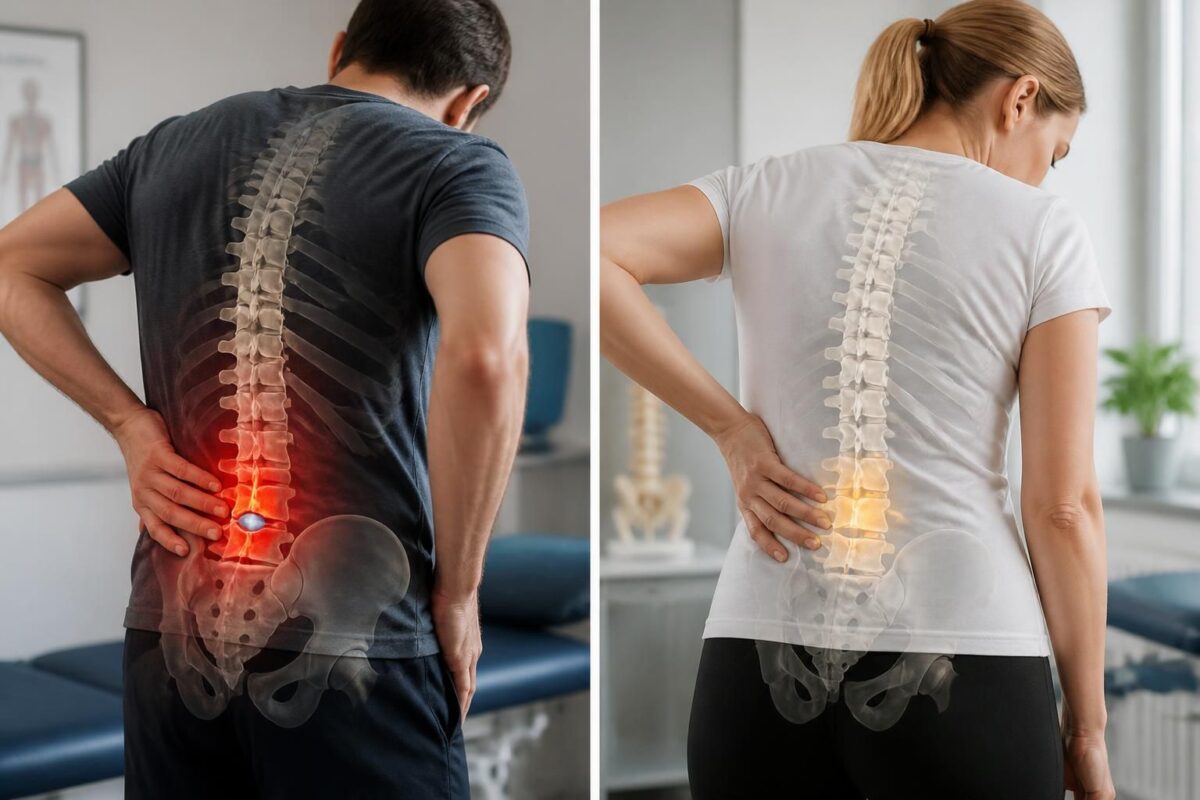
Herniated disc and disc bulge: do not confuse
IN BRIEF In brief, the Herniated disc and the disc bulge are two conditions of the spine that differ in their mechanism and prognosis. The disc bulge is a protrusion of the disc without rupture of the fibrous ring, often…
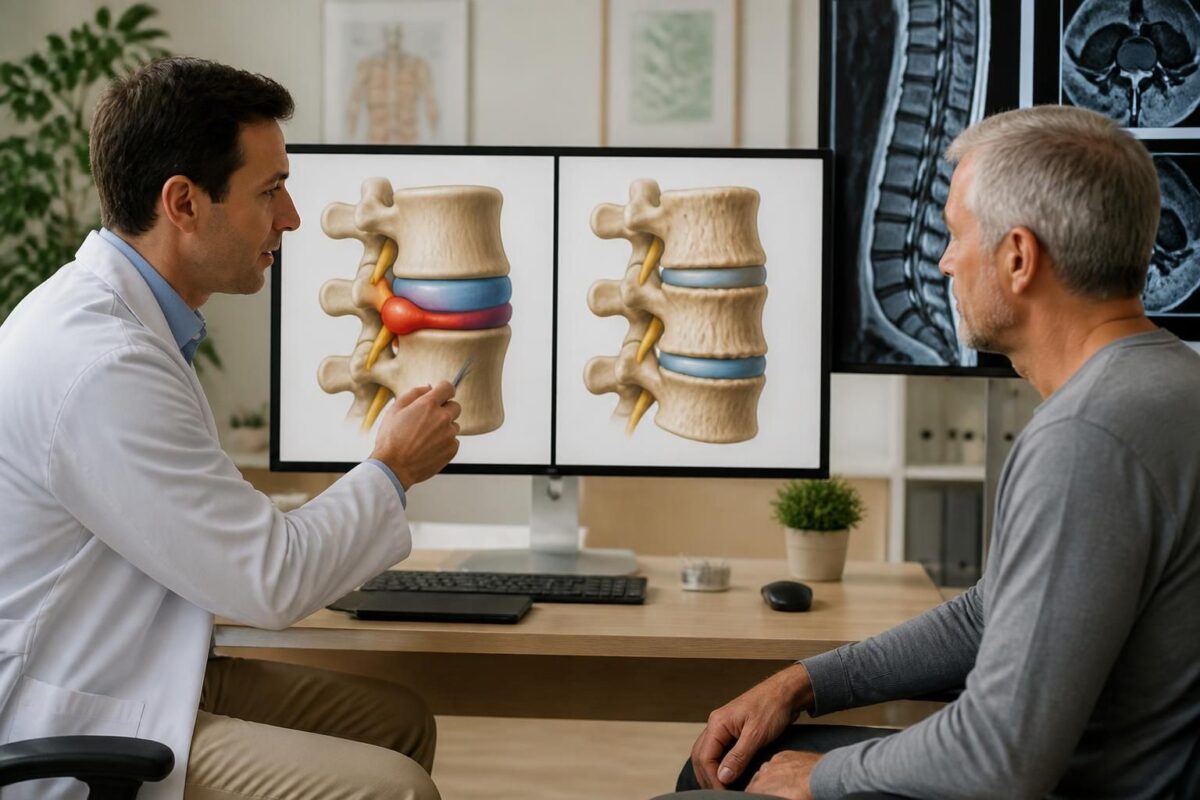
Herniated disc and disc disease: understanding the differences
IN BRIEF In brief, a herniated disc and discopathy are two distinct causes of spinal pain: wear of the intervertebral disc (discopathy) and the protrusion of the gelatinous nucleus that can compress a nerve (herniated disc). Understanding these differences helps…
Common causes of nerve root irritation and foot pain
The most common hypothesis is a lumbar disc herniation compressing a root (usually L5 or S1). Other mechanisms such as spinal stenosis, spondylolisthesis, or piriformis syndrome can also cause sciatica with pain extending to the foot. Less often, factors like pregnancy or rarer conditions (infections, tumors) contribute to this root irritation. A precise evaluation helps identify the affected root or roots and the best management approach.

Herniated disc and annular tear: possible pain
IN BRIEF In short, Herniated disc and annular tear refer to issues with the intervertebral disc that can cause lower back pain and, at times, pain radiating down the leg. Symptoms vary and can mimic sciatic pain. Treatment favors conservative…
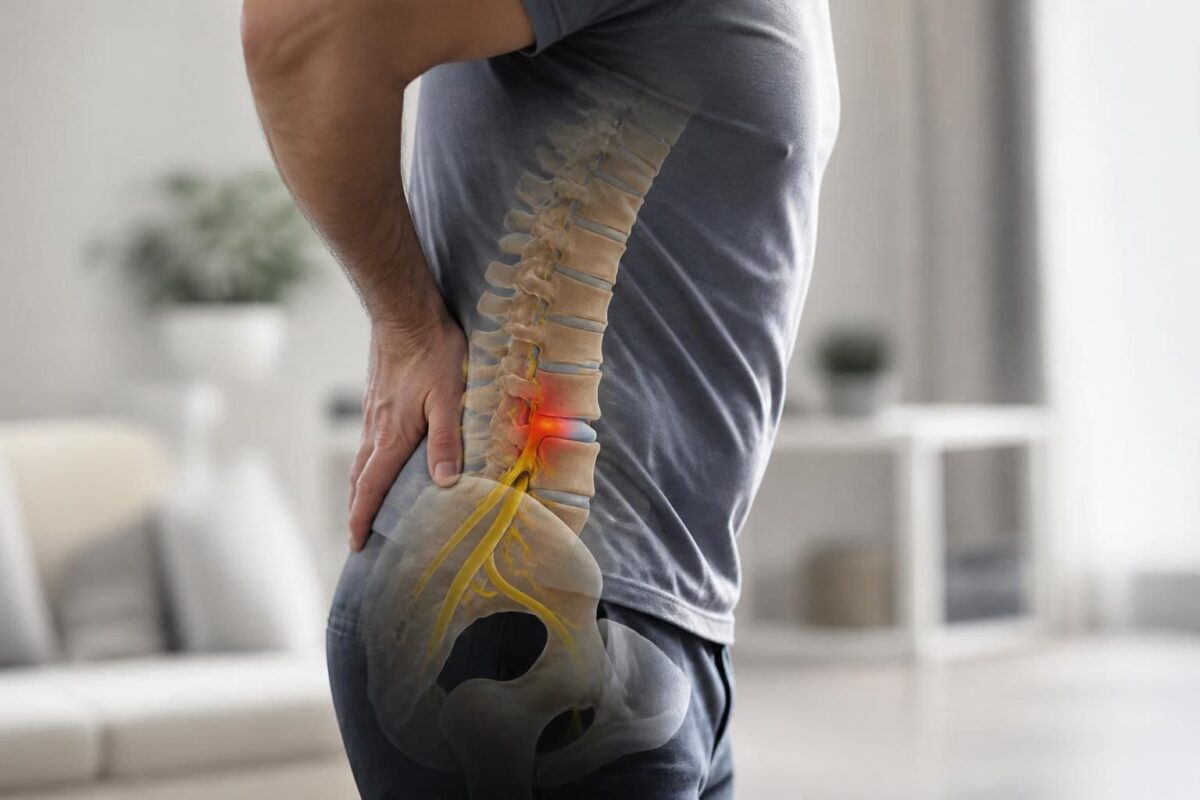
Herniated disc and chemical irritation of the nerve root
IN BRIEF In brief, Herniated disc and chemical irritation of the nerve root describe pain and dysfunction due to compression and inflammatory chemical exchanges affecting a spinal nerve root. This association explains radiating pain, abnormal sensations, and sometimes muscle weakness…
Signs and symptoms to know
The main symptom is a radicular pain that follows the nerve’s path and may radiate to the foot. Paresthesias (tingling, prickling) or a sensation of numbness may accompany the pain. In cases of motor deficit, such as difficulty lifting the foot or standing on tiptoe, a consultation is necessary. Warning signs to watch for include loss of bladder or bowel control, fever associated, or intense nocturnal low back pain that may suggest a neurosurgical emergency.
Herniated disc and mechanical compression of the nerve
IN BRIEF In brief, a herniated disc is a prolapse of the intervertebral disc that can lead to mechanical compression of the nerve root, causing pain and numbness that often radiate down the leg. This compression explains radiculopathy and sensations…
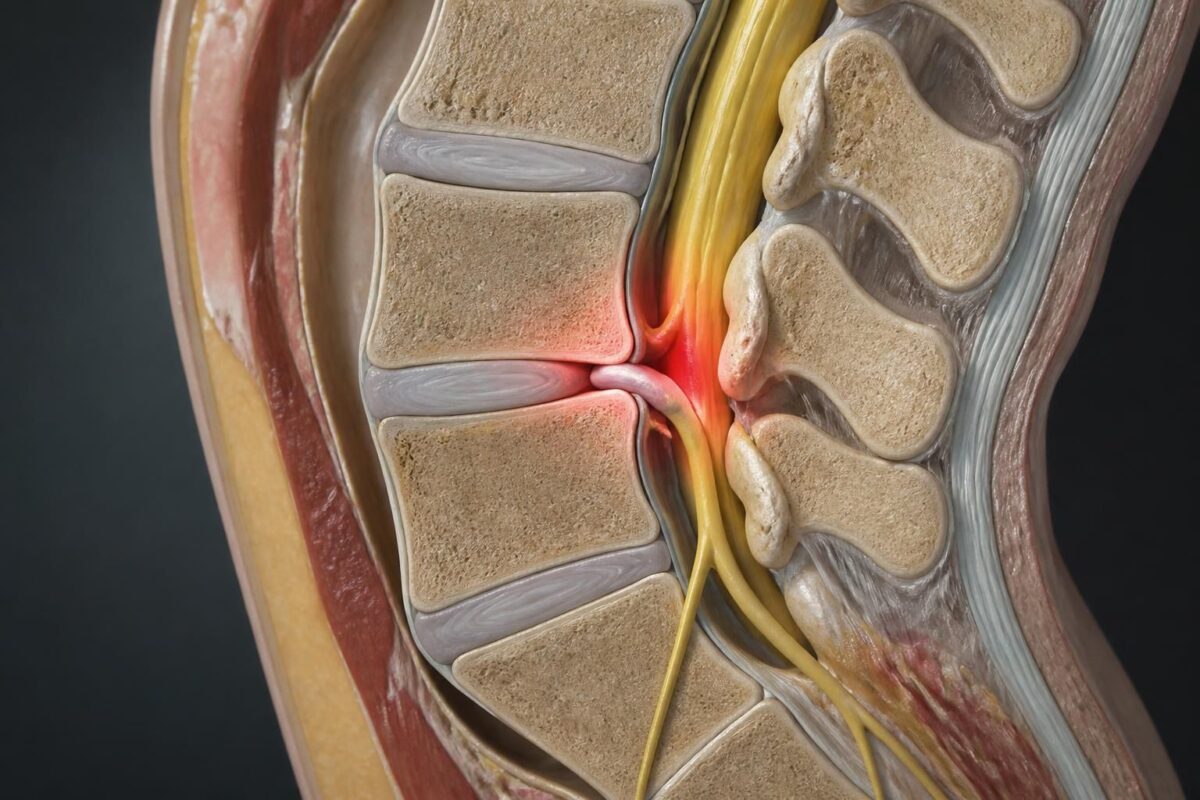
Herniated disc and nerve root inflammation
IN BRIEF In brief, lumbar disc herniation and nerve root inflammation refer to compression and irritation of a spinal root causing radiating pain, paresthesias, and sometimes muscle weakness. The mechanism combines disc protrusion and radicular inflammation, hence the importance of…
Recommended treatment approaches
Conservative treatment (first-line)
Most foot pain related to radicular irritation evolves favorably with non-surgical measures. Relative rest and the maintenance of suitable activity are preferred over prolonged bed rest. Analgesics (paracetamol, possibly opioids for severe pain) and non-steroidal anti-inflammatory drugs can help. Oral corticosteroids may be proposed for a short period to limit inflammation around the nerve root. Muscle relaxants relieve tense muscles, and gabapentinoids may be useful when the pain is neuropathic.
Physiotherapy and rehabilitation
Rehabilitation begins once the acute phase has passed and aims to strengthen the deep back and abdominal muscles, improve flexibility, and adopt good postures. Learning appropriate techniques for lifting loads and performing daily activities gently helps speed up the return to an active life and reduces strain on the spine.
Complementary interventions
If medical treatment proves insufficiently effective, epidural injections may be considered to reduce inflammation around the root. Surgery is only considered after failure of conservative treatment over several weeks or in the presence of an urgent sign, such as progressive motor deficits or cauda equina syndrome. In certain cases, minimally invasive techniques may be proposed depending on the patient’s profile, aiming to quickly alleviate pain and promote recovery.

Herniated disc and peripheral pain: sign to watch out for
IN BRIEF In brief, Herniated disc is the partial protrusion of the gelatinous nucleus of an intervertebral disc through the fibrous ring, which can compress a nerve root and trigger radiating pain in the limb. The key benefits of rapid…

Herniated disc and centralizing pain: sign to interpret
IN BRIEF In brief, a herniated disc is a protrusion of the intervertebral disc that can compress a nerve root, causing centralized pain and signs such as radiating pain, numbness, and weakness. The treatment is mostly conservative: guided activity, physical…
Practical tips for daily life
Maintaining regular and appropriate physical activity (walking, swimming on the back), ensuring correct posture, and learning proper lifting techniques are key elements. Comfortable resting positions, such as sleeping on the side with a pillow between the knees or on the back with knees bent, can ease the pain. Avoiding movements that worsen the pain and consulting a professional for a personalized evaluation allows for an adapted treatment plan for each case.
Sciatica: foot pain and irritated nerve root — comparative table
| Origin | Compressed or irritated lumbar nerve root causing pain that radiates to the foot. |
| Location and pathway | Pathway of the sciatic nerve: buttock, underside of the thigh, calf, and foot, depending on the level. |
| Nature of the pain | Acute or pulsating pain, type burning or electric shock-like, worsened by coughing or straining. |
| Associated symptoms | Paresthesias (tingling) and sometimes muscle weakness affecting the foot or ankle. |
| Common causes | Predominantly lumbar disc herniation; spinal stenosis, spondylolisthesis, piriformis syndrome. |
| Clinical signs | Positive Lasègue; diminished reflexes (Achilles or patellar); motor deficit depending on the affected root. |
| Useful tests | Lumbar MRI as a reference; CT if MRI is contraindicated; EMG in some cases. |
| Rapid treatment | Conservative approach in 4–6 weeks: analgesics, NSAIDs, short corticosteroids, physiotherapy, and postural prevention. |
| Emergency and when to consult | Cauda equina syndrome, rapid weakness, urinary disturbances, or perineal anesthesia requiring emergency consultation. |
Testimonials about sciatica: foot pain and irritated nerve root
“Before, the pain started from the lower back and radiated to the foot, with a burning sensation along the irritated nerve root. Every step was painful. After a personalized program and targeted exercises, the pain in my foot significantly decreased and I can walk normally again.”
“I constantly had pain radiating to the foot and tingling that prevented me from sleeping. Rehabilitation sessions and posture advice helped calm the pain and restore a smooth gait, without electric shocks.”
“As an athlete, a pain in the foot related to an irritated nerve root hindered my training. Thanks to a strengthening plan, stretching, and suitable recovery, I was able to resume running and my performance returned.”
“Low back pain and the radiation along the nerve pathway woke me up every night. After following a rehabilitation program and adjusting my daily positions, the pain in the foot decreased and my nights became peaceful again.”
“My sciatic nerve was so irritated that every step triggered a shock. With a gradual approach and practical advice, the pain diminished and walking became natural again.”
“I’ve learned to listen to my body: when the foot pain returns, suitable exercises and better posture are often enough to keep it at bay. I can return to my daily activities without fear of relapse and with more confidence.”
Sciatica is pain that follows the path of the sciatic nerve, the longest nerve in the body. It originates in the lower back, spreads into the buttock and the back of the thigh before reaching the calf and, sometimes, the foot. This pain is referred to as radicular because it reflects the irradiation from an irritated or compressed nerve root at the lumbar level. In 85% of cases, the primary cause is a lumbar disc herniation that compresses an L5 or S1 nerve root, triggering pain that can become disabling and significantly limit daily activities.
As Dr Sylvain Desforges, an osteopath specializing in chronic pain management and manual therapies, I emphasize a holistic approach aimed at quickly relieving pain while restoring mobility and function. My work is part of a process that integrates manual techniques, patient education, and, when necessary, appropriate technologies. My goal is to provide evidence-based care and help each person return to an active and peaceful life.
Diverse causes can explain sciatica. Disc herniation is the most common, but other mechanisms exist: narrowing of the lumbar canal (spinal stenosis), vertebral slippage (spondylolisthesis), tightness or hypertrophy of the piriformis muscle (piriformis syndrome), or specific factors related to pregnancy. Less common but possible are rarer pathologies such as infections, tumors, or trauma. This diversity explains why the evaluation must be personal and tailored to each patient.
The typical clinical signs of sciatica include: a radicular pain that follows the path of the nerve, paresthesias (tingling, electric shock sensation), and sometimes a motor or sensory deficit in the territory corresponding to the affected root. There are warning signs: loss of urinary or fecal control, perineal anesthesia, progressive weakness of both legs, or lumbar pain associated with fever—these elements require urgent medical consultation to rule out a neurological emergency.
The diagnosis primarily relies on a careful clinical examination, which looks for the painful path and confirms the affected root (for example, L5 or S1) using the Lasègue sign, reflex evaluation, and muscle strength testing. Imaging, particularly lumbar MRI, is the key tool for visualizing discs, nerves, and potential compressions; a CT scan can complement the evaluation when MRI is impossible. Electrodiagnostic tests, such as EMG, can specify the affected root and the duration of the impairment.
Treatment primarily favors a conservative approach, combining suitable activity, analgesics, and anti-inflammatories, followed by functional rehabilitation and core strengthening. Options like epidural injections may be considered if pain persists, and surgery remains an option when non-surgical treatment fails after several weeks or in cases of neurological emergency. The goal is to achieve lasting relief and avoid long-term mobility limitations.
Preventing recurrence involves maintaining good physical condition, strengthening core muscles, adopting appropriate posture in daily life, and using correct lifting techniques. In my practice, each patient benefits from a personalized plan that combines postural advice, targeted exercises, and regular follow-up to reduce tension on the discs and nerve roots. For a personalized assessment and to discuss available options, contact TAGMED Clinic and schedule an appointment with a team dedicated to managing radicular pain and the sciatic nerve.
This conclusion details the mechanisms of sciatica when the pain spreads to the foot and the nerve root is irritated. It recalls common causes such as lumbar disc herniation, the clinical signs to monitor, treatment options focusing on functional recovery, and situations that require prompt management to avoid permanently disabling sequelae.
Sciatica is an inflammatory or irritative pain that follows the path of the sciatic nerve, the longest nerve in the body. When the nerve root is compressed or irritated at the lumbar level, pain can radiate to the lower back, the buttock, and especially the back of the leg, sometimes affecting the foot in the form of pain or weakness of the foot.
The role of mechanical causes is predominant: a lumbar disc herniation is the most frequent cause and can compress the L5 or S1 roots, leading to specific symptoms along the path of these roots. In some cases, other mechanisms such as spinal canal stenosis, spondylolisthesis, or tensions in the piriformis muscle can cause a radicular manifestation that simulates sciatica pain but originates from non-vertebral sources. To enrich your understanding of the mechanisms, you can consult dedicated resources on mechanical causes and their connections to the foot.
The key symptoms should guide the diagnosis: radicular pain following the territory of a root, paresthesias along the leg, and potentially a motor deficit with weakness during ankle or foot movements. A weak foot can represent an important sign to monitor, particularly the risk of foot drop in the case of L5 impairment. Warning signs such as loss of urinary control or lumbar pain associated with fever warrant emergency management.
The diagnosis first relies on a clinical examination (notably the Lasègue sign and evaluation of strength and reflexes), then becomes more precise with imaging tests like lumbar MRI to visualize discs and nerves, and sometimes an electromyogram (EMG) to locate the affected root and assess the duration of nerve impairment. Complementary sources present the indications and limitations of various tests in the context of sciatica.
Treatment primarily aims for a conservative and functional approach: relative rest, analgesics and anti-inflammatories, and adapted physiotherapy to strengthen deep muscles, improve flexibility, and relearn daily movements. Epidural injections may be considered in cases of inadequate response, with relief rates varying among patients. Surgery is indicated only in cases of failure of optimal treatment over several weeks or neurological emergency, for example in the presence of a cauda equina syndrome or progressive motor deficit. Minimally invasive techniques often allow for a quicker recovery.
For foot pain associated with an irritated root, it is essential to monitor signs of worsening and to emphasize a gradual return to activities while protecting the spine. External resources provide additional explanations on the mechanisms, therapeutic options, and preventive measures: understanding possible mechanical causes, sign to watch for, radiculopathy, pain after a day of sitting, and MSD Manuals.
Finally, prevention relies on maintaining appropriate physical activity, strengthening and stretching the trunk muscles, good posture, and correct lifting technique. Specialized resources on prevention and symptoms can help you anticipate episodes and react quickly in case of the appearance of radiating pain down to the foot, numbness, or foot weakness.

Dr Sylvain Desforges, B.Sc., D.O., N.D., osteopath, is the founding president of TAGMED and of the ACMA association. He dedicates his practice to chronic spinal pain, low back pain and symptoms compatible with sciatica, particularly when pain radiates toward the buttock, leg, calf, foot or toes.
Through SOS Sciatique, he publishes educational content on sciatica symptoms, possible causes such as disc herniation, disc narrowing, foraminal stenosis or irritation of a lumbar nerve root, as well as non-surgical approaches that may be considered according to the evaluation. At Clinique TAGMED, care may include, depending on the case, motorized neurovertebral decompression, specific osteopathic care or precision percussion.
For an evaluation related to sciatica treatment in Montreal / Mount Royal or sciatica treatment in Terrebonne, please consult the services available at Clinique TAGMED.
Medical disclaimer
The information published on SOS Sciatique is provided for educational purposes only and does not replace a consultation, diagnosis, opinion or treatment provided by a physician or another authorized healthcare professional. The author of this article is neither a medical doctor nor a specialist in a medical specialty recognized by the Collège des médecins du Québec. The osteopathic, manual medicine or functional support approaches described on this site do not constitute medical acts and are not intended to replace medical follow-up.
Consult a physician or emergency service in cases of loss of bladder or bowel control, anesthesia in the saddle area, significant or progressive weakness in the leg or foot, fever, recent trauma, severe pain or rapid worsening of symptoms. For more details, please read our Legal Notice.