Sciatica and loss of strength: a sign not to be taken lightly
04/09/2026
Sciatica and travel: how to recognize a worsening
04/09/2026
IN BRIEF
| In brief, Herniated disc is the partial protrusion of the gelatinous nucleus of an intervertebral disc through the fibrous ring, which can compress a nerve root and trigger radiating pain in the limb. The key benefits of rapid screening and an appropriate rehabilitation pathway include quick pain relief, maintenance of mobility, and reduction of the risk of surgery through medical treatment and active physical therapy. Specifically, diagnosis initially relies on clinical examination; depending on the case, imaging may be necessary; then a progressive exercise and rehabilitation program promotes recovery. Warning signs require urgent management, such as loss of urinary control, saddle anesthesia, or major weakness. |
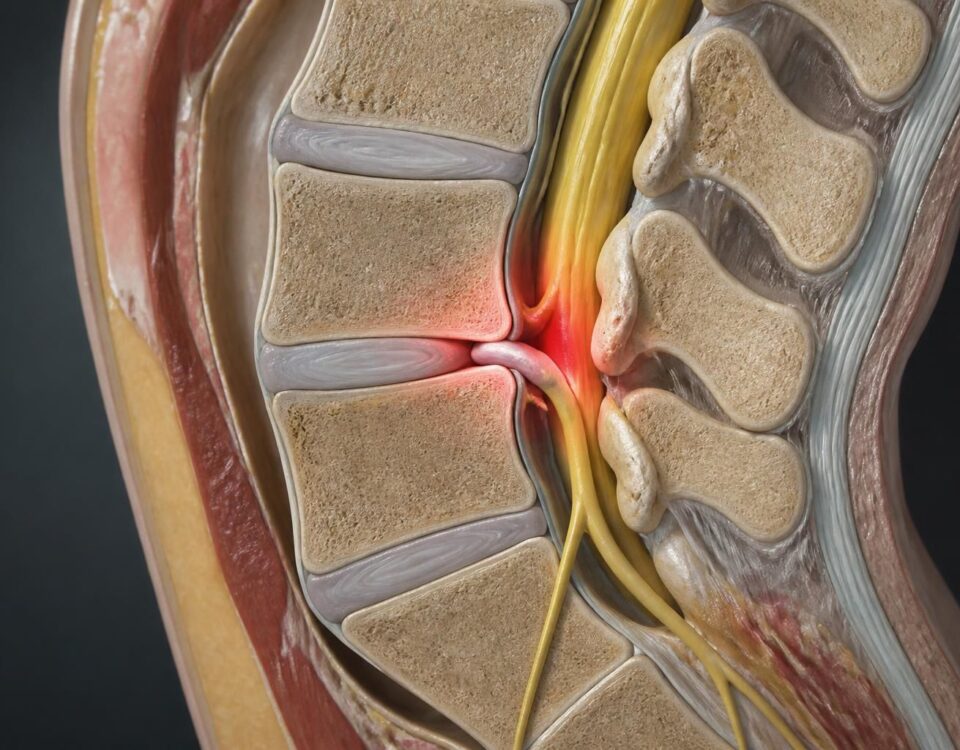
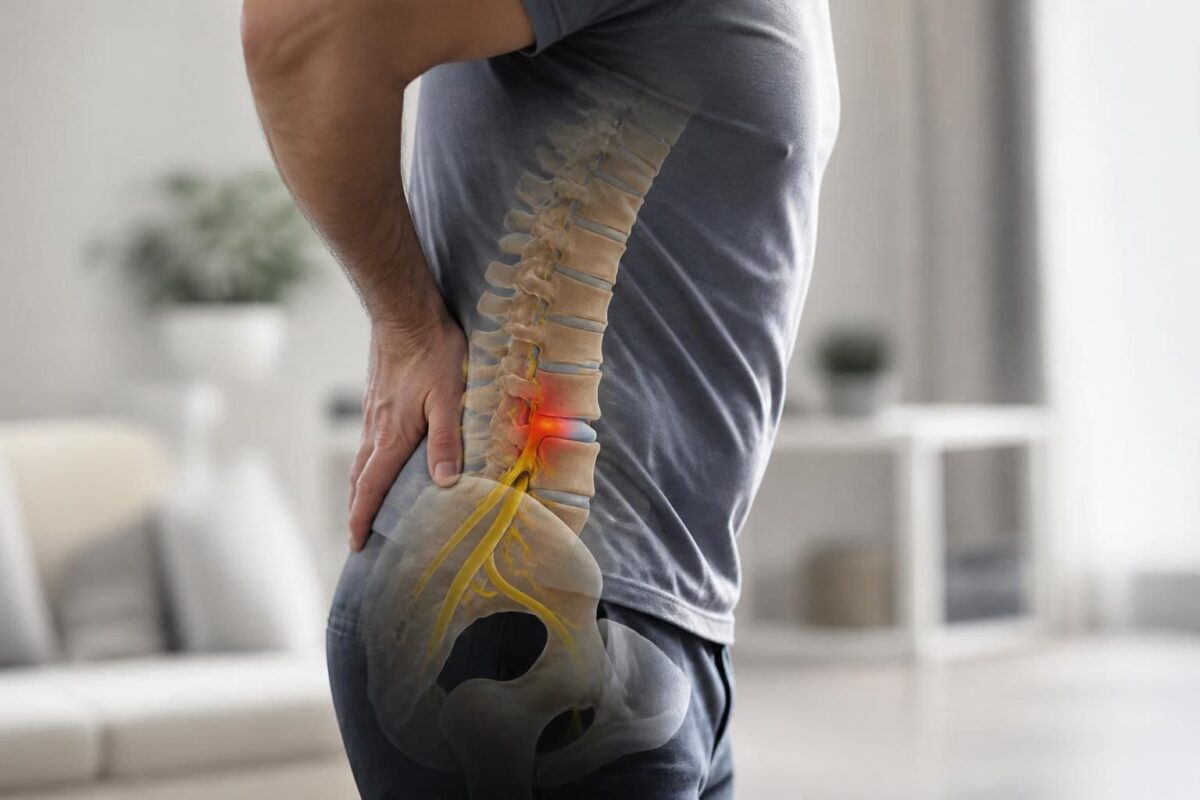
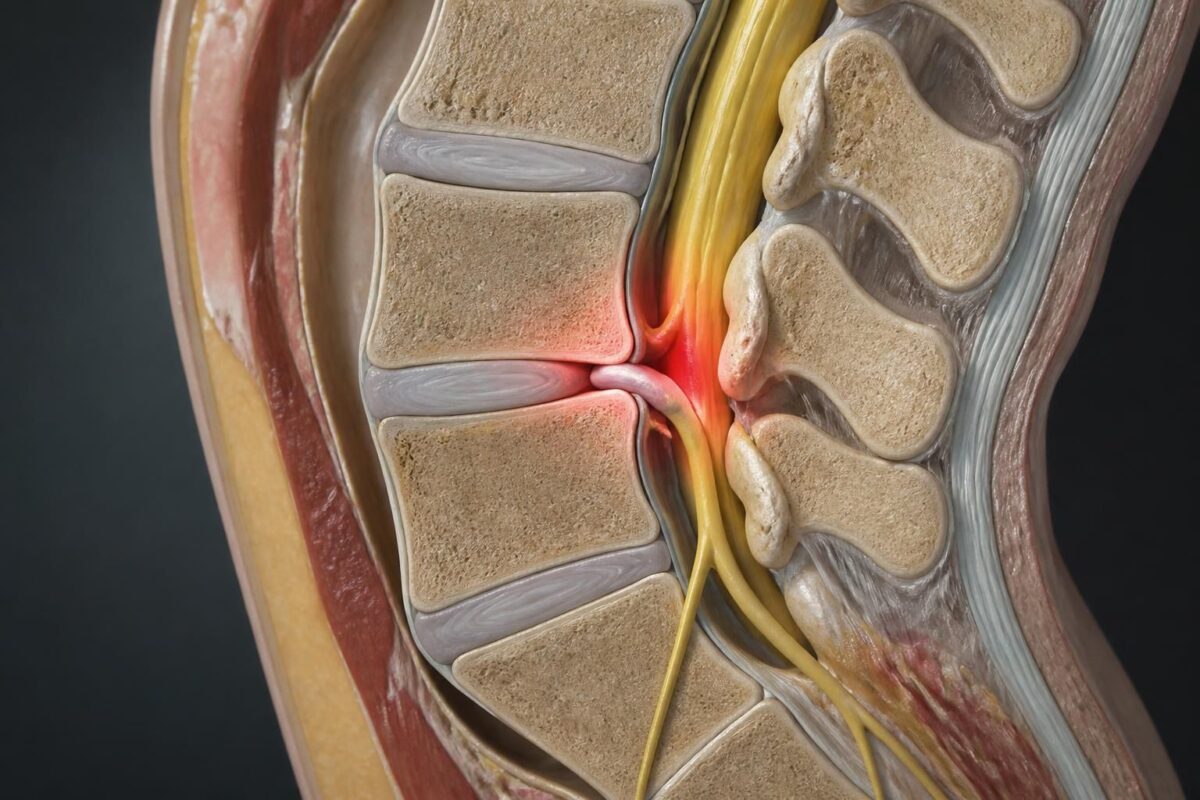
The herniated disc is the partial protrusion of the nucleus of the intervertebral disc through its covering. It can compress a nearby nerve root and cause radiating pain along the nerve pathway, sometimes extending to the limb, without necessarily being felt by everyone.
Signs to watch for when the pain becomes peripheral:
- Local pain in the back or neck with radiation to the buttock, thigh, calf, or arm, depending on the level of the disc
- Paresthesias (tingling, “pins and needles” sensation) along the nerve pathway
- Muscle weakness in the affected limb (difficulty lifting the foot, gripping the hand, or carrying an object)
- Urgent warning sign:
- loss of urinary or fecal control, saddle anesthesia, or major motor deficit appearing suddenly
If these signs appear, prioritize a quick consultation. In the absence of emergency signs, a first medical opinion within the week helps to guide the treatment pathway and appropriate rehabilitation.
Quick summary: a herniated disc can cause radiating pain along the nerve pathway. This article explains the signs to watch for, the steps in diagnosis, management options, and prognosis. It emphasizes the importance of appropriate triage to avoid delays in treatment and to guide towards non-surgical care when appropriate. For further explanations, you can check related resources, including those addressing pain associated with sitting and other aspects of herniated discs.
Article written by Dr Sylvain Desforges, osteopath.
Warning signs and symptoms to watch for
A localized vertebral pain may be accompanied by radiating pain in a leg or arm. This radiation usually follows the path of a compressed nerve root and may be accompanied by paresthesias such as tingling, or muscle weakness. The appearance or worsening of the following signs should attract attention:
– Pain that radiates down to the buttock, thigh, calf, or foot (in cases of lumbar pain, the radiation often characterizes sciatica; in the neck, cervico-brachial neuralgia). To better understand this mechanism, see this summary on radicular radiation.
– Tingling or “buzzing” sensation in the limb.
– Localized muscle weakness, for example, difficulty in raising the toes or maintaining a standing posture on tiptoes.
– Pain lasting beyond a few days, especially when associated with radiation.
For a deeper understanding of the mechanisms and warning signals, refer to the following resources: pain aggravated by sitting and general information on herniated discs.
When to consult: a three-level decision tree
Level 1: standard consultation
Lower back or neck pain persists after a few days of simple measures (moderate activity, gentle heat, basic painkillers). There is no marked radiation or notable weakness. In this case, make an appointment with your primary care physician within 48–72 hours for evaluation and advice.
Level 2: quick consultation
The pain radiates into the leg or arm, tingling appears, or the pain wakes you up at night. Consult within the week (5–7 days) and discuss additional examinations if necessary. A slight loss of strength or functional discomfort may also fall under this level.
Level 3: absolute emergency
Signs not to be ignored that require immediate management:
- Loss of urinary or fecal control
- Saddle anesthesia (loss of sensation around the perineum and inner thigh areas)
- Major loss of strength or rapid progression of weakness in a leg
- Inability to stand on tiptoes
- Fever associated with severe vertebral pain
- Recent significant trauma
In these situations, seek emergency care without delay, as some neurological situations require rapid intervention to preserve function. To understand why certain situations necessitate urgent care, you can consult specialized resources available at this point of attention on disc pressures and nerve irritations.
The stages of evolution of a herniated disc
A disc herniation typically progresses through four stages. The disc bulge occurs when the fibrous ring deforms without rupture. Then comes the partial extrusion of the nucleus through the ring, accompanied by inflammation. A fragment can then migrate and move within the spinal canal. Finally, the body may encourage the resorption of the herniated fragment through immune mechanisms. This natural progression may explain why some hernias decrease in imaging over the months, even though symptoms vary. To understand this continuum, you can refer to the dedicated resources on the progression of disc herniation.
How to check for the presence of a disc herniation?
The diagnosis primarily relies on clinical examination. The doctor assesses the onset pattern, location of the pain, and neurological signs. Targeted tests measure muscle strength, reflexes, and sensitivity. Imaging is considered based on clinical elements and may include MRI as the reference examination to visualize the disc and root compression. A CT scan is an alternative when MRI is contraindicated. To delve deeper into diagnostic modalities, consult the resources on diagnosis and imaging and sciatica without disc herniation.
The role of management and physiotherapy
The typical approach favors a global and coordinated approach with the treating physician. Within the TAGMED Clinic framework, non-surgical options may be considered based on the evaluation, including neurovertebral decompression or other non-invasive procedures suited to each patient. For a specialized evaluation and referrals to appropriate treatments, you can consult TAGMED Clinic.
Physiotherapy can intervene in a coherent framework with the doctor, but is not the first recourse in the case of a red flag. The goal is to reduce pain, improve mobility, and promote a gradual return to activities, while respecting the body’s signals and the patient’s tolerance. To understand the distinctions between the approaches and available options, you can consult the resources related to neurovertebral decompression and assessment in specialized clinics on neurovertebral decompression and why decompression can be a sustainable solution.
Common fears and objections
Several misconceptions arise during consultations. First, many fear an inevitable operation. Most lower back pain associated with a disc herniation progresses favorably with conservative treatment and appropriate measures, without surgery. Second, physiotherapy sometimes raises concerns. The process is gradual and aims for relief and mobility, without sudden loading, and pain may slightly increase at first without signifying a lasting worsening. Third, lack of time can be a barrier. Options at TAGMED Clinic and programs conducted at home exist to support continuity of care. Finally, some people fear that moving will worsen the problem; on the contrary, maintaining a suitable guided activity is generally beneficial for recovery. For additional information on various situations, consult link on disc pressures and nerve irritations.
Prognosis and concrete expectations
The prognosis is generally favorable in non-urgent cases: most lower back pains associated with a disc herniation evolve positively over a period of weeks with appropriate management. Re-evaluation after an acute episode is useful to adjust the care plan. Early signs of improvement may include better tolerance in sitting positions, reduced radiation, and more restful sleep. In some cases, recovery may take several months and some patients require a different management approach if pain persists. To explore additional information on the subject, consult pain and sitting position and general resources on disc herniation available on understanding disc herniation.
A medical disclaimer: The information and advice provided on this site do not replace the opinion, diagnosis, or treatment of a healthcare professional. Please note that Dr. Sylvain Desforges, osteopath, is neither a doctor of medicine nor a physician, and is not a specialist in a medical specialty as defined by the Collège des médecins du Québec. Manual medicine, functional medicine, and sports medicine as described on this site exclude any medical treatment or diagnosis made by a physician or specialist doctor. Always consult your doctor for any medical questions. For more details, please read our full Legal Notice.
Disc herniation and peripheral pain: signs to watch for
Analysis axis: From sign to action — interpret signals and guide the clinical and therapeutic approach.
- Location Spinal pain radiating along the nerve pathway.
- Radiation Pain descending into the buttock/leg/foot (or shoulder/arm depending on the level).
- Paresthesias Tingling or numbness in the limb.
- Motor deficit Targeted weakness (foot, toes, leg).
- Duration Persistent pain (> 4–6 weeks) or worsening at rest.
- Warning signs Loss of urinary/fecal control, saddle anesthesia, major weakness.
- When to consult Marked radiation or weakness; appointment within 5–7 days.
- Emergency Absolute signs: loss of sphincter control or perineal anesthesia — call emergency services.
- Kinesiology and rehabilitation Assessment and active program quickly to rehabilitate the back.
- Imaging MRI not systematic in acute cases; decision at the physician’s discretion.
- Activity Adapted activity and correct posture; avoid prolonged rest.
- Follow-up Re-evaluation after 2–4 weeks to adjust the plan.

The disc herniation can cause pain that radiates into the affected limb, with or without tingling and muscle weakness. This quick guide helps you identify the signs that require evaluation and act quickly to limit functional impairment. The goal is to monitor the evolution, from simple measures to specialized consultation, in order to preserve mobility and speed up recovery.
Signs to monitor
Radiated pain and location
A pain that spreads from the spine to the buttock, thigh, calf, or foot indicates potential radiculopathy. In the cervical spine, the radiation may reach the shoulder, arm, and hand. If the pain is localized only in the back without radiation, the risk is lower but should still be monitored.
Paresthesias and weakness
Paresthesias (tingling sensations) often outline the path of the involved nerve. Muscle weakness that interferes with daily activities (walking on tiptoes, lifting the foot) is a warning sign that requires prompt consultation.
Sign of intensity and persistence
If the pain persists for more than a few days, intensifies, or disrupts sleep, an evaluation should be considered. Marked radiation, associated with sleep disturbances or functional limitations, increases the need for a quick review.
Emergency signs not to ignore
Any sign of major neurological impairment must prompt immediate medical attention: loss of bowel or bladder control, saddle anesthesia, sudden weakness, or inability to move a leg, fever with spinal pain, significant recent trauma. These factors require emergency consultation.

Herniated disc and annular tear: possible pain
IN BRIEF In short, Herniated disc and annular tear refer to issues with the intervertebral disc that can cause lower back pain and, at times, pain radiating down the leg. Symptoms vary and can mimic sciatic pain. Treatment favors conservative…
Herniated disc and chemical irritation of the nerve root
IN BRIEF In brief, Herniated disc and chemical irritation of the nerve root describe pain and dysfunction due to compression and inflammatory chemical exchanges affecting a spinal nerve root. This association explains radiating pain, abnormal sensations, and sometimes muscle weakness…
When to consult and what to expect
Level 1 — consultation within 48 to 72 hours
Lower back or cervical pain without marked radiation and without neurological signs suggesting major nerve damage; you may consult your primary care physician within the week for an initial clinical examination and to establish an appropriate treatment plan.
Level 2 — consultation within the week
Radiating pain in the limb, paresthesias, night pain, or significant functional impairment. A quick evaluation is indicated, with possible additional tests to specify the level of discopathy and plan appropriate physiotherapy.
Level 3 — emergency
Absolute emergency in the presence of cauda equina syndrome or major neurological abnormalities. Contact emergency services immediately.
Herniated disc and mechanical compression of the nerve
IN BRIEF In brief, a herniated disc is a prolapse of the intervertebral disc that can lead to mechanical compression of the nerve root, causing pain and numbness that often radiate down the leg. This compression explains radiculopathy and sensations…
Herniated disc and nerve root inflammation
IN BRIEF In brief, lumbar disc herniation and nerve root inflammation refer to compression and irritation of a spinal root causing radiating pain, paresthesias, and sometimes muscle weakness. The mechanism combines disc protrusion and radicular inflammation, hence the importance of…
The role of early action and physiotherapy
In the case of a disc herniation felt, maintaining adapted activity and avoiding prolonged rest is key. Physiotherapy offers a progressive approach: mobilizations, exercises to strengthen stabilizing muscles, and neurodynamics techniques to relieve pain and restore motor control. Complementary tools can be considered under supervision, without replacing the patient’s active effort.

Herniated disc and centralizing pain: sign to interpret
IN BRIEF In brief, a herniated disc is a protrusion of the intervertebral disc that can compress a nerve root, causing centralized pain and signs such as radiating pain, numbness, and weakness. The treatment is mostly conservative: guided activity, physical…

Herniated disc and pain that travels lower after movement
IN BRIEF The Herniated Disc is a protrusion of the intervertebral disc that can compress a nerve root, leading to a pain that radiates down after a movement. The benefits include better guidance for non-surgical treatment and a gradual reduction…
What to remember
Most disc herniations evolve favorably with conservative treatment and appropriate rehabilitation in the first weeks. Monitoring the nerve path irrigation, the presence of paresthesias, and signs of weakness is essential to determine whether to proceed to further investigations or specialized care.

Herniated disc and generic exercises: risk of poor choices
IN BRIEF In brief, the herniated disc and generic exercises can worsen the pressure on the discs and the pain if the movements are inappropriate. The advantage of personalized approaches lies in tailored exercises, controlled progression, and better recovery, while…

Herniated disc and stretches: why some movements worsen
IN BRIEF A herniated disc is the displacement of an intervertebral disc that can compress a nerve root, causing pain and limitations. In this context, certain gestures or physical practices exacerbate pressure on the spine. In short, the herniated disc…
Disc herniation and peripheral pain: signs to watch for
| Sign to monitor | Concise observation |
|---|---|
| Persistent lumbar or cervical pain > 2-3 days | Consult quickly if it persists without improvement and remains painful. |
| Painful radiation in the limb (leg/arm) | Evaluate quickly, as it may require a precise diagnosis and appropriate management. |
| Paresthesias or numbness | Monitor and consult if persistent or worsening. |
| Motor weakness (foot, leg) | Quick consultation if notable loss of strength or progression. |
| Pain that wakes you at night | Early evaluation recommended to exclude persistent nerve irritation. |
| Loss of urinary or fecal control and saddle anesthesia | Absolute medical emergency; call for help without delay. |
| Pain worsened by flexion or effort | Adapt activity and consult to adjust treatment. |
| Failure of conservative treatment after 4-6 weeks | Re-evaluation and discussion of options (injections, surgery if necessary). |
| Progressing motor deficit | Quick consultation; orientation towards the best options depending on the context. |
Testimonials on Disc Herniation and Peripheral Pain: signs to watch for
“I woke up with lower back pain that quickly became peripheral along the buttock and leg. Paresthesias and slight weakness in the foot appeared, which prompted me to seek consultation.” — Marie, 42 years old
“The radiation extended from my back to my foot and was accompanied by a loss of strength in my ankle. This development made me realize that I needed to monitor the signs and act quickly.” — Adrien, 33 years old
“At first, the pain started in my neck and radiated into my shoulder and arm, with tingling that kept me from sleeping. It became a sign to watch for.” — Fatima, 52 years old
“The pain in my arm appeared after a few days and was associated with stiffness and tingling; I felt the peripheralization reach my hand and wrist.” — Sophie, 29 years old
“The pain traveled down my thigh and affected my knee, with slight weakness in my calf while walking. I recognized it as cruralgia and made an appointment for early treatment.” — Jérôme, 60 years old
“Nighttime tingling and a feeling of numbness that evolves alerted me: we need to watch for signs and consult promptly to evaluate a herniated disk.” — Clara, 43 years old
Herniated Disc and Peripheral Pain: Signs to Watch For
Dr. Sylvain Desforges, expert in osteopathy, naturopathy, and manual medicine, plays a central role in the integrated approach to back pathologies. Founding president of TAGMED clinics and the ACMA association, he has dedicated his career to innovation in health and the continuous improvement of clinical practices. His work focuses on managing chronic pain and optimizing well-being, with particular attention to early signs that allow for the assessment of a potential herniated disc and the pain that may peripheralize from it.
His approach combines advanced technologies and a patient-centered strategy. Among the tools used are spinal decompression, the use of laser, and shock wave therapies, integrated into a strategy aimed at reducing inflammation and restoring mobility. However, the goal goes well beyond immediate relief: it is to support the patient in sustainable rehabilitation, encouraging them to take an active role in their recovery and to recognize signs to watch for when peripheral pain is present. This philosophy allows for anticipating complications and quickly adjusting the therapeutic pathway.
For him, a herniated disc results from a bulging of the nucleus of a disc through the fibrous envelope, which can compress a nerve root and cause pain radiating to the limb. While some hernias remain silent, when a painful pathway extends towards the legs or arms, accompanied by paresthesias or weakness, it constitutes a sign to watch for and evaluate with caution. The importance lies in the localization of symptoms and their impact on daily activities, rather than solely on the radiological term encountered during imaging studies.
Among the signals to watch for are pain that persists despite usual measures, marked radiation along a nerve, tingling, or weakness that interferes with the execution of everyday tasks. More alarming signals exist, such as significant loss of strength, sensory disturbances in the perineum, or urinary/bowel signs, or fever-related pain associated with vertebral pain; these require urgent intervention. Recognizing these indicators helps avoid worsening conditions and quickly directs to appropriate clinical resources.
In his approach, the initial evaluation prioritizes clinical examination and neurological tests to precisely identify the affected root, rather than relying solely on imaging. His aim is to limit unnecessary explorations and encourage conservative management when possible. Physiotherapy and active rehabilitation occupy a central place, complemented by technological interventions when necessary, to reduce inflammation, restore mobility, and strengthen lumbar or cervical stability.
The pathway proposed by Dr. Sylvain Desforges is graduated and personalized. Progress is generally measured over a few weeks, with an initial phase focused on relief and improvement of mobility, followed by gradual strengthening and a progressive return to activities. The goal is a sustainable functional recovery, while remaining vigilant to the possibility of complementary treatments when peripheral pain persists. This patient-centered vision illustrates the physician’s commitment to promoting sustainable health and empowering individuals to take action regarding their back.
This summary article on herniated discs and peripheralizing pain reminds us that pain can radiate along the nerve pathway, sometimes with paresthesias or weakness, and that the vast majority of cases evolve favorably with appropriate management, often without surgery. It emphasizes the importance of recognizing warning signs and following a pathway that prioritizes conservative treatment and rehabilitation.
The mechanism of herniated discs involves a protrusion of the nucleus of the intervertebral disc that can compress a nerve root. This compression causes pain that radiates to the corresponding limb, sometimes accompanied by paresthesias and, in some cases, motor deficits. The lumbar and cervical areas remain the most affected, with typical signs such as radiation into the leg or arm and capricious sensory or strength disturbances. To better understand the symptoms and causes, you can consult specialized resources like Herniated Disc: Symptoms, Causes, and Treatment.
Warning signs that require special attention include marked loss of strength, significant paresthesias, and pain that worsens or awakens at night, as well as emergency signs such as loss of sphincter control or saddle anesthesia. These elements suggest more serious radicular involvement and warrant prompt management in consultation or at emergency departments. For explanations on risks and recurrence factors, you can consult Herniated Disc and Sciatica Recurrence – Possible Factors.
The diagnosis primarily relies on clinical examination. Imaging (MRI) is not systematic at first and can be postponed if red flags are not present, as abnormalities can exist without symptoms and vice versa. For more in-depth information on imaging indications and alternatives, refer to resources like Herniated Disc – Symptoms, Causes, and Treatment or Vidal – Symptoms and Complications.
The care pathway prioritizes conservative treatment and physiotherapy as the main foundation. In practice, the goal is to alleviate pain, restore mobility, and strengthen supporting muscles, in order to avoid recurrences and allow for a gradual return to activities. Physiotherapy generally combines manual techniques, active exercises, and technological approaches when relevant. For information on specialized approaches and exercises, refer to resources such as Doctolix – Herniated disc: symptoms and treatment or Sciatica and disc protrusion.
The prognosis is generally favorable: about 80 to 90% of cases progress without surgery over a period of 4 to 12 weeks when conservative treatment is well conducted and activity is appropriate. Active rehabilitation and maintaining a suitable level of activity play a key role in recovery. For additional readings on progression and practical advice, you can refer to Herniated disc – symptoms and treatment or Vidal – symptoms and complications.
In case of doubt, prioritize a thorough clinical assessment to distinguish a normal disc pain from a sign requiring prompt management. For practical advice and examples of safe exercises, resources such as Herniated disc and exercises – risks and choices or Health advice – symptoms and complications can be useful in your information and prevention efforts.
To delve into warning signs and management steps, you can also consult resources on associated pain and situations requiring rapid evaluation, particularly pages dedicated to heel pain or the sensation of a numb foot when it indicates radiculopathy, such as Herniated disc and heel pain – possible S1 root and Sciatica and numb foot sensation – when to consult.

Dr Sylvain Desforges, B.Sc., D.O., N.D., osteopath, is the founding president of TAGMED and of the ACMA association. He dedicates his practice to chronic spinal pain, low back pain and symptoms compatible with sciatica, particularly when pain radiates toward the buttock, leg, calf, foot or toes.
Through SOS Sciatique, he publishes educational content on sciatica symptoms, possible causes such as disc herniation, disc narrowing, foraminal stenosis or irritation of a lumbar nerve root, as well as non-surgical approaches that may be considered according to the evaluation. At Clinique TAGMED, care may include, depending on the case, motorized neurovertebral decompression, specific osteopathic care or precision percussion.
For an evaluation related to sciatica treatment in Montreal / Mount Royal or sciatica treatment in Terrebonne, please consult the services available at Clinique TAGMED.
Medical disclaimer
The information published on SOS Sciatique is provided for educational purposes only and does not replace a consultation, diagnosis, opinion or treatment provided by a physician or another authorized healthcare professional. The author of this article is neither a medical doctor nor a specialist in a medical specialty recognized by the Collège des médecins du Québec. The osteopathic, manual medicine or functional support approaches described on this site do not constitute medical acts and are not intended to replace medical follow-up.
Consult a physician or emergency service in cases of loss of bladder or bowel control, anesthesia in the saddle area, significant or progressive weakness in the leg or foot, fever, recent trauma, severe pain or rapid worsening of symptoms. For more details, please read our Legal Notice.