Sciatica and the sensation of a numb leg: what does this symptom mean?
02/09/2026
Sciatica and train: pain after a long journey
02/09/2026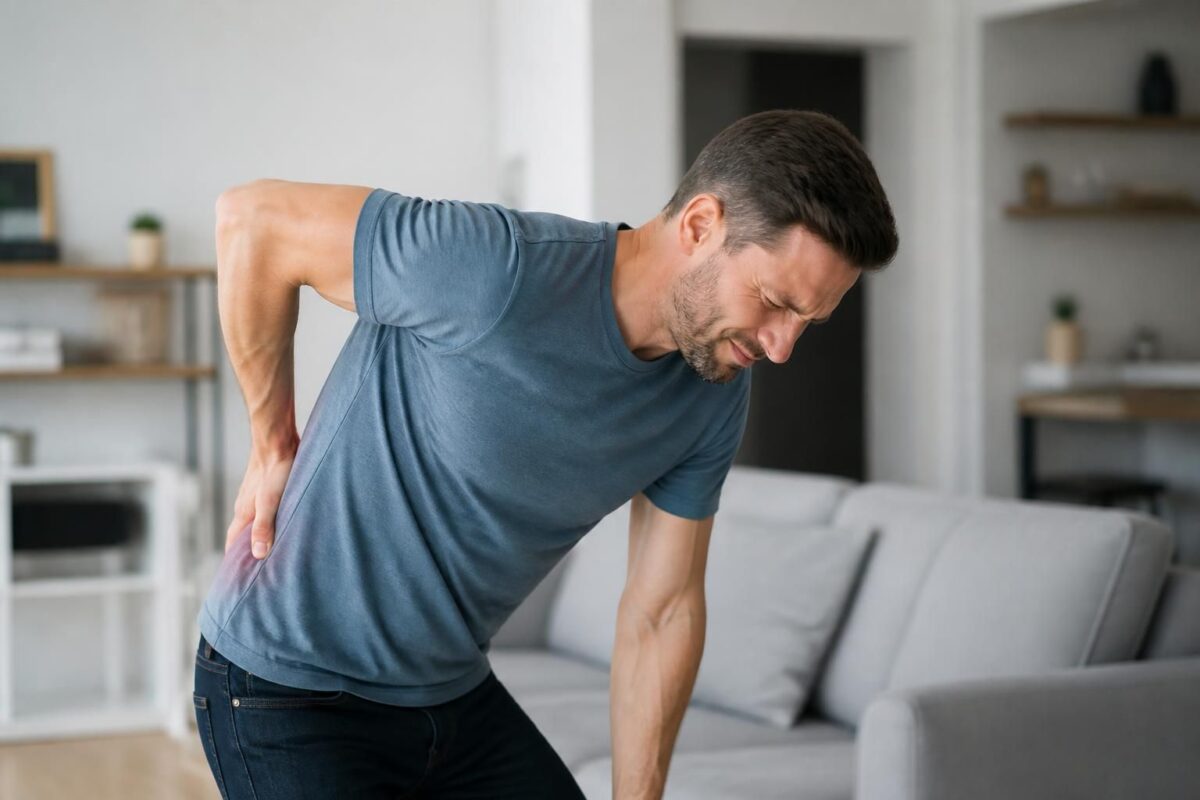
IN BRIEF The Herniated Disc is a protrusion of the intervertebral disc that can compress a nerve root, leading to a pain that radiates down after a movement. The benefits include better guidance for non-surgical treatment and a gradual reduction in pain, with improvement in mobility. In Montreal, this topic is relevant for those seeking a quick assessment and suitable approaches, without surgery. |
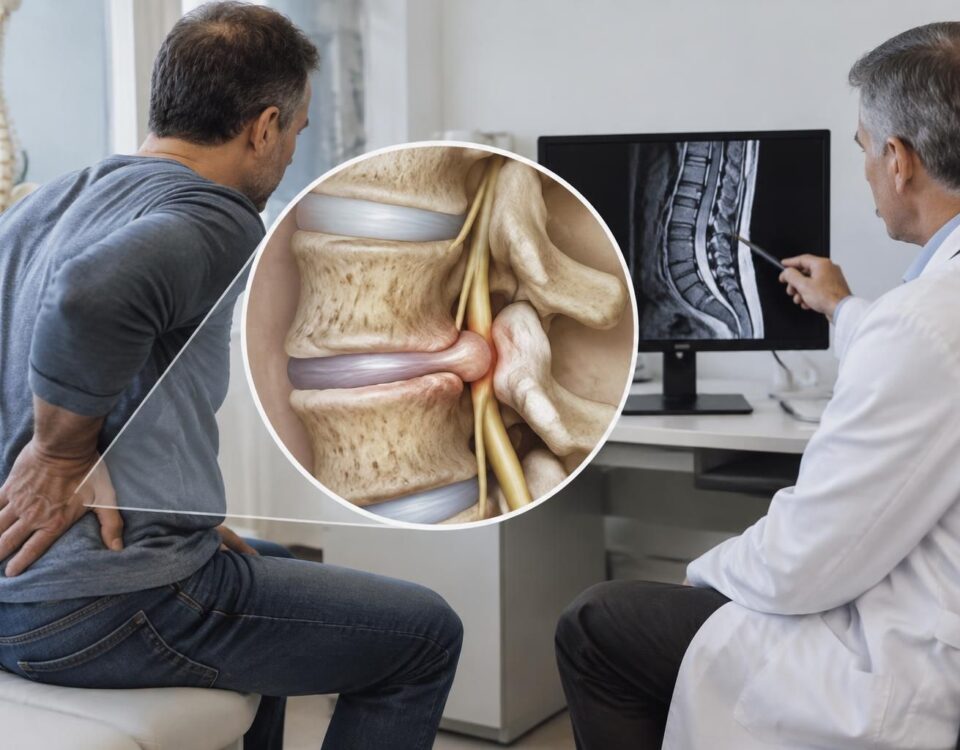
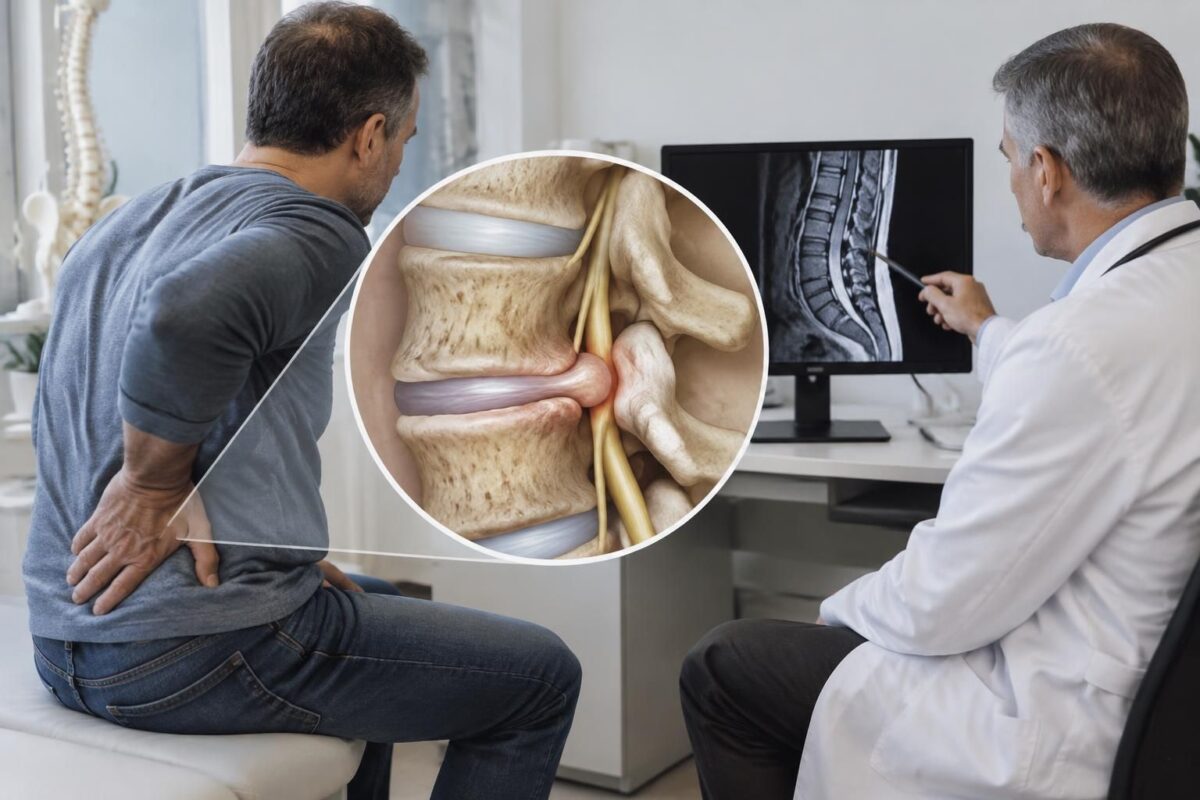
A herniated disc is the protrusion of the nucleus pulposus through the fibrous ring of an intervertebral disc, which can irritate a nerve root.
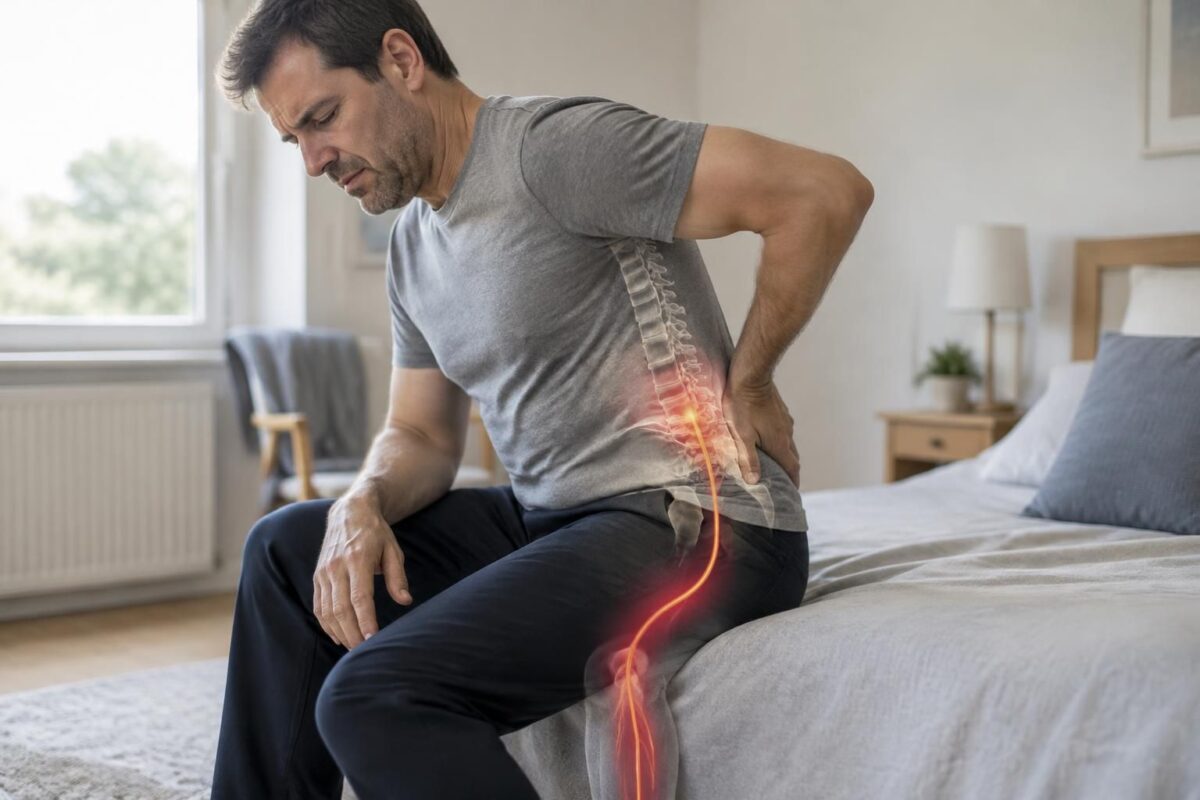
It can trigger radicular pain that radiates down the nerve, creating pain that travels from the hip down to the calf or foot after movement or twisting.
Non-surgical approaches aim to reduce inflammation and improve mobility through targeted exercises, osteopathy, and posture advice. Consult quickly if the pain is accompanied by significant weakness, loss of urinary control, or persists despite self-management measures.
This article, written by Dr. Sylvain Desforges, osteopath, explains how a herniated disc can cause pain that radiates lower after a movement, typically down the leg and sometimes to the foot. It describes possible mechanisms, signs that justify a quick assessment, and non-surgical approaches that may be considered based on clinical evaluation and resources available at the TAGMED Clinic.
Pain may result from irritation or compression of a lumbar nerve root when movement alters the dynamics of the disc or foramen. In some cases, an extruded disc or a protrusion may adapt or exacerbate the painful radiation along the nerve pathway. Understanding this link between the type of injury and the pain helps guide the evaluation and management choices. For more in-depth information on these mechanisms, consult the following resources:
Extruded Herniated Disc and Sciatica: Clinical Significance and
Central Herniated Disc and Sciatica Pain: What You Need to Understand.
In some cases, the radiating pain may be associated with pain below the knee and reflect radicular irritation that manifests dynamically after movement. To better understand this phenomenon, dedicated resources describe the different clinical presentations and their implications.
Causes and Mechanisms
Movement can alter the pressure and space around a nerve root, causing pain that travels along the radicular pathway. A lumbar disc that deforms during movement can worsen irritation if the nucleus pulposus presses against the fibrous ring and the adjacent nerve. Specialized resources detail these mechanisms based on the type of hernia and the exact location in the lumbar canal. For more information, see the following articles:
To broaden your understanding, you can consult:
Extruded Herniated Disc and Sciatica: Clinical Significance,
Central Herniated Disc and Sciatica Pain: What You Need to Understand,
Herniated Disc and Pain Below the Knee: Why It Matters and
Can You Have Sciatica Without a Herniated Disc?.
Diagnosis and Warning Signs
Any episode of radicular pain that radiates down after a movement requires evaluation if warning signs appear: rapidly worsening pain, new or progressive weakness, loss of urinary or fecal control, fever, or recent trauma. In these cases, contact a doctor or an emergency department promptly. The evaluation helps distinguish disc pain from other origins and tailor the management.
Non-Surgical Management Approaches
Non-surgical options may be considered after a thorough clinical evaluation. As an indication, neurovertebral decompression and certain targeted osteopathic approaches are part of the possibilities discussed on a case-by-case basis. These approaches aim to reduce pressure on the nerve structures and support the musculoskeletal system as a whole, without resorting to surgical intervention. For more information on these options, refer to the following resources:
Neurovertebral Decompression and Herniated Disc: A Gentle and Effective Approach and Neurovertebral Decompression Site. In Montreal and Terrebonne, the TAGMED Clinic offers tailored and complementary care based on evaluation.
At the TAGMED Clinic, care may include, as appropriate, motorized neurovertebral decompression, specific osteopathy, or precision percussion, in order to promote functional rebalancing and a better tolerance for daily movements. For more information on the services offered, visit TAGMED Clinic.
Additional Resources and Comparison of Approaches
To enhance your understanding, these resources present various perspectives on conditions related to herniated discs and pain that travels down after a movement. They offer useful explanations without providing self-management protocols. See:
Hernie discale extrudée et sciatique: signification clinique,
Hernie discale centrale et douleur sciatique: ce qu’il faut comprendre,
Hernie discale et douleur sous le genou: pourquoi c’est important,
Peut-on avoir une sciatique sans hernie discale.
For a broader view of the non-surgical options available at the TAGMED Clinic, you can also check the corresponding resources on the TAGMED Clinic website.
Medical disclaimer: The information and advice provided on this site do not replace the opinion, diagnosis, or treatment of a healthcare professional. Please note that Dr Sylvain Desforges, osteopath, is neither a medical doctor nor a physician, and is not specialized in a medical specialty as defined by the Collège des médecins du Québec. Manual medicine, functional medicine, and sports medicine as described on this site exclude any treatment or medical diagnosis performed by a doctor or specialist physician. Always consult your doctor for any medical questions. For more details, please read our full Legal Notice.
- Herniated disc or irritation of a lumbar nerve root.
- Radicular pain that “travels down” to the buttock / leg / calf / foot after a movement.
- Triggers: flexion, torsion, or repeated effort.
- Sometimes paresthesia or slight weakness in the leg.
- Professional evaluation to confirm the reason and guide treatment.
- Non-surgical approaches: osteopathy, manual therapies, targeted exercises, and neurovertebral decompression when suitable.
- Improvement of posture and habits: gradual activity, appropriate ergonomics.
- Progressive plan aimed at reducing pain and improving mobility.

In this article, you will discover how a herniated disc can cause pain that travels down along the leg after a movement, why this occurs, what signs to watch for, and which non-surgical approaches are best to relieve, strengthen, and prevent recurrences.
Understanding the Mechanism of Herniated Discs and Descending Pain
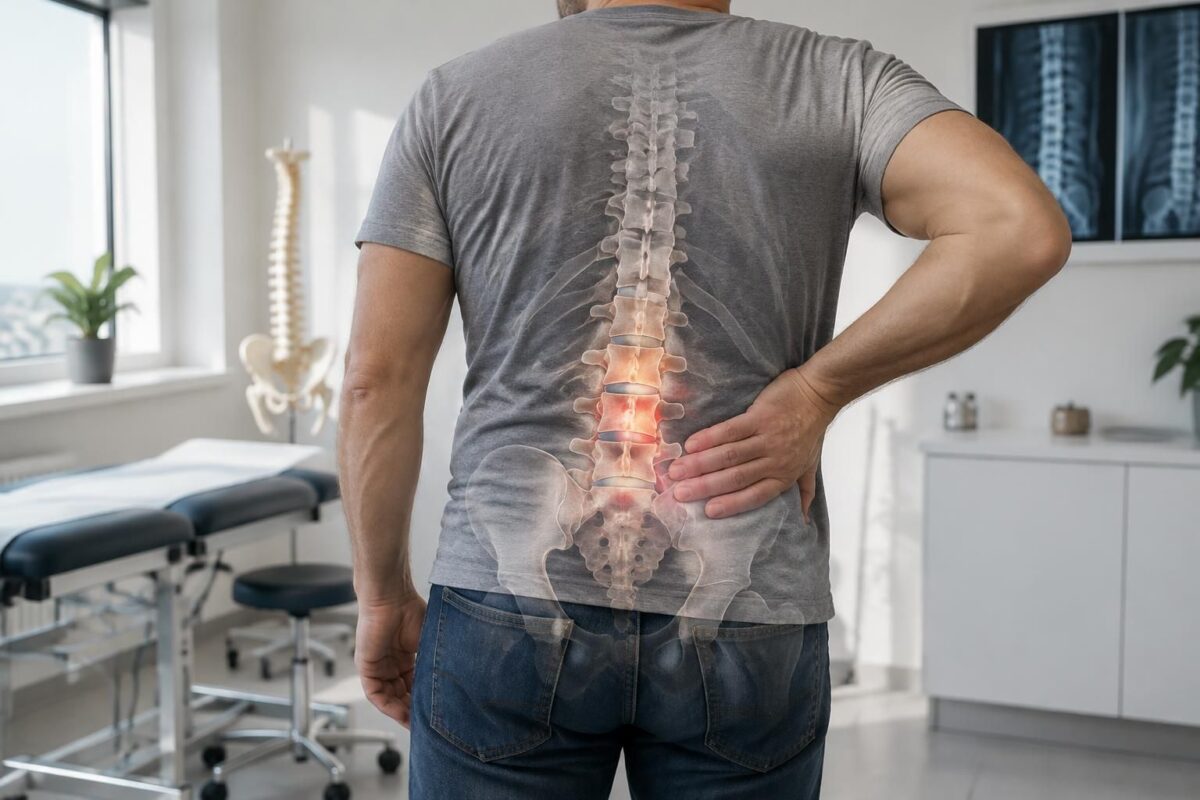
A herniated disc occurs when the nucleus pulposus of the intervertebral disc pushes through a tear in the outer covering (the annulus fibrosus) and can irritate or compress the nerve root exiting the spinal cord. This compression or inflammation creates radicular pain that follows the path of the nerve and can radiate from the buttock to the calf, sometimes to the foot. Movement can aggravate or sometimes re-center the pain depending on the position and level of the disc.
The pain may be sharper during movements that stress the lumbar spine, during flexion or effort, or after prolonged suspension in an unsuitable position. Muscles around the spine can tense in response to the irritation, contributing to the pain and reduced mobility. A good understanding of this mechanism helps to direct actions and treatments towards reducing nerve irritation and improving stability.
Differences Between Local Pain and Radicular Pain
Local pain is often centered in the lower back and may be associated with stiffness, while radicular pain follows a specific path on the thigh, leg, and sometimes the foot. Adopting positions that relieve the nerve can be temporarily helpful, but approaches that restore mobility, strengthen the trunk, and improve back mechanics provide long-term improvements.
Disc herniation and persistent pain in the leg
IN BRIEF A disc protrusion is a bulging of a disc that can irritate a nerve and cause persistent pain in the leg, sometimes accompanied by tingling or numbness. Imaging alone does not confirm the origin of the symptoms: clinical…
Disc herniation and lumbar degeneration
IN BRIEF A lumbar disc protrusion is a bulging of a disc often related to disc degeneration. It does not always cause symptoms but can contribute to lower back pain or pain radiating down the leg if a nerve is…
Signs and Alarms to Watch For
Aside from the descending pain, certain signs require prompt evaluation: loss of control over urination or bowel movement, progressive numbness in the saddle, marked or rapid weakness in a leg or foot, pain accompanied by fever or recent trauma, or pain that does not decrease after a few weeks despite appropriate management. If any of these signals are present, seek consultation without delay.
Disc protrusion and disc pinching: combined mechanisms
IN BRIEF A disc protrusion is a bulging of the disc, while a disc narrowing refers to a decrease in its height. These changes can coexist and sometimes irritate a nerve root, leading to pain or radiation, but they can…

Disc herniation and associated foraminal stenosis
IN BRIEF A disc protrusion associated with foraminal stenosis occurs when a bulging disc coexists with a narrowing of the opening through which a nerve root passes. This association can lead to lower back pain radiating into the leg, tingling,…
Non-Surgical Approaches and Effective Management
Osteopathy and Manual Therapies
Gentle techniques, focused on spinal mobility, muscle tension, and posture, can reduce nerve irritation and improve function. The goal is to restore proper mechanics, release tension areas, and promote gradual and controlled movement.
Exercises and Posture at Home
Targeted exercises to improve lumbar stability, hip mobility, and hamstring flexibility, combined with postural corrections at work and during daily activities, help reduce pressure on the nerve roots and prevent recurrences. Start slowly, gradually increase intensity, and listen to your body to avoid painful flare-ups.
Pain Management and Suitable Activities
Simple measures like alternating heat and cold, active breaks, and breathing exercises can help regulate pain and promote the repositioning of lumbar segments. A multimodal approach combining appropriate physical activity, correction of movement patterns, and autonomy in exercises is often effective in the medium term.

Spinal disc protrusion and nerve inflammation
IN BRIEF A disc protrusion is a bulging of the disc that can irritate or compress a nerve, without necessarily causing symptoms. When it leads to nerve inflammation, it can cause pain in the back or neck, sometimes accompanied by…

Disc protrusion and irritation of L5
IN SHORT A disc protrusion is a bulging of the disc that can irritate the L5 root and cause lower back pain radiating to the buttock, leg, or foot, sometimes with tingling or weakness. MRI alone is not sufficient to…
Action Plan and Prevention
Establish a gradual plan over 4 to 6 weeks: 1) precise assessment of pain and function, 2) implementation of daily exercises and mobility exercises, 3) integration of postural and ergonomic work, 4) regular follow-up to adjust loads and avoid overloads. The key is measured progression, improved mobility, reduced nerve irritation, and maintaining a stable trunk to prevent recurrences.

Disc protrusion and pain after twisting the back
IN BRIEF A disc protrusion is a bulging of the disc that can contribute to pain after a back twist, but it alone does not confirm the cause. The pain can remain in the lower back or radiate to the…

Disc herniation and pain after lifting
IN BRIEF A disc protrusion is a bulging of a disc between the vertebrae. Pain that appears after lifting a load does not prove that it is the cause: the MRI must be interpreted alongside the symptoms and the clinical…
Herniated disc and pain radiating after movement
| Element | What it means |
|---|---|
| Origin | Herniated disc or foraminal stenosis potentially irritating a lumbar root. |
| Pain pattern | Lower back pain radiating to the buttock and leg after movement. |
| Trigger | Triggered by flexion, rotation, or sudden effort. |
| Radicular signs | Pain that follows the nerve pathway; possible positive Lasègue. |
| Differentiation | Differentiate from local low back pain by irradiation and nerve pathway. |
| Monitoring | Monitor for weakness, increasing paresthesias, or worsening pain. |
| Useful exams | Clinical evaluation; imaging if persistent or alarming signs. |
| Non-surgical approaches | Targeted exercises, osteopathy, manual therapy, and progressive recovery. |
| Emergency | Loss of urinary/anal control, febrile pain, or rapid weakness requiring urgent consultation. |
Testimonies about Herniated disc and radiating pain after movement
“After an awkward movement lifting a bag, a Herniated disc was suspected and a radiating pain down the leg began, waking me up at night.”
“I thought it was just a muscle strain, but from the first day, a radiating pain to the buttock and calf appeared after every movement. Thanks to the support, I learned to modify my movements and better tolerate efforts, and the pain gradually decreased.”
“After a twisting movement, the radiating pain down to my foot was unbearable. The assessment and care allowed us to target the irritated area and gradually restore mobility without surgery.”
“Every time I bent over, pain traveled down my leg and I felt like the nerve was pinched. With practical advice and osteopathy sessions, the frequency of episodes reduced and the pain does not radiate as much anymore.”
“The bending movement caused a radiating pain that started from my lower back and went down to my foot. After a few weeks of personalized treatment and tailored exercises, I regained proper mobility and the pain is much less present.”
“At first, every turn of my head or torso triggered a radiating pain markedly down my thigh. The sessions were well-structured and the movements performed gently helped avoid painful spikes while strengthening my back.”
“After the diagnosis, I noticed that a simple movement could rekindle the pain and make it travel down to my calf. Thanks to a tailored osteopathy plan and ergonomic advice, I have experienced significant improvement and better control over my daily movements.”
About the author
Dr Sylvain Desforges, B.Sc., D.O., N.D., osteopath, is the founding president of TAGMED and the ACMA association. He dedicates his practice to chronic pain of the spine, low back pain, and pain compatible with sciatica, particularly when pain radiates to the buttock, leg, calf, foot, or toes.
Through SOS Sciatique, he publishes educational content on the symptoms of sciatica, possible causes such as herniated disc, disc compression, foraminal stenosis, or irritation of a lumbar nerve root, as well as non-surgical approaches that may be considered based on evaluation. At the TAGMED Clinic, care may include, depending on the case, motorized neurovertebral decompression, specific osteopathy, or precision impactor.
For an evaluation related to sciatica treatment in Montreal / Mont-Royal or sciatica treatment in Terrebonne, check the services available at the TAGMED Clinic.
Medical disclaimer
The information published on SOS Sciatique is provided for educational purposes and does not replace a consultation, diagnosis, opinion, or treatment by a physician or other authorized healthcare professional. The author of this article is neither a physician nor a specialist in a medical specialty recognized by the Collège des médecins du Québec. The osteopathy, manual medicine, or functional support approaches described on this site do not constitute medical acts and are not intended to replace medical follow-up.
Consult a doctor or emergency service in case of loss of urinary or bowel control, numbness in the saddle area, significant or progressive weakness of the leg or foot, fever, recent trauma, severe pain, or rapid worsening. For more details, please read our Legal Notice.
Herniated disc and pain radiating after movement
The Herniated disc is a common cause of low back pain and can cause radicular pain that radiates down the leg after movement. It results from a protrusion or extrusion of the nucleus pulposus of the intervertebral disc, potentially compressing an adjacent nerve root or triggering a local inflammatory response. When pressure is applied to a root, radicular pain can rise from the lower back, radiate into the buttock, then follow the pathway down the leg to the calf and sometimes to the foot. This pain is often amplified by movements, flexions, or violent efforts.
The most characteristic signal is pain that radiates to the buttock and along the nerve pathway, possibly accompanied by tingling, numbness, or intermittent weakness. The symptom can be triggered by a trivial action like getting up from a chair, bending forward, or lifting a heavy object. The typical pattern is “pain that descends” rather than pain exclusively localized in the back, which helps distinguish a discal origin from other lumbar causes.
From a physiological perspective, a herniated disc can awaken nerve endings and release inflammatory substances causing nerve irritation. This combination generates pain that follows the path of the nerve root and may be accompanied by a decrease in reflexes or slight muscle weakness in the lower limb. The diagnosis primarily relies on the history and clinical examination; magnetic resonance imaging is considered when red flags appear or when the pain persists despite initial management.
For management, a non-surgical approach is often preferred as the first line of treatment. It includes maintaining appropriate physical activity, mobility and core strengthening exercises, as well as targeted manual therapies. Modalities such as motorized spinal decompression, osteopathy, and other non-invasive therapies can be considered based on individual assessment. The objective is to reduce inflammation, promote disc rehabilitation, and help the patient regain normal function without pain.
When pain persists beyond a few weeks, or when neurological warning signs appear (significant progressive pain, marked weakness, loss of urinary control), a specialized evaluation is necessary. Surgical options may be discussed in cases where conservative treatments fail or in the presence of significant neurological deficit, but they remain reserved for these situations. The goal is always to restore mobility, reduce pain, and prevent recurrences.
Alongside treatments, adopting good postures, following a tailored training program, and actively managing pain can help prevent recurrences. The individualized approach, focused on the patient’s goals and adapted to their daily life, encourages a secure and lasting progression towards a better quality of life.
This article explains how a herniated disc can cause pain that descends into the buttock or leg after a movement, what the possible causes are, and how to assess the situation to determine appropriate options, especially in the absence of surgery. It highlights the mechanisms of nerve irritation, the signals to watch for, and useful non-surgical approaches in daily management.
A lumbar herniated disc can compress a nerve root, explaining radicular pain that follows the path of the irritated nerve and may extend to the buttock, thigh, and sometimes the leg. This phenomenon is often triggered or aggravated by certain movements (flexion, twisting, sudden effort) and by situations that increase pressure on the disc. Understanding this mechanism helps distinguish pure spinal pain from pain that descends and that requires more targeted evaluation.
The signs accompanying descending pain after a movement can help guide management, but they do not replace a comprehensive clinical evaluation. Symptoms such as significant pain during movements, targeted weakness in a muscle leading to an abnormal gait, or loss of urinary or bowel control require prompt medical consultation. To enhance your understanding of the connections between lumbar pain and disc issues, you can consult resources explaining the link between sciatica and lumbar herniated disc and how symptoms can persist even after the initial movement.
Non-surgical management offers approaches tailored to the acute phase and then to recovery, focused on maintaining or restoring mobility, gradually strengthening supportive muscles, and improving posture. Targeted techniques and appropriate exercises often help reduce pain and improve motor control without resorting to surgical intervention. For additional explanations on the projection mechanisms of symptoms and the relationship between herniated discs and sciatica, refer to dedicated resources.
The phenomenon can also be influenced by daily-related factors, such as prolonged positions and routine activities. For example, practical considerations regarding posture at work, parking, and commuting can play a role in the evolution of pain after a movement and in overall recovery. Articles like the one on posture and daily habits provide useful tips to gradually integrate into your routine.
To delve deeper into the link between disc pressure, nerve irritations, and associated pain, you can consult the article on disc pressure and nerve irritation, or the one examining why pain may persist in chronic sciatica.
If you wish to understand more about the link between herniated disc and lumbar sciatica, a dedicated article can clarify this link and the mechanisms contributing to it: Herniated disc and lumbar sciatica – understanding the link.
In certain contexts, symptoms may worsen with certain activities such as driving. To understand why and how to adapt these activities, see the article on the impact of driving on symptoms.

Dr Sylvain Desforges, B.Sc., D.O., N.D., osteopath, is the founding president of TAGMED and of the ACMA association. He dedicates his practice to chronic spinal pain, low back pain and symptoms compatible with sciatica, particularly when pain radiates toward the buttock, leg, calf, foot or toes.
Through SOS Sciatique, he publishes educational content on sciatica symptoms, possible causes such as disc herniation, disc narrowing, foraminal stenosis or irritation of a lumbar nerve root, as well as non-surgical approaches that may be considered according to the evaluation. At Clinique TAGMED, care may include, depending on the case, motorized neurovertebral decompression, specific osteopathic care or precision percussion.
For an evaluation related to sciatica treatment in Montreal / Mount Royal or sciatica treatment in Terrebonne, please consult the services available at Clinique TAGMED.
Medical disclaimer
The information published on SOS Sciatique is provided for educational purposes only and does not replace a consultation, diagnosis, opinion or treatment provided by a physician or another authorized healthcare professional. The author of this article is neither a medical doctor nor a specialist in a medical specialty recognized by the Collège des médecins du Québec. The osteopathic, manual medicine or functional support approaches described on this site do not constitute medical acts and are not intended to replace medical follow-up.
Consult a physician or emergency service in cases of loss of bladder or bowel control, anesthesia in the saddle area, significant or progressive weakness in the leg or foot, fever, recent trauma, severe pain or rapid worsening of symptoms. For more details, please read our Legal Notice.