


Sciatic pain: understand the symptoms, path, and signs to watch for
Sciatic pain often starts in the lower back or buttock and radiates down one leg. It can extend to the back of the thigh, calf, foot, or certain toes and may be accompanied by burning sensations, tingling, numbness, or weakness.
The path of the pain provides clues, but it alone cannot determine the cause. The intensity, progression, aggravating positions, sensitivity, and muscle strength must also be taken into account.
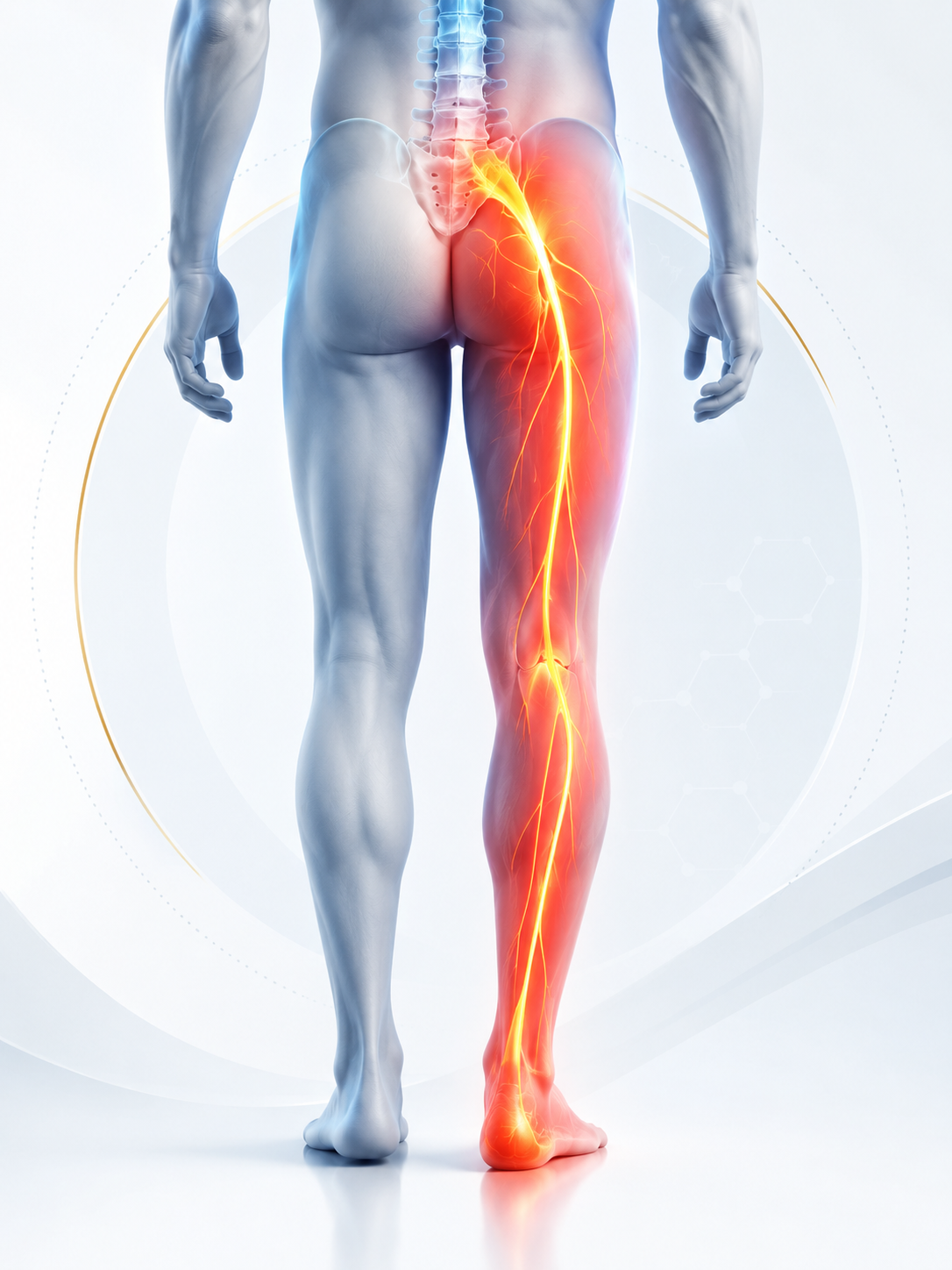
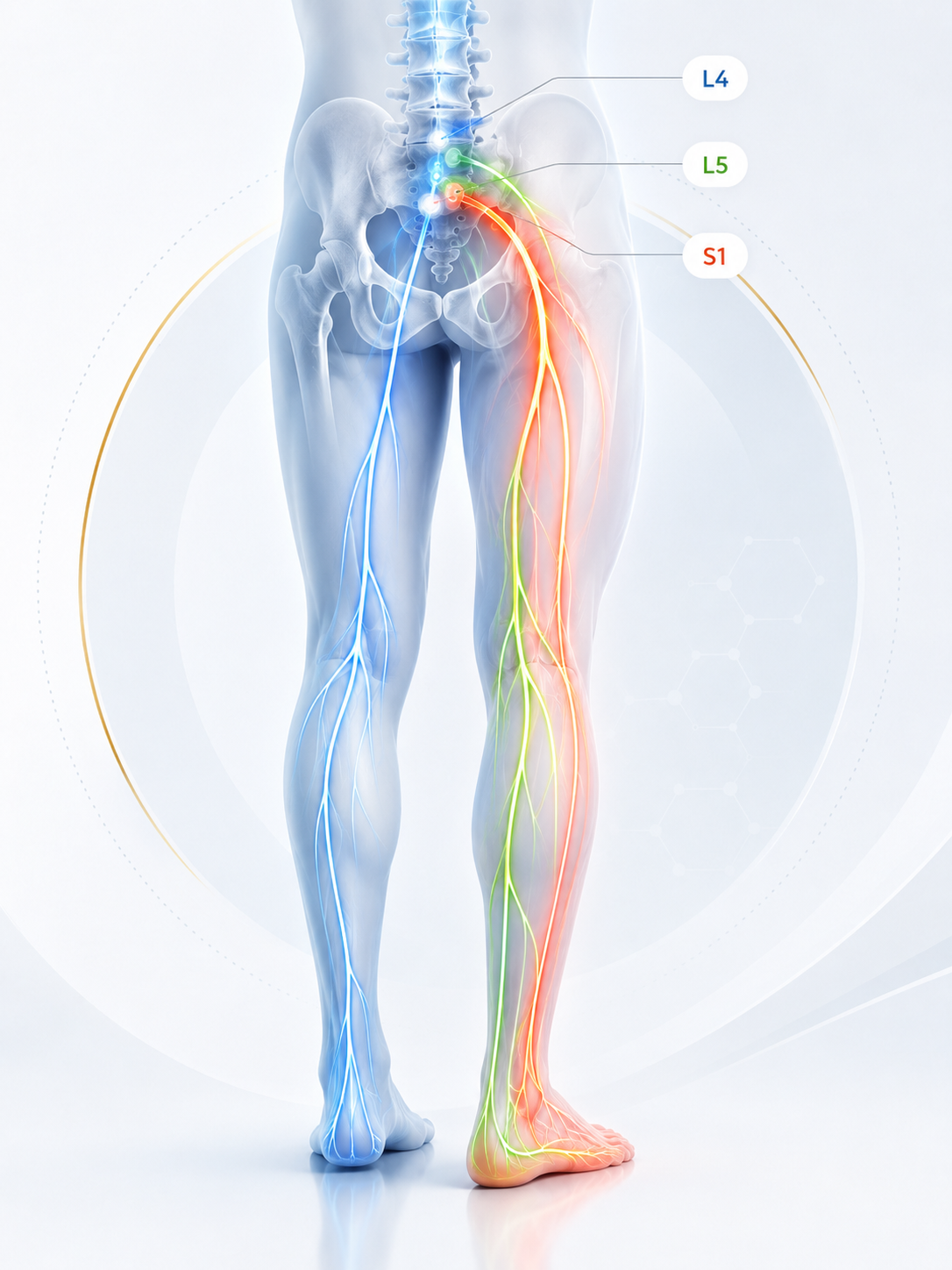
Where does sciatic pain occur?
The path often starts in the lower back, the buttock, or the hip, then descends behind or on the side of the thigh. It may continue down to the calf, heel, edge of the foot, or toes. However, it is not always complete: some people primarily feel the pain in the buttock, calf, or foot.
| Perceived territory | Sometimes referred root | Cautious interpretation |
|---|---|---|
| Front of the thigh or knee area | L3 or L4 | May correspond to high root pain or another cause. |
| Side of the leg or big toe | L5 | May be compatible with irritation of the L5 root. |
| Back of the calf, heel, or outer edge of the foot | S1 | May be compatible with irritation of the S1 root. |
What symptoms can accompany sciatica ?
The location of the pain is just one element. One must also consider the nerve sensations, strength, walking, tolerance to positions, and the evolution of symptoms.
Pain in the buttock
It can be deep, unilateral, and aggravated by sitting or certain trunk movements.
Leg pain
It can radiate down to the thigh, calf, or foot and be more intense than lower back pain.
Burning or shock
A sensation of current or burning along the leg may accompany nerve irritation.
Tingling
It can occur in the leg, foot, or toes and may vary depending on the position.
Numbness
A persistent or progressive loss of sensitivity should be taken seriously.
Muscle weakness
A dragging foot, a giving way leg, or difficulty walking requires prompt evaluation.
What causes may irritate a nerve root?
Several situations can produce symptoms consistent with sciatica. An anomaly observed in imaging does not automatically explain the pain: it must be related to the symptoms and examination.
| Possible Cause | Possible Manifestations | Key Point |
|---|---|---|
| Herniation or disc protrusion | Descending pain, burning, numbness, and sometimes weakness. | Symptoms vary depending on the irritated root and their evolution. |
| Foraminal stenosis | Pain or numbness affected by certain positions. | The exit space of a nerve root is narrowed. |
| Lumbar canal stenosis | Heaviness, pain, or weakness while walking, sometimes relieved when sitting. | Several nerve roots may be affected. |
| Other causes | Hip or leg pain not always following a nerve root pattern. | Joint, muscle, vascular, or other causes may sometimes need to be ruled out. |
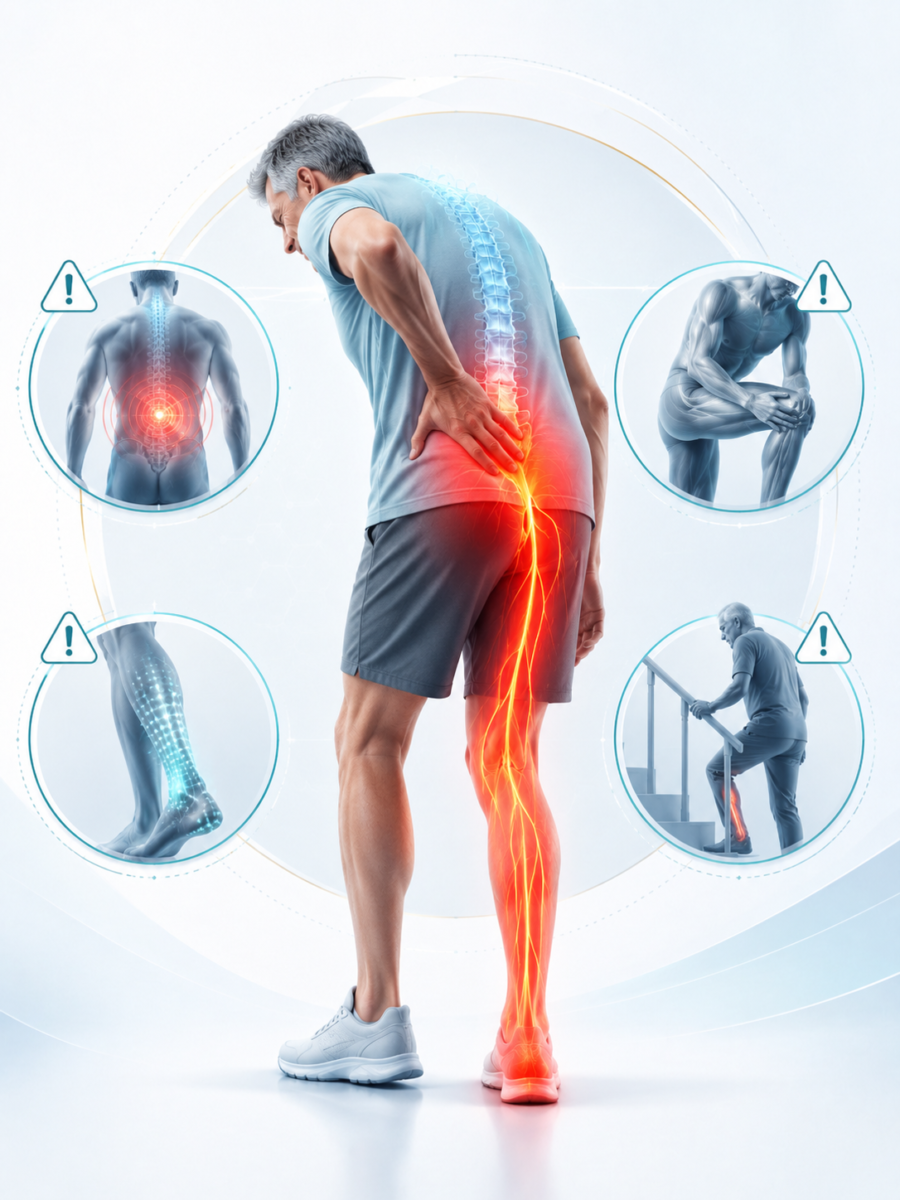
When to consult ?
Request an evaluation if the pain persists, recurs frequently, radiates below the knee, disrupts sleep, limits walking, or is accompanied by numbness or weakness.
Consult quickly
Pain progressing toward the foot, loss of sensation, decreased strength, fever, recent trauma, or unusual general condition.
Consult urgently
New urinary or intestinal issues, saddle anesthesia, or significant or rapidly progressive weakness.
Evaluation and non-surgical options
Before choosing an exercise or intervention, it is useful to clarify where the pain starts, how far it radiates, what worsens or eases it, and whether sensitivity, strength, or walking have changed. Medical guidance or imaging may be necessary depending on the observed signs and progression.
At the TAGMED Clinic, an evaluation can help determine if a non-surgical approach is appropriate. Depending on the situation and the person’s tolerance, the proposed options may include motorized neurovertebral decompression, specific osteopathy, or the precision impactor. No approach suits all profiles.
Consult in Montreal or Terrebonne
Services at the TAGMED Clinic are available by appointment only. They are not covered by RAMQ. Osteopathy receipts can be provided; reimbursement depends on your insurance plan.
TAGMED Clinic Montreal / Mont-Royal
1140, Avenue Beaumont
Mont-Royal (Quebec) H3P 3E5
Phone : 1 877 672-9060
Consultations : Tuesday and Thursday
TAGMED Clinic Terrebonne
1150, Rue Lévis, Suite 200
Terrebonne (Quebec) J6W 5S6
Phone : 450 704-4447
Consultations : Monday, Wednesday and Friday
Frequently Asked Questions about Sciatic Pain
How to recognize sciatic pain ?
It often radiates from the lower back or buttock down to one leg and may be accompanied by burning, tingling, numbness, or weakness. Other issues may produce similar symptoms.
Does pain always start in the back ?
No. Some people mainly feel pain in the buttock, leg, or foot, with little to no lower back pain.
Is pain in the buttock always sciatica ?
No. Buttock pain can have several causes. A radiating pain down the leg and nerve symptoms make it more compatible with sciatica, but do not confirm the diagnosis.
Is walking and stretching always recommended ?
No. The reaction varies depending on the cause and stage of the problem. Any activity that increases pain lower in the leg, heightens numbness, or decreases strength should be stopped and re-evaluated.
When does sciatica become urgent ?
New urinary or bowel issues, saddle anesthesia, or significant or rapidly progressive weakness require urgent medical evaluation.
Consulted sources
- NICE — Low back pain and sciatica in over 16s
- NHS — Sciatica
- High Authority of Health — Management of common low back pain
Last editorial revision : July 2026.
Is your pain radiating down your leg ?
An assessment can help clarify the path of the pain, identify signs to monitor, and determine if a non-surgical approach may be relevant.
TAGMED Clinic — non-surgical and non-invasive care
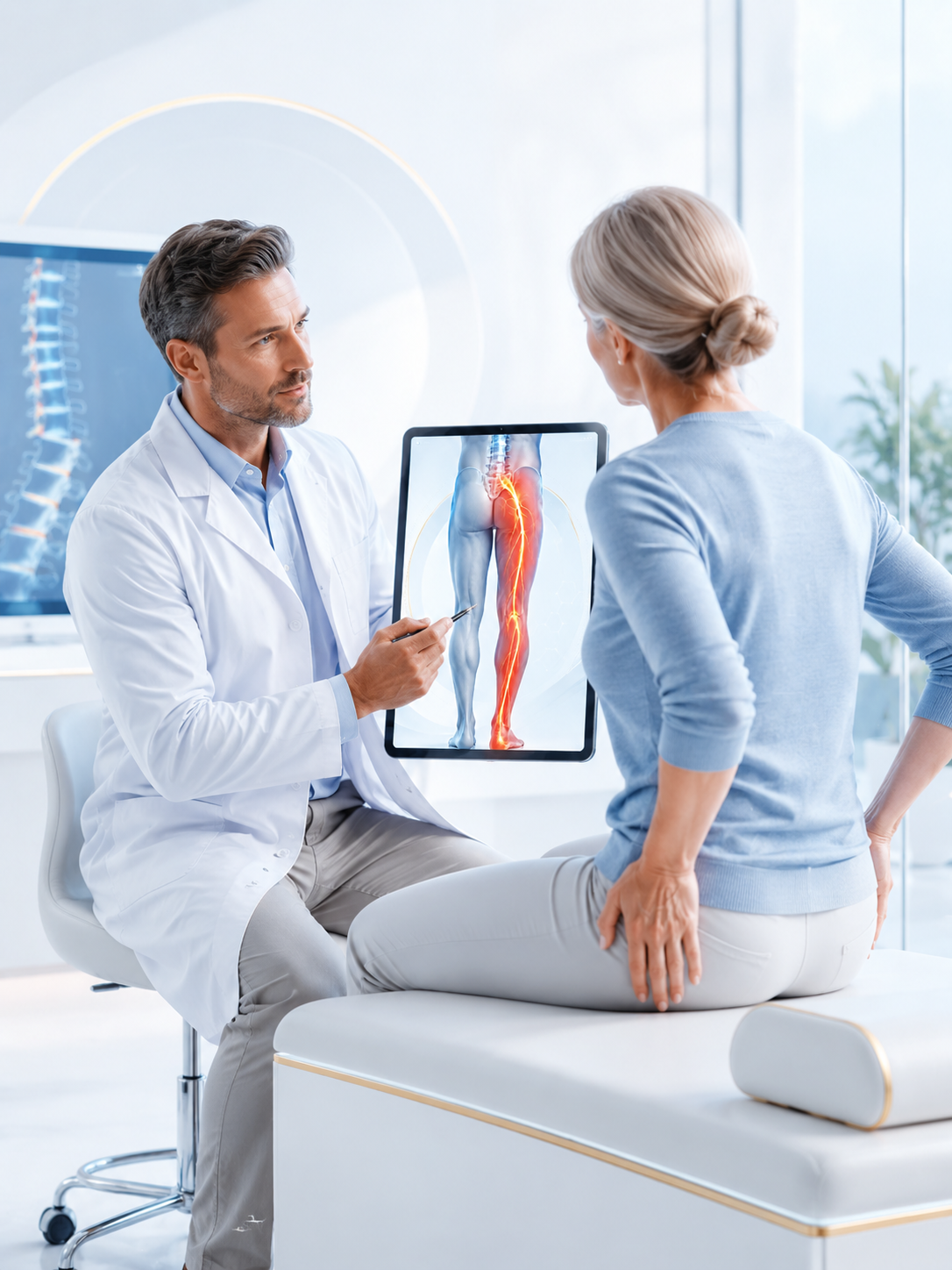
Editorial information, sources and limitations
This content is intended to inform patients about sciatica, possible causes, warning signs, and care options. It does not replace an individualized assessment.
Reference sources
References are selected according to the subject of the page: guidelines, systematic reviews, then institutional resources.
- NICE NG59 – Low back pain and sciatica in over 16s — National guideline
- HAS – Management of patients with common low back pain — French national guideline
- Cochrane – Corticosteroid injections for treatment of sciatica — Systematic review
- NCBI Bookshelf – Sciatica — Clinical institutional resource
Complementary resources from the TAGMED network
These internal resources complement the clinical information and thematic linking. They do not replace national guidelines or systematic reviews.
Editorial note on decompression
Clinical resource from the TAGMED network; it does not replace national guidelines. Some guidelines use the term “traction” and recommend caution for low back pain with or without sciatica. Any decompression option should therefore be presented as an individualized clinical approach, with limitations, indications, and contraindications clearly explained.
Limitations of this information
The information on this page is general. It does not constitute a diagnosis, prescription, or guarantee of results. Pain radiating into the leg may have several causes; assessment should consider clinical history, examination findings, symptom progression, and, when appropriate, complementary tests.
When to seek urgent medical care
Seek urgent medical care if you experience loss of bladder or bowel control, saddle anesthesia, major or progressive leg weakness, unexplained fever, pain after significant trauma, or severe pain that rapidly worsens.
