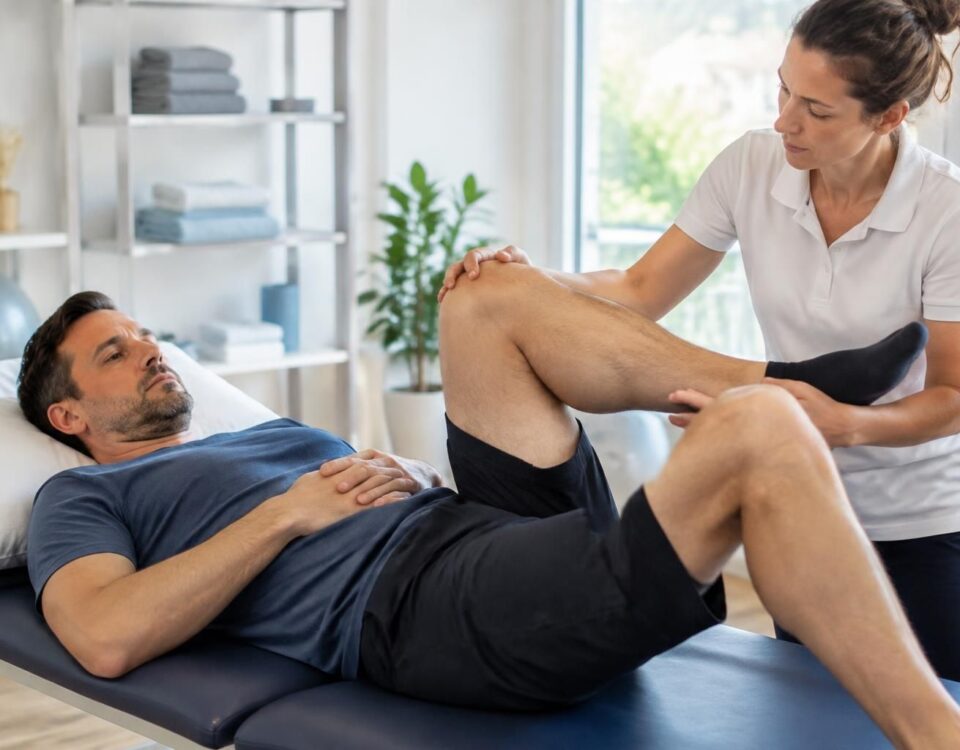
Herniated disc and pain that travels lower after movement
02/09/2026
Sciatica in Montreal: pain radiating to the outer edge of the foot
03/09/2026
IN BRIEF
| In brief, Sciatica after a long train journey is pain that radiates along the sciatic nerve after long periods of sitting. The problem often arises from an inadequate posture and a poorly mobilized pelvis during the trip. The benefits of an adapted approach include reduced pain and increased comfort, as well as better prevention of recurrences during travels. How does it work? By reducing immobility, rebalancing the pelvis, and promoting micro-movements and a smooth breath, you decrease the tension on the nerve and gradually regain mobility during the trip. In Montreal, this advice is particularly useful for long train journeys. |
Here is a clear and practical summary to limit sciatica after a long train journey.
- Context: pain occurs after several hours of sitting, due to prolonged sitting position, an unbalanced pelvis, and vehicle vibrations.
- Symptoms: pain starting from the lower back that may radiate down the leg, appearing after 20–30 minutes and often relieved by walking or stopping.
- Practical gestures: adopt a comfortable posture, adjust the seat to limit lower back pressure, keep knees slightly bent, and avoid twisting; the upper body should remain relaxed and breathing smooth.
- Active breaks: at each stop, walk for 2–5 minutes, breathe deeply, and gently mobilize the pelvis to restart circulation.
- Goal: maintain movement and mobility to reduce pain over time and better get back on the road.
- When to consult: persistent pain, notable weakness, or neurological issues requiring medical advice.
This text, written by a health professional and expert, explains why pain related to the sciatic nerve may appear after a long train journey. It describes simple mechanisms, typical signs, and practical gestures to travel and stay mobile without pain. It provides advice on posture, regular breaks, and breathing techniques to limit pain and improve comfort.
Understanding the Mechanisms
Sciatic pain after a train journey usually occurs after long periods of sitting. The pelvis can become misaligned, and the vibrations from the car fatigue the muscles. This tension can irritate the sciatic nerve. The problem is typically functional and reversible if posture and travel rhythm are adjusted.
Signs and Warning Signals
Pain manifests after the journey and can radiate down the leg. It may worsen while walking or when putting the foot back on the ground. If there is marked weakness or loss of sensation, it is important to consult quickly.
Preferred Posture and Adjustments
Adjust the seat so that the hips are slightly above the knees and the pelvis is stable without excessive arching. Tilt the backrest slightly to reduce lumbar pressure and avoid a stiff posture. Keep the knees slightly bent and feet flat on the ground. Relax the upper body and allow the breath to follow the rhythm of the body.
Travel Management and Breaks
Plan breaks every 30 to 45 minutes. Get out of the car or vehicle and walk for 2 to 5 minutes. Breathe deeply and gently move your hips. These micro-movements restart circulation and reduce tension around the sciatic nerve.
Activity and Mobility During the Journey
Micro-movements and simple, non-painful exercises can help, without straining the nerve. Use a lumbar cushion compatible with your posture. Stay attentive to signals sent by your body and favor movements that remain comfortable.
When to Consult and Management
If the pain persists despite adjustments and breaks, or if it is accompanied by notable weakness, seek a professional evaluation. A coordinated approach may be considered to adjust the journey and direct you to available services in your area, notably through TAGMED clinic in Montreal or Terrebonne.
For further information, you can consult resources and testimonials on the following sites, where topics related to sciatica and travel are addressed:
Herniated disc and chronic sciatica – why the pain persists
Sciatica in Terrebonne – lower back pain with shooting into the leg
Sciatica in Terrebonne – difficulty walking on heels or toes
Sciatica – pain that changes path over the days
Sciatica and traffic jams – stationary position and nerve pain
Lumbago-sciatica and journeys – why and how to avoid
For clinical advice and management options, also consult TAGMED Montreal and Terrebonne.
Professional Options and Frame of Reference
The recommended approaches prioritize ergonomics and gentle mobility. Research and practices are integrated into choices offered by specialized clinical structures. If necessary, an evaluation can direct you to services adapted to your situation, without favoring physiotherapy treatments as the sole option, but comparing them to other available therapies at the TAGMED clinic in Montreal or Terrebonne.
To train and inform, relevant training and associations remain limited to certain recognized organizations by the profession, such as NUMSS, NAO, National University of Medical Sciences, and National Academy of Osteopathy, and the associations ACMA, College of Canadian Osteopaths, Collège des Ostéopathes Canadiens.
Specialized resources and technological advances can be considered depending on symptoms. For specific aspects related to neurovertebral decompression or other conditions, it is important to avoid overly ambitious exercises or stretches without prior medical advice.
Complementary resources and testimonials can be helpful to broaden perspectives and find similar situations to your case.
Medical disclaimer: The information and advice provided on this site do not replace the opinion, diagnosis, or treatment of a healthcare professional. Please note that Dr Sylvain Desforges, osteopath, is neither a medical doctor nor a physician and is not specialized in a medical specialty as defined by the Collège des médecins du Québec. Manual medicine, functional medicine, and sports medicine as described on this site exclude any treatment or medical diagnosis made by a physician or specialist. Always consult your doctor for any medical questions. For more details, please read our complete Legal Notice.
- Prolonged sitting in the train = irritation of the sciatic nerve.
- Unbalanced pelvis and micro-shifts due to the movement of the carriage.
- Vibrations and postural fatigue that increase nerve tension.
- Pain radiating in the leg after 20–30 minutes of travel.
- Warning signs: weakness, loss of sensation, numbness.
- Seat adjustment: pelvis slightly above the knees, backrest inclined.
- Active breaks every 30–45 minutes: walk 2–5 minutes, breathe.
- Micro-movements of the pelvis during breaks to restart circulation.
- Controlled breathing to release tension in the lower back and pelvis.
- Leg position: knee bent, foot close to the pedal or on the floor; avoid straight leg.
- Lumbar cushion helpful if compatible with posture.
- Gentle stretches and light mobility after the journey.
- Upon arrival light walking and hydration; integrate a mobility routine.

This practical guide explains why Sciatica can manifest after a long train journey and what simple actions to adopt to relieve pain and improve comfort on board. The goal is to preserve mobility, optimize posture, and integrate effective micro-breaks without disrupting your travel rhythm.
Understanding Sciatica During a Train Journey
Pain typically follows the path of the sciatic nerve and can appear after long hours in a sitting position. In the train, the pelvis can become less mobile and the vibration of the car can fatigue the muscles, increasing the sensitivity of the nerve. The pain can extend into the buttock and the back of the leg, and be more pronounced after the journey than at rest.
Seat Adjustments and Posture in the Carriage
Ideal Position of the Seat and Pelvis
Adjust the seat so that the hips are slightly above the knees, without excessive arching. Tilt the backrest just enough to limit lumbar pressure and avoid a rigid posture that stagnates mobility.
Leg Position and Breathing
Keep the knees slightly bent and feet resting on the floor, without excessive extension of one leg. The upper body should remain relaxed: soft shoulders, smooth breathing, to decrease tension around the pelvis and buttocks. Controlled breathing acts as a release valve for your nerve.
Breaks, Mobility, and Comfort Management in Train
When to Take Micro-Breaks
Prefer breaks every 30 to 45 minutes if possible, even if time is tight. Getting out of the seat to walk for 2 to 5 minutes and practicing some gentle movements of the pelvis restarts circulation and limits tension on the nerve.
Simple Exercises to Perform in the Carriage
Perform micro-movements of the pelvis, gentle hip rotations, and breathing exercises during stops or in designated areas. Avoid sudden twists and movements that trigger stronger radiation. If you have a lumbar cushion and it remains compatible with your position, it can provide useful support without stiffening the posture.
After the Journey and Long-Term Prevention
Upon arrival, take a few minutes to gently stretch and resume a light walk. Consider daily routines for hip and lower back mobility to gradually reduce pain during future trips. If pain persists despite adjustments and breaks, do not hesitate to seek advice for a tailored and personalized care plan, so you can continue your train journeys with more comfort and safety.
| Item | Info |
|---|---|
| Main cause | Lack of movement and prolonged sitting posture during train journeys irritate the sciatic nerve. |
| Typical signs | Pain radiating down the leg after a long period of sitting and decreasing after walking. |
| Ideal positioning | Hips above the knees, back slightly inclined and leg slightly bent. |
| Breaks and mobility | Plan active breaks every 30–45 minutes and perform micro-movements of the hips. |
| Breathing and relaxation | Controlled breathing and relaxed shoulders to reduce tension in the hips and buttocks. |
| Useful accessories | A lumbar pillow compatible with the seat can improve support without stiffening the posture. |
| Vibrations and cabin | Vibrations can increase nerve sensitivity; vary positions when possible and move briefly. |
| When to consult | Persistent pain with weakness or loss of sensation requires professional evaluation. |
| Halting tips | At each stop, stand up, walk for 2–5 minutes, and perform gentle hip rotations. |
Testimonials: Sciatica and train — pain after a long journey
“After a long train trip lasting several hours, I felt pain radiating from my lower back up into my leg. By adjusting the seat so that my hips were slightly above my knees, breathing calmly, and performing micro-movements of my hips during stops, I regained comfort and was able to return to my seat without the pain returning immediately.”
“As someone who often travels by train for 4 to 5 hours, I use a small lumbar cushion and keep my legs slightly bent to avoid any tension on the nerve. At every stop, I stand up, walk for 2 to 3 minutes, and breathe deeply. The result: my sciatica stays calm and I finish my journey without difficulty.”
“As a train driver, the vibrations and repeated stops caused pain to rise in my leg. Now, I release my upper body, align my hips with my knees, and perform small movements of my hips during the brief stops. This allows me to return to my task without persistently feeling discomfort.”
“I regularly traveled by train for work, and the pain mostly occurred after the midpoint of the journey. I adopted a simple routine: slightly reclined seat, knees bent, breathing = calm, and 2 to 5 minutes of hip mobility during stops. Since then, even long trips can be done without my sciatica bothering me as much.”
“During my night trips, the vibrations would wake me up with pain shooting down my leg. I started alternating my positions, relaxing my upper body, and doing micro-movements of my hips at each stop. The comfort improved and I was able to sleep more on the next trip without the pain settling in permanently.”
“On long routes, I sometimes feel tension in the lower back after several hours in the seat. By adjusting the seat so that my hips are level with my knees, maintaining smooth breathing, and practicing small movements of my hips, the pain quickly flattens out. The stops become simple and effective moments for rebalancing.”
Dr. Sylvain Desforges, expert in osteopathy, naturopathy, and manual therapy, is the founding president of the TAGMED clinics and ACMA. His career is rooted in an approach of innovation in healthcare, with a marked specialization in the management of chronic pain and the integration of advanced technologies such as spinal decompression, laser, and shockwave therapy. His mission is to provide evidence-based care to optimize the health and well-being of his patients, including those who regularly travel by train and experience sciatica after long periods of sitting.
In the context of train journeys, he observes how prolonged posture and hip imbalance can trigger or exacerbate pain radiating along the sciatic nerve. Dr. Desforges’ work fits into a multidisciplinary approach that combines manual techniques, ergonomic advice, and mobility and breathing programs. The goal is to restore pelvic dynamics, improve nerve circulation, and prevent cumulative tension related to travel, in order to preserve the quality of the journey and recovery after the trip.
For travelers and train professionals, he develops customized protocols focused on active breaks and micro-movements during long journeys. He recommends simple position adjustments, gentle hip exercises, and breathing techniques that reduce tension on the nerve and increase comfort. The aim is to maintain movement without disrupting the travel schedule, while reducing the risk of relapse during rail adventures.
Dr. Desforges’ philosophy is based on a solid scientific foundation: evaluate posture, understand functional mechanisms, and propose suitable therapeutic modalities that may include advanced technologies when necessary. His approach aims not only to alleviate pain but also to restore mobility, educate patients, and establish preventive daily actions that support the sciatic nerve throughout train journeys and after arrival.
Over the years, he has developed a comprehensive method that combines education, ergonomic gestures, and targeted therapies, while integrating tools such as decompression technologies and adjunct treatments when symptoms persist. This approach establishes a sustainable routine: optimizing the initial position in the train car, implementing regular active breaks, and promoting fluid and relaxed breathing. The goal is to relieve tension, improve hip mobility, and prevent painful episodes during repeated train journeys.
Aside from his clinical activities, Dr Desforges contributes to the evolution of care protocols and the improvement of patient pathways through an evidence-based approach and demonstration of the effectiveness of interventions. His commitment aims to help travelers continue taking the train while minimizing pain and preserving their autonomy and well-being in the long term.
This detailed conclusion on sciatica related to travel by train reminds us that pain can arise after a long journey due to prolonged sitting, a less mobile hip, and vibrations. It offers simple gestures to maintain posture, promote mobility, and limit pain in the leg, while remaining effective during your travels.
In the context of train travel, the main mechanisms remain the same as on the road: prolonged sitting, a hip misaligned by micro-movements and vibrations, and general muscle fatigue that can irritate the sciatic nerve. This can lead to pain radiating down the leg after several hours, which may persist at rest or worsen when walking.
To limit the impact on your journey, adopt an appropriate posture: the seat should allow for the hips to be slightly above the knees, with a slight incline of the backrest to reduce lumbar pressure and avoid excessive stiffness. Keep the upper body relaxed, with shoulders loose and a breath that helps release tension in the hips and buttocks.
Plan for active breaks every 30 to 45 minutes when possible. At the station, stand up and walk for 2 to 5 minutes, then perform gentle movements of the hips to stimulate circulation and reduce tension around the sciatic nerve. On the train, alternate between sitting and standing when the silence of the car allows, or practice micro-movements in your seat to keep the nerve active.
Incorporate simple and safe exercises during the journey: gentle mobilization of the trunk and hips, progressive activation of deep muscles, relaxation of the glutes, and diaphragmatic breathing. Avoid abrupt twists and painful ranges of motion, and favor a gradual progression that does not trigger nerve irritation.
For comfort, using a lumbar cushion compatible with your posture can be helpful in supporting the natural curve of the lower back without stiffening the whole trunk. Combine this with micro-movements and regular breaks to preserve pain tolerance during repeated train travels.
When to consult and how to coordinate with professionals: if pain persists or is accompanied by significant weakness, progressive numbness, or unusual acute pain, it is advisable to consult to adjust the journey and consider appropriate management. Specialized resources and additional advice can guide you in your specific situation and direct you to available services in your area.
For further exploration and to benefit from shared approaches and experiences, you can explore the following resources: Run with Sciatica: mild pain, warning signs, and resumption, Causes, symptoms, and treatments, Sciatica in Terrebonne: pain in the buttock after long sitting, Sciatica and tingling at bedtime, Sciatica, Sciatica: causes, symptoms, and definitions, Doctissimo: sciatica, Numbness that progresses towards the foot, Pain stronger in the leg, Burning sensation in the toes.
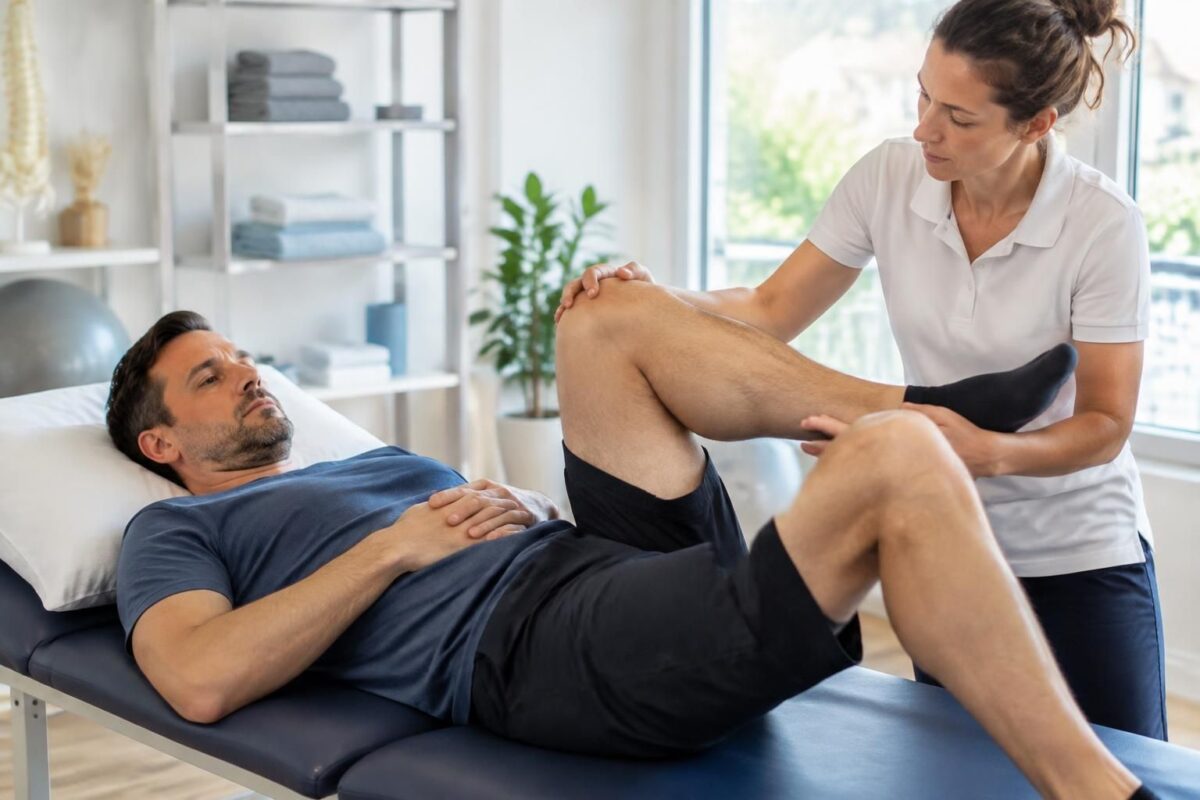
Sciatica and piriformis stretching: useful or worsening depending on the case
IN BRIEF Piriformis-related sciatica can cause deep pain in the buttock, sometimes radiating down the back of the thigh. A gentle stretch can loosen the hip and relieve discomfort if the muscle is involved, but it can worsen symptoms if…

Sciatica and popular stretches: why to stay cautious
IN BRIEF Sciatica causes pain that radiates from the lower back down the leg. Popular stretches, such as the pigeon pose or hamstring stretches, are not always suitable: pulling on an irritated nerve can worsen the symptoms. Favor gentle movements,…

Sciatica and Pilates: movements to adapt
IN SHORT Sciatica causes pain that can radiate from the lower back down to the leg. The Pilates Reformer can promote a gradual return to movement and strengthen core control, provided that the movements, range, and resistance are adapted. Favor…

Sciatica and core stability: variable tolerance depending on symptoms
IN BRIEF Core strengthening in case of sciatica consists of progressively strengthening the trunk muscles. Its tolerance varies depending on pain and symptoms: suitable without worsening the pain, it can support mobility and the resumption of activities, but does not,…

Sciatica and lunges: leg pain to watch out for
IN BRIEF Sciatica is pain that starts from the lower back or buttock and radiates down the leg. If a lunge triggers or worsens this pain, stop the movement and adjust your activity: this exercise does not address sciatica. Consult…

Sciatica and deadlifts: risk depending on the cause
IN BRIEF Sciatica and deadlifts are not always incompatible: the risk depends on the cause of the pain and its intensity. During acute episodes, it’s best to avoid heavy loads and seek medical or physiotherapy advice before resuming. A gradual…

Sciatica and squats: why caution is needed
IN BRIEF Sciatica does not always prohibit squats, but a deep or loaded squat can aggravate symptoms, especially during a flare-up. Gradually resume with a neutral back and a comfortable range of motion, and stop if the pain travels down…
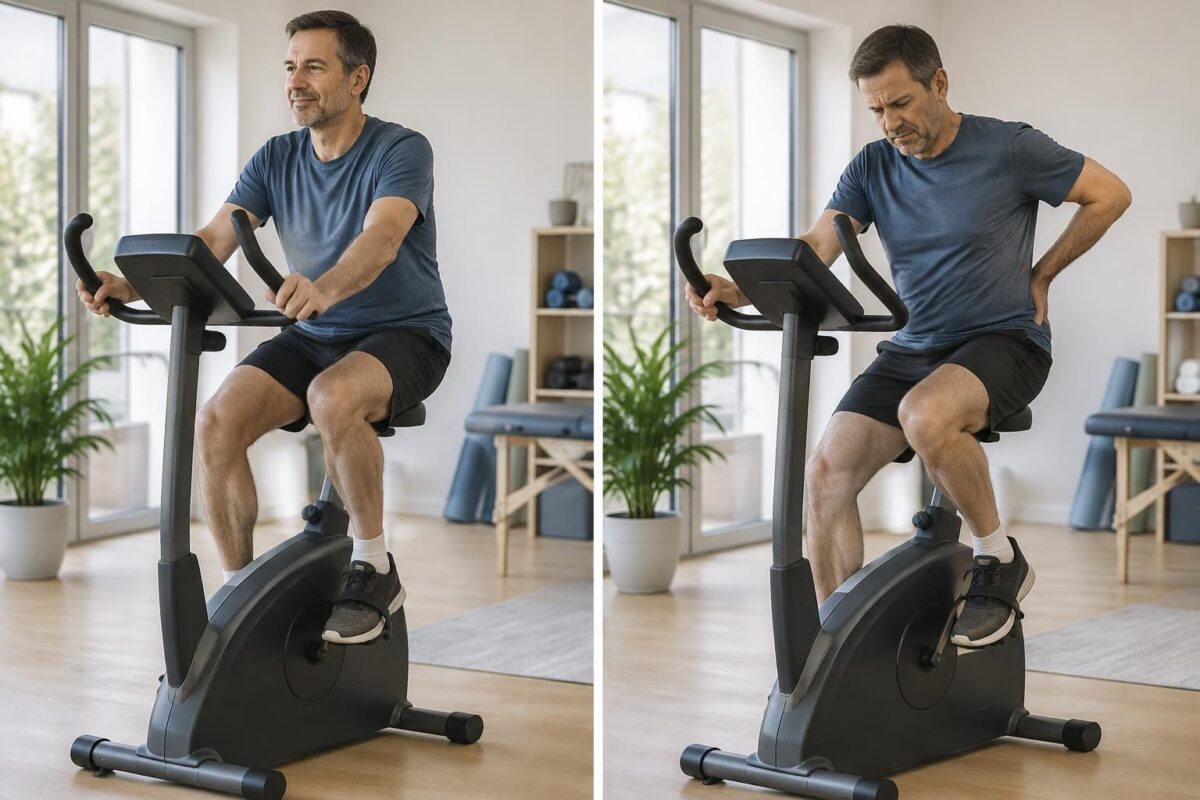
Sciatica and stationary bike: useful or aggravating depending on the case
IN BRIEF The stationary bike with sciatica can help you stay active if the pain is mild and stable. Start with a short session, at low resistance and in a comfortable position. If the pain goes further down the leg,…

Dr Sylvain Desforges, B.Sc., D.O., N.D., osteopath, is the founding president of TAGMED and of the ACMA association. He dedicates his practice to chronic spinal pain, low back pain and symptoms compatible with sciatica, particularly when pain radiates toward the buttock, leg, calf, foot or toes.
Through SOS Sciatique, he publishes educational content on sciatica symptoms, possible causes such as disc herniation, disc narrowing, foraminal stenosis or irritation of a lumbar nerve root, as well as non-surgical approaches that may be considered according to the evaluation. At Clinique TAGMED, care may include, depending on the case, motorized neurovertebral decompression, specific osteopathic care or precision percussion.
For an evaluation related to sciatica treatment in Montreal / Mount Royal or sciatica treatment in Terrebonne, please consult the services available at Clinique TAGMED.
Medical disclaimer
The information published on SOS Sciatique is provided for educational purposes only and does not replace a consultation, diagnosis, opinion or treatment provided by a physician or another authorized healthcare professional. The author of this article is neither a medical doctor nor a specialist in a medical specialty recognized by the Collège des médecins du Québec. The osteopathic, manual medicine or functional support approaches described on this site do not constitute medical acts and are not intended to replace medical follow-up.
Consult a physician or emergency service in cases of loss of bladder or bowel control, anesthesia in the saddle area, significant or progressive weakness in the leg or foot, fever, recent trauma, severe pain or rapid worsening of symptoms. For more details, please read our Legal Notice.