


Sciatica in Montreal: numbness progressing toward the foot
23/08/2026
Sciatica and tingling upon waking: possible causes
23/08/2026
IN BRIEF
| In brief, sciatica in Terrebonne is pain and numbness that follows the path of the sciatic nerve and may progress towards the foot. It often manifests with symptoms triggered or amplified by walking, with numbness or weakness potentially extending along the leg. The benefits of appropriate management include rapid assessment and referral to non-surgical treatments when neurology is stable, to improve walking and functionality. The approach relies on a practical model that connects history, clinical examination, and, if necessary, simple tests to target the cause (herniated disc, foraminal stenosis, etc.) and guide the care plan towards relief, strengthening, and return to activity. |
In Terrebonne, sciatica may present as numbness that progresses towards the foot, often starting from the lower back or buttock. This condition is frequently accompanied by pain along the path of the sciatic nerve and may be worsened by walking or standing. The assessment combines history, examination of strength, sensitivity, and balance, with tests like the Lasègue sign to assist in diagnosis. Treatment favors conservative measures: appropriate activity, exercises and strengthening, pain management, and postural advice; follow-up is recommended if symptoms progress or if any weakness arises.
This phenomenon describes pain and numbness that progresses along the path of the sciatic nerve. In Terrebonne, patients report that numbness sometimes extends from the lower back to the foot, with or without pain, especially during walking or prolonged standing. Appropriate management is based on a comprehensive clinical assessment and an accurate understanding of the nerve pathway.
Signs and Affected Areas
The sciatic nerve can be compressed at different levels. Numbness and tingling often appear in the buttock, thigh, and calf, and may reach the foot and toes. Pain may be triggered or worsened by walking, then improve when sitting or leaning forward. Electric shock-like sensations may accompany these symptoms, especially during certain movements.
Diagnosis and Distinction of Associated Disorders
The diagnosis relies on the history and clinical examination. Imaging can describe the anatomy, but does not solely assess function. It is necessary to correlate the observed narrowing with the location, pathway, and neurological profile of the patient. Clinical concordance is essential to avoid diagnostic errors.
Functional Assessment and Progression
The assessment includes walking distance, the onset time of symptoms, and the effect of positions. The examination also covers muscle strength, sensitivity, and reflexes, as well as pulses and vascular factors when necessary. Any potential neurological deterioration requires prompt management.
Management Options at TAGMED Clinic
Based on the assessment, several non-surgical approaches can be discussed. The goal is to maintain function and improve tolerance to walking and standing. Options for neurovertebral decompression, specific osteopathic techniques, and precision impactors may be part of the offering, depending on the patient’s profile and assessment results.
Resources and additional information are available through local and specialized resources. To explore options in Terrebonne or Montreal, you can consult the dedicated pages for TAGMED Clinic, as well as contextual resources such as The Spine Page or local telecommunication guides concerning sciatica in Terrebonne.
For practical information on symptoms and situations that may require rapid assessment, see particularly the pages related to sciatica in Terrebonne and related resources on travel and pain in the car.
For additional information on the available options for therapeutic approaches and assessment in Terrebonne, consult the public and professional resources associated with TAGMED Clinic and The Spine Page.
Note that warning signs requiring urgent medical evaluation include new or progressive weakness, a foot drop, saddle anesthesia, or urinary or bowel changes. In these cases, contact a doctor or emergency service promptly.
To diversify your sources and obtain complementary perspectives, you can also consult specialized resources available on sites such as Sciatica in Terrebonne or Sciatica and car.
Additional information and discussions on the holistic approach can be found on the pages of Sos Herniated Disc and other associated resources, within the permitted fields.
For benchmarks on functional consequences and clinical signs, see also the resources related to foraminal stenosis and spinal stenosis presented in specialized guides.
If the pain is associated with electric shocks or an abnormal sensation in a leg, it is important not to wait and to consult promptly, even if the pain temporarily decreases. The presence of progressing numbness towards the foot requires precise evaluation to rule out evolving neurological impairment.
For more information on evaluation and local approaches, you can refer to the guides and resources on the following pages: Foraminal/spinal stenosis, TAGMED Clinic Terrebonne, and the specialized resources associated with Sciatica Terrebonne.
Medical disclaimer: The information and advice provided on this site do not replace the opinion, diagnosis, or treatment of a health professional. Please note that Dr. Sylvain Desforges, osteopath, is neither a medical doctor nor a physician, and is not a specialist in a medical specialty as defined by the Collège des médecins du Québec. Manual medicine, functional medicine, and sports medicine as described on this site exclude any treatment or medical diagnosis made by a physician or a specialist. Always consult your doctor for any medical questions. For more details, please read our full Legal Notice.
– Warning: This article adheres to the principles of clarity and readability to facilitate understanding for patients and professionals while remaining aligned with current clinical practices and available resources in authorized fields.
Source and professional references: NUMSS, NAO, National University of Medical Sciences, National Academy of Osteopathy; professional associations: ACMA, College of Canadian Osteopaths, Collège des Ostéopathes Canadiens.
Sciatica in Terrebonne: numbness that progresses to the foot
- Location: numbness that rises from the lower back to the buttock, then to the thigh, calf, and foot
- Type: paresthesias and electric sensation along the sciatic pathway
- Triggering factors: standing and walking worsen symptoms
- Warning signs: new weakness, loss of urinary control, or severe pain
- Recommended actions: rapid evaluation (walking, neurology, reflexes)
- Functional goal: measure walking distance and ability to stand
- Conservative approaches: proper posture, core strengthening, and targeted stretching
- When to consult/emergency: emergency if progression, neurological deficit, or bilateral pain
- Professional options: osteopathy and associated therapies after evaluation

This article provides clear recommendations for residents of Terrebonne facing sciatica with a numbness that progresses to the foot. It outlines possible mechanisms, signs to monitor, preferred evaluation, and conservative and dynamic measures to implement to improve function and quality of life, while indicating situations that require specialized assessment.
Understanding the mechanisms and numbness that progresses to the foot
The sciatic nerve runs from the lower back to the foot. When compressed or irritated, numbness, tingling, or weakness may occur, particularly during walking or standing. The most common causes include a herniated disc, lumbar stenosis, or piriformis syndrome. The key element is that pain and numbness should be interpreted in light of the nerve’s pathway and clinical examination, rather than solely on imaging.
Evaluation and clinical decision
Warning signs and quick consultation
Consult quickly in case of loss of urinary or bowel control, saddle anesthesia, significant and worsening weakness in a foot or leg, or associated fever. These elements may indicate an emergency requiring immediate medical management.
Practical evaluation and action plan
The evaluation relies on a precise medical history and a targeted neurological examination. Walking distance and time, symptom onset, strength and sensitivity, as well as reflexes are assessed. Simple tests coordinate symptoms with the side and pathway of the affected nerve. Imaging can specify the anatomy, but it does not replace functional and clinical evaluation guiding therapeutic decisions.
Conservative treatment plan and rehabilitation
Adapted activity, posture, and ergonomics
Adopting progressive and suitable activity is fundamental. Favor positions that decrease symptom provocation and integrate controlled rest periods. Spread walking and physical activities throughout the week, adjusting intensity according to tolerance and progress.
Targeted exercises and therapies
Programs should aim to strengthen the core and hips, stretch the hamstring and piriformis muscles, and control hip muscle coordination. Manual techniques or osteopathic approaches can be considered based on the profile, in addition to a regular active program. Respect sensations and progress gradually to promote stability and function.
Pain management and medication options
Anti-inflammatory measures and muscle relaxants may be considered under supervision to reduce inflammation and short-term pain, without dependence or prolonged use. The goal is to allow movement and strengthening without exacerbating symptoms.
When to consider interventions and follow-up
Indications for specialized evaluation
If symptoms persist, worsen, or significantly limit walking and daily activities, a specialized evaluation may explore additional options, such as targeted procedures or decompression based on the clinical context. Surgery is only considered when clinical and radiological criteria align and the functional impact is significant.
Follow-up Plan and Treatment Revision
Establish a baseline measurement (walking distance, strength, and sensitivity) and schedule review points. Adjust the plan based on progress: pain and comfort alone are not sufficient to assess success. A clear improvement in walking and function, associated with stable symptoms, validates the therapeutic choice and helps avoid unnecessary repeated evaluations.
| Aspect | Clarification or Action |
|---|---|
| Symptomatic Path | Numbness extending from the buttock to the foot, when walking or standing. |
| Main Trigger | Walking and extension worsen; flexion may provide temporary relief in a seated position. |
| Unilateral vs Bilateral | Foraminal stenosis: more unilateral symptoms; central: possible bilateral symptoms and claudication. |
| Key Clinical Evaluation | Measurement of walking distance, strength exam, sensitivity, and reflexes; correlation with imaging. |
| Alarm Signs | Progressive weakness, saddle numbness, loss of urinary/bowel control requiring urgent evaluation. |
| Initial Approach | Start with appropriate activities, gradual walking, and strengthening; work on posture. |
| Role of Imaging | MRI describes anatomy but diagnosis remains based on history and examination; it offers little about function. |
| Non-Surgical Options | Possible injections for temporary relief; motor decompressions or other interventions do not permanently change the canal and do not replace evaluation. |
| Goal and Follow-up | Set functional criteria (walking distance, standing time) and revise the plan if progress or stagnation occurs. |
Testimonials on Sciatica in Terrebonne: Numbness Progressing to the Foot
“In Terrebonne, my numbness started in the buttock and quickly spread along the sciatic nerve path. The sensation progressed to the foot as soon as I walked, making my daily outings difficult. Thanks to a comprehensive evaluation, the personalized plan stabilized my symptoms and allowed me to gradually resume walking without burning pain.”
“I live in Terrebonne and the numbness worsened with every step. After a consultation, we linked the problem to how I was walking and my posture. Within a few weeks, with targeted exercises and postural advice, the intensity decreased and the progression to the foot stopped.”
“The issue began as a diffuse pain, then the numbness progressed to the foot especially during long walks in Terrebonne. The personalized treatment balanced my spine and strengthened my core, leading to a notable improvement in walking and reduced symptoms during daily activities.”
“Living near Terrebonne, I felt the numbness progressing to the foot after a day of standing. Thanks to a plan that combined posture, mobility, and appropriate exercises, walking became more stable, and the intensity of sensations decreased, allowing me to resume my usual activities.”
About the Author
Dr. Sylvain Desforges, B.Sc., D.O., N.D., osteopath, is the founding president of TAGMED and the ACMA association. He dedicates his practice to lower back pain and pain compatible with sciatica. Through SOS Sciatique, he provides educational content on symptoms and possible causes, as well as non-surgical approaches based on evaluation. At the TAGMED Clinic, care may include specific osteopathic techniques and functional approaches. For an evaluation related to sciatica treatment in Terrebonne or Montreal, check the available services at the TAGMED Clinic.
In the Terrebonne region, Dr. Sylvain Desforges embodies an integrated approach to sciatica, combining his expertise in osteopathy, naturopathy, and manual medicine to provide comprehensive support. As the founding president of TAGMED clinics and the ACMA association, he applies his experience to patients suffering from numbness that may travel to the foot. His practice is based on an innovative view of chronic pain management and the integration of advanced technologies tailored to each profile to optimize the health and well-being of individuals facing radicular pain that limits walking and daily activities.
The clinical picture of sciatica in Terrebonne often relies on progressive numbness, sometimes associated with tingling or weakness, that descends along the nerve path and is felt in the buttock, back of the thigh, and down to the foot. Dr. Desforges emphasizes the distinction between foraminal stenosis and central stenosis, and reminds that diagnosis is not limited to an imaging measure. The clinical evaluation is based on the correlation between the painful side, symptom trajectory, and neurological examination results, with particular attention to walking distance and standing tolerance, which often define functional impact more precisely than isolated pain intensity.
The integrated diagnostic journey provided by the practitioner aims to link radiological findings to history and examination. An MRI may clarify anatomy, but it is the functional evaluation — strength, sensitivity, reflexes, balance, and progression of neurogenic claudication — that guides therapeutic decisions. The physician also draws attention to alarm signs: new and progressive weakness, loss of urinary or bowel control, or rapidly evolving neurological alterations that require urgent medical attention. This patient safety-focused approach is at the heart of care both in urban centers and on the outskirts of Terrebonne.
In terms of treatment, the goal is to avoid early surgical intervention when possible and appropriate. Dr. Desforges’ team offers personalized plans that combine education, tailored activity programs, and measured progression of walking. Targeted exercises for the trunk, hips, and lumbar muscles enhance stability and reduce pressure on the nerve, while manual interventions and advanced technologies may be considered depending on the patient’s profile. Among these options, motorized spinal decompression, laser, and shock waves are complementary tools that can help reduce inflammation, improve mobility, and accelerate return to normal activity without waiting for surgery when it’s not necessary.
Follow-up is structured around clear functional goals: distance and gait control, tolerated standing time, and the ability to resume desired activities. The plan is revised at defined intervals, taking into account neurological progression and the patient’s tolerance to effort. Dr. Desforges emphasizes a shared decision and regular reevaluation to adjust the plan according to the results and any potential mimicking causes, such as hip problems, sacroiliac issues, or peripheral neuropathies. This balanced approach offers a sustainable path toward symptom reduction and improved quality of life in the context of diagnosed sciatica in a land-based setting.
For residents of Terrebonne, Dr. Sylvain Desforges’ expertise provides a clear and personalized path to manage numbness progressing toward the foot. By merging hands-on knowledge and targeted technologies, he is committed to guiding each patient toward better function and sustainable well-being, prioritizing safety, effectiveness, and a measured progression within a transparent therapeutic project.
Quick summary: Sciatica with progressive numbness toward the foot may reflect lumbar nerve compression, often related to foraminal or central stenosis. The diagnosis is based on the association of history, neurological examination, and symptom trajectory, and is not limited to imaging. Management prioritizes conservative measures suited to walking and function, with regular reevaluation to adjust the plan and consider, if necessary, more specialized options. Local resources in Terrebonne and beyond guide toward effective treatments and specialized assessments.
The functional diagnosis of foraminal or spinal stenosis relies on the concordance between the side and trajectory of symptoms, the neurological examination, and the measured walking distance. Neurogenic claudication typically manifests as pain or heaviness triggered in standing or walking and relieved by bending or sitting, but imaging alone is not sufficient for a conclusion. Clinical elements must be connected to MRI when symptoms persist or worsen and when neurological signs develop.
Therapeutically, a graduated approach first prioritizes active and functional measures: appropriate posture, progressive walking program, trunk strengthening, and work on bending and mobility, while remaining attentive to the patient’s reactions. Some manual or technological approaches may be considered depending on the profile, but evidence and tolerance vary. An injection may offer temporary relief in certain radicular presentations, but it does not restore the canal space durably. Decompression surgery is considered when functional limitation persists despite suitable conservative management or when the anatomical-clinical concordance and progressive deficit justify it.
To assess impact on daily life and measure progress, it is essential to use reproducible walking tests and follow the evolution of tolerable time and distance without symptom aggravation. The assessment must also distinguish any potential vascular claudication or other causes (hip, peripheral nerves) that can mimic sciatica. Regular follow-up allows for plan adjustments and prevents a silent progression of weakness or walking disorders.
Specialized resources and examples of local guides provide practical information for patients seeking suitable care in Terrebonne and Montreal. For deeper insights, consult the guides and services available at Clinique TAGMED – Sciatica treatment in Terrebonne, or explore resources dedicated to Sciatica in Terrebonne. You can also refer to additional articles and guides such as Sciatica in Terrebonne – buttock pain and radiation and general resources on managing numbness and pain at numbness of the foot.
Finally, the introduction to complementary options should always be guided by a rapid medical evaluation as soon as new weakness or neurological changes appear. For a more in-depth overview of signs to watch for and treatment pathways, resources such as Podexpert, and other regional guides can be consulted to enlighten therapeutic choices and recommended exercises.
Sciatica in Terrebonne: S1 and difficulty standing on tiptoe
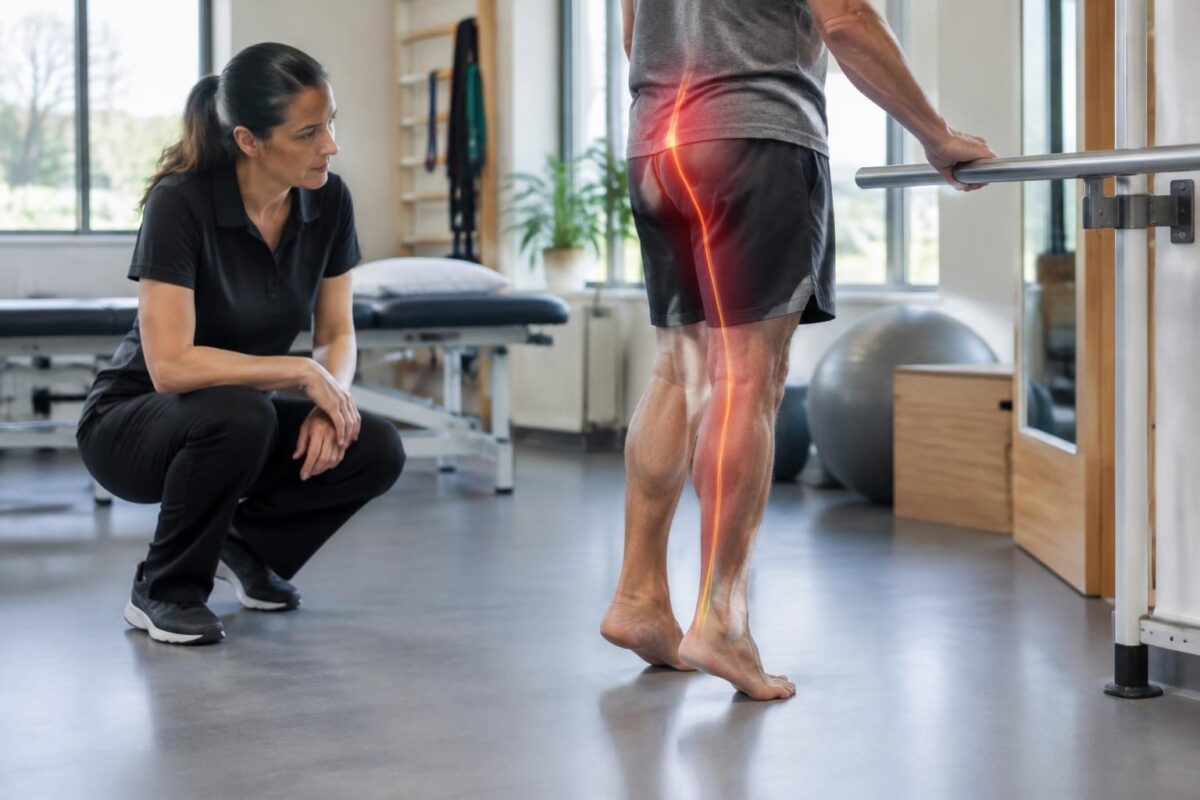
IN SHORT An S1 sciatica can irritate the nerve root associated with the calf and make it difficult to rise onto the balls of the feet. This sign should be evaluated with strength, sensitivity, reflexes, and walking: the pathway of…

Sciatica in Terrebonne: L4-L5 and pain towards the top of the foot
IN BRIEF A L4-L5 sciatica can radiate to the outer side of the leg and the top of the foot, sometimes reaching the big toe. This pathway can guide the assessment, though it does not suffice to confirm the cause:…

Sciatica in Terrebonne: L5-S1 and symptoms in the calf
IN BRIEF A L5-S1 sciatica can cause pain that radiates down the calf, sometimes accompanied by tingling, numbness, or weakness. At Terrebonne, an assessment at the TAGMED Clinic helps to examine the symptom pathways, strength, and sensitivity, and then discuss…

Sciatica in Terrebonne: pain in the big toe, L5 root or another cause?
IN BRIEF Pain in the big toe accompanied by pain in the buttock or leg may be compatible with irritation of the L5 root, but other causes are possible. In Terrebonne, the evaluation notably compares strength, sensitivity, and gait to…

Sciatica in Terrebonne: why the affected root changes the pain path
IN BRIEF Sciatica is a pain related to the irritation of a lumbar nerve root, the path of which varies depending on the affected root. Damage to L5 can radiate to the top of the foot, while damage to S1…

Sciatica in Terrebonne: L4-L5 disc, L5-S1 disc, and leg pain
IN BRIEF Sciatica is pain that travels down the leg when a nerve root is irritated. An injury to the L4-L5 disc often affects the L5 root; an L5-S1 injury affects the S1 root. The path of the pain and…

Sciatica in Terrebonne: understanding lumbar levels on an MRI
IN BRIEF Sciatica may be related to irritation of a lumbar nerve root. A lumbar MRI shows the disks and nerves at different levels, such as L4-L5 or L5-S1, to help identify an abnormality and compare it with symptoms. In…

Sciatica L4-L5 in Terrebonne: possible pain, numbness, and weakness
IN BRIEF L4-L5 sciatica refers to pain related to irritation of a nerve root in the lower back. It can radiate to the buttock and leg, with numbness or weakness. Identifying these symptoms helps guide evaluation and care. In Terrebonne,…

Dr Sylvain Desforges, B.Sc., D.O., N.D., osteopath, is the founding president of TAGMED and of the ACMA association. He dedicates his practice to chronic spinal pain, low back pain and symptoms compatible with sciatica, particularly when pain radiates toward the buttock, leg, calf, foot or toes.
Through SOS Sciatique, he publishes educational content on sciatica symptoms, possible causes such as disc herniation, disc narrowing, foraminal stenosis or irritation of a lumbar nerve root, as well as non-surgical approaches that may be considered according to the evaluation. At Clinique TAGMED, care may include, depending on the case, motorized neurovertebral decompression, specific osteopathic care or precision percussion.
For an evaluation related to sciatica treatment in Montreal / Mount Royal or sciatica treatment in Terrebonne, please consult the services available at Clinique TAGMED.
Medical disclaimer
The information published on SOS Sciatique is provided for educational purposes only and does not replace a consultation, diagnosis, opinion or treatment provided by a physician or another authorized healthcare professional. The author of this article is neither a medical doctor nor a specialist in a medical specialty recognized by the Collège des médecins du Québec. The osteopathic, manual medicine or functional support approaches described on this site do not constitute medical acts and are not intended to replace medical follow-up.
Consult a physician or emergency service in cases of loss of bladder or bowel control, anesthesia in the saddle area, significant or progressive weakness in the leg or foot, fever, recent trauma, severe pain or rapid worsening of symptoms. For more details, please read our Legal Notice.


