


Paramedian disc herniation and sciatica: possible painful journey
11/08/2026
Sciatica in Montreal: pain that travels from the lower back to the leg
12/08/2026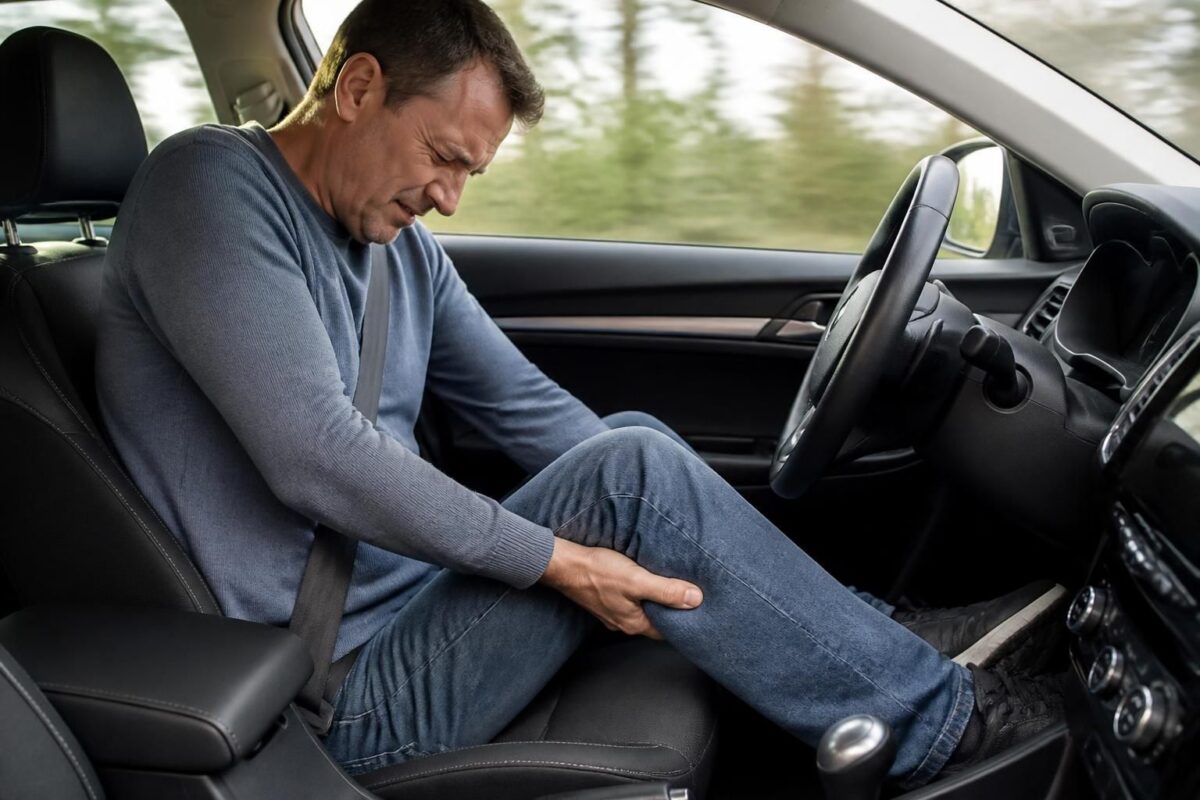
IN BRIEF
| In brief, Driving with Sciatica refers to the pain radiating from the lower back to the leg, triggered by sitting position and repeated vibrations. The benefits: tolerable driving when incorporating regular breaks and a pelvic stabilization with a sciatica cushion, which relieves pressure and improves lumbar curvature. The operation relies on reducing prolonged strain, redistributing weight on the ischiums, and adjusting posture during trips, which helps to decrease leg pain. |
The car journey can exacerbate sciatica when the sitting position is prolonged, as the lumbar spine experiences increased pressure and muscle strain. The micro-vibrations from the vehicle reinforce these strains, and the pain can spread along the leg. To limit the impact, it is essential to relieve pressure points and take regular breaks to vary posture and stabilize the pelvis.
This text, written by a health professional and expert, summarizes sciatica while driving. It describes how the sitting position, vibrations, and pain radiating into the leg interact to influence symptoms, and proposes simple and effective measures to better tolerate journeys without worsening the pain.
The Sitting Position and Lumbar Strain
Driving imposes a preference for a stable sitting position. The pelvis remains pressed against the seat, the torso is held in a minimally variable posture, and the legs stay close to the pedals. This stability prolongs a similar lumbar configuration throughout the duration of the trip. In sciatica, the nerve root is more sensitive to repeated or sustained strains. The nerve is not fragile but reacts more easily to these repeated stresses. A fixed posture for a long time can therefore increase sensitivity.
To limit these effects, an effective approach consists of relieving pressure points and stabilizing the pelvis. A cushion designed for sciatica can make a significant difference. It can feature a cutout at the back to “suspend” the coccyx and sacrum, reducing direct pressure on the area where the sciatic nerve exits. At the same time, it helps restore a healthy lumbar curvature and evenly distribute the weight on the ischiums, relieving back muscles from compensatory work.
The Vibrations and Their Impact on the Sciatic Nerve
Driving involves repeated micro-vibrations, even when the jolts seem moderate. These vibrations do not cause sudden injury, but they can maintain or exacerbate pain in a nerve that is already sensitized. The sciatic nerve poorly tolerates continuous stresses, especially when the position is inflexible and postural adjustments are limited.
Tolerance and Breaks
The duration of uninterrupted effort determines tolerance. The body can adapt as long as the strains remain within a manageable threshold. Beyond this, pain may gradually increase without any new damage occurring. A short trip may be well tolerated; a long trip without a break can become more uncomfortable. Introducing regular breaks and changing position helps reduce the continuity of strains and improves symptom control.
Practical Tips for Driving and Sitting
Assess your tolerance on short trips before increasing the distance. For long journeys, plan regular breaks and stops to relieve the lumbar system and reset postures. Practically, favor a sitting position that relieves pressure points and stabilizes the pelvis, and consider using a quality sciatica cushion with a non-slip base to ensure the device remains in place during the trip. A high-density memory foam can contour well to the body and absorb vibrations, contributing to a more balanced weight distribution.
To enrich your information, you can consult additional resources on the topic, including articles dealing with driving and sciatic pain on sossciatique.com and analyses regarding neurovertebral decompression and other associated conditions on decompressionneurovertebrale.com. For additional clinical perspectives, you may also visit sosherniediscale.com and sossciatique.com.
Practical advice and a tailored approach can be found in the following resources: sciatica and pain upon waking, pain and tingling, and evaluating constant pain.
When seeking a clinical approach, various trainings and specializations are available through recognized institutions such as NUMSS and NAO, and practical approaches are discussed in exchanges with professionals from the TAGMED clinic associated with Montreal and Terrebonne.
For more information on practical aspects and measures to prioritize, also consult the following resources on specialized information sites: sossciatique.com, decompressionneurovertebrale.com.
Medical Disclaimer: The information and advice provided on this site do not replace the opinion, diagnosis, or treatment of a healthcare professional. Please note that Dr. Sylvain Desforges, osteopath, is neither a medical doctor nor a physician, and is not a specialist in a medical specialty as defined by the Collège des médecins du Québec. Manual therapy, functional medicine, and sports medicine as described on this site exclude any treatment or medical diagnosis made by a doctor or medical specialist. Always consult your physician for any medical questions. For more details, please read our complete Legal Notice.
- Stable sitting position: pelvis and trunk maintained, little variation.
- Prolonged posture: sciatic nerve poorly tolerates constant stress.
- Repeated vibrations: stress muscles and maintain pain.
- Breaks and variation: stop, walk, change position to decrease stress.
- Adapted duration: adjust the journey based on pain.
- Adapted seating: specific cushion for sciatica, relieves pressure, stabilizes the pelvis, anti-slip base.

This summary explains how sciatica can influence driving: the sitting position and repeated vibrations can increase pain in the leg when the nerve is irritated. It emphasizes that it’s not driving itself that is dangerous, but the uninterrupted duration and constraints on the back, then offers practical tips to limit discomfort and protect the spine during journeys.
Sitting position and pelvis stability
Inside the vehicle, the pelvis is in contact with the seat and the trunk remains in a little variable posture, the legs near the pedals. This stability extends the lower back in an almost identical configuration throughout the journey duration. In the case of sciatica, the nerve root is particularly sensitive to repeated or prolonged stress; staying in a fixed posture can amplify this sensitivity. The vibrations of the vehicle, even moderate, add continuous stress and can exacerbate the pain in an already irritated nerve. Finally, the opportunity to vary posture is limited during the journey, which can prolong the pain signals.
Key points
The stable sitting position encourages mechanical congestion, but it can also worsen symptoms if prolonged without interruption. Vibrations and the lack of posture change increase stress on the spine and the nerve.

Sciatica and popular stretches: why to stay cautious
IN BRIEF Sciatica causes pain that radiates from the lower back down the leg. Popular stretches, such as the pigeon pose or hamstring stretches, are not always suitable: pulling on an irritated nerve can worsen the symptoms. Favor gentle movements,…
Impact of vibrations and pain in the leg
Road vibrations transmit micro-shocks that force the stabilizing muscles of the back to contract repeatedly. This constant work can tire the muscles and increase pressure on the lumbar discs, promoting an aggravation of the pain that can radiate to the leg. The sciatic nerve is therefore subjected to a double constraint: local pressure and repeated stress due to the nature of the jolts, which can make the pain more sensitive and harder to bear during journeys.
Important points
The road and sitting position work together: the pain can persist or worsen not because one is driving, but because the stress continues and repeats throughout the journey.

Sciatica and Pilates: movements to adapt
IN SHORT Sciatica causes pain that can radiate from the lower back down to the leg. The Pilates Reformer can promote a gradual return to movement and strengthen core control, provided that the movements, range, and resistance are adapted. Favor…
Duration, breaks, and tolerance
Driving is not inherently bad for sciatica, but the key is duration without interruption. The body can adapt as long as the stresses remain tolerable; beyond that, pain can increase without signs of new injury. A short trip may be well tolerated; a long trip without breaks can sometimes become more uncomfortable. Introducing regular breaks, stepping out a bit, walking, or changing posture helps to break the continuity of stresses and better manage symptoms.
Practical recommendations
Assess your tolerance on short trips at first. Plan regular breaks during long travels and adjust the duration based on your reaction after each stop. If the pain increases persistently, consider temporarily reducing the length of trips without a break and providing more rest.

Sciatica and core stability: variable tolerance depending on symptoms
IN BRIEF Core strengthening in case of sciatica consists of progressively strengthening the trunk muscles. Its tolerance varies depending on pain and symptoms: suitable without worsening the pain, it can support mobility and the resumption of activities, but does not,…
Optimizing seating and back gestures
The key solution is to adapt the seating to relieve pressure points and stabilize the pelvis. An appropriate cushion in the car is not just comfort: it’s an effective preventive measure. A quality cushion designed for this condition features a cutout at the back that allows for “suspending” the tailbone and sacrum, relieving pressure on the area where the sciatic nerve emerges. Meanwhile, it stabilizes the pelvis in a neutral position, helps distribute weight on the ischial bones, and alleviates the lower back muscles from overactivity.
The choice of materials is crucial: favor high-density memory foam that molds to the shape and absorbs vibrations. Also check for an anti-slip base so the cushion stays in place during the journey. By investing in an ergonomic seating solution suited for driving, you address the mechanical cause and prevent symptom aggravation, thus regaining the pleasure of driving without pain.
| Aspect | Impact and concise advice |
|---|---|
| Prolonged sitting position | Increases lumbar pressure and can amplify pain; plan breaks and change position. |
| Pelvis stabilization | Neutral pelvis maintenance reduces tension on the sciatic nerve. |
| Repeated vibrations | Micro-vibrations maintain pain; use a cushioning seat and properly adjusted seat. |
| Limited postural variation | Lack of movement can worsen irritation; favor stops and some adjustments. |
| Nerve tolerance | The sciatic nerve poorly tolerates prolonged stress; shorten trips and limit periods without breaks. |
| Duration and breaks | Short trips with regular breaks improve tolerance; plan breaks every 60 to 90 minutes. |
| Ergonomic interventions | A memory foam cushion with a coccyx cutout and anti-slip base relieves pressure and stabilizes the pelvis. |
| Seat impact | An unsuitable seat can accentuate pain; investing in adapted seating can transform driving. |

Sciatica and lunges: leg pain to watch out for
IN BRIEF Sciatica is pain that starts from the lower back or buttock and radiates down the leg. If a lunge triggers or worsens this pain, stop the movement and adjust your activity: this exercise does not address sciatica. Consult…
Testimonials on Sciatica in the car: when the sitting position, vibrations, and pain in the leg intertwine
Marc, 42 years old, reports that his sciatica sets in during every trip. The sitting position on the seat exerts pressure on the lumbar discs, and the vibrations from the road exacerbate the pain in his leg. The sciatic nerve, already sensitive, reacts to prolonged constraints, making the journey difficult. Since he started using a sciatica cushion designed to relieve pressure points and stabilize the pelvis, his situation has improved: the pain decreases and the journey becomes bearable again.
Sophie, 35 years old, testifies that the sitting position and repeated vibrations awaken the pain radiating in her leg. Even on short trips, the sciatic nerve shows increased sensitivity, and calmness at the wheel may slip away. She has found relief by taking regular breaks and using a suitable ergonomic cushion, which helps distribute pressure and avoid overloads on the lower back.
Jean, 58 years old, highlights that driving provides few opportunities to vary posture, and the vibrations from the road keep the back muscles tense. The leg can become painful after a long trip, even if short journeys remain acceptable. He has therefore adopted planned breaks and adjusted his seat to better relieve pressure and stabilize the pelvis, which quickly improved his comfort.
Claire, 29 years old, explains that sciatica makes every trip tricky when the sitting position is prolonged, and the vibrations tend to amplify the pain rising towards her leg. She prefers trips with frequent interruptions and uses a suitable cushion designed for driving to relieve pressure points and stabilize the pelvis. As a result: less perceived pain and more confidence at the wheel.

Sciatica and deadlifts: risk depending on the cause
IN BRIEF Sciatica and deadlifts are not always incompatible: the risk depends on the cause of the pain and its intensity. During acute episodes, it’s best to avoid heavy loads and seek medical or physiotherapy advice before resuming. A gradual…
Biography of an Expert Facing Sciatica While Driving
Dr. Sylvain Desforges is a recognized expert in osteopathy, naturopathy, and manual medicine, and serves as the founding president of TAGMED clinics and the ACMA association. His career focuses on innovation in healthcare and the management of chronic pain. In his approach, he emphasizes the integration of advanced technologies such as spinal decompression, laser, and shockwave therapy to provide measurable and lasting results.
This biography fits into the context of a often overlooked yet crucial issue for many drivers: sciatica that can worsen during car trips. Desforges explains that driving is not inherently dangerous, but the dynamics of the vehicle and the duration of maintaining a sitting position significantly affect symptoms. From his clinical perspective, each trip becomes an opportunity to observe how the pelvis and lumbar spine respond to specific and repeated stresses.
According to him, the posture imposed by the vehicle, with a minimally mobile back and legs close to the pedals, can keep the lower back in an almost constant configuration. When the nerve root associated with the sciatic nerve is already sensitive, prolonged and repeated stresses can amplify pain and heighten the perception of symptoms, even without immediate danger to the structures. The role of the vibrations from the vehicle must also be considered: they produce micro-stimulations that, if compounded with inflammation, maintain the pain.
Desforges also emphasizes that the ability to vary postures is limited in a car setting. In other words, once seated at the wheel or in the passenger seat, it becomes difficult to alternate positions, highlighting the importance of preparing a suitable seat and planning regular breaks to limit the cumulative effect of stress on the sciatic nerve.
To address these issues, he recommends seating solutions that relieve pressure and stabilize the pelvis. The main idea is to use a cushion specifically designed for sciatica, with a cut-out at the back to “suspend” the coccyx and sacrum while supporting the pelvis in a neutral position. This configuration allows for weight distribution on the ischia and lightens the back muscles, thus reducing compensatory work and inflammatory tension around the nerve root.
The choice of such a device is based on proven materials, notably a high-density memory foam that can contour to the body’s curves while absorbing vibrations. A non-slip base is also essential for keeping the cushion in place during trips. By combining such a seating solution with an evidence-based approach, the patient does not merely mask the pain: they act on the mechanical origin of the symptoms and improve their tolerance during road travel.
In his practice, Dr. Desforges suggests assessing tolerance on short trips, then introducing regular breaks during long journeys and adjusting the duration based on perceived reactions. This progressive strategy—to achieve a suitable tolerance and avoid prolonged trips without interruptions—aimed to preserve the comfort, mobility, and safety of drivers suffering from leg pain related to sciatica. His work illustrates how evidence-based care and modern technologies can transform a potentially painful driving experience into a manageable and reassuring activity.
His holistic approach aims to optimize the health and well-being of each individual by combining traditional knowledge and innovations. To discover his approach and the services offered, contact his office and explore the personalized solutions he provides for driving-related sciatica and daily postures.
This article details why driving can be compatible with sciatica if one adjusts the sitting position, reduces vibrations, and moderates the duration of each trip with regular breaks to limit the pain that may extend down the leg.

Sciatica and squats: why caution is needed
IN BRIEF Sciatica does not always prohibit squats, but a deep or loaded squat can aggravate symptoms, especially during a flare-up. Gradually resume with a neutral back and a comfortable range of motion, and stop if the pain travels down…
Sitting Position and Pelvic Stability
In a car, the body settles into a stable position where the pelvis is supported, the torso remains relatively still, and the legs stay close to the pedals. This stability prolongs the strain on the lower back and can intensify the sensitivity of the sciatic nerve when it is already irritated. Adjusting the seat to promote the maintenance of a natural lumbar curve and avoid targeted pressure on the sciatic area can make all the difference.
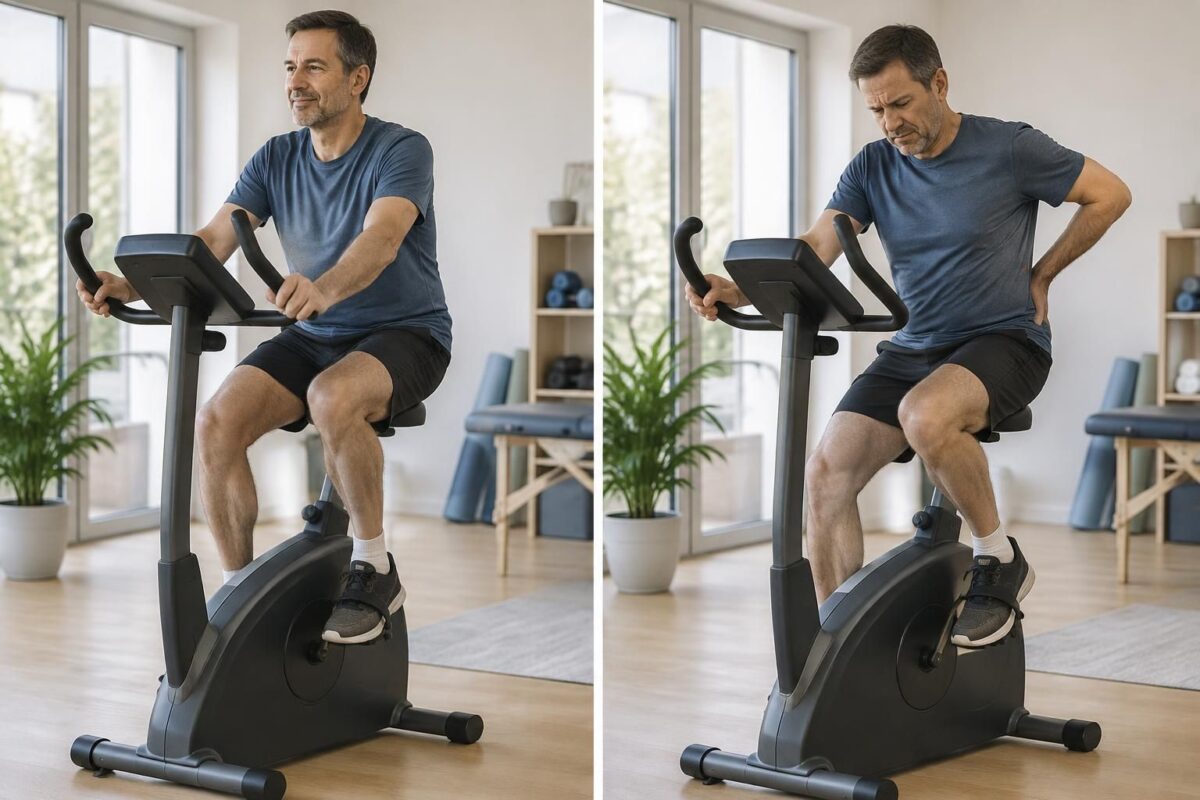
Sciatica and stationary bike: useful or aggravating depending on the case
IN BRIEF The stationary bike with sciatica can help you stay active if the pain is mild and stable. Start with a short session, at low resistance and in a comfortable position. If the pain goes further down the leg,…
Vibrations and nerve stimulation
The micro-vibrations transmitted by the road do not cause brutal lesions, but they accumulate and maintain continuous muscle strains around the spine. For a sensitive sciatic nerve, these repeated jolts can keep the pain pulsating and make it more noticeable during the journey.

Sciatica and cycling: sitting, bending, and symptoms
IN BRIEF Sciatica is pain related to irritation of the sciatic nerve, which can extend from the buttock down to the leg. Cycling may sometimes be possible if symptoms are mild and stable: a comfortable seat, a less bent posture,…
Duration and breaks: the key to tolerance
Driving is not dangerous in itself; it all depends on the duration without interruption. A short trip can be well tolerated, while a long trip without breaks can gradually increase pain. Integrating regular breaks, a brisk walk, or a change of position during these breaks helps interrupt the strain and better manage symptoms.
Practical tips for driving with sciatica
Choose an ergonomic seating solution suitable for driving, with a back cutout to relieve the coccyx and stabilize the pelvis in a neutral position. A high-density memory foam and a non-slip base can ensure that the cushion stays in place and absorbs vibrations. Combine this device with breaks and micro-exercises at stops to maintain comfort and mobility.
For further insights, explore these useful resources: Driving and sciatica: relieving pain, Relieving sciatic pain while driving, Sciatica and cars: why driving can worsen pain, Sciatic cushion car.
Resources and useful links
To go further and adapt your driving according to your situation, you can refer to guides and testimonials such as Sciatica and pain that radiates lower: signs to watch out for and other articles on Health Magazine, explaining the dynamics between driving and pain. Resources such as ErgoTech and Sos Sciatique offer practical tips for better managing the situation during your trips.

Dr Sylvain Desforges, B.Sc., D.O., N.D., osteopath, is the founding president of TAGMED and of the ACMA association. He dedicates his practice to chronic spinal pain, low back pain and symptoms compatible with sciatica, particularly when pain radiates toward the buttock, leg, calf, foot or toes.
Through SOS Sciatique, he publishes educational content on sciatica symptoms, possible causes such as disc herniation, disc narrowing, foraminal stenosis or irritation of a lumbar nerve root, as well as non-surgical approaches that may be considered according to the evaluation. At Clinique TAGMED, care may include, depending on the case, motorized neurovertebral decompression, specific osteopathic care or precision percussion.
For an evaluation related to sciatica treatment in Montreal / Mount Royal or sciatica treatment in Terrebonne, please consult the services available at Clinique TAGMED.
Medical disclaimer
The information published on SOS Sciatique is provided for educational purposes only and does not replace a consultation, diagnosis, opinion or treatment provided by a physician or another authorized healthcare professional. The author of this article is neither a medical doctor nor a specialist in a medical specialty recognized by the Collège des médecins du Québec. The osteopathic, manual medicine or functional support approaches described on this site do not constitute medical acts and are not intended to replace medical follow-up.
Consult a physician or emergency service in cases of loss of bladder or bowel control, anesthesia in the saddle area, significant or progressive weakness in the leg or foot, fever, recent trauma, severe pain or rapid worsening of symptoms. For more details, please read our Legal Notice.


