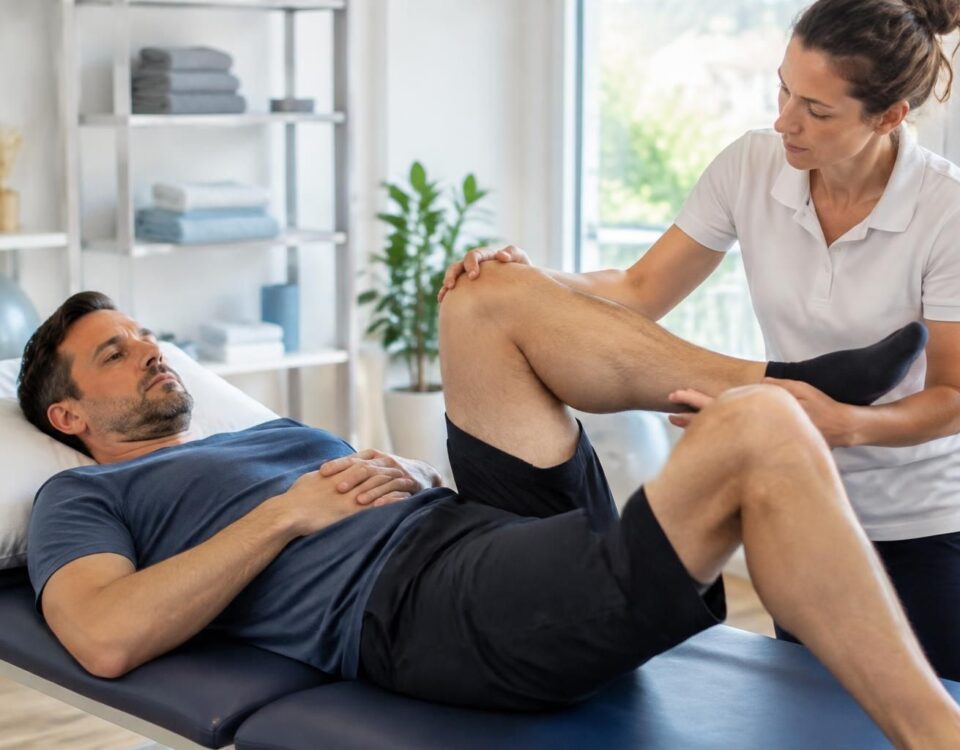
Disc herniation and associated foraminal stenosis
22/10/2026
Sciatica in Montreal: L5 and difficulty lifting the foot
23/10/2026
IN BRIEF Sciatica causes pain that radiates from the lower back down the leg. Popular stretches, such as the pigeon pose or hamstring stretches, are not always suitable: pulling on an irritated nerve can worsen the symptoms. Favor gentle movements, like nerve gliding, that do not cause pain or require forced holding, and consult a professional if the pain persists or intensifies. |
Sciatica and popular stretches: caution is advised. The pigeon, hamstring stretches, or straight-leg bends can exacerbate symptoms if the nerve is already sensitive. Favor gentle movements, without sharp pain, and stop if discomfort increases or descends further into the leg. If the pain persists, worsens, or is accompanied by weakness, seek advice from a healthcare professional.
Popular stretches for sciatica, like pigeon pose, hamstring stretches, or downward dog, are not suitable for everyone. Pain that travels down the leg may arise from a sensitive nerve rather than a tight muscle. Forcing a stretch can then increase symptoms. Here’s how to understand the risks, identify warning signs, and choose a cautious approach with a healthcare professional.
Sciatica describes pain related to irritation of a nerve root or the sciatic nerve. It can cause pain in the buttock and leg, tingling, numbness, or weakness. This type of pain can have multiple causes. A medical examination helps determine its origin.
Stretches are often presented as a simple solution. However, a sensation of tightness behind the thigh doesn’t always mean the muscle lacks flexibility. The nervous system can also be sensitive and limit movement to protect the irritated area. In this case, trying to gain range by forcing is not a good strategy.
The general advice available on stretches associated with sciatica or exercises sometimes proposed to relieve pain does not replace an individual assessment. A movement beneficial for one person can worsen another’s symptoms.
A sensitive nerve does not react like a tight muscle
A muscle can tolerate gradual tension. An irritated nerve may react to certain positions with pain that travels further down the leg, jolts, or tingling. This change in symptoms deserves attention. One should not attempt to “unblock” the leg by increasing the strength or duration of the stretch.
Movements that involve a rounded back, a straight leg, and the foot drawn towards oneself can increase tension along the nerve pathway in some people. This can happen with several popular postures, including certain variations of pigeon, forward bend, or downward dog. Caution is therefore preferable, especially if the pain is sharp or recent.
To better understand the difference between stretching and nerve mobilization, refer to this presentation on gestures that engage the sciatic nerve and this overview of stretches sometimes associated with the sciatic nerve. These pages do not confirm the cause of your symptoms nor help choose an exercise without assessment.
Why some popular stretches may worsen pain
The pigeon pose and the piriformis stretch
The pigeon pose targets the hip and gluteal muscles. It is often recommended when pain is located in that area. However, pain in the buttock does not prove that the piriformis muscle is responsible. It can also stem from the lower back or nerve irritation.
If the pose triggers pain that travels further down the leg, tingling, or lasting aggravation, stop. Avoid repeating the movement in hopes that the discomfort will eventually go away. Buttock pain without low back pain may have several explanations, as highlighted on this page about pain in the buttock without back pain.
The hamstring stretch and the straight leg
A leg that feels tight behind the thigh may give the impression that hamstrings need to be stretched. But if the tightness is accompanied by nerve symptoms or extends toward the calf and foot, the issue may not necessarily be a shortened muscle. Prolonged bending with the leg straight may then make the leg more sensitive.
The same caution applies to exercises performed with the torso bent and knees straight. In cases of pain related to a disc injury or a nerve root, a professional should clarify which movements to avoid. The advice on symptoms and gentle stretches can help identify general precautions but does not replace medical advice.
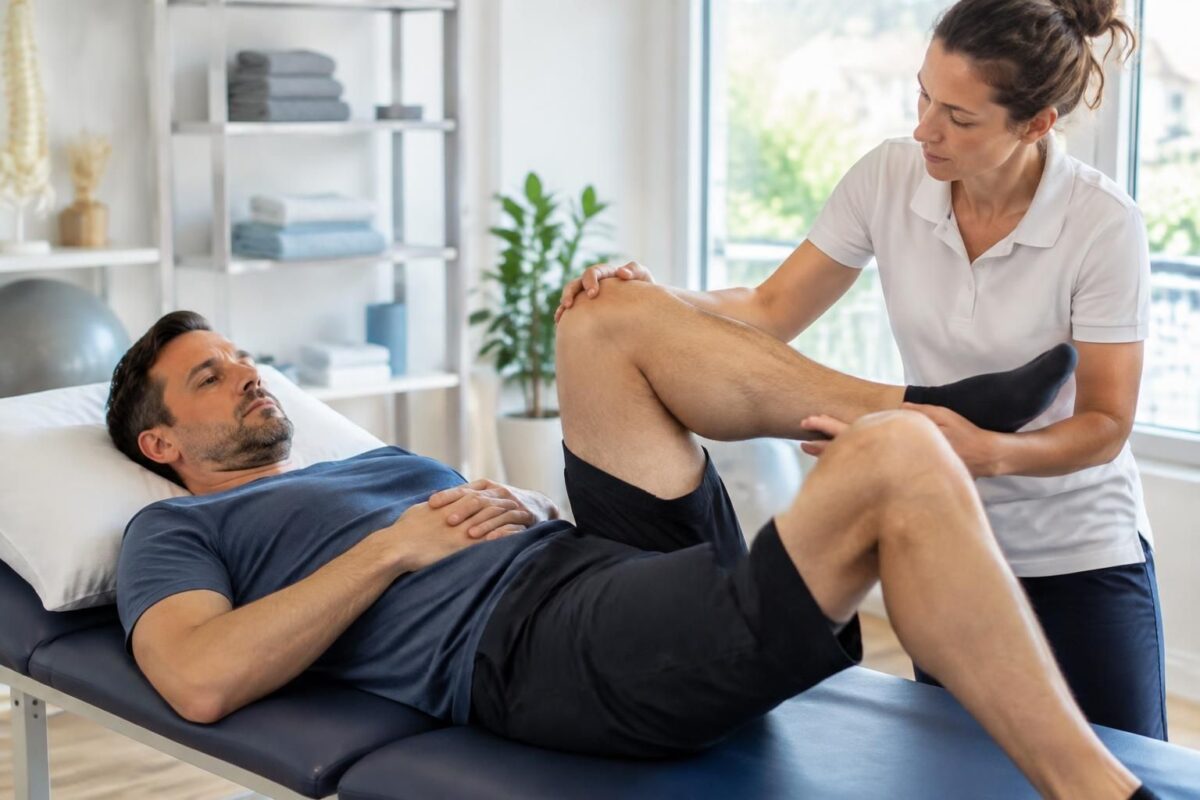
Sciatica and piriformis stretching: useful or worsening depending on the case
IN BRIEF Piriformis-related sciatica can cause deep pain in the buttock, sometimes radiating down the back of the thigh. A gentle stretch can loosen the hip and relieve discomfort if the muscle is involved, but it can worsen symptoms if…
How to assess your leg’s reaction
Do not rely solely on the relief felt during the stretch. Also observe the evolution of symptoms after the movement and the next day. Pain that travels further down the leg, increased tingling, or persistent discomfort are reasons to stop the exercise and seek advice.
Note positions that relieve or worsen pain, as well as changes in your walking, sleeping, and activities. This information will help the healthcare professional assess your situation. Pain may also manifest in the foot or heel without marked pain in the lower back, as explained on these pages about pain towards the heel or foot and foot pain without back pain.

Sciatica and Pilates: movements to adapt
IN SHORT Sciatica causes pain that can radiate from the lower back down to the leg. The Pilates Reformer can promote a gradual return to movement and strengthen core control, provided that the movements, range, and resistance are adapted. Favor…
What precautions to take before stretching
Avoid forcing or holding a painful position
Do not try to achieve maximum range. Do not apply pressure with your hands or a strap to intensify the stretch. Also avoid repeating a movement that causes sharp pain, jolts, or loss of sensitivity. In the presence of a herniated disc, protrusion, or another diagnosed issue, do not start a stretching program without appropriate guidance.
Judgment does not mean you should remain still without advice. The course of action depends on the cause, the intensity of the symptoms, and your general condition. A health professional can help you distinguish between muscle pain and nerve-related pain and choose appropriate care.
Seek advice if symptoms persist or change
Consult a professional if the pain persists, worsens, or limits your activities. Quickly seek advice if you notice new weakness in the leg, difficulty lifting the foot, or significant loss of sensitivity. Loss of control over the bladder or bowels, or numbness around the genitals and anus, requires urgent medical evaluation.
Tingling, weakness, or numbness should not be taken lightly. To learn more about signs that need to be taken seriously, consult information on nerve symptoms that require special attention. If pain disrupts your sleep, this resource also discusses sciatica and pain during the night.

Sciatica and core stability: variable tolerance depending on symptoms
IN BRIEF Core strengthening in case of sciatica consists of progressively strengthening the trunk muscles. Its tolerance varies depending on pain and symptoms: suitable without worsening the pain, it can support mobility and the resumption of activities, but does not,…
Stretching is not a one-size-fits-all treatment
A stretch may provide a sense of relaxation without addressing the underlying cause of the pain. It does not guarantee the prevention of a new episode. The priority is to obtain an appropriate assessment when symptoms are marked, unusual, or persistent, and then to follow recommendations that are consistent with your diagnosis.
Do not rely on a list of “nine stretches” or a video to choose a posture on your own. If a movement increases symptoms, stop it and seek advice. To compare approaches and general precautions, you can consult resources dedicated to stretches for sciatica and nerve tensioning, without considering them as a diagnosis or personal prescription.
If you wish to present your situation to a professional, a specialized clinic can inform you about available options and check if they match your case. Choosing a care plan should take into account the cause of the symptoms and an appropriate examination.
Medical disclaimer: The information and advice provided on this site do not replace the opinion, diagnosis, or treatment of a healthcare professional. Please note that Dr. Sylvain Desforges, osteopath, is neither a doctor of medicine nor a physician, and is not a specialist in a medical specialty as defined by the Collège des médecins du Québec. Manual medicine, functional medicine, and sports medicine as described on this site exclude any treatment or medical diagnosis made by a physician or medical specialist. Always consult your physician for any medical questions. For more details, please read our complete Legal Notice.
Popular stretches to moderate
- Pigeon and figure four: may exacerbate symptoms if the nerve is sensitive.
- Hamstrings and straight legs: avoid forcing or holding pain.
- Downward Dog and forward bends: modify postures, for example, by bending the knees.
Cautionary guidelines
- An immediate relief is not enough: also observe the state of the leg the next day.
- Prefer gentle movements and stop if the pain increases or moves further down the leg.
- A neural glide is done without holding the position or trying to pull on the nerve.
- Consult a professional if symptoms persist, worsen, or are accompanied by a loss of strength.

In the case of sciatica, popular stretches such as the pigeon pose, the forward bend, or downward dog are not automatically suitable for everyone. If the pain radiates down the leg, forcing a position that pulls may intensify symptoms. Take a gradual approach: prioritize well-tolerated movements, observe how you feel after the session, and seek advice from a professional if pain persists or worsens.

Sciatica and lunges: leg pain to watch out for
IN BRIEF Sciatica is pain that starts from the lower back or buttock and radiates down the leg. If a lunge triggers or worsens this pain, stop the movement and adjust your activity: this exercise does not address sciatica. Consult…
Why some stretches require caution
A pulling sensation behind the thigh does not necessarily mean that the muscle is too short. In sciatica, the nerve or the tissues around it may be sensitive. A straight-legged posture, especially if accompanied by a rounded back and a dropped head, can then reproduce or intensify symptoms.
Stretches of the piriformis, hamstrings, and certain yoga postures can provide temporary relief. However, this immediate comfort does not guarantee that the exercise is right for you: also pay attention to your condition in the hours following and upon waking the next day. A sharper pain, increased tingling, or discomfort radiating further down the leg are reasons to reduce the amplitude or stop the movement.
Beware of the most common positions
The pigeon, figure four, seated forward bend, and downward dog can put tension on the back of the leg depending on how they are executed. This is not about banning them entirely, but about not practicing them at all costs during a period when symptoms are exacerbated. To adapt yoga, bend the knees, reduce the amplitude, and inform your teacher about your pain.

Sciatica and deadlifts: risk depending on the cause
IN BRIEF Sciatica and deadlifts are not always incompatible: the risk depends on the cause of the pain and its intensity. During acute episodes, it’s best to avoid heavy loads and seek medical or physiotherapy advice before resuming. A gradual…
Favor gentle and well-tolerated movements
Instead of trying to “pull” on the painful area, start with low-amplitude gestures. Lying on your back, knees bent and feet on the ground, you can do slow pelvic tilts, without forcing. A short walk, if it does not increase pain, can also help maintain appropriate daily activity.
Some professionals offer nerve glides: the movement mobilizes the nerve without holding a stretching position. Coordination is essential, and the exercise should not cause sharp pain or increase symptoms. Have the technique demonstrated by a physiotherapist, especially if you already have significant pain or a diagnosed back condition.
A simple rule for adjusting exercise
Stay within a comfortable range, breathe naturally, and avoid jerks. Do not try to gain flexibility quickly. If a movement triggers a shock, numbness, or pain that progresses toward the foot, stop it. Also, note the reaction of your leg after the session: it’s a useful marker for adapting your routine.

Sciatica and squats: why caution is needed
IN BRIEF Sciatica does not always prohibit squats, but a deep or loaded squat can aggravate symptoms, especially during a flare-up. Gradually resume with a neutral back and a comfortable range of motion, and stop if the pain travels down…
When to Seek Medical Advice
Consult a health professional if the pain persists, comes back frequently, or limits your activities despite adapting your movements. A doctor or physiotherapist can assess the situation and suggest a program considering the probable cause, your symptoms, and your activity level. Stretching does not replace an assessment when needed.
A new or significant weakness in the leg, difficulty lifting the foot, marked loss of sensitivity, or urinary or bowel disturbances require urgent evaluation. In these situations, do not attempt to solve the problem by increasing stretches.
| Popular Stretch | Why to Stay Cautious |
|---|---|
| Pigeon | Can exacerbate symptoms if the position irritates the nerve. |
| Hamstrings, straight leg | Tension may further stress a sensitive nerve. |
| Sitting or standing forward bend | Back bending with straight legs can provoke pain. |
| Downward Dog | Adjust by bending the knees if the back of the leg pulls. |
| Figure 4 | Stop if it triggers pain going down the leg. |
| Calf stretch, straight leg | Can increase tension felt along the nerve. |
| Held or forced stretch | Avoid jerks and sharp pain; do not seek maximum range. |
| Sitting neural gliding | Perform a gentle movement without holding the leg straight or forcing. |
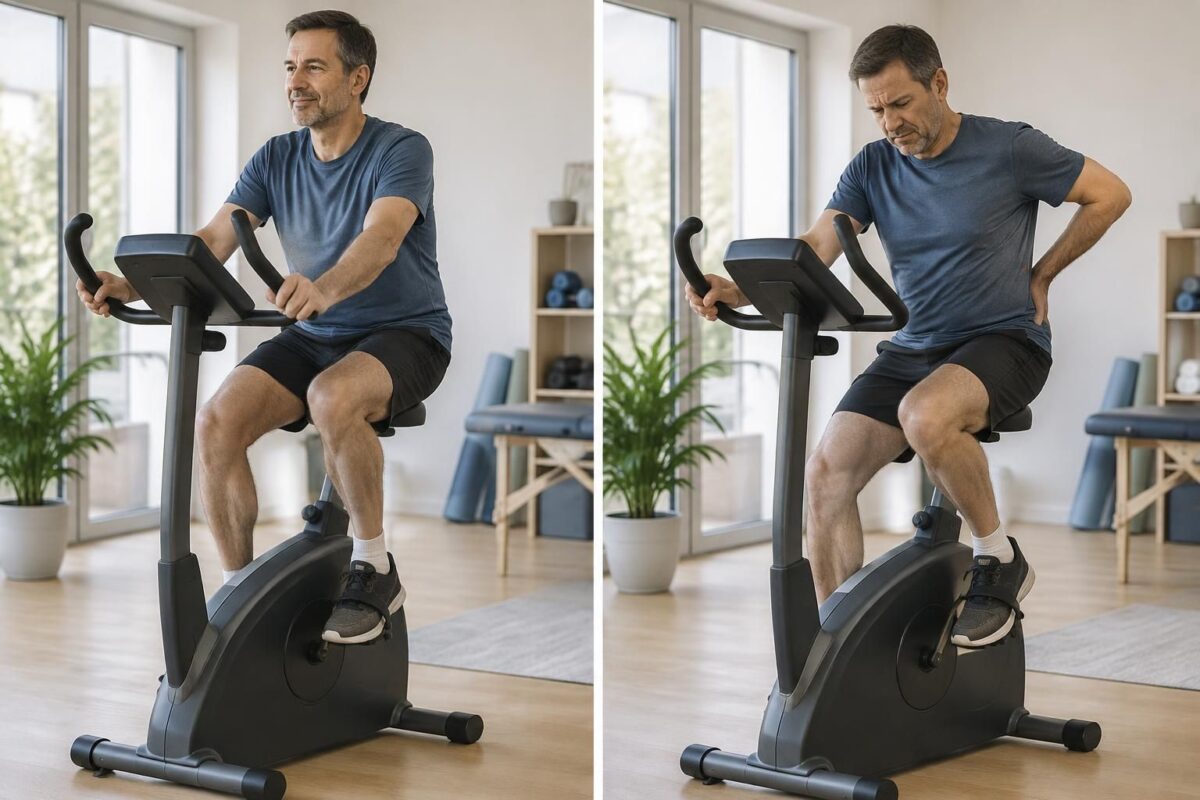
Sciatica and stationary bike: useful or aggravating depending on the case
IN BRIEF The stationary bike with sciatica can help you stay active if the pain is mild and stable. Start with a short session, at low resistance and in a comfortable position. If the pain goes further down the leg,…
Sciatica and Popular Stretches: Cautionary Testimonials
The testimonials below are illustrative examples, not medical advice or verified experiences. Sciatica can have various causes: an exercise suitable for one person may worsen symptoms for another.
“I did the pigeon pose every evening because I felt tension in my buttock. It relieved me a bit at the moment, but my pain traveled further down my leg the next day. My physiotherapist advised me to stop temporarily and gradually resume the movements.” This type of situation reminds us that immediate relief does not always mean the exercise is suitable: also observe your body’s reaction in the hours following, especially upon waking.
“Hamstring stretches seemed logical to me since I felt tightness in the back of my thigh. But, with my leg straight and torso bent, I experienced the same tingling down to my foot.” A sensation of tightness does not necessarily indicate that a muscle is too short. When the sciatic nerve is sensitive, certain positions that stretch the back of the leg can reproduce or intensify the symptoms.
“I had seen a video recommending pulling the toes towards myself during the stretch. I pushed a bit more with each session, thinking I was gaining flexibility. Eventually, that was what triggered the shocks in my leg.” Forced movements, jerks, and the pursuit of intense pain should be avoided. If you experience sharp discomfort, intensifying tingling, or pain spreading lower in the leg, stop the exercise.
“I thought all pain in the buttock came from the piriformis. So I did the figure 4 and pigeon without questioning it. After an assessment, I discovered that my symptoms might also stem from my lower back.” The piriformis syndrome does exist, but a buttock pain alone does not determine its origin. Avoid self-diagnosing and consult a professional if symptoms persist or worsen.
“I replaced my prolonged stretches with small gentle movements, without trying to go further with each repetition. I also noted how my leg reacted the next day.” Some individuals tolerate low-amplitude movements better, such as a gentle pelvic tilt or guided neural gliding. They must remain comfortable and not provoke the usual symptoms. Ask a physiotherapist to show you the technique if you’re unsure.
“I wanted to return to yoga, but some postures caused pulling in my leg. My teacher helped me bend my knees and reduce the range, and I avoided positions that reproduced my pain.” During periods of sensitive symptoms, it may be helpful to temporarily adapt postures rather than forcing a precise form. The radiating pain is a signal to consider, not a stretching goal.
If the pain becomes significant, worsens, persists, or is accompanied by weakness in the leg, seek evaluation by a health professional. Sudden loss of strength, newfound difficulty controlling the bladder or bowels, or numbness around the groin requires urgent medical attention.

Sciatica and cycling: sitting, bending, and symptoms
IN BRIEF Sciatica is pain related to irritation of the sciatic nerve, which can extend from the buttock down to the leg. Cycling may sometimes be possible if symptoms are mild and stable: a comfortable seat, a less bent posture,…
Dr. Sylvain Desforges and Sciatica: Why to Stay Cautious with Popular Stretches
The Dr. Sylvain Desforges is a professional specializing in osteopathy, naturopathy, and manual medicine. Throughout his career, he has focused on innovation in health and the management of chronic pain. He is the founding president of TAGMED clinics and the ACMA association. His approach aims to combine clinical expertise with available knowledge to support patients in improving their health and well-being.
Sciatica is one of the pains that can profoundly disrupt daily activities. It often presents as pain that starts from the lower back or buttock and radiates down the leg, sometimes to the foot. Tingling, a burning sensation, or weakness may also occur. However, these symptoms do not all have the same origin: nerve irritation, a lumbar issue, or another condition can produce similar sensations. Identifying the cause therefore requires an appropriate evaluation, rather than relying solely on an exercise found online.
Among the most common advice for sciatica are stretches for the piriformis, glutes, and hamstrings. They seem intuitive when a leg appears stiff or tense. However, this impression does not always indicate that a muscle is shortened. It may also correspond to nerve sensitivity or a protective reaction from the body. In this context, strongly pulling on the back of the leg or maintaining an uncomfortable posture can exacerbate symptoms for some individuals.
Prudence does not mean that stretching should be permanently banned. Rather, it involves avoiding forced movements and observing their effects during and after the session. Relief lasting only a few minutes is not enough to confirm that an exercise is beneficial: it is useful to check whether the pain remains stable, decreases, or intensifies in the hours and the day after. If a stretch causes sharp pain, discharge, or worsens tingling, it is better to stop it and seek professional advice.
Dr. Desforges’ background is also linked to the integration of advanced technologies in care, notably spinal decompression, laser, and shock waves. These options do not necessarily suit everyone and do not replace an individual assessment. The choice of treatment depends on the symptoms, their evolution, the patient’s history, and their goals. Serious care seeks to determine what is relevant in each situation without presenting one method as a universal solution.
To move more safely, a professional can suggest gradual exercises tailored to the patient’s tolerance. Depending on the case, this may involve gentle movements, walking, strengthening, or guided mobilizations. The priority is to maintain an appropriate activity without constantly pushing the painful limit. People who practice yoga or sports can often temporarily modify certain postures, for example, by bending their knees or reducing the range of motion, rather than forcing a straight-leg stretch.
A medical opinion is particularly important if the pain persists, worsens, or is accompanied by marked weakness. A loss of bladder or bowel control, numbness in the groin area, or sudden difficulty in lifting the foot requires urgent evaluation. By favoring an individualized approach based on available data, Dr. Desforges advocates for care that takes into account the limits of each method and the uniqueness of each patient.
Popular stretches for sciatica—the pigeon pose, straight-leg bends, or hamstring stretches—do not systematically suit all types of pain. Their effect depends on the cause of the symptoms and how your body reacts: a movement that provides temporary relief can also intensify pain in the leg. Caution consists of avoiding forcing, adapting exercises, and seeking advice if symptoms persist.
Popular exercises, but not universal
A pain that radiates down the buttock or leg does not necessarily mean that the muscles are too tight and need to be stretched. Nerve irritation, a lumbar issue, or another cause can produce similar sensations. The exercises presented in guides focused on sciatica stretching or stretches aimed at relieving pain should thus be considered as general leads and not as instructions adapted to each situation.
The pigeon pose, straight-leg bends, and certain yoga postures can tension the back of the thigh and sometimes reproduce symptoms. If a movement significantly increases pain, tingling, or numbness, stop it rather than insist. Resources on yoga gestures to favor or avoid and sciatic nerve stretches can help better understand precautions without replacing professional advice.
Observe your body’s reaction
Do not evaluate an exercise solely based on relief felt for a few minutes. Also observe how your symptoms evolve afterward and the next day: pain that progresses further down the leg or becomes sharper may indicate that the movement is not well tolerated at that moment. Conversely, gentle and comfortable mobility may be more suitable. It is not about seeking a strong feeling of stretch or pushing your limit at every session.
In case of pain, prioritize slow movements with a small range of motion, and stop if symptoms intensify. Walking, regular position changes, or simple pelvic movements can sometimes be easier to tolerate than maintaining a position. To compare different positions in daily life, refer to tips on positions and gestures that can bring comfort, as well as information on pain when lying on the stomach.
Don’t too quickly attribute the pain to the piriformis
A pain in the buttock is sometimes attributed to the piriformis muscle, but its location alone is not enough to establish this cause. Pain may also originate from the lower back and follow the path of a nerve root. Information about a herniated disc accompanied by lumbar stiffness upon waking, or possible symptoms of an L4-L5 issue and an L5-S1 protrusion, can clarify the different presentations, but only a professional can assess your situation.
Pain triggered by coughing, laughing, or straining should also be taken into account among the symptoms. It may warrant medical advice, especially if accompanied by persistent pain or other unusual signs. You can consult general information about pain when laughing or straining, but do not make a diagnosis on your own.
When to seek medical advice
If the pain worsens, does not improve, recurs frequently, or limits your activities, schedule an appointment with a doctor or a physiotherapist. A professional can investigate the probable cause, check well-tolerated movements, and suggest suitable exercises, rather than letting you multiply stretches found online. This precaution is particularly important in cases of weakness, marked numbness, or advancing symptoms.
Significant loss of strength, a new difficulty in lifting the foot, problems urinating or controlling bowel movements, or loss of sensitivity in the groin require urgent medical evaluation. While waiting for appropriate advice, avoid movements that clearly exacerbate the pain and do not force a numb or weak leg. Stretches can be part of a treatment plan, but they should remain gradual, tolerable, and adjusted to your situation.

Dr Sylvain Desforges, B.Sc., D.O., N.D., osteopath, is the founding president of TAGMED and of the ACMA association. He dedicates his practice to chronic spinal pain, low back pain and symptoms compatible with sciatica, particularly when pain radiates toward the buttock, leg, calf, foot or toes.
Through SOS Sciatique, he publishes educational content on sciatica symptoms, possible causes such as disc herniation, disc narrowing, foraminal stenosis or irritation of a lumbar nerve root, as well as non-surgical approaches that may be considered according to the evaluation. At Clinique TAGMED, care may include, depending on the case, motorized neurovertebral decompression, specific osteopathic care or precision percussion.
For an evaluation related to sciatica treatment in Montreal / Mount Royal or sciatica treatment in Terrebonne, please consult the services available at Clinique TAGMED.
Medical disclaimer
The information published on SOS Sciatique is provided for educational purposes only and does not replace a consultation, diagnosis, opinion or treatment provided by a physician or another authorized healthcare professional. The author of this article is neither a medical doctor nor a specialist in a medical specialty recognized by the Collège des médecins du Québec. The osteopathic, manual medicine or functional support approaches described on this site do not constitute medical acts and are not intended to replace medical follow-up.
Consult a physician or emergency service in cases of loss of bladder or bowel control, anesthesia in the saddle area, significant or progressive weakness in the leg or foot, fever, recent trauma, severe pain or rapid worsening of symptoms. For more details, please read our Legal Notice.