Sciatica in Montreal: deep buttock pain and radiation in the thigh
20/08/2026
Sciatica and tingling after walking: what to check?
20/08/2026
IN BRIEF Sciatica in Terrebonne is a pain of the sciatic nerve, characterized by a deep buttock pain and radiation that may extend down to the thigh. It can be effectively treated without surgery through approaches such as osteopathy, which rebalances movement, reduces pressure on the nerve, and improves mobility. Treatment begins with a targeted local assessment, followed by postural advice and gentle exercises to prevent recurrences. Available in Terrebonne, this care allows for a quick return to comfort and quality of life. |
In Terrebonne, Sciatica may present as a deep buttock pain and radiation into the thigh, a typical pathway of the sciatic nerve that may travel up to the leg.
This pain may be accompanied by tingling or weakness and strongly depends on posture and muscle tension. An osteopathic assessment helps identify the causes and propose tailored non-surgical approaches to relieve and prevent recurrences.
This presentation explains the possible mechanisms of sciatica in Terrebonne felt as a deep buttock pain with radiation in the thigh. It describes common causes, warning signs, the role of the osteopathic assessment, and non-surgical options offered by the TAGMED Clinic to improve quality of life without resorting to surgery.
Common Causes Associated with Sciatica
Sciatica most often results from a conflict around the sciatic nerve. Factors such as a herniated disc in the lumbar area, or an inflammatory mechanism related to the piriformis muscle, can radiate pain along the nerve pathway. The sacrum and pelvis may also contribute due to movement dysfunction at the sacroiliac joint, leading to pain in the buttock that can spread into the thigh. Finally, facet syndrome involves the joints located on either side of the spine and can trigger localized or radiating pain, typically on one side.
To delve deeper into these mechanisms, you can consult specialized resources on reference sites, including information dedicated to sciatica and its various causes.
Signs and Path of the Pain
The typical symptom follows the pathway of the nerve: buttock → thigh → leg → foot. It may be accompanied by tingling, a sense of loss of sensitivity, or weakness in the leg. The pain can be constant or occur in episodes, and its severity varies depending on the underlying cause and the positions adopted.
Diagnosis and Role of the Osteopathic Assessment
A reliable diagnosis relies on a targeted history and physical examination. Imaging is not routine and may not alter the initial care plan. Osteopathy aims to identify and correct structural dysfunctions and tensions around the sciatic nerve to reduce mechanical constraints. This approach is particularly useful when the pain is associated with joint blockages or muscle tensions that contribute to nerve irritation. In some cases, a medical assessment may be necessary to rule out other causes and guide the use of specific treatments or additional follow-ups.
Role of TAGMED and Non-Surgical Treatment Options
At the TAGMED Clinic, treatments may include, depending on the case, a motorized neurovertebral decompression, specific osteopathy, or the use of a precision sensor. These approaches aim to decrease the constraints on the nerve and restore harmonious movements at the joints of the pelvis and spine, without resorting to surgical intervention when possible. For more information on the solutions offered, please consult The Sciatica Solution and the information dedicated to treating sciatica in Terrebonne.
Additional resources on signs, typical pathways, and consultation options can be found through guides dedicated to sciatica and its manifestations in the Terrebonne area.
When and How to Access Care in Terrebonne
If the pain is associated with loss of sensation, marked weakness, resting pain, or neurological signs, or if it persists despite initial care, it is recommended to consult promptly. You can contact the TAGMED Clinic for an appropriate assessment in Terrebonne and benefit from a care pathway focused on non-surgical solutions tailored to your situation.
For specific information on symptoms and the nerve pathway, please consult articles dedicated to sciatica in Terrebonne – pain in the buttock that descends into the leg and other related resources on pain in the buttock and leg.
To learn more about the links between herniated discs and sciatica, consult the resources dedicated to extruded disc herniation and sciatica and to the nerve pathway.
For additional information on treatment options and perspectives in Terrebonne, you can also consult resources on Treatment of sciatica in Terrebonne and on tingling and nerve pathway.
Medical disclaimer: The information and advice provided on this site do not replace the opinion, diagnosis, or treatment of a healthcare professional. Please note that Dr. Sylvain Desforges, osteopath, is neither a medical doctor nor a physician, and is not a specialist in a medical specialty as defined by the Collège des médecins du Québec. Manual medicine, functional medicine, and sports medicine as described on this site exclude any treatment or medical diagnosis made by a physician or specialist. Always consult your physician for any medical questions. For more details, please read our full Legal Notice.
La Sciatique – Solution
Pain in the buttock and leg: consultation for sciatica in Terrebonne
Traitement de la sciatique à Terrebonne
Sciatica and pain without lower back pain: is it possible?
https://www.chiropratiqueterrebonne.com/maux-de-jambes-et-sciatique
Extruded disc herniation and sciatica: clinical significance
Sciatica in Terrebonne: tingling in the toes and nerve path
Burning pain in the leg: is it sciatica in Terrebonne?
Sciatica in Terrebonne: pain in the buttock that radiates down the leg
Numbness in the foot and sciatica in Terrebonne: signs to watch for
Medical disclaimer: The information and advice provided on this site do not replace the opinion, diagnosis, or treatment of a healthcare professional. Please note that Dr. Sylvain Desforges, osteopath, is neither a medical doctor nor a physician, and is not a specialist in a medical specialty as defined by the Collège des médecins du Québec. Manual medicine, functional medicine, and sports medicine as described on this site exclude any treatment or medical diagnosis made by a physician or specialist. Always consult your physician for any medical questions. For more details, please read our full Legal Notice.
- Typical symptoms: deep gluteal pain and radiation into the thigh.
- Pain pathway: buttock → thigh → leg.
- Common causes: herniated disc, piriformis syndrome, or sacroiliac joint dysfunction.
- Emergency signs: loss of strength, significant numbness, pain that worsens.
- Quick diagnosis: osteopathic assessment and, if necessary, medical evaluation.
- Non-surgical approaches: manual therapies, stretching, and targeted exercises.
- Role of osteopathy: reduce pressure on the nerve and release joint tension.
- Prevention: good posture, strengthening of the trunk and hips.
- Typical duration: from few days to several weeks depending on the cause.
- When to consult: prompt management to limit recurrences.

This article offers practical recommendations for sciatica in Terrebonne, focused on deep gluteal pain and radiation into the thigh. You will find explanations of possible causes, signs to watch for, and an action plan centered on non-surgical approaches, including osteopathy and targeted exercises to relieve and prevent recurrences.
Understanding Pain and Its Symptoms
Pain generally follows the pathway of the sciatic nerve: buttock → thigh → leg → foot. It may be associated with sensations of tingling, pins and needles, or numbness. In some cases, pain may appear as deep pain in the gluteal region and widely radiate towards the back of the thigh. Understanding this profile helps guide diagnosis and avoid inappropriate treatments.

Sciatica in Terrebonne: numbness progressing to the foot
IN BRIEF In brief, sciatica in Terrebonne is pain and numbness that follows the path of the sciatic nerve and may progress towards the foot. It often manifests with symptoms triggered or amplified by walking, with numbness or weakness potentially…

Sciatica in Terrebonne: why the pain may be stronger in the leg
IN BRIEF In brief, sciatica in Terrebonne is pain that follows the path of the sciatic nerve, starting from the lower back and descending into the buttock, leg, and sometimes the foot. The phenomenon may be stronger in the leg…
Common Causes and Local Factors
Sacroiliac Joint Dysfunction and Blockage
A dysfunction of the sacroiliac joint can cause deep pain in the buttock that radiates to the thigh. This type of blockage can limit certain movements and increase tension on the sciatic nerve.
Pain Related to Spinal Joints
Irritation at the facet joints can also generate localized pain on one side while sometimes radiating slightly. These irritations are often associated with repetitive postures or muscle imbalances that influence the movement of the pelvis and back.
Sciatica and Common Causes
Sciatica can stem from a bulging disc compressing the nerve or a muscular conflict around the piriformis. In any case, inflammation or compression of the sciatic nerve leads to pain that can extend to the thigh and limit daily activities.

Sciatica in Terrebonne: calf pain without significant lower back pain
IN BRIEF In short, sciatica in Terrebonne with pain that radiates to the calf but little lower back pain is a radiculopathy or referred lower back pain. This quick assessment helps identify the pathway of symptoms, neurological signs, and the…
Pain in one leg: possible sciatica in Terrebonne
IN BRIEF In brief, pain in a single leg related to sciatica is pain caused by the irritation or compression of a lumbar root, starting in the lower back and radiating to the buttock and leg. In Terrebonne, the management…
Therapeutic Action Plan in Terrebonne
Initial Assessment and Triage
A thorough examination helps clarify the origin of the pain and rule out situations requiring urgent medical attention. The goal is to establish a personalized plan based on your posture, movements, and clinical history.
Osteopathic and Manual Interventions
The osteopathic approach aims to reduce pressure on the nerve and restore normal mobility of the pelvic and spinal joints. Targeted techniques may be used to release muscle tension around the sacrum, hips, and nerve pathways, which can decrease pain and irritation in the thigh.
Exercises and Postural Rehabilitation
Gentle and progressive exercises promote muscle rebalancing and pelvic stability. Some targeted stretches and strengthening exercises help to improve posture on a daily basis and reduce the risks of reoccurrence, all while respecting pain-related limitations.
When to seek immediate consultation
Consult quickly if you experience loss of bowel or bladder control, very intense pain associated with fever, marked progressive weakness in a leg or foot, or if the pain occurs after significant trauma. These signs may require urgent medical evaluation.
Preventing recurrences and maintaining results
The key lies in regular follow-ups and adapting daily habits: posture at work, suitable physical activity, and stress management strategies for the back and pelvis. A maintenance program can help prevent relapses and prolong the benefits gained.
| Location | The deep gluteal pain can extend and radiate to the thigh. |
| Radiating path | The typical path is buttock → thigh → leg, and can reach the foot. |
| Common causes | Common causes include a herniated disc or piriformis syndrome. |
| Associated signs | Presence of paresthesia and, sometimes, weakness or numbness in the leg. |
| Duration & evolution | Pain can last from few days to several weeks depending on the cause and treatment. |
| Diagnostic assessment | Clinical examination and, if necessary, imaging or specialized consultation. |
| Therapeutic approaches | Non-invasive approaches such as osteopathy, rehabilitation, and posture improvement. |
| Practical advice | Adapt activities and consult if symptoms persist. |

Sciatica in Terrebonne: pain that travels below the knee
IN BRIEF In brief, sciatica in Terrebonne and pain that radiates below the knee is a nerve-origin pain due to irritation of the sciatic nerve. It manifests as burning sensations, electric shocks, and tingling that follow the nerve path down…

Weakness in the foot and sciatica in Terrebonne: when to consult quickly?
IN BRIEF In short, foot weakness associated with sciatica corresponds to a loss of strength or muscle control in the foot related to lumbar nerve irritation. This helps clarify whether a visit is urgent and guides towards a quick consultation…
Testimonials on Sciatica in Terrebonne: deep gluteal pain and thigh radiation
“In Terrebonne, my Sciatica hit me with a deep gluteal pain and radiation in the thigh that blocked me in my daily activities. After an assessment and targeted osteopathy sessions, I regained some mobility and the pain significantly decreased.”
“I came in for an annoying pain that started from my lower back and spread to my thigh, with a radiation that prevented me from walking normally. The osteopathic approach in Terrebonne addressed the tensions and blockages, and in a few weeks, the gluteal pain and radiation in the thigh decreased.”
“As an athlete, Sciatica affected me mainly with a deep gluteal pain and radiation down to the thigh during runs. After the osteopathy sessions and the recommended exercises, I was able to gently resume my training without discomfort.”
“The osteopathic treatment in Terrebonne targeted the blockages around the sciatic nerve. Result: disappearance of the radiation in the thigh and improvement of the deep gluteal pain after only a few weeks.”
“My doctor advised me to rest, but it was in Terrebonne that I found the key with osteopathy. The Sciatica was accompanied by radiation in the thigh; after treatment, the pain significantly decreased, and I regained better mobility in my daily life.”
In Terrebonne, sciatica often manifests as deeply localized pain in the buttock, which can irradiate along the thigh and sometimes down to the knee or ankle. This presentation, common among active patients and those with biomechanical imbalances, often results from compromised mobility or blockage in the pelvic and lumbar structures. The clinical focus is on the complex interaction between muscles, joints, and the sciatic nerve in order to distinguish possible causes and assess the impact on daily function.
The evaluation process relies on a precise examination and targeted history-taking. The practitioner seeks to determine if the pain follows the path of the sciatic nerve, with signs such as tingling, numbness, or partial loss of sensation. Investigations complement the picture when necessary and allow differentiation between a herniated disc, piriformis syndrome, or other nerve irritations. In all cases, patient safety prevails, and therapeutic decisions are made within a framework of evidence-based care and personalized adaptation to the context of Terrebonne.
The proposed therapeutic framework aims for a progressive improvement of pain and mobility, prioritizing a patient-centered approach. The use of osteopathic techniques and manual medicine allows for the release of muscle tensions, restoration of pelvic-lumbar alignment, and reduction of constraints on the nerve. Recommendations for self-rehabilitation, postural advice, and targeted exercises complement sessions to optimize the return to activity and prevent recurrences. The goal is to restore effective and sustainable function while minimizing the suffering associated with sciatica.
For some patients, the team integrates advanced options when indications are met and the clinical framework allows. These approaches include motorized spinal decompression, which can facilitate rebalancing of the vertebral segments and reduce pressure on the nerve, the use of laser therapy to promote inflammation reduction and tissue support, and shockwave therapy to stimulate repair processes and relieve pain. These techniques are part of a coordinated strategy, combining manual actions, technologies, and exercise programs tailored to each patient in Terrebonne.
The duration of treatment and the rhythm of visits depend on the exact cause and individual response. On average, sciatica can evolve over a few days to several weeks; a structured approach, combining patient education and regular follow-up, can accelerate recovery and improve functional resilience. At the heart of the offering in Terrebonne, the goal is to support a gradual and safe return to usual activities while strengthening prevention mechanisms and promoting better posture and sustainable muscle balance.
This conclusion focuses on Sciatica in Terrebonne, manifested by a deep gluteal pain and radiation into the thigh. It recalls the common mechanisms, the diagnostic approaches, and the non-surgical options, with an emphasis on the local osteopathic approach and preventive actions to sustainably improve the quality of life of patients experiencing this context in Terrebonne.
Sciatic pain generally follows the path of the nerve and may be accompanied by sensations of tingling or sometimes loss of sensation in the thigh or foot. In Terrebonne, it is useful to distinguish the usual causes such as a paramedian disc herniation and a piriformis syndrome, as well as the biomechanical factors related to the pelvis and spine. This precise diagnosis allows for quickly targeting appropriate treatments and avoiding unsuitable ones.
A non-surgical and personalized approach is often effective, especially when the pain is related to a joint blockage or muscle tension. Osteopathy can help to reduce the strain on the nerve and restore clear biomechanics, through targeted manipulations, gentle techniques, and postural advice. A treatment plan that includes specific exercises and daily adjustments can accelerate recovery and reduce the risk of recurrence.
For the residents of Terrebonne, the goal is to combine clear diagnosis, appropriate care, and prevention of recurrent episodes. A structured approach aims to correct musculoskeletal imbalances, improve pelvic stability, and optimize the movements of the back and hips to limit triggering factors such as poor posture, overload, and repeated demands.
It is important to remain attentive to signs that require urgent medical care, such as a gradual weakening of a leg, loss of bladder control, or sudden pain accompanied by fever or recent trauma. If symptoms consistent with sciatica are present, consult a professional quickly to establish an appropriate assessment and guide the most suitable treatment.
To deepen your understanding and explore complementary resources on sciatica and relevant osteopathic approaches in Terrebonne, consult the following links: Sciatica: causes, diagnosis, and treatment, Sciatica or pain in the glute: symptoms and osteopathic treatment, Sciatica: recognize and relieve neuralgia, Paramedian disc herniation and sciatica, Sciatica in Terrebonne: pain starting from the lower back to the leg, Heel pain and S1 root in Terrebonne, Sciatic nerve: understand and relieve, Sciatica and intermittent numbness: how to interpret, Pain after a long phone call while seated.
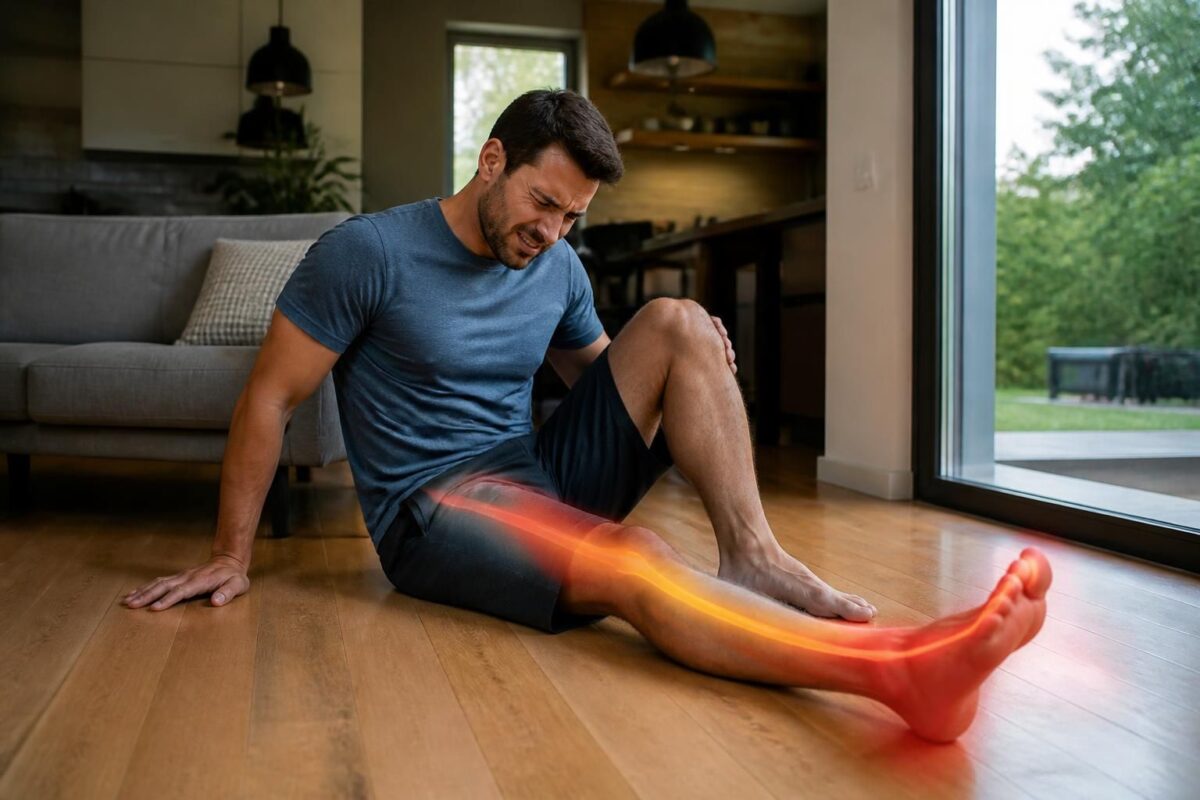
Sciatica in Terrebonne: tingling in the toes and nerve path
IN BRIEF The Sciatica in Terrebonne is pain that starts from the lower back or buttock and radiates down the leg, accompanied by tingling and signs along the nerve pathway. At the TAGMED Clinic, the assessment focuses on the pain…

Numbness in the foot and sciatica in Terrebonne: signs to watch for
IN BRIEF In short, the numbness of the foot related to sciatica is a compression or irritation of the sciatic nerve that starts from the lower back and runs down to the toes. This phenomenon is manifested by tingling and…

Dr Sylvain Desforges, B.Sc., D.O., N.D., osteopath, is the founding president of TAGMED and of the ACMA association. He dedicates his practice to chronic spinal pain, low back pain and symptoms compatible with sciatica, particularly when pain radiates toward the buttock, leg, calf, foot or toes.
Through SOS Sciatique, he publishes educational content on sciatica symptoms, possible causes such as disc herniation, disc narrowing, foraminal stenosis or irritation of a lumbar nerve root, as well as non-surgical approaches that may be considered according to the evaluation. At Clinique TAGMED, care may include, depending on the case, motorized neurovertebral decompression, specific osteopathic care or precision percussion.
For an evaluation related to sciatica treatment in Montreal / Mount Royal or sciatica treatment in Terrebonne, please consult the services available at Clinique TAGMED.
Medical disclaimer
The information published on SOS Sciatique is provided for educational purposes only and does not replace a consultation, diagnosis, opinion or treatment provided by a physician or another authorized healthcare professional. The author of this article is neither a medical doctor nor a specialist in a medical specialty recognized by the Collège des médecins du Québec. The osteopathic, manual medicine or functional support approaches described on this site do not constitute medical acts and are not intended to replace medical follow-up.
Consult a physician or emergency service in cases of loss of bladder or bowel control, anesthesia in the saddle area, significant or progressive weakness in the leg or foot, fever, recent trauma, severe pain or rapid worsening of symptoms. For more details, please read our Legal Notice.